
REVIEW · KATHMANDU
Everest Base Camp Trek – 15 days
Everest rewards patience, lungs, and sturdy legs. This 15-day trek combines Kathmandu sightseeing with a classic route through the Khumbu Valley, ending at Everest Base Camp and the Kalapathar sunrise viewpoint. I like the sensible acclimatization plan, especially the rest days at Namche Bazaar and Dingboche, and I like that airport transfers, flights, guesthouses, guides, porters, and trekking staff costs are arranged together.
The price of $1,375 per person is strong value for a guided Everest trek that includes Kathmandu transport, the Lukla flights, accommodation, staff insurance, equipment, and medicine. The main consideration is that this is a demanding high-altitude walk, and the package details about meals are not perfectly clear. Meals and drinks are listed as excluded, while breakfast and dinner also appear among the inclusions, so you should confirm exactly what food is covered before paying.
Key points to know before booking
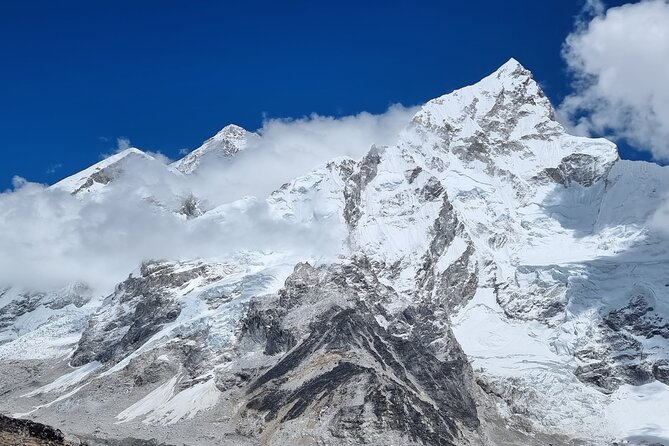
- Everest Base Camp reaches about 5,400 meters, with an additional climb to Kalapathar at 5,545 meters.
- Two acclimatization days are built into the route, one near Namche Bazaar and one in Dingboche.
- The Lukla flight is included, along with airport transfers in Kathmandu and a return flight.
- Guesthouse accommodation uses twin-sharing rooms, while Kathmandu includes three nights in a standard hotel.
- The group is capped at 15 people, which gives the trip a more manageable feel than a large walking tour.
- Guides and porters are central to the experience, with named staff such as Kumar, Santosh, Prakash, Kali, Dilli, Nima, and Bikash receiving repeated praise for care and support.
Kathmandu arrival and two days of useful preparation
Your trip begins at Tribhuvan International Airport, where an Outshine Adventure representative meets you with a name sign and drives you to your hotel. After check-in, you visit the company office for documents and a briefing. This is practical rather than glamorous, but it matters when you are about to fly to Lukla and spend two weeks above the clouds.
The second day is devoted to Kathmandu’s major sights. A private car and English-speaking guide take you to Kathmandu Durbar Square, Swayambhunath, Boudhanath, and Pashupatinath. The sightseeing day lasts about seven hours, though entrance fees are not included.
Each stop gives you a different introduction to the Kathmandu Valley. Durbar Square brings old royal architecture and temple courtyards. Swayambhunath, often called the Monkey Temple, gives you a hilltop view over the city. Boudhanath is one of the city’s great Buddhist centers, while Pashupatinath is a major Hindu pilgrimage site along the Bagmati River.
You also have time in the afternoon for equipment shopping and final preparation. Use it wisely. Check your boots, warm layers, gloves, water system, and headlamp before leaving Kathmandu. The trek reaches serious altitude quickly, and this is the best time to fix small problems.
More Everest Base Camp Treks in Kathmandu:
- Everest Base Camp Trek – 14 Days
★ 5.0 · 1,499 reviews - Everest Base Camp Trek
★ 5.0 · 842 reviews - Everest Base Camp Trekking
★ 5.0 · 485 reviews
Lukla to Phakding: the short first walk
The flight from Kathmandu to Lukla takes about 30 minutes and gives you your first mountain views through a small aircraft window. The flight is included, but mountain weather can affect schedules. Keep your first day flexible and avoid planning an important international connection immediately afterward.
After breakfast at a guesthouse near Lukla Airport, you walk downhill toward Phakding. The route drops roughly 200 meters and takes about three hours, following the Dudh Koshi River. This is a gentle introduction to the trek, though your body is still adjusting to the altitude and the long travel day.
Phakding is a useful overnight stop because the first day is deliberately short. You are not trying to prove anything yet. The goal is to eat, rest, and begin walking at a steady pace.
Namche Bazaar and the first acclimatization test
Day four is much harder. You follow the Dudh Koshi toward Namche Bazaar, climbing about 850 meters over roughly five hours. The route passes through the early Khumbu settlements and reaches Namche, a large mountain market town with shops and services.
The climb can feel tiring because it comes so soon after arrival. Walk slowly and let your guide set the rhythm. The point is not speed. At this altitude, a calm pace is one of the simplest tools you have.
Namche is more than a place to sleep. It is the main trading center of the Everest region, and you have time to see its shops, cafés, and social life. The itinerary names the Irish Pub as a stop, though this should be understood as a meeting or rest point rather than a promise of a particular evening program.
The following day is for acclimatization. You climb for about two hours to the Everest View Hotel, stop for tea, and look across a dramatic line of peaks including Everest, Nuptse, Lhotse, Ama Dablam, Thamserku, and Kusum Kangaru. Then you return to Namche.
This walk high and sleep lower pattern is important. It gives you mountain views without pushing you straight toward the highest camps. I consider this one of the strongest parts of the itinerary.
Tengboche and the spiritual heart of the route
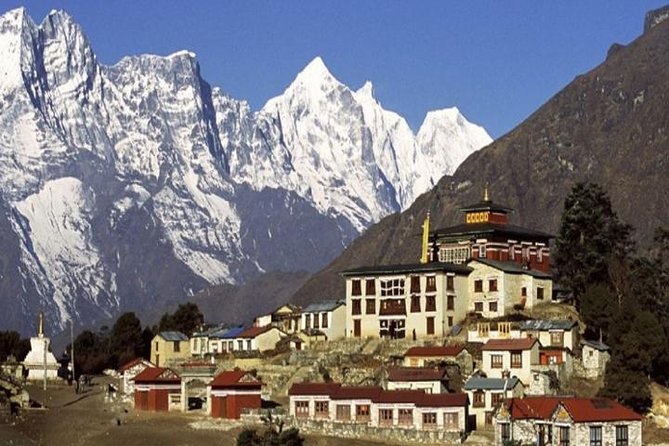
From Namche, the trail continues to Tengboche in about five hours. The route brings views of Ama Dablam and leads to the area’s well-known monastery.
Tengboche Gompa is not simply a photo stop. You may visit during morning or evening worship, and the itinerary also allows time for meditation. Be respectful inside the monastery, keep quiet, and follow local instructions about photography.
The views here are among the most memorable on the route. Ama Dablam has a sharp, elegant profile, and the monastery gives the day a cultural focus that keeps the trek from becoming only a parade of mountain viewpoints.
The accommodation is in guesthouses, usually on a twin-sharing basis. Conditions are practical and basic rather than hotel-like. Several people who used this company specifically praised the rooms as warm and clean, but you should still pack a sleeping bag liner and personal toiletries. Outshine supplies a down jacket and sleeping bag if necessary.
A few more treks around Kathmandu worth a look
- Annapurna Circuit Trek with Tilicho Lake
★ 5.0 · 368 reviews - Everest Base Camp Trekking – 13 Day
★ 5.0 · 365 reviews - Everest Base Camp Trek
★ 5.0 · 350 reviews - Everest Base Camp Trek -14 Days
★ 5.0 · 321 reviews
Dingboche and the second acclimatization day
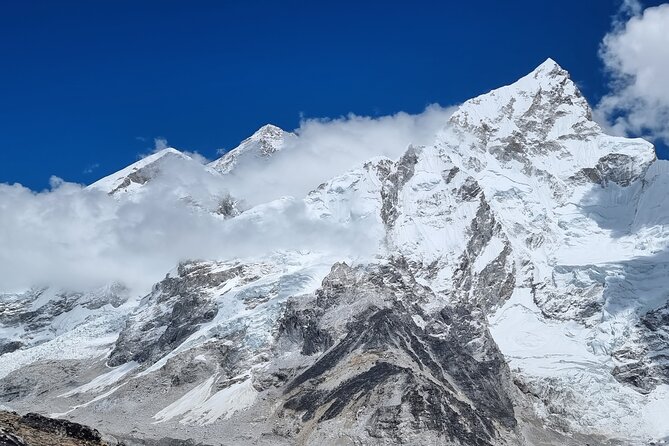
The walk to Dingboche takes about five hours. You pass through rhododendron-covered areas and enter the Imja Valley, with views toward Ama Dablam, Kantega, Island Peak, Nuptse, and Lhotse. A large Mani Stupa marks part of the route, adding a quiet cultural detail to the day.
Dingboche is another key acclimatization point. On the next day, you make a side trip into the Chhukung Valley and return to Dingboche by evening. The route gives you views of Ama Dablam’s north face, the Lhotse-Nuptse ridge, Island Peak, and Tawoche Peak.
This is not a wasted rest day. You still walk, but the schedule lets your body adjust before the route rises toward Lobuche and Gorakshep. If you feel headache, nausea, unusual fatigue, or other altitude symptoms, tell your guide immediately. The price includes staff support and medicine, but no package can remove the risks of altitude.
Lobuche and the frozen upper valley
From Dingboche, you walk for about five hours through the Dughla Valley toward Lobuche. The surroundings become more severe, with frozen rivers, stone houses, and an icy valley that feels far removed from Kathmandu.
The route brings views of the Khumbu Icefall, Pumori, and smaller peaks from the ridge. This is where the trek begins to feel truly high and remote. The walking time is moderate on paper, but the altitude makes every uphill section count.
You should carry water, snacks, warm layers, and any personal medicine where you can reach them easily. A porter carries the main luggage, but you need a small day pack for essentials. The arrangement says porters carry luggage shared between two clients, so pack with that limit in mind.
Gorakshep and Everest Base Camp at 5,400 meters
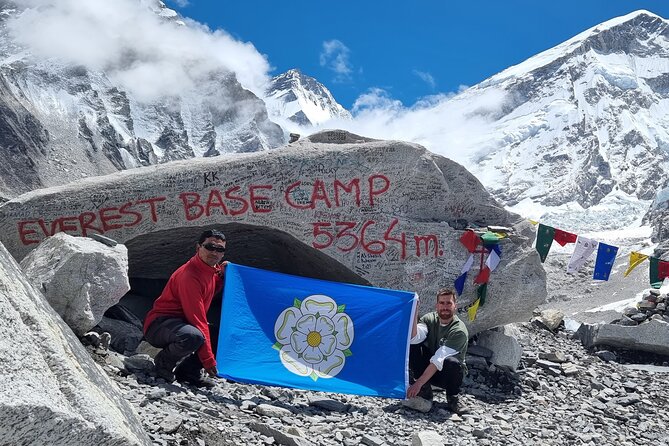
The next day is the emotional center of the trek. You walk about three and a half hours to Gorakshep, then continue for roughly three hours round trip to Everest Base Camp.
The trail follows rocky ground beside the Khumbu Glacier. From the route, you see Pumori, Nuptse, Lho-La, and Khumbutse. The itinerary also notes the possibility of hearing avalanches, a reminder that this is an active mountain environment, not a controlled sightseeing attraction.
Everest Base Camp sits at about 5,400 meters. Depending on the season, it may look like a broad rocky area marked by expedition equipment rather than a permanent village. The achievement is in reaching the point, seeing the glacier, and understanding the scale of the climbing route ahead.
Returning to Gorakshep for the night is a sensible choice. You do not need to carry on farther after reaching Base Camp, and the descent gives your body some relief.
Kalapathar sunrise and the long return
The next morning begins early with a climb to Kalapathar at 5,545 meters. This is the highest point in the itinerary and the place for the broadest view of Everest and the surrounding Himalayan range.
The ascent is hard because it comes after Base Camp and because the air is thin. Take small steps and keep your expectations realistic. The view is the reward, but the climb itself may take considerable effort.
After Kalapathar, the route heads back down. The itinerary describes the day as about six hours, with altitude loss making the walking feel easier than the climb up. Even so, downhill walking can be tough on knees and ankles, so trekking poles are worth considering.
The route returns through Namche Bazaar on day 12, a roughly six-hour descent with mountain views. You have time to enjoy the town’s shops, drinks, and pool house before the final walking days.
The next day takes about five and a half hours from Namche through Phakding to Lukla. Reaching Lukla marks the end of the main trek, and you can rest in the town’s restaurants, bars, and shops.
The flight back and what the package covers
On day 14, you fly from Lukla back to Kathmandu. The return flight takes about 30 minutes, but weather can influence mountain aviation. If the flight is delayed, the itinerary needs flexibility, so avoid booking a tight onward connection.
The package includes three total nights in a Kathmandu hotel, private airport transfers, the city tour, domestic flights, trekking accommodation, an English-speaking licensed Sherpa guide, and porters. It also covers staff food, accommodation, salaries, insurance, equipment, and medicine. Those staff provisions are meaningful. They show that the cost is not only paying for a guide to walk beside you.
The package also includes government taxes, a down jacket, and a sleeping bag when needed. However, the meal information needs clarification. The inclusions list dinner and two breakfasts, while the exclusions list meals and drinks. Ask the operator for a written meal schedule before departure, including what is covered in Kathmandu and on the trail.
You must also buy travel insurance with coverage up to at least 5,300 meters. This is not a minor add-on. Standard policies may not cover high-altitude trekking, helicopter evacuation, or trip interruption, so read the wording carefully.
Guides, porters, and the human side of the trek
The strongest part of this experience appears to be its staff support. Company contacts describe Gokul as responsive during planning and flexible when people needed changes. Asmita was repeatedly praised for warm arrival support and regular care, while guides including Kumar, Santosh, Prakash, Kali, Dilli, Nima, and Bikash were recognized for kindness, humor, safety, and practical help.
That matters on an Everest trek. Your guide does more than point out mountains. The guide manages pace, checks how you are feeling, helps with guesthouse arrangements, and keeps the group moving through a demanding route.
The maximum group size is 15 people. That is large enough to offer company but small enough for a guide to notice when someone is struggling. Solo participants should ask how groups are formed and how twin-sharing rooms are assigned.
Is $1,375 good value?
At $1,375, this is an attractive price for a 15-day guided Everest Base Camp package. The included Lukla flights alone are an important part of the budget, and the package also covers Kathmandu transport, three hotel nights, guesthouses, guide services, porters, staff costs, equipment, and taxes.
You still need money for city entrance fees, meals and drinks not covered by the operator, tips, travel insurance, personal purchases, and any extra expenses. The price is best understood as a strong base package, not an all-inclusive holiday.
The value is especially good if you want one company to coordinate the difficult pieces. If you prefer private rooms, a larger hotel budget, or full control over meals, you may want to compare other options.
Who should book this trek?
You should consider this trip if you have moderate physical fitness, enjoy long days on foot, and want a structured route rather than arranging every guesthouse and flight yourself. It suits people who value local guides, a planned acclimatization schedule, and a mix of cultural stops with mountain walking.
You should think carefully if you dislike basic accommodation, struggle with steep climbs, or need a fixed timetable. The route reaches 5,545 meters, and the Lukla flight depends on mountain weather. Good insurance and a flexible attitude are essential.
Cancellation is generous only when handled early. You receive a full refund if you cancel at least six full days before the start time, a 50 percent refund if you cancel two to six full days before, and no refund for cancellations less than two days before. Weather or insufficient numbers can lead to a new date, another experience, or a full refund.
Should you book the Everest Base Camp Trek?
I would book this trek if you want a classic Everest route with Kathmandu sightseeing, two useful acclimatization days, and a company that handles the main logistics. The staff support receives especially strong praise, and the price includes more than many basic trekking packages.
Before booking, confirm the meal plan, the exact hotel and guesthouse standards, porter luggage limits, and what happens if the Lukla flight is delayed. If you are ready for high altitude and long walking days, this offers a well-organized path to Base Camp without stripping away the local character of the Khumbu villages.
FAQ
How long is the Everest Base Camp Trek?
The experience lasts approximately 15 days, including Kathmandu sightseeing, the trek from Lukla to Everest Base Camp, the return to Lukla, and flights back to Kathmandu.
Where does the trek begin?
The activity begins with pickup at Tribhuvan International Airport in Kathmandu. The trekking portion starts after the flight from Kathmandu to Lukla.
How high is Everest Base Camp on this route?
Everest Base Camp is listed at approximately 5,400 meters. Kalapathar reaches about 5,545 meters.
Is the Lukla flight included?
Yes. The package includes Kathmandu to Lukla and Lukla to Kathmandu flights.
What accommodation is provided?
You receive standard hotel accommodation in Kathmandu for three nights and twin-sharing guesthouse accommodation during the trek.
Are guides and porters included?
Yes. The package includes an English-speaking licensed Sherpa trekking guide and porters to carry luggage shared between two clients.
Are meals included?
The package information lists dinner and two breakfasts as included, but it also lists meals and drinks among the exclusions. Confirm the exact meal arrangements with Outshine Adventure before booking.
Do I need travel insurance?
Yes. You must arrange your own travel insurance with coverage for trekking at altitudes up to at least 5,300 meters.
What happens if bad weather cancels the experience?
If poor weather causes cancellation, you are offered a different date or a full refund. The activity also requires a minimum number of participants, and a cancellation for that reason brings an alternative date or experience, or a full refund.
Recently added around Kathmandu
- Ghorepani Poon Hill Trek★ 5.0 · 16 reviews
- Private Manaslu Circuit Trek at Himalayas★ 5.0 · 3 reviews
- Amazing 1 Day Trekking Experience in Kathmandu Nepal★ 5.0 · 24 reviews
- Ghorepani Poonhill Trek★ 5.0 · 5 reviews
- Upper Mustang Trekking★ 5.0 · 2 reviews
- Upper Mustang Trekking★ 3.0 · 2 reviews
- Upper Mustang Trekking★ 5.0 · 4 reviews
- Upper Mustang Trek★ 5.0 · 5 reviews
Everest Base Camp Treks, compared.




Browse the lists this tour appears in