
REVIEW · KATHMANDU
Everest Base Camp Trek
Everest changes the scale of everything. This 14-day trek from Kathmandu takes you through Sherpa villages, Buddhist monasteries, suspension bridges, and some of the finest mountain scenery on Earth before reaching Everest Base Camp at 5,365 metres. I like the careful acclimatization days in Namche Bazaar and Dingboche, and I like that the trip includes a licensed guide, porter support, meals, teahouse lodging, and useful gear such as a sleeping bag and down jacket.
The biggest consideration is the altitude. This is not a sightseeing stroll with a few uphill sections. You will spend long days walking above 4,000 metres, reach Kala Patthar at about 5,550 metres, and face basic accommodation near the highest points. The price also needs a close look, since Kathmandu lodging, insurance, personal costs, tips, and the Lukla flight are listed as exclusions even though domestic flights are also described among the inclusions.
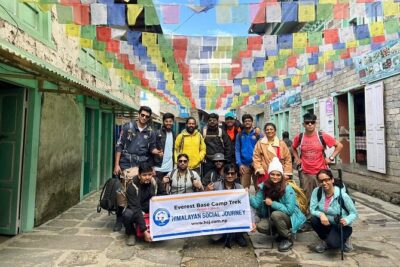
Several names come up again and again in the strongest praise for this company, especially Shiva, Hari, Avi, Himal, Avinash, and Samden. The common thread is attentive support, clear planning, help with dietary needs, and guides who watch the pace and safety of the group. That matters here. A good guide is not decoration. At altitude, it can change the whole experience.
The five details that define this trek
- Lukla begins the real adventure: The small mountain flight is short, dramatic, and weather dependent, with the option of a night drive to Manthali Airport before flying.
- Two acclimatization stops are built in: Namche Bazaar and Dingboche provide rest days with optional hikes, a much better plan than racing uphill.
- Kala Patthar gives the best Everest view: Everest itself is not clearly visible from Base Camp, so the early hike to Kala Patthar is a major payoff.
- Sherpa culture is part of the route: You visit Namche, Pangboche, Tengboche Monastery, teahouses, local shops, and high mountain settlements.
- Support is unusually broad for the price: A licensed English-speaking guide, assistant guide ratio, porter service, meals, park fees, first-aid supplies, sleeping bag, down jacket, and duffel are included.
- The published price needs checking: At $1,169 per person, it looks competitive, but you should confirm the Lukla flight and Kathmandu hotel arrangements before booking.
What the $1,169 price really buys
At first glance, $1,169 is a strong price for a private 14-day Everest Base Camp program. You receive airport transfers in a private vehicle, a trekking leader, assistant guide support, a porter arrangement, park and community fees, teahouse accommodation, full-board meals during the trek, and staff costs.
The guide ratio is worth noting. The plan provides one assistant guide for every four trekkers and one porter for every two trekkers. That is more personal support than a bare-bones group departure, especially on slow or difficult days. Your main luggage is carried, but you still need a daypack with water, layers, valuables, and anything you need during the day.
The package also supplies a down jacket, sleeping bag, duffel bag, T-shirt, and trekking map. You return the jacket and sleeping bag, while the duffel, shirt, and map are yours to keep. These items cut down on expensive rental shopping in Kathmandu, although you still need suitable boots, warm clothing, gloves, sun protection, and personal equipment.
There is one important pricing wrinkle. The information lists domestic flights as part of the all-inclusive package, but the exclusions separately list the Lukla flight. Accommodation in Kathmandu is also excluded, as are travel and medical insurance, excess baggage above 15 kilograms, internet, laundry, snacks, drinks, battery charging, and tips. A solo trekker must also pay separately for a porter.
I would ask for a written cost breakdown before sending payment. Specifically, confirm if the Lukla flight is included, how many Kathmandu hotel nights are covered, and what happens if a flight is delayed by weather. The value is good if the flight and core arrangements are included. It is less impressive if several hundred dollars in add-ons appear later.
More Everest Base Camp Treks in Kathmandu:
- Everest Base Camp Trek – 14 Days
★ 5.0 · 1,499 reviews - Everest Base Camp Trek
★ 5.0 · 842 reviews - Everest Base Camp Trekking
★ 5.0 · 485 reviews
Days 1 and 2: Kathmandu planning, then the flight to Lukla
Your first day is deliberately light. An airport representative meets you, takes you to the hotel, and brings you together with the trek leader and team. The briefing is a useful chance to check equipment, ask about altitude, and make last-minute purchases in Thamel.
Thamel is a practical place to find trekking supplies, cafés, restaurants, and small shops. You may also simply want a quiet evening. The next morning starts early, and current airport arrangements may send you by road to Manthali Airport in Ramechhap District, roughly a four-hour night drive from Kathmandu.
That change matters. The flight from Manthali is listed as about 20 minutes, while the more familiar Lukla flight is often around 25 to 30 minutes. Either way, the aircraft is a small Dornier or Twin Otter, and the approach to Lukla is an exciting start. The runway has a marked height difference from one end to the other, so the landing feels like a genuine mountain operation rather than a routine airport arrival.
Weather can disrupt this part of the trip. The cancellation terms allow a full refund if the experience is canceled for poor weather, or a different date may be offered. That protects you to some degree, but it does not solve the problem of missed international connections or extra hotel nights, so insurance is important.
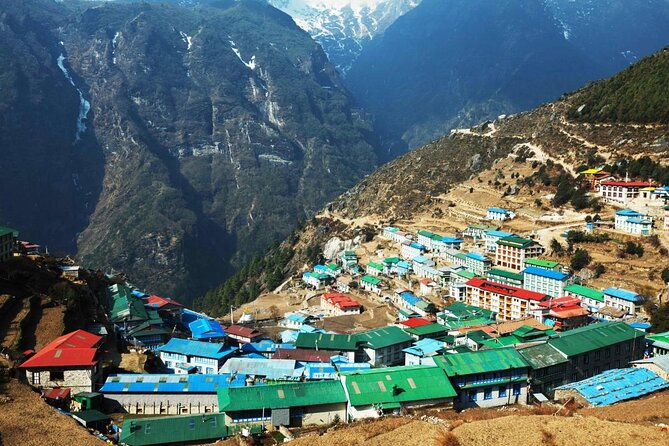
From Lukla, you walk through Chauri Kharka and down toward the Dudh Koshi River. The first section to Phakding takes about three hours and passes through pine country, small settlements, and views toward Khumbila, a sacred peak that Sherpa tradition leaves unclimbed. Phakding is a gentle first night, though you may still feel the early start and flight fatigue.
Days 3 and 4: Namche Bazaar and the first Everest view
The route from Phakding to Namche Bazaar takes about five hours. You cross the Dudh Koshi on suspension bridges, pass Monjo, enter Sagarmatha National Park, and continue toward Jorsale for lunch.
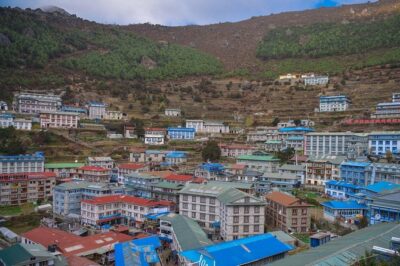
The climb into Namche is the first serious uphill test. The payoff is Tope Danda, where you may catch your first view of Everest. Namche itself is more than a place to sleep. It is the economic center of the Khumbu, with cafés, gear shops, souvenir stalls, restaurants, and some internet access.
Day 4 is a proper acclimatization day, not a wasted rest day. You can visit Hillary School, walk among Sherpa homes, see yak farms, or climb toward the Everest View Hotel. The hotel sits on a ridge with wide views of Everest and the surrounding peaks. The walk also gives your body a chance to adjust while following the essential high-altitude rule of climbing higher during the day and sleeping lower.
The itinerary includes two repeated entries for Syangboche Airport. This is not a second flight or a separate attraction worth planning around. The airstrip is close to Namche and is mainly used for local access or hotel visits, rather than for people continuing on foot toward Base Camp. Treat that part as an itinerary duplication, not extra sightseeing.
Namche is one of the best places to notice the human side of the route. You are no longer simply walking toward a famous mountain. You are moving through a working Sherpa community where porters, guides, shopkeepers, lodge owners, and families all support life in a difficult setting.
Days 5 and 6: Tengboche’s monastery and the road to Dingboche
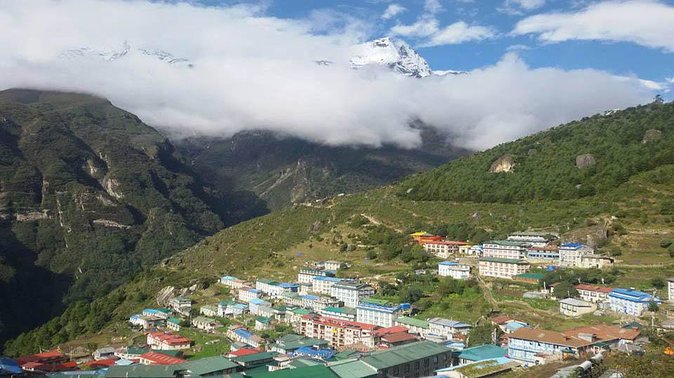
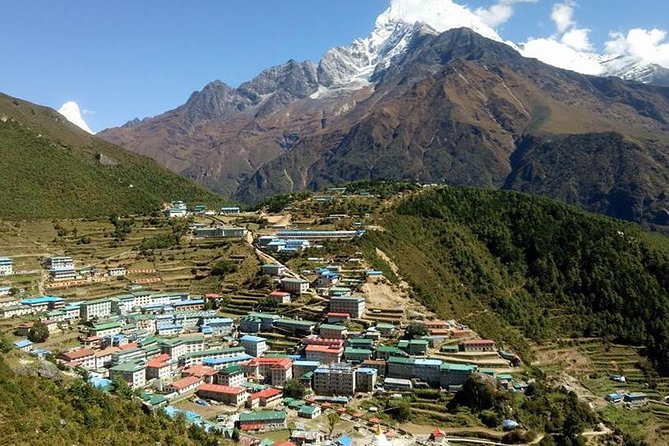
From Namche, the trail opens to views of Everest, Nuptse, Lhotse, Ama Dablam, Thamserku, and Kwangde. The six-hour walk passes through juniper and rhododendron country before reaching Tengboche.
Tengboche is one of the emotional high points of the trek. Its monastery, also called Dawa Choling Gompa, is the largest Buddhist monastery in the Khumbu region. Set at about 3,867 metres, it gives the village a quiet focus even when the trail is busy. A short visit is included, and you should allow yourself time to sit quietly rather than rushing through for a photograph.
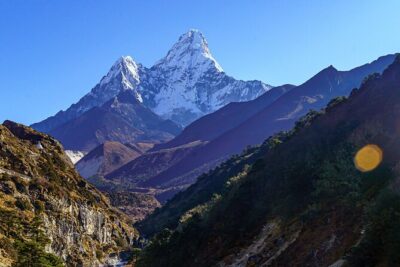
Ama Dablam is especially impressive from here. Its shape is clean and steep, and it often draws the eye away from Everest. That is one of the pleasures of this route: the famous summit is only part of the show.
The next day crosses the Imja Khola toward Pangboche, described as the largest and highest permanent Sherpa settlement in the area. The walk takes about six hours and ends at Dingboche, with views toward Island Peak and Ama Dablam. Food and teahouse life become increasingly basic as you gain height, but shared meals and warm drinks are an important part of the experience.
A few more treks around Kathmandu worth a look
- Annapurna Circuit Trek with Tilicho Lake
★ 5.0 · 368 reviews - Everest Base Camp Trekking – 13 Day
★ 5.0 · 365 reviews - Everest Base Camp Trek
★ 5.0 · 350 reviews - Everest Base Camp Trek -14 Days
★ 5.0 · 321 reviews
Day 7: The useful rest day in Dingboche
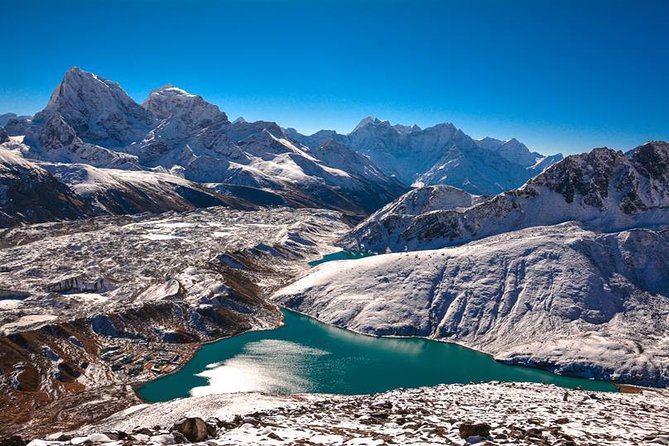
Dingboche provides the second major acclimatization stop. The optional hike toward Nagarjun Hill, also called Nangkartshang, reaches about 5,100 metres and gives you wide views of Makalu, Lhotse, Ama Dablam, Kantega, Thamserku, Island Peak, and the Imja Glacier.
This is a demanding rest day. The route is not technical climbing, but it includes loose rocks and steep sections. You may feel the altitude more than the distance. Do not treat the viewpoint as a test of toughness. Walk slowly, follow your guide’s advice, and turn around if symptoms worsen.
The hike is valuable because it helps you adjust without adding another overnight at a greater height. It also offers some of the best views of Ama Dablam, with the mountain visible from its base to its summit. The itinerary repeats the Nagarjun and Chhukung Path descriptions, so you should ask your guide which exact route is planned on your departure date.
Days 8 and 9: Lobuche, memorial stones, and Everest Base Camp
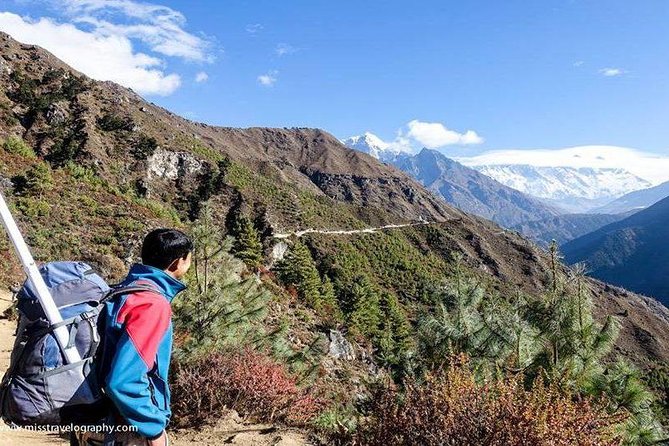
The trail to Lobuche follows the lateral moraine of the Khumbu Glacier. You pass stone memorials dedicated to climbers who died on nearby peaks. This section brings a more serious mood to the trek. Everest is not just a postcard subject here. It is a high-risk mountain, and the memorials make that clear.
Lobuche is a basic high-altitude stop at the foot of Lobuche Peak. The walk takes about five hours, but the thin air can make a modest distance feel long. You may notice headaches, shortness of breath, poor sleep, or loss of appetite. Report symptoms early rather than trying to hide them.
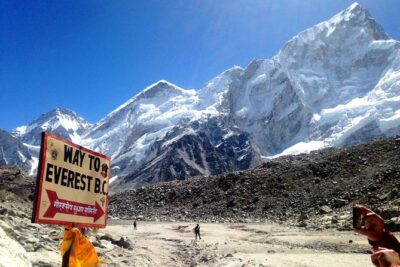
The Base Camp day is about 12 kilometres and takes around seven to eight hours. You walk toward Gorak Shep, continue beside the Khumbu Glacier, and reach Everest Base Camp at about 5,365 metres. In spring, expedition teams may be preparing for summit attempts, and the Khumbu Icefall provides the dramatic view.
Base Camp itself is not a summit, and it is not a comfortable resort. It is a working staging area for climbers, visited by hikers during the trekking season. You do not see the full shape of Everest from here, which is why the next morning at Kala Patthar matters so much.
The itinerary wording around this day is not perfectly clean. It describes a return to Gorak Shep, then also lists Lobuche as a stop. In practical terms, you should expect an overnight around Gorak Shep before the Kala Patthar morning, but confirm the exact lodging plan with the operator.
Day 10: Kala Patthar and the best mountain viewpoint
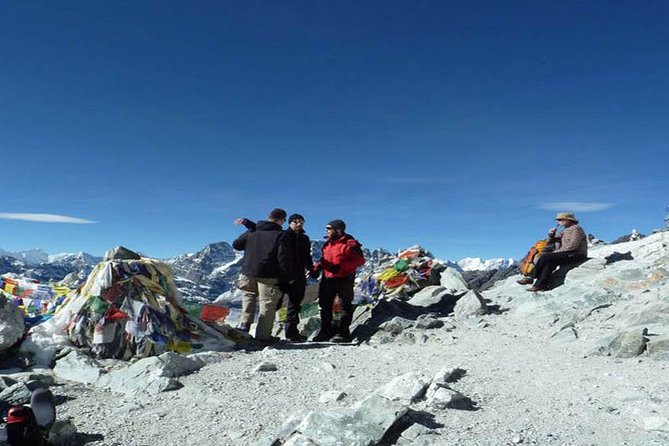
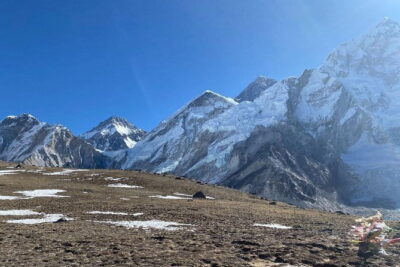
Kala Patthar is the highest point of the trek, at roughly 5,550 metres. The climb usually begins after breakfast, and the reward is a close view of Everest, Pumori, Nuptse, and Lhotse.
This is the point I would build the whole trip around. Everest is partly hidden from Base Camp by the surrounding peaks, while Kala Patthar gives the classic broad view. The itinerary describes the sun lighting Everest from the rocky summit, and timing matters if you want the most dramatic morning light.
The walk is hard because of altitude, not because it involves technical climbing. At this height, every step can feel deliberate. Your guide’s job is especially important here, and the praise for guides such as Shiva and Avi focuses on exactly this kind of care, including encouragement, pacing, and attention to safety.
After returning to Gorak Shep, you descend toward Pheriche. The drop in altitude can feel welcome, and Pheriche has an emergency hospital operated by the Himalayan Rescue Association. That does not remove the need for insurance, but it is a reassuring feature of the route.
Days 11 to 13: The long walk back to Kathmandu
The route from Pheriche returns toward Tengboche and Namche Bazaar. The day is listed at about eight hours, so do not expect an easy stroll simply because you are going downhill. Descending can be hard on tired knees, and the final approach to Namche still includes climbs.
From Namche, you continue through the suspension bridges and villages toward Lukla. This seven-hour day is your last long walk in the mountains. The final night is a good time to thank the guide and porter team, celebrate the finish, and take stock of how far you have walked.
The return flight to Kathmandu is scheduled for the next morning. Again, weather may alter the plan. Once back in Kathmandu, the afternoon is free for rest, markets, or dinner in Thamel. After two weeks of mountain silence, the city can feel loud and fast.
Day 14 is departure day, with an airport transfer included. If you want to extend your stay, the operator says it can help plan additional time in Nepal. Kathmandu accommodation itself is not included in the listed price, so confirm how many nights are covered before you arrive.
Food, lodging, guides, and practical comfort
You sleep in tea houses, described as clean and comfortable for the route. Standards vary with altitude, and the lodges near Gorak Shep will be much more basic than a Kathmandu hotel. Twin-share rooms are part of the package, and full-board breakfast, lunch, and dinner are included during the trek.
Dietary requests can be discussed with the team. Several strong accounts praise the guides for responding to food needs and selecting good tea houses. Still, personal snacks are excluded, and you may want to bring familiar high-energy food for long days.
The guide is an English-speaking, government-licensed trek leader trained in first aid. The staff carry a first-aid kit, pulse oximeter, and basic medicines including paracetamol and Diamox. These supplies are useful, but they are not a substitute for travel and medical insurance.
Tipping is expected for the guide, porters, and driver. It is not included in the advertised price. Bring enough local currency or ask the company for current guidance before the trek begins.
The maximum group size is nine, though the trip is described as private. That is small enough for personal attention without making the trek feel entirely solitary. If you are hiking alone, note that porter service is not included for solo trekkers.
Who should book this Everest trek?
You should consider it if you want the classic southern route, prefer organized support, and are comfortable walking for five to eight hours on successive days. It also suits you if Sherpa villages, monasteries, teahouse life, and mountain views matter as much as reaching the Base Camp sign.
This is a good fit for people who want equipment support without paying for a luxury expedition. The duffel, sleeping bag, down jacket, meals, porter, assistant guide structure, and park fees reduce the amount of planning you must handle yourself.
It is not a good fit if you want a soft adventure or dislike basic rooms, early starts, uncertain flights, and high-altitude walking. The word accessible here means a route to Base Camp rather than an easy or physically accessible outing. You need good general fitness and a willingness to turn back if your health demands it.
Should you book it?
I would book this trek if the operator confirms the Lukla flight is included and gives you a clear hotel and transfer plan in writing. The route has the right acclimatization structure, the major viewpoints are included, and the support package is strong for the price.
I would not book it based on the headline price alone. Add insurance, tips, Kathmandu rooms, personal spending, and possible flight-related costs. If you want a guided Everest Base Camp trek with Sherpa culture, strong mountain views, and a small group, this is a sensible option. If you want comfort above 4,000 metres or a guaranteed timetable, choose a different style of Nepal trip.
FAQ
How long does the Everest Base Camp Trek take?
The experience lasts approximately 14 days, including arrival and departure in Kathmandu, the trek from Lukla to Base Camp, the return walk, and the flights between Kathmandu and the mountains.
What is the highest point on the trek?
Kala Patthar is the highest point, at approximately 5,550 metres. Everest Base Camp is reached at about 5,365 metres.
Is the Lukla flight included in the price?
The information is unclear. Domestic flights are described as included, but Lukla Flight is also listed under exclusions. Confirm this point with Accessible Adventure Pvt. Ltd. before booking.
Are meals included?
Breakfast, lunch, and dinner are included during the trek. Personal snacks, drinks, bar bills, and similar expenses are not included.
Is accommodation in Kathmandu included?
No. Kathmandu accommodation is listed as an exclusion. Teahouse accommodation during the trek is included, generally on a twin-share basis.
Is a porter provided?
Yes. The standard arrangement provides one porter for every two trekkers. Porter service for a solo trekker is excluded.
What equipment is supplied?
A duffel bag, down jacket, sleeping bag, T-shirt, and trekking map are supplied. The down jacket and sleeping bag must be returned after the trek, while the duffel bag, T-shirt, and map are take-home items.
What happens if bad weather cancels the experience?
If poor weather causes the experience to be canceled, you can be offered a different date or a full refund. You can also cancel for a full refund if you do so at least three full days before the experience start time.
Recently added around Kathmandu
- Ghorepani Poon Hill Trek★ 5.0 · 16 reviews
- Private Manaslu Circuit Trek at Himalayas★ 5.0 · 3 reviews
- Amazing 1 Day Trekking Experience in Kathmandu Nepal★ 5.0 · 24 reviews
- Ghorepani Poonhill Trek★ 5.0 · 5 reviews
- Upper Mustang Trekking★ 5.0 · 2 reviews
- Upper Mustang Trekking★ 3.0 · 2 reviews
- Upper Mustang Trekking★ 5.0 · 4 reviews
- Upper Mustang Trek★ 5.0 · 5 reviews
Everest Base Camp Treks, compared.
Browse the lists this tour appears in