
REVIEW · KATHMANDU
Everest Base Camp trek 14 days
The mountain days begin long before Everest. This 14-day trek takes care of the hard planning, including internal flights, lodges, permits, meals, a guide, and airport transfers. I like the sleeping bag and down jacket included, and I like the finish: a cultural show and farewell dinner back in Kathmandu.
The route also gives you acclimatization time in Namche Bazaar and Dingboche, rather than rushing straight uphill. The main caution is simple: this is a serious high-altitude trek, not a sightseeing walk, and the schedule contains one confusing line about the Dingboche days that you should clarify before departure.
Key points to know before booking
- Fourteen days from Kathmandu: The plan includes arrival, the trek, flights back from Lukla, and a final departure day.
- High point at 5,550 meters: The Kalapatthar hike is the physical and scenic climax, followed by a long descent to Pheriche.
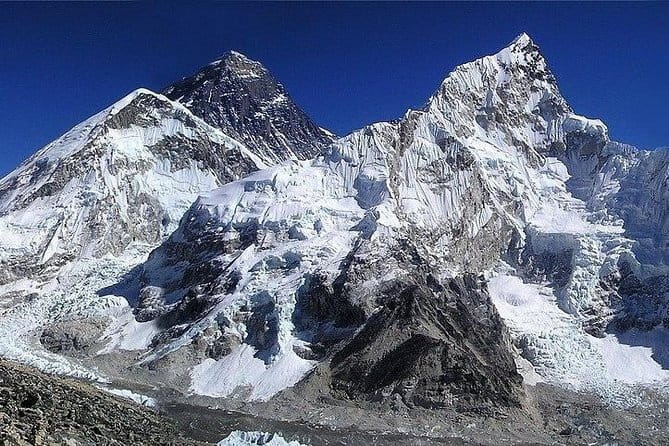
- Major Himalayan peaks: You should see Everest along with Ama Dablam, Lhotse, Makalu, and Cho Oyu during the route.
- Practical gear included: A sleeping bag and down jacket are available if needed, which saves luggage space and rental expense.
- Small-to-medium group size: The maximum is 18 people, giving the trip a group feel without promising a private trek.
- Strong value at $1,380: Flights, lodging, meals during the trek, permits, guide costs, and several transfers are included.
What the $1,380 price really covers
At $1,380 per person, this trek is priced as a bundled Nepal trip rather than a simple guided walk. You are paying for the pieces that can become expensive and difficult to arrange independently: Kathmandu to Lukla flights, the return flight, trekking permits, a TIMS card, lodging, a guide, and meals on the trail.
Your city accommodation is in a standard hotel on a twin-sharing basis with breakfast. During the trek, you stay in trekking lodges. That usually means practical mountain lodging rather than resort comfort, so you should think of the accommodation as a warm bed and a place to recover, not as a luxury feature.
Three meals a day are included during the trekking portion when shown in the schedule. Kathmandu meals outside the listed breakfast are not included, along with drinks, bar bills, entrance fees, international airfare, insurance, and tips for the trekking crew. Those exclusions matter because small personal costs can add up during two weeks in Nepal.
The included sleeping bag and down jacket are useful value items. You can request them if needed, which means you do not have to buy or carry every cold-weather item from home. Still, you should confirm the exact specifications and condition of the equipment before setting off.
The package also includes a T-shirt, a trip achievement certificate, first aid medicine items, government taxes, and the guide’s salary, lodging, meals, and insurance. Those details show that the price covers more than the basic route. It also reduces the number of separate arrangements you need to make in Kathmandu.
More Everest Base Camp Treks in Kathmandu:
- Everest Base Camp Trek – 14 Days
★ 5.0 · 1,499 reviews - Everest Base Camp Trek
★ 5.0 · 842 reviews - Everest Base Camp Trekking
★ 5.0 · 485 reviews
Kathmandu starts the trip at an easy pace
Day one is your arrival in Kathmandu. Airport pickup is included, and the plan gives you a gentle opening rather than sending you straight to the mountains.
Kathmandu is also where the practical side of the trip begins. You can meet the guide, sort out equipment, and make sure your permits and flight arrangements are in order. Because the next morning involves a short but important flight to Lukla, use this first day to ask clear questions about baggage, the day’s meeting time, and the schedule.
The return to Kathmandu comes on day 13, followed by a cultural show and farewell dinner before departure on day 14. I like this closing rhythm. You are not forced to leave the mountains and rush directly to an international flight the same day.
Lukla to Phakding introduces the trail
Day two starts with a 40 to 45-minute flight from Kathmandu to Lukla. The flight is short, but it places you at the gateway to the Khumbu region, where the walking begins almost immediately.
The trek from Lukla to Phakding takes about three to four hours and reaches 2,640 meters. It is a useful first day because you begin moving through the mountain region without tackling the biggest altitude gain at once.
Breakfast, lunch, and dinner are included on this trekking day. The walk should feel like an introduction to the rhythm of the route: several hours on foot, a lodge at the end, and a meal followed by rest. Your guide’s pacing will matter here, especially if the group includes people with different levels of fitness.
Namche Bazaar gives you time to adjust
On day three, you walk from Phakding to Namche Bazaar, reaching about 3,440 meters. The expected walking time is five to six hours, making this a meaningful step up from the first day.
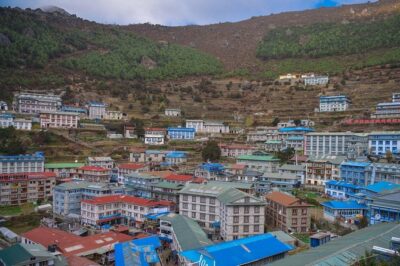
Namche is one of the key stops on the route. It is not just a place to sleep. It is the point where the trip begins to feel properly high and remote, and it gives you a chance to settle into the mountain routine before the harder days ahead.
Day four is set aside for acclimatization in Namche Bazaar. This is one of the best choices in the program. A rest day at altitude can feel frustrating when you are eager to continue, but it gives your body time to adjust and can make the following stages more manageable.
Use the day sensibly. You can walk, look around town, and enjoy the mountain setting, but the goal is not to exhaust yourself. I would treat Namche as a recovery day with some gentle activity, not as an opportunity to add an extra challenge.
A few more treks around Kathmandu worth a look
- Annapurna Circuit Trek with Tilicho Lake
★ 5.0 · 368 reviews - Everest Base Camp Trekking – 13 Day
★ 5.0 · 365 reviews - Everest Base Camp Trek
★ 5.0 · 350 reviews - Everest Base Camp Trek -14 Days
★ 5.0 · 321 reviews
Tengboche brings the first major mountain views
The route continues to Tengboche on day five, with six to seven hours of walking to about 3,860 meters. This is a longer day, and the steady rise makes it a useful test of your fitness.
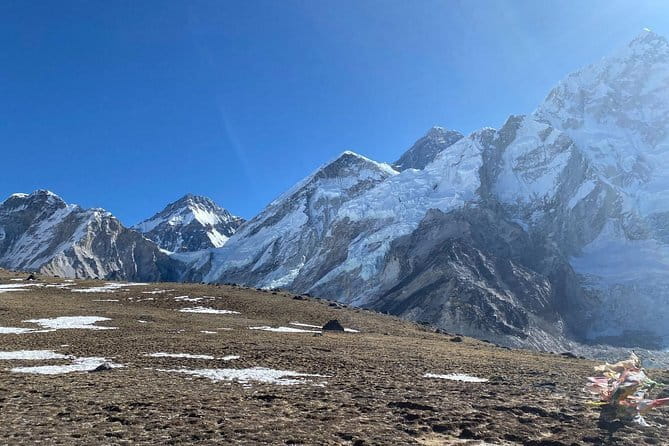
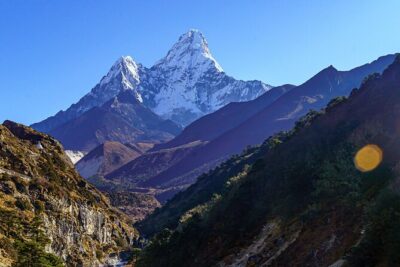
Tengboche is one of the memorable stops on the route because of its setting and views toward the Himalayan peaks. The program specifically highlights Ama Dablam, Lhotse, Makalu, Cho Oyu, and Everest, and this section is part of the route where the scale of the mountains becomes increasingly clear.
The following schedule includes an acclimatization day connected with Dingboche, but the wording is not perfectly clear. Day six is labeled Dingboche acclimatization, while day seven is also described as the trek to Dingboche. Before booking, ask the operator to confirm exactly where you sleep on day six and how the transfer to Dingboche is arranged.
That is not a reason to reject the trip. It is simply the kind of detail worth settling before a high-altitude trek, where a one-day change can affect your expectations, packing, and energy.
Dingboche prepares you for the high camps
The itinerary places Dingboche at about 4,410 meters and gives you another acclimatization period. This is important because the next stops, Lobuche and Gorakshep, take you much higher.
Dingboche is a practical pause in the climb. The walking schedule lists roughly five to six hours for the approach, and the rest period gives you a chance to watch how your body handles the altitude. You should tell your guide promptly if you feel unwell rather than trying to prove that you can push through.
This is also where the trek changes character. Earlier days involve villages and longer stretches at lower elevation. From here, the air is thinner, the nights are colder, and each hour of walking asks more of you. The included down jacket and sleeping bag become especially useful at this stage.
Lobuche and Gorakshep lead to Everest Base Camp
Day eight takes you to Lobuche at about 4,910 meters, with around five hours of walking. This is a shorter listed day than the Tengboche stage, but altitude makes distance deceptive. You may find that a modest number of hours feels demanding.
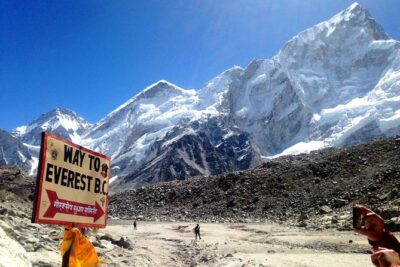
Day nine is the big approach to Everest Base Camp, followed by a return to Gorakshep at about 5,200 meters. It is one of the longest and most demanding parts of the program because you walk out to Base Camp and then return to sleep at altitude.
Everest Base Camp itself is a powerful goal, but it is worth keeping expectations realistic. The route is about reaching the base camp area and experiencing the Khumbu setting, not climbing Mount Everest. You will see the famous mountain region up close, with the enormous peaks around you and the route’s rough, high-altitude character underfoot.
The practical challenge is the combination of distance, altitude, and limited recovery time. Follow the guide’s pace. Eat even when your appetite is low, drink regularly, and avoid treating the Base Camp day as a race.
Kalapatthar is the visual high point
Day ten begins with a hike to Kalapatthar at about 5,550 meters. The listed climb takes around two and a half hours, followed by a descent to Pheriche at about 4,200 meters, with seven hours of trekking in total.
This is likely the day you remember most clearly. Kalapatthar is included for the high viewpoint, and it offers the chance to look across the Everest region from a very high position. The climb is short on paper, but the altitude makes it strenuous.
The descent to Pheriche is not an afterthought. Seven hours of total walking makes this a full day, and going downhill can be hard on tired knees. Take your time, keep your footing secure, and save enough energy for the final stretch.
I like the way the itinerary places this viewpoint after Base Camp rather than trying to squeeze both objectives into one rushed outing. You get two distinct goals: reaching Base Camp and then climbing higher for the broad mountain view.
The return to Lukla is still real trekking
After the high point, the route turns back toward Namche Bazaar on day 11. The walk is listed at six hours, followed by a seven-hour trek to Lukla on day 12.
Do not assume the return is easy because you are descending. Your body will be tired, and long downhill sections can be demanding. The return days also give you a final chance to enjoy the villages, trails, and mountain views without the same pressure of gaining altitude.
Reaching Lukla marks the end of the walking portion, but not quite the end of the logistics. Your flight back to Kathmandu is scheduled for day 13. Mountain flights can be affected by conditions, so it is wise not to arrange an important international connection too tightly around the return.
The plan includes Kathmandu airport transfers and transport by air-conditioned car or tourist deluxe bus where applicable. That is helpful after the trek, when you will probably value a straightforward ride more than an adventurous one.
What the organized format does well
The strongest part of this package is the amount of coordination handled for you. Internal flights, airport transfers, permits, TIMS registration, lodging, meals, equipment, and guide costs are all brought into one plan.
You also have a named local team behind the trip. Suresh and Sobit are praised for their support, while guides including Ram are singled out for helping with the Everest Base Camp trek and a Kathmandu UNESCO visit. Pasang Sherpa is also noted in connection with the team. These names matter because a trek can feel very different when communication is personal and consistent.
The service is presented as highly rated, with a five-star score and 46 ratings, and the strongest praise focuses on organization, safety, helpful guides, meals, permits, and accommodation. One particularly useful detail is that the team was described as staying involved from beginning to end rather than simply meeting the group at the start.
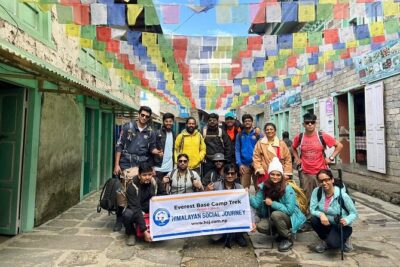
The maximum group size is 18. That is small enough for a shared experience, but it is not a private trek. If you want every decision made around your own pace, ask about a private option. If you like having company and sharing costs, this group size may suit you well.
What you should pack and prepare for
The operator supplies a sleeping bag and down jacket if you need them, but you still need suitable personal clothing and trekking basics. The supplied information does not specify a complete packing list, so ask for one before you travel.
At minimum, plan around cold high-altitude nights, long walking days, and changing conditions. Comfortable trekking footwear, warm layers, sun protection, personal medicines, and a reliable day pack are sensible starting points. I would also carry a small amount of personal spending money for Kathmandu meals, drinks, entrance fees, and other costs not included.
The tour requires a moderate level of physical fitness. That description should not be read as easy. The route reaches 5,550 meters, includes several six to seven-hour days, and has demanding sections around Gorakshep, Base Camp, and Kalapatthar.
Travel insurance is not included, and you are responsible for arranging it. Since this is a high-altitude trek, check that your policy covers the activities and elevations involved before you leave home.
Who should book this Everest trek?
I would choose this trip if you want the classic Everest Base Camp route without arranging every flight, permit, lodge, meal, and transfer yourself. It suits someone who values structure, wants local guiding, and is comfortable sharing the experience with a group of up to 18.
It is also a good fit if you want the two main goals in the route: Everest Base Camp and the Kalapatthar viewpoint. The acclimatization stops in Namche and Dingboche are another major advantage for anyone who prefers a measured schedule.
I would hesitate if you want luxury lodging, complete control over the pace, or a short mountain holiday. Fourteen days is a serious commitment, and the price does not include international flights, insurance, Kathmandu meals, entrance fees, or tips.
The free cancellation rule allows a full refund when you cancel at least 24 hours before the local start time. Changes or cancellations inside that window are not accepted for a refund, so check your plans carefully before the cutoff.
Should you book it?
I would book this trek if the $1,380 price fits your budget and you want a well-organized route with the major costs handled in advance. The package offers solid value because it combines internal flights, permits, guide support, lodging, trekking meals, and useful cold-weather equipment.
Before paying, I would ask one clear question: how exactly are the day six and day seven Dingboche entries arranged? Then confirm the flight schedule, luggage limits, equipment details, group size for your departure, and what kind of hotel is planned in Kathmandu.
If the answers are clear, this is a practical way to reach Everest Base Camp without turning the planning into a second expedition.
FAQ
How long is the Everest Base Camp trek?
The full experience lasts 14 days, including arrival in Kathmandu, the trek, the return flight to Kathmandu, and the farewell program. The stated activity duration can range from 5 to 14 days, depending on the selected arrangement.
Where does the trek begin?
The experience begins in Kathmandu, Nepal. Airport pickup is included, followed by a flight from Kathmandu to Lukla.
Are meals included?
Breakfast, lunch, and dinner are included during the trekking days listed in the schedule. Kathmandu meals outside the included breakfast are not covered.
Are a sleeping bag and down jacket provided?
Yes. A sleeping bag and down jacket are available during the trek if you need them.
Is the Kathmandu to Lukla flight included?
Yes. The package includes the Kathmandu to Lukla flight and the return flight from Lukla to Kathmandu.
Are permits included?
Yes. The trekking permit and TIMS card are included, along with government tax and official expenses.
How large can the group be?
The maximum group size is 18 people. The tour is not described as a private trek.
Recently added around Kathmandu
- Ghorepani Poon Hill Trek★ 5.0 · 16 reviews
- Private Manaslu Circuit Trek at Himalayas★ 5.0 · 3 reviews
- Amazing 1 Day Trekking Experience in Kathmandu Nepal★ 5.0 · 24 reviews
- Ghorepani Poonhill Trek★ 5.0 · 5 reviews
- Upper Mustang Trekking★ 5.0 · 2 reviews
- Upper Mustang Trekking★ 3.0 · 2 reviews
- Upper Mustang Trekking★ 5.0 · 4 reviews
- Upper Mustang Trek★ 5.0 · 5 reviews
Everest Base Camp Treks, compared.
Browse the lists this tour appears in