
REVIEW · KATHMANDU
Everest Base camp Trek-12 days
Everest begins with a small plane. This 13-day group trek takes you from Kathmandu to Lukla, through Sherpa villages and Sagarmatha National Park, and finally to Everest Base Camp and Kala Patthar. I like the built-in acclimatization days, and I like that flights, teahouses, meals, park fees, sleeping bags, and down jackets are covered in the $1,400 price.
The trip also benefits from practical support. Subash, the company owner, has earned praise for quick replies and help with flight changes, hotels, and health questions. My main caution is simple: this is a serious high-altitude hike, not a sightseeing walk, and the itinerary’s moderate fitness label should not be read as easy.
Key facts before you book
- The Lukla flight is part of the adventure: The 40 to 45 minute flight reaches a small mountain airstrip and sets the tone for the trek.
- Acclimatization is built into the route: You spend extra time in Namche Bazaar and Dingboche, with short climbs designed to help your body adjust.
- Kala Patthar adds the best mountain view: The early morning climb reaches 5,364 meters and offers views of Everest, the Khumbu Glacier, and the Khumbu Icefall.
- Teahouse lodging keeps the price reasonable: You sleep in local mountain lodges rather than high-end hotels.
- The group can reach 26 people: That keeps the cost down, though it may mean a less personal pace than a private trek.
- The package is unusually practical: Domestic flights, meals, park fees, sleeping bags, down jackets, arrival and departure transfers, and basic medical kits are included.
What this Everest Base Camp trek really offers
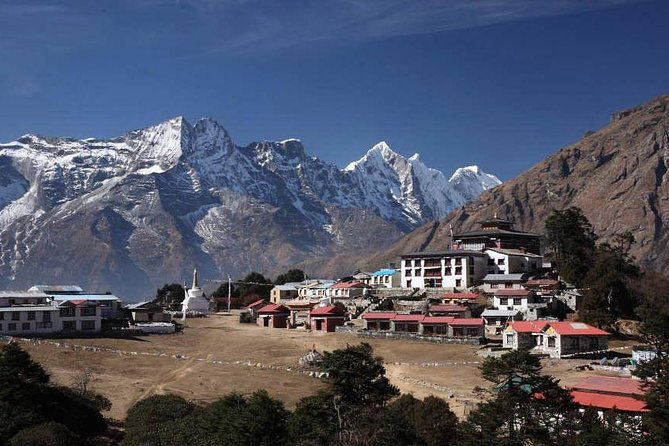
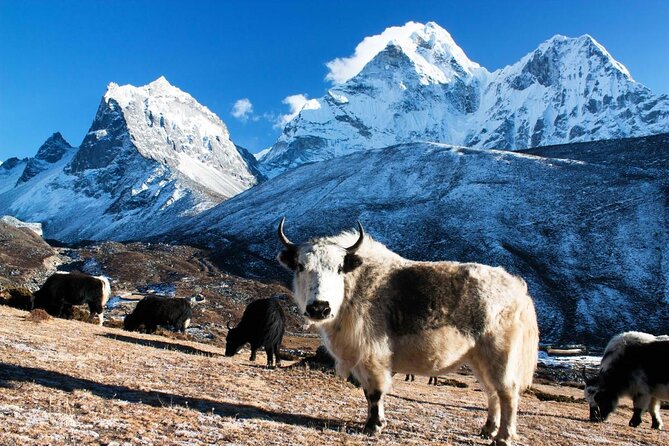
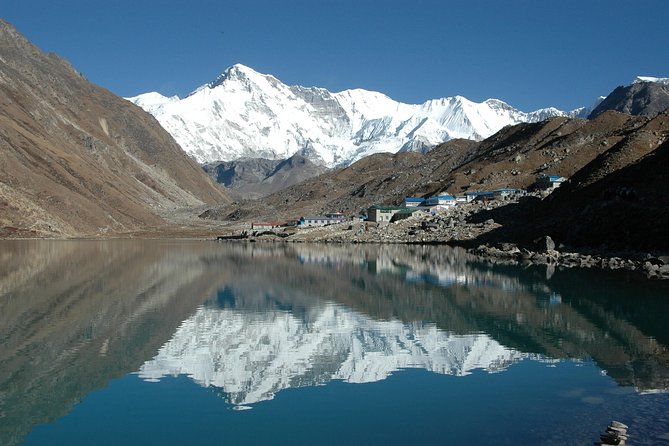
This is an economical route to Everest Base Camp, but economical does not mean effortless. You walk for many hours on rough trails, cross suspension bridges, climb stone steps, and spend several nights at high altitude. The reward is a steady change in scenery, from river valleys and forest to bare mountain slopes, glaciers, prayer flags, and enormous Himalayan peaks.
The trek begins in Kathmandu and runs through Lukla, Monzo, Namche Bazaar, Tengboche, Dingboche, Duglha, Gorak Shep, Everest Base Camp, and Kala Patthar. The return follows a quicker descent through Namche and back to Lukla.
The advertised duration is about 13 days. The actual walking schedule covers roughly 12 trekking days, with the first and last days devoted mainly to Kathmandu and flights. That distinction matters when you arrange international flights, insurance, and extra hotel nights.
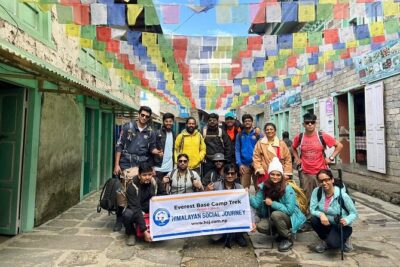
A group of up to 26 people is allowed. That is a fairly large walking group for mountain trails. It can be sociable and budget-friendly, but your experience may depend on the group’s fitness, weather, and the guide assigned to your departure.
More Everest Base Camp Treks in Kathmandu:
- Everest Base Camp Trek – 14 Days
★ 5.0 · 1,499 reviews - Everest Base Camp Trek
★ 5.0 · 842 reviews - Everest Base Camp Trekking
★ 5.0 · 485 reviews
Day 1 in Kathmandu: a quiet start before the mountains
The first day is listed in Kathmandu Valley without a detailed activity schedule. Think of it as a buffer and preparation day rather than a full excursion. You can use it to meet the team, organize your pack, and make sure your clothing and equipment are ready.
The early start on Day 2 means you should not plan a late night. Pickup is offered, and the team handles the transfer to Tribhuvan International Airport. That removes one small but useful worry from a morning when you have enough to think about already.
Lukla to Monzo: the flight that gets your heart going
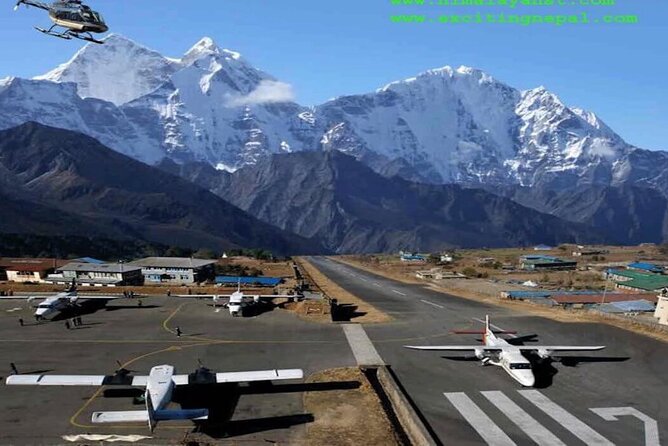
The flight from Kathmandu to Lukla takes around 40 to 45 minutes. It is one of the defining moments of the route. The airstrip is small, and the mountain setting makes the arrival feel much more dramatic than an ordinary domestic flight.
Once you arrive, you meet the porters and support staff, then begin walking. The trail initially drops toward the Dudh Kosi River, whose pale, glacial water follows the route toward the higher valleys. You continue through Phakding before reaching Monzo, covering about 10 kilometers in five to six hours.
This first walking day is a useful warning. It is not all uphill, but descents can tire your legs, especially when you are carrying a daypack and still adjusting to the trail. Keep your pace slow from the start. There is no prize for arriving early.
Monzo to Namche Bazaar: the first serious climb
Day 3 covers only about four kilometers and takes three to four hours, but the short distance hides a demanding ascent. You pass through Jorasele and enter Sagarmatha National Park, a UNESCO World Heritage Site.
From the river, the trail climbs roughly 600 meters toward Namche Bazaar. The path is described as steep, rugged, and tough, with a crossing over the Khumbu River before the final climb. Rhododendron forest and sunrise views add beauty, but they do not make the uphill work disappear.
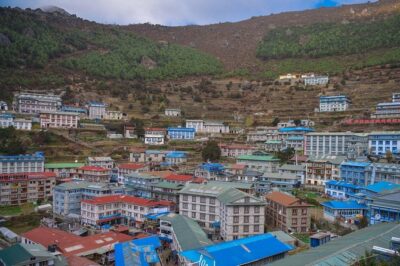
Namche is the main trading town in the Khumbu region. It is an important rest point, but arriving here does not mean you should rush out to explore every corner. Eat, drink water, and let your body adjust. The altitude begins to matter more from this point onward.
A few more treks around Kathmandu worth a look
- Annapurna Circuit Trek with Tilicho Lake
★ 5.0 · 368 reviews - Everest Base Camp Trekking – 13 Day
★ 5.0 · 365 reviews - Everest Base Camp Trek
★ 5.0 · 350 reviews - Everest Base Camp Trek -14 Days
★ 5.0 · 321 reviews
Namche acclimatization: Everest View Hotel and Sherpa villages
Day 4 is not a day for staying in bed all morning. The plan uses the sensible high-by-day, low-by-night approach. You climb above Namche, visit Khunde and Khumjung, and continue toward the Everest View Hotel before returning to sleep in Namche.
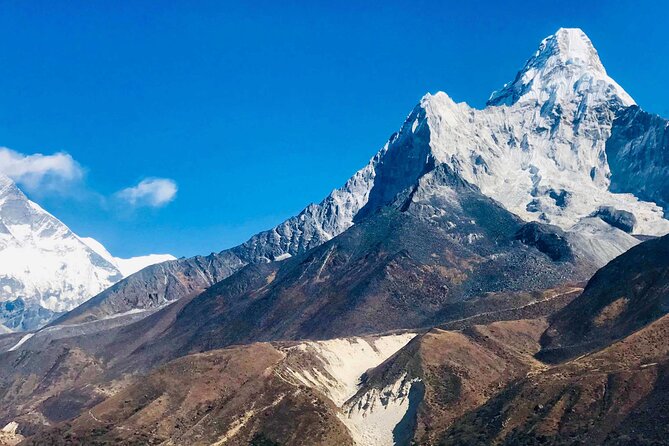
The walk takes two to three hours and reaches about 3,440 meters. Khumjung is known here for its substantial houses and views toward Ama Dablam. The Everest View Hotel provides a memorable first look toward Everest, along with a broad panorama of surrounding peaks.
This short climb has two jobs. It gives you a better mountain view, and it helps your body respond to altitude before the route gets higher. You may feel fine at Namche and still notice the difference on the climb. Take the day seriously, even if the schedule looks easy on paper.
Namche to Tengboche: monasteries and Ama Dablam
The next walking day covers about 9.5 kilometers in five to six hours. The trail follows the contours above the valley, crosses stone steps toward the Mongla Pass at about 3,975 meters, then descends to the Dudh Kosi River before climbing again to Tengboche.
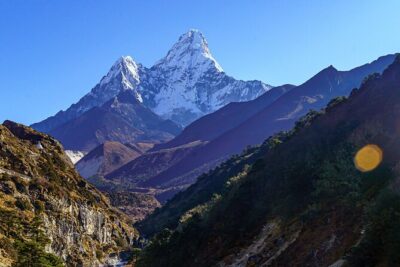
This is one of the most scenic sections. Buddhist stupas, small gompas, and prayer structures appear along the route. The views of Ama Dablam are especially memorable, with the mountain’s sharp shape appearing again and again as the trail changes direction.
Tengboche is famous for its monastery and its mountain setting. The day includes several changes in elevation, so the total distance does not tell the whole story. You will want good socks, trekking poles if you use them, and enough water within reach.
Tengboche to Dingboche: a higher, barer world
From Tengboche, the route descends through rhododendron forest before climbing again. You pass birch, conifer, and rhododendron trees, then move toward the Khumbila Khola valley and its open ridges.
The day covers about 11 kilometers in five to six hours and reaches around 4,350 meters. Along the way, you may see peaks including Taboche, Nuptse, Cholatse, and Ama Dablam. The villages become smaller, the vegetation thinner, and the air noticeably sharper.
Dingboche is an important stop because the altitude is now high enough to affect even fit hikers. Keep your schedule gentle after arrival. A short stroll may be pleasant, but trying to squeeze in a long extra walk is not a clever use of energy.
Dingboche acclimatization: the Nangkartshang viewpoint
The second acclimatization day includes a hike toward Nangkartshang Peak above Dingboche. It is a viewpoint rather than a summit attempt, and the main reward is the view of Ama Dablam. If conditions are clear, you can see the mountain from its lower slopes to its high summit.
The afternoon is left for resting or walking around Dingboche. This balance is important. At high altitude, a rest day still includes movement, but it should not become a race.
The route description does not give a precise distance or maximum altitude for this day. That is not a problem, but you should expect the guide to adjust the outing to weather and how the group is coping.
Dingboche to Duglha: prayer flags and the Everest story
Day 8 covers about 11 kilometers in roughly five hours, reaching approximately 4,950 meters. The valley begins wide, then narrows near Dusa. You pass the campsite connected with the first successful Everest expedition and later gain views of Mount Pumori.
The trail crosses a stream before climbing to Duglha, a small settlement marked by prayer flags. This section feels more remote than the earlier walking days. The trees thin out, and the mountains take up more of your view.
You should pay close attention to your body here. Headaches, unusual tiredness, nausea, and shortness of breath can become serious at altitude. The itinerary includes normal medical kits, but those do not replace careful decisions. Tell your guide early if you feel unwell.
Duglha to Gorak Shep and Everest Base Camp
Day 9 is the hardest and most important day for many people. The route covers about 15 kilometers in seven to eight hours and reaches 5,364 meters.
You continue toward Gorak Shep with views of the Khumbu Glacier. The trail includes gradual rises and drops, but the surface becomes rougher near Gorak Shep. Expect large rocks, awkward steps, and slow progress. This is where sturdy footwear and a patient pace matter most.
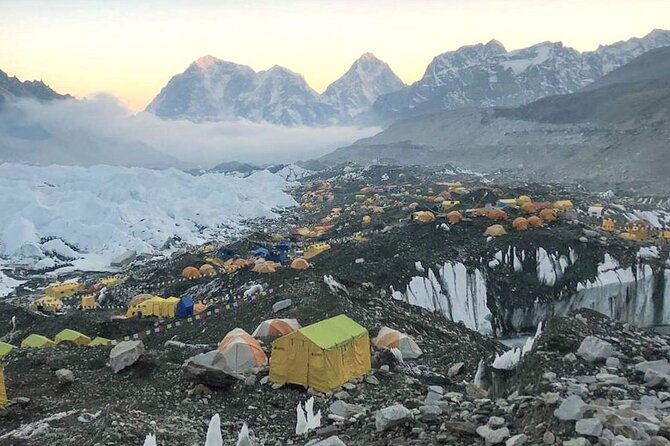
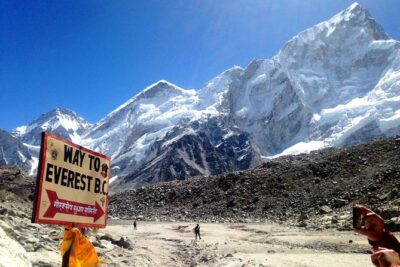
After Gorak Shep, the route continues toward Everest Base Camp. You see the Khumbu Glacier and, farther along, the Khumbu Icefall. Reaching Base Camp is a powerful moment, though it may not look like the clean, open field shown in expedition photographs. Conditions change, and the area can be rocky, icy, and crowded with expedition activity during climbing seasons.
Base Camp itself is not the highest viewpoint on this trek. It is the emotional goal, while the next morning’s Kala Patthar climb usually gives you the more impressive view of Everest.
Kala Patthar at sunrise: the visual high point
You start very early on Day 10 for the three to four hour climb to Kala Patthar. At about 5,364 meters, it is a demanding walk, especially after the previous day’s effort.
The payoff is a wide view of Everest, the Khumbu Glacier, and the Khumbu Icefall. At sunrise, the peaks can change color as the first light reaches the snow. Clear weather is essential, so the view is never guaranteed, but this is the best planned viewpoint of the trip.
Bring warm layers, gloves, and a charged phone or camera. The cold before sunrise can be severe, and you will likely stop often for breath. After taking in the view, you return toward the lower valleys.
The long descent through Namche and Lukla
Day 11 takes you from the high country through Pangboche and Tengboche to Namche Bazaar. The descent is easier for your lungs, but it can be hard on knees and toes. Downhill walking is not free time.
Day 12 covers about 10 kilometers from the Manjoo area through Benkar and Phakding to Lukla. You cross several suspension bridges over the Dudh Kosi and pass small Sherpa settlements along the river and forest.
Lukla feels busy after the quieter high valleys, with lodges, teahouses, and shops. This final night gives you a chance to celebrate, sort your luggage, and prepare for the early flight back to Kathmandu.
Day 13 is the return flight. A window seat can provide striking aerial views of the mountains, though weather can affect flight schedules. The package includes the flight, and the company also handles arrival and departure transfers.
Teahouses, meals, gear, and what remains extra
Teahouse accommodation is included. These are practical mountain lodges, not luxury hotels. The value comes from having a bed, meals, and a place to warm up along a demanding route.
The package includes 11 dinners, 12 breakfasts, and 11 lunches, plus seasonal fruit. Sleeping bags and down jackets are included, which can save you the cost and hassle of buying or renting them separately. A normal medical kit is also supplied.
Personal expenses are not covered. You pay for items such as alcoholic drinks, cold drinks, laundry, and other personal purchases. A porter carrier is also listed as an extra if you need one, so ask exactly what porter support is included for your group before departure.
At $1,400 per person, the value is strong for the services listed. Two domestic flights, park fees, accommodation, meals, transfers, equipment, and a guide-led group trek would be expensive to arrange independently. The price is less attractive if you want a private group, more comfortable lodging, or extensive porter support.
The guide support and communication
The company’s strongest service points are communication and organization. Subash is repeatedly praised for answering questions quickly and helping with flight rescheduling, hotels, and health advice. That kind of support matters in Nepal, where weather can disrupt mountain flights.
Guide names in the feedback include Ram Tamang, Basu, Suman, Shasi, Tika, and others. Ram is described as attentive to safety and personal needs. Basu is praised for keeping people informed about the day ahead, while Suman is described as helpful and honest. Shasi is noted for good English and careful organization.
Your guide will depend on the departure, so do not assume you will receive a particular person. Still, the pattern is encouraging: practical care, frequent communication, and help with the small decisions that become tiring at altitude.
Who should book this trek?
I would recommend it to someone with regular hiking experience who can manage five to eight hours of walking, steep climbs, rough rock, and repeated days at altitude. You do not need to be an elite athlete, but you should train before arriving.
Build fitness with long walks, hills, stairs, and a loaded daypack. Practice walking slowly. On the trek, slow is not weak. It is often the smartest way to conserve energy and reduce altitude problems.
This trip suits you if you want:
- A lower-cost guided route to Everest Base Camp
- Group company, with a maximum of 26 people
- Teahouse lodging rather than camping
- Included Lukla flights and major route costs
- Planned acclimatization in Namche and Dingboche
- A guide and office team to help with logistics
You may prefer a private itinerary if you want your own pace, more flexibility, or close control over rest days. You should also consider extra buffer days in Nepal if your international flight schedule is tight, since mountain weather can affect the Lukla flights.
Cancellation is free if you cancel at least 24 hours before the local start time. A cancellation within 24 hours is not refundable. If poor weather cancels the experience, you are offered another date or a full refund.
Should you book this Everest Base Camp trek?
Book it if you want a well-supported, budget-conscious route and you are ready for genuine physical work. The included flights, meals, gear, park fees, and teahouses make $1,400 a fair price, while the planned acclimatization days show sensible route design.
Do not book it simply because Everest Base Camp is on your wish list. Book after you have trained, checked your insurance, and accepted that cold, altitude, rough trails, and flight delays are part of the bargain.
For the right hiker, this trip offers a clear path to the foot of Everest, excellent mountain views, contact with Sherpa communities, and helpful logistical support from Exciting Nepal Treks and Expedition.
FAQ
How long is the Everest Base Camp trek?
The experience lasts approximately 13 days. The walking schedule spans the route from Lukla to Everest Base Camp and back, with Kathmandu and flight days included.
What is the tour price?
The listed price is $1,400 per person.
Where does the trek begin?
The experience begins in Kathmandu, Nepal. You fly from Kathmandu to Lukla before starting the main trek.
How long is the flight to Lukla?
The flight from Kathmandu to Lukla takes approximately 40 to 45 minutes.
Is airport pickup included?
Yes. Arrival and departure transfers are included, and pickup is offered.
What accommodation is provided?
Teahouse accommodation during the trek is included.
Are meals included?
Yes. The package includes 12 breakfasts, 11 lunches, and 11 dinners, along with seasonal fruit.
Is trekking equipment included?
Sleeping bags and down jackets are included. A normal medical kit is also provided.
Is a porter included?
Porter carriage is listed as an additional cost if you need it. Confirm the exact porter arrangement before booking.
How large can the group be?
The maximum group size is 26 people.
What fitness level is required?
The trek is intended for people with moderate physical fitness and hiking experience. Several days involve five to eight hours of walking, steep sections, rough trails, and high altitude.
Can I cancel for a full refund?
You can receive a full refund if you cancel at least 24 hours before the experience start time. Cancellations within 24 hours are not refunded.
Recently added around Kathmandu
- Ghorepani Poon Hill Trek★ 5.0 · 16 reviews
- Private Manaslu Circuit Trek at Himalayas★ 5.0 · 3 reviews
- Amazing 1 Day Trekking Experience in Kathmandu Nepal★ 5.0 · 24 reviews
- Ghorepani Poonhill Trek★ 5.0 · 5 reviews
- Upper Mustang Trekking★ 5.0 · 2 reviews
- Upper Mustang Trekking★ 3.0 · 2 reviews
- Upper Mustang Trekking★ 5.0 · 4 reviews
- Upper Mustang Trek★ 5.0 · 5 reviews
Everest Base Camp Treks, compared.
Browse the lists this tour appears in