
REVIEW · KATHMANDU
Everest Base Camp Kalapathar Trek 14 Days
The Himalayas demand your attention. This 14-day trek from Kathmandu combines Sherpa villages, Buddhist monasteries, glacier views, and two major goals: Everest Base Camp and the 5,545-meter summit of Kala Patthar. I especially like the careful acclimatization stop in Namche Bazaar and the fact that round-trip Lukla flights, permits, a guide, tea-house lodging, and basic trekking equipment are included.
The price is $1,990 per person, which is a substantial investment, but it covers several costly and important pieces of the trip. The main caution is the physical demand: this is a high-altitude trek with several long walking days, and a porter is not included. You need moderate fitness, patience, and a willingness to sleep simply.
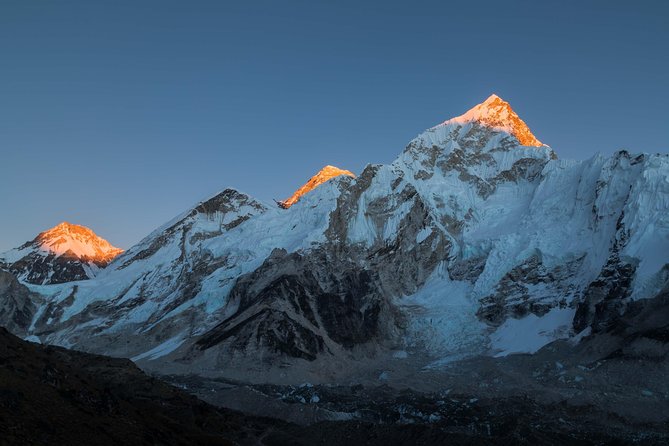
- Kala Patthar reaches 5,545 meters, giving you the highest point of the trek and close views toward Everest.
- Namche Bazaar provides an acclimatization day, with a viewpoint walk and a visit to the park museum.
- Lukla flights are included, saving you the trouble of arranging one of the trip’s key logistics yourself.
- Tengboche Monastery adds cultural depth, not just mountain scenery, with views of Everest and Ama Dablam.
- Tea-house lodging and most meals are included, but drinks, WiFi, showers, personal expenses, and porters cost extra.
- The trip is private, so your group travels with its own guide rather than joining a large shared party.
What the $1,990 price really covers
The price makes the most sense if you want a guided trek with the major arrangements handled before you arrive. It includes permits, private ground transport, round-trip flights between Kathmandu and Lukla, a professional trekking guide, tea-house accommodation during the trek, a sleeping bag, a duffel bag, a route map, and an Eco Holidays Nepal T-shirt.
Meals are covered in a useful but not complete way: 12 breakfasts, 11 dinners, and 10 lunches are included. That leaves some meals and personal spending outside the package. Soft drinks, alcoholic drinks, WiFi, showers, and other personal items are also extra.
I see real value here for a first Himalayan trekker. Lukla flights can be a headache to organize, and permits and local transport add up quickly. Having a guide and lodging arranged also removes much of the daily guesswork. Still, compare the package carefully with similar treks, especially if you need a porter. Porter service is not included, so ask about its cost before booking if you do not want to carry your own main bag.
The trip is private, and that matters. Your group can walk at its own pace more easily than a large fixed party. It does not mean the schedule is effortless, however. The route still follows a demanding altitude profile, and the walking times listed for several days reach eight hours.
Kathmandu begins with temples and practical preparation
Day 1 is simple and useful. You are met at Kathmandu International Airport and transferred to a hotel around Thamel, the city area used as the base for the trip.
Day 2 adds a short cultural introduction with a visit to Swayambhunath Temple, followed by preparation for the trek. The temple visit is listed at about two hours, and admission is not included. This is a good use of your final low-altitude day because it gives you a first look at Nepal beyond the trail.
The schedule does not provide much detail about the Kathmandu hotel or the exact afternoon preparations. Ask what is supplied and what you need to bring. Sleeping bags and duffel bags are included, but personal clothing, walking shoes, water equipment, and other individual gear are your responsibility.
More Everest Base Camp Treks in Kathmandu:
- Everest Base Camp Trek – 14 Days
★ 5.0 · 1,499 reviews - Everest Base Camp Trek
★ 5.0 · 842 reviews - Everest Base Camp Trekking
★ 5.0 · 485 reviews
Lukla to Phakding: the trail starts gently
On Day 3, an early breakfast is followed by the flight to Lukla. The flight itself takes about 30 minutes, then the trek begins by heading down toward the Dudh Kosi River and continuing to Phakding.
This opening walk passes through Sherpa farm villages and provides an easier introduction than the higher sections to come. You get a taste of the river valleys, bridges, and settled mountain communities before the route turns more demanding.
The early start matters. You will be walking soon after arriving at Lukla, so keep essential items in your day bag rather than buried in your duffel. The itinerary does not list the total walking time for this first day, but it is presented as a shorter opening stage to Phakding.
Monjo and Namche Bazaar bring the first long day
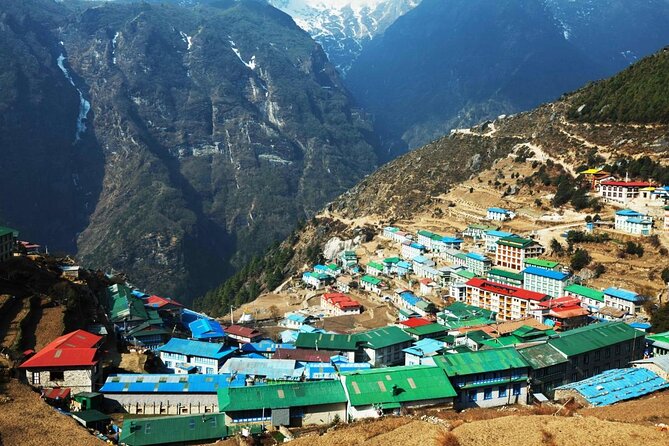
Day 4 follows the river and crosses bridges on the way to Monjo. Views open toward Thamserku and Kongde peaks before you enter Sagarmatha National Park and continue toward Namche Bazaar.
The day is listed at about eight hours, making it one of the first real tests of your legs. Namche sits at 3,440 meters, so the route is not only long but also introduces a major change in altitude. The reward is one of the most memorable settlements on the route, with shops and restaurants arranged around the mountain town.
The itinerary labels this stop Irish Pub, but the actual description concerns the route through Monjo, Sagarmatha National Park, and Namche. Treat the natural scenery and the national park entry as the attraction, not the label in the schedule.
Sagarmatha National Park is also a major reason this trek feels different from a simple mountain walk. You are moving through a protected area recognized as a World Heritage Site, with woodland at lower levels and increasingly bare, rocky ground higher up.
Namche’s rest day is essential, not optional
Day 5 is a short acclimatization day in Namche. You can take an excursion to a viewpoint above town and visit the park museum, which covers the Khumbu area, Sherpa culture, and mountaineering history.
The listed activity takes about two hours, but the value is greater than the clock suggests. You are giving your body time to adjust before moving higher. The schedule does not force a major walking day here, and that is a sound choice.
Museum admission is not included. You should also use this day to check your clothing, batteries, water supplies, and personal items. The route becomes more exposed and remote after Namche, while comfort becomes simpler and prices for extras can rise.
A few more treks around Kathmandu worth a look
- Annapurna Circuit Trek with Tilicho Lake
★ 5.0 · 368 reviews - Everest Base Camp Trekking – 13 Day
★ 5.0 · 365 reviews - Everest Base Camp Trek
★ 5.0 · 350 reviews - Everest Base Camp Trek -14 Days
★ 5.0 · 321 reviews
Tengboche pairs mountain views with a monastery
Day 6 takes you toward Tengboche after several hours of walking. The setting is described as forested, with broad views of Everest, Ama Dablam, and surrounding peaks. The itinerary gives this walking day about eight hours.
Tengboche is one of the cultural highlights of the trek. You visit Tengboche Monastery, with a separate 30-minute visit listed. Admission is not included, so carry some local cash for entry or donations if needed.
I like this part of the route because the monastery gives the scenery a human and spiritual context. You are not simply collecting mountain photographs. You are passing through a living Sherpa region where Buddhist practice, mountaineering, and daily village life sit close together.
The long walking time is the drawback. After Namche, the route gains height and the air feels thinner. Keep your pace steady rather than trying to race ahead during the early part of the day.
Pangboche and Dingboche mark the move into exposed country
Day 7 passes through Pangboche, described as the last permanent village on the Everest Base Camp route, then climbs toward Dingboche. The route becomes more open and exposed, with views toward Island Peak and Ama Dablam.
The itinerary again lists about eight hours of walking. This is where the trek begins to feel less like a village-to-village hike and more like a serious high-altitude route. The open ground offers excellent mountain views, but it also means less shelter from wind and weather.
Dingboche is an important staging point before the route climbs farther. The day does not list a separate acclimatization rest day here, so you should pay close attention to how you feel. The guide’s role is especially important at this stage. Reviews praise guides including Anup, Sagar, Balaram, Bikram, and others for kindness, experience, and support, although one account noted that a Sherpa guide’s English was limited. Friendly help and practical mountain judgment may matter more than polished conversation, but you should still confirm your communication needs in advance.
Lobuche follows prayer flags, memorials, and giant peaks
From Dingboche, Day 8 passes Buddhist monuments and prayer flags before reaching Thukla. From there, you get views of Ama Dablam, Cholatse, Taboche, and other large peaks before continuing to Lobuche.
This is another eight-hour walking day, and the terrain is becoming barren and glacial. The change from woodland to moraine, ice, and exposed rock is one of the trek’s strongest visual features. It also removes some of the comfort of the lower route.
Lobuche is a practical overnight stop before the main goal. Do not expect a relaxed sightseeing day here. The purpose is to position you for Everest Base Camp while keeping the distance manageable.
Everest Base Camp is the emotional high point
Day 9 brings the trek’s main target. You walk from Lobuche toward Gorak Shep, then continue to Everest Base Camp. At the base camp, you are close to the Khumbu Icefall and glaciers, with Everest rising beyond the surrounding mountain world.
The itinerary lists the Base Camp visit at about one hour, although the full day includes the approach and return to Gorak Shep. The stop itself is not a long museum visit or a developed attraction. It is a rough, dramatic mountain destination, and the satisfaction comes from reaching it under your own power.
Be clear about what you will and will not see. Everest Base Camp is the expedition staging area, not the best viewpoint for the whole mountain. The next morning’s climb to Kala Patthar is designed to provide the more complete mountain panorama.
You spend the night at Gorak Shep, a high and basic stop. The schedule is demanding because you reach Base Camp and return on the same day. Keep your expectations practical: weather, energy, and trail conditions affect how long you can comfortably remain outside.
Kala Patthar at 5,545 meters is the trek’s best viewpoint
Day 10 begins with an early climb to Kala Patthar, listed at 5,545 meters. This is the highest point of the adventure and the place for close views of Everest and the surrounding peaks.
The early start is sensible because mountain visibility can change during the day. You descend to Gorak Shep for breakfast, then continue toward Thukla and Pheriche through a windy valley before walking onward to Pangboche for the night.
This is a very full day. You climb to the highest point, return for breakfast, descend through Thukla and Pheriche, and continue to Pangboche. The schedule lists about two hours for the Pheriche stop, but the complete day involves much more movement. Treat it as one of the hardest days of the trip.
Kala Patthar is also why this experience is more than a standard Base Camp visit. You get both the destination at Base Camp and a high mountain viewpoint. If your main dream is seeing Everest clearly, this morning may become the defining part of the entire route.
The return to Namche gives your legs a break from climbing
Day 11 takes you from Pangboche back toward Namche, via Tengboche. The itinerary again gives the day about eight hours and allows time around Tengboche.
The return route is not simply a repeat with the same feeling. Descending generally makes breathing easier, and familiar peaks appear from new angles. Even so, downhill walking can be tiring on knees and ankles, especially after the Kala Patthar push.
You spend the night in Namche, which brings back access to shops and restaurants. It is a welcome change after the higher tea houses.
Namche to Lukla closes the walking route
Day 12 is another long walk, about eight hours, from Namche to Lukla. You spend the night near Tenzing-Hillary Airport before flying back to Kathmandu on Day 13.
This final walking day can feel deceptively hard. You have already completed the headline goals, but the route still includes bridges, uneven ground, and a long distance. Keep some energy in reserve and do not assume the return is effortless.
The Lukla flight is included in the package, but mountain flights can affect the schedule. The provided information does not specify a weather-delay policy or extra buffer days, so ask the operator how delays are handled before you depart. That question is especially important if you have an international flight soon after Day 13.
What the guide and support arrangement are like
The company provides a professional trekking guide, and the tour is private for your group. That is a strong setup for a route where altitude, weather, and daily pace matter.
The supplied accounts repeatedly praise the organization, guides, and friendly service. Specific guides named in the feedback include Anup, Sagar, Balaram, and Bikram. One person described the arrangements as running smoothly from Kathmandu to Base Camp and back, while another appreciated quick help after logistical problems at the beginning.
The praise is not completely one-sided. Communication in English may vary by guide, so tell the company what you need before arrival. The service style appears warm and attentive, but you should not confuse friendliness with a promise that every detail will run exactly on schedule. Lukla flights and mountain conditions can disrupt plans.
Who should book this trek
This trek suits you if you want:
- A guided private trip rather than an independent route
- Everest Base Camp plus Kala Patthar
- A two-week schedule with Kathmandu included
- Tea-house lodging and most meals arranged
- Help with permits, Lukla flights, and ground transfers
- A route that includes Sherpa villages, Sagarmatha National Park, and Tengboche Monastery
It is less suitable if you want luxury, short walking days, or a fully inclusive package with porters, drinks, showers, WiFi, and every meal covered. You also need moderate physical fitness, and the schedule requires you to handle several eight-hour walking days at altitude.
Free cancellation is available if you cancel at least 24 hours before the experience start time. Changes or cancellations made within 24 hours are not accepted for a refund.
FAQ
How long is the Everest Base Camp Kala Patthar Trek?
The trek lasts 14 days, including arrival and departure days in Kathmandu, the flights to and from Lukla, the walking route, and overnight stops in the Khumbu region.
What is the highest point of the trek?
Kala Patthar is the highest point, at 5,545 meters.
Are flights between Kathmandu and Lukla included?
Yes. Round-trip flights between Kathmandu and Lukla are included in the tour price.
Is accommodation included?
Tea-house accommodation during the trek is included. The provided information does not specify all details about Kathmandu hotel arrangements, so confirm those before booking.
Are meals included?
The package includes 10 lunches, 12 breakfasts, and 11 dinners. Soft drinks, alcoholic drinks, and personal food expenses are not included.
Is a porter included?
No. A porter is not included in the listed price. You can ask the operator about arranging and pricing porter service.
Is this a private tour?
Yes. Only your own group participates in the private tour or activity.
What level of fitness is required?
The tour requires a moderate level of physical fitness. Several walking days are listed at about eight hours, and the route reaches high altitude, including Kala Patthar at 5,545 meters.
Should you book it?
I would recommend this trek if you want a well-organized first visit to the Everest region and value having the major logistics handled for you. The strongest points are the private format, included Lukla flights, acclimatization day in Namche, experienced guide support, and the combination of Base Camp with Kala Patthar.
Before paying, confirm the Kathmandu hotel details, porter cost, flight-delay arrangements, and exactly what gear you must bring. If you are comfortable with basic tea houses, long walking days, and high-altitude conditions, the $1,990 price offers a practical route to two of the Khumbu’s biggest goals. If you need a slower schedule or more comfort, choose a longer itinerary instead.
Recently added around Kathmandu
- Ghorepani Poon Hill Trek★ 5.0 · 16 reviews
- Private Manaslu Circuit Trek at Himalayas★ 5.0 · 3 reviews
- Amazing 1 Day Trekking Experience in Kathmandu Nepal★ 5.0 · 24 reviews
- Upper Mustang Trekking★ 5.0 · 2 reviews
- Ghorepani Poonhill Trek★ 5.0 · 5 reviews
- Upper Mustang Trekking★ 3.0 · 2 reviews
- Upper Mustang Trekking★ 5.0 · 4 reviews
- Upper Mustang Trek★ 5.0 · 5 reviews
Everest Base Camp Treks, compared.






Browse the lists this tour appears in