
REVIEW · KATHMANDU
Everest: 16 Day Trek to Everest Base Camp
The mountain earns every step. I like the careful acclimatization days at Namche and Dingboche, and I like that the $1,699 price includes flights, meals, tea-house lodging, permits, a guide, and a porter. The main drawback is the altitude: reaching Everest Base Camp and Kala Patthar demands strong fitness, warm clothing, and a willingness to change plans if your body struggles.
I also appreciate the local focus. You sleep in tea houses, pass through Sherpa villages, and move through valleys shaped by roaring rivers, glaciers, and huge peaks rather than simply stopping at a famous viewpoint. Sujan, the local contact named in the feedback, was praised for kind, helpful handling of an emergency that required a return to Kathmandu from about 5,100 meters.
This is a serious high-altitude trek packaged for first-time trekkers, not a gentle holiday walk. The days are paced to help you adjust, but the route still reaches more than 5,500 meters at Kala Patthar, and conditions in the Khumbu can make the journey tiring and uncertain.
Key points to know before booking
- Two altitude rest days matter: You spend a full acclimatization day in both Namche and Dingboche, which gives your body time to adjust before the higher sections.
- Kala Patthar is the visual high point: The route reaches a stated 5,555 meters, with broad views toward Everest and surrounding peaks.
- The price covers the costly basics: Flights to and from Lukla, meals on trek, tea-house stays, permits, guide, porter, jacket, sleeping bag, and airport transfers are included.
- Sherpa villages are part of the experience: Namche, Pangboche, Dingboche, Tengboche, and other settlements give the trek a human scale.
- Lukla flights can shape the trip: The schedule includes flights from Kathmandu, though you may need to use Ramechhap Airport instead.
- The service has handled real problems: Communication and organization received high praise, including support during a medical emergency at altitude.
Why this 16-day route works for first-time trekkers
The route follows a sensible pattern: rise gradually, pause twice for acclimatization, reach the high point, then descend quickly through familiar villages. You begin at 1,400 meters in Kathmandu and finish the trekking section after reaching more than 5,000 meters, so the change is enormous even though the schedule is spread across two weeks.
I like the balance between famous sights and ordinary mountain life. You are not simply carried from one photo stop to another. You walk between villages, sleep in tea houses, eat breakfast, lunch, and dinner along the way, and spend time in places where the mountain economy is part of daily life.
The phrase first-time trekker needs a little care. You do not need to be an expert mountaineer for this route, but you do need to walk for many hours on uneven ground, handle cold conditions, and cope with thin air. This is not suitable for wheelchair users or people with mobility impairments.
The route reaches Everest Base Camp at a stated altitude of 5,364 meters, while the headline description gives 5,340 meters. Kala Patthar is listed at 5,555 meters, with another figure of 5,534 meters appearing elsewhere. These small differences are normal in tour descriptions, but the important point is clear: this is an extremely high trek.
More Everest Base Camp Treks in Kathmandu:
- Everest Base Camp Trek – 14 Days
★ 5.0 · 1,499 reviews - Everest Base Camp Trek
★ 5.0 · 842 reviews - Everest Base Camp Trekking
★ 5.0 · 485 reviews
Days 1 and 2: Kathmandu at 1,400 meters
Your first day is for arrival in Kathmandu, with airport and hotel transfers included. You stay at a three-star hotel, and breakfast is included for the three Kathmandu nights covered by the trip.
Day two is set aside for sightseeing in Kathmandu. A guided city tour is not included, so you should treat this as free time unless you arrange sightseeing separately. Lunch and dinner in Kathmandu are also your responsibility.
This opening is useful for practical reasons. You can rest after the international flight, meet the English-speaking trekking team, check your warm clothing, and prepare for the short but important flight into the mountains. It also gives you a gentler introduction to Nepal before the route turns uphill.
Day 3: Lukla to Phakding
The flight from Kathmandu to Lukla takes you from the capital to an airport at 2,860 meters. From there, you trek down to Phakding at 2,610 meters.
That first walking day is relatively modest compared with what follows. It gives you a chance to get used to your boots, your pack, the guide’s rhythm, and the tea-house system. The route begins in earnest, but you are not immediately asked to climb to a huge altitude.
The flight schedule deserves attention. You may need to fly from Ramechhap Airport rather than Kathmandu, depending on operations. The package includes the airfare, but the airport arrangement may affect your ground transfers and start time, so ask for current details before departure.
Day 4: The climb to Namche Bazaar
The route reaches Namche Bazaar at 3,440 meters. This is one of the most important stops because it is both a major Sherpa settlement and the first place where altitude becomes a serious concern.
Namche is more than a convenient overnight stop. It is a place to see how villages function along the Everest route, with local homes, tea houses, and services supporting people heading higher into the Khumbu. The surrounding peaks begin to feel much closer here.
You gain a substantial amount of altitude from Phakding to Namche, so this day may feel harder than its distance suggests. I would not rush it. Keep your pace steady, drink regularly, and listen closely to your guide if you develop a headache, nausea, or unusual fatigue.
A few more treks around Kathmandu worth a look
- Annapurna Circuit Trek with Tilicho Lake
★ 5.0 · 368 reviews - Everest Base Camp Trekking – 13 Day
★ 5.0 · 365 reviews - Everest Base Camp Trek
★ 5.0 · 350 reviews - Everest Base Camp Trek -14 Days
★ 5.0 · 321 reviews
Day 5: A proper acclimatization day in Namche
A full day at 3,440 meters is one of the strongest features of this schedule. You are not simply sitting idle. The purpose is to let your body adjust before the trail climbs higher.
You can use the day to walk at an easy pace around Namche and take in the surrounding peaks. The exact activities are not specified, so do not assume a particular museum visit or guided excursion is included.
This pause is valuable for first-time trekkers. It also shows why a 16-day trip can be safer and more manageable than a rushed version of the same route. You still need to take altitude seriously, but the plan gives you a better chance to adjust.
Days 6 and 7: Pangboche and Dingboche
From Namche, you continue to Pangboche at 3,985 meters, then climb to Dingboche at 4,410 meters. The villages become more remote, the air thinner, and the scenery more dramatic.
Pangboche is a good example of the Sherpa village experience promised by the trip. You are moving through settlements rather than sleeping only in large commercial centers. That creates a closer connection to the people and places that support life in this high valley.
Dingboche is an important staging point before the highest section. The gain from Pangboche is significant, so this day may test your legs and breathing. Tea-house meals and a guide who knows the route help, but neither removes the physical demands.
Day 8: Dingboche acclimatization
Another full acclimatization day comes at 4,410 meters. I consider this essential rather than optional padding.
At this height, even simple movement can feel slow. The schedule lets you spend more time at altitude before going to Lobuche, Gorak Shep, and Base Camp. You may find the day useful for gentle walking, rest, and checking that your clothing and sleeping setup are adequate.
The package includes a jacket and sleeping bag, but both must be returned after the trek. You should still bring warm clothing and proper hiking gear, since borrowed equipment does not replace a personal base layer, gloves, socks, and suitable footwear.
Day 9: Lobuche at 4,940 meters
The trek to Lobuche marks a clear shift into the high-altitude section. At 4,940 meters, the air is thin and the trail can feel demanding even if you are fit.
You will see more exposed mountain scenery, valleys, glaciers, and high peaks along this stretch. The route’s appeal is not only the final Base Camp sign. The approach provides the gradual drama, with each day taking you farther into a remote world of rock, ice, and snow-covered summits.
Do not judge the day by distance alone. At nearly 5,000 meters, a short climb can take real effort. Keep your pack light, use the porter service wisely, and avoid treating the group pace as a competition.
Day 10: Gorak Shep and Everest Base Camp
You trek to Gorak Shep at 5,164 meters, continue to Everest Base Camp, listed at 5,364 meters, and return to Gorak Shep for the night. This is the longest and most anticipated day for many people.
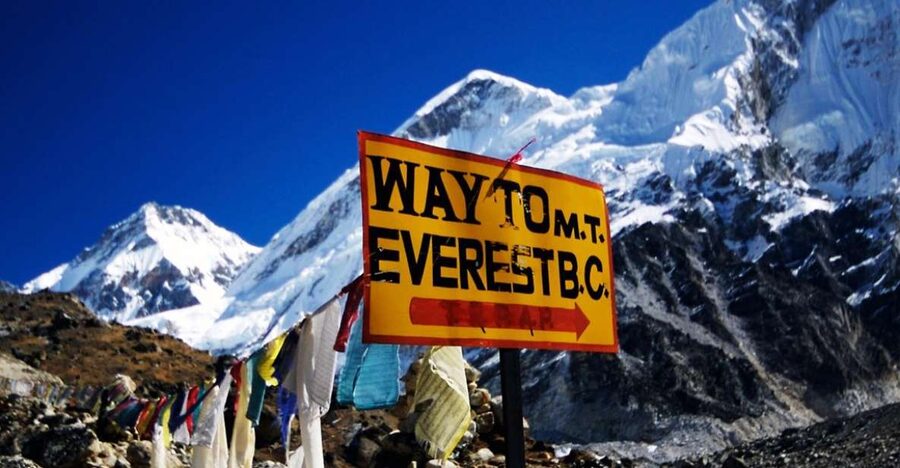
Base Camp itself is the emotional target, but the setting is the true reward. You are surrounded by glaciers, high valleys, and enormous peaks. The route gives you a close look at the environment used by Everest expeditions, though reaching Base Camp does not mean climbing Everest or standing on the summit route.
The return to Gorak Shep matters. You reach Base Camp, then still need to walk back at very high altitude. This is where patience counts. Eat what you can, keep warm, and follow your guide’s advice rather than pushing for a faster finish.
Day 11: Kala Patthar and the descent to Pheriche
The day begins with a trek to Kala Patthar, listed at 5,555 meters. The stated height varies slightly in the trip material, but this is the highest point of the route and the place to expect the finest broad views of Everest.
Kala Patthar is often valued for the viewpoint rather than the walking itself. You gain a wide angle on the surrounding peaks, valleys, and glaciers, and you come within viewing range of the world’s highest mountain. The climb is demanding because of the altitude, so your guide may set the pace and turn you around if conditions or symptoms become unsafe.
After Kala Patthar, you descend to Pheriche at 4,371 meters. Going down usually feels easier on the lungs, but the day remains long. The descent is also a reminder that Base Camp is not the end of the physical challenge. You still need to return to Lukla.
Days 12 to 14: Tengboche, Namche, and Lukla
Day 12 takes you back to Tengboche at 3,860 meters. The lower altitude should help, and the return route lets you see familiar valleys from a different direction.
You then continue to Namche Bazaar on day 13 and Lukla on day 14. These days are not throwaway walking days. They complete the trek, return you to lower altitude, and give you more time among Sherpa settlements before the flight out.
The return to Lukla can feel surprisingly tiring after the high point has passed. Your knees have spent many days descending, and you may be carrying souvenirs or an untidy bag of used clothing. The porter service is a real benefit here, although you should confirm what weight limit applies before setting out.
Days 15 and 16: Returning to Kathmandu
On day 15, you fly back to Kathmandu. The return flight is included, but the Ramechhap possibility applies here too, so allow flexibility around the airport transfer and flight schedule.
You have another Kathmandu hotel night within the three-night stay and can use the time to rest or handle personal shopping. Food in the capital is not covered beyond the included breakfast, and desserts, bottled water, Wi-Fi, and personal expenses are also excluded.
Day 16 is departure. Airport drop-off is included, which makes the last morning simpler, especially after a trek when you may have an early international flight.
What the $1,699 price really covers
At $1,699 per person, the cost is strong if you use the included services. Flights to Lukla and back are a major part of the package, and you also receive 12 nights in tea houses, three Kathmandu hotel nights, meals during the trek, a guide, a porter, the Everest National Park permit, airport transfers, and basic loan equipment.
The meal plan includes breakfast, lunch, dinner, and a cup of tea during the trek. Mineral water is not included, so budget for drinking water. Wi-Fi, desserts, and food in Kathmandu also come out of your pocket.
You receive a kitbag and T-shirt, plus a jacket and sleeping bag that must be returned. Bring your passport, warm clothing, hiking shoes, and hiking pants. Travel insurance is not included, and it is especially important on a high-altitude trek where a medical problem can change the plan quickly.
The strongest service point is the human support. Communication and organization were rated highly, and Sujan was specifically praised for being kind and helpful when an emergency occurred around 5,100 meters and a return to Kathmandu became necessary. That does not guarantee a trouble-free trip, but it is a good sign that the team takes problems seriously.
Who should book this trek
I would choose this trip if you want Everest Base Camp with a fixed 16-day structure, included trekking meals, and support from a guide and porter. It suits someone who values Sherpa villages and gradual acclimatization as much as the final photograph.
I would be more cautious if you dislike basic tea-house lodging, need a private comfort-focused trip, or have mobility limitations. The tour is not suitable for wheelchair users or people with mobility impairments, and the altitude can challenge even strong walkers.
Free cancellation up to 24 hours before the start and the option to reserve now and pay later reduce the financial pressure while you plan. They do not reduce the mountain’s demands, so use that flexibility to prepare properly rather than to underestimate the route.
FAQ
How long does the Everest Base Camp trek last?
The experience lasts 16 days, including arrival and departure days in Kathmandu, the flight to Lukla, the trek to Base Camp and Kala Patthar, and the return flight.
What altitude does the trek reach?
The route reaches Everest Base Camp at a stated altitude of 5,364 meters, with another figure of 5,340 meters also provided. Kala Patthar is listed at 5,555 meters.
Are flights to Lukla included?
Yes. Airfare from Kathmandu to Lukla and the return flight to Kathmandu are included. The trip notes that Ramechhap Airport may be used instead.
Are meals included?
Breakfast, lunch, dinner, and a cup of tea are included during the trek. Lunch and dinner in Kathmandu are not included, and mineral water and desserts are also excluded.
Where do you stay during the trek?
You stay in tea houses for 12 nights and in a three-star hotel in Kathmandu for three nights. Breakfast is included at the Kathmandu hotel.
What equipment should you bring?
You should bring your passport, warm clothing, hiking shoes, and hiking pants. A jacket and sleeping bag are provided for use during the trek and must be returned afterward.
Should you book it?
Book this trek if you want a practical route to Everest Base Camp with two planned acclimatization days, a guide and porter, meals, tea-house lodging, permits, and flights included in one price. The positive feedback about organization, communication, and Sujan’s help during a serious high-altitude emergency adds confidence.
Do not book it expecting an easy walk or luxury lodging. You need fitness, patience, insurance, and respect for altitude. For a prepared first-time trekker who wants Sherpa villages, glacier views, and Kala Patthar rather than a rushed checklist, this is a well-priced way to reach the Everest region.
Recently added around Kathmandu
- Ghorepani Poon Hill Trek★ 5.0 · 16 reviews
- Private Manaslu Circuit Trek at Himalayas★ 5.0 · 3 reviews
- Amazing 1 Day Trekking Experience in Kathmandu Nepal★ 5.0 · 24 reviews
- Ghorepani Poonhill Trek★ 5.0 · 5 reviews
- Upper Mustang Trekking★ 5.0 · 2 reviews
- Upper Mustang Trekking★ 5.0 · 4 reviews
- Upper Mustang Trek★ 5.0 · 5 reviews
- Upper Mustang Trekking★ 3.0 · 2 reviews
Everest Base Camp Treks, compared.




Browse the lists this tour appears in