
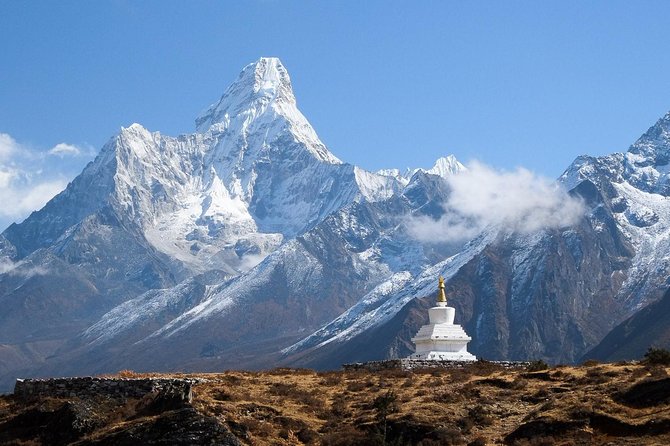
REVIEW · KATHMANDU
Classic Everest Base Camp Trek
The Himalayas reward patient feet. This 24-day Everest Base Camp trek combines mountain walking, monastery visits, glacier rivers, and close contact with Sherpa communities, with airport pickup and much of the practical work handled for you. I especially like the strong focus on safety and the inclusion of a guide, porter support, permits, equipment, and domestic flights. I also like the chance to see daily mountain life instead of simply racing toward Base Camp. The main drawback is the physical demand: you need a moderate fitness level, and the price does not cover every meal, drink, snack, or internet use.
This is not a quick sightseeing trip. It is a long Himalayan journey with repeated climbs and descents, basic mountain accommodation, early starts, and weather that can affect flights. The 98 percent recommendation rate and 4.9 rating from 190 ratings point to dependable service, especially from the guides and office team. Still, you should choose this trek for the walking and mountain experience, not for comfort or convenience.
Key points before you book
- Twenty-four days gives your body time to adjust: The extended schedule is useful for a high-altitude trek and leaves room for the slow rhythm of mountain travel.
- Lukla flights are included: The package covers the Lukla to Kathmandu flight and departure taxes, with airport transfers included on the ground.
- Guide and porter support are built in: One porter is provided for every two people, and staff costs, food, accommodation, equipment, and accidental insurance are included.
- Mountain equipment is supplied: You receive a duffle bag, down jacket, sleeping bag, trekking map, T-shirt, and trip achievement certificate.
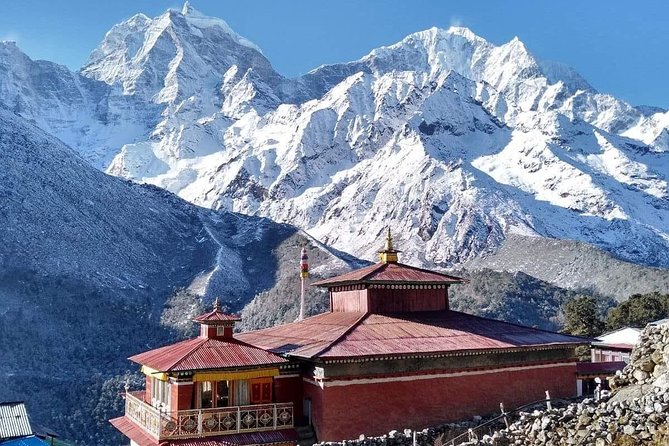
- Culture is part of the walk: Monasteries, prayer flags, local homes, and mountain communities add meaning beyond the views.
- The price is useful but not all-inclusive: At $1,835.90 per person, many major costs are covered, but unspecified meals, WiFi, cold drinks, bottled water, and snacks are extra.
What the 24-day schedule really means
A 24-day Everest Base Camp trek is long enough to feel like a proper journey rather than a mountain photo opportunity. The supplied information does not give a detailed day-by-day schedule, so I cannot promise exact villages, walking times, or the number of acclimatization days. That matters because high-altitude trekking depends on a careful pace, and the final plan can change with weather and conditions.
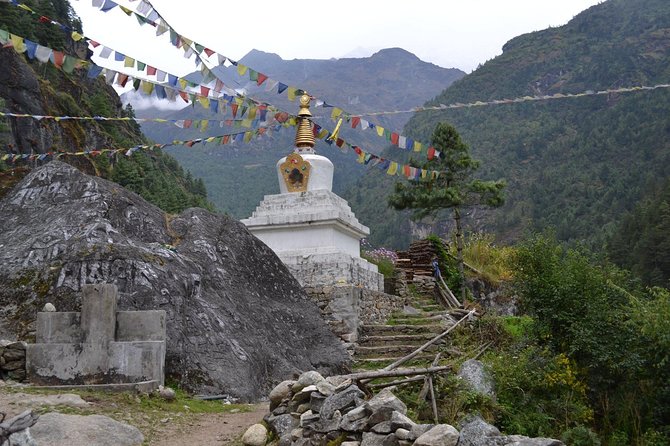
The broad shape is clear. You begin in Kathmandu, travel toward the Everest region, walk through forested valleys and beside glacier-fed rivers, reach the Base Camp area, and return before flying back to Kathmandu. Along the way, you visit monasteries and pass prayer flags that mark the spiritual character of the region.
The repeated uphill and downhill sections are part of the challenge. You should expect a trek that tests your legs even when the distance for a day does not look extreme on paper. The reward is the gradual change in scenery, from alpine forest to higher, more exposed mountain country, with big peaks in view.
I like the length of this program because it allows the experience to unfold at a sensible pace. The downside is simple: three weeks or more is a serious commitment. If you want a short holiday with one dramatic walk, this is not the right shape of trip.
More Everest Base Camp Treks in Kathmandu:
- Everest Base Camp Trek – 14 Days
★ 5.0 · 1,499 reviews - Everest Base Camp Trek
★ 5.0 · 842 reviews - Everest Base Camp Trekking
★ 5.0 · 485 reviews
Kathmandu: a practical start and finish
The tour begins and ends in Kathmandu, at the stated meeting point in Kathmandu 44600. The listed start time is 6:45 am, so you should be ready for an early morning, particularly if your departure toward the mountains is scheduled at the start of the trip.
Three nights of accommodation with breakfast are included at the deluxe Hotel Ramada Encore Kathmandu. That gives you a proper base at the beginning and end of the trek, rather than leaving you to arrange city lodging on your own. Private ground transport and airport transfers are also included, which is useful after a long international flight.
The Kathmandu portion is not presented as a sightseeing tour, so do not assume that city attractions, entrance tickets, or extra meals are included. Its main value is practical: arrival support, briefing time, a comfortable hotel, and a place to recover after the mountains.
The office team receives repeated praise for communication and organization. That is worth noting because a trek such as this has many moving parts, from luggage and permits to flights and staff coordination. Guide assignments vary, but names praised for warmth, care, and mountain judgment include Ram, Pooja, Lal Kumar Tamang, Lok, Nirjala, and Prakash.
Flying toward Lukla
The Lukla flight is one of the key pieces of this package. The price includes the flight from Lukla to Kathmandu and departure taxes, while ground transport covers airport transfers and private vehicles where applicable.
Flight conditions are important. The cancellation terms specifically say that the experience requires good weather. If poor weather causes cancellation, you are offered a different date or a full refund. That is a useful safeguard, but it does not remove the practical uncertainty of mountain travel.
One useful detail comes from the operating experience described in the feedback: when flights could not operate, a group had to drive to the start instead. You should treat this as a possible change in transport plans, not as a guaranteed part of the schedule. Ask the company before departure how flight disruption is handled, how extra transport costs work, and how much flexibility you need in your international flights.
The early start and weather risk may sound inconvenient, but they are part of the reality of reaching the Everest region. Build spare time around the trek if you have a fixed flight home.
Forest trails, glacier rivers, and mountain culture
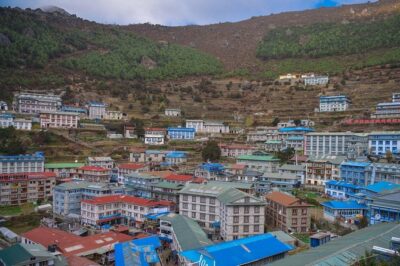
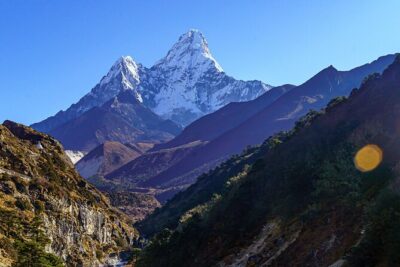
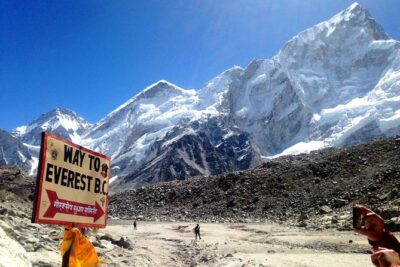
The walking itself is the heart of the experience. The route passes through alpine forests and along glacier rivers, with mountain views opening behind you as the trail rises. You will encounter a mix of natural scenery and signs of local life rather than one continuous wilderness walk.
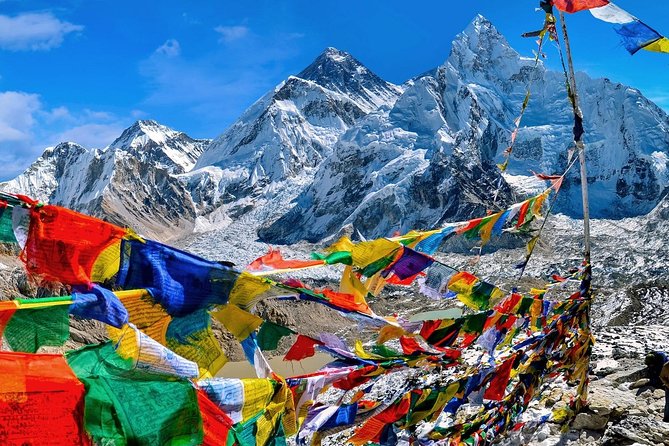
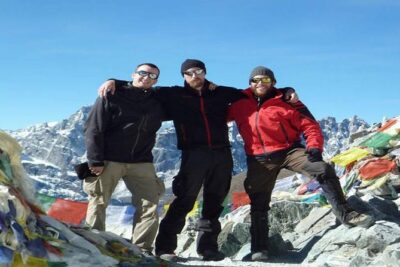
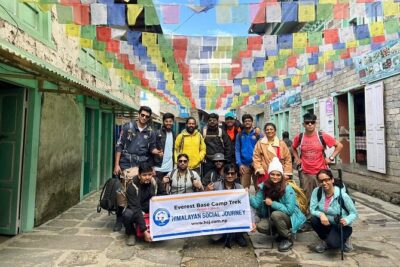
Monasteries and prayer flags provide a cultural layer that makes the trek more than a physical test. Take time to look closely and behave respectfully. The package specifically highlights interaction with local people and an opportunity to understand mountain life, culture, and hospitality.
You should also be ready for a less polished side of the journey. Mountain accommodation is described as the best available twin-sharing lodge-to-lodge lodging, not as luxury hotels. Food and lodging were praised as a good standard during past trips, but high-altitude lodges are still practical places built around trekking needs.
The best moments may come between the famous points: a conversation with a local person, a monastery stop, the sound of a river, or a quiet stretch beneath prayer flags. You need to allow time for those moments. If you treat each day as a race, you will miss much of what makes the route special.
A few more treks around Kathmandu worth a look
- Annapurna Circuit Trek with Tilicho Lake
★ 5.0 · 368 reviews - Everest Base Camp Trekking – 13 Day
★ 5.0 · 365 reviews - Everest Base Camp Trek
★ 5.0 · 350 reviews - Everest Base Camp Trek -14 Days
★ 5.0 · 321 reviews
The guide team and the value of porter support
The guide is central to the quality of this trek. The package includes one highly experienced, helpful, and friendly guide, plus porters at a ratio of one porter for two people. Staff food, lodging, salary, equipment, and accidental insurance are included.
That arrangement has two clear benefits. First, your guide can help with route decisions, group pace, safety, and local context. Second, you do not need to carry every item for the entire trek. You will still carry a daypack, but the porter arrangement reduces the burden of a heavy load.
The feedback gives a strong picture of the staff culture. Ram is praised for experience and humor, Pooja for friendliness, and Lal Kumar Tamang for his attention to terrain, weather, local culture, and safety. Lok, Nirjala, Prakash, Raj, Prim, and several assistant guides and porters also receive warm praise.
Guide quality matters more than a glossy hotel in a trek like this. A good guide notices when someone is struggling, keeps an eye on changing conditions, and helps the group remain calm when plans shift. The company also receives credit for developing local guides, including women, which is a positive sign for visitors who want their money to support people from the region.
Your group size can vary by departure. The activity is described as private, meaning only your group participates, but that does not necessarily mean a solo trip or a two-person departure. Confirm the expected group size before booking if that is important to you.
Lodges, meals, and the equipment package
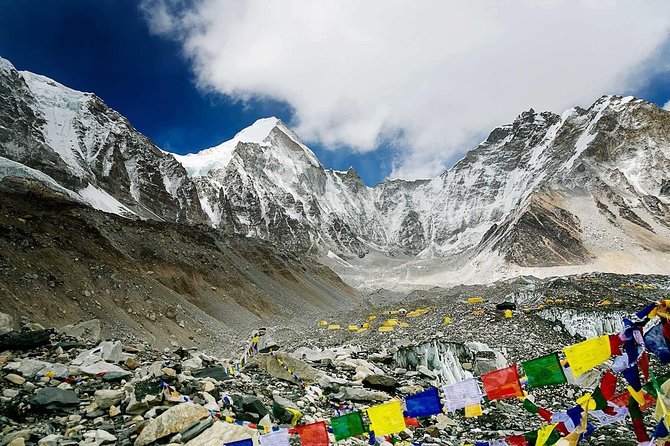
The package includes twin-sharing accommodation in the best available lodges during the trek. This is a practical arrangement, not a promise of private rooms or hotel-style service. You should be comfortable sharing a room and adapting to simple mountain facilities.
Three Kathmandu hotel nights include breakfast. During the trek, the included meals are limited to those specified in the detailed meal plan, which is not supplied here. Meals not listed are extra, as are cold drinks, bottled water, snacks, and WiFi.
This is where the $1,835.90 price needs careful reading. The headline cost covers a great deal: Kathmandu hotel nights, private transfers, the Lukla return flight, guide and porter services, park permits, the TIMS fee, trek lodging, equipment, staff insurance, a first aid kit, government taxes, and office service charges. It is not a fully prepaid trip where you carry no extra money.
The supplied gear is helpful. A duffle bag, down jacket, and sleeping bag can save you from buying or renting bulky equipment before arrival. You also receive a trekking map, T-shirt, and trip achievement certificate. You should still confirm what personal clothing, footwear, water treatment, toiletries, and insurance you need to bring, since those items are not listed as included.
Altitude, fitness, and the hard parts
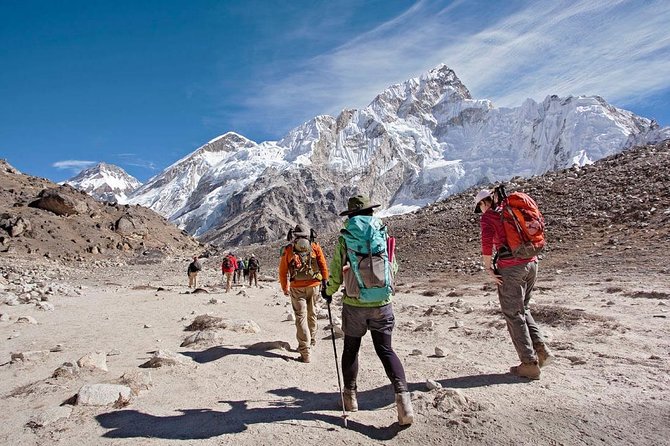
The company asks for a moderate level of physical fitness. Take that seriously. The description itself warns of many ups and downs, and the route involves high mountain walking over a long period.
You should prepare for sustained walking, stairs, hills, and carrying a daypack. The best preparation is regular walking with some uphill work, followed by recovery. Break in your boots before Nepal. A trek does not become easier because the scenery is beautiful, although the scenery certainly helps.
Altitude adds another concern. The supplied information does not state the exact highest sleeping point, acclimatization plan, or daily walking hours, so ask for those details before paying. Ask how the guide team responds if someone develops altitude symptoms, where the first aid kit is carried, and what evacuation arrangements your personal insurance must cover.
Safety receives unusually strong praise in the feedback, and that is one of the best reasons to use an organized operator. Guides were repeatedly credited with keeping people safe, answering concerns, and managing difficult stretches. Even so, no guide can remove the effects of altitude, weather, or fatigue. You remain responsible for telling the guide when you feel unwell.
The return to Kathmandu
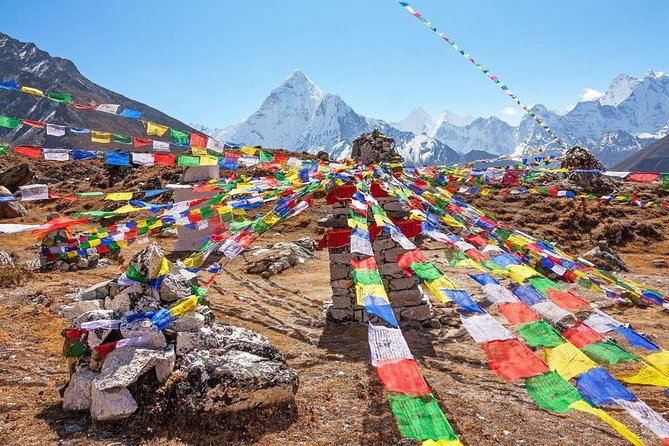
The return journey is part of the experience, not just a formality. After reaching the Everest Base Camp area, you walk back through the mountain valleys before taking the included flight from Lukla to Kathmandu, assuming weather allows.
The route back can feel different from the outward walk. You recognize places, notice details you missed while climbing, and feel the physical cost of the days behind you. It is also when the value of the porter and guide becomes especially clear, since tired legs make every descent and uneven path more demanding.
Back in Kathmandu, the included hotel nights provide a useful buffer before departure. Past groups appreciated having a comfortable place to relax and celebrate after the trek. Keep your schedule flexible until you are safely back in the city, since weather can affect flights.
Is $1,835.90 good value?
For a 24-day trip, the price is competitive if you use the included services. You are paying not just for a walk, but for planning, staff, accommodation, permits, domestic air travel, equipment, airport support, and private ground transport.
The value is strongest if you would otherwise need to arrange a guide, porter, permits, lodging, airport pickup, equipment rental, and internal flights separately. It is also useful for first-time Himalayan trekkers who want a clear support structure.
The price is less attractive if you expect a luxury trip or want all food and drinks included. Budget extra for meals outside the stated inclusions, water, snacks, WiFi, cold drinks, and personal expenses. The exact amount depends on what your meal plan covers and how much you use during the trek.
Who should book this Everest trek?
I would recommend it to someone who wants a classic Everest Base Camp experience with strong logistical support and plenty of time in Nepal. It suits people who value local guides, porter assistance, cultural stops, and a carefully organized trip more than privacy or high-end comfort.
It is also a good fit for families with adult children or friends traveling together, provided everyone understands the physical demands. Several praised departures included families and mixed-age groups, with the guide team helping people through hard days.
I would not choose it for someone with very limited walking fitness, a rigid international flight schedule, or a dislike of shared lodges and changing plans. I would also ask detailed questions before booking if you need a specific room arrangement, exact meal plan, or highly private experience.
Cancellation is free up to 24 hours before the 6:45 am local start time. Later cancellations and changes are not refunded, except when poor weather cancels the experience and the operator offers another date or a full refund.
Final verdict: a strong choice for a supported Himalayan trek
I like this trek because it treats Everest Base Camp as a journey, not merely a finish line. The mountain scenery is the obvious draw, but the monasteries, prayer flags, glacier rivers, local hospitality, guides, and slower pace give the trip its real character.
The strongest reasons to book are the staff support, included equipment, permits, transfers, porter arrangement, and long schedule. The main cautions are altitude, repeated climbs, shared lodge accommodation, weather delays, and extra daily costs.
Book it if you are ready to walk hard, spend nearly a month in Nepal, and let the mountains set the pace. Before paying, confirm the day-by-day schedule, meal inclusions, expected group size, altitude plan, and disruption policy for Lukla flights. Those answers will tell you if this well-supported classic route matches the trip you actually want.
FAQ
How long is the Classic Everest Base Camp Trek?
The trek lasts approximately 24 days.
Where does the experience start and finish?
It starts in Kathmandu, Nepal, at the stated meeting point in Kathmandu 44600, and ends back at the same meeting point.
What time does the tour start?
The stated start time is 6:45 am.
Is airport pickup included?
Yes. Airport transfers and other ground transport in private vehicles are included.
Is the Lukla to Kathmandu flight included?
Yes. The Lukla to Kathmandu flight and departure taxes are included.
What accommodation is provided?
You receive three nights with breakfast at the deluxe Hotel Ramada Encore Kathmandu. During the trek, the package provides the best available twin-sharing lodge-to-lodge accommodation.
Do I need to be physically fit?
Yes. The company states that participants should have a moderate physical fitness level. The trek includes many uphill and downhill sections.
What is not included in the price?
Meals not specified in the meal inclusions, WiFi during the trek, cold drinks, bottled water, and snacks are not included.
Recently added around Kathmandu
- Ghorepani Poon Hill Trek★ 5.0 · 16 reviews
- Amazing 1 Day Trekking Experience in Kathmandu Nepal★ 5.0 · 24 reviews
- Private Manaslu Circuit Trek at Himalayas★ 5.0 · 3 reviews
- Ghorepani Poonhill Trek★ 5.0 · 5 reviews
- Upper Mustang Trekking★ 5.0 · 2 reviews
- Upper Mustang Trekking★ 3.0 · 2 reviews
- Upper Mustang Trekking★ 5.0 · 4 reviews
- Upper Mustang Trek★ 5.0 · 5 reviews
Everest Base Camp Treks, compared.
Browse the lists this tour appears in