
REVIEW · KATHMANDU
Everest Base Camp Trek
The mountain is only half the story. This 12-day Everest Base Camp trek takes you through Sherpa villages, Buddhist monasteries, rhododendron forests, and Sagarmatha National Park before reaching the foot of Mount Everest. I like that the price includes flights, meals, lodge accommodation, permits, airport transfers, and a private guide, so you are not left piecing together the trip yourself.
I also like the careful altitude plan, with acclimatization days at Namche Bazaar and Dingboche. Guides such as Raji, Chakra, Santosh, Raj, Bibek, and Fura receive especially warm praise for patience, flexibility, and practical help. The main drawback is the flight to Lukla: delays and cancellations can last for days, even during good trekking months, and the $1,380 price does not include insurance, porters, bottled water, or extra Kathmandu nights.
This is not a casual mountain walk. You need a moderate fitness level, patience with simple accommodation, and a willingness to keep moving at high altitude. If you can accept those conditions, Adventure Bound offers a sensible way to reach Everest Base Camp without managing every permit, meal, flight, and lodge booking yourself.
Key points to know before booking
- The route reaches 5,364 meters at Everest Base Camp: You also climb to Kala Patthar at 5,554 meters, the highest point on this itinerary.
- Two acclimatization days are built in: Namche Bazaar and Dingboche give your body time to adjust before the highest sections.
- The price covers the major trekking costs: Round-trip Kathmandu to Lukla flights, meals, twin-sharing lodges, permits, a guide, airport transfers, and a first aid kit are included.
- Lukla flights can disrupt the whole schedule: Bad weather may cause long waits or cancellations, so extra days and suitable insurance are essential.
- This is a private trip: Only your group participates, and the itinerary can be adjusted around your pace, physical condition, and weather.
- Porters are optional and cost extra: You should ask about porter arrangements before departure if you do not want to carry your own larger pack.
Why the Everest Base Camp route remains so compelling
Everest Base Camp is not simply a viewpoint reached by road or cable car. You walk there, one valley and one stone staircase at a time. The reward comes from seeing how the Khumbu region changes as you gain height.
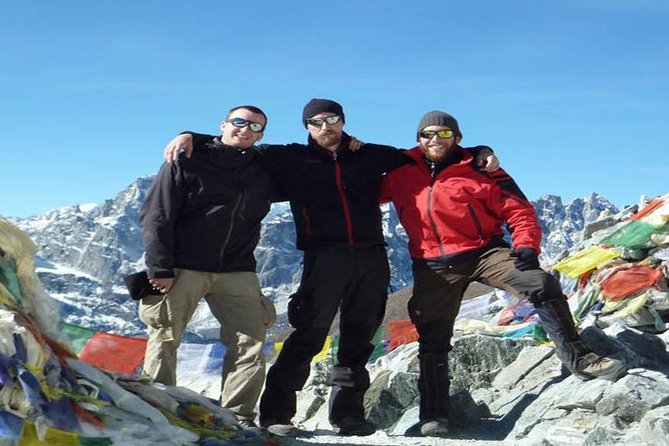
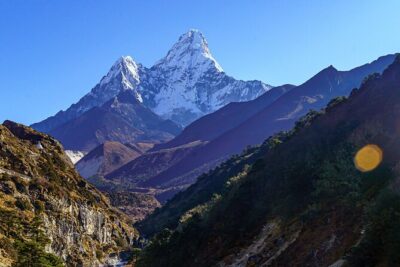
The lower sections pass through Sherpa settlements and forest. Higher up, the trees thin out, the valleys widen, and the mountains begin to dominate every view. You also pass monasteries and enter Sagarmatha National Park, home to several peaks above 8,000 meters.
The famous names of Edmund Hillary and Tenzing Norgay Sherpa are part of the route’s appeal, but the experience is not only about mountaineering history. It is also about daily life in the Khumbu, where lodges, villages, prayer flags, monasteries, and mountain paths form the rhythm of the trek.
I like that the route includes both Everest Base Camp and Kala Patthar. Base Camp gives you the sense of arriving at the starting point for major Everest expeditions. Kala Patthar, reached early on Day 9, offers the higher climb and is treated as the main mountain-view point of the trip.
More Everest Base Camp Treks in Kathmandu:
- Everest Base Camp Trek – 14 Days
★ 5.0 · 1,499 reviews - Everest Base Camp Trek
★ 5.0 · 842 reviews - Everest Base Camp Trekking
★ 5.0 · 485 reviews
Day 1: Lukla to Phakding, the first taste of the Khumbu
The trip begins with a flight from Kathmandu to Lukla, followed by a trek to Phakding at 2,652 meters. The flight is short, but its timing depends heavily on mountain weather. If it is delayed, the entire first day can change.
The walk to Phakding is a useful introduction rather than a dramatic physical test. You begin learning how the trail feels underfoot, how slowly you need to walk, and how your guide manages the group. The first night also gives you a chance to settle into lodge accommodation before the route becomes steeper.
Airport pickup and drop-off in a private vehicle are included in Kathmandu. That is a small but useful touch after an international flight, especially if you are arriving tired or carrying trekking equipment.
Day 2: Climbing to Namche Bazaar at 3,446 meters
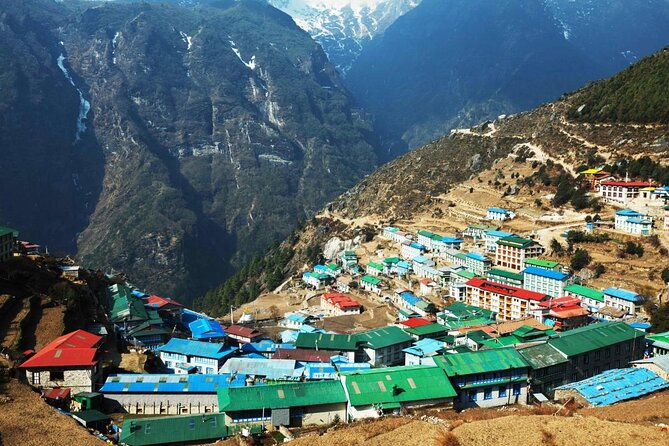
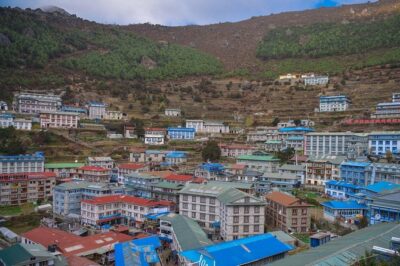
The trail continues to Namche Bazaar, the main trading center of the Khumbu. This is where the trek begins to feel properly mountainous. The altitude rises noticeably, and the walk includes sustained uphill sections.
Namche is more than a place to sleep. It is the practical center for supplies and a major resting point on the Everest route. The town’s position among the mountains makes it one of the most memorable stops, but the altitude can also make this a tiring day.
Your guide’s judgment matters here. The itinerary does not rush straight onward after arrival. Instead, it keeps Day 3 free for acclimatization, which is one of the strongest features of the schedule.
Day 3: Acclimatization in Namche Bazaar
An acclimatization day does not mean doing nothing. It gives you time to adjust to 3,446 meters before climbing higher. The exact activities can be customized, but the point is to remain active without pushing too hard.
This is also a useful day to check your equipment, charge devices if possible, and speak with your guide about how you are feeling. Personal attention is a repeated strength of this operator. Guides named Raji, Chakra, Santosh, and Raj are praised for changing plans around weather and physical condition rather than treating the itinerary as fixed law.
That flexibility is valuable on a high-altitude trek. Reaching Base Camp matters, but moving too fast can put the whole trip at risk.
A few more treks around Kathmandu worth a look
- Annapurna Circuit Trek with Tilicho Lake
★ 5.0 · 368 reviews - Everest Base Camp Trekking – 13 Day
★ 5.0 · 365 reviews - Everest Base Camp Trek
★ 5.0 · 350 reviews - Everest Base Camp Trek -14 Days
★ 5.0 · 321 reviews
Day 4: Namche to Tengboche at 3,820 meters
The route to Tengboche brings you to one of the most important monasteries in the region. The stop combines mountain scenery with a strong sense of place, giving the trek more substance than a simple march from lodge to lodge.
At 3,820 meters, you are now clearly in high country. The walk can feel demanding, especially after the effort of reaching Namche. Your guide should set a steady pace, and you should avoid using a fast group member as your standard.
Tengboche is a good example of why this route works so well. You get natural views, a Sherpa cultural setting, and a meaningful overnight stop in one day.
Day 5: Tengboche to Dingboche at 4,410 meters
The trail reaches Dingboche, a settlement at 4,410 meters. At this height, the air is thinner and ordinary tasks take more effort. You may find that walking slowly is not just sensible but necessary.
Dingboche is an important staging point for the final ascent toward Lobuche and Gorak Shep. The itinerary wisely includes another acclimatization day here instead of pushing straight through.
The route’s twin-sharing lodge accommodation and full-board meals keep the basic logistics simple. Breakfast, lunch, and dinner are included during the trek, but bottled or boiled water is not, so you should budget for drinking water separately.
Day 6: A second acclimatization day at Dingboche
This day is designed to help your body adjust before the highest section. You can use it to rest, walk at an easy pace, and discuss your condition with your guide.
Altitude sickness is not something to ignore because the schedule looks manageable on paper. The company’s more flexible trips have adapted the plan for safety, and that is exactly the kind of judgment you want from a guide in the Khumbu.
Warm down jackets and sleeping bags have also been arranged for some previous trips, but you should confirm what equipment is supplied for your departure. The included first aid kit is useful, but it does not replace personal travel and rescue insurance.
Day 7: Dingboche to Lobuche at 4,930 meters
The route climbs to Lobuche at 4,930 meters. Vegetation becomes sparse, and the feeling of remoteness increases. The mountain setting grows more severe as you approach the glacier and the upper valley.
This is one of the days when the trek can feel long even if the distance looks reasonable. Thin air affects everyone differently. You should keep food and water nearby, walk steadily, and tell your guide early if you feel unwell.
The value of a private trek becomes clearer here. You are not forced to match a large group’s pace, and the guide can pay attention to your breathing, energy, and general condition.
Day 8: Gorak Shep and Everest Base Camp at 5,364 meters
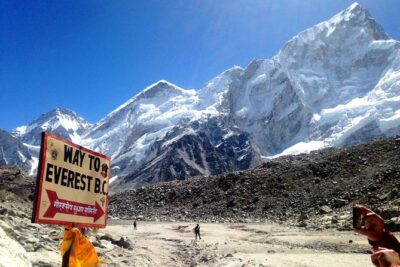
From Lobuche, you continue to Gorak Shep at 5,140 meters, then walk onward to Everest Base Camp at 5,364 meters. This is the emotional center of the trip, but it is also a physically demanding day at extreme altitude.
The base camp itself is not the summit and does not offer the classic highest viewpoint of Everest. Its importance comes from standing at the foot of the mountain and seeing the route used by major expeditions. You also gain views of several other high peaks within the Sagarmatha region.
The return to Gorak Shep makes the day more tiring. You should keep your expectations realistic. At this altitude, the achievement is reaching the place safely, not racing through it for photographs.
Day 9: Kala Patthar and the return to Pheriche
The itinerary calls for an early climb to Kala Patthar at 5,554 meters, followed by a descent to Pheriche at 4,243 meters. This is the highest point of the trip and often the most demanding morning.
Kala Patthar is important because it provides the high mountain panorama many people hope to see on the Everest route. You then lose altitude, which is welcome after the thin air around Gorak Shep.
This day also shows why the trip needs experienced local support. Your guide has to balance timing, weather, energy, and altitude. The best feedback about guides such as Santosh, Chakra, and Raj focuses on patience and problem-solving, not just route finding.
Days 10 and 11: Returning to Namche and Lukla
The published schedule lists a trek to Namche on Day 10 and Lukla on Day 11. It gives Namche as 2,840 meters in one place and 3,446 meters elsewhere, so you should ask Adventure Bound to confirm the exact overnight elevations and route details before booking.
The return journey is not simply an easy walk downhill. Descending can be hard on your knees, and the trail still includes climbs. The advantage is that you now know the rhythm of the route and can focus more on the villages, scenery, and people around you.
Lukla is your final mountain stop before flying back to Kathmandu. Since flights can be delayed at either end of the trek, this is where an extra contingency day becomes especially useful.
Day 12: Flying back to Kathmandu
The final day includes the flight from Lukla to Kathmandu and a transfer to your hotel. If the weather cooperates, you return to the city according to schedule.
If the flight is canceled, you may face a long wait in Lukla. Helicopter evacuation can be arranged at additional cost, with a tentative price of $3,000 per lift for up to five people. That is a major expense, so travel and rescue insurance is not optional in practical terms, even though it is not included in the tour price.
The company suggests keeping spare days at the end of the trip. If everything runs on time, those days can be used to explore other parts of the Kathmandu Valley.
What the $1,380 price really covers
At $1,380 per person, the trip offers solid value for a guided Everest Base Camp package. You receive round-trip Kathmandu to Lukla flights, airport transfers, full-board meals during the trek, twin-sharing lodge accommodation, a guide, Sagarmatha National Park permits, TIMS fees, government taxes, and a first aid kit.
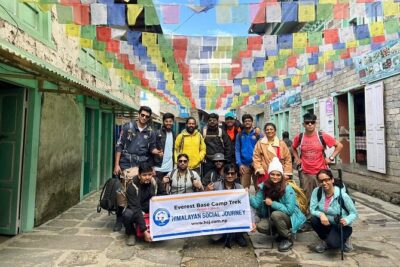
The private format is also important. Only your group participates, and the plan can be adjusted rather than tied to a large fixed party. For first-time high-altitude trekkers, that personal support may be worth more than a slightly cheaper basic package.
You still need to pay for travel and rescue insurance, personal calls, laundry, bar bills, battery charging, showers, bottled or boiled water, and tips. Porters are optional, not included, so ask in advance about the cost if you prefer to carry only a daypack.
The biggest financial risk is not the advertised price. It is the possibility of extra Kathmandu nights, missed flights, or a helicopter transfer. Build those costs into your budget before you decide that the trip is affordable.
Guides, flexibility, and the human side of the trek
The strongest praise goes to the guides and the company’s communication. Laxman is repeatedly described as responsive before departure, while guides including Raji, Chakra, Santosh, Raj, Raman, Bibek, and Fura are associated with careful organization and friendly support.
That does not mean every guide will be the same person or that every trip will unfold perfectly. It does mean you should request the guide’s name, clarify porter arrangements, and discuss how changes are handled before departure.
The trip is a good match for solo trekkers, couples, friends, and families with older children. The minimum age is eight, but the route’s altitude and effort mean that age alone should not decide suitability. The stated requirement is moderate physical fitness.
The drawbacks you should take seriously
The flight schedule is the main weak point. Lukla weather can delay or cancel flights even in October and November, which are usually popular trekking months. You may wait for hours or days in Kathmandu or Lukla.
The route is also physically demanding. Sleeping above 5,000 meters, climbing Kala Patthar, and walking several days in thin air will test you. Simple lodge accommodation, extra charges for water and charging, and the need to manage your own insurance add to the work.
The non-refundable policy deserves attention as well. Once booked, the experience cannot be canceled or amended for a refund, so you should have your dates, insurance, fitness, and contingency budget in order.
Should you book this Everest Base Camp trek?
I would recommend it if you want a private, guided route with most major costs arranged and you value personal support over the cheapest possible price. The two acclimatization days, full-board meals, included permits, and airport transfers make this a practical package for a first Everest Base Camp attempt.
I would not book it without travel and rescue insurance, spare days, and a clear understanding of porter and water costs. You should also confirm the day 10 altitude discrepancy and ask exactly what happens if flights are delayed.
If you accept the uncertainty of Lukla and prepare properly for the altitude, this is a strong choice for reaching Everest Base Camp with less logistical stress. The mountain still demands effort, but the right guide and a flexible plan can make the difference between a rushed checklist and a rewarding journey through the Khumbu.
FAQ
How long does the Everest Base Camp trek take?
The planned experience lasts approximately 12 days, including flights from Kathmandu to Lukla and back.
What is the highest point on the itinerary?
Kala Patthar is the highest point at 5,554 meters. Everest Base Camp is listed at 5,364 meters.
Are flights from Kathmandu to Lukla included?
Yes. Round-trip Kathmandu to Lukla flights, including departure taxes, are included.
Are meals and accommodation included?
Full-board breakfast, lunch, and dinner are included during the trek. Twin-sharing lodge accommodation is also included. Extra Kathmandu nights and meals caused by delays or early returns are not included.
Is travel insurance included?
No. Travel and rescue insurance are not included. Personal expenses, water, showers, charging, laundry, and tips are also excluded.
Can the Lukla flights be delayed or canceled?
Yes. Flights may be delayed for hours or canceled for one or more days because of weather. The company advises keeping extra contingency days available.
Recently added around Kathmandu
- Ghorepani Poon Hill Trek★ 5.0 · 16 reviews
- Amazing 1 Day Trekking Experience in Kathmandu Nepal★ 5.0 · 24 reviews
- Private Manaslu Circuit Trek at Himalayas★ 5.0 · 3 reviews
- Ghorepani Poonhill Trek★ 5.0 · 5 reviews
- Upper Mustang Trekking★ 5.0 · 2 reviews
- Upper Mustang Trekking★ 3.0 · 2 reviews
- Upper Mustang Trekking★ 5.0 · 4 reviews
- Upper Mustang Trek★ 5.0 · 5 reviews
Everest Base Camp Treks, compared.
Browse the lists this tour appears in