
REVIEW · KATHMANDU
Mardi Himal Trek – 9 Days
The short trail delivers a big Himalayan reward. The Mardi Himal Trek combines views of Mount Machhapuchhre, forest paths, sunrise walks, and stays in highland villages without requiring the longer schedule of many Annapurna routes. I especially like the private transport and internal flights, which reduce long road journeys, and the fact that meals, lodging, permits, a guide, porters, and trekking equipment are included.
The main thing to consider is the physical demand. This is not a sightseeing tour with a little walking added. You need moderate fitness, early starts, and comfort with basic mountain lodges. The published duration also needs careful reading: it is called a nine-day trek, but the schedule covers 10 calendar days, from arrival in Kathmandu to departure.
I also like the human scale of the route. You pass through forest, open mountain viewpoints, and local villages rather than spending the whole trip at famous roadside stops. The company’s team has earned a perfect 5 out of 5 rating from eight published ratings, with repeated praise for guides, porters, food, lodging, airport arrangements, and care for larger groups.
Key points at a glance
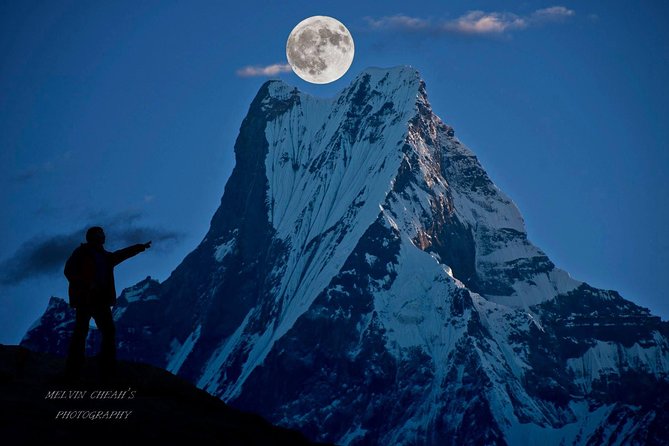
- Sunrise at Mardi View Point: A pre-dawn walk leads toward the viewpoint and Mardi Himal Base Camp, with the best light appearing around the mountain ridges.
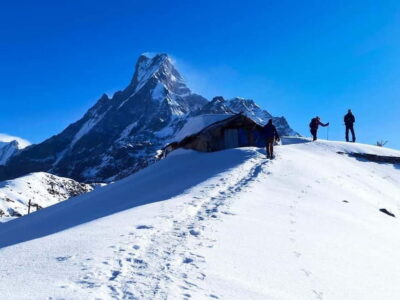
- Mount Machhapuchhre scenery: The route brings you close to views of the distinctive Fish Tail mountain, especially as the forest gives way to open sky.
- Village-based trekking: The lower sections pass through local communities where you see daily life, culture, and changing mountain scenery.
- A well-supported package: Flights, private road transfers, permits, meals during the trek, a guide, porters, sleeping bag, down jacket, and trekking pole are included.
- A 10-day schedule: The plan allows time in Kathmandu and Pokhara as well as the trek, though the name Mardi Himal Trek 9 Days can cause confusion.
- Good for moderate trekkers: You need reasonable fitness, warm layers, proper shoes, and a willingness to walk for several hours on mountain trails.
What the Mardi Himal Trek is really like
Mardi Himal is one of the better choices in the Annapurna region if you want mountain scenery without committing to a very long Himalayan route. The experience moves through several distinct settings: Kathmandu’s cultural sites, Pokhara’s relaxed lakeside setting, forest trails, high ridges, village paths, and the upper route toward Mardi View Point and Base Camp.
The route is not simply about reaching a summit. Its appeal comes from the change in scenery. One day you may be walking beneath trees with Mount Machhapuchhre appearing through gaps, and later you may be on an open ridge with wide mountain views. That variety gives the trek a pleasing rhythm.
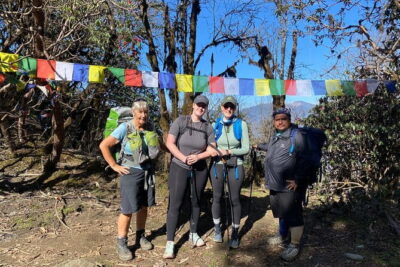
The package is private, so only your own group participates. That matters if you are traveling with family, friends, or a larger private party. One group included nine women, while another included four couples, a friend, and a teenager. Those details suggest the operator has experience managing different group sizes and mixed levels of trekking confidence.
More Mardi Himal Treks in Kathmandu
- Mardi Himal Trek
★ 5.0 · 41 reviews - Mardi Himal Trek Nepal
★ 5.0 · 29 reviews - Mardi Himal Trek – 8 Days | Hidden Gem of the Annapurnas
★ 5.0 · 19 reviews
Days 1 and 2: Kathmandu and the road toward the mountains
Your trip begins in Kathmandu, with arrival transport included. The first day is intentionally light. You have time to get settled and explore Nepal’s capital, including its culture and historic areas, depending on your arrival time.
Do not expect a tightly scheduled city tour from the information provided. Instead, treat this as a useful arrival day. Kathmandu can be busy, and having transport arranged removes one early worry. You will also need to provide flight details, a passport copy, and a passport-size photo so the company can prepare the trekking permit and TIMS card.
Day two is the transition toward the Annapurna region. If the weather is clear, you may see Himalayan peaks and local villages during the journey. The package includes a flight from Kathmandu to Pokhara, followed by private transport from Pokhara toward Dhampus Village.
This arrangement is a strong point. It saves you from spending a full day on a long road transfer from Kathmandu. At the same time, flight schedules and mountain weather can affect timing, so keep your plans flexible. The supplied details do not specify the exact flight time or aircraft arrangements.
Days 3 and 4: Forest trails beneath Machhapuchhre
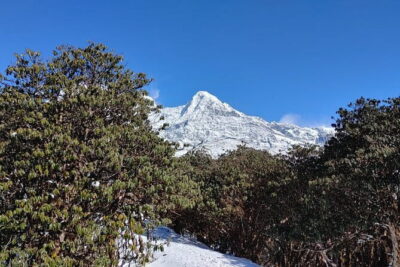
The trail on day three enters forest near Mount Machhapuchhre, also called Fish Tail. The forest section provides shade and a softer visual start to the trek, with the mountain appearing through the trees rather than dominating every step.
This is where suitable footwear begins to matter. Lightweight trekking shoes are recommended, along with warm wool or thermal socks. You should expect uneven mountain paths, and a walking pole is included to help with balance on changing ground.
Day four continues through forest beneath the mountains. The walking is described as somewhat longer, then opens into broader views under the sky. This change is one of the best features of the route. You begin with trees close around you, then reach sections where the surrounding peaks and ridges become easier to see.
The open sections also bring stronger sun and wind. Pack sunglasses, sun block, lip balm, gloves, and a hat or cap. Sun at higher altitude can feel intense even when the air is cold. A windproof outer jacket and warm down-filled jacket are sensible choices, and the company supplies a warm down jacket and sleeping bag for the trek.
Day 5: The early walk to Mardi View Point and Base Camp
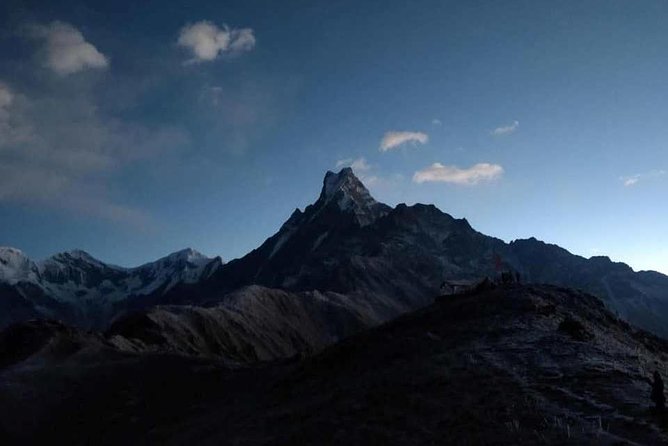
Day five is the key mountain day. The schedule calls for a 4 a.m. start toward Mardi View Point and Mardi Himal Base Camp, with the uphill walk taking around four to five hours before returning to Badal Danda.
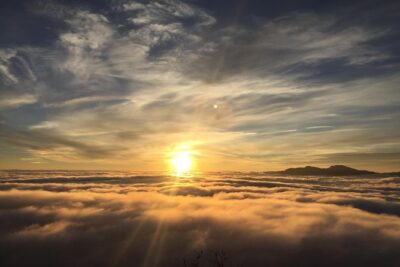
This early departure is not just a scheduling quirk. It gives you a chance to catch sunrise from the viewpoint or along the route. The reward is the changing light on the mountain ridges, but the tradeoff is obvious: you will be walking before dawn, in cold conditions, after sleeping at a mountain lodge.
Use the supplied flashlight and carry spare batteries. Put warm layers beside your bed the night before so you are not searching through your duffel in the dark. Gloves, a hat, thermal clothing, and the provided sleeping bag should make the cold more manageable, though your comfort will depend on weather and personal tolerance.
The walk returns to Badal Danda. That makes the day demanding but practical, because you do not need to carry on to a new sleeping place after the viewpoint visit. The itinerary does not give a precise altitude, so you should not assume this is effortless simply because the route is relatively short. The company states that altitude sickness and medical costs are not included, and you remain responsible for telling the guide if you feel unwell.
Same trailhead, a longer or shorter day out:
- Everest Base Camp Trek – 14 Days
★ 5.0 · 1,499 reviews - Everest Base Camp Trek
★ 5.0 · 842 reviews - Everest Base Camp Trekking
★ 5.0 · 485 reviews - Annapurna Circuit Trek with Tilicho Lake
★ 5.0 · 368 reviews
Day 6: From Badal Danda down to village life
Badal Danda is described as one of the best sunrise viewpoints on the route and the last major viewpoint of the trek. Day six then turns downhill toward a local village.
This change in direction is welcome after the pre-dawn climb, though downhill walking can still tax your knees. Trekking poles are useful here. Take your time, drink water, and do not race simply because the elevation is decreasing.
The move from ridge to village also changes the character of the trip. You leave behind the most exposed mountain viewpoints and begin seeing more of the communities connected to the trail. This is a good point to slow down and pay attention to homes, paths, fields, and ordinary routines rather than focusing only on photographs.
Day 7: Local culture beyond the mountain views
Day seven continues through local villages and focuses on local culture. The itinerary does not promise a formal cultural performance or a particular museum, so you should think of this as a walking day through inhabited places.
That can be more rewarding than a staged cultural stop. You see how the highland communities fit into the trekking route and how daily life continues around visitors passing through. Your guide can help explain what you are seeing, though no specific guide name is provided in the tour details.
The accommodation is in comfortable local lodges, with breakfast, lunch, dinner, tea, coffee, hot lemon with ginger and honey, and hot chocolate included during the trek. Do not expect city-hotel facilities. Hot showers, mineral water, phone use, laundry, and bar bills cost extra, and lodge standards can vary.
Day 8: Tea gardens, village scenery, and Pokhara
Day eight begins with an early exploration of a Himalayan tea garden and village life. This gives the trek a gentler final chapter before the private drive back to Pokhara.
Pokhara is a useful contrast to the mountain route. After several days of walking and lodge stays, you have a chance to rest, enjoy some free time, and use the included hotel night with breakfast. The schedule describes the afternoon as free and easy rather than packed with sightseeing.
The return route is from Lumre to Pokhara by private transport. Since the exact drive length is not specified, you should avoid arranging a fixed activity immediately afterward. The package does not include lunch or dinner in Pokhara, so budget separately for those meals.
Days 9 and 10: Kathmandu, farewell dinner, and departure
Day nine returns you to Kathmandu and leaves time for final exploration of Nepal’s history. The package includes a farewell Nepali culture dinner, which gives the group a shared ending after the trek.
Your Kathmandu hotel stay includes breakfast, but lunch and dinner in Kathmandu are not included. You will also need to budget for your own optional sightseeing if you extend the trip beyond the planned schedule.
Day ten is set aside for last-minute shopping before airport departure. This is practical for gifts and family purchases, but keep space and weight in mind if you are flying internationally. The company provides departure transport to Kathmandu International Airport and wishes you a safe flight.
What the $1,315 price includes
At $1,315 per person, the package has a strong list of inclusions. You are paying for more than the walking itself:
- Arrival and departure transport
- Two Kathmandu hotel nights with breakfast
- One Pokhara hotel night with breakfast
- Kathmandu to Pokhara and Pokhara to Kathmandu flights
- Private road transfers between Pokhara, Dhampus Village, Lumre, and Pokhara
- Lodges and meals during the trek
- English-speaking guide and porters
- Trekking permit and TIMS card
- Guide and porter insurance
- Down jacket, sleeping bag, walking pole, duffel bag, and T-shirt
- Medical kit along the trek
- Farewell Nepali culture dinner
- Government and local taxes where required
That is a useful package for someone who wants fewer pieces to arrange independently. The internal flights and private transfers are especially valuable because transport can otherwise become a major source of delays and confusion.
You still need to allow money for Kathmandu and Pokhara lunches and dinners, drinks, bottled or mineral water, hot showers, phone use, laundry, bar bills, tips, medical treatment, international airfare, and the Nepal entry visa. The listed visa fees are $25 for 15 days and $40 for 30 days when applying on arrival, though you may also apply in your own country.
Tips are not included. The information does not give a recommended amount, so ask the company or guide before departure if you want a clear tipping plan.
Food, lodging, equipment, and support
Meals during the trek include breakfast, lunch, and dinner, along with tea, coffee, hot lemon with ginger and honey, and hot chocolate. That is helpful after cold or tiring walking days. The package also lists 10 breakfasts and two dinners, although the wider itinerary indicates that meals are covered throughout the trekking portion, so confirm the final meal count when booking.
A guide and porters are included, with food and lodging provided for the trek. Past groups praised the care given by the team, including a party supported by six guides and eight porters. The strongest pattern in the feedback is not one single scenic moment. It is the attention to transport, lodge allocation, meals, safety, and comfort.
That support matters on a private trek. You are not left to solve every small problem yourself, and porters can carry the waterproof trekking duffel. Pack a smaller day bag with water, layers, sun protection, medication, documents, and a flashlight.
Who should book this trek
I would recommend this experience if you want:
- A moderate Himalayan trek with a clear support team
- Mountain scenery mixed with forests and villages
- A private trip for your own group
- Internal flights and road transport arranged in advance
- Meals and basic trekking equipment included
- Time in both Kathmandu and Pokhara
- A route shorter than some of the larger Annapurna circuits
I would be more cautious if you dislike early starts, basic lodges, cold nights, or several hours of walking. The company asks for moderate physical fitness, and that should be taken seriously. This is also not the best choice if you want every detail of city sightseeing planned, since Kathmandu and Pokhara include free time rather than a full program.
Avoid flashy jewelry and keep valuables secure. The company also advises you not to wander alone, to stay aware of your surroundings, and not to give money to street children or beggars. At temples, some areas may be closed to non-Hindus, and leather articles may not be allowed inside temple grounds.
The cancellation policy is strict: the experience is non-refundable and cannot be changed for any reason. Keep all receipts until you return home. Confirmation is provided within 48 hours, subject to availability.
Should you book the Mardi Himal Trek?
I would choose this trek if I wanted a well-organized first Himalayan experience with a private group, strong logistical support, and a good mix of scenery and village life. The porters, meals, flights, permits, and equipment make the price easier to justify, especially if you do not want to arrange each part yourself.
Before paying, confirm the nine-day title against the 10-day schedule, ask for the exact daily walking times and lodging names, and clarify the final meal count. If you are comfortable with an early morning climb, cold lodge nights, and moderate physical effort, Mardi Himal offers a satisfying introduction to Nepal’s Annapurna region without turning the whole trip into an endurance test.
FAQ
How long is the Mardi Himal Trek?
The experience is promoted as a nine-day trek, but the supplied schedule covers 10 calendar days, including arrival in Kathmandu, the trek, time in Pokhara, a farewell dinner, shopping, and departure.
Where does the experience start?
It starts in Kathmandu, in Nepal’s Kathmandu Valley. Arrival transport is included.
Is the trek private?
Yes. Only your own group participates in this private tour or activity.
Are flights between Kathmandu and Pokhara included?
Yes. The package includes flights from Kathmandu to Pokhara and back to Kathmandu.
Are meals included?
Breakfast is included at the Kathmandu and Pokhara hotels. Breakfast, lunch, dinner, tea, coffee, hot lemon with ginger and honey, and hot chocolate are included during the trek. Lunch and dinner in Kathmandu and Pokhara are not included.
Is accommodation included?
Yes. The package includes two nights in a Kathmandu hotel, one night in a Pokhara hotel, and lodges during the trekking section.
What trekking equipment is supplied?
The company supplies a warm down jacket, sleeping bag, walking pole, waterproof trekking duffel bag, and T-shirt. You should bring suitable shoes, warm layers, gloves, sun protection, and a flashlight with spare batteries.
Do I need a visa and trekking documents?
You need a Nepal entry visa and trekking documents. The company requests your flight details, passport copy, and passport-size photo for the trekking permit and TIMS card. A Nepal visa can be obtained on arrival at Kathmandu airport, with the listed fees of $25 for 15 days or $40 for 30 days.
Recently added around Kathmandu
- Ghorepani Poon Hill Trek★ 5.0 · 16 reviews
- Private Manaslu Circuit Trek at Himalayas★ 5.0 · 3 reviews
- Amazing 1 Day Trekking Experience in Kathmandu Nepal★ 5.0 · 24 reviews
- Ghorepani Poonhill Trek★ 5.0 · 5 reviews
- Upper Mustang Trekking★ 5.0 · 2 reviews
- Upper Mustang Trekking★ 3.0 · 2 reviews
- Upper Mustang Trekking★ 5.0 · 4 reviews
- Upper Mustang Trek★ 5.0 · 5 reviews
Mardi Himal Treks, compared.
Mardi Himal Trek – 8 Days | Hidden Gem of the Annapurnas
Read our review →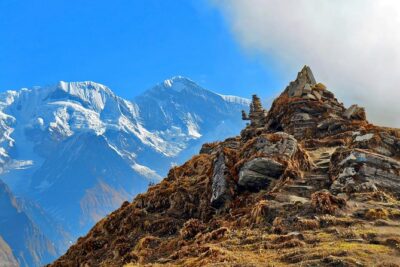
Browse the lists this tour appears in