
REVIEW · KATHMANDU
Mardi Himal Base Camp Trek
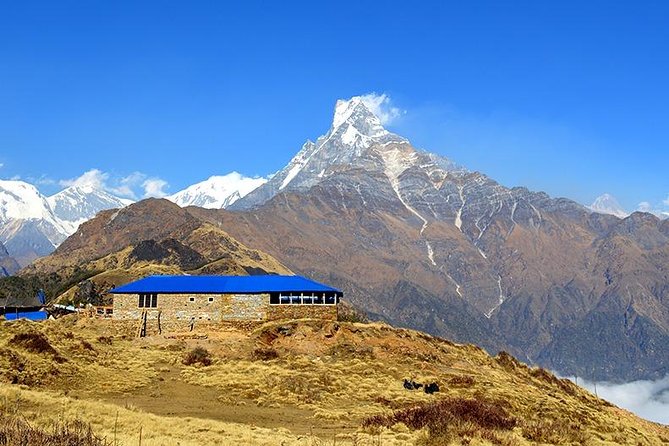
Mountain views arrive quickly on this Nepal trek. The 11-day Mardi Himal Base Camp route combines snowy Himalayan scenery with village life, forest paths, and simple tea-house stays. I like the private format, which keeps the trip flexible for your own group, and I like that guides, porters, permits, meals, transfers, and trekking gear support are bundled into the $999 price. The main caution is the altitude: reaching 4,500 meters is not a casual walk, even though the route is described as an easier trek.
You begin in Kathmandu, travel to Pokhara, then walk through Deurali, Forest Camp, Low Camp, and High Camp before the base camp day. The itinerary includes a long return by way of Sidhing and Lumre, with two nights in Pokhara and transport back to Kathmandu. You should also confirm the exact pickup and transfer details before departure, since the itinerary refers to Phedi while the inclusions also mention Pokhara to Nayapul transport.
Key points to know before booking
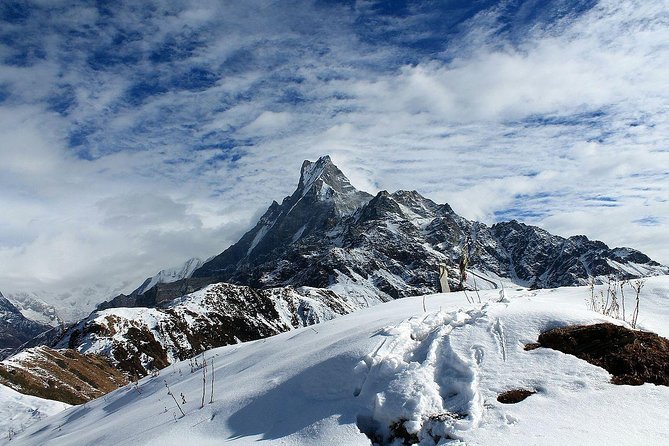
- The highest point reaches 4,500 meters: The Mardi Himal Base Camp day is the physical and altitude high point of the trip.
- You stay in tea houses: Expect practical mountain lodging during the trek, with Kathmandu and Pokhara hotel nights included.
- A private group keeps the trip personal: Only your party participates, supported by an English-speaking guide and porters.
- Transport is built into the package: Airport transfers, tourist buses, private road transfers, and the return to Kathmandu are included.
- Meals and small trail snacks are supplied: The package includes 11 breakfasts, 8 lunches, 7 dinners, plus biscuits, fruit, peanuts, and one Snickers per person.
- The route is not a sightseeing stroll: Moderate fitness is required, and the weather may force a date change or cancellation.
What the 11-day route is really like
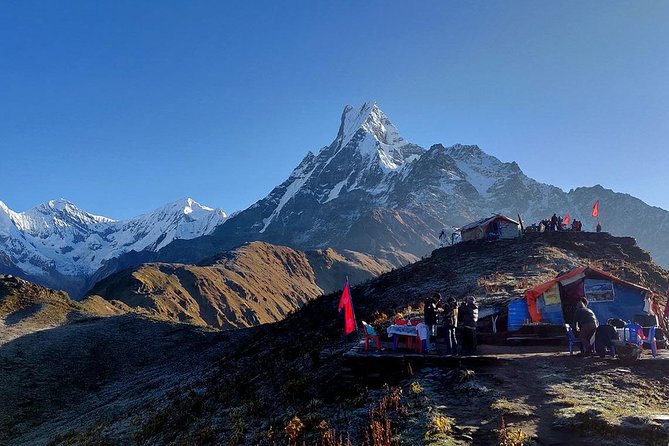
This is a point-to-point mountain trip with a clear rhythm: city preparation, a road journey to Pokhara, several days of climbing, one major high-altitude excursion, and a long descent. I like that the itinerary does not rush straight from Kathmandu to the mountains. The extra time in Pokhara helps break up the travel and gives you a more manageable start.
The route also has a useful balance of scenery. You move from settled city streets to Pokhara, then from roadhead villages into forests and higher mountain country. The supplied description emphasizes broad views, white peaks, local culture, and changing ways of life. Those are the reasons to choose this trip rather than a simple hotel-based Nepal tour.
The word easy needs a little care here. The route may be considered accessible compared with longer Himalayan treks, but the final base camp day reaches 4,500 meters. Your physical condition, pace, and response to altitude still matter.
More Mardi Himal Treks in Kathmandu
- Mardi Himal Trek
★ 5.0 · 41 reviews - Mardi Himal Trek Nepal
★ 5.0 · 29 reviews - Mardi Himal Trek – 8 Days | Hidden Gem of the Annapurnas
★ 5.0 · 19 reviews
Day 1 in Kathmandu: arrival and preparation
Your first day is for arrival in Kathmandu, a transfer to the hotel, and preparation for the trek. Airport pickup is offered by car, van, or bus, so this first transfer is included rather than left for you to arrange after a long international flight.
Two nights of Kathmandu accommodation with breakfast are included in the package. The first night gives you time to settle in, organize personal equipment, and meet the English-speaking guide. The stated meeting point is in Thamel, Kathmandu, with a 6:45 am start time shown for the experience.
Do not treat this as a major sightseeing day. Its value is practical: you get your bearings, check your trekking supplies, and prepare for the early road journey. Nepal entry fees, personal equipment, and meals in Kathmandu are not included, so budget for those separately.
Day 2: the tourist bus to Pokhara
The second day takes you from Kathmandu to Pokhara by tourist bus, with an overnight stay in Pokhara at about 820 meters. Ground transportation is included, which removes one of the more awkward pieces of planning for a first Nepal trek.
A tourist bus is useful for the price, but it is not the same as a quick private transfer. Road travel can take much of the day, and you should expect this to be a transportation day rather than an active touring day. That slower pace is part of the package’s value, but it is also one reason the trip needs 11 days.
Pokhara accommodation with breakfast is included for two nights. Lunch and dinner in Pokhara are not included, so you can choose where and what to eat. The city stop also gives you a chance to collect anything you did not bring from Kathmandu before walking begins.
Day 3: Phedi to Deurali at 2,010 meters
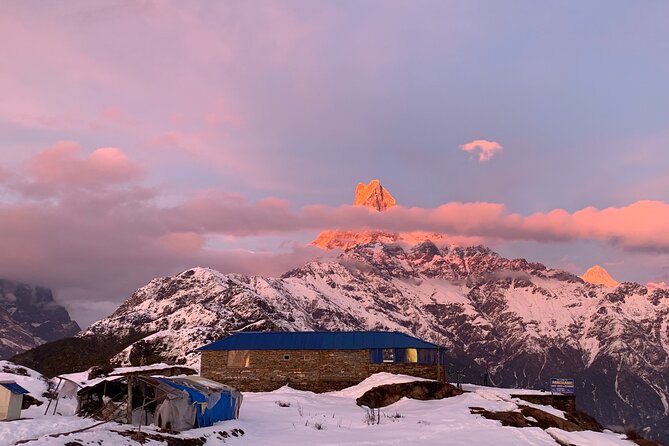
A private vehicle takes you from Pokhara to Phedi in about 40 minutes. From there, you trek to Deurali, at approximately 2,010 meters.
This is your first real walking day, and it introduces the pattern of the trek: a road transfer followed by a climb to a mountain lodge. The short drive is convenient, since you do not lose a full morning on local transport. Deurali is also a sensible first overnight elevation after Pokhara.
You should expect a moderate start rather than a warm-up stroll. The package includes an English-speaking guide, porter support, medical kit, and staff insurance and medicine. One porter is provided for every two people as a basic arrangement, so pack carefully and keep your day bag comfortable.
The transport details deserve a quick check before you go. The day-by-day route says Phedi, while the included transport notes also mention Pokhara to Nayapul. Ask Overland Trek Nepal to confirm which roadhead applies to your booking.
Same trailhead, a longer or shorter day out:
- Everest Base Camp Trek – 14 Days
★ 5.0 · 1,499 reviews - Everest Base Camp Trek
★ 5.0 · 842 reviews - Everest Base Camp Trekking
★ 5.0 · 485 reviews - Annapurna Circuit Trek with Tilicho Lake
★ 5.0 · 368 reviews
Day 4: Deurali to Forest Camp at 2,550 meters
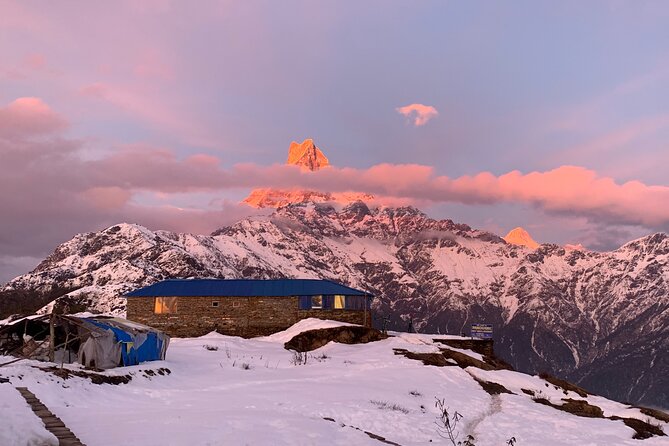
The trek continues from Deurali to Forest Camp, gaining roughly 540 meters in elevation. This section takes you farther from the road and deeper into the wooded part of the route.
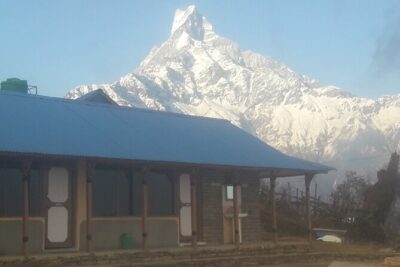
Forest Camp is one of the places where the tea-house format becomes important. You are not camping with a tent and carrying a full camp kitchen. Instead, you stay in local trekking accommodation and rely on the package’s meal and porter arrangements.
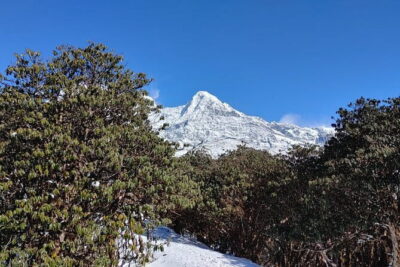
The scenery changes as you climb, and the forest setting provides a different mood from the open high mountain views that come later. The route is not only about reaching a viewpoint. The gradual change from village roads to woodland paths is one of the more appealing parts of the experience.
Day 5: Forest Camp to Low Camp at 2,990 meters
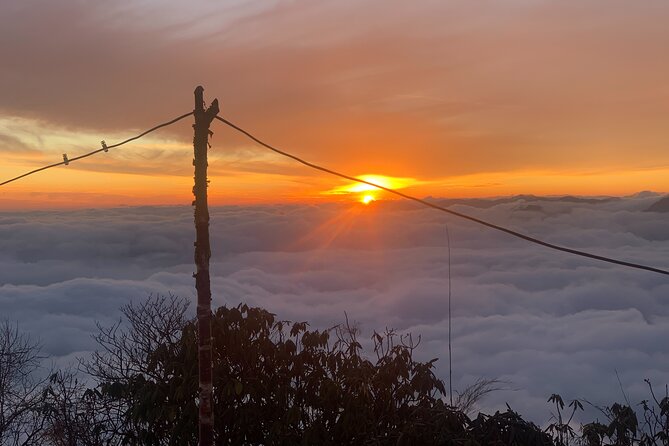
The next stage climbs to Low Camp, at approximately 2,990 meters. By now, the trek has moved above the lower settlements and closer to the high ridges associated with the Mardi Himal route.
This is a good day to pay attention to your pace. You do not need to race the guide or porter. A private trip allows your group to walk at a sensible speed, though the schedule still has fixed overnight stops.
The package supplies trail snacks, including biscuits or Oreo cookies, peanuts, fruit such as apples or pomegranates, and one Snickers chocolate for each person during the trek. These are small additions, but they matter on a walking day when you want something quick between meals.
Day 6: Low Camp to High Camp at 3,580 meters
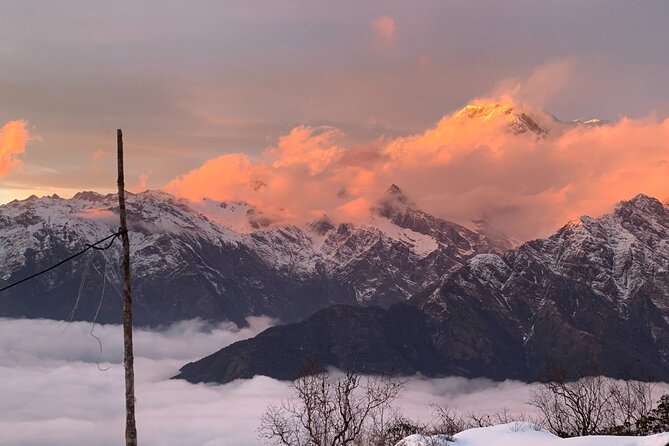
From Low Camp, you continue to High Camp, reaching about 3,580 meters. This is the last overnight point before the base camp excursion and a key acclimatization stage in the itinerary.
High Camp is valuable because it places you close to the next day’s goal. You do not have to make a single huge ascent from a low valley. Still, the elevation is serious enough that you should be alert to how you feel and tell your guide if anything seems wrong.
The package includes breakfast, lunch, and dinner as part of the listed meal arrangement, though the exact menu is not specified. Hot water, bottled water, cold drinks, showers, and battery charging cost extra when available, so bring enough personal funds for these comforts.
Day 7: the 4,500-meter Mardi Himal Base Camp day
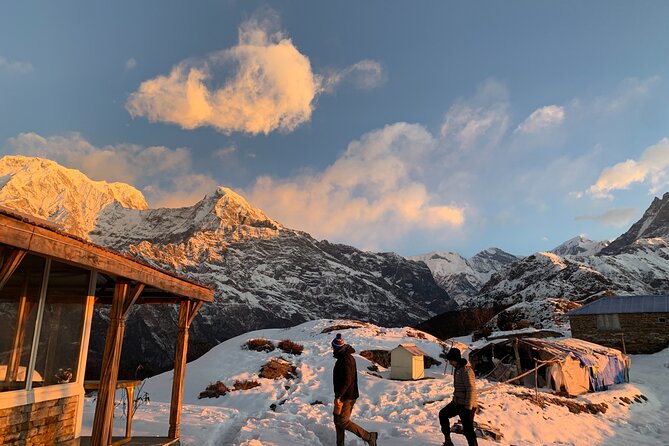
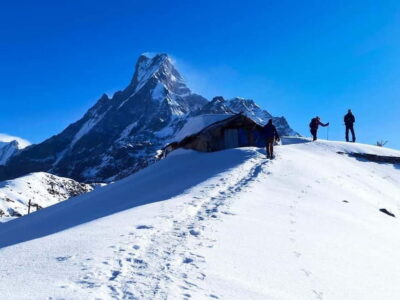
This is the trip’s main event. You hike from High Camp to Mardi Himal Base Camp at approximately 4,500 meters, spend time taking in the mountain views, and return to High Camp for another night at 3,580 meters.
The out-and-back plan is a smart feature. You can reach the highest point without carrying your overnight luggage or giving up the security of the same tea house at High Camp. The return also gives you a chance to recover at a lower elevation that same evening.
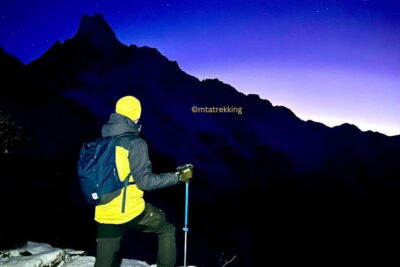
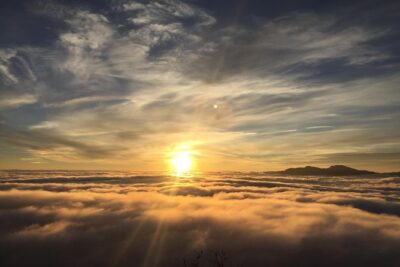
The views are the reason most people choose this trek. The supplied description points to large white peaks and wide mountain scenery, along with the feeling of being far above ordinary daily life. Weather will shape how much you see, so keep your expectations realistic. Mountain views are never guaranteed, and the operator states that poor weather may lead to a new date or a full refund.
This is the day when the moderate-fitness requirement matters most. The route is promoted as relatively easy, but 4,500 meters can make walking and breathing harder. Follow your guide’s advice, keep your pace even, and do not treat the base camp as a race.
Day 8: High Camp to Sidhing at 1,850 meters
After the high point, you descend from High Camp to Sidhing, at about 1,850 meters. The large loss in elevation should feel welcome after the base camp day, but downhill walking can still put strain on your knees and legs.
Sidhing gives the route a different character from the upper camps. You return toward lower settlements and a more settled environment, with the forest and village portions of the trek becoming more prominent again.
This is also when you may appreciate the porter arrangement. Your main job is to walk and manage your personal day pack, while the porter carries the larger shared load according to the one-porter-for-two-people setup.
Day 9: Sidhing to Lumre, then back to Pokhara
You trek from Sidhing to Lumre and then take transport to Pokhara, at about 825 meters. This is the final walking section, followed by a road transfer and a second stay in the city.
The return to Pokhara gives you a comfortable break after several mountain nights. Two nights in Pokhara are included overall, with breakfast provided. Lunch and dinner remain your own expense, along with personal drinks and other extras.
The transport notes mention Pokhara to Nayapul, while the itinerary specifies the return from Lumre. Since these place names do not match exactly, confirm the planned road transfers with the provider before paying your balance or arriving in Nepal. This is a small planning point, but clear transport information is useful after a long trek.
Day 10 and Day 11: back to Kathmandu, then departure
Day 10 takes you from Pokhara to Kathmandu by tourist bus, ending at roughly 1,336 meters. This is another long road day, so you should not schedule an important international connection immediately after arrival unless you have allowed plenty of time.
On Day 11, you leave for the international airport. Airport departure transfer is included, according to the package. If your flight is later or you have extra days, the itinerary suggests using the time for shopping, sightseeing, or simply resting in Kathmandu.
The two-city hotel arrangement is helpful here. You get time in Kathmandu before and after the mountain section, rather than being forced to connect directly from a tea house to an international flight.
What the $999 price includes
At $999 per person, this is not just a walking guide fee. The package includes a substantial collection of services:
- Airport pickup and departure transfer
- Two nights in Kathmandu with breakfast
- Two nights in Pokhara with breakfast
- Tea-house accommodation during the trek
- English-speaking guide
- Porter support at one porter for two people
- Trekking permits and Annapurna Conservation Area entry fees
- Ground transportation
- Medical kit
- Guide and staff food, salary, insurance, and medicine
- Company duffel bag and T-shirt
- Trip certificate
- Government and local taxes
- Listed breakfasts, lunches, and dinners
- Trail snacks and fruit
That bundle gives the price good practical value, especially if you would otherwise need to arrange permits, city hotels, transport, porters, and mountain lodging separately. The duffel bag is also useful because it fits the porter-based format better than hauling a large suitcase through the trek.
Several costs remain outside the price. You pay for international airfare, Nepal entry visa, travel medical insurance, emergency costs, personal equipment, tips, alcoholic drinks, hot showers, water, cold drinks, battery charging, and meals in Kathmandu and Pokhara. GST and airport or departure tax are also listed separately.
The key value question is not only the headline price. It is how much planning you want to do yourself. If you prefer one operator to coordinate the mountain logistics, $999 is a reasonable package to examine closely. If you already have equipment, hotel bookings, and transport arranged, a fully bundled tour may offer less benefit.
Guides, porters, and the private format
The strongest practical feature is the support system. An English-speaking guide leads the group, porters carry the larger bags, and a medical kit is included. The package also covers staff accommodation, food, salary, insurance, and medicine, which means you are not expected to solve those arrangements on the trail.
The private format means only your own group participates. That can make a difference on a trek. You can discuss pacing, breaks, and daily comfort with your guide without being tied to a large mixed group.
The available feedback gives particular praise to the guide and porter service. The useful point is not a named personality, since no guide names are supplied. It is the repeated emphasis on experienced staff, helpfulness, and feeling well cared for throughout the journey. That is exactly the kind of support you want when the route reaches 4,500 meters.
Tips for guide and porter are not included. Carry cash for that purpose and confirm the customary amount with the provider before you leave.
Food, lodging, and daily comfort
Tea-house accommodation keeps the trek simpler and usually more connected to local mountain communities than a self-contained camping operation. The listing does not promise private rooms, attached bathrooms, menus, or heating, so you should ask what is available on your dates rather than assume hotel-style comfort.
The food plan is generous in coverage. You receive 11 breakfasts, 8 lunches, and 7 dinners, plus small trail snacks. That means most meals on the organized route are accounted for, but food and drinks in Kathmandu and Pokhara are your responsibility.
Personal expenses can add up in the mountains. Hot water, water bottles, cold drinks, hot showers, and battery charging are specifically excluded. Bring a cash reserve and do not count on free charging or unlimited hot water.
Who should book this trek?
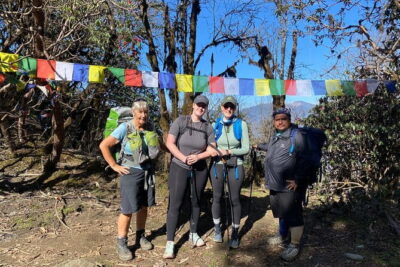
I would recommend it to someone who wants a guided Himalayan trek but does not want to arrange every permit, vehicle, hotel, meal, and porter independently. It also suits a private group that values an English-speaking guide and a clear route through the Annapurna region.
It is a good match if you can handle several consecutive trekking days and understand that the final goal is high altitude. You do not need to be an elite mountaineer, but you should have moderate physical fitness and be ready for climbs, descents, and long transport days.
I would be more cautious if your priority is luxury, short transfers, or a guaranteed view of the peaks. The tea houses are practical, the tourist buses take time, and poor weather can affect the base camp day. You should also ask about the Phedi and Nayapul references before booking, so the starting transport is clear.
Free cancellation is available if you cancel at least 24 hours before the experience starts. Changes or cancellations inside that period are not accepted for a refund, while poor weather may result in another date or a full refund.
Should you book the Mardi Himal Base Camp Trek?
Book it if you want a well-supported, private trek with a strong package of inclusions and a real high-altitude goal. The combination of Kathmandu, Pokhara, forest camps, High Camp, and the 4,500-meter base camp makes the route varied without stretching into a much longer expedition.
Before committing, confirm the exact road transfers, ask what tea-house rooms provide, and budget for visas, insurance, tips, mountain drinks, and personal gear. If those details suit you, the $999 price offers solid value for an 11-day Nepal experience with guides and porters handling the hard logistics.
FAQ
How long is the Mardi Himal Base Camp Trek?
The experience lasts approximately 11 days, including time in Kathmandu, Pokhara, the trek, return transport, and departure.
Where does the experience begin?
The ticket redemption point is in Thamel, Kathmandu, Nepal. A 6:45 am start time is provided, and airport pickup is offered.
What is the highest point on the trek?
The highest point is Mardi Himal Base Camp, at approximately 4,500 meters.
Is accommodation included?
Yes. The package includes two nights in Kathmandu with breakfast, two nights in Pokhara with breakfast, and tea-house accommodation during the trek.
Are meals included?
The package lists 11 breakfasts, 8 lunches, and 7 dinners. Lunch and dinner in Kathmandu and Pokhara are not included.
Is transportation included?
Yes. Airport transfers, ground transportation, the tourist buses between Kathmandu and Pokhara, and private road transfers listed in the package are included. Confirm the exact Phedi, Nayapul, and Lumre transfer details before departure.
Is a guide and porter included?
Yes. An English-speaking guide is included, along with porter service at a basic rate of one porter for every two people.
What happens if bad weather cancels the trek?
If poor weather causes the experience to be canceled, you will be offered a different date or a full refund.
Recently added around Kathmandu
- Ghorepani Poon Hill Trek★ 5.0 · 16 reviews
- Private Manaslu Circuit Trek at Himalayas★ 5.0 · 3 reviews
- Amazing 1 Day Trekking Experience in Kathmandu Nepal★ 5.0 · 24 reviews
- Ghorepani Poonhill Trek★ 5.0 · 5 reviews
- Upper Mustang Trekking★ 5.0 · 2 reviews
- Upper Mustang Trekking★ 3.0 · 2 reviews
- Upper Mustang Trekking★ 5.0 · 4 reviews
- Upper Mustang Trek★ 5.0 · 5 reviews
Mardi Himal Treks, compared.
Mardi Himal Trek – 8 Days | Hidden Gem of the Annapurnas
Read our review →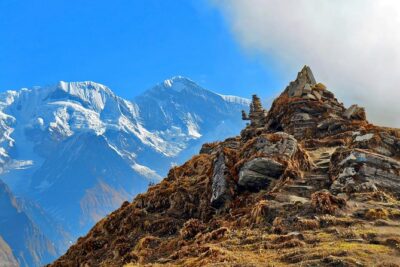
Browse the lists this tour appears in