
REVIEW · KATHMANDU
Langtang Valley Trekking
Mountain culture begins just north of Kathmandu. The Langtang Valley trek takes you into Langtang National Park, where rhododendron, orchid, and pine forests lead toward Himalayan views and Tamang villages. I like the mix of nature and culture here, and I like that this is a private trip rather than a large group departure. The main consideration is cost: at $2,102.57 per person, you should confirm exactly what is included before paying, since lunch and dinner are excluded.
You should also be ready for basic tea-house accommodation, simple food, and demanding walking at altitude. Still, the friendly support from guides and porters is a strong point. Names such as Pasang, Shubham, Sundeep, Ganesh, Indra, and Jay Ram KC appear in connection with successful trips, so it is worth asking who will lead your group.
What makes this Langtang trek worth considering
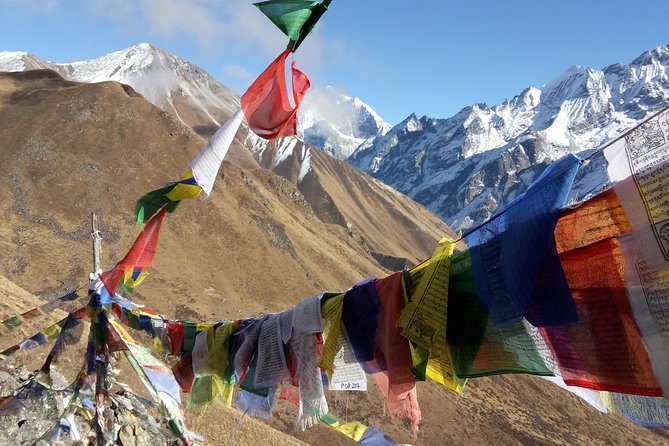
- A rare mix of forest, wildlife, and high mountain scenery: You pass through rhododendron, orchid, and pine country inside Langtang National Park.
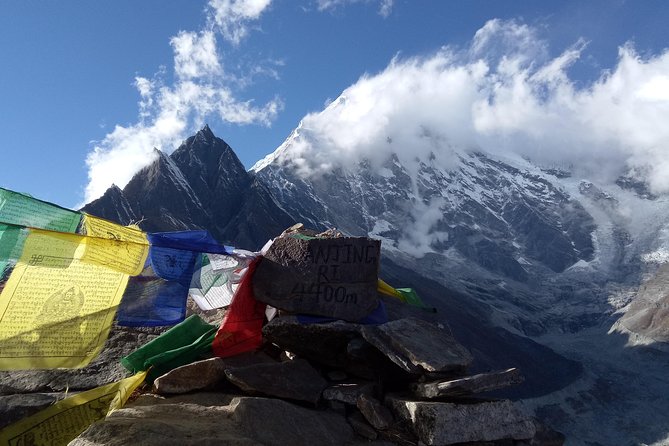
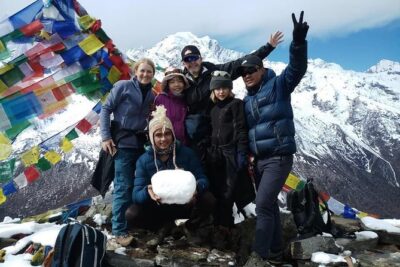
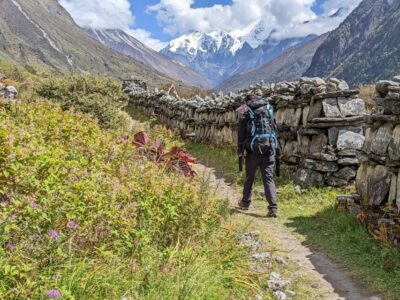
- Strong Tamang and Tibetan Buddhist character: Gompas, Mani walls, prayer flags, and local customs give the route a clear sense of place.
- A quieter alternative to busier Nepal routes: The trek is repeatedly praised for its peaceful walking and less crowded feel.
- Useful guide and porter support: Guides are praised for patience, cultural knowledge, safety care, and practical help with tea houses.
- Optional high points near the valley: Kyangjin Ri and Tserko Ri are highlighted as memorable summit walks.
- A private format: Only your own group participates, which can make pacing easier for families or mixed-fitness groups.
From Kathmandu toward Langtang National Park
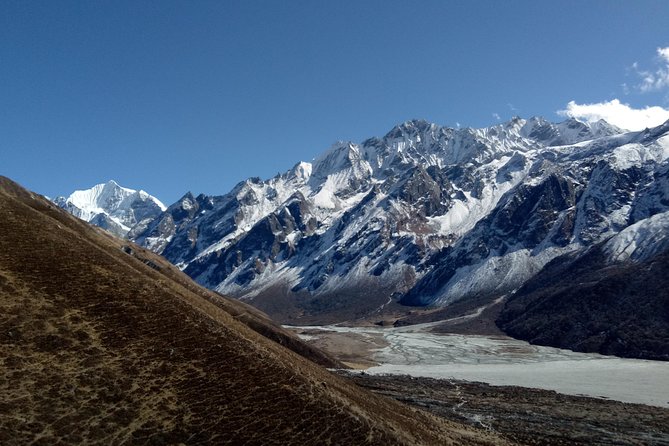
The trip begins in Kathmandu, with a stated start time of 9:15 am and pickup available. Private transportation is included, which matters here because the approach toward the Langtang region can be tiring before you even reach the trail.
The journey toward Dhunche is one part to prepare for. The road has been described as difficult, so do not treat the transfer as a minor taxi ride. If you are prone to motion sickness, bring whatever normally helps you. The reward is that the walking becomes the main event after the road section.
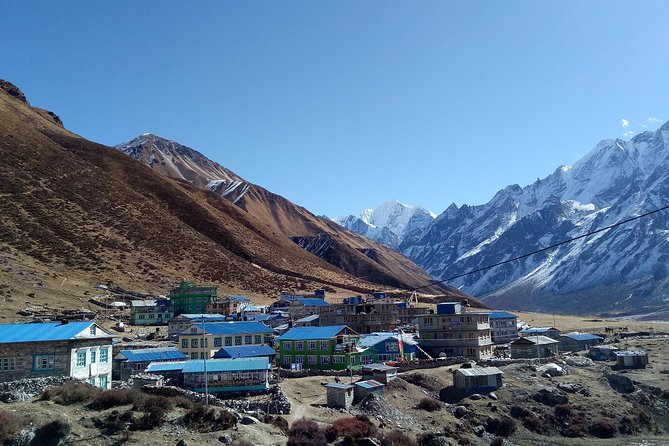
Langtang lies about 150 kilometers north of Kathmandu, close to the Tibetan border. That location gives the route a different feel from trekking areas around Pokhara. You are not simply walking toward mountain views. You are moving through a region shaped by Tamang culture and Tibetan Buddhism.
The exact overnight schedule is not provided, so you should request a day-by-day plan before booking. The experience is described as approximately nine days, but some past trips have been arranged in five, seven, or eight days, while other combinations have included Gosainkunda and lasted 14 days. That flexibility can be useful, but it also means the advertised duration should be clarified.
More Langtang Treks in Kathmandu:
- Langtang Valley Trek
★ 5.0 · 140 reviews - Langtang Valley Trek
★ 5.0 · 61 reviews - 8 Days Tour in Langtang Valley Trek
★ 5.0 · 45 reviews
Forest walking inside Langtang National Park
One of the best reasons to choose Langtang is the change in plant life as you gain height. The national park contains 14 vegetation types across 18 ecological systems. You can walk beneath rhododendrons, pines, and orchids, with the forest providing a welcome break from exposed mountain paths.
This is a good route for anyone who enjoys noticing small things. The trip is not only about taking one enormous mountain photograph. You might see birds, monkeys, musk deer, and Pika. Danphe, Nepal’s national bird, is also found in the park. Wildlife sightings are never guaranteed, but the range of habitats gives you more to watch for than a bare high-altitude trail.
I would bring binoculars if you already own a compact pair, though you should not add unnecessary weight. A phone camera is useful too, especially for flowers, prayer flags, and village details. Keep expectations sensible: this is not a wildlife safari, and the main attraction remains the combination of forest, culture, and mountain views.
Tamang villages, gompas, and prayer flags
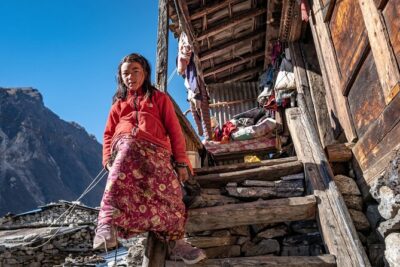
The cultural side of Langtang is one of its strongest features. Most people in the valley are Tamang, an ethnic group with roots in Tibet and distinctive customs, architecture, and daily life.
Along the route, you can expect to see gompas, Mani walls, and colorful prayer flags. These are not stage decorations placed for visitors. They are part of the spiritual life of the valley. Walk respectfully, keep your voice down near religious sites, and ask your guide before photographing people or ceremonies.
A guide can make a major difference here. Several guides connected with the operator have been praised for explaining local customs and mountain life. Pasang, for example, is described as helpful with local culture and tea-house arrangements. Shubham is praised for being attentive and easy to talk with, while Sundeep is noted for patience with an older family member who needed more time on the trail.
That last point matters. A private trek lets you discuss pace and rest stops more easily than a fixed group trip. You should still be honest about your fitness before departure. Private does not mean effortless, and the altitude adds difficulty even when the walking distance looks manageable.
Tea houses, food, and the real level of comfort
Tea houses are part of the character of the Langtang Valley trek. They offer a place to sleep, eat, and talk at the end of a walking day, but you should expect basic conditions rather than hotel comfort.
Food has been described as simple. Lunch and dinner are specifically excluded from the price, so budget for those meals each day. Breakfast is not clearly listed either, and you should ask whether it is included. The same applies to accommodation, permits, guide fees, porter service, and drinks, since the published inclusions list only private transportation.
This is the most important value question in the whole booking. A price of $2,102.57 per person can make sense for a private nine-day trek if it covers substantial services, but the information provided does not spell out the full package. Ask for a written list of inclusions before confirming.
I would ask these questions directly:
- Are accommodation and breakfast included?
- Are a guide and porter included?
- Are national park fees and permits included?
- Is airport pickup included, or only the Kathmandu to trailhead transfer?
- Are transport costs for the return journey covered?
- How much should I budget daily for lunch and dinner?
The friendly service is a clear strength. The company’s team has been praised for airport greetings, dinners in Kathmandu, practical planning, and help when small transport problems appear. Those touches can make a long trip feel much easier. Just make sure the warm service does not distract you from checking the financial details.
A few more treks around Kathmandu worth a look
- Everest Base Camp Trek – 14 Days
★ 5.0 · 1,499 reviews - Everest Base Camp Trek
★ 5.0 · 842 reviews - Everest Base Camp Trekking
★ 5.0 · 485 reviews - Annapurna Circuit Trek with Tilicho Lake
★ 5.0 · 368 reviews
Reaching the upper valley and the high viewpoints
The upper Langtang Valley is where the trip becomes most dramatic. The route is associated with high mountain views, and several people have singled out Kyangjin Ri or Tserko Ri as the best part of the trek.
These are not casual sightseeing stops. Reaching a high viewpoint means extra climbing and a greater need to move slowly. Your guide should help judge the pace and conditions on the day. If you are short on time or worried about altitude, ask whether the itinerary includes a viewpoint walk and how long it will take.
Tserko Ri has been described as an especially rewarding summit, while Kyangjin Ri was a highlight for another trekker on a longer Langtang and Gosainkunda route. The details of your own trip may differ, so do not assume both are included in the nine-day plan.
The views are the payoff, but altitude is the challenge. One direct account described the trek as a mix of beautiful scenery, tea-house life, and the difficulty of walking high above sea level. Take that seriously. Build in enough time, drink regularly, and tell your guide if you feel unwell. A private schedule should be adjusted for safety, not used to force a summit.
How the guide and porter service affects the trip
The strongest pattern in the experience is human support. Guides are repeatedly praised for being cheerful, attentive, professional, and careful. Porters are also praised for carrying heavy loads while maintaining a fast pace.
You should not take that last point as a reason to hurry. Your porter’s speed is not your target. Walk at a pace that lets you breathe comfortably and enjoy the route. If you need a slower day, say so early.
The operation has worked with guides including Pasang, Shubham, Sundeep, Ganesh, Indra, Prakash, and Jay Ram KC. You may not receive one of these people, so ask who is available before departure. It is also reasonable to ask about guide experience, porter arrangements, emergency procedures, and how the itinerary changes if someone needs extra rest.
This is especially important for families and older walkers. A 75-year-old participant completed a Langtang and Gosainkunda trip with strong support, and another family appreciated a guide who waited patiently for an older parent. Those examples suggest that the company can adapt, but your ability should still be discussed honestly in advance.
Price, private transport, and overall value
At $2,102.57 per person, this is not a budget walk. The private format gives you control over the group and may be worth paying for if you value personal attention, flexible pacing, and direct help from a guide.
The price is harder to judge because the listed inclusions are narrow. Private transportation is included, while lunch and dinner are not. If the package also includes accommodation, permits, guide service, porter service, airport transfers, and return transport, the price may be reasonable for a private Himalayan trek. If those costs are separate, the final bill could be much higher.
I would compare the complete package rather than the headline price. A cheaper trek may charge extra for transport, permits, porters, or changes. A more expensive one may include those items from the beginning. Ask for the full cost in writing and find out whether the nine-day estimate is fixed or adjustable.
The free cancellation policy is useful. You can cancel up to 24 hours before the start time for a full refund. Changes made inside that 24-hour window are not accepted, and poor weather may lead to a different date or a full refund. Since mountain conditions can disrupt plans, this protection has real value.
Who should book this Langtang experience?
I would recommend it to you if you want more than a mountain postcard. The route suits people interested in Tamang culture, Buddhist symbols, forest ecology, tea-house stays, and a private guide-led format.
It can also suit families or mixed-ability groups, provided everyone discusses pace and fitness before departure. The personal service and patient guides may be helpful for older walkers.
I would be more cautious if you want a polished hotel-style holiday, a fully itemized all-inclusive package, or a short sightseeing excursion with little physical effort. This is a trek. The road to Dhunche can be rough, the food is simple, altitude is a factor, and the accommodation is basic.
You should also avoid assuming that the most difficult viewpoints are included. Ask specifically about Kyangjin Ri, Tserko Ri, daily walking hours, elevation gain, and rest days.
Should you book the Langtang Valley trek?
Book it if you want a quieter Himalayan route with strong Tamang identity, forest walking, wildlife possibilities, tea houses, and impressive high viewpoints. The private format and consistently warm guide support are persuasive advantages.
Before paying $2,102.57, get the full itinerary and inclusion list. Confirm meals, accommodation, permits, porters, guide assignment, transport, and the exact summit options. If those details are clear and the physical demands suit you, this can be a rewarding way to experience Langtang without joining a large group.
FAQ
Where does the Langtang Valley trek take place?
The trek takes place in Langtang National Park in Nepal, about 150 kilometers north of Kathmandu.
How long does the trek last?
The advertised duration is approximately nine days. Other versions of Langtang trips have been arranged in five, seven, eight, or 14 days, so confirm the exact schedule before booking.
What time does the experience start?
The stated start time is 9:15 am.
Is private transportation included?
Yes. Private transportation is listed as an inclusion, and pickup is offered.
Are lunch and dinner included?
No. Lunch and dinner are specifically listed as not included.
Is this a private tour?
Yes. Only your own group participates in this private tour or activity.
What wildlife might I see?
The area is home to birds, monkeys, musk deer, Pika, and Danphe, Nepal’s national bird. Sightings are possible but are not guaranteed.
Can I cancel for a full refund?
Yes, if you cancel at least 24 hours before the experience start time. Cancellations made less than 24 hours in advance are not refunded. If poor weather causes cancellation, you may be offered another date or a full refund.
Recently added around Kathmandu
- Ghorepani Poon Hill Trek★ 5.0 · 16 reviews
- Private Manaslu Circuit Trek at Himalayas★ 5.0 · 3 reviews
- Amazing 1 Day Trekking Experience in Kathmandu Nepal★ 5.0 · 24 reviews
- Ghorepani Poonhill Trek★ 5.0 · 5 reviews
- Upper Mustang Trekking★ 5.0 · 2 reviews
- Upper Mustang Trekking★ 3.0 · 2 reviews
- Upper Mustang Trekking★ 5.0 · 4 reviews
- Upper Mustang Trek★ 5.0 · 5 reviews
Langtang Valley Treks, compared.
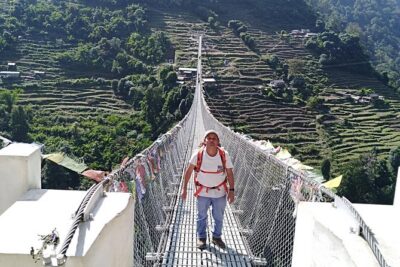
Trekking in Annapurna/Langtang/Everest/Upper Mustang regions
Read our review →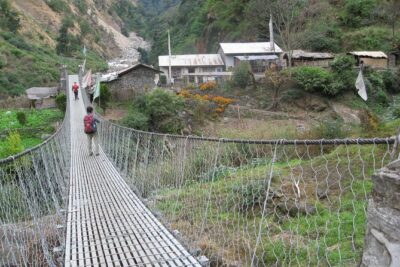
Browse the lists this tour appears in