
REVIEW · KATHMANDU
Langtang Valley Trekking
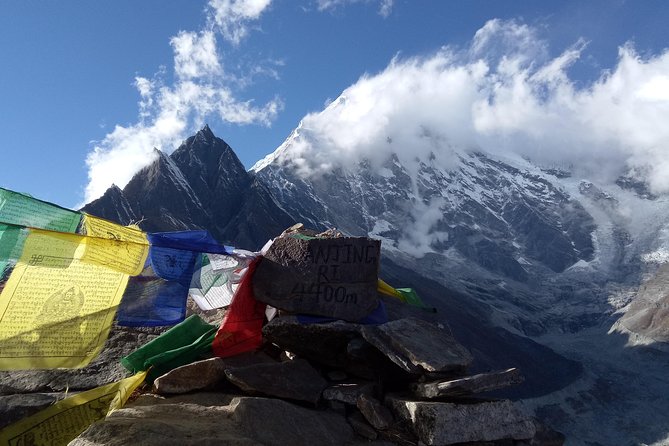
The mountains begin before the trail. This eight-day Langtang Valley trek pairs a long Jeep ride from Kathmandu with quiet Tamang villages, Buddhist monasteries, rhododendron forests, and high Himalayan views. I like the cultural side of the route, especially the chance to pass through communities shaped by Tibetan Buddhism, and I like that the price includes transport, guide, porters, permits, and useful cold-weather gear.
The main consideration is altitude. The itinerary reaches Kyanjin Ri at 4,773 meters and Chorkari Ri at 5,050 meters, so this is not simply a gentle village walk. Meals, drinks, hot showers, Kathmandu lodging, personal equipment, and travel insurance are extra, and the six-to-seven-hour road journey each way can be tiring.
I also like the small private-group setup, which gives your own party more say in the pace. The provider needs at least two people to operate the trip. Surya, named in the available feedback, is praised for answering questions through WhatsApp and planning practical details such as guesthouse stops and personal needs, though the comments concern other Nepal treks rather than this exact route.
Key points at a glance
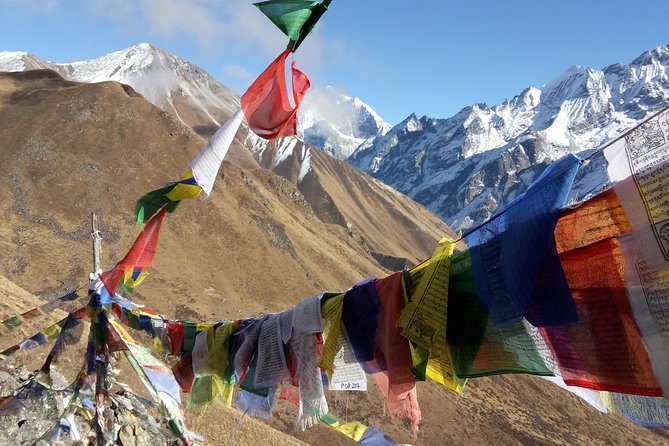
- Kyanjin Gompa at 3,798 meters provides the trek’s main base for high walks and mountain views.
- Two demanding viewpoint days reach Kyanjin Ri at 4,773 meters and Chorkari Ri at 5,050 meters.
- Tamang and Tibetan Buddhist culture gives the route more human interest than a mountain-only itinerary.
- The $600 price includes major essentials, including a private guide, one porter for every two people, permits, Jeep transport, and selected gear.
- The route uses the same trail for the return, making navigation simple but reducing variety during the final three walking days.
- A moderate fitness level is required, with five-to-seven-hour walking days and limited comforts in the mountains.
Why Langtang Valley is a smart short trek from Kathmandu
Langtang Valley offers a strong mountain experience without requiring a very long schedule. You leave Kathmandu by Jeep, reach Syabru Besi, and then follow the Langtang River into forests and high villages. The walking section lasts six days, with the highest points reached from Kyanjin Gompa.
I like the balance here. You get forests, river scenery, village life, monasteries, and snow-covered Himalayan views, rather than spending the whole trek on one type of terrain. The route is also aimed at people who want contact with Tamang culture and local Buddhist traditions, not only altitude and summit statistics.
The route is listed as a private activity, so only your own group takes part. That matters on a trek where walking speeds can differ. You can discuss short breaks, energy levels, and the timing of high walks with your guide more easily than you usually can in a large group.
Still, do not mistake eight days for an easy holiday. The walking days generally last five to seven hours, and the high-point excursions involve serious elevation. A moderate physical fitness level is required, but you also need to be ready for the effects of altitude.
More Langtang Treks in Kathmandu:
- Langtang Valley Trek
★ 5.0 · 140 reviews - Langtang Valley Trek
★ 5.0 · 61 reviews - 8 Days Tour in Langtang Valley Trek
★ 5.0 · 45 reviews
Day 1: Six to seven hours by Jeep to Syabru Besi
The trip starts with a Jeep journey from Kathmandu to Syabru Besi, about 117 kilometers away. The drive takes six to seven hours and ends at approximately 1,462 meters.
This is a full travel day, not a brief transfer. You should expect the road journey to use much of your energy before the walking even begins. The benefit is that you reach the trailhead without adding another overnight stop to the schedule.
Syabru Besi is the practical starting point for the Langtang route. Your guide and porter arrangement begins here, and the next morning you start following the Langtang River. Since the return drive takes another six to seven hours, the road sections are one of the biggest practical features of the trip.
Day 2: River paths and forest to Lama Hotel
The first walking day runs from Syabru Besi to Lama Hotel, at about 2,500 meters. The scheduled walking time is around five hours.
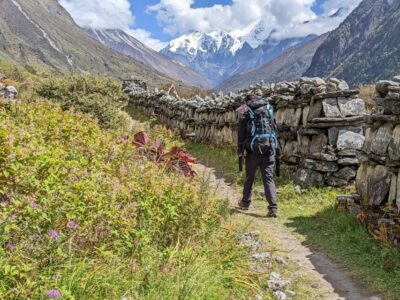
The route follows the river and passes through lush rhododendron and pine forest. This gives you a gradual introduction to the trek, with shade and changing vegetation before the trail climbs toward the higher valley.
The gain in height is substantial, rising from 1,462 meters to 2,500 meters in one day. Your guide can help manage the pace, but you should not treat the first walking day as a race. The forest section is scenic, though it does not yet deliver the broad mountain views that make the upper valley famous.
Lama Hotel is a useful overnight point because it breaks the ascent into manageable stages. At this stage, the trip’s simple mountain accommodation and meal arrangements become important. The tour price does not include meals, so you will need to budget separately for food throughout the trek.
Day 3: Lama Hotel to Langtang Village at 3,307 meters
The walk from Lama Hotel to Langtang Village takes about five hours and reaches approximately 3,307 meters. The route continues along the Langtang River and moves through forest before opening into the higher valley.
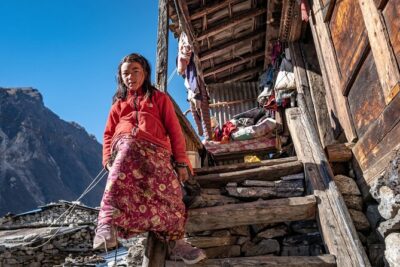
Langtang Village is where the cultural character of the route becomes more noticeable. The area is inhabited by Tamang and Tibetan Buddhist communities, and monasteries and village life form part of the experience. You are not simply walking through empty mountain country.
The altitude also begins to demand more attention. The increase from Lama Hotel to Langtang Village is moderate in distance but meaningful in elevation. Walk steadily, drink enough water, and tell your guide if you feel unwell. The information provided does not specify an extra acclimatization day, so your walking pace matters.
A few more treks around Kathmandu worth a look
- Everest Base Camp Trek – 14 Days
★ 5.0 · 1,499 reviews - Everest Base Camp Trek
★ 5.0 · 842 reviews - Everest Base Camp Trekking
★ 5.0 · 485 reviews - Annapurna Circuit Trek with Tilicho Lake
★ 5.0 · 368 reviews
Day 4: Kyanjin Ri and the high valley
The fourth day is listed as a seven-hour walking day, going from Langtang Village to Kyanjin Ri at 4,773 meters and back to Kyanjin Gompa at 3,798 meters. This is one of the hardest days of the itinerary.
Kyanjin Gompa is described as an ancient monastery and becomes the high base for the trek. From here, you can take in the surrounding Himalayan range and explore the upper valley. The itinerary places the Kyanjin Ri climb on the same day as the move to the Gompa, which makes this a long and demanding schedule.
The high viewpoint is a major reason to choose this route. It gives you a chance to see the mountains from above the valley rather than only from the trail. At this altitude, the weather, cold, and thin air can make the walk feel harder than the distance suggests.
The trip description also mentions non-technical peak climbing near Kyanjin Gompa. That does not mean every high walk is easy. You should understand non-technical to mean no specialized technical climbing is specified, not that the terrain requires no effort or preparation.
Day 5: Kyanjin Gompa and Chorkari Ri at 5,050 meters
Day five is devoted to exploring the Kyanjin area and climbing Chorkari Ri, listed at 5,050 meters. The planned walking time is again about seven hours.
This is the highest point in the program and the day that should influence your booking decision most. Reaching 5,050 meters is a serious physical challenge, especially without a separate acclimatization day listed in the schedule. You need to be comfortable with steep walking, cold conditions, and a slow pace at altitude.
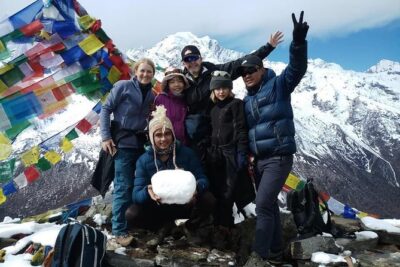
The upper valley offers views toward glaciers and mountain ranges in Nepal and Tibet. The named peaks include Dorje Lakpa and Shishapangma, which rises to 8,013 meters and is the highest mountain in Tibet. These views are the payoff for the hard climb, but they depend on weather and visibility.
Other options mentioned around Kyanjin include the cheese factory at about 4,633 meters and the Langsisa pasture. The description also names Tsergo Ri at 4,984 meters as another viewpoint. Because the itinerary specifically schedules Chorkari Ri, ask the provider before departure how the guide handles these alternatives and which walk is planned for your group.
Days 6 and 7: Returning through Lama Hotel to Syabru Besi
On day six, you walk from Kyanjin Gompa back to Lama Hotel, taking five to six hours. After the high viewpoints, the descent should feel different from the climb, but it is still a long day on the legs.
Day seven continues from Lama Hotel to Syabru Besi and takes five to six hours. The route follows the same path used on the way in, passing back through the forest and river corridor.
Using the same trail makes the trek easy to understand and reduces the need for complicated route planning. The tradeoff is variety. You will not see a new side of the region on the return, so the value of these days comes from noticing familiar places from a different direction and enjoying the descent.
The porter arrangement is one porter for every two people. Pack carefully and keep essential personal items in your day bag. The included porter service is helpful, but it does not mean you should bring unlimited luggage.
Day 8: The long drive back to Kathmandu
The final day returns from Syabru Besi to Kathmandu by Jeep, again taking six to seven hours. It is another long road day, so your tour effectively includes two full travel days in addition to six walking days.
This schedule works well for someone with limited time who wants a substantial Himalayan trek. It is less appealing if you prefer slow travel, extra rest days, or a flexible mountain itinerary. The return drive also means you should avoid planning an important international flight immediately afterward unless you have allowed plenty of extra time.
What the $600 price really covers
At $600 per person, the value is fairly strong if you need a guided, organized trek. The price includes:
- Kathmandu to Syabru Besi and return by Jeep
- An English-speaking trekking guide for the full trek
- Porters, with one porter for every two people
- Staff salaries, accommodation, equipment, and insurance
- Langtang National Park permit
- TIMS card
- Down jacket, sleeping bag, duffel bag, T-shirt, and trekking map
- Medical kit, taxes, and service charges
The down jacket and sleeping bag must be returned. That reduces the amount of cold-weather equipment you need to buy or carry, though personal trekking equipment remains your responsibility.
The price does not include meals, drinks, hot showers, Kathmandu accommodation, international airfare, Nepal entry visa fees, or travel and medical insurance. Alcoholic drinks and both hot and cold drinks are also excluded. These extras can change the final cost, so I would set aside a separate budget for food, drinks, personal gear, and insurance.
The included permits and transport are particularly useful. Organizing a Jeep and park paperwork yourself can be awkward, and the guide and porter support gives the trek a clearer structure. The main weakness is that the headline price does not cover several daily costs you will certainly face.
Guide support, group size, and planning
You receive one English-speaking guide for the entire walking program. The trip is private, and at least two people are required for it to run.
The available provider feedback gives Surya specific credit for staying in contact through WhatsApp, answering questions, and thinking through guesthouse locations and personal needs. That kind of communication is useful before a high-altitude trek, especially when you need to clarify gear, food costs, walking expectations, and the exact plan for Kyanjin Ri and Chorkari Ri.
The strongest praise is for practical organization and personal attention. However, the comments supplied are about other Nepal trekking experiences, including Gosaikund and a frozen-lake trip, not a direct account of this Langtang itinerary. I would treat them as useful information about the provider’s communication style, not proof of every detail on this route.
Confirmation is provided at booking, and the experience uses a mobile ticket. Free cancellation is available if you cancel at least 24 hours before the local start time. Changes or cancellations made inside that window are not accepted for a refund.
Who should book this Langtang trek?
I would choose this trek if you want a compact Nepal itinerary with real mountain walking, local Tamang and Buddhist culture, and high viewpoints. It suits people who can manage five-to-seven-hour walking days and who understand that the two highest days are demanding.
It also suits small groups that prefer a private guide rather than a shared departure. Families or mixed-ability groups should discuss the high walks in advance, since the route reaches 5,050 meters and the schedule does not list an extra rest day.
I would hesitate if you want luxury, included meals, short transfers, or a relaxed pace. I would also hesitate if you have no experience with strenuous walking at altitude or if your schedule cannot absorb two long Jeep journeys.
Should you book it?
Book this Langtang Valley trek if the combination of Tamang culture, forest trails, Kyanjin Gompa, and high Himalayan viewpoints appeals to you more than comfort and route variety. The $600 package covers many costly essentials, and private guide support plus porter service gives the trip useful structure.
Before paying, confirm the meal arrangements, guesthouse locations, personal equipment list, and the exact high-day plan. If you are prepared for altitude, long road transfers, and extra daily costs, this is a solid short trek from Kathmandu with a strong mix of culture and mountain scenery.
FAQ
How long is the Langtang Valley trek?
The trek takes approximately eight days, including two six-to-seven-hour Jeep journeys between Kathmandu and Syabru Besi.
Where does the trek start?
The walking section starts in Syabru Besi, which is about 117 kilometers from Kathmandu and sits at approximately 1,462 meters.
What is the highest point on the itinerary?
The highest scheduled point is Chorkari Ri at approximately 5,050 meters. Kyanjin Ri is listed at 4,773 meters.
Is a guide included?
Yes. An English-speaking trekking guide is included for the entire trek.
Are porters included?
Yes. The package includes necessary porters, with one porter assigned for every two people.
Are meals included?
No. Meals during the trek and in Kathmandu are not included. Alcoholic drinks and hot and cold drinks are also excluded.
Is travel insurance included?
No. Travel and medical insurance are not included, so you need to arrange them separately.
Recently added around Kathmandu
- Ghorepani Poon Hill Trek★ 5.0 · 16 reviews
- Private Manaslu Circuit Trek at Himalayas★ 5.0 · 3 reviews
- Amazing 1 Day Trekking Experience in Kathmandu Nepal★ 5.0 · 24 reviews
- Ghorepani Poonhill Trek★ 5.0 · 5 reviews
- Upper Mustang Trekking★ 5.0 · 2 reviews
- Upper Mustang Trekking★ 3.0 · 2 reviews
- Upper Mustang Trekking★ 5.0 · 4 reviews
- Upper Mustang Trek★ 5.0 · 5 reviews
Langtang Valley Treks, compared.
Trekking in Annapurna/Langtang/Everest/Upper Mustang regions
Read our review →
Browse the lists this tour appears in