
REVIEW · KATHMANDU
Langtang Valley Trek
The Himalayas feel close in seven days. The Langtang Valley Trek gives you snow-capped peaks, Tamang culture, forest trails, and a high mountain destination without the longer schedule demanded by some Nepal routes. I like its gradual trekking route and the fact that permits, meals, accommodation, guides, and transport are included. I also like the chance to reach Kyanjin Gompa, the trip’s main goal, without pushing into the more extreme altitudes found on other Himalayan treks.
There is one important catch: this is not a gentle sightseeing holiday. The road journey to Syabrubesi is long, and several trekking days are demanding. The advertised trip lasts seven days, but some guest accounts refer to eight or nine days, so I would confirm the exact schedule before paying. You should also budget for insurance, tips, and a porter if you do not want to carry your own pack.
Key points to know before booking
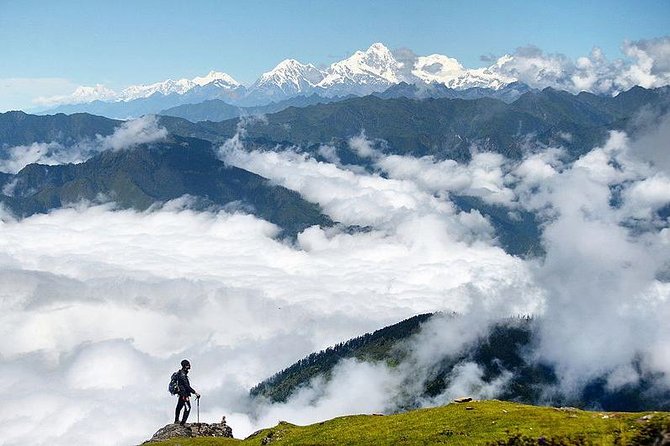
- Kyanjin Gompa is the high point of the route: The trek reaches the major mountain settlement after passing through Langtang village and cooler upper valley scenery.
- The route begins and ends with long transport days: Local shared jeeps connect Kathmandu and Syabrubesi, making the trip practical but not especially comfortable.
- Your meals are covered for all seven days: Breakfast, lunch, and dinner are included, along with three hot drinks per day and seasonal fruit.
- A licensed guide leads the private group: Only your own party participates, and guides such as Buddhi, Laku, Pawan, Nabin, and Tenjin receive especially warm praise for care and organization.
- The trek suits moderately fit beginners: The route is described as moderate, but uphill and downhill walking over several days still requires preparation.
- The $555 price covers the essentials: Permits, TIMS, six nights of private accommodation, food, and shared transport are included, while insurance, tips, city hotels, porter service, and a private jeep cost extra.
Why Langtang works for a shorter Nepal trek
Langtang Valley is a sensible choice if you want a real Himalayan trek but have only a week. The route heads north from Kathmandu toward the Langtang Himal, entering Langtang National Park and following the valley toward Kyanjin Gompa.
I like the balance here. You get mountain scenery, forest, rivers, farming areas, villages, and local culture in one compact trip. You also avoid an itinerary built around only one dramatic viewpoint. Much of the pleasure comes from the steady change in surroundings as the trail rises from Syabrubesi into cooler, higher country.
The route is described as moderate, with gradual terrain and lower altitudes than some better-known Nepal treks. That makes it a reasonable first Himalayan trek for someone with moderate physical fitness. Still, moderate does not mean easy. You walk for several days in a row, often uphill or downhill, and you need to manage your energy rather than race ahead on day one.
The private format is another useful feature. Your group travels with its own guide rather than joining a large mixed party. That can make the pace, meal stops, and daily routine easier to manage, especially if members of the group have different walking speeds.
More Langtang Treks in Kathmandu:
- Langtang Valley Trek
★ 5.0 · 61 reviews - 8 Days Tour in Langtang Valley Trek
★ 5.0 · 45 reviews - Private 8 – Day Langtang Trekking
★ 5.0 · 29 reviews
Day 1: Kathmandu to Syabrubesi by shared jeep
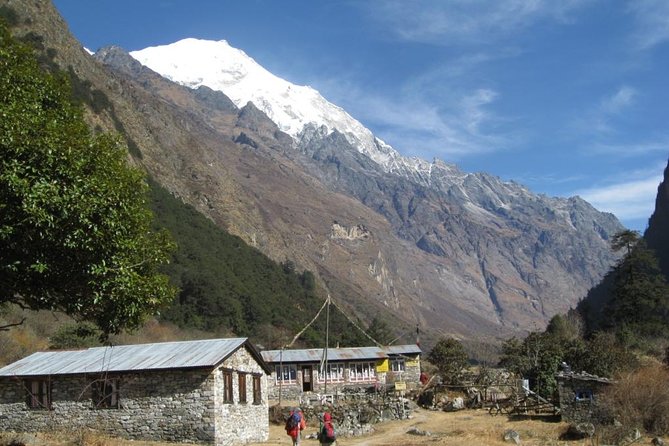
The first day begins around 6:45 a.m. with an overland trip north from Kathmandu. The drive takes about eight hours according to the itinerary, although the full day is shown as roughly 12 hours when departure and arrival time are included.
This is a transport day, not a warm-up hike. You travel by local sharing jeep toward Syabrubesi, with views of snow-capped peaks along the way. The village becomes your starting point for the walking portion of the trek.
The shared jeep keeps the trip price down, but you should expect a basic road journey rather than a relaxed private transfer. If comfort and control matter to you, ask about the private jeep option before departure. A private jeep is listed at $190 per booking, but the supplied details also mention porter cost alongside that option, so confirm exactly what the extra payment covers.
Syabrubesi is more than a place to sleep. It marks the change from city travel to mountain travel. You arrive at a village environment, prepare for the trail, and begin the next morning on foot.
Day 2: Syabrubesi, river crossings, and Langtang National Park
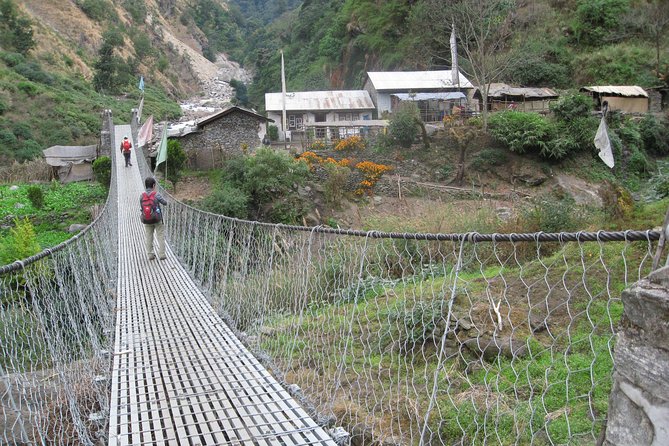
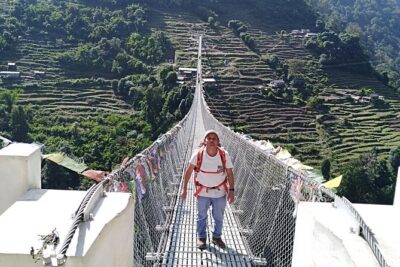
The walking begins by crossing a bridge over the Langtang River. From there, the trail climbs through farming areas before entering dense green forest inside Langtang National Park.
This day gives you the first proper taste of the route. The setting changes gradually, from village land and cultivated plots to trees, river sounds, and a narrower mountain corridor. That slow change is one reason I prefer this trek to a route that puts you immediately on a high pass or exposed ridge.
The day is listed at roughly 14 hours, but that appears to represent the full scheduled day rather than continuous walking time. The itinerary does not provide exact walking hours or a precise distance, so you should ask the operator for those details if you need to plan around fitness or mobility concerns.
Accommodation is included in a private room arrangement for the trek’s six nights. The phrase private accommodation does not tell you the room standard, so do not expect city-hotel facilities without asking. You are paying for a practical mountain stay, with meals and basic lodging arranged along the route.
Day 3: From Lama Hotel to Langtang village
The third day follows the river upstream from Lama Hotel. The path runs through thick forest and a gorge before reaching Ghodetabla and then the cooler surroundings of Langtang village.
This is where the route begins to feel more distinctly Himalayan. The forest and river remain part of the setting, but the air and scenery change as you gain height. The gorge gives the day a more enclosed character, while the approach to Langtang village opens the route toward the upper valley.
Langtang village is a key overnight stop because it places you closer to Kyanjin Gompa. It also gives you a chance to see how settlement patterns change as the route moves higher. The experience is not only about peaks. It is also about walking through communities shaped by mountain geography and local Tamang culture.
You should take this day seriously. The itinerary lists a long day, and the accumulated effort of the first two days may be noticeable. Keep your pack light, use the included hot drinks as short rest breaks, and tell your guide early if your pace is slipping.
A few more treks around Kathmandu worth a look
- Everest Base Camp Trek – 14 Days
★ 5.0 · 1,499 reviews - Everest Base Camp Trek
★ 5.0 · 842 reviews - Everest Base Camp Trekking
★ 5.0 · 485 reviews - Annapurna Circuit Trek with Tilicho Lake
★ 5.0 · 368 reviews
Day 4: The approach to Kyanjin Gompa
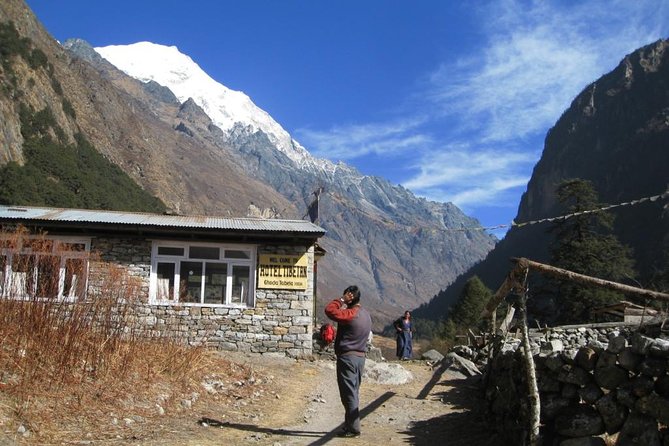
Day four is described as a shorter walk to Kyanjin Gompa, the major destination of the trek. The trail begins with a short steep climb to a ridge after leaving the forested section, then continues into the upper valley.
This is likely the most rewarding day for scenery. The route leaves the lower forest behind and brings you into a cooler, more open mountain setting. You are no longer simply following a river through trees. You are moving toward the high valley that gives the trek its name.
Kyanjin Gompa is the point that makes this seven-day plan feel worthwhile. You get a clear destination rather than a vague promise of mountain views. The itinerary allows time around the settlement before the return journey, which is important. A trek should include at least a little time to absorb its best place, not just arrive, eat, and turn around.
The details do not state whether a separate acclimatization hike or summit walk is included from Kyanjin Gompa. Do not assume one is part of the package. Ask the operator what you will do during the time there and how much independent walking is expected.
Day 5: Returning through Langtang National Park
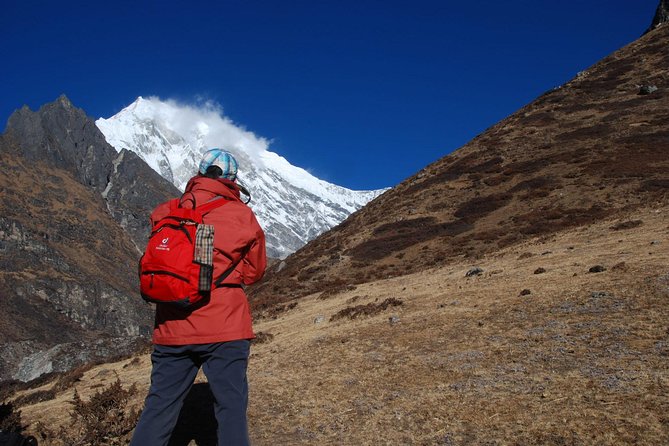
After time around Kyanjin Gompa, the route turns downhill toward Lama Hotel. The return follows the same broad valley, but walking in the opposite direction gives you a different view of the river corridor, forests, and settlements.
Downhill days can sound easy on paper. They are not always easy on the knees, especially after several days of uphill walking. Trekking poles can help, but the supplied details do not say whether they are provided, so bring your own or ask about rental options.
The return route also shows the value of a guide. Guides praised in the guest feedback include Buddhi, Laku, Pawan, and Nabin, with comments highlighting their kindness, organization, humor, flexibility, and explanations of local traditions. Those qualities matter most on long return days, when a good pace and sensible breaks can make the difference between a pleasant walk and a miserable one.
Day 6: Lama Hotel to Syabrubesi
The final walking day follows the forest downhill, crosses a bridge, and returns to Syabrubesi for the last overnight stop. At this point, you have completed the main valley section and are walking back toward road access.
This day is practical rather than dramatic, but it helps keep the schedule manageable. Returning to Syabrubesi before the final drive avoids trying to combine a long mountain walk with the road back to Kathmandu on the same day.
The route shown in the itinerary lists long total-day durations for nearly every stop. Because exact hiking distances and walking times are not supplied, I would ask for a day-by-day breakdown before booking. That information will help you judge whether the trek fits your usual walking ability.
Day 7: The road back to Kathmandu
The last day is an overland journey from Syabrubesi to Kathmandu. The drive is listed as taking about 13 hours in total, so you should treat this as another full travel day.
The return trip completes the loop around the Rasuwa district and gives you time to look back on the week. It also means you do not get a spare rest day in Kathmandu within the seven-day package. If you have an international flight soon after the trek, leave a sensible buffer rather than scheduling a tight connection.
Pickup is offered, and the meeting time is 6:45 a.m. The exact pickup location is not stated, so confirm it with the operator after booking.
What the $555 price really covers
At $555 per person, the package has solid value if you want most major trek expenses handled in advance. The price includes a government-licensed mountain guide for seven days, Langtang National Park entry, the TIMS card, both-way local shared jeep transport, six nights of private accommodation, and all breakfasts, lunches, and dinners.
You also receive three hot beverages per trekking day, seasonal fruit, and a medical kit bag. These extras are modest, but they matter on a route where warm drinks and simple food become part of your daily rhythm.
The package does not include travel insurance, a hotel in Kathmandu, tips, or porter service. A private jeep is offered as an option for $190 per booking. Since the wording connects the private jeep and porter cost, ask for a written breakdown of that extra before committing.
The value is strongest for people who want one clear price covering the core route. It is less attractive if you already have transport, accommodation, or a porter arranged independently. The cost also does not remove the need for personal spending money, suitable clothing, insurance, and possible gear rental.
Food, accommodation, and guide support
Food is included for all seven days, which removes one of the common headaches of a trek. You receive breakfast, lunch, and dinner each day, along with three hot drinks and seasonal fruit.
The information does not provide menus or dietary details. If you have allergies or follow a restricted diet, ask what substitutions are possible before departure. Do not assume that every request can be handled in a remote mountain setting.
Six nights of private accommodation are included during the trek. The exact properties, room arrangements, bathrooms, heating, and charging facilities are not specified. You should view this as organized mountain lodging rather than a hotel stay and ask direct questions if comfort is a major concern.
Guide quality appears to be one of the strongest parts of the experience. Buddhi is praised for warmth, local explanations, and calm organization. Laku receives similar praise for kindness, humor, professionalism, and adaptability. Pawan, Nabin, and porter Tenjin are also singled out for making trips run smoothly.
That human support has real value. You are not simply buying a route. You are buying help with pacing, permits, accommodation, food, transport, and the small decisions that become important when you are tired.
Fitness, packing, and practical concerns
You need moderate physical fitness. The route includes forest climbs, steep sections, river crossings, and repeated uphill and downhill walking over nearly a week. You do not need to be an experienced mountaineer based on the information provided, but you should be comfortable walking for several consecutive days.
A light pack is especially useful because porter service is not included. If you carry your own gear, pack only what you need and confirm the expected baggage arrangement. If you prefer a porter, arrange the cost in advance.
Travel insurance is also your responsibility. The package includes a medical kit bag, but that is not a replacement for personal insurance. Confirm that your policy covers trekking in Nepal and the activities you plan to undertake.
Service animals are allowed, and the starting point is near public transportation. The tour is private for your group, but the included road transport is shared. Those are two different things: you receive a private trekking experience, but you may share the jeep ride with other passengers.
Free cancellation is available up to 24 hours before the local start time for a full refund. Changes or cancellations inside that 24-hour window are not accepted or refunded.
Who should book this trek?
I would recommend the Langtang Valley Trek to you if you want a short, organized introduction to Nepal’s mountain trails and you are comfortable with basic trekking conditions. It is a good fit for first-time trekkers who want a guide, included meals, permits, and planned accommodation rather than arranging each part alone.
It also suits private groups that want their own guide and a more personal pace. The route has enough cultural and natural variety to feel substantial, even though it is only about a week.
I would be cautious if you dislike long road journeys, need hotel-level comfort, or want a very relaxed walking schedule. The shared jeep transfers are lengthy, porter service costs extra, and the available day descriptions do not give enough detail about exact walking distances.
Should you book the Langtang Valley Trek?
Book it if your priority is a compact Himalayan route with strong logistical support. The $555 price covers the core expenses, the itinerary reaches Kyanjin Gompa, and guide support appears to be a major strength.
Before booking, confirm the exact walking hours, the standard of accommodation, the private jeep and porter charges, and why some trip accounts describe eight or nine days rather than seven. If those details fit your expectations, this is a practical way to experience Langtang without committing to a much longer Nepal trek.
FAQ
How long is the Langtang Valley Trek?
The advertised itinerary lasts approximately seven days, with six nights of accommodation during the trek.
Where does the trek start?
The walking portion starts in Syabrubesi, which you reach from Kathmandu by local shared jeep.
What time does the trip start?
The stated start time is 6:45 a.m.
Is transportation included?
Yes. Both-way transportation by local sharing jeep is included. A private jeep is available as an option for $190 per booking.
Are meals included?
Yes. Breakfast, lunch, and dinner are included for all seven days. The package also includes three hot beverages per trekking day and seasonal fruit.
Are permits included?
Yes. The Langtang National Park permit and TIMS card are included.
Is a porter included?
No. Porter cost is not included in the base price and should be confirmed separately with the operator.
What level of fitness is required?
A moderate level of physical fitness is required. The route includes uphill and downhill walking, forest trails, bridges, and several consecutive trekking days.
Can I cancel for a full refund?
Yes, if you cancel at least 24 hours before the experience start time. Cancellations made less than 24 hours before the start are not refunded.
Recently added around Kathmandu
- Ghorepani Poon Hill Trek★ 5.0 · 16 reviews
- Private Manaslu Circuit Trek at Himalayas★ 5.0 · 3 reviews
- Amazing 1 Day Trekking Experience in Kathmandu Nepal★ 5.0 · 24 reviews
- Ghorepani Poonhill Trek★ 5.0 · 5 reviews
- Upper Mustang Trekking★ 5.0 · 2 reviews
- Upper Mustang Trekking★ 3.0 · 2 reviews
- Upper Mustang Trekking★ 5.0 · 4 reviews
- Upper Mustang Trek★ 5.0 · 5 reviews
Langtang Valley Treks, compared.
Trekking in Annapurna/Langtang/Everest/Upper Mustang regions
Read our review →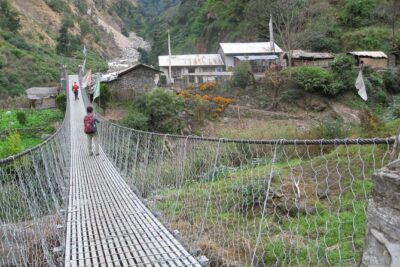
Browse the lists this tour appears in