
REVIEW · KATHMANDU
Langtang Valley Trek
Mountains, monasteries, and a long road in. The Langtang Valley Trek gives you a strong mix of forest walking, Himalayan views, Tamang and Sherpa culture, and a high point at Tserko Ri. I especially like the gradual change from river valleys and monkeys in the lower country to open alpine scenery near Kyangjin Gompa. I also like that guides such as Shiva and Himal are praised for careful planning, cultural insight, and adapting the pace when someone feels unwell.
The main drawback is the road. The trip begins and ends with a rough six to eight-hour drive between Kathmandu and Syabrubesi, and the return walk uses much of the same trail. The published plan also has a small timing puzzle: it is sold as roughly nine days, while one description refers to a standard 11-day version. Confirm your exact schedule before paying.
Key points at a glance
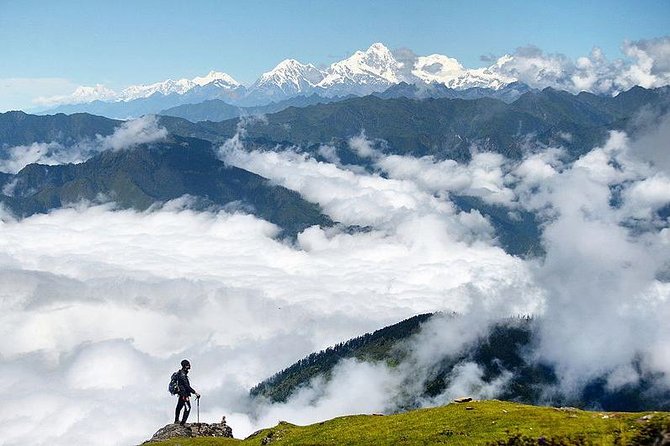
- Tserko Ri sunrise: The high walk above Kyangjin Gompa is the trip’s big prize, with broad views of the Langtang ranges.
- A changing trail: You move from farmland, river crossings, and forest to yak-grazing country and high Himalayan peaks.
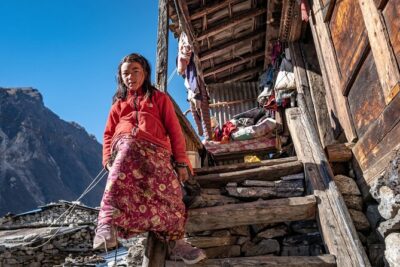
- A meaningful cultural route: The valley borders Tibet and still carries traces of its old trading links, with mani walls, monasteries, Tamang villages, and Sherpa settlements.
- Guides who adjust the plan: Shiva, Himal, and other guides receive strong praise for care, safety, cultural explanations, and flexible pacing.
- Useful equipment included: A down jacket, four-season sleeping bag, duffel, map, medical kit, permits, guide, porter support, and transport are part of the package.
- Small-group format: The maximum group size is 15, with group discounts available.
Why Langtang works so well for a first Himalayan trek
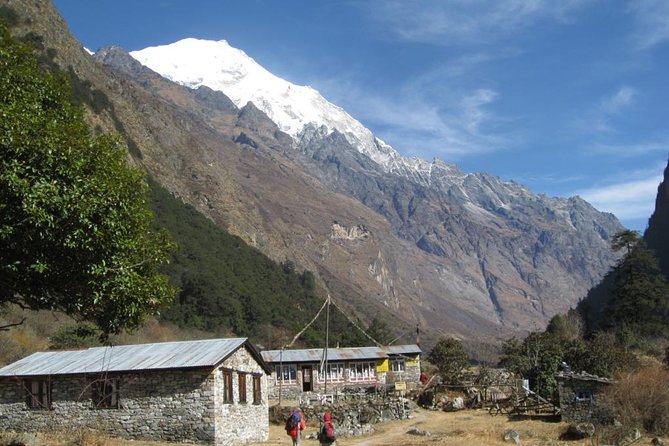
Langtang is a good choice if you want real mountain walking without committing to the longer, more demanding routes in Nepal. The trip reaches Kyangin Gompa, with optional walks toward Kyangin Ri or Tserko Ri, but it does not require a full expedition setup.
The route also has a pleasing sense of progression. You begin near Kathmandu, pass through the Trisuli River corridor, and arrive in a countryside of terrace farms and scattered mountain villages. Then the trail narrows beside rivers and enters Langtang National Park, where forest, wildlife, and steep hills take over.
Higher up, the scenery opens. Peaks such as Langtang Lirung, Changbu, and Kinshung come into view, while the villages become more closely tied to grazing, monasteries, and mountain trade. That change makes the walking feel like a journey, not simply a climb to a single viewpoint.
I also appreciate the human story here. Langtang Village was heavily damaged in the 2015 earthquake and has since been rebuilt. Walking through the reconstructed settlement gives the route emotional weight, without turning the trek into a memorial tour. The mountains remain the focus, but the valley’s recent past is impossible to miss.
More Langtang Treks in Kathmandu:
- Langtang Valley Trek
★ 5.0 · 140 reviews - Langtang Valley Trek
★ 5.0 · 61 reviews - 8 Days Tour in Langtang Valley Trek
★ 5.0 · 45 reviews
Day 1 in Kathmandu: an easy landing
Your first day is built around arrival at Tribhuvan International Airport. A representative meets you outside the terminal with a sign bearing your name, transfers you to the hotel, and helps with check-in.
That assistance matters after an international flight. You have time to sort out your luggage, adjust to Kathmandu, and prepare for the road journey ahead. The airport transfer is included, but your Nepal entry visa, international airfare, airport taxes, drinks, and personal expenses are not.
Do not expect a sightseeing day in this schedule. It is mainly a practical arrival and rest day, which is exactly what you want before the early road departure.
Day 2: the rough road to Syabrubesi
The drive to Syabrubesi takes about six to eight hours. Some stretches are off-road, so this is not a polished coach transfer. The reward is a steady change in scenery, from Kathmandu’s urban edge to the Trisuli River, terrace farms, mountain villages, and glimpses of Ganesh Himal.
You will make quick stops at local places for food or tea. These pauses help break up the drive and offer small windows into everyday life. By the time you pass Dhunche, the setting feels much more remote.
Syabrubesi provides a useful reset before walking begins. You stay at a local lodge and can stroll around, visit a bakery, try local cheese, or sit with tea or coffee. This sounds modest, but it is a good way to settle your legs and get a first feel for village life.
The transport description deserves a question before booking. The inclusions list public bus or jeep fare between Kathmandu and Syabrubesi, while also mentioning private transportation. Ask exactly what vehicle and service your group will receive. The answer may affect comfort, departure time, and how much control you have over roadside stops.
Day 3: rivers, forest, and the walk to Lama Hotel
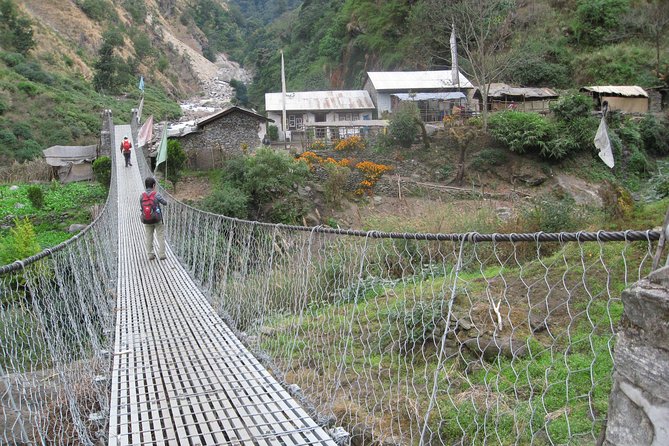
The trek starts by crossing the Bhote Koshi River and Langtang Khola. From there, the route climbs gradually toward Bamboo, with careful walking needed in areas affected by landslides.
This is a full walking day of about seven hours. The trail follows the river, and many lunch stops sit close to the water. Ramche is noted as a lunch point before the route continues toward Lama Hotel.
The lower Langtang trail is one of the trip’s strongest sections. The forest is thick, and you may see langur monkeys or, with luck, a red panda. The red panda sighting is never guaranteed, so treat it as a fortunate possibility rather than a promised feature.
You should also expect uneven ground, stone steps, and sections where you need to watch your footing. The itinerary calls for moderate physical fitness, and this is where that requirement begins to feel real. You do not need technical climbing skills, but you do need to handle several hours of steady walking.
A few more treks around Kathmandu worth a look
- Everest Base Camp Trek – 14 Days
★ 5.0 · 1,499 reviews - Everest Base Camp Trek
★ 5.0 · 842 reviews - Everest Base Camp Trekking
★ 5.0 · 485 reviews - Annapurna Circuit Trek with Tilicho Lake
★ 5.0 · 368 reviews
Day 4: rebuilt Langtang Village and Mundu
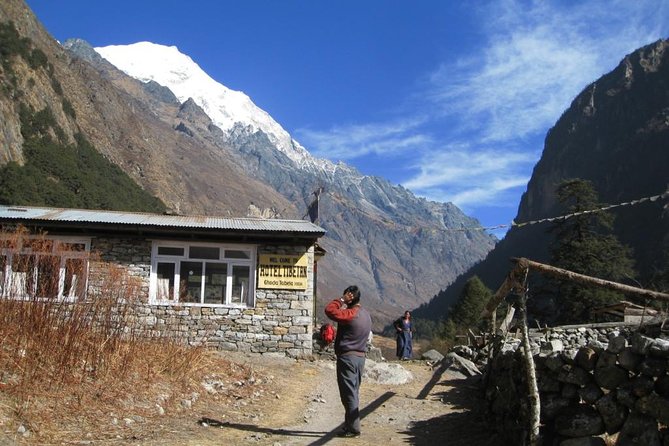
The trail continues through one of the valley’s most significant areas. Langtang Village was destroyed in the 2015 earthquake and has since been rebuilt, with tea houses operating again.
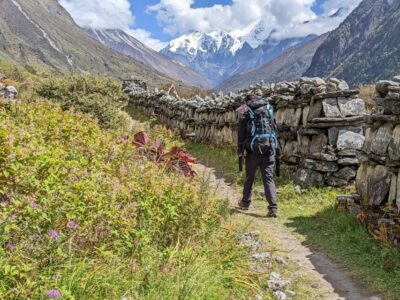
Rather than stop there, the schedule continues toward Mundu. The day takes about six hours and brings better mountain views. Mani stone walls line parts of the route, and Langtang Lirung, Changbu, and Kinshung peaks appear above the valley.
Mundu is a sensible overnight stop because it positions you close to Kyangin Gompa for the next morning. It also gives you a quieter setting than simply stopping at Langtang Village.
This is a good day to listen to your guide. The route’s cultural details are not always obvious from the trail itself. Guides such as Himal and Shiva have been praised for explaining Nepalese culture, Buddhism, and Himalayan life in a way that adds meaning without slowing the group to a crawl.
Day 5: Kyangin Gompa and your first high choice
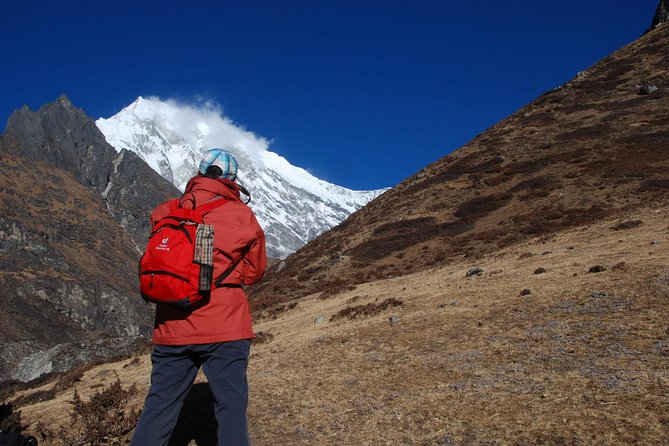
The walk from Mundu to Kyangin Gompa takes roughly two hours. It is a gradual ascent through grazing land, across small streams, and over wooden bridges.
Kyangin Gompa is the high point of the standard valley route and a natural place to pause. A famous monastery is under reconstruction, and the former cheese factory is no longer operating, so do not arrive expecting every historic attraction to be open.
The schedule gives you a choice. If your legs are strong and conditions suit you, you may climb Kyangin Ri, listed at 4,300 meters, then return to the gompa. Or you can arrive at Kyangin Gompa, rest, and save Kyangin Ri or Tserko Ri for the next day.
That flexibility is valuable. The trek is not a race, and high-altitude walks are better when you judge the day honestly. Some people use the extra time for a shorter viewpoint walk, while others prefer to rest before the sunrise outing.
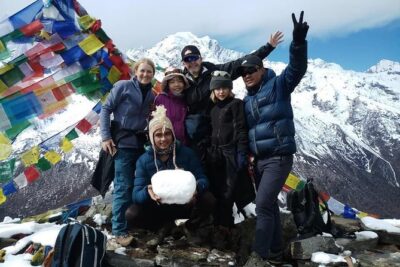
The main event is Tserko Ri, known for sunrise views over the Langtang ranges. The supplied plan names Tserko Ri as a major objective, while some trip descriptions and guest accounts use Cherko Ri or Tsergo Ri. Confirm which summit your guide plans to attempt, since those names can create confusion.
Day 6: the same trail, seen differently
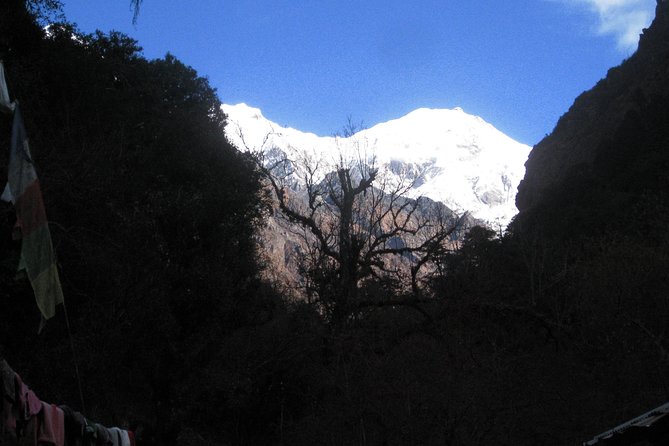
The return begins after your time around Kyangin Gompa. You descend through Ghodatabela, follow the Langtang Khola, and spend the night at Lama Hotel.
The walking time is about six hours. Yes, you are using much of the same trail, but downhill travel changes what you notice. The river now runs beside you in a different rhythm, and views that were partly hidden during the climb can open up on the way down.
This repeated section is the least varied part of the route. If you want a more circular trek, ask about extensions before departure. The wider region offers routes toward the Tamang Heritage Trail, Gosaikunda, and Helambu, but those are not part of this standard schedule and require extra days.
Day 7: Sherpagaun and the final mountain walking day
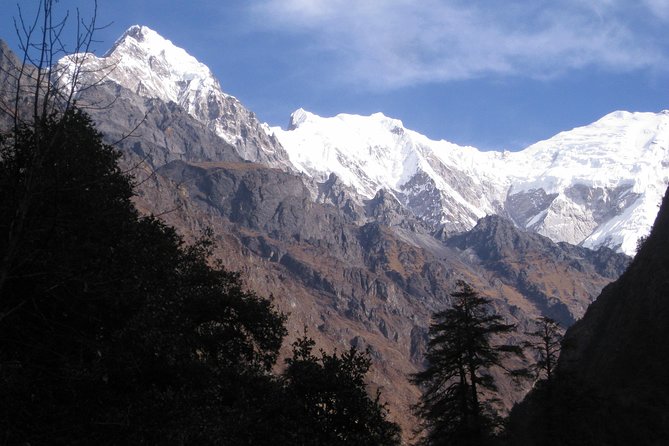
The last walking day takes you from Lama Hotel through Sherpagaun and back toward the Syabrubesi area. Allow about seven hours.
Sherpagaun adds another cultural layer, with Sherpa and Tamang communities appearing along the route. The setting becomes greener again, and broad valley views return as you lose altitude.
This day can feel long because the trek’s main high point is behind you, but it gives you one final chance to enjoy village life at walking speed. The route also shows how many possible journeys branch from this part of Nepal. Westward, the Tamang Heritage Trail reaches Gatlang. Eastward, the Laurebina Pass leads toward the pilgrimage site of Gosaikunda.
Those options are useful to know if you want to turn this trip into a longer Nepal holiday. They are not free add-ons, though. Extra walking days, permits, accommodation, and transport need to be arranged separately.
Day 8: back to Kathmandu by road
The morning drive from Syabrubesi to Kathmandu takes about seven to eight hours. After the quiet of the valley, the return to city traffic can feel abrupt.
The company arranges the transfer and assists with hotel check-in. You then have free time, which is useful for a shower, a meal, shopping, or simply resting after the road ride.
Build some patience into this day. Road conditions can affect timing, and the schedule does not leave much room for a same-day international flight. The next day is reserved for airport transfer, which is a safer arrangement.
Day 9: airport transfer and departure
The final day is straightforward. You should have your bags ready for a transfer to Tribhuvan International Airport around three hours before your international flight.
The airport transfer is included. Nepal visa costs, airfare, airport taxes, personal purchases, laundry, phone calls, internet, camera charging, drinks, and travel or medical insurance remain your responsibility.
What the $860 price really covers
At $860 per person, the package has solid value if you want a guided trek with equipment support and organized logistics. You receive a guide, porters at a ratio of one porter for two people, porter food and accommodation, salaries, equipment, and insurance.
The package also includes permits and paperwork, a medical kit, trekking duffel, map, down jacket, four-season sleeping bag, and a T-shirt. The down jacket and sleeping bag are loan items and must be returned after the trek.
Transport between Kathmandu and Syabrubesi is included, as is private transportation according to the inclusions, though that point should be clarified. The meal section lists Breakfast (2), but the wording is not detailed enough to establish exactly which meals are covered. Ask what food is included each day, especially in the teahouses.
Drinks are not included. That covers bottled water, soft drinks, hot drinks, boiled drinking water, and hot showers. Personal shopping, chocolate, desserts, laundry, communications, battery charging, insurance, helicopter rescue, and tips are also outside the price.
Free cancellation is available if you cancel at least 24 hours before the local start time. A later cancellation or late change is not refundable.
Who should book this trek
I would point this trip toward someone with moderate fitness who wants a guided Himalayan trek of manageable length. It suits you if you value local lodges, village contact, mountain scenery, and a guide who can adjust the plan when a group member needs more recovery time.
The small-group cap of 15 is helpful, though your actual group may be smaller. Group discounts can improve the value for friends or families traveling together.
I would hesitate if you dislike rough road travel, need private bathrooms and hotel-level comfort, or want a completely different trail on the way back. I would also hesitate if you expect every listed attraction to be operating, since the cheese factory is closed and the monastery is under reconstruction.
Final call: a strong trek with two things to clarify
You should book the Langtang Valley Trek if you want a well-supported route with a big mountain finish, strong cultural contact, and a price that includes the major trekking basics. The most praised parts are the care of guides such as Shiva and Himal, the thoughtful organization, the scenery from forest to high country, and the willingness to shorten or adjust the plan when someone feels unwell.
Before booking, get two answers in writing: Is your trip nine days or part of the longer 11-day version, and will the Kathmandu transfers use a public bus, jeep, or private vehicle? Once those details are clear, this is a practical and rewarding introduction to the Langtang Valley.
FAQ
How long does the Langtang Valley Trek take?
The experience is advertised as approximately nine days, covering arrival in Kathmandu, the trek, return to Kathmandu, and airport transfer. One description refers to a standard 11-day version, so confirm your exact schedule before booking.
What is the price per person?
The listed price is $860 per person. Group discounts are available.
What fitness level do I need?
A moderate physical fitness level is required. Walking days range from about two hours to eight hours, with several full days on uneven mountain trails.
Is Tserko Ri included?
Tserko Ri is presented as a major highlight of the trek, especially for sunrise views. The schedule also allows walks to Kyangin Ri or Tserko Ri, depending on your fitness, interest, and timing.
What equipment is provided?
The package provides a down jacket, four-season sleeping bag, trekking duffel bag, T-shirt, trekking map, and medical kit. The down jacket and sleeping bag must be returned after the trek.
Are meals and drinks included?
The inclusion details list breakfast (2), but they do not clearly explain the full meal plan. Alcohol, soft drinks, bottled water, hot drinks, boiled drinking water, hot showers, and other personal purchases are not included.
What happens if I need to cancel?
You can receive a full refund if you cancel at least 24 hours before the experience start time. Cancellations or changes made less than 24 hours before the start time are not accepted for a refund.
Recently added around Kathmandu
- Ghorepani Poon Hill Trek★ 5.0 · 16 reviews
- Private Manaslu Circuit Trek at Himalayas★ 5.0 · 3 reviews
- Amazing 1 Day Trekking Experience in Kathmandu Nepal★ 5.0 · 24 reviews
- Ghorepani Poonhill Trek★ 5.0 · 5 reviews
- Upper Mustang Trekking★ 5.0 · 2 reviews
- Upper Mustang Trekking★ 3.0 · 2 reviews
- Upper Mustang Trekking★ 5.0 · 4 reviews
- Upper Mustang Trek★ 5.0 · 5 reviews
Langtang Valley Treks, compared.
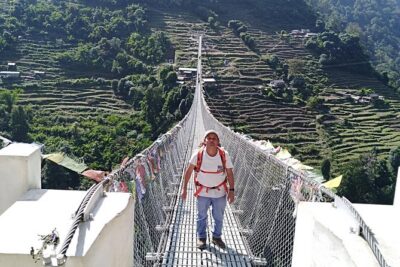
Trekking in Annapurna/Langtang/Everest/Upper Mustang regions
Read our review →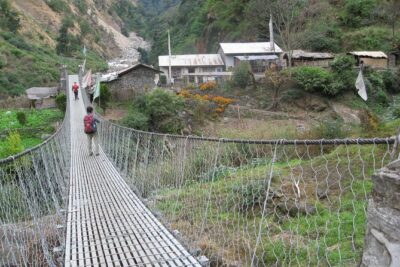
Browse the lists this tour appears in