
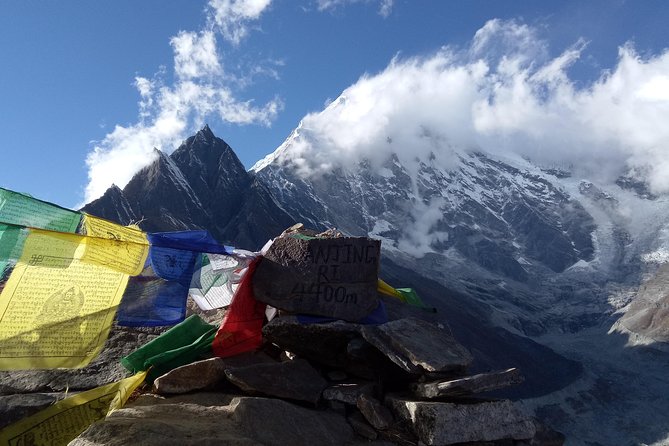
REVIEW · KATHMANDU
Langtang Valley Trekking
Mountain roads lead to serious Himalayan views. The Langtang Valley Trek gives you mountain scenery, forest paths, river valleys, and Tibetan-influenced villages in 10 days, without requiring the longer schedule of Everest Base Camp. I especially like the built-in rest day at Kyanjin Gompa and the steady support of a guide and porter team. The main concern is the combination of rough road travel, long walking days, and fast altitude gain.
I also like that the trek includes Kathmandu hotel nights, permits, meals during the walk, airport transfers, and tea-house lodging. Past trips have featured guides such as Sandesh, Suk, Veer Gurung, Phul Gurung, and Bal, with praise for their patience and care. Still, you should arrive with a reasonable fitness level and take altitude symptoms seriously, especially on the climb from Bamboo toward Lama Hotel.
Key points to know before booking
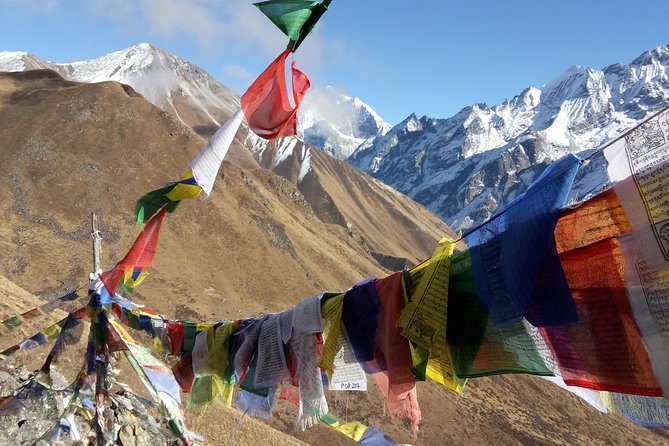
- Kyanjin Gompa is the high point of the main route: You spend a full day here for the monastery, cheese factory, and optional climb toward Chorkari Ri.
- The road to Syabrubesi is part of the adventure: The journey passes rural settlements, Trishuli Bazaar, and Dhunche before reaching the trailhead.
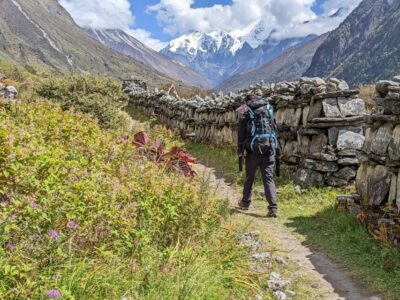
- You walk beside the Langtang River: Forests, rhododendrons, pine trees, waterfalls, and possible wildlife sightings fill the route.
- A guide and porter are included: One porter is provided for every two people, while the guide speaks English.
- The package covers major trekking costs: Permits, tea-house lodging, meals during the trek, Kathmandu hotel stays, and bus transport are included.
- A private jeep costs extra: The listed price is $750 per person, but a private Kathmandu to Syabrubesi transfer is priced separately at $150 each way.
Why Langtang works well for a shorter Nepal trek
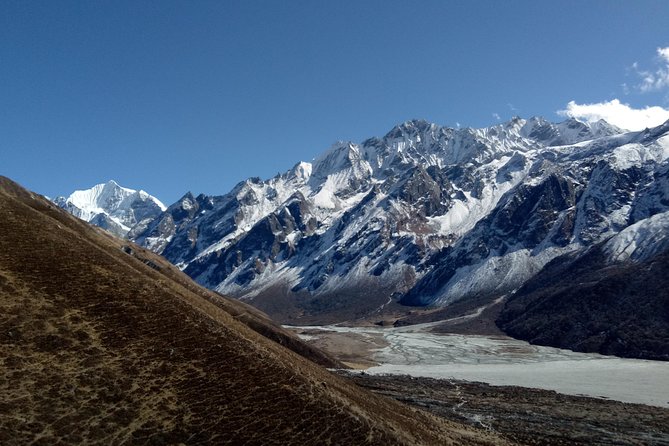
Langtang sits north of Kathmandu, close to the Tibetan border, and the route gives you a strong taste of Himalayan trekking without requiring several weeks away. The trek combines rural Nepal, Buddhist culture, mountain views, and high-altitude walking in a fairly compact program.
I like the rhythm of this itinerary. You spend two nights reaching and leaving the trail, several days moving gradually upward, one full day at Kyanjin Gompa, then retrace the route to Syabrubesi. That makes the trip easier to understand than a complicated point-to-point trek, although you will walk some of the same trail twice on the return.
The route is not a casual hill walk. The itinerary describes moderate physical demands, but the altitude makes the effort more serious than the word moderate might suggest. You rise from Kathmandu to Syabrubesi, then reach Lama Hotel, Langtang Village, and finally Kyanjin Gompa at much higher elevations over only a few days.
One past trekker developed mild mountain sickness after Bamboo while walking toward Lama Hotel. That detail matters. You should not treat this route as a simple sightseeing holiday, and you should tell your guide immediately if you develop a headache, nausea, unusual tiredness, or other altitude symptoms.
More Langtang Treks in Kathmandu:
- Langtang Valley Trek
★ 5.0 · 140 reviews - Langtang Valley Trek
★ 5.0 · 61 reviews - 8 Days Tour in Langtang Valley Trek
★ 5.0 · 45 reviews
Days 1 and 2: Kathmandu to Syabrubesi by road
Day 1 is deliberately light. After arriving in Kathmandu, you are taken to your hotel, with a short 15 to 20 minute drive through the Kathmandu Valley. The route passes Pashupatinath Temple, giving you a first glimpse of one of the city’s major religious sites.
Do not expect a full Kathmandu sightseeing day here. This is mainly an arrival and orientation day, useful after an international flight. You get time to settle in before the long road journey north.
Day 2 begins with the drive from Kathmandu toward Syabrubesi. The road passes through northwestern hill country, rural settlements, Trishuli Bazaar, and Dhunche. You may catch views of the Himalayas between bends in the road, though the journey itself is a substantial part of the day.
The itinerary uses an express bus, while a private jeep is available for an additional $150 each way. The bus keeps the price lower, but a private vehicle may appeal if you value flexibility or want a more personal ride for your group. The package describes this as a private activity for your group, but the included transport is listed as an express bus, so confirm the exact vehicle arrangement before departure.
You sleep at a guesthouse in Syabrubesi, with breakfast, lunch, and dinner included. This is the last major road settlement before the walking begins in earnest.
Day 3: River paths and the climb to Lama Hotel
The first trekking day starts from Syabrubesi, crossing the Bhote Koshi River before following the Langtang River. The path gradually enters forest, with Bamboo and Ramche along the way.
The walk to Lama Hotel takes about five hours according to the itinerary. The elevation at Ramche is given as 2,400 meters, and Lama Hotel is the day’s overnight stop. Expect a route shaped by river sounds, wooded slopes, and steady uphill walking rather than one dramatic viewpoint.
The forest may offer glimpses of wild monkeys, red pandas, and other animals. These sightings are never guaranteed, so enjoy the habitat even if the wildlife stays out of sight. The real reward is the change from road travel to a quieter footpath.
This is also the day to manage your pace. The climb can feel harder than the distance suggests because your body is adjusting to altitude. A guide such as Veer Gurung or Suk has been praised for staying attentive to trekkers, but your own job is to speak up early when you feel unwell.
Day 4: Rhododendrons, foxgloves, and Langtang Village
From Lama Hotel, the trail passes through wooded areas filled with rhododendron and pine. In the right season, foxgloves and red poppies add color around Ghoda Tabela.
The route then continues toward Langtang Village at 3,455 meters before finishing at Mundu. This is one of the most visually rewarding walking days because the scenery changes as you gain height. Forest gives way to more open mountain surroundings, and the settlements feel increasingly tied to the high valley.
The itinerary describes roughly three hours of walking after Ghoda Tabela before passing Langtang Village, though actual timing depends on pace, trail conditions, and stops. You should expect a full trekking day, not a quick transfer between villages.
Mundu is a useful overnight point before the final push to Kyanjin Gompa. Sleeping at altitude before going higher gives you a chance to rest, eat, and prepare for the next day.
A few more treks around Kathmandu worth a look
- Everest Base Camp Trek – 14 Days
★ 5.0 · 1,499 reviews - Everest Base Camp Trek
★ 5.0 · 842 reviews - Everest Base Camp Trekking
★ 5.0 · 485 reviews - Annapurna Circuit Trek with Tilicho Lake
★ 5.0 · 368 reviews
Day 5: Reaching Kyanjin Gompa and the icefalls
Day 5 takes you from Langtang Village through Sindum and Yamphu, which sits at about 3,640 meters. You cross the Laja River and continue toward a viewpoint with sights of icefalls flowing from Langtang Lirung.
This is the point where the trek feels properly Himalayan. Kyanjin Gompa brings wide views of Langtang Lirung, Gangchempo, and other peaks. The combination of high mountains, open valley, and a Buddhist monastery gives the destination more character than a simple mountain lodge stop.
The walk is not only about arriving. You are still gaining altitude, so keep your pace calm. The itinerary does not give a precise walking time for this day, but the elevation change makes it one of the more important sections for careful acclimatization.
Kyanjin Gompa is also where the trip earns much of its price. You are not simply driven to a viewpoint, photographed, and returned to Kathmandu. You spend time walking into the valley, then have a full day to explore the high surroundings.
Day 6: A full day at Kyanjin Gompa
The rest day at Kyanjin Gompa is one of the smartest parts of the plan. You can visit the monastery and cheese factory, or attempt the climb toward Chorkari Ri, listed at 5,050 meters.
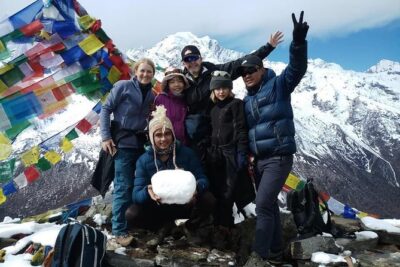
The high viewpoint offers views of ice walls and the Langtang range, including Langshisa Ri at 6,810 meters, Langtang Lirung at 7,244 meters, Ganjala Peak, and Gangchempo at 6,888 meters. The itinerary also refers to a climb behind Langtang Village, so ask your guide to confirm the exact route and objective for the day.
This optional high walk should not be treated as a requirement. At 5,050 meters, it is a serious outing, especially after several days of ascent. You can gain plenty from a gentler day around Kyanjin Gompa, and your guide should help you decide based on weather, energy, and altitude symptoms.
Past clients have specifically valued guides who adjusted the day to suit their condition. Bal was praised for flexibility and for carrying a sleeping bag, while Veer Gurung was singled out for patient encouragement. Those details are useful because high-altitude support often matters more than a polished schedule.
Days 7 and 8: Retracing the valley to Syabrubesi
Day 7 takes about six hours to return to Lama Hotel. You descend through familiar forest and river country, but the direction changes the views and usually makes the walking feel different.
Day 8 continues downhill from Lama Hotel to Syabrubesi, again taking about six hours. Descending is easier on the lungs, but it can be tiring on the knees, especially after the high point at Kyanjin Gompa. Trekking poles may be useful, although they are not listed as an included item.
Returning by the same trail has one clear advantage: you know what lies ahead. You can walk more steadily and spend less mental energy wondering how far remains. The drawback is that those hoping for a circular route will find the return repetitive in places.
You sleep in guesthouses, with meals listed as included. Food on the trek has received unusually warm praise, with dal bhat and other lodge meals described as better than expected. Do not expect a restaurant menu in the mountains, but you should have regular meals and a hot drink with the trekking meals listed in the package.
Days 9 and 10: Back to Kathmandu
Day 9 is a roughly seven-hour drive from Syabrubesi to Kathmandu. After several days on foot, the long bus ride can feel tiring, but it gives you a clear end to the mountain portion of the trip.
You spend the night at a Kathmandu hotel, with breakfast included. The package provides two nights in a three-star Kathmandu hotel on a bed-and-breakfast plan, giving you one city night before the trek and another after it.
Day 10 is departure day. An Everest Trekking Routes representative escorts you to the airport, and breakfast is included.
Airport pickup and drop-off by private car, van, or bus are part of the package. That is useful for first-time visitors who do not want to negotiate Kathmandu transport immediately after a long flight or after returning from the mountains.
What the $750 price really covers
At $750 per person, the package offers solid value if you use most of its inclusions. It covers airport and hotel transfers, two Kathmandu hotel nights, express bus transport between Kathmandu and Syabrubesi, tea-house accommodation during the trek, trekking permits, an English-speaking guide, and one porter for every two people.
Meals during the trek are also included. The package lists eight breakfasts, eight lunches, and seven dinners during the trekking period, plus nine breakfasts elsewhere in the inclusions. Since the meal count is written in two slightly different ways, confirm the final meal schedule before paying.
The package lists dinner as included, but the inclusions are not perfectly consistent on this point. Ask the company to clarify which dinners are covered on the Kathmandu nights and on the arrival and departure days.
Personal costs are not included. You pay for drinks, bottled water, hot water, bar items, beer, soft drinks, extra hotel nights, and tips for your guide, porters, and driver. A private jeep costs $150 per way, so choosing that option can change the final cost substantially.
The package also says all government taxes and service charges are included. That helps keep the advertised price closer to the actual base cost, but you should still budget for personal purchases and gratuities.
Guides, porters, and the human side of the trek
The strongest part of this experience is the practical care provided by the local team. Past clients have praised prompt communication from Rabin, patient guidance from Phul Gurung, Sandesh, Suk, Veer Gurung, Bal, and others, and helpful porters who assisted with luggage and difficult sections.
A porter is included at a ratio of one for two people. Pack carefully and keep your personal day bag light. You should not assume the porter will carry every item you bring, and the package does not state a baggage limit.
The guide is English-speaking and is expected to manage the walking route, support the group, and help with mountain conditions. Ask questions before departure about the guide assigned to your group, the porter arrangement, luggage limits, and the plan for the high day at Kyanjin Gompa.
This is a private activity, so only your group participates. That gives you more control over pace and rest stops than a large group departure. It can also mean that the social atmosphere depends on the people in your own party.
Who should book this Langtang trek?
I would recommend this trek to you if you want Himalayan scenery and village life but have only about 10 days. It suits people who prefer a guided route with permits, transport, meals, and basic lodging arranged in advance.
It is a good match for first-time trekkers who are willing to train beforehand. You do not need to be an elite mountaineer, but you should be comfortable walking for several hours, climbing and descending uneven paths, and coping with basic tea-house conditions.
You should think twice if you dislike long road journeys, shared-style mountain lodging, repeated routes, or uncertain weather. You also need to accept that the high viewpoint on the rest day may not be suitable for you, even if you feel fine at lower elevations.
The published score is 4.9 out of 5 from 20 ratings, with a 100 percent recommendation figure. The most consistent praise centers on helpful guides, clear communication, beautiful views, porter support, and surprisingly good food. Those are meaningful strengths, but they do not remove the physical demands of altitude or the roughness of the road.
Should you book the Langtang Valley Trek?
Book it if you want a well-supported, moderate-length Nepal trek with a strong mountain payoff. The combination of Kyanjin Gompa, the Langtang River, rhododendron forests, local villages, monastery visits, and high viewpoints gives you plenty of variety for the time involved.
Before booking, confirm the meal count, transport type, luggage allowance, assigned guide, and whether the Chorkari Ri outing is optional or planned as part of your day. If you prepare your legs, travel with patience, and respect the altitude, the $750 price offers a practical way to experience the Langtang Himalayas without arranging every detail yourself.
FAQ
How long is the Langtang Valley Trek?
The trip lasts approximately 10 days, including arrival and departure arrangements, travel between Kathmandu and Syabrubesi, trekking days, and a rest day at Kyanjin Gompa.
How much does the trek cost?
The listed price is $750 per person. A private jeep between Kathmandu and Syabrubesi costs an additional $150 each way.
Is airport pickup included?
Yes. Airport, hotel, and airport transfers by private car, van, or bus are included.
What transportation is included between Kathmandu and Syabrubesi?
The package includes express bus transportation from Kathmandu to Syabrubesi and back to Kathmandu.
Are meals included during the trek?
Yes. The package includes meals during the trek, listed as eight breakfasts, eight lunches, and seven dinners with tea or coffee. It also lists nine breakfasts in the general inclusions, so confirm the final meal schedule before departure.
Is accommodation included?
Yes. You receive two nights in a three-star Kathmandu hotel on a bed-and-breakfast plan, plus lodge or tea-house accommodation during the trek.
Do I need a high level of fitness?
The activity states that you should have a moderate physical fitness level. The route includes walking days of about five to six hours, altitude gain, and a possible climb toward 5,050-meter Chorkari Ri.
What happens if bad weather cancels the trek?
If poor weather causes cancellation, you are offered a different date or a full refund. You can also cancel for a full refund if you do so at least 24 hours before the experience start time.
Recently added around Kathmandu
- Ghorepani Poon Hill Trek★ 5.0 · 16 reviews
- Private Manaslu Circuit Trek at Himalayas★ 5.0 · 3 reviews
- Amazing 1 Day Trekking Experience in Kathmandu Nepal★ 5.0 · 24 reviews
- Ghorepani Poonhill Trek★ 5.0 · 5 reviews
- Upper Mustang Trekking★ 5.0 · 2 reviews
- Upper Mustang Trekking★ 5.0 · 4 reviews
- Upper Mustang Trek★ 5.0 · 5 reviews
- Upper Mustang Trekking★ 3.0 · 2 reviews
Langtang Valley Treks, compared.
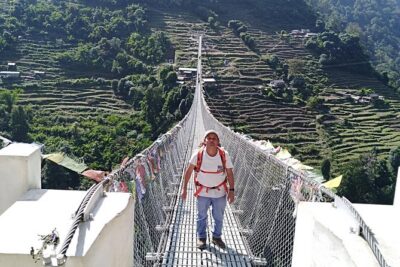
Trekking in Annapurna/Langtang/Everest/Upper Mustang regions
Read our review →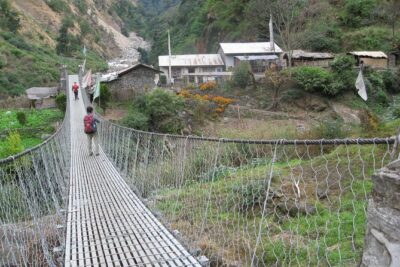
Browse the lists this tour appears in