
REVIEW · KATHMANDU
Gokyo Valley Trekking
The Himalayas make a grand first impression. This 14-day Gokyo Valley trek pairs high mountain lakes and Gokyo Ri with Sherpa villages, Buddhist sites, and the busy-to-quiet rhythm of the Khumbu. I like the included Lukla flights, guide, porter, permits, meals, and airport transfers. I also like that the route reaches Gokyo without following the full Everest Base Camp trail.
The main caution is altitude. Gokyo sits around 4,750 meters, and the route reaches Gokyo Ri at roughly 5,300 meters. The schedule includes acclimatization, but you still need solid fitness, patience, and flexibility. Lukla flights can be delayed or canceled by bad weather, so the suggested two or three extra days at the end are practical advice, not wasted time.
Key points about the Gokyo Valley Trek
- Gokyo’s 19 high-altitude lakes: The lake system sits between about 4,700 and 5,000 meters, with Gokyo village beside the third lake.
- Gokyo Ri sunrise: The climb offers views toward Everest, Lhotse, Nuptse, Cho Oyu, Makalu, Gyachung Kang, and nearby peaks.
- A quieter alternative to Everest Base Camp: The route still uses the Khumbu approach through Namche, but then follows the Gokyo valley.
- A well-supported package: Flights, teahouse lodging, meals on trek, permits, an English-speaking guide, and porter service are included.
- Useful altitude preparation: A visit to the Himalayan Rescue Hospital in Machhermo provides a talk on altitude sickness and basic treatment.
- Small private-group format: Only your own group takes part, which allows the pace and daily rhythm to be handled more personally.
What the $1,299 price really covers
At $1,299 per person, this is not a bare-bones walking holiday. The fee covers a three-star Kathmandu hotel with breakfast, teahouse lodging during the trek, breakfast, lunch, and dinner in the mountains, domestic flights between Kathmandu and Lukla, permits, taxes, guide services, porter support, and airport transfers.
That bundle matters in Nepal. The Lukla flight is a major part of the transport plan, and the trek takes place in a remote region where arranging food, beds, permits, and staff separately can become a nuisance. Staff costs also include salaries, insurance, equipment, flights, food, and lodging for the local team.
The porter arrangement is listed as one porter for every two trekkers. That helps keep your personal load manageable, but you should ask how much weight is permitted before departure. The package does not include tips, drinks, showers, battery charging, laundry, phone calls, bar bills, or meals in Kathmandu.
There is also a wording conflict in the cost details. The package says government and local taxes are included, but another line lists all fees and taxes as excluded. I would ask Himalayan Sanctuary Adventure Private Limited to confirm this in writing before paying.
The price is strongest for someone who wants one organized package rather than a self-arranged trek. It is less attractive if you already have local contacts, gear, and experience arranging the Khumbu route yourself.
More Everest Base Camp Treks in Kathmandu:
- Everest Base Camp Trek – 14 Days
★ 5.0 · 1,499 reviews - Everest Base Camp Trek
★ 5.0 · 842 reviews - Everest Base Camp Trekking
★ 5.0 · 485 reviews
Kathmandu gives you two useful days
Your first day is simple. A representative meets you outside the international arrival terminal and transfers you to the hotel. The transfer is listed at about 30 minutes, though city traffic can affect that timing.
Day two is a five-hour cultural tour around Kathmandu Valley. The listed stops include Boudhanath Stupa, Pashupatinath Temple, Patan Durbar Square, and Swayambhunath Stupa. This is a good use of time before the mountain section because it gives you a first look at Nepal’s Buddhist and Hindu traditions.
Boudhanath is the large white stupa east of central Kathmandu. Pashupatinath, beside the Bagmati River, is one of the country’s most important Hindu shrines. Patan’s former palace complex includes courtyards, temples, and a museum. Swayambhunath sits on a hill above the valley and is also called the Monkey Temple.
The tour description elsewhere mentions Kathmandu Durbar Square and Bhaktapur as possible stops, but the more detailed schedule lists Boudhanath, Pashupatinath, Patan, and Swayambhunath. Confirm the final sightseeing plan if one particular site matters to you.
Lukla to Namche, from flight nerves to mountain life
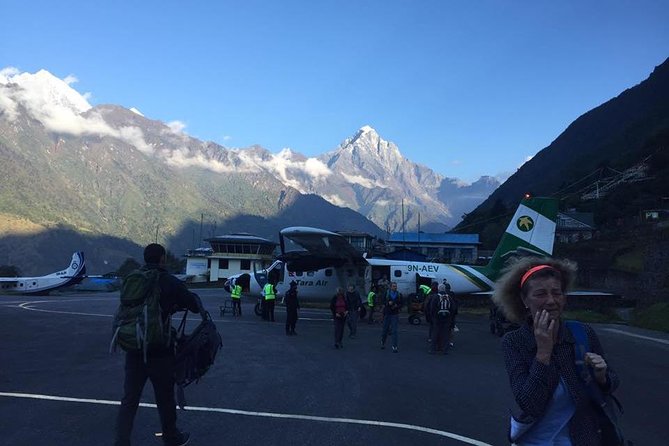
Day three begins early with the roughly 40-minute flight from Kathmandu to Lukla. You meet the rest of the crew there and start walking toward Phakding. The route passes Cheplung village and offers an early view of Khumbila, a sacred mountain that has never been climbed.
The walk to Phakding takes about three to four hours. It is a gentle introduction compared with later days, but the early flight and unfamiliar altitude can still make the day feel full.
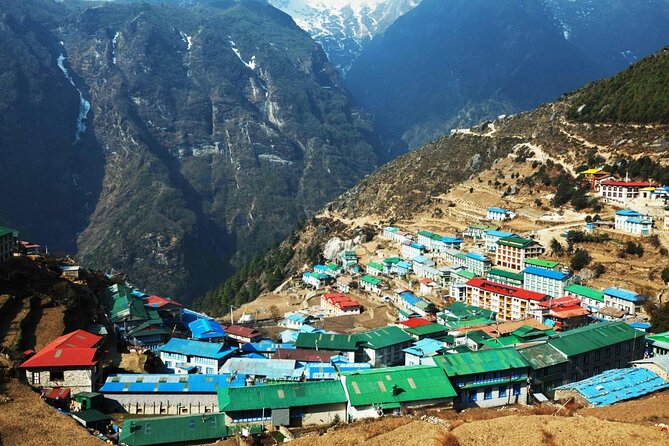
Day four leads to Namche Bazaar in about five hours. You walk through Benkar, Chumoa, Monjo, and Jorsale, crossing suspension bridges and following the Dudh Koshi and Bhote Koshi rivers. Monjo marks the entrance to Sagarmatha National Park.
The final approach to Namche includes a steep climb. Namche is not just a stopping point. It is the main commercial center on this side of the Khumbu, with a dramatic bowl-shaped setting and access to mountain viewpoints. You will want to walk slowly here and save energy for the next days.
Namche’s acclimatization day is time well spent
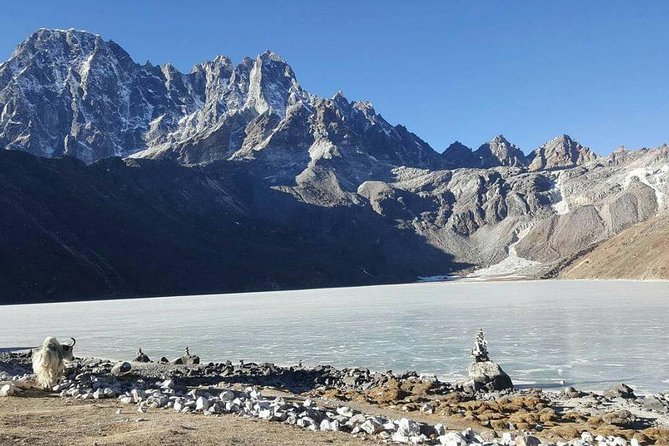
Day five is set aside for acclimatization. The plan includes a hike toward Sagarmatha National Park viewpoints, with views of Everest, Lhotse, Nuptse, Ama Dablam, Thamserku, and Kongde. A possible walk to Khumjung village gives you another option.
This short hike is important because your body needs time to adjust before the route rises much higher. The schedule lists about three hours of walking, but the real value is the controlled climb and return rather than distance.
I would not treat this as a day to sleep until noon. A gentle walk, plenty of water, and a steady pace are more useful. If you feel unwell, tell the guide early. Altitude symptoms should not be hidden to protect the schedule.
A few more treks around Kathmandu worth a look
- Annapurna Circuit Trek with Tilicho Lake
★ 5.0 · 368 reviews - Everest Base Camp Trekking – 13 Day
★ 5.0 · 365 reviews - Everest Base Camp Trek
★ 5.0 · 350 reviews - Everest Base Camp Trek -14 Days
★ 5.0 · 321 reviews
Phortse brings a quieter side of the Khumbu
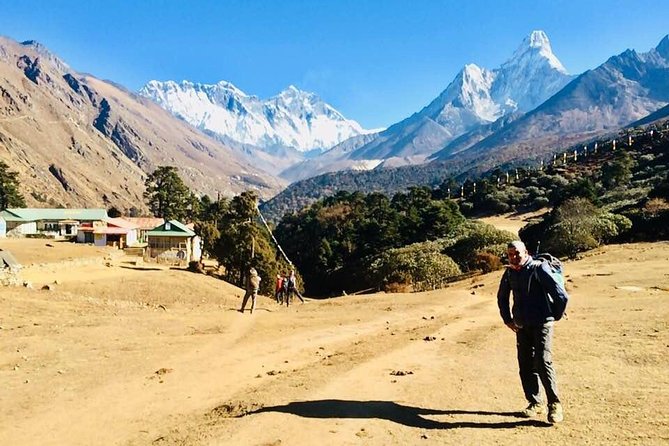
From Namche, the route heads toward Phortse. You first descend toward Kyanjuma, then follow the Gokyo route from Sansa and Mong. Views include Ama Dablam, Thamserku, Tawoche, and Khumbila.
The trail drops to the Dudh Koshi before climbing through rhododendron forest toward Phortse. The walk takes about five hours. You might spot Himalayan birds, musk deer, and Himalayan tahr, though wildlife sightings are never guaranteed.
Phortse is an appealing overnight stop because it feels more like a working mountain settlement than a major trekking hub. Pine and rhododendron surround the village, and views toward Tawoche and Cholatse add a fine mountain backdrop.
The schedule uses both Phortse and Phortse Tenga in its descriptions, so ask your guide to confirm the exact lodge location. The altitude is listed around 3,680 meters.
Machhermo offers a serious altitude lesson
The next day climbs toward Machhermo at about 4,470 meters. The route passes Dole, Kele, and Luza, with views of Tawoche and Cholatse. It takes around six hours.
This is one of the most important days for pacing. You gain a large amount of height, and the air becomes noticeably thinner. The route includes forests, waterfalls, bridges, a ridge, sandy sections, and small settlements, but the altitude is the real story.
At Machhermo, you can attend an altitude talk at the Himalayan Rescue Hospital at about 3 p.m. The session covers altitude sickness, rescue, and basic treatment. This is a particularly useful inclusion because it turns a general warning into practical information you can use for the rest of the trek.
The walk may feel manageable at first, then become harder as the height builds. Keep your pace modest and use the guide as your first point of contact if you feel headache, nausea, unusual tiredness, or other symptoms.
Reaching Gokyo and its third lake
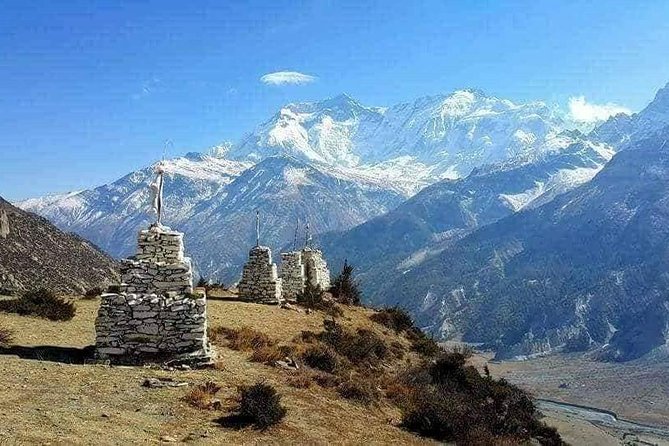
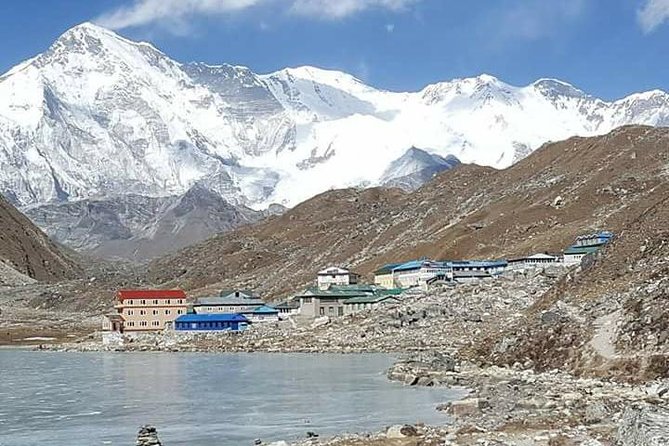
Day eight climbs from Machhermo through the Dudh Koshi valley toward Gokyo. The route rises along a ridge with views toward Kangtega, Thamserku, and Cho Oyu. You pass a chorten, reach Phangga, and then approach the terminal moraine of the Ngozamba Glacier.
The trail crosses glacial terrain and passes Longpongo, Raboche Tsho, and Dudh Pokhari before reaching Gokyo. The walk takes about four to five hours, but the altitude makes it feel more demanding than the clock suggests.
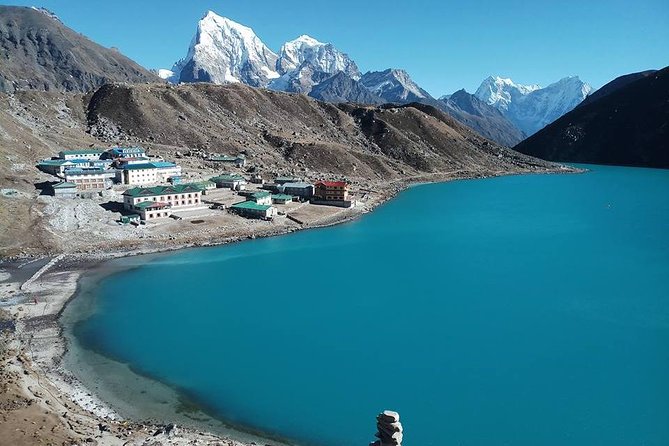
Gokyo village sits beside the third lake, Dudh Pokhari. Its stone buildings are mainly small lodges serving trekkers. The setting is unusual and memorable: a compact settlement beside still water, surrounded by high peaks, moraine, and the upper valley.
The route also includes a local religious detail. Near the first lake, you may see marks believed to be the footprints of a Buddhist lama. Whether you treat that as faith, folklore, or simply a curious local story, it adds character to the walk.
Gokyo Lakes and the climb to Gokyo Ri
Day nine is the main exploration day. You can rest around Gokyo, walk toward the fourth and fifth lakes, or climb Gokyo Ri if weather and energy allow.
The fourth lake lies about three kilometers north of Gokyo. It is surrounded by cliffs and high peaks. Continuing farther brings you to the fifth lake, with a nearby rise offering views toward Cho Oyu, Gyachung Kang, Everest, Lhotse, Nuptse, and Makalu.
The Gokyo lake system includes 19 lakes, large and small, between roughly 4,700 and 5,000 meters. You will not see every lake in a single outing, but the route gives you a strong sense of why this valley is known for water as much as for mountains.
Gokyo Ri is the signature climb. The schedule places the main sunrise attempt on day ten, although the earlier day description also mentions climbing it on day nine. Confirm the plan locally, since weather and acclimatization may determine the best morning.
The ascent is short in distance but serious at altitude. From the top, you can look across the Gokyo lakes and toward Everest and other major Himalayan peaks. Sunrise is a strong reason to accept the early start, but clouds can erase the view. A snowstorm once affected the scenery on this route, so keep your expectations flexible.
Returning through Phortse and Monjo
After the Gokyo Ri climb, you return to Gokyo for breakfast, then retrace part of the valley and cross toward Phortse. The walk takes about five hours. Phortse offers another night among pine and rhododendron, with possible views of birds and other Himalayan animals.
Day eleven descends to Khumjung, then continues through Namche to Monjo. The day takes about six hours and includes a steep descent. Khumjung is a pleasant village with mountain views, while Namche makes a sensible lunch stop before the trail drops farther.
Monjo sits near the national park entrance. Reaching it means you have left the highest section behind, but long downhill stretches can still tax your knees. Trekking poles may be worth bringing, though they are not specifically listed among the included equipment.
Day twelve follows the Dudh Koshi back to Lukla, passing Phakding and several smaller settlements. This four-hour walk is the final trek day. You say goodbye to the guide, porter, and wider crew in Lukla before spending the night there.
Lukla flights require patience
The flight back to Kathmandu is scheduled for day thirteen. On paper, it takes about 40 minutes. In practice, weather can change the plan, and the operator specifically advises adding two or three extra days after the trek before an international flight.
That advice is one of the most important practical details in the entire package. Do not schedule an important same-day international connection after returning from Lukla. A delayed or canceled flight can quickly turn a comfortable itinerary into a costly scramble.
Once back in Kathmandu, you have time to rest at the hotel. Day fourteen provides a transfer to Tribhuvan International Airport a couple of hours before departure.
Who should book this trek?
I would recommend this trip to someone with moderate physical fitness who wants a supported high-altitude trek, not a casual mountain holiday. You need to be comfortable walking several hours a day, climbing steep paths, descending rough trails, and spending nights in simple teahouse accommodation.
The route suits you if you want major Himalayan views but prefer the Gokyo valley to the more heavily used Everest Base Camp route. It also works well if you value local staff, arranged flights, permits, food, and airport transfers in one package.
I would think twice if you dislike basic lodging, cannot add spare days for flight delays, or want a fixed schedule with no weather-related changes. The trek is also not a good match for anyone who is treating altitude as a minor inconvenience.
Cancellation is free up to 24 hours before the local start time. Changes or cancellations inside that window are not accepted for a refund.
FAQ
How long is the Gokyo Valley Trek?
The experience lasts approximately 14 days, including Kathmandu sightseeing, the trek, return to Kathmandu, and airport departure.
Where does the trek begin?
It begins in Kathmandu, with airport pickup on arrival. The walking section starts after the flight from Kathmandu to Lukla.
How long is the flight from Kathmandu to Lukla?
The flight is listed as approximately 40 minutes.
What altitude does Gokyo village reach?
Gokyo village is listed at about 4,750 meters, or roughly 15,580 feet.
Is there an acclimatization day?
Yes. Day five is an acclimatization day in Namche Bazaar. Another day is set aside to explore Gokyo and its surrounding lakes.
Is Gokyo Ri included?
Yes. The itinerary includes an early morning hike to Gokyo Ri, weather and conditions permitting.
Are meals included during the trek?
Breakfast, lunch, and dinner are included during the trekking section. Breakfast is also included at the Kathmandu hotel.
Is accommodation included?
Yes. The package includes a three-star hotel in Kathmandu and teahouse accommodation during the trek.
Are permits included?
The package lists the National Park Permit and TIMS, along with necessary paperwork and government and local taxes. Because another cost line mentions fees and taxes as excluded, confirm the final cost before booking.
Is airport transportation included?
Yes. Airport transportation is included for arrival and departure, with transfers to and from the hotel.
Can flights from Lukla be delayed?
Yes. The tour information warns that Kathmandu to Lukla and Lukla to Kathmandu flights may be delayed or canceled because of bad weather. You are advised to allow two or three extra days before your international departure.
Should you book the Gokyo Valley Trek?
Book it if your priority is a supported trek to high lakes, Sherpa villages, and a major Himalayan viewpoint without arranging every detail yourself. The included flights, meals, permits, guide, porter, and acclimatization stops give the $1,299 price useful value.
Before booking, confirm the tax wording, the exact day for Gokyo Ri, porter weight limits, and your plan for possible Lukla delays. If you can handle the altitude and keep your schedule flexible, this is a strong choice for the quieter, lake-centered side of the Everest region.
Recently added around Kathmandu
- Ghorepani Poon Hill Trek★ 5.0 · 16 reviews
- Amazing 1 Day Trekking Experience in Kathmandu Nepal★ 5.0 · 24 reviews
- Private Manaslu Circuit Trek at Himalayas★ 5.0 · 3 reviews
- Ghorepani Poonhill Trek★ 5.0 · 5 reviews
- Upper Mustang Trekking★ 5.0 · 2 reviews
- Upper Mustang Trekking★ 3.0 · 2 reviews
- Upper Mustang Trekking★ 5.0 · 4 reviews
- Upper Mustang Trek★ 5.0 · 5 reviews
Everest Base Camp Treks, compared.




Browse the lists this tour appears in