
REVIEW · KATHMANDU
Everest Base Camp & Gokyo Ri Trek
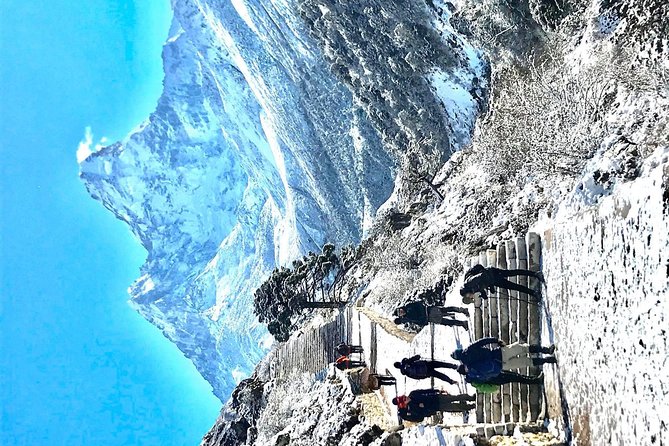
Everest is only part of the story. This 21-day trek links the classic Base Camp route with the quieter Gokyo Valley, Cho La Pass, and a flight through the mountains to Lukla. I like the contrast between busy Namche Bazaar and peaceful Thame, and I like that the trek includes both Gokyo Ri and Kala Patthar, two of the finest viewpoints in the Khumbu. The main caution is the difficulty: Cho La is a long, steep day involving icy rock, glacier travel, and crevasses.
I also like the practical setup. The price includes domestic flights, lodges, meals during the trek, permits, a local guide, porters, airport transfers, and Kathmandu sightseeing. The company has arranged trips for families, older trekkers, and people needing flexible plans, with guides and porters praised for personal care. Still, you need good physical fitness, patience with mountain weather, and proper insurance for evacuation and medical costs.
Key points before you book
- Gokyo Ri adds a superb second viewpoint: You see Everest, Lhotse, Makalu, Cho Oyu, and other major peaks from a wide mountain panorama.
- Cho La is the hardest day: Expect about nine hours, steep icy sections, a glacier crossing, and possible crevasses.
- The trek uses a quieter route first: Thame and Khumjung provide a calmer introduction to Sherpa life before the busier Everest Base Camp trail.
- Lukla flights are included: The package covers Kathmandu to Lukla and the return flight, saving you a major piece of planning.
- The $2,800 price covers a lot: Trek lodging, meals, permits, guide, porters, staff insurance, airport transfers, and three Kathmandu hotel nights are included.
- This is a high-altitude trek, not a casual walk: Daily hikes range from roughly three to nine hours, with several demanding days above 4,000 meters.
Why this route is better than a simple Everest Base Camp trek
A standard Everest Base Camp trek gives you the famous destination. This route gives you a fuller look at the Khumbu.
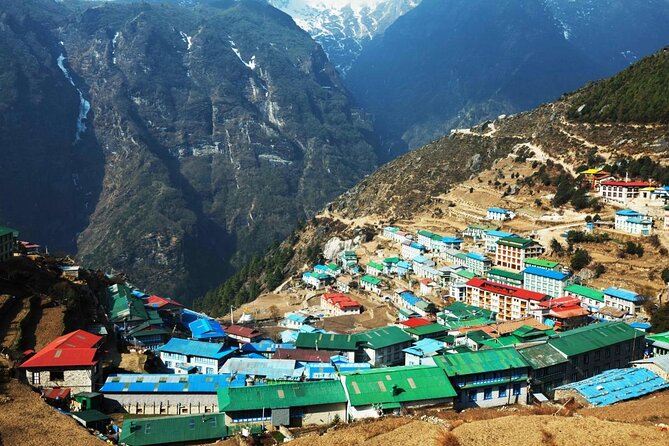
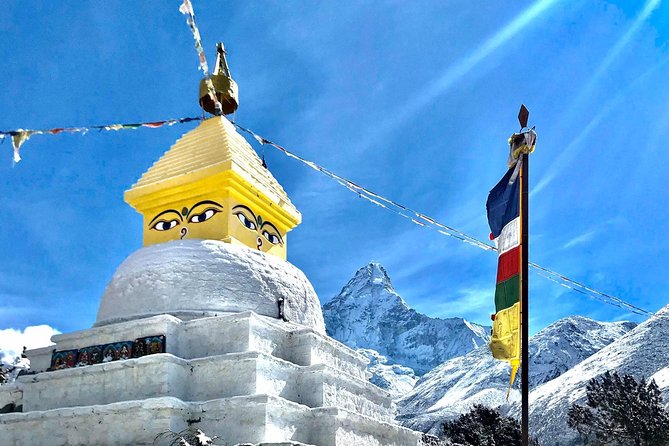
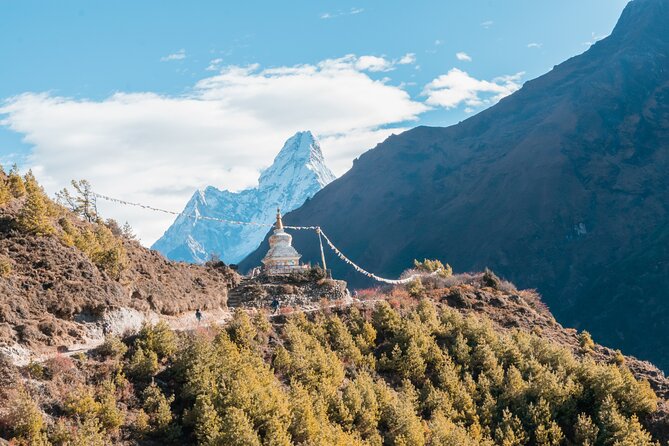
After Namche, you head toward Thame and Khumjung rather than simply following the main trail toward Tengboche and Lobuche. That detour brings quieter paths, old trading connections with Tibet, Buddhist shrines, and broader views of peaks such as Kantega, Thamserku, and Khumbila.
Then comes Gokyo, with its chain of high alpine lakes and the Ngozumpa Glacier. From there, you cross Cho La and reconnect with the main Everest route. In practical terms, you get two major high points, Gokyo Ri and Kala Patthar, plus Everest Base Camp itself.
The tradeoff is clear. You walk more days, gain altitude more gradually, and face a much tougher route than the usual Base Camp itinerary. If your goal is simply to stand at Everest Base Camp, this is more than you need. If you want variety and a serious mountain journey, the extra effort pays off.
More Everest Base Camp Treks in Kathmandu:
- Everest Base Camp Trek – 14 Days
★ 5.0 · 1,499 reviews - Everest Base Camp Trek
★ 5.0 · 842 reviews - Everest Base Camp Trekking
★ 5.0 · 485 reviews
Kathmandu to Phakding: a quick start in the Khumbu
The journey begins with airport pickup in Kathmandu and a hotel stay. The next morning, the flight to Lukla takes about 30 minutes, followed by roughly three hours of walking to Phakding.
The flight is part of the drama. On a clear day, you get sweeping views of Himalayan peaks before landing at Lukla, the cliffside gateway to the Everest region. From there, the trail follows the Dudh Koshi River through villages and suspension bridges.
Phakding is a sensible first stop because the walking day is short. You sleep in a local lodge, usually in a standard room with a non-attached bathroom. Do not expect city-hotel comfort. The value here is shelter, meals, and a place to rest while the mountains begin to take over.
Namche Bazaar and the first acclimatization day
From Phakding, the trail crosses and recrosses the river before reaching Monjo, the entrance to Sagarmatha National Park. The path then climbs steeply toward Namche Bazaar.
This is the first day when the altitude feels serious. The walk takes about five hours, and you may get an early glimpse of Everest if the sky is clear. Namche is the commercial center of the Khumbu, with lodges, tea shops, souvenir stalls, and a Saturday market that has long connected local traders, lowland merchants, and Tibetan yak caravans.
The schedule includes an acclimatization day in Namche. That is not wasted time. It gives your body a chance to adjust before the route climbs higher. The day includes about four hours of activity, and the town gives you a useful place to rest, eat, and prepare for the more remote sections ahead.
A useful detail from past arrangements is the level of personal support. Guides have provided early tea and coffee, helped with special diets, and adjusted plans when people changed their needs. That sort of care matters much more at altitude than polished sales language.
Thame and Khumjung: the quieter side of the Khumbu
The route turns west from Namche into the Bhote Koshi Valley. This old trade corridor once led toward Tibet, and the trail feels quieter than the main Everest route.
You pass prayer flags, mani stones, and mountain views toward Teng Kangpoche and Kwangde. Thame Gompa sits above the village, looking over the valley, and is linked with the Mani Rimdu festival. The route also points toward Nangpa La, a high pass leading toward Tibet.
The schedule labels this section as a Khumjung stop, but the daily description clearly includes Thame before you retrace the route toward Khumjung. That is worth confirming with the operator before departure, especially if you want exact overnight locations.
Khumjung offers a different mood. The village sits beneath Khumbila, a 5,734-meter peak regarded as the patron deity of the Khumbu. You also visit Khunde Hospital, founded by Sir Edmund Hillary. Views of Thamserku, Kantega, and Ama Dablam make this a memorable place to pause.
This section is one of the route’s best features. It gives you time with Sherpa villages and Buddhist culture before the high pass and glacier days begin.
A few more treks around Kathmandu worth a look
- Annapurna Circuit Trek with Tilicho Lake
★ 5.0 · 368 reviews - Everest Base Camp Trekking – 13 Day
★ 5.0 · 365 reviews - Everest Base Camp Trek
★ 5.0 · 350 reviews - Everest Base Camp Trek -14 Days
★ 5.0 · 321 reviews
Dole, Machhermo, and the approach to Gokyo
After Khumjung, the trail climbs through rhododendron and birch forest toward Dole. Moss and lichens hang from the trees, and the route feels more secluded than the main Base Camp corridor.
From Dole, the forest thins into scrub juniper and high grazing country. You pass summer yak settlements, known as yersa, and gain views toward Cho Oyu, Kantega, and Thamserku. The walk to Machhermo is about five hours, and you arrive in time for lunch.
The next day leads to Gokyo in roughly six hours. The route passes Pangka, follows a stream beside the Ngozumpa Glacier, and reaches the first of the sacred lakes. The second lake sits near the trail toward Cho La, giving you an early look at the route you will later cross.
Gokyo sits beside the third lake, Dudh Pokhari, also called Milk Lake. Its green water reflects Cho Oyu and Gyachung Kang when conditions are clear. This is one of the most beautiful sections of the trek, but the altitude is now substantial. Walk slowly, drink regularly, and treat any sign of altitude illness seriously.
Gokyo Ri and the best mountain panorama
The climb to Gokyo Ri begins just after first light. The path is steep, but the early start is worthwhile. As you rise above the village, Everest, Lhotse, and Makalu come into view.
From the summit, you get a wide panorama across the Everest region. The view includes several major peaks, and the high perspective gives Gokyo Ri a different feel from Kala Patthar. It is not just a substitute viewpoint. It shows you the mountains from the opposite side of the valley.
After lunch, the route continues toward Na at the foot of the Ngozumpa Glacier. The day takes about five hours, but the morning climb is demanding because of the altitude.
This is a point where the itinerary rewards people who want more than a famous name. Gokyo Ri is often the visual highlight of the entire trip. It also gives you a quieter alternative to the crowded viewpoints on the main route, depending on the season.
Thangnak and the Cho La crossing
The walk from Gokyo to Thangnak is shorter, about five hours, and gives you an afternoon to rest. That pause matters because the next day is the hardest part of the trip.
Cho La is not described as technically extreme, but it is steep and can be icy. The eastern side includes a glacier traverse, slippery rock, frozen surfaces, and crevasses. The full day to Dzongla takes about nine hours.
At the top, prayer flags mark the pass. Ama Dablam rises to the south, while Cholatse, Lobuche East, and Baruntse create a powerful ring of peaks around you. The route then continues toward Dzongla, where you can look down toward Pheriche.
You should take this day seriously. A moderate fitness level may be enough for the general trek, but you need the ability to walk for many hours on uneven ground while carrying a day pack. Good footwear and careful pacing are essential. Ask the operator what technical equipment, if any, is supplied for current conditions, since the package specifically includes equipment and clothing for porters and staff, not clearly for clients.
Lobuche, Gorak Shep, and Kala Patthar
From Dzongla, the route follows a lower valley path and rejoins the main Everest trail. After Duglha, you climb beside the terminal moraine of the Khumbu Glacier.
The trail passes stone memorials honoring Sherpas who died on Everest expeditions. This is a quiet, sobering section. It gives the high peaks a human context that photographs cannot provide.
Lobuche is the next overnight stop. The sunset on Nuptse can be striking, and the six-hour day leaves you close to the final approach.
The following day begins early for Gorak Shep. You walk across rough glacial terrain, stop for lunch, and later climb Kala Patthar to 5,554 meters. The viewpoint gives you close views of Everest, Nuptse, Pumori, and the Khumbu Glacier.
The air is thin here, and the ascent can feel slow. That is normal. Kala Patthar is not a casual afternoon lookout. Plan on patient steps, warm layers, and enough time to return to Gorak Shep safely.
Everest Base Camp and the long return
The excursion to Everest Base Camp takes about seven hours round trip. The trail winds among ice formations and crevasses beside the Khumbu Glacier. A higher return route provides another look at the Khumbu Icefall and the route toward the South Col.
The Base Camp experience is more about location than a single viewpoint. You are walking through a serious glacial environment, with the massive Icefall above and the expedition route ahead. Conditions and access can vary, so your guide’s instructions matter.
From there, the route descends to Pheriche, then continues toward Tengboche. The walk back includes views of Ama Dablam, Thamserku, Tawache, and Lhotse. Rhododendron forest returns, along with possible sightings of pheasants, griffons, musk deer, and wild goats.
The descent to Namche takes about eight hours, and the final trek to Lukla takes another eight. Those are not easy recovery days. Your knees may appreciate trekking poles, and you should avoid treating downhill walking as effortless.
The last evening in Lukla includes a chance to share chang, a local beer, and Sherpa dancing with the support crew. It is a fitting social finish after three weeks of walking together.
Kathmandu sightseeing and what the price includes
The return flight to Kathmandu takes about an hour, followed by a free day. The final sightseeing day visits Boudhanath, Pashupatinath, and Patan Durbar Square.
Boudhanath introduces you to one of Kathmandu’s major Buddhist centers. Pashupatinath is a major Hindu shrine dedicated to Shiva. In Patan, you walk through the old Durbar Square area and see the Mahaboudha, Kumbeshwor, Krishna, and Golden temples.
At $2,800 per person, the package offers solid value if you use the included services. It covers Kathmandu hotel accommodation for three nights with breakfast, local lodge accommodation during the trek, 17 lunches, 17 dinners, 20 breakfasts, domestic flights, permits, airport transfers, a guide, porters, and sightseeing.
You still pay for international flights, drinks, snacks, hot showers, internet, tips, personal expenses, medical care, and emergency evacuation. Travel insurance is not included for you, so that is a major extra cost to arrange before departure.
The porter ratio is listed as one porter for every two members. That is useful support, but pack thoughtfully and keep your own day pack manageable.
Who should book this trek?
Book it if you want the Everest region’s major highlights plus Gokyo Lakes, Gokyo Ri, Thame, Khumjung, and Cho La. It suits people who value local support and are ready for long walking days at high altitude.
It is also a good choice if you prefer an organized package rather than arranging flights, permits, lodges, guides, and porters yourself. Past arrangements have been praised for flexible planning and strong support from guides such as Bibek, Bal, Sureman, Tiger, and Anuj.
Do not choose it simply because the price includes a famous name. The route is demanding, and the Cho La crossing may be uncomfortable or unsuitable in poor conditions. You also need to accept basic lodge rooms, non-attached bathrooms, changing weather, and possible changes to the flight schedule.
Cancellation is free up to 24 hours before the experience begins. The stated meeting point is Tribhuvan International Airport in Kathmandu, with pickup offered.
FAQ
How long is the Everest Base Camp and Gokyo Ri Trek?
The experience lasts approximately 21 days, including arrival and departure arrangements, the trek, return flights, and Kathmandu sightseeing.
Is the flight from Kathmandu to Lukla included?
Yes. The package includes Kathmandu to Lukla and Lukla to Kathmandu airfare.
What meals are included?
The package includes 20 breakfasts, 17 lunches, and 17 dinners. Personal drinks, snacks, hot showers, and internet are not included.
Is accommodation included during the trek?
Yes. Accommodation is provided in local lodges or teahouses during the trek. Rooms are standard and bathrooms are not attached.
How difficult is Cho La Pass?
Cho La is described as one of the hardest days. The crossing takes about nine hours and includes steep sections, icy rock, a glacier traverse, and some crevasses.
Does the package include a guide and porters?
Yes. An English-speaking local guide and porters are included, with one porter assigned for every two members. Permits and staff equipment and insurance are also included.
Should you book it?
I would recommend this trek to a fit, prepared hiker who wants the full Khumbu experience rather than only the standard Everest Base Camp route. The combination of Gokyo Ri, Gokyo Lakes, Cho La, Kala Patthar, and Base Camp gives you a remarkable range of mountain views and village experiences.
The best reason to book is the route variety and the strong logistical support. The main reason to hesitate is the physical demand, especially at Cho La and during the long return days. If you prepare properly, carry suitable insurance, and confirm current trail conditions with Explore Himalaya Travel and Adventure, this is a serious but rewarding way to see Everest country.
Recently added around Kathmandu
- Ghorepani Poon Hill Trek★ 5.0 · 16 reviews
- Private Manaslu Circuit Trek at Himalayas★ 5.0 · 3 reviews
- Amazing 1 Day Trekking Experience in Kathmandu Nepal★ 5.0 · 24 reviews
- Ghorepani Poonhill Trek★ 5.0 · 5 reviews
- Upper Mustang Trekking★ 5.0 · 2 reviews
- Upper Mustang Trekking★ 3.0 · 2 reviews
- Upper Mustang Trekking★ 5.0 · 4 reviews
- Upper Mustang Trek★ 5.0 · 5 reviews
Everest Base Camp Treks, compared.






Browse the lists this tour appears in