
REVIEW · KATHMANDU
Everest Base Camp Trek -14 Days
Everest rewards patience, not speed. This 14-day trek combines famous Himalayan views with Sherpa villages, monasteries, and the steady rhythm of walking from lodge to lodge. I like the two built-in acclimatization days, and I like that the package includes guides, porters, meals, permits, flights, and mountain accommodation rather than leaving you to assemble the trip yourself. The main caution is altitude: reaching 5,545 meters at Kalapatthar is a serious physical challenge, even with a carefully paced schedule.
The trek costs $1,800 per person, which is a strong value if the included services work as planned. Airport transfers, Kathmandu hotels, Lukla flights, a porter for every two clients, a guide, meals during the trek, permits, a duffle bag, and basic medical supplies are all covered. You still need to budget for insurance, drinks, showers, charging, tips, visa fees, and possible delays.
The private format gives your group more flexibility than a large fixed group. The company has also earned repeated praise for careful organization, responsive staff, and guides such as Prakash Adhikari, Nima, Urken Sherpa, and Bhagwat Simkhada. Still, this is a demanding trek with basic tea-house lodging, unpredictable mountain flights, and no room for casual preparation.
What Makes This Trek Worth Considering
- A real acclimatization plan: Rest days in Namche Bazaar and Dingboche break up the climb toward Everest Base Camp.
- Kalapatthar at 5,545 meters: This is the trip’s best high viewpoint, with a chance to see Everest and the surrounding Himalayan peaks.
- Sherpa culture along the route: You visit Khumjung, Tengboche, Namche Bazaar, and several mountain communities rather than walking through empty wilderness.
- A guide and porter system included: One porter is provided for every two clients, while a trained guide leads the group and manages the route.
- Support when plans go wrong: The company handles flight changes, rescue arrangements, and travel logistics, though extra nights and expenses can still fall to you.
- A private trip for a minimum of two people: This suits couples, families, and friends who want a more personal pace.
From Kathmandu to Lukla: The Trek Begins Quickly
Your trip starts with airport pickup in Kathmandu and transfer to a three-star hotel. Two nights in Kathmandu are included, with breakfast, while the farewell evening includes dinner at a Nepali restaurant with cultural entertainment.
The mountain portion begins with a flight to Lukla at 2,860 meters. Depending on operating conditions, the routing may involve Kathmandu or Ramechhap. This is one of the parts of the journey where flexibility matters most. Mountain weather can delay flights, and a late departure may lead to extra hotel nights or other costs not included in the $1,800 price.
From Lukla, you walk for three to four hours to Phakding at 2,610 meters. The route follows the Dudh Koshi River and provides a manageable first walking day after the flight. Phakding is not the grand climax of the trek, but it gives your body a gentle start before the harder climb to Namche Bazaar.
You will spend the night in a tea house or lodge. These accommodations are part of the local trekking system and are practical rather than luxurious. The package includes breakfast, lunch, and dinner during the trek, but bottled or boiled water, hot showers, charging, laundry, and bar bills cost extra.
More Everest Base Camp Treks in Kathmandu:
- Everest Base Camp Trek – 14 Days
★ 5.0 · 1,499 reviews - Everest Base Camp Trek
★ 5.0 · 842 reviews - Everest Base Camp Trekking
★ 5.0 · 485 reviews
Phakding to Namche Bazaar: The First Real Test
Day three covers six to seven hours from Phakding to Namche Bazaar at 3,446 meters. This is where the trek begins to feel serious. You gain altitude, cross river valleys, and enter Sagarmatha National Park.
Namche Bazaar is one of the most important settlements on the route. It is the main staging point for the upper Khumbu, and it gives you a chance to slow down before heading higher. The town is also a useful place to settle into the rhythm of lodge meals, early starts, and walking with a lighter pack while your porter carries the main load.
The schedule wisely keeps a full acclimatization day here. You visit Khumjung Village and the Hotel Everest View at about 3,880 meters. This is not a wasted day. You climb higher during the day, then sleep lower in Namche, giving your body a better chance to adjust.
Khumjung adds cultural value to the route. Instead of treating the trek as a simple march toward a mountain, you see a Sherpa village and spend time among communities shaped by life in the Khumbu. The Hotel Everest View also provides a chance to look across the Himalayan peaks without waiting until the final days.
Tengboche and Dingboche: Monasteries, Rivers, and Thin Air
The walk from Namche to Tengboche takes five to six hours and reaches 3,860 meters. The route continues through Sagarmatha National Park and heads toward Tengboche, one of the most memorable stops on the trek.
Tengboche is known for its monastery and its mountain setting. You get a strong sense of the spiritual side of the region here, along with dramatic Himalayan views. It is a good place to pause and appreciate that this route is not only about reaching a point called Base Camp.
The next day takes you from Tengboche to Dingboche at 4,360 meters. You follow the Imja River and walk for another five to six hours. At this height, the same distance feels harder than it did near Lukla. I would treat the stated walking times as estimates, not promises. Your speed, weather, trail conditions, and how your body reacts to altitude will shape the day.
Dingboche brings another acclimatization day. This second rest day is one of the strongest parts of the schedule. You are now above 4,000 meters, and the trek soon reaches nearly 5,000 meters. A rushed itinerary might save a day, but it would ask far more from your body.
Lobuche and Everest Base Camp: The High Point of the Route
After acclimatizing in Dingboche, you walk five to six hours to Lobuche at 4,910 meters. The route crosses the Thukla Pass at about 4,830 meters before reaching the settlement.
This section can feel stark and demanding. Vegetation becomes limited, temperatures drop, and every uphill stretch takes more effort. The high altitude is no longer a background detail. It affects breathing, sleep, appetite, and walking speed.
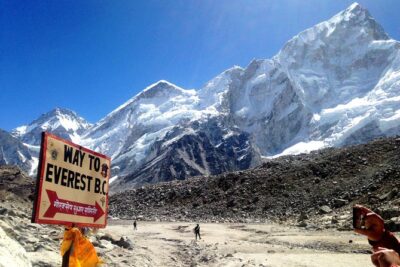
The next day is the main goal: Lobuche to Gorakshep at 5,160 meters, then onward to Everest Base Camp at about 5,360 meters. The full walking day lasts six to seven hours. You pass along the Khumbu Glacier, and the route becomes a slow, high-altitude push rather than a casual hike.
Everest Base Camp itself is a powerful destination, but you should keep your expectations realistic. From the base camp area, the surrounding glacier and mountain environment are central to the experience. The clearest broad views of Everest come from Kalapatthar the following morning, not necessarily from Base Camp.
Gorakshep is a functional stopping point for this high section. The accommodation is included, but comfort becomes more limited as the route climbs. You will want warm layers, a good sleeping bag, and a willingness to accept simple facilities.
A few more treks around Kathmandu worth a look
- Annapurna Circuit Trek with Tilicho Lake
★ 5.0 · 368 reviews - Everest Base Camp Trekking – 13 Day
★ 5.0 · 365 reviews - Everest Base Camp Trek
★ 5.0 · 350 reviews - Everest Base Camp Trek -14 Days
★ 5.0 · 321 reviews
Kalapatthar at 5,545 Meters: The Best Mountain View
Day ten begins with the climb from Gorakshep to Kalapatthar, reaching 5,545 meters, followed by the descent to Pheriche at 4,371 meters. The walking time is listed as four to five hours, but the early climb can feel slow because of the altitude.
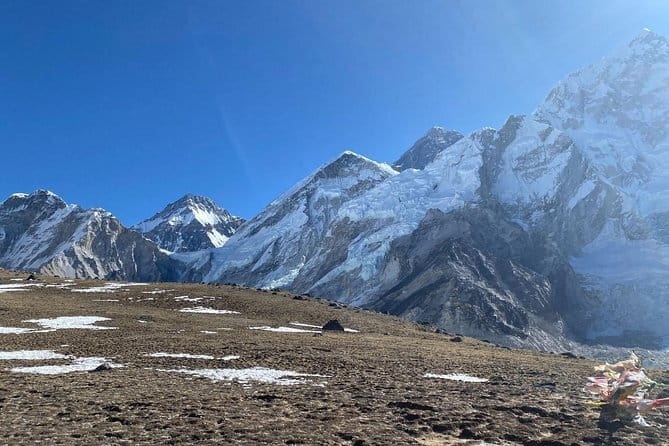
Kalapatthar is the visual reward of the trek. From this high point, you can take in the Everest region from a broad viewpoint and look across the Himalayan peaks. If you have come primarily for the mountain views, this is the morning you will remember.
The descent to Pheriche is welcome after the high climb. Going down does not make the day effortless, but it usually feels easier than gaining altitude. Pheriche also gives your body a lower place to spend the night before the return to Namche.
This day reveals why the itinerary needs two acclimatization stops. Without the rest days in Namche and Dingboche, the combination of Base Camp and Kalapatthar would be much harder to manage safely.
The Return to Lukla Is Part of the Adventure
The return from Pheriche to Namche takes six to seven hours. You retrace much of the route, but the experience changes when you are descending. You can notice details that were easy to miss during the uphill push, and the lower altitude often brings back energy.
The final walking day runs from Namche to Lukla and takes five to six hours. It is a long day, but you are descending overall. Reaching Lukla gives you a proper sense of completion, even though the flight back to Kathmandu remains subject to weather and operating conditions.
Day thirteen includes the flight to Kathmandu, along with dinner. The package says the return routing may involve Kathmandu or Ramechhap, so confirm the exact flight plan before departure. The final day is airport transfer and departure, with breakfast included.
Guides, Porters, and the Personal Side of the Trip
The quality of a trek operator matters most when someone is tired, ill, or stuck because of weather. This company assigns an experienced guide, a porter for every two clients, and support for travel and rescue arrangements.
Several names appear repeatedly in the trip’s strongest feedback. Prakash Adhikari is praised as a lead guide who combines route knowledge with calm support. Nima received special praise for helping with medical issues, including time spent assisting a client at a doctor. Urken Sherpa is also highlighted as an effective assistant guide, while Bhagwat Simkhada receives credit for organization and quick responses before and during the trip.
That does not guarantee that every group will have the same staff member. You should confirm your guide before arrival. Still, the pattern is useful: this operator’s best feature appears to be human support, not fancy lodging.
The company has also handled family groups, including a 12-year-old on an Everest Base Camp trek. The minimum age is eight, but age alone does not make a child ready for high altitude. Families need to judge fitness, patience, and comfort with basic accommodation carefully.
A private trip can help here. Your group can discuss pace and practical needs with the guide instead of fitting into a large fixed schedule. Special dietary requirements should be provided at booking.
What $1,800 Includes, and What It Does Not
At $1,800 per person, the price covers a substantial amount:
- Airport pickup and private vehicle transfer
- Two nights in a three-star Kathmandu hotel with breakfast
- Flights between Kathmandu or Ramechhap and Lukla
- Tea-house or lodge accommodation during the trek
- Breakfast, lunch, and dinner while trekking
- TIMS and Khumbu Valley fees
- Guide, porter support, paperwork, and travel arrangements
- A returnable duffle bag
- Basic first-aid supplies
- Company T-shirt
- Farewell dinner with cultural performance
I consider this good value for a guided Everest Base Camp package, especially because flights and porters are included. Organizing those parts separately can create extra work and uncertain costs.
The exclusions are important. You pay for your Nepal visa, international flights, travel and rescue insurance, drinks, hot showers, laundry, phone calls, battery charging, tips, and personal purchases. If bad weather delays a flight or you spend extra nights in the mountains, those added expenses are yours.
Do not treat rescue arrangements as a substitute for insurance. The operator can help coordinate an emergency, but the insurance policy is still your responsibility.
Fitness, Weather, and Practical Preparation
The tour requires moderate physical fitness, but that phrase should not be read as easy. The schedule includes multiple six to seven-hour walking days, high passes, glacier terrain, and sleeping above 5,000 meters.
I would prepare by walking regularly before the trip, including long uphill outings. You need to be comfortable moving for several hours with a daypack, even though the porter carries the main duffle.
The trek operates in all weather conditions. Bring clothing for cold, wind, sun, and wet conditions. The exact packing list is not provided, so you should ask the operator what size and weight limits apply to the duffle and what equipment can be rented or purchased in Kathmandu.
Altitude is the biggest concern. The itinerary includes sensible rest days, but no schedule can remove the risk of altitude sickness. Tell your guide promptly if you feel unwell. The operator has first-aid supplies and rescue arrangements, but your own travel insurance remains essential.
The cancellation policy allows a full refund if you cancel at least 24 hours before the local start time. Changes or cancellations within 24 hours are not refunded.
Should You Book This Everest Base Camp Trek?
I would recommend this trek to you if you want a guided, private Everest Base Camp experience with a clear 14-day structure and strong logistical support. The price is attractive because it includes the expensive and awkward parts: Lukla flights, porters, meals, permits, lodging, and airport transfers.
You should book it only after accepting the trade-offs. Tea houses are basic, flights can be delayed, personal costs add up, and the altitude is serious. This is not a sightseeing holiday with a little walking attached.
For the best fit, you should be comfortable with long walking days, willing to follow your guide’s safety advice, and prepared to spend money on insurance and possible delays. If that sounds right, the combination of Sherpa villages, Tengboche monastery, Everest Base Camp, and Kalapatthar offers a powerful Himalayan journey at a competitive price.
FAQ
How long is the Everest Base Camp trek?
The experience lasts approximately 14 days, including arrival and departure days, flights between Kathmandu and Lukla, acclimatization days, the trek to Everest Base Camp, and the return to Lukla.
What is the highest point on the itinerary?
Kalapatthar is the highest point, at about 5,545 meters. Everest Base Camp is listed at approximately 5,360 meters.
Are meals included during the trek?
Yes. Breakfast, lunch, and dinner are included during the trekking portion. Meals in Kathmandu are not included except for the stated breakfasts and farewell dinner.
Are flights to Lukla included?
Yes. The package includes flights between Kathmandu or Ramechhap and Lukla. Exact routing can depend on operating conditions.
Is this a private tour?
Yes. Only your group participates, and a minimum of two people per booking is required.
What is the minimum age and fitness requirement?
The minimum age is eight, and participants should have a moderate level of physical fitness. The trek includes walking days of up to seven hours and reaches more than 5,500 meters.
Recently added around Kathmandu
- Ghorepani Poon Hill Trek★ 5.0 · 16 reviews
- Amazing 1 Day Trekking Experience in Kathmandu Nepal★ 5.0 · 24 reviews
- Private Manaslu Circuit Trek at Himalayas★ 5.0 · 3 reviews
- Ghorepani Poonhill Trek★ 5.0 · 5 reviews
- Upper Mustang Trekking★ 5.0 · 2 reviews
- Upper Mustang Trekking★ 3.0 · 2 reviews
- Upper Mustang Trekking★ 5.0 · 4 reviews
- Upper Mustang Trek★ 5.0 · 5 reviews
Everest Base Camp Treks, compared.




Browse the lists this tour appears in