
REVIEW · KATHMANDU
Everest Chola Pass Trek-17 Days
High passes, big views, real effort. This 17-day Everest Chola Pass Trek links the quieter Gokyo Valley with Everest Base Camp, giving you three major prizes: Gokyo Ri, Cho La Pass, and Kala Patthar. I like the route’s variety, from pine forests and Sherpa villages to glaciers and high mountain viewpoints. I also like that airport transfers, mountain lodging, meals, permits, a guide, and a porter are included. The main drawback is clear: this is a demanding high-altitude trek, with cold conditions, long walking days, and a pass reaching 5,368 meters.
The route costs $2,100 per person and operates as a private activity for your group. That price offers solid value if you use the included services, though extra costs can add up for hot showers, phone calls, drinks, charging, laundry, water, tips, insurance, and delays. Guides such as Ang Pemba have received specific praise for being kind and helpful, while the company’s founder, Bhagwat Simkhada, is noted for handling airport transfers and paperwork with care.
Key points at a glance
- Gokyo Ri at 5,360 meters: A high viewpoint with views toward Everest, Makalu, Cho Oyu, and the surrounding peaks.
- Cho La Pass at 5,368 meters: The trek’s toughest and most memorable crossing, linking the Gokyo and Everest Base Camp routes.
- Everest Base Camp and Kala Patthar: Two different ways to experience Everest, one at the foot of the climbing route and one from a high viewpoint.
- Private group format: Only your own group takes part, with one porter assigned for every two clients.
- Included mountain support: Tea-house lodging, meals, permits, flights, a guide, porter, duffle bag, and basic first aid are covered.
- A route with quieter sections: Gokyo Valley and Cho La offer a less direct path than the standard Everest Base Camp route, though they demand more from your legs.
Why this route is more than a standard Everest trek
Many visitors come to the Khumbu region with one goal: Everest Base Camp. This route gives you more than that single destination. You approach the Everest area through Gokyo Valley, climb Gokyo Ri, cross Cho La Pass, visit Base Camp, and then climb Kala Patthar.
That makes the route attractive to strong walkers who want variety. You see high lakes, glaciers, suspension bridges, Sherpa villages, prayer flags, and enormous peaks. The scenery changes often enough to keep the walking interesting.
The cost of that variety is effort. You do not simply walk uphill to Base Camp and return. You spend several nights at high altitude, cross a 5,368-meter pass, and walk through cold, rocky terrain. The schedule is not suited to someone seeking a gentle mountain holiday.
The route is private, which matters. You are not placed into a large mixed group, and the company assigns a guide and one porter for every two clients. One traveler who completed the EBC and Cho La route had a guide alone and described the arrangements as smooth. Ang Pemba was singled out as especially pleasant and helpful, a useful name to keep in mind when discussing guide arrangements.
More Everest Base Camp Treks in Kathmandu:
- Everest Base Camp Trek – 14 Days
★ 5.0 · 1,499 reviews - Everest Base Camp Trek
★ 5.0 · 842 reviews - Everest Base Camp Trekking
★ 5.0 · 485 reviews
Days 1 and 2: Kathmandu to Lukla and Phakding
Your arrival begins at Tribhuvan International Airport in Kathmandu. A representative from Himalayan Adventure Treks and Tours meets you and transfers you to your hotel by private vehicle.
You spend the first night in a three-star Kathmandu hotel, with breakfast included. This is a practical start rather than a sightseeing-heavy one. You meet the trek members, settle your bags, and prepare for an early airport transfer.
Day two begins with a short flight to Lukla, taking less than 40 minutes. The views include mountains, forests, and river valleys, so try to keep a window seat if possible. The flight is part of the experience, but it also sets the pace for the rest of the trip: mountain travel is shaped by weather and local conditions.
After landing in Lukla, you walk for roughly three to four hours to Phakding. The first trail follows the Dudh Koshi River through forested scenery. Pine, oak, and rhododendron trees give you a softer introduction to the Himalayas before the route becomes colder and steeper.
Days 3 and 4: Entering Sagarmatha National Park
From Phakding, you walk beside the Dudh Koshi River toward Namche Bazaar. The path passes through Monjo, the entrance to Sagarmatha National Park. This is an important point in the trek, since the scenery begins to feel distinctly Himalayan, with larger peaks appearing beyond the trees.
The route to Namche is not a quick stroll. It includes uphill sections and mountain paths that require steady pacing. Your guide and porter are especially valuable here because you can focus on breathing, footing, and carrying only a daypack.
Namche Bazaar is your first major acclimatization stop. You spend a full day here rather than climbing higher immediately. The planned hike leads toward the Hotel Everest View, where you can see across the Khumbu region. You also get time to observe local life and the way the community serves people moving through the valley.
This rest day is not wasted time. It helps your body adjust before the route climbs into thinner air. Keep the day easy, drink regularly, and avoid treating the viewpoint hike as a race.
Days 5 to 7: Dole, Machhermo, and the Gokyo Lakes
After Namche, the route leaves the main Everest Base Camp trail and heads toward Dole. The mountains seem much closer now, and the forest begins to give way to more open high-country scenery.
Dole is a small stopping point with time to look around before continuing. The next day brings you to Machhermo at about 4,470 meters. The trail climbs through mountain scenery, with views of peaks and glaciated areas. At this altitude, the cold becomes more noticeable, and a slow pace matters.
Machhermo also gives you a chance to observe a smaller Sherpa settlement. The itinerary allows free time to walk around the village and see local life, though you should save energy for the days ahead.
From Machhermo, you continue toward Gokyo Lake. The approach includes a rocky ascent, but the reward is immediate. The clear lakes reflect the surrounding mountains, creating some of the most memorable scenery on the route.
Gokyo is one of the trek’s strongest sections. The lakes provide a calm contrast to the harsher pass and glacier crossings later on. You stay overnight beside the lakes, giving you time to enjoy the setting instead of rushing through it.
A few more treks around Kathmandu worth a look
- Annapurna Circuit Trek with Tilicho Lake
★ 5.0 · 368 reviews - Everest Base Camp Trekking – 13 Day
★ 5.0 · 365 reviews - Everest Base Camp Trek
★ 5.0 · 350 reviews - Everest Base Camp Trek -14 Days
★ 5.0 · 321 reviews
Day 8: The high viewpoint of Gokyo Ri
The climb to Gokyo Ri reaches about 5,360 meters. This is a serious hike, but it gives you one of the finest viewpoints in the region.
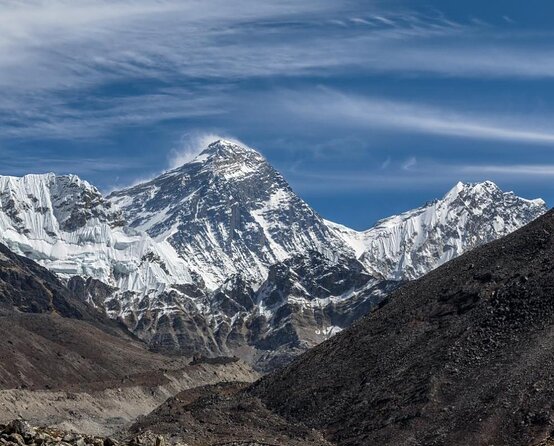
From the top, you can see Everest, Makalu, Cho Oyu, and other major peaks. The view is broad rather than limited to one mountain, so it helps explain why the Gokyo Valley is such a popular alternative to the direct Base Camp route.
The day is described as a full excursion around Gokyo Valley, with a return to the lakeside for the night. That return is useful because you do not need to carry your full trekking load to a new village after the climb.
You should treat Gokyo Ri as a genuine high-altitude ascent, not simply a scenic hill. The cold, thin air and steep walking make the climb tiring. A strong fitness level is required, and the guide’s pacing will matter.
Days 9 and 10: Thagnag and the Cho La crossing
From Gokyo, you walk to Thagnag across snowfields and rocky ground. This is one of the more challenging stretches because the terrain becomes less forgiving and the altitude remains high.
The next day is the central challenge of the route: Cho La Pass. You climb to 5,368 meters before descending to Dzongla. From the pass, the views include Everest, Ama Dablam, Cho Oyu, Lhotse, Nuptse, Makalu, Cholatse, Tawache, and Gyachung Kang.
This day deserves careful preparation. It is long, cold, and physically demanding. Conditions on high passes can change, and the itinerary specifically notes that the trip may face delays or extra costs if weather or other problems prevent normal movement.
Cho La is also why this route feels different from a standard Base Camp itinerary. You are not just following the most direct valley path. You are crossing a serious mountain pass that connects two major trekking areas.
After descending to Dzongla, you have time to explore the area in the evening. Keep expectations practical. At this height, the simple achievement of reaching your lodge, eating, and warming up can feel like a full evening.
Days 11 to 13: Lobuche, Everest Base Camp, and Kala Patthar
From Dzongla, the route continues toward the Khumbu Glacier and Lobuche. Views of Tawache and Cholatse remain prominent. Lobuche is extremely cold, and the high altitude becomes impossible to ignore.
The next day takes you from Lobuche to Gorakshep and then onward to Everest Base Camp. Gorakshep serves as the overnight base, so you return there after visiting Base Camp.
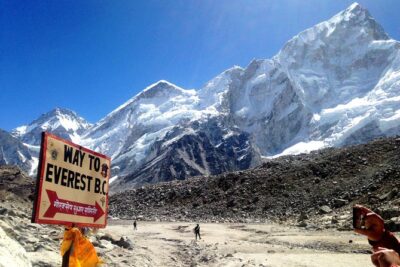
Everest Base Camp is not the summit, but it is an important point for mountaineers attempting the peak. Standing at the foot of the world’s highest mountain gives the day a strong sense of purpose, even though the surrounding terrain is rocky, cold, and demanding rather than comfortable.
The following morning, you climb Kala Patthar. This viewpoint gives you a closer view of Everest, Ama Dablam, and Pumori, along with glaciers and surrounding peaks. The two Everest experiences are different: Base Camp connects you with the climbing route, while Kala Patthar gives you the more dramatic high viewpoint.
After Kala Patthar, you continue to Pangboche. This village offers a quieter setting after the pressure of the high point. You have time to explore before continuing lower.
Days 14 to 16: Returning through Namche and Lukla
From Pangboche, the route returns to Namche Bazaar. The descent is welcome, though long downhill sections can be hard on tired knees.
Namche is also the most practical place to reconnect with the outside world. Wi-Fi is available, so you can contact family and upload a few photos. Do not expect every connection to work perfectly, but this is your best listed opportunity to touch base before Lukla.
The next day takes you to Lukla along a sandy path with strenuous sections. The scenery remains attractive, with mountain views and open country. In Lukla, you can explore the bazaar, buy local items, and celebrate finishing the trek with a drink.
Day 16 brings the flight back to Kathmandu. The short flight offers one final look at snowy peaks through the plane window. After the transfer to your hotel, you have free time for last-minute shopping or further sightseeing.
That evening includes a farewell dinner at an authentic Nepalese restaurant with cultural performance. It is a pleasant close to a trip that has involved plenty of early starts, simple lodges, and long walking days.
What the $2,100 price really covers
At $2,100 per person, the package offers good value for a private 17-day Himalayan trek, especially because many major costs are included.
You receive airport pickup, two nights in a three-star Kathmandu hotel with breakfast, meals during the trek, flights between Kathmandu and Lukla or the Ramachap flight route, permits and Khumbu Valley fees, a duffle bag, a company T-shirt, tea-house lodging, a guide, a porter, travel and rescue arrangements, and basic medical supplies.
The food package covers breakfast, lunch, and dinner during the mountain portion. Lodging is based on twin sharing in tea houses. That means you should expect practical mountain accommodation rather than hotel comfort.
Budget extra money for Nepal visa fees, international flights, travel insurance, personal expenses, extra Kathmandu nights, hot showers, charging, bottled or boiled water, laundry, drinks, phone calls, extra porters, and tips. Delays caused by weather or other problems can also create costs beyond the planned schedule.
Rescue arrangements are included, but you should still buy travel and rescue insurance because the policy itself is not included in the price.
Who should book this trek?
You should consider this route if you have strong physical fitness, want more than the standard Base Camp path, and are comfortable with cold, basic accommodation, and high-altitude walking.
It suits someone who values a private group, personal guide support, and a route with major viewpoints. It is also a good fit if Gokyo Lakes and Cho La Pass appeal to you as much as Everest Base Camp itself.
You should think twice if you want a relaxed holiday, dislike early starts, or have no interest in strenuous walking. The itinerary includes several days above 4,000 meters and two viewpoints above 5,300 meters. That is the real character of the trip.
The company has received praise for airport help, paperwork, punctuality, and personal service. Bhagwat Simkhada is associated with that hands-on approach, while Ang Pemba is a guide name worth requesting if available. One useful caution is that mountain accommodation can become crowded, and conditions may not always match your expectations.
Practical details before you reserve
Pickup begins at Tribhuvan International Airport in Kathmandu, and the activity starts at 6:00 a.m. The trip ends back at the same general meeting point after your return to Kathmandu.
Confirmation is provided at booking. Vegetarian food is available, and you should give dietary requirements in advance.
The cancellation policy allows a full refund if you cancel at least 24 hours before the scheduled start time. Changes or cancellations inside that period are not accepted for a refund.
Should you book the Everest Chola Pass Trek?
I would book this trek if you want a demanding, scenic route that combines Gokyo Ri, Cho La Pass, Everest Base Camp, and Kala Patthar in one carefully arranged trip.
The strongest reasons are the route variety, private format, included guide and porter support, and the chance to see Everest from several angles. The main warning is just as important: this is not an easy walk. You need strong fitness, patience with mountain conditions, and a budget for costs not covered by the package.
Ask about flight routing, current lodge conditions, guide availability, and contingency plans before paying. If you are prepared for basic comforts and serious altitude, this route gives you a fuller view of the Everest region than the direct Base Camp trail.
FAQ
How long is the Everest Chola Pass Trek?
The trek lasts approximately 17 days, including arrival and departure days in Kathmandu, the flights to and from Lukla, and the mountain walking itinerary.
What is the price per person?
The listed price is $2,100 per person.
Is airport pickup included?
Yes. Pickup from Tribhuvan International Airport and transfer to the Kathmandu hotel by private vehicle are included.
Are flights between Kathmandu and Lukla included?
Yes. The package includes the Kathmandu to Lukla and return flight arrangements, with the itinerary also noting the possible Kathmandu or Ramachap routing.
What meals are included?
Breakfast is included during the two Kathmandu hotel nights. Breakfast, lunch, and dinner are included during the trekking portion.
What type of accommodation is provided?
You receive two nights in a three-star hotel in Kathmandu and twin-sharing accommodation in lodges or tea houses during the trek.
Is a guide and porter included?
Yes. An experienced guide and porter are included, with one porter assigned for every two clients.
Do I need strong physical fitness?
Yes. The tour information states that a strong level of physical fitness is required. The route includes Gokyo Ri at 5,360 meters and Cho La Pass at 5,368 meters.
Is travel insurance included?
No. Travel and rescue insurance is not included, so you need to arrange it separately.
Recently added around Kathmandu
- Ghorepani Poon Hill Trek★ 5.0 · 16 reviews
- Private Manaslu Circuit Trek at Himalayas★ 5.0 · 3 reviews
- Amazing 1 Day Trekking Experience in Kathmandu Nepal★ 5.0 · 24 reviews
- Upper Mustang Trekking★ 5.0 · 2 reviews
- Ghorepani Poonhill Trek★ 5.0 · 5 reviews
- Upper Mustang Trekking★ 3.0 · 2 reviews
- Upper Mustang Trekking★ 5.0 · 4 reviews
- Upper Mustang Trek★ 5.0 · 5 reviews
Everest Base Camp Treks, compared.




Browse the lists this tour appears in