
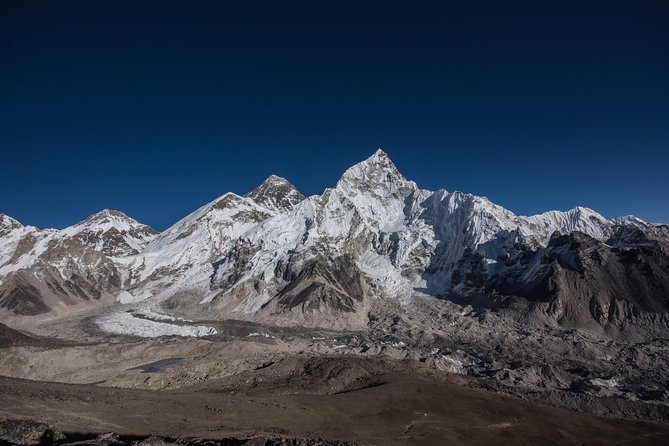
REVIEW · KATHMANDU
Everest Base Camp Trekking-14 nights/15 Days
Everest is the goal; the journey is the test. This 15-day private trek takes you from Kathmandu toward Everest Base Camp at 5,364 meters, with views of Everest, Lhotse, Pumori, Nuptse, and other major Himalayan peaks. I like that the package includes domestic flights between Kathmandu and Lukla, porter support, guide services, national park fees, and hotel transfers. Those inclusions remove much of the planning work from a demanding trip.
I also like the personal feel. The experience is private rather than a set group tour, and guides named in past accounts include Ram, Chandra, Sreekrishna, and Bikash. The main caution is simple: this is a high-altitude trek, not a sightseeing tour with a few walks. You need moderate physical fitness, suitable clothing, insurance, and patience with weather and mountain conditions.
Key points before you book
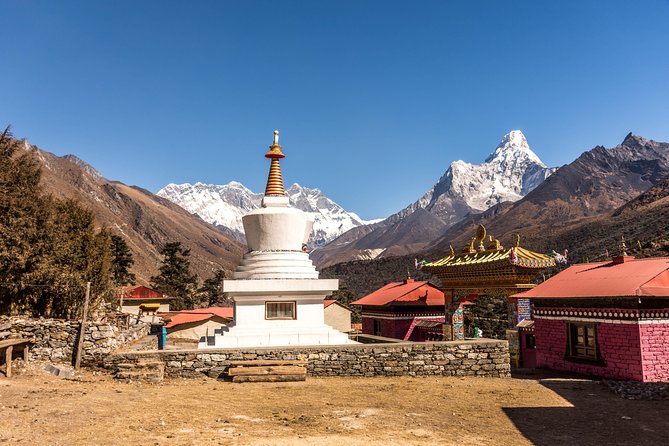
- Everest Base Camp reaches 5,364 meters: Prepare for thin air, long walking days, and a demanding route.
- Kathmandu to Lukla flights are included: Domestic air travel saves time, but mountain weather can affect schedules.
- Private touring gives you more personal attention: Only your own group participates, with a professional guide and porter support.
- The package covers major trekking costs: Accommodation, staff costs, national park fees, local taxes, baggage service, and transfers are included.
- Food and drinks are extra: Budget separately for meals, snacks, desserts, and drinks throughout the trek.
- The experience has a strong service record: Past accounts praise Ram and guides such as Chandra and Sreekrishna for organization, help with altitude, and personal care.
Why this trek remains such a big deal
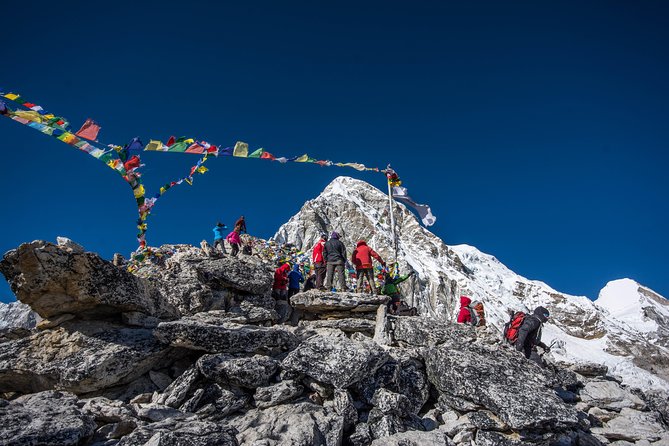
Everest Base Camp is not the summit of Mount Everest, but reaching it is still a serious Himalayan achievement. At 5,364 meters, the base camp sits in the Khumbu region among some of the highest peaks on earth. You go for the mountain views, but the walking itself becomes the story.
The route is tied to Sherpa communities, high mountain villages, Buddhist culture, and the working world of porters and mountaineering teams. The trip gives you a close look at a place where daily life is shaped by altitude, weather, and the mountains.
The advertised package lasts 14 nights and 15 days. The booking information also displays an approximate duration of 15 days and 20 minutes, which appears to include the initial airport transfer or a platform timing detail. I would confirm the exact day-by-day schedule before paying, since only the airport transfer is described in the supplied itinerary.
That missing detail matters. A standard Everest Base Camp program needs careful pacing, rest time, and sensible altitude planning. Ask for the exact overnight stops, walking hours, elevation gains, and contingency plan before you commit.
More Everest Base Camp Treks in Kathmandu:
- Everest Base Camp Trek – 14 Days
★ 5.0 · 1,499 reviews - Everest Base Camp Trek
★ 5.0 · 842 reviews - Everest Base Camp Trekking
★ 5.0 · 485 reviews
Landing in Kathmandu and meeting the team
Your stated meeting point is Tribhuvan International Airport in Kathmandu, with a start time of 5:45 am. The company provides airport pickup and transfer to your hotel, with the listed transfer taking about 30 minutes.
That early start likely connects with the domestic flight to Lukla. Kathmandu airport can be a busy place, and having someone meet you is useful after an international flight. You do not need to work out the first transfer alone, and the company says hotel pickup and drop-off are included.
You should have your current passport ready. At booking, every participant must provide passport name, number, expiry date, and country. Those details are needed for the domestic flight arrangements, so check that the information matches your travel document exactly.
The company is based in Kathmandu and operates the trip as a private activity. That means you are not simply added to a large general group. You travel with your own party and assigned staff, which can make a real difference when someone is tired, slow on a climb, or having trouble with the altitude.
The Kathmandu to Lukla flight
The package includes a Kathmandu to Lukla flight and the return flight to Kathmandu on a domestic airline. This is one of the most useful inclusions in the price because Lukla is the normal air gateway for the Everest region.
It is also the part of the trip most exposed to weather disruption. The experience operates in all weather conditions, but the company states that poor weather can lead to cancellation, a different date, or a full refund. You should still build flexibility into your wider Nepal plans if possible.
Once you leave Kathmandu, the character of the trip changes quickly. The city gives way to mountain country, and the trek begins from the Lukla area. The supplied information does not list the exact walking stages, so you should request them directly rather than rely on a generic Everest Base Camp schedule.
Walking toward the Khumbu high country
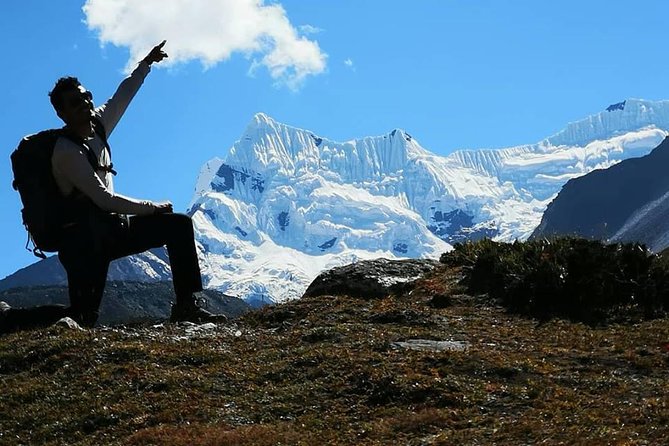
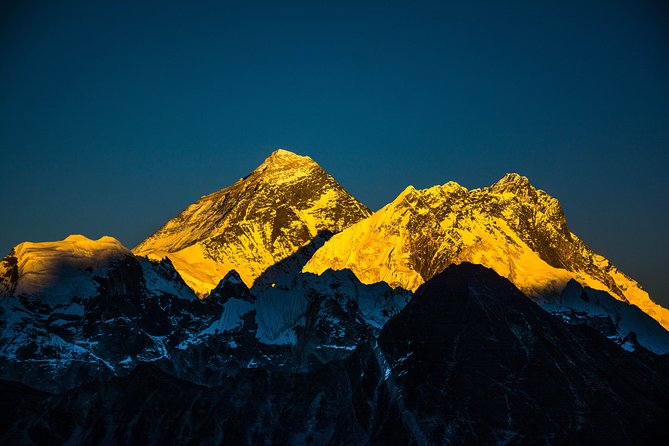
The heart of the experience is the trek through the Khumbu region. You are heading toward Everest Base Camp, with the major peaks of Everest, Lhotse at 8,516 meters, Pumori at 7,161 meters, and Nuptse at 7,855 meters forming the setting.
The appeal is not only the final destination. The route gives you changing views, mountain villages, suspension bridges, high passes, rocky paths, and long stretches where the scale of the Himalayas becomes clear. The information provided does not promise particular villages or daily stops, so I would not assume that every familiar Everest route highlight is part of this exact booking.
What is clear is that the company provides a professional guide, porter service, staff accommodation, staff food, and staff salaries. The baggage carried service is especially useful. You can walk with a daypack instead of carrying your full luggage, though you should ask about weight limits before departure.
Past accounts give useful clues about the human side of the trip. Ram is praised for staying involved from arrival in Nepal through departure. Chandra is described as supportive and attentive, while Sreekrishna helped a solo trekker manage altitude problems. Bikash is named as a porter on one completed trek.
Those details do not guarantee the same guide for your departure, but they show what to ask for. If you have a preference for a guide who speaks your language, has experience with children, or has handled altitude concerns, mention it before booking.
A few more treks around Kathmandu worth a look
- Annapurna Circuit Trek with Tilicho Lake
★ 5.0 · 368 reviews - Everest Base Camp Trekking – 13 Day
★ 5.0 · 365 reviews - Everest Base Camp Trek
★ 5.0 · 350 reviews - Everest Base Camp Trek -14 Days
★ 5.0 · 321 reviews
Everest Base Camp at 5,364 meters
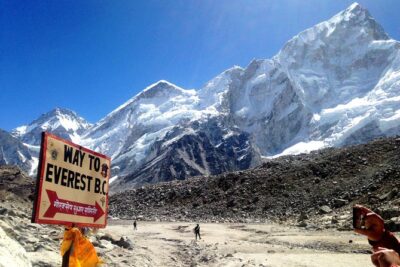
Reaching Base Camp is the emotional high point. You are not climbing Everest itself, but you are standing at the starting point used by expeditions attempting the world’s highest mountain. The surrounding peaks give the moment its power.
The views listed for this trip include Everest, Lhotse, Pumori, Nuptse, and other snow-covered summits. The exact visibility depends on weather, season, and cloud cover. A clear day can bring wide mountain views, while poor conditions can reduce the visual reward. That is one reason the itinerary’s flexibility matters.
You should also be honest about your own limits. A moderate fitness level is required, and the altitude is the central physical challenge. The supplied details do not promise medical support, oxygen, or a specific acclimatization program. Ask how the guide handles altitude sickness, what happens if you cannot continue, and what emergency arrangements are available.
One account describes guide support during altitude sickness, which is encouraging, but it should not replace proper travel insurance. Insurance is not included, and you should make sure your policy covers trekking at the maximum altitude of this route, emergency evacuation, and trip interruption.
What the $1,600 price really covers
At $1,600 per person, this is not a bare-bones walk where you arrange every piece yourself. The package includes accommodation according to the itinerary, national park fees, local taxes, all listed taxes and handling charges, guide services, porter and staff costs, airport transfers, and the Kathmandu to Lukla flights.
That is a useful collection of inclusions. Domestic flights alone can be a major part of the logistics, and staff costs are important in a trek where guides and porters carry much of the practical burden. Private touring also gives you more control than a large shared departure.
Still, the price does not cover everything. International flights, Nepal visa fees, meals, drinks, snacks, desserts, extra activities, travel insurance, and staff tips are excluded. Food is the item most likely to surprise you if you assume the package is all-inclusive.
The included items also mention an Environmental Management Charge labeled Reef Tax. That wording does not fit a Himalayan trek, so I would ask the company to clarify exactly which conservation or park fee it refers to. Clear answers before departure are worth more than a vague promise.
At this price, the trip offers good value for someone who wants a private, organized trek without arranging guides, permits, flights, staff, and transfers separately. It is less attractive if you want a low-cost package with meals included or if you prefer to plan each day independently.
Guides, porters, and the personal side of the trip
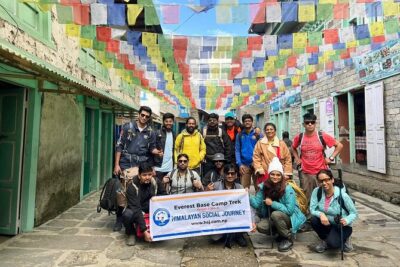
The strongest part of this experience appears to be the staff. Several accounts praise the company’s communication, organization, and friendly service. One person used the same company for Everest Base Camp and Mera Peak, while another returned for a second Everest trip with a seven-year-old daughter.
The mention of a child is useful, but it should not be read as proof that the route is easy for families. A seven-year-old’s successful trip depends on health, pace, guide support, weather, and careful parental judgment. If you are considering taking a child, discuss the full route and emergency plan directly with the company.
A good guide matters most when the weather turns, a flight changes, or your body reacts badly to altitude. Ramhari Neupane is connected with the company, and Ram, Chandra, and Sreekrishna are named in different accounts. You can ask who will lead your group, how many people that guide has taken to Base Camp, and whether a porter is assigned to each trekker or shared across the party.
Tipping is not included. Carry enough local currency or ask the company how tips are normally handled. Guides and porters are central to the trip, so treat tipping as part of your budget rather than an awkward last-minute decision.
The practical drawbacks you should weigh
The biggest drawback is the lack of a detailed day-by-day schedule in the supplied information. You know the trip lasts 15 days and reaches Base Camp, but you are not given the daily walking times, overnight places, acclimatization days, or exact elevation profile.
That is not a small detail. The quality of an Everest itinerary depends heavily on how it handles altitude. Ask for a written plan before booking, including what happens if flights are delayed or if someone needs to stop early.
Meals are another gap in the package. All food and drinks are excluded, including snacks and desserts. That gives you personal choice, but it means the advertised price is not your complete trip budget.
Weather is also part of the deal. The company operates in all weather conditions, yet poor weather can cancel the experience or force a date change. You need warm, practical clothing and a flexible attitude. Mountain timetables do not care about your onward flight.
Finally, the trek is private, but private does not mean easy. You get personal attention, not a softer route. Moderate fitness is the minimum stated expectation, and you should be prepared for strenuous walking at high altitude.
Who should book this Everest trek
I would recommend this experience to you if you want a private Everest Base Camp trip with major logistics arranged in advance. It suits people who value a guide, porter support, airport transfers, domestic flights, and direct help from a local company.
It may also suit solo trekkers, couples, families with suitable experience, and small groups that want their own pace. The accounts connected with the company include solo travel, repeat clients, a parent and child, and couples who booked with short notice.
I would be more cautious if you have limited hiking experience, a medical condition affected by altitude, or a fixed schedule that cannot absorb a delayed flight. The company requires moderate fitness, and travel insurance is your responsibility.
Before paying, ask for four things: the detailed daily route, the guide’s name and experience, the meal and accommodation arrangements, and the emergency plan for altitude illness or delayed flights. Those answers will tell you far more than a polished description.
Should you book it?
Book this trek if the attraction of Everest Base Camp outweighs the hard walking, high altitude, extra meal costs, and possible weather delays. The $1,600 price includes many of the costly and complicated pieces, especially the Lukla flights, guide, porter support, park fees, staff costs, and transfers.
I would not book until the company confirms the exact itinerary and clarifies the listed Environmental Management Charge. Once those points are clear, this looks like a strong choice for a private, locally managed Everest experience with a service record centered on helpful guides and careful organization.
FAQ
How long is the Everest Base Camp trek?
The experience is advertised as 14 nights and 15 days. The booking details also show an approximate duration of 15 days and 20 minutes.
Where does the experience start?
It starts at Tribhuvan International Airport on Ring Road in Kathmandu, Nepal.
What time is the stated meeting time?
The stated start time is 5:45 am.
Is airport pickup included?
Yes. Hotel pickup and drop-off are included, along with airport transfer. The listed airport transfer takes about 30 minutes.
Are flights to Lukla included?
Yes. The package includes Kathmandu to Lukla and return Lukla to Kathmandu flights by domestic airline.
Is this a group tour?
No. It is described as a private tour or activity, so only your own group participates.
What level of fitness is required?
You should have a moderate physical fitness level. The trek reaches Everest Base Camp at 5,364 meters.
Are meals included?
No. Foods, drinks, snacks, and desserts are excluded from the price.
Is travel insurance included?
No. Travel insurance is not included, so you must arrange it yourself.
What is the cancellation policy?
You can cancel at least 24 hours before the experience start time for a full refund. Cancellations or changes made less than 24 hours in advance are not accepted for a refund. If poor weather causes the experience to be canceled, you are offered another date or a full refund.
Recently added around Kathmandu
- Ghorepani Poon Hill Trek★ 5.0 · 16 reviews
- Private Manaslu Circuit Trek at Himalayas★ 5.0 · 3 reviews
- Amazing 1 Day Trekking Experience in Kathmandu Nepal★ 5.0 · 24 reviews
- Ghorepani Poonhill Trek★ 5.0 · 5 reviews
- Upper Mustang Trekking★ 5.0 · 2 reviews
- Upper Mustang Trekking★ 3.0 · 2 reviews
- Upper Mustang Trekking★ 5.0 · 4 reviews
- Upper Mustang Trek★ 5.0 · 5 reviews
Everest Base Camp Treks, compared.




Browse the lists this tour appears in