
REVIEW · KATHMANDU
Everest Base Camp trek- 13 Days
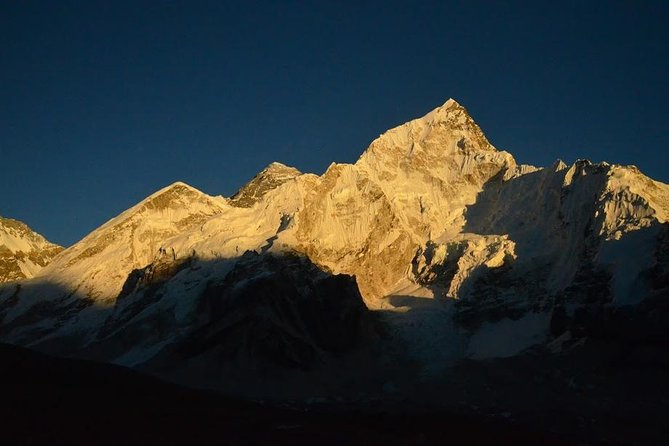
The mountains begin before the trail. This 13-day Everest Base Camp trek combines the famous Lukla flight, Sherpa villages, hanging bridges, Namche Bazaar, Tengboche Monastery, and a high-altitude walk to base camp. I like the strong logistical support, including permits, meals, flights, airport transfers, a guide, and one porter for every two people. I also like the private format, which gives your group more room to adjust its pace.
The main drawback is the physical demand. You spend many days walking at altitude, with basic tea houses, outside bathrooms, extra charges for drinks and hot showers, and a mandatory tip for the guide and porters. The early 5:15 am start and weather-sensitive Lukla flight also require patience.
Key things to know before you go
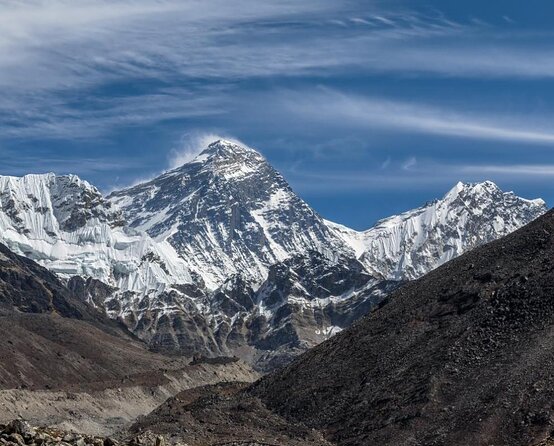
- Lukla is part of the adventure: The 30-minute flight from Kathmandu takes you directly to the trailhead at 2,840 meters.
- Two acclimatization days are built in: You pause at Namche Bazaar and Dingboche rather than rushing upward.
- The route includes Everest Base Camp and Kala Patthar: You reach base camp on day eight and return to Kala Patthar for sunrise the next morning.
- The price covers major trekking costs: At $1,300 per person, the package includes flights, permits, meals, guide services, porter support, and transfers.
- Tea house lodging is basic: Expect twin rooms with toilets and bathrooms outside during the trek.
- Personal support is a major strength: The company has been praised for flexible help, quick replies, airport assistance, and support when plans change.
Why this 13-day Everest route works
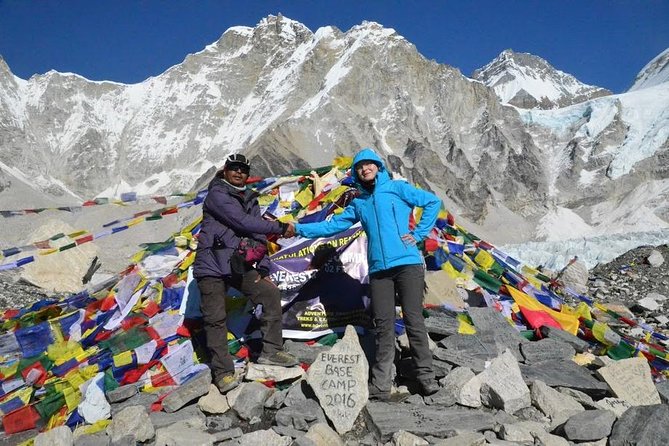
I like the shape of this trek. It does not simply send you uphill to Everest Base Camp and back. The route gives you two acclimatization days, includes a full return journey through the Khumbu, and allows time for major cultural stops along the way.
You begin in Kathmandu and finish there, with airport transfers included. The trek itself is private, meaning only your group participates. That matters on a route where walking speed, rest needs, and altitude reactions can vary sharply.
The package price is $1,300 per person. That is not the entire cost of a Nepal holiday, since Kathmandu accommodation, sightseeing, drinks, hot showers, Wi-Fi, charging, tips, and personal expenses are extra. Still, the price covers several costly and important pieces: round-trip Kathmandu to Lukla flights, national park and Khumbu permits, three daily meals, a licensed English-speaking guide, porter support, insurance for the trekking staff, and emergency assistance.
You receive one strong porter for every two people, with a stated carrying limit of up to 25 kilos. You should still pack carefully. A porter arrangement does not mean you need to bring everything you own to the Himalayas.
More Everest Base Camp Treks in Kathmandu:
- Everest Base Camp Trek – 14 Days
★ 5.0 · 1,499 reviews - Everest Base Camp Trek
★ 5.0 · 842 reviews - Everest Base Camp Trekking
★ 5.0 · 485 reviews
Day 1: Lukla flight and the walk to Phakding
The trip begins at 5:15 am from Outdoor Himalayan Treks on Thamel Marg in Kathmandu. After the hotel-airport transfer, you take a roughly 30-minute flight to Lukla, at 2,840 meters.
The Lukla airport experience is famous for its setting and short runway, but the important practical point is that the flight depends on good weather. A delay can affect the first day and later plans. The cancellation terms specifically allow a different date or a full refund if poor weather cancels the experience, but you should still leave room in your wider Nepal schedule.
From Lukla, the first walk takes four to five hours to Phakding, at 2,610 meters. This is a useful introduction rather than an all-out test. You get your first feel for the trail, bridges, villages, and changing elevation before the route becomes harder.
Your accommodation is a basic tea house on a twin-sharing basis. Toilets and bathrooms are outside. That setup is part of the trade-off for staying directly along the mountain route instead of using more polished hotels.
Day 2: Phakding to Namche Bazaar
The second day takes six to seven hours from Phakding to Namche Bazaar, at 3,440 meters. This is one of the more important days in the itinerary because the trail gains altitude and Namche becomes the main hub of the Khumbu region.
Namche is often called the gateway to Mount Everest, and the name fits. It is a major stopping point before the higher villages. The route also includes hanging bridges, one of the trek’s most memorable features. They are practical crossings, not theme-park attractions, so you should expect some movement underfoot and keep your attention on the trail.
The longer walking time makes this a demanding day. You should use the guide’s pace rather than trying to prove anything early in the trip. A slow start is a good investment at altitude.
Day 3: Acclimatization at Namche Bazaar
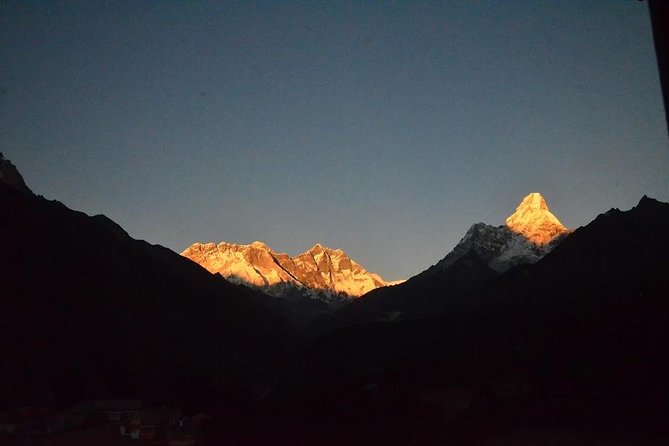
The third day is reserved for acclimatization. The itinerary does not specify a particular excursion, so you should ask your guide what the day’s plan will be and how much walking is appropriate for your group.
The value of this pause is clear. You are already at 3,440 meters, and the route continues much higher. A rest day gives your body time to adjust before the trail climbs toward Tengboche and Dingboche.
The area also includes the Hotel Everest View, described as one of the highest hotels in the world. This is one of the trek’s unusual stops and a good reason not to treat acclimatization as wasted time. You can use the day to enjoy the setting, take photographs, and conserve energy.
A few more treks around Kathmandu worth a look
- Annapurna Circuit Trek with Tilicho Lake
★ 5.0 · 368 reviews - Everest Base Camp Trekking – 13 Day
★ 5.0 · 365 reviews - Everest Base Camp Trek
★ 5.0 · 350 reviews - Everest Base Camp Trek -14 Days
★ 5.0 · 321 reviews
Day 4: Namche Bazaar to Tengboche
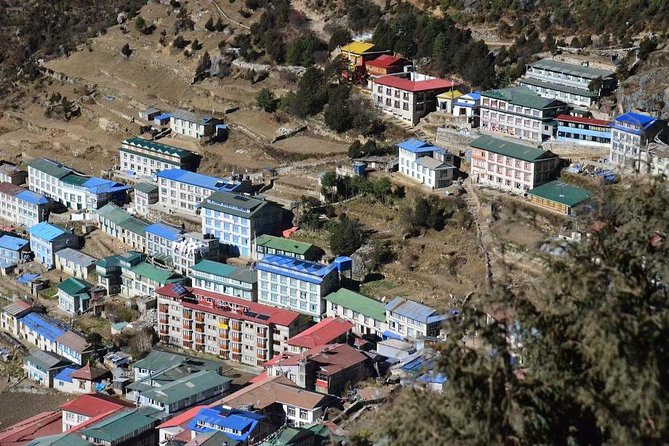
The trail continues to Tengboche, at 3,860 meters, in about five to six hours. The village is home to Tengboche Monastery, described in the tour material as more than 350 years old.
This is one of the strongest cultural parts of the route. The monastery gives the trek meaning beyond the physical challenge. You are not only walking toward a famous mountain landmark. You are also passing through Sherpa communities and places connected to local Buddhist practice.
At this point, the basic tea house conditions become more noticeable. Outside bathrooms, paid hot showers, charging fees, and extra costs for drinks are all worth expecting. The included meals let you choose one dish from the menu at breakfast, lunch, and dinner, but snacks, desserts, and extra meals cost more.
Day 5: Tengboche to Dingboche
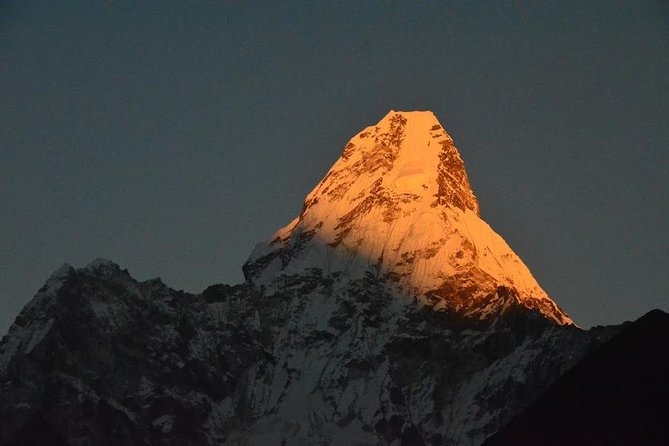
Day five takes you from Tengboche to Dingboche. No walking time or altitude is supplied for this section, so I would not promise a precise schedule. The important change is that you are moving deeper into the high Khumbu and closer to the most demanding part of the trek.
Dingboche is followed by another acclimatization day. That placement is sensible. The itinerary gives you time to pause before Lobuche, Gorak Shep, and Everest Base Camp.
You should pay attention to how you feel here. The tour requires a moderate level of physical fitness, but that phrase should not be read lightly. Several consecutive walking days, high altitude, basic lodging, and limited paid comforts make this a serious trek rather than a casual sightseeing trip.
Day 6: Acclimatization at Dingboche
The second acclimatization day takes place in Dingboche. As at Namche, the exact activity is not stated, so your guide will be important in deciding how your group uses the day.
This pause has practical value because the next stages are high and strenuous. You can spend the day adjusting to the altitude, checking equipment, and preparing for the walk to Lobuche. The guide is licensed, English-speaking, and included with expenses, so you have a dedicated person to help with the day-to-day plan.
The company’s strongest praise centers on personal support. Ram, the manager, has been described as quick to respond and helpful with hotels, local transport, food suggestions, and changing plans. Other names connected with positive experiences include Krishna, Dipak, Kamal, Ramani, and Dilly. Since guide assignments can vary, you should confirm who will lead your particular departure.
Day 7: Dingboche to Lobuche
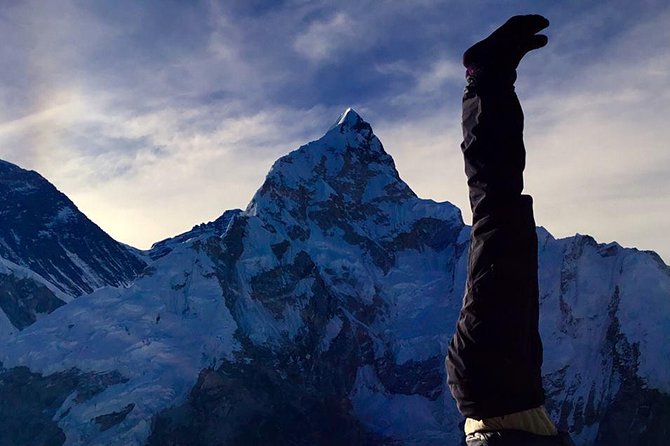
The route now moves toward Lobuche. The supplied schedule does not state the walking hours or elevation for this day, but it clearly places you in the approach to Everest Base Camp.
By now, the rhythm of the trek is well established: walk, eat, rest, and manage your energy. You should not judge each day only by distance. At high altitude, a shorter section can feel harder than a longer lowland walk.
The included porter service is especially useful here. One porter is provided for every two people, carrying up to 25 kilos. You will still need a small day bag for personal essentials, but you should not have to carry your full trekking load.
Day 8: Lobuche to Gorak Shep and Everest Base Camp
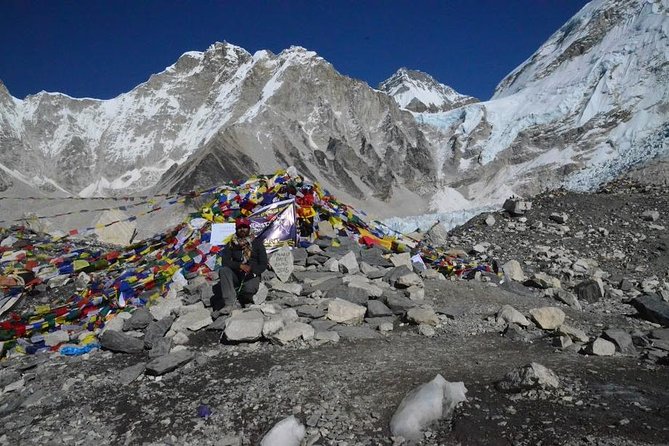
Day eight is the central challenge. You walk from Lobuche to Gorak Shep, continue to Everest Base Camp, and return to Gorak Shep for the night.
This is a long and demanding day, and the schedule gives no exact walking time. You should be prepared for a slow pace and limited comforts. Reaching base camp is the goal, but the route there is not designed as a quick photo stop.
The appeal is obvious. You get to walk to the base camp used by climbers preparing for Everest, with the enormous mountain region around you. The experience is about the route, the altitude, and the sense of reaching a place that has become one of the world’s best-known trekking destinations.
Day 9: Kala Patthar sunrise and Pheriche
The day begins with a climb to Kala Patthar for sunrise, followed by a walk to Pheriche. The itinerary does not state the elevation of Kala Patthar or the exact walking time, but this is another early and physically serious section.
The sunrise stop is valuable because it gives you a different view after the base camp visit. Base camp is the destination, while Kala Patthar is included for the panoramic mountain view. You should expect darkness, cold, and a steep start, although the supplied information does not specify the exact conditions.
After Kala Patthar, you descend toward Pheriche. The change in direction should feel welcome after the high point of the trek, but the day remains demanding because it combines an early climb with a long walk.
Days 10 to 12: The return through Tengboche and Namche
The return journey begins with Pheriche to Tengboche on day ten. Day eleven continues from Tengboche to Namche Bazaar, and day twelve takes you from Namche to Lukla.
I like that the return follows the same broad route rather than rushing you out by another method. You get a second look at places that may have passed quickly on the way up. The lower altitude should also make the walking feel more manageable, though tired legs remain a real consideration.
The return to Lukla keeps the weather issue in view. Your final flight depends on conditions, so I would avoid scheduling an important international departure too tightly after the included Lukla to Kathmandu flight. The tour includes the flight itself, airport transfers, and emergency assistance, but it cannot control mountain weather.
Day 13: Lukla to Kathmandu and the farewell meal
The final day includes the flight from Lukla to Kathmandu, transfer to your hotel, and a farewell dinner in the evening. The Kathmandu hotel itself is not included, so you need to arrange and pay for that accommodation separately.
The farewell meal takes place at an authentic Nepali restaurant with a live cultural show. It is a pleasant way to finish a physically demanding trip and gives you a final taste of local food and performance.
The experience ends back at the meeting point on Thamel Marg. That central starting point makes the package easy to locate, and the airport-hotel transfers remove some of the usual Kathmandu transport work.
What the $1,300 price really covers
The package offers good value if you want the main trekking arrangements handled in one booking. Included items are:
- Round-trip Kathmandu to Lukla flights
- Hotel-airport-hotel transfers
- Sagarmatha National Park entry permit
- Khumbu village entry permit
- Basic twin-sharing tea house accommodation
- Breakfast, lunch, and dinner
- A licensed English-speaking guide
- One porter for every two people
- Insurance for the guide and porters
- Applicable taxes, service charges, and fees
- Emergency assistance
- Farewell dinner with a live cultural show
You pay separately for cold and alcoholic drinks, bottled or boiled water, tea, coffee, snacks, desserts, Wi-Fi, battery charging, photography charges, and hot showers. Tips for the guide and porters are mandatory according to the supplied terms, and donations are also separate.
The package does not include Kathmandu accommodation or sightseeing. If you want a longer Nepal holiday, add those costs before deciding that $1,300 is your full trip budget.
Who should book this trek
I would recommend this trek to someone who wants a structured Everest Base Camp experience without arranging every permit, flight, guide, meal, and porter independently. It suits a private group that values flexibility and direct support.
You should have moderate physical fitness and be ready for multiple high-altitude walking days. The tea house conditions are basic, and the route is not a good match if you need private bathrooms, included hot showers, reliable Wi-Fi, or hotel-style comfort.
The company’s strongest practical advantage appears to be personal assistance. Positive experiences describe airport welcomes, quick answers, help with transport and food choices, and support when plans change. That kind of help matters in Nepal, especially when flights, weather, or your own energy disrupt the original schedule.
The rating shown for the experience is 5 from seven reviews. That is encouraging, though the sample is small. I would still ask about the assigned guide, porter arrangement, Kathmandu hotel plans, and what happens if the Lukla flight is delayed.
Should you book this Everest Base Camp trek?
Book it if you want a well-supported, private 13-day route with the major trekking costs included and two acclimatization days built into the schedule. The combination of Everest Base Camp, Kala Patthar, Namche Bazaar, Tengboche Monastery, Sherpa villages, and the Lukla flight gives you the classic Khumbu experience in a compact format.
Think twice if you want a relaxed holiday or dislike basic lodging, early starts, weather delays, and extra daily charges. For a fit person who accepts those conditions, the $1,300 price offers a practical way to reach Everest Base Camp with experienced local support rather than handling the complex pieces alone.
FAQ
How long is the Everest Base Camp trek?
The experience lasts approximately 13 days, including the Kathmandu to Lukla flight at the start, the trek, the return flight, and the farewell dinner.
Where does the trek start?
It starts at Outdoor Himalayan Treks on Thamel Marg in Kathmandu, Nepal.
What time does the trek start?
The stated start time is 5:15 am.
Is airport pickup included?
Yes. Hotel-airport-hotel transfers are included.
Are the Kathmandu to Lukla flights included?
Yes. A Kathmandu to Lukla and Lukla to Kathmandu flight ticket is included.
Is accommodation included during the trek?
Yes. Basic tea house accommodation is included on a twin-sharing basis. Toilets and bathrooms are outside.
Are meals included?
Yes. Breakfast, lunch, and dinner are included during the trek. You can choose one dish from the menu at each meal.
Are a guide and porter included?
Yes. The package includes an experienced English-speaking licensed guide and one porter for every two people. The porter carries up to 25 kilos.
Does the itinerary include acclimatization days?
Yes. There is an acclimatization day at Namche Bazaar and another at Dingboche.
Is cancellation free?
You can cancel at least 24 hours before the experience start time for a full refund. If poor weather cancels the experience, you are offered a different date or a full refund.
Recently added around Kathmandu
- Ghorepani Poon Hill Trek★ 5.0 · 16 reviews
- Amazing 1 Day Trekking Experience in Kathmandu Nepal★ 5.0 · 24 reviews
- Private Manaslu Circuit Trek at Himalayas★ 5.0 · 3 reviews
- Ghorepani Poonhill Trek★ 5.0 · 5 reviews
- Upper Mustang Trekking★ 5.0 · 2 reviews
- Upper Mustang Trekking★ 3.0 · 2 reviews
- Upper Mustang Trekking★ 5.0 · 4 reviews
- Upper Mustang Trek★ 5.0 · 5 reviews
Everest Base Camp Treks, compared.




Browse the lists this tour appears in