
REVIEW · KATHMANDU
Private 12 – Day Everest Base Camp Trekking
Everest begins with a small plane. This private 12-day trek takes you from Kathmandu to Lukla, then along the Dudh Koshi River, through Sherpa villages, and up to Everest Base Camp. I like that your guide, porter, permits, flights, meals, and tea house rooms are arranged in advance. I also like the private format, since you can walk at your group’s pace instead of matching strangers.
The main caution is the altitude and the physical work. You reach Gorakshep at roughly 5,164 meters and hike to Kala Patthar, while long days run up to eight hours. The $1,300 price is strong for what it covers, but you still need to budget for Kathmandu hotels, travel insurance, hot drinks, showers, charging, laundry, desserts, and tips.
Key points to know before you book
- Lukla flights are included: Round-trip domestic flights connect Kathmandu with the mountain trailhead.
- Private pacing matters: Only your group takes part, with a registered guide and porters assigned to you.
- Acclimatization is built in: Day 3 rests in Namche, and Day 6 allows time in Dingboche.
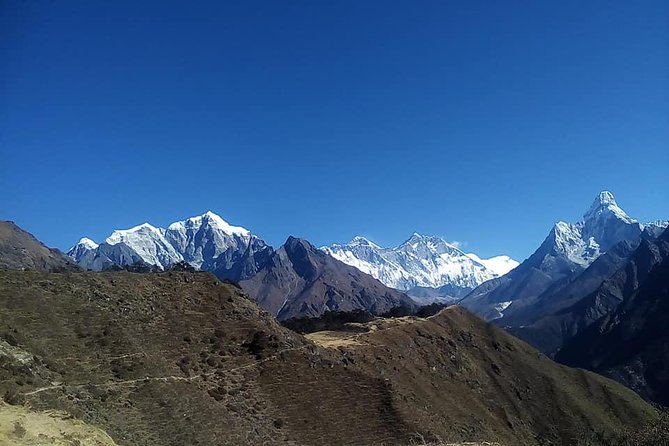
- The route has major mountain views: Ama Dablam, Lhotse, Nuptse, Pumori, Everest, and the Khumbu Glacier appear along the way.
- The toughest highlights come late: Everest Base Camp follows the climb to Gorakshep, then Kala Patthar the next morning.
- The service gets high marks: Specific guides praised in past trips include Amar, Kumar, Nauser, Yugal, Ongchhu Sherpa, and Saroj.
What this Everest Base Camp trek really includes
This is not a sightseeing trip with a short mountain walk attached. It is a serious high-altitude trek that covers the standard route from Lukla to Everest Base Camp and back in 12 days.
The company takes care of the main moving parts. Your package includes flights between Kathmandu and Lukla, tea house lodging during the trek, meals on the trail, Sagarmatha National Park and local entry fees, permits, a government-registered guide, porters, a trekking map, duffle bag, water purification, oxygen saturation checks, and emergency rescue assistance.
That list matters because the Everest route involves repeated small decisions. You need rooms, meals, permits, transport, and help when weather affects flights. Here, the operator handles those jobs while you concentrate on walking, drinking water, and adjusting to altitude.
The trip is private, so your group does not share the daily schedule with other customers. That can be especially useful on difficult days, when one person needs a slower pace or an earlier rest. It does not make the trek easy, but it gives you more control over how you tackle it.
More Everest Base Camp Treks in Kathmandu:
- Everest Base Camp Trek – 14 Days
★ 5.0 · 1,499 reviews - Everest Base Camp Trek
★ 5.0 · 842 reviews - Everest Base Camp Trekking
★ 5.0 · 485 reviews
Day 1: Lukla flight and the river path to Phakding
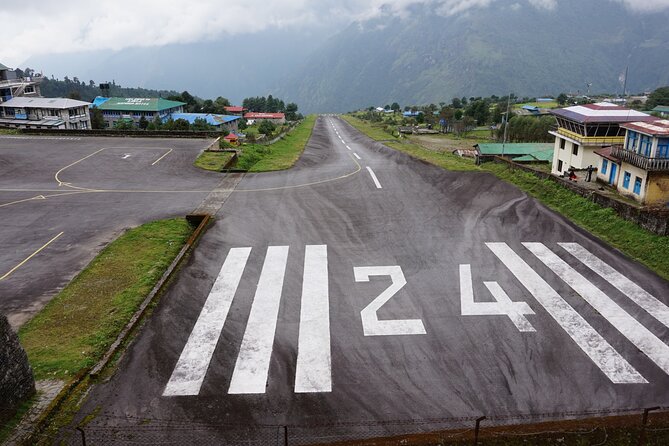
Your day starts early at 6:15 a.m. From the Kathmandu meeting point, you drive to Tribhuvan International Airport for the short flight to Lukla. The flight lasts about 30 minutes and crosses forested hills and steep ravines before landing at the mountain airstrip.
After breakfast in Lukla, you walk toward Phakding along the Dudh Koshi River. This first day takes about three hours, making it a sensible introduction to the route. You get your first taste of mountain walking without immediately facing the steep climbs found higher up.
Phakding is your first overnight stop. The short distance is useful because your body is still adjusting to the altitude, and the early start plus flight already makes this a full day.
Day 2: Suspension bridges and the climb into Namche Bazaar
The trail follows the Dudh Koshi upstream toward Monjo, passing waterfalls and crossing suspension bridges. At Monjo, you enter Sagarmatha National Park and complete the required park formalities.
From Jorsalle, the route continues toward Namche Bazaar. The walking time is about six hours, and this is the first day that feels like a proper mountain trek. The trail rises and falls, with bridge crossings and a sustained approach to Namche.
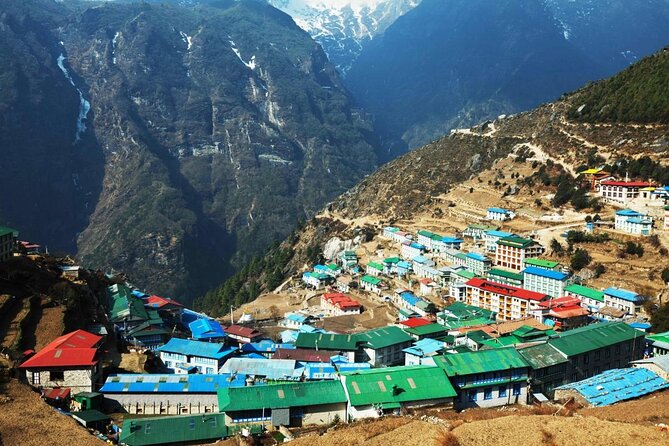
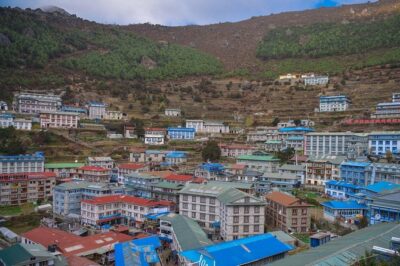
Namche is the largest village in the Everest region and a key stopping point for altitude adjustment. You can see the Kongde Ri range from the village, and the settlement gives you a chance to rest, eat, and prepare for the higher sections.
Day 3: A useful rest day around Namche and Khumjung
The schedule wisely keeps you in Namche for a second night. Rather than treating rest as wasted time, you use the day for a short outing around Khumjung and Khunde.
The walk to Khumjung Monastery takes about an hour uphill. The monastery is associated with the local Yeti tradition, and the route also passes Syangboche Airport. You can visit the Edmund Hillary School before returning toward Namche.
The total walking time is listed at about three hours. That gives you movement without the strain of gaining another overnight altitude. I consider this one of the most important parts of the trip, not one of the quietest. A proper acclimatization day can help you handle the harder sections later.
A few more treks around Kathmandu worth a look
- Annapurna Circuit Trek with Tilicho Lake
★ 5.0 · 368 reviews - Everest Base Camp Trekking – 13 Day
★ 5.0 · 365 reviews - Everest Base Camp Trek
★ 5.0 · 350 reviews - Everest Base Camp Trek -14 Days
★ 5.0 · 321 reviews
Day 4: Tengboche and the monastery above the river
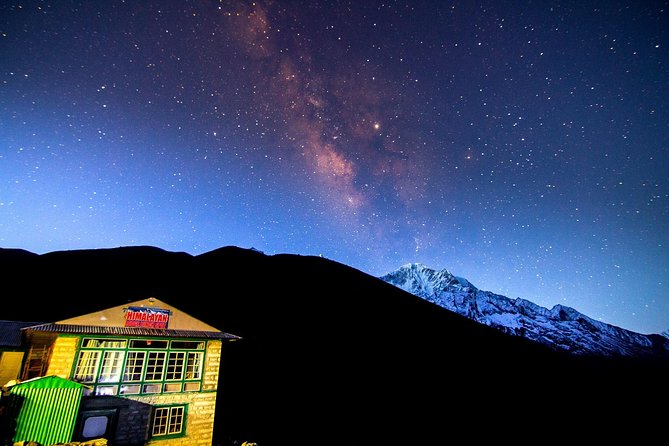
Leaving Namche, you follow the Dudh Koshi and make a steep climb toward Phunki Tenga. From there, the trail gains about 427 meters before reaching Tengboche.
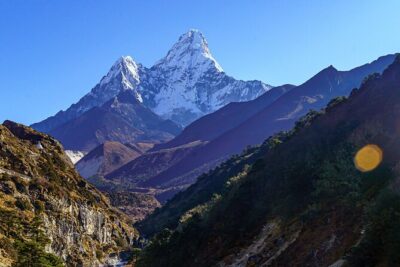
The reward is the view of Ama Dablam, one of the most recognizable peaks on the route. Tengboche is also home to the region’s largest monastery, a major center of Tibetan Buddhism with a history of about a century. The annual Mani Rimdu festival takes place in October.
The walking day lasts around five hours. The climb is not extreme by Everest standards, but the steep section can feel demanding after Namche. Tengboche gives the route a cultural center as well as a mountain one, and the overnight stay lets you enjoy both.
Day 5: Leaving the forest for Dingboche
You start with views of Ama Dablam before walking toward Debuche and Pangboche. The trail gradually changes as the forested sections give way to rockier ground.
The route drops to the Imja Khola, then climbs again toward Pangboche and Shomare. Along the way, you pass Mani stones, carved Buddhist prayer stones that add a quiet cultural detail to an otherwise strenuous day.
After about six hours, you reach Dingboche, a remote Sherpa village. This is where the air feels thinner and the walking becomes more demanding. The route is no longer just a scenic river trek. You are now preparing for high-altitude terrain and colder nights.
Day 6: Acclimatizing at Dingboche with a 5,083-meter hike
The second major acclimatization day comes at Dingboche. The planned outing is a hike to Nangkartshang Peak, listed at 5,083 meters.
This is an ambitious rest-day activity. You gain altitude during the day and return to sleep lower in Dingboche, a useful pattern for adjustment. From the high point, the route offers views of Taboche, Ama Dablam, Island Peak, Lhotse, Everest, and Pumori.
The walking time is about five hours. You should not read the word rest as easy. At this height, a short step can feel like work, and your guide needs to judge the group’s condition carefully. The included oxygen saturation checks are useful here because they give the guide another way to monitor how you are coping.
Day 7: The memorials above Thukla and the approach to Lobuche
The trail leaves Dingboche for Pheriche and Thukla before climbing higher toward Lobuche. Near Thukla, you pass the climbers’ memorial park, dedicated to people who died climbing in the Everest region.
This is one of the route’s most sobering stops. The mountains may look beautiful, but the memorials make the risks of high-altitude climbing impossible to ignore. For you, the standard trek is not a summit attempt, yet the path still takes you into a serious environment.
From Thukla, you continue beside the Lobuche Glacier to Lobuche village. The day takes about five hours, and the increasing altitude makes it feel harder than the time suggests.
Day 8: Gorakshep and Everest Base Camp
This is the day most people picture when they book the trek. From Lobuche, you climb toward Gorakshep along the Lobuche and Khumbu glaciers.
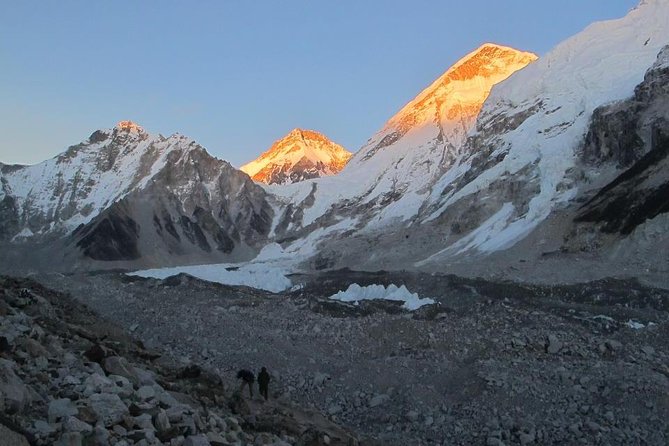
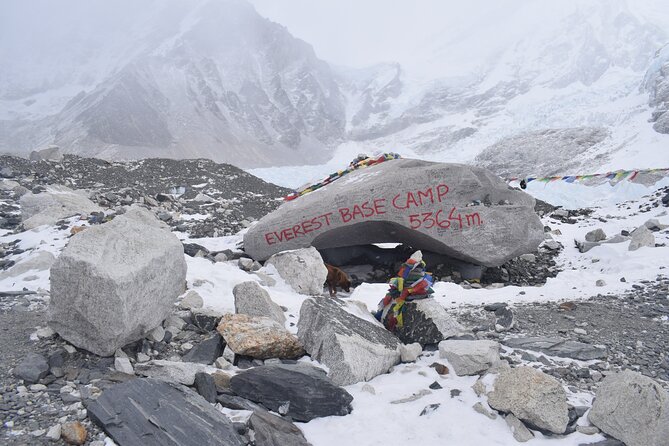
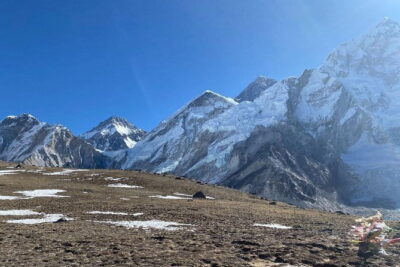
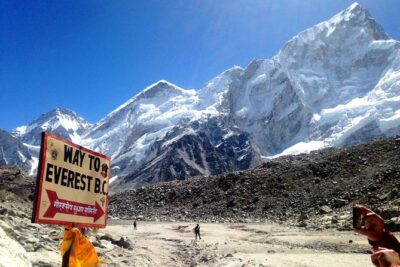
After a short rest in Gorakshep, you continue east toward Everest Base Camp. The trail follows the Khumbu Glacier and reaches the famous base camp area, where you can see the glacier and Khumbu Icefall. The surrounding peaks include Pumori, Lingtren, Khumbutse, and Nuptse.
The listed walking time is about five hours, but this is not a casual afternoon stroll. You are now at very high altitude, and the rough glacier-side path can be tiring. You return to Gorakshep to sleep, which keeps the night at the available lodge rather than at the base camp itself.
Day 9: Kala Patthar at sunrise, then down to Pheriche
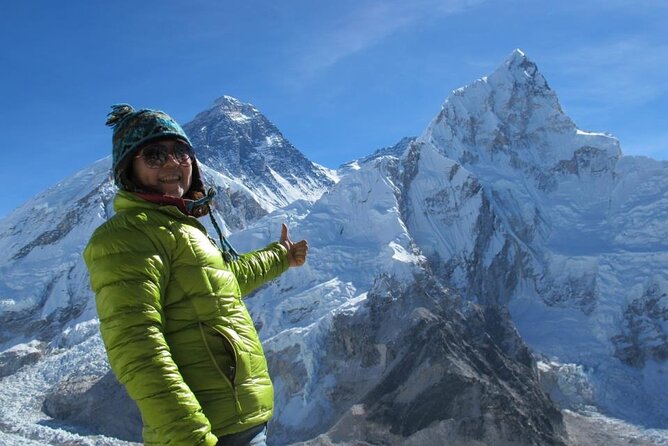
The next morning begins early with a hike to Kala Patthar. This is often the best viewpoint of the trek for Everest itself, with views toward Everest, Nuptse, Lhotse, Khumbutse, Pumori, and Ama Dablam.
The climb crosses rocky moraine and is described as rigorous. You should expect slow progress, cold conditions, and a strong need to pace yourself. The climb is not merely a photo stop. At this height, even reaching the top requires effort.
After returning to Gorakshep for breakfast, you descend along the Lobuche Glacier toward Pheriche. The day totals about five hours of walking, though the early start makes it feel longer. The downhill direction offers some relief, and Pheriche is a more comfortable place to spend the night than Gorakshep.
Days 10 and 11: Retracing the route to Lukla
Day 10 takes you from Pheriche back through Dingboche and Pangboche. You cross the Imja River, pass Debuche, and return to Tengboche before continuing through Phunki Tenga toward Namche.
This is a six-hour day, and the repeated climbs can surprise you. Going downhill overall does not mean every step points downward. The route still rises and falls, so save energy rather than assuming the return will be effortless.
Day 11 is the longest listed day at about eight hours. From Namche, you descend through Jorsalle and Monjo, exit Sagarmatha National Park, pass Phakding, and continue to Lukla.
The evening in Lukla marks the end of the walking route. A small celebration is included in the schedule, though meals and lodging are already covered as part of the trek package rather than as a separate luxury service.
Day 12: Flying back to Kathmandu
You take an early flight from Lukla to Kathmandu. The return flight gives you another aerial view of the hills and ravines, followed by views over Kathmandu before landing.
After the flight, you are driven back to the hotel area. The experience ends at the Kathmandu meeting point, and the rest of the day is free. The flight is listed at about 35 minutes, though the real timing of mountain flights can be affected by local conditions, so avoid scheduling an important international connection too tightly afterward.
Is $1,300 good value?
For a private 12-day trek, $1,300 per person is a competitive package price because it includes the most expensive and complicated parts of the route: Lukla flights, permits, guide, porters, tea house accommodation, and trail meals.
It also includes 12 breakfasts, 11 lunches, and 11 dinners. You are not paying only for a guided walk. You are paying for a support system that deals with transport, park fees, local entry fees, porters, and emergency assistance.
The limits are clear. Kathmandu accommodation and meals are not included. Tea, coffee, hot water, hot showers, battery charging, alcoholic drinks, laundry, phone bills, desserts, travel insurance, and tips are extra.
I would also treat the emergency rescue provision as assistance rather than a replacement for insurance. Your own travel insurance is specifically excluded, and high-altitude trekking policies can have special conditions. Check that your policy covers the activity and the altitude before you leave home.
The guides and support team
The operator has used several named guides on past trips, including Amar, Kumar, Nauser, Yugal, Ongchhu Sherpa, Saroj, Tek, and Andrea. Amar was praised for handling administrative problems when weather grounded Lukla flights, while Nauser received specific praise for patience and care. Kumar and Yugal were also singled out for dependable support.
The praise is not universal. One past experience raised concerns about a guide’s limited knowledge of local plants, animals, and Himalayan subjects. That is a useful reminder to ask who will guide your group and what language and regional expertise you can expect.
The company also supplies porters, and the package covers their expenses. Since the trek is private, ask in advance how bags are divided and what your personal daily carry will be. You should still pack lightly and keep essential items with you.
Who should book this trek?
This trip suits you if you want Everest Base Camp without arranging each permit, room, meal, flight, and porter yourself. It is also a good fit if you prefer a private group and want the option to set a slower pace on difficult days.
You need moderate physical fitness. The route includes walking days of three to eight hours, repeated steep climbs, rocky glacier-side paths, and very high altitude. The two acclimatization days help, but they cannot remove the physical demands.
I would not choose this package if you want a soft adventure with flexible sightseeing and lots of spare time. I would choose it if reaching Base Camp is your main goal and you value local logistical support more than hotel comfort or complete independence.
Should you book it?
Book this trek if the $1,300 package price fits your budget after adding insurance, Kathmandu lodging, tips, and personal trail expenses. The best reasons are the private format, included flights, full trail support, and a route that gives you both Everest Base Camp and Kala Patthar.
Before paying, confirm the guide’s name, porter arrangements, flight timing, Kathmandu transfers, and what happens if weather delays the Lukla flight. If those details are clear, this is a practical way to tackle one of Nepal’s great trekking routes with much of the paperwork taken off your shoulders.
FAQ
How long is the Everest Base Camp trek?
The experience lasts approximately 12 days, including flights from Kathmandu to Lukla and the return flight from Lukla to Kathmandu.
Is the trek private?
Yes. Only your group participates in the activity, with a guide and required porters assigned to the trek.
Are flights between Kathmandu and Lukla included?
Yes. Round-trip flight tickets between Kathmandu and Lukla are included.
Are meals included during the trek?
Yes. The package includes 12 breakfasts, 11 lunches, and 11 dinners.
Is accommodation included?
Yes. Lodge accommodation during the trek is included. Hotel accommodation in Kathmandu is not included.
Are permits and national park fees included?
Yes. The package includes the Sagarmatha National Park fee, Pashang Lhamu entry fee, and necessary permits.
Does the package include a guide and porters?
Yes. It includes one government-registered trekking guide and the required porters, along with their expenses.
Is travel insurance included?
No. Travel insurance is not included. Emergency rescue evacuation assistance is included, but you must arrange your own insurance.
What is the cancellation policy?
You can receive a full refund if you cancel at least 24 hours before the experience start time. Cancellations or changes made less than 24 hours before the start time are not accepted for a refund.
Recently added around Kathmandu
- Ghorepani Poon Hill Trek★ 5.0 · 16 reviews
- Private Manaslu Circuit Trek at Himalayas★ 5.0 · 3 reviews
- Amazing 1 Day Trekking Experience in Kathmandu Nepal★ 5.0 · 24 reviews
- Ghorepani Poonhill Trek★ 5.0 · 5 reviews
- Upper Mustang Trekking★ 5.0 · 2 reviews
- Upper Mustang Trekking★ 3.0 · 2 reviews
- Upper Mustang Trekking★ 5.0 · 4 reviews
- Upper Mustang Trek★ 5.0 · 5 reviews
Everest Base Camp Treks, compared.
Browse the lists this tour appears in