
REVIEW · KATHMANDU
Everest Base Camp Trekking – 16 Days
The trail begins with a mountain flight. This 16-day Everest Base Camp trek takes you from Kathmandu to Lukla, through Sherpa villages and Sagarmatha National Park, and up to Everest Base Camp and Kala Patthar. I like the sensible pacing, with acclimatization days in Namche Bazaar and Dingboche, and I also like the extra day reserved for weather delays.
The route delivers huge rewards: Everest, Lhotse, Nuptse, Pumori, glaciers, Buddhist monasteries, and the Khumbu Icefall. The main drawback is the physical demand. You need moderate fitness, must handle very high altitude, and should be comfortable with basic high-mountain conditions where WiFi, hot showers, battery charging, and some other comforts cost extra.
Key points before you book
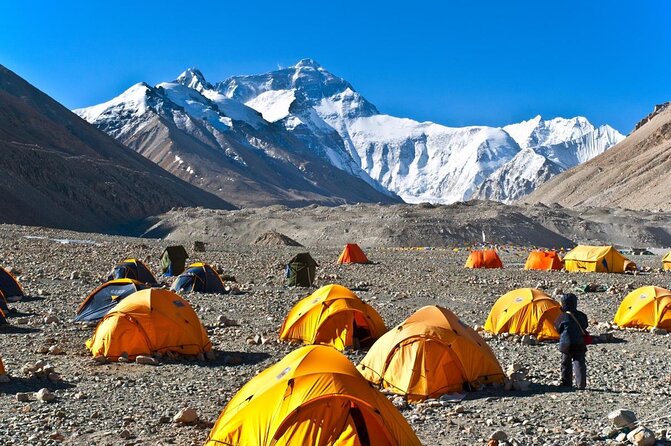
- The trek reaches 5,545 meters at Kala Patthar, the highest point on the planned route and the best viewpoint of Everest.
- Two acclimatization days are built in, one in Namche Bazaar and one in Dingboche.
- Lukla flights are included, but weather can disrupt both the outward and return journeys.
- The package includes a guide, permits, national park fees, meals, accommodation, and trekking equipment, but not a porter for carrying your luggage.
- The route combines mountain scenery with Sherpa culture, including Kathmandu Durbar Square, Tengboche Monastery, Namche Bazaar, and several highland villages.
- Guide quality is a major part of the experience, with Prakash and Shiva among the guides praised for their care, flexibility, and help on the trail.
What the 16-day Everest route feels like
This is not a quick sightseeing trip with a short walk attached. You spend most of the middle portion walking between mountain villages, gaining altitude slowly, sleeping in lodges, and adjusting to thinner air.
That gradual rhythm matters. The itinerary includes a rest day at Namche on Day 5 and another at Dingboche on Day 8. These are not wasted days. They give you time to walk a little, look around, and let your body adjust before the route climbs higher.
I also like the built-in reserve day in Kathmandu. Flights to Lukla depend on weather, and a delayed aircraft can affect the whole schedule. Having Day 15 held open gives the operator some room to deal with that problem instead of sending you straight from the mountains to your international departure.
The experience is private, meaning only your own group takes part, with a maximum of 15 people per booking. An assistant guide is included if the group has more than six people. That is useful on a demanding route, though you should clarify the guide-to-hiker arrangement before departure if your group is large.
More Everest Base Camp Treks in Kathmandu:
- Everest Base Camp Trek – 14 Days
★ 5.0 · 1,499 reviews - Everest Base Camp Trek
★ 5.0 · 842 reviews - Everest Base Camp Trekking
★ 5.0 · 485 reviews
Days 1 and 2: Kathmandu arrival and preparation
Your trip begins with pickup at Tribhuvan International Airport. Staff transfer you to the hotel, help you settle in, and give you time to recover from the flight. The first evening includes a Nepalese dinner with local cultural performances, which gives the trip a pleasant introduction before the walking begins.
Day 2 visits Kathmandu Durbar Square for about two hours. Admission is not included, so keep a little local currency available. The square provides an early look at Nepalese architecture and local life, while the rest of the day is used for trek preparation.
This preparation day is especially useful if you have just arrived from a long international flight. You can check your gear, meet the guide and group, and make sure your passport and travel documents are ready. The minimum age is 16, and a current passport is required on the day of travel.
Day 3: The short flight to Lukla and the first walk
The flight from Kathmandu to Lukla takes about 30 minutes. It is a striking way to begin, with views of green hills, rolling terrain, and mountain country below the aircraft.
Lukla is where the walking starts. The first trek leads to Phakding, giving you an initial taste of the route without immediately forcing you into the highest sections. Even so, do not treat this as an ordinary day hike. You are beginning a long series of walking days, so a steady pace is wiser than an energetic start.
The flight is one of the trip’s practical weak points. Weather can affect departures, arrivals, or both. The schedule includes an extra day for this reason, but a serious delay can still affect onward plans. If you add separate hotel nights or international connections, allow some flexibility.
Days 4 and 5: Pines, rhododendrons, and Namche Bazaar
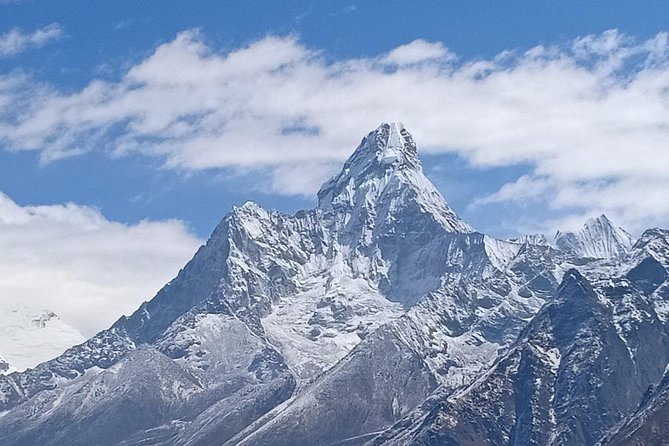
From Phakding, the route heads toward Namche Bazaar through pine and rhododendron country. Namche is a Sherpa town and the main gateway to trekking in the Everest region.
It is also your first major altitude checkpoint. The town offers a more social and developed stop than the smaller villages along the route, with lodges and mountain views. The itinerary gives you a full acclimatization day here rather than rushing onward.
On Day 5, you can walk around Namche, visit the museum, see snow peaks, and take things slowly. The goal is not to exhaust yourself. A short outing followed by rest is more useful than trying to turn the acclimatization day into another hard trek.
I especially value this pause because altitude problems often begin when people climb too fast. The schedule cannot guarantee that your body will adjust well, but it gives you a better chance than a compressed itinerary.
A few more treks around Kathmandu worth a look
- Annapurna Circuit Trek with Tilicho Lake
★ 5.0 · 368 reviews - Everest Base Camp Trekking – 13 Day
★ 5.0 · 365 reviews - Everest Base Camp Trek
★ 5.0 · 350 reviews - Everest Base Camp Trek -14 Days
★ 5.0 · 321 reviews
Days 6 and 7: Tengboche, monasteries, and Dingboche
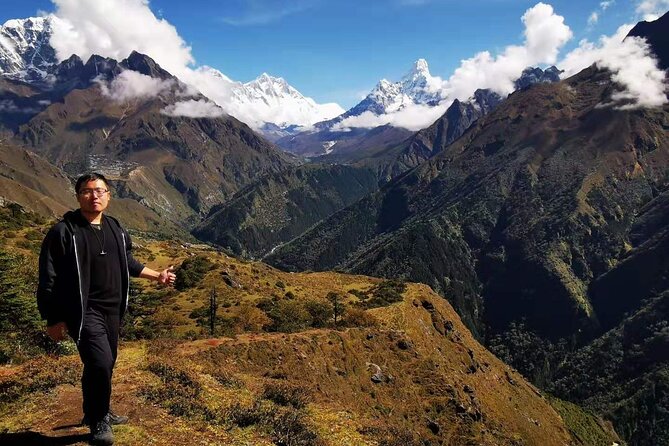
The route leaves Namche for Tengboche, also written as Tyangboche in the itinerary. The walk brings wider views of the surrounding peaks and ends at Tengboche Monastery, one of the cultural highlights of the route.
You can see monks and priests taking part in religious activities. Admission to the monastery is not included, so budget for that separately. This stop adds meaning to the mountain journey: you are not simply walking toward a famous viewpoint, but passing through communities shaped by Tibetan Buddhist traditions.
The next day continues toward Dingboche through Pangboche and Deboche. The route grows more exposed and alpine as you climb, with high peaks appearing more often around the village paths. Dingboche is an important stop because it places you at a much higher altitude before the final approach to Base Camp.
The lodging is described as accommodation according to the itinerary, but the package does not specify exact hotels or lodge standards. In practical terms, you should expect mountain accommodation rather than city-hotel comfort, and confirm the room arrangements before booking if that matters to you.
Day 8: The second acclimatization day
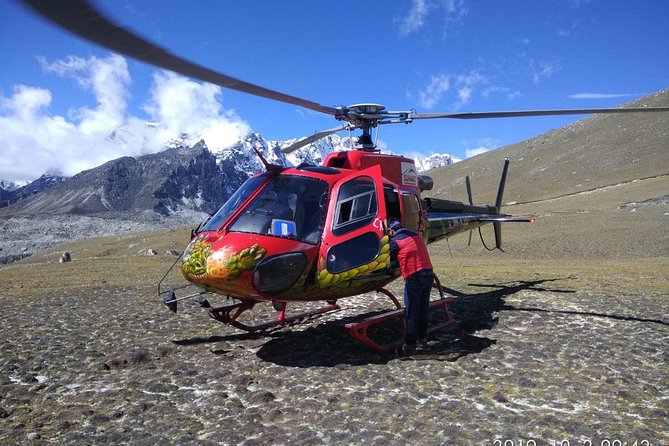
Dingboche gets its own rest day. You can stroll around the village, take in the surrounding peaks, and prepare for the harder days ahead.
A rest day at this altitude can feel strange. You may be eager to move toward Base Camp, yet resting is part of the trek. The route becomes more demanding after Dingboche, and saving energy here can make the difference between enjoying the high section and merely enduring it.
The itinerary does not set out a detailed acclimatization hike, so ask your guide what the day’s plan will be. The guide can adjust the outing to the group’s condition, which is important because altitude affects people differently.
Days 9 and 10: Lobuche, the Khumbu Glacier, and Everest Base Camp
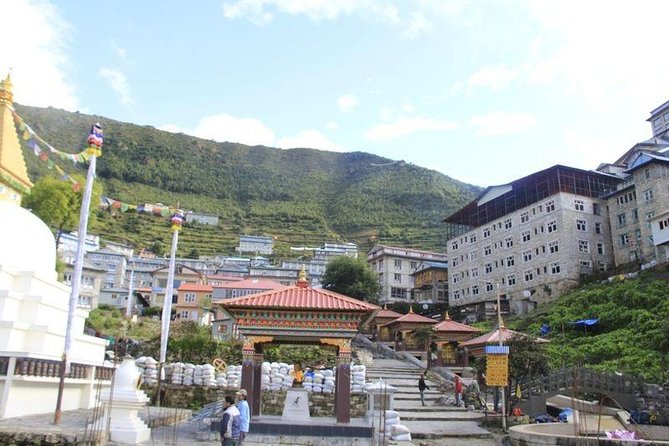
From Dingboche, you walk toward Lobuche on a winding path above the Pheriche Valley. Cholatse and Taboche peaks appear along the route, adding drama before you reach Thugla.
At Thugla, the Khumbu Glacier feeds into a powerful river. This is one of the route’s more striking natural features, and it also reminds you that the trail is now entering serious high-mountain country. Lobuche provides views of Lobuche East and Lobuche West before the final push toward Base Camp.
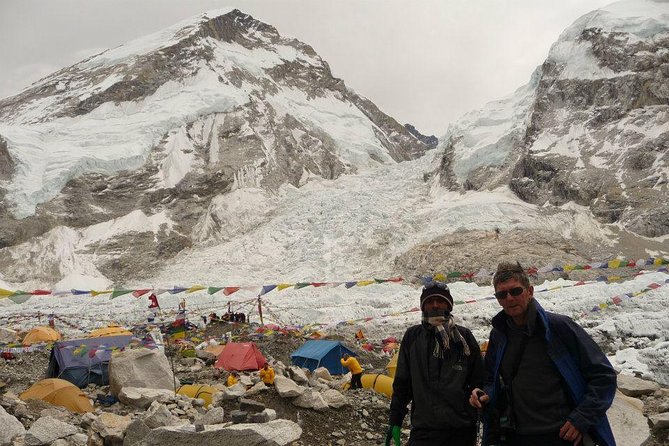
Day 10 is the main destination day. The walk to Everest Base Camp brings views of Everest, Nuptse, Lhotse, and Pumori, with the Khumbu Icefall close by. You have time for photographs and a moment at the base of the world’s highest mountain before returning to Gorakshep for the night.
It is worth keeping expectations sensible. Everest Base Camp is not a permanent city or a polished attraction. It is a rugged high-altitude staging area surrounded by rock, ice, and changing expedition activity. The reward is the setting and the sense of reaching the foot of the mountain, not creature comforts.
This is also one of the longest and most tiring parts of the trek. You should follow the guide’s pace, drink regularly, and avoid treating the Base Camp day as a race.
Day 11: Kala Patthar at 5,545 meters
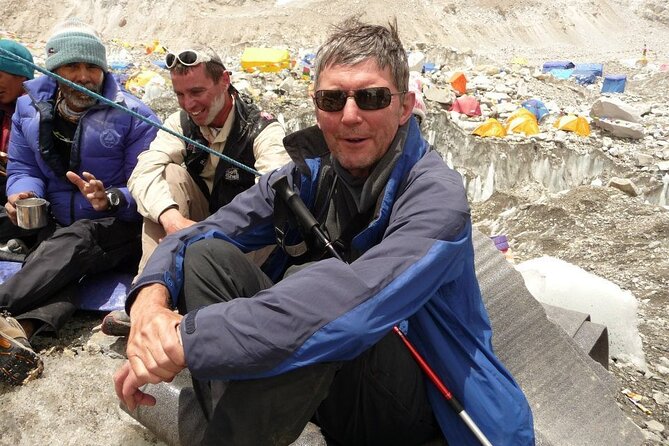
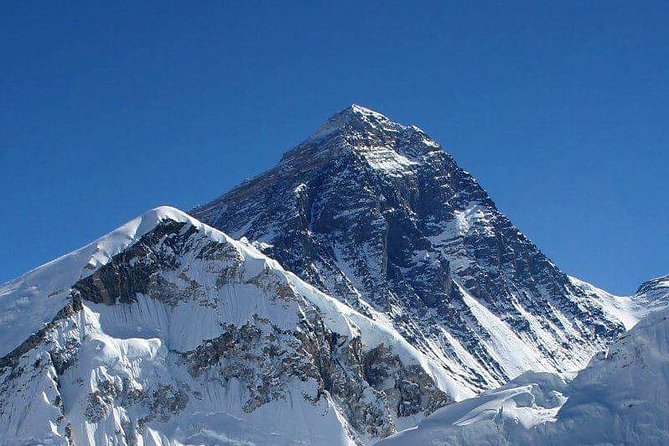
The day begins before breakfast with a climb to Kala Patthar. At 5,545 meters, this is the highest point on the itinerary. From the rocky summit, you get close views of Everest and Pumori, along with a broad panorama of the surrounding peaks.
For many people, Kala Patthar provides the clearest mountain view of the entire trip. Base Camp puts you close to the Khumbu Icefall, but Kala Patthar gives you the higher viewpoint and the classic broad view toward Everest.
After the summit, you descend to Gorakshep for breakfast, then continue down through the Pheriche Valley toward Pangboche. This is a demanding day because it combines an early high-altitude climb with a long descent. The downhill direction helps, but tired legs still need care.
Days 12 and 13: Back through Tengboche to Lukla
From Pangboche, the route climbs again to Tengboche. That short uphill section may feel surprisingly hard after the previous day, but it brings you back to the monastery and then onto a scenic walk toward Namche Bazaar.
Namche is your final overnight stop in the Khumbu before Lukla. This is a good point to rest, sort your belongings, and enjoy being at a lower altitude again.
Day 13 continues from Namche to Lukla. The return route may feel easier because you know the terrain, but it is still a full walking day. Keep your attention on the path and do not assume the trek is finished until you are on the aircraft back to Kathmandu.
Days 14 to 16: Kathmandu, weather backup, and departure
Day 14 includes the flight from Lukla to Kathmandu and a transfer to the hotel. The rest of the day is set aside for rest, which is welcome after the long mountain section.
Day 15 is a reserve day. It can be used for flight problems caused by poor weather at Lukla or for personal time in Kathmandu if the flights operate normally. This is a practical feature, not a spare day to overlook. If you are connecting to an international flight, check the schedule carefully and avoid a tight same-day connection after the Lukla flight.
On Day 16, staff transfer you to Kathmandu International Airport for your flight home. The trip ends with airport assistance rather than leaving you to arrange the final transfer yourself.
What the $2,350.34 price includes
At $2,350.34 per person, the price covers more than the walking permit and a guide. It includes accommodation, a professional guide with salary and insurance, round-trip flights, private vehicle transport, local taxes, national park fees, and necessary trekking equipment.
The meal plan includes 15 breakfasts, 11 lunches, and 11 dinners. That covers the main trekking schedule, but you should check which meals are provided on the arrival, departure, and Kathmandu days. Alcohol is not included and can be purchased separately.
The value is strongest for someone who wants the major arrangements handled in one package. The Lukla flights, permits, guide, transport, and national park fees can be awkward to coordinate independently, especially when weather affects the mountain airport.
The price does not include a porter. That is a major detail if you do not want to carry your own luggage at altitude. Extra luggage charges, alcoholic drinks, souvenir photographs, battery charging, WiFi, and showers in the high Himalayas are also separate costs.
The equipment supplied during the trek must be returned afterward. Ask exactly what is provided before you pack, since the information does not list each item.
Guides, group size, and the human side
The strongest part of the service is the guiding. Prakash is praised for making the trip enjoyable and explaining the route well. Shiva is also singled out as an experienced and helpful guide. These names are examples of the staff associated with the company, not a promise that one of them will lead your group.
The company also has a reputation for replying promptly before departure, helping with arrangements, and meeting people at the airport. That early communication matters on a trek where questions about altitude, luggage, flights, and paperwork can pile up quickly.
The flexible approach is another plus. The route may not always need to follow every line of the printed schedule if weather, fitness, or group conditions call for a change. You should still ask how such decisions are made and who has final authority if someone becomes unwell.
A maximum of 15 people keeps the group from becoming enormous, while an assistant guide is added for groups larger than six. Since this is a private activity, only your booking takes part, rather than joining a mixed public departure.
Who should book this trek?
I would recommend it to an active adult who wants a structured Everest Base Camp trip with flights, permits, meals, accommodation, and guiding arranged in advance. It also suits solo participants who prefer to join an organized group rather than manage the route alone.
You should be ready for long walking days, high altitude, simple high-mountain facilities, and possible flight delays. The trip is not recommended for people with heart complaints or other serious medical conditions, and it is not recommended during pregnancy.
The minimum age is 16, but age alone says little about readiness. Your current fitness, experience with long walks, and ability to cope with altitude matter more. Speak with a medical professional if you have any health concerns before booking.
Cancellation is free if you cancel at least 24 hours before the local start time. Cancellations made later, or changes requested within 24 hours, are not refunded or accepted.
Should you book the 16-day Everest Base Camp trek?
I would book this trek if you want the classic Everest route and prefer a company to handle the complicated pieces. The two acclimatization days, included Lukla flights, reserve day, airport pickup, permits, guide, and national park fees give the package solid practical value.
I would hesitate if you want private rooms, dependable internet, included porters, or a highly predictable timetable. Lukla weather can disrupt the plan, and the high-altitude section is genuinely hard.
For the best experience, confirm the lodge standard, equipment list, porter options, group size, guide assignment, and meal details before paying. If you accept the physical challenge and basic conditions, this is a well-structured way to reach Everest Base Camp, see Kala Patthar, and pass through the Sherpa villages and monasteries that make the route much more than a mountain photo stop.
FAQ
Where does the Everest Base Camp trek begin?
The experience begins with pickup at Tribhuvan International Airport in Kathmandu, Nepal.
How long does the trek last?
The full program lasts 16 days, including arrival, trekking, flights, a reserve day, and departure.
What is the price per person?
The listed price is $2,350.34 per person.
Is airport pickup included?
Yes. Staff pick you up at Tribhuvan International Airport and transfer you to the hotel.
Are the Lukla flights included?
Yes. Round-trip flights between Kathmandu and Lukla are included in the package.
Are meals included?
Yes. The package includes 15 breakfasts, 11 lunches, and 11 dinners.
Is a porter included?
No. A porter for carrying luggage is not included. You should arrange and price this separately if needed.
Are permits and national park fees included?
Yes. Local taxes and national park fees are included.
What is the highest point on the route?
Kala Patthar is the highest point, at approximately 5,545 meters.
Are there acclimatization days?
Yes. The itinerary includes a rest day in Namche Bazaar and another rest day in Dingboche.
What happens if the Lukla flight is delayed?
Day 15 is reserved as an extra day for flight problems caused by unfavorable weather at Lukla or earlier in the program.
Is the trek suitable for everyone?
No. Participants should have moderate physical fitness. The experience is not recommended for people with heart complaints or other serious medical conditions, or for pregnant women.
What is the minimum age?
The minimum age is 16 years.
Is the activity private?
Yes. Only your group takes part, with a maximum of 15 people per booking. An assistant guide is included when the group has more than six people.
What is not included in the price?
Alcoholic drinks, souvenir photographs, excess luggage charges, battery charging, WiFi, showers in the high Himalayas, and a porter are not included.
Recently added around Kathmandu
- Ghorepani Poon Hill Trek★ 5.0 · 16 reviews
- Private Manaslu Circuit Trek at Himalayas★ 5.0 · 3 reviews
- Amazing 1 Day Trekking Experience in Kathmandu Nepal★ 5.0 · 24 reviews
- Ghorepani Poonhill Trek★ 5.0 · 5 reviews
- Upper Mustang Trekking★ 5.0 · 2 reviews
- Upper Mustang Trek★ 5.0 · 5 reviews
- Upper Mustang Trekking★ 3.0 · 2 reviews
- Upper Mustang Trekking★ 5.0 · 4 reviews
Everest Base Camp Treks, compared.






Browse the lists this tour appears in