
REVIEW · KATHMANDU
14 Days Everest Base Camp Trek
The mountains start before the trek does. This 14-day Everest Base Camp trek combines the famous Khumbu route with Sherpa villages, monastery visits, and the high-altitude viewpoints that make Nepal special. I especially like the built-in acclimatization days at Namche Bazaar and Dingboche, plus the fact that meals, guides, porters, flights, airport transfers, and a farewell dinner are included.
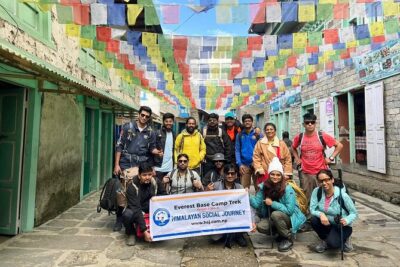
I also like the private format, since only your own group takes part. The main caution is altitude: one group of seven had five people unable to reach base camp because of altitude sickness and other illness. This is a serious high-mountain trek, not simply a long walk with good views.
Key points to know before booking
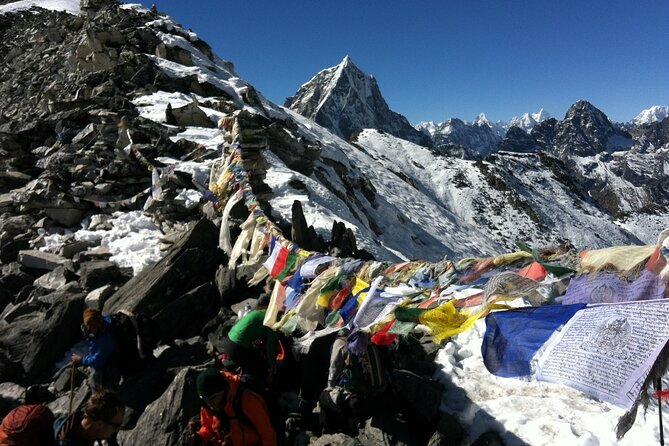
- Kala Patthar is the visual high point: The hike from Gorak Shep gives you some of the best stated views of Mount Everest.
- Two acclimatization stops help: Namche Bazaar and Dingboche provide time to adjust before the highest sections.
- The package covers major costs: Meals, Lukla flights, airport transfers, a certified guide, and porter support are included.
- You share the trail with the Khumbu’s Sherpa culture: Namche, Tengboche, Khumjung, and the monastery add more than mountain scenery.
- The trek requires real fitness: High altitude, suspension bridges, long walking days, and basic facilities are part of the experience.
- The $1,600 price is useful to compare carefully: You still need to budget for insurance, drinks, personal costs, equipment, international airfare, and a visa.
Arriving in Kathmandu and preparing for the Khumbu
Your trip begins with airport pickup at Tribhuvan International Airport and a transfer to your hotel in Kathmandu. Day one is intentionally light. After a long international flight, having time to rest is sensible, especially because the next morning begins early.
The listed meeting point is in Thamel, Kathmandu. This central area is a practical place to begin a trek, and the company provides airport pickup and drop-off, so you do not need to arrange your first transfer alone.
International airfare and the Nepal visa are not included. You also need travel insurance, drinks, personal expenses, and trekking gear such as hiking shoes and walking sticks. Check your equipment before departure rather than treating Kathmandu as your only chance to fill gaps.
The package includes a government-certified guide and one porter for every two trekkers. That arrangement can make a large difference on a long route. You still need to carry a daypack with essentials, but porter support reduces the weight on your back.
More Everest Base Camp Treks in Kathmandu:
- Everest Base Camp Trek – 14 Days
★ 5.0 · 1,499 reviews - Everest Base Camp Trek
★ 5.0 · 842 reviews - Everest Base Camp Trekking
★ 5.0 · 485 reviews
The Lukla flight and first walk to Phakding
Day two begins with a roughly 40-minute flight from Kathmandu to Lukla. The route offers views toward the Langtang and Annapurna Himalayan ranges before landing at an elevation of about 2,850 meters.
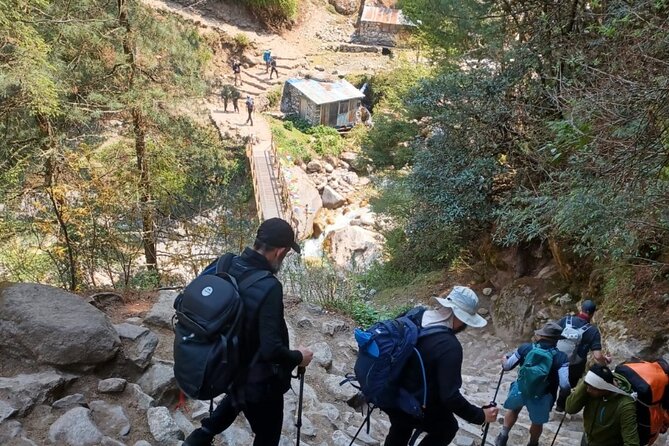
From Lukla, you walk downhill toward Phakding, crossing several suspension bridges along the way. This first section gives you an immediate taste of the route: narrow mountain paths, river crossings, and a steady change from city travel to foot travel.
The schedule describes this as a long day, so do not treat the short flight as the main event. The walking starts as soon as you arrive in Lukla. Since the exact operating time of mountain flights can vary, keeping your first day flexible is wise, although the supplied plan does not specify a delay policy.
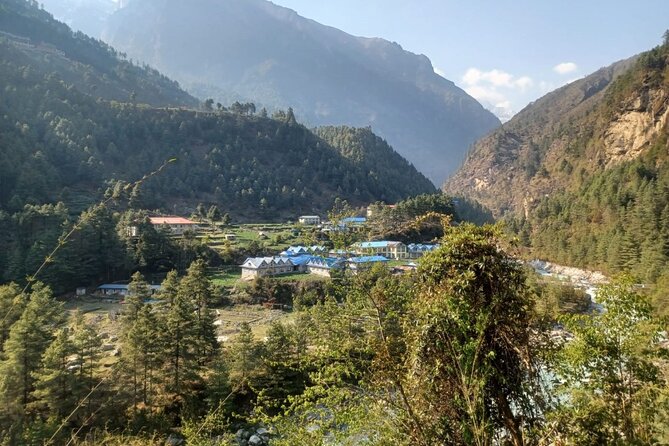
Phakding is your first overnight trekking stop. It is not the grand mountain finale, but it lets your body begin adjusting before the route climbs higher.
Namche Bazaar, bridges, and the first acclimatization day
The walk toward Namche Bazaar follows the Dudh Koshi River and crosses several suspension bridges, including the Hillary Suspension Bridge. These crossings are part of the character of the route, though people uneasy with heights should expect them to feel exposed.
Namche is described as a beautiful Sherpa town and serves as a key stop in the trek. You can find coffee shops, trekking equipment shops, and other services here. That makes Namche more than a sleeping place. It is a chance to rest, look around, and get supplies before the trail becomes more remote.
Day four is set aside for acclimatization. You can explore the town and visit Everest View Point for a panoramic mountain scene. This pause matters. The itinerary does not rush you straight from Lukla to the highest camps, and that is one of its strongest features.
You may be tempted to spend the entire day sitting in a café, but the plan is designed to help you adjust through gentle activity and exploration. The exact walking program should be confirmed with your guide, since the supplied details describe the day broadly rather than giving a fixed route.
Tengboche and the Khumbu’s spiritual side
The route continues to Tengboche, known for its spiritual importance and its large monastery, or gompa. You have a dedicated visit to Tengboche Gompa, with time to see the building and observe the religious setting.
The description notes that lamas carry out spiritual rituals and that interested visitors may be able to take part. Approach this respectfully. You are entering an active religious place, not a staged attraction. Follow your guide’s instructions about behavior and photography.
Tengboche also gives the trek a welcome change of pace. Until this point, the journey has been shaped by flights, rivers, bridges, markets, and acclimatization. Here, the focus turns toward Sherpa religious life and the quiet power of the mountains around the settlement.
The stated day is long, so you should expect a demanding walk rather than a quick transfer. Good footwear matters, and your guide can help set a pace that leaves energy for the higher sections.
A few more treks around Kathmandu worth a look
- Annapurna Circuit Trek with Tilicho Lake
★ 5.0 · 368 reviews - Everest Base Camp Trekking – 13 Day
★ 5.0 · 365 reviews - Everest Base Camp Trek
★ 5.0 · 350 reviews - Everest Base Camp Trek -14 Days
★ 5.0 · 321 reviews
Dingboche and a second pause for altitude
From Tengboche, you continue to Dingboche and gain elevation gradually. Along the way, you see the stone walls that cover much of the Imja Valley. These walls are practical features of life at high altitude and make the route feel distinctly different from the lower valley.
Dingboche is one of the most important stops in the plan. Day seven is reserved for acclimatization before you move toward Everest Base Camp. By this point, you are already much higher than at the start, so the rest day is not wasted time.
It is also the point where the trek becomes more demanding. The itinerary calls the following section preparation for mighty Everest Base Camp, and that is fair. You should monitor headaches, nausea, dizziness, unusual tiredness, or other signs of altitude illness and tell your guide quickly.
The experience has shown why this matters. Five of seven people in one group did not reach base camp because of altitude sickness and other illnesses. That is not a failure. Turning back is the correct decision when your body is not coping. A responsible guide should support that choice.
Lobuche and the approach to Everest Base Camp
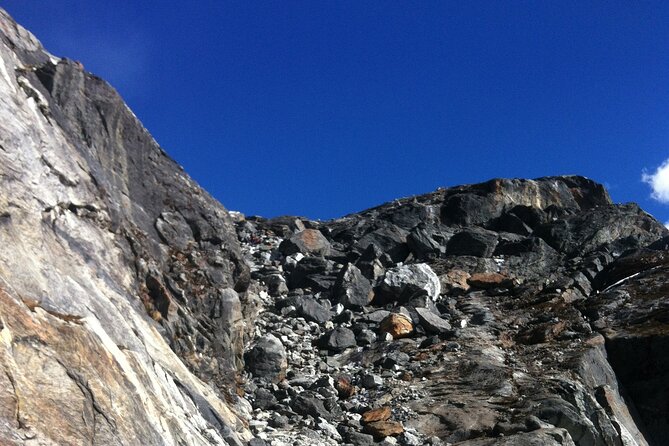
After Dingboche, the route leads to Lobuche. You pass views of Taboche and Arakam peaks, continue through Thukla, and climb toward Dughla Pass before reaching the settlement.
The itinerary gives this day about four hours, shorter than several earlier walking days. Do not assume it will feel easy. Altitude changes the effort required, and the climb toward the pass can feel serious even when the clock says otherwise.
Lobuche is surrounded by hills and valleys and sits close to the high part of the route. The name is also linked with Lobuche East and Lobuche West, two peaks in the area. This is where the goal starts to feel close, but the highest and hardest walking still lies ahead.
Facilities on the trek are described as basic but adequate. One detailed account praised the staff and called the food and facilities Spartan but more than sufficient. That is a useful expectation to carry: you are paying for access, guiding, meals, and logistics in a remote mountain region, not resort comfort.
Everest Base Camp and the return to Gorak Shep
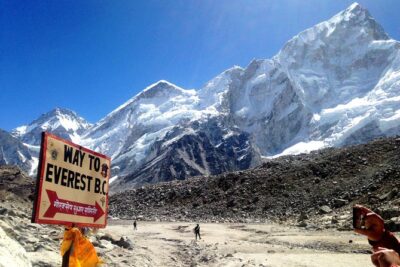
Day nine takes you to Everest Base Camp, then back to Gorak Shep. The walking time is listed at about five hours, but the high elevation makes this one of the most challenging days.
Reaching base camp is an important goal, but it is not the point from which you see the best full view of Everest. The following morning at Kala Patthar is designed for that. Base camp itself is about standing at a famous place and feeling the scale of the route you have just completed.
The return to Gorak Shep is part of the same day, so pacing is essential. Your guide and porter support are valuable here, but no staff member can remove the effects of altitude. Drink as directed, eat the provided meals, and say something early if you feel unwell.
The itinerary includes all meals during the trek, including breakfast, lunch, and dinner. Drinks and beverages are extra, so bring a budget for those purchases.
Kala Patthar, Pheriche, and the easier direction
Day ten begins with a climb from Gorak Shep to Kala Patthar. This is the trip’s clearest viewpoint goal, with broad views toward Mount Everest. You then descend to Pheriche.
The return direction usually feels easier because you are losing altitude. The plan notes that you can cover more distance in less time on the way down, but tired legs still need care. Descending does not mean the day is effortless.
Kala Patthar is a strong reason to choose this itinerary rather than stopping at base camp alone. You get both the symbolic destination and the stated mountain viewpoint. If weather or visibility affects the view, the cultural and physical achievement of the trek still remains, but you should keep expectations realistic.
Khumjung, Lukla, and the final trekking days
The route continues toward Khumjung, with references to the Dudh Koshi River, Everest views, and a local market. Khumjung adds another Sherpa community to the journey and gives you a different setting from Namche and Tengboche.
The next day takes you back to Lukla. The plan highlights Lukla’s famously difficult airport and gives you time to celebrate the journey. After many days on foot, returning to the airstrip can feel like a major milestone.
The route does not end at base camp. You still need to walk back through the Khumbu, and the two return days are part of the experience. That is why the 14-day length is useful. It allows the trek to include acclimatization, the high point, and a gradual return rather than forcing a rapid turnaround.
What the $1,600 price really covers
At $1,600 per person, the package includes several costly and important pieces: airport transfers, flights between Kathmandu and Lukla, meals during the trek, a certified guide, porter service, first aid, and a farewell dinner.
The inclusion of one porter for two trekkers is especially useful. It gives you support without requiring every person to hire a separate porter. The private format also means your group is not automatically combined with strangers, which can make pacing and decision-making simpler.
The value is strongest if you want one company to handle the main moving parts. You are not only buying walking days. You are paying for mountain transport, food, route support, and help if the altitude creates problems.
Still, $1,600 is not your final trip budget. Add international flights, visa fees, insurance, drinks, personal spending, and equipment. Hiking shoes and walking sticks are specifically excluded, along with other trekking gear you may need.
The package lists first aid service and a restroom on board. Since the supplied information does not explain exactly when the restroom is available or what vehicle it applies to, ask the operator for clarification before booking. That small question can prevent a large misunderstanding.
Who should book this Everest Base Camp trek?
I would recommend this trip to someone with moderate physical fitness who wants a supported trek rather than a self-planned route. It suits you if you value a certified guide, porter assistance, included meals, and a clear schedule with two acclimatization stops.
It also works well for people who want more than mountain photographs. Namche Bazaar, Tengboche Gompa, Khumjung, local markets, and Sherpa communities give the route a human side.
I would be cautious if you dislike basic facilities, long walking days, suspension bridges, or uncertain mountain conditions. I would also avoid treating the base camp finish as compulsory. The best guide will help you turn back if altitude sickness appears.
The strongest praise attached to the experience focuses on the staff, personal care, and support throughout the trek. One account described the whole journey as a life-changing challenge, while another praised the team for going above and beyond when illness affected the group. Those points matter more than polished extras in a high-altitude trek.
Free cancellation is available when you cancel at least 24 hours before the local start time. Changes or cancellations inside that window are not accepted for a refund.
Should you book it?
Book this trek if you want a well-supported 14-day route with flights, meals, porter help, acclimatization days, Sherpa villages, Everest Base Camp, and Kala Patthar. The $1,600 cost can be good value once you account for what is included.
Do not book it simply because the price looks manageable or because reaching base camp sounds easy. The high altitude is the deciding factor. If you are prepared for basic facilities, listen carefully to your guide, and accept that turning around may be the smart outcome, Master Himalaya Treks and Expedition offers a practical way to tackle one of Nepal’s great mountain routes.
FAQ
How long is the Everest Base Camp trek?
The experience lasts approximately 14 days, including arrival and departure from Kathmandu.
Where does the trek start?
The listed meeting point is in Thamel, Kathmandu, Nepal. Airport pickup is offered from Tribhuvan International Airport.
Are flights to Lukla included?
Yes. The package includes the flight from Kathmandu to Lukla and the return flight from Lukla to Kathmandu.
Are meals included during the trek?
Yes. Breakfast, lunch, and dinner during the trek are included. Drinks and beverages are not included.
Is a guide and porter included?
Yes. The package includes a government-certified guide and one porter for every two trekkers.
Are trekking shoes and hiking sticks included?
No. Trekking equipment such as hiking shoes and hiking sticks is not included, so you need to arrange those yourself.
What level of fitness is required?
The activity states that participants should have a moderate level of physical fitness. It includes long walking days, high altitude, suspension bridges, and a challenging section to Everest Base Camp.
Recently added around Kathmandu
- Ghorepani Poon Hill Trek★ 5.0 · 16 reviews
- Amazing 1 Day Trekking Experience in Kathmandu Nepal★ 5.0 · 24 reviews
- Private Manaslu Circuit Trek at Himalayas★ 5.0 · 3 reviews
- Ghorepani Poonhill Trek★ 5.0 · 5 reviews
- Upper Mustang Trekking★ 5.0 · 2 reviews
- Upper Mustang Trekking★ 3.0 · 2 reviews
- Upper Mustang Trekking★ 5.0 · 4 reviews
- Upper Mustang Trek★ 5.0 · 5 reviews
Everest Base Camp Treks, compared.




Browse the lists this tour appears in