
REVIEW · KATHMANDU
15 Days Private Everest Base Camp Trek
The Himalayas begin with a thrilling flight. This 15-day private trek takes you from Kathmandu to Lukla, then along the classic route through Namche Bazaar, Tengboche, Dingboche, Lobuche, Gorak Shep, and Everest Base Camp. I like the careful acclimatization plan, with rest days in Namche and Dingboche, and I like that the price includes flights, lodging, meals, a guide, a sleeping bag, and a duffel bag.
I also appreciate the human side of this trip. The guides repeatedly praised by name include Kamal, Achut, Lhakpa, Bishnu Bhatta, and Lakpa Sherpa, with particular praise for patience, altitude support, and family care. The main drawback is that this is no gentle sightseeing holiday: you need moderate fitness, the final days are demanding, Lukla flights can be delayed by weather, and a porter is not included.
Key things to know before booking
- The 40-minute Lukla flight sets the tone: It is scenic, weather-sensitive, and one of the most memorable parts of the journey.
- Two acclimatization days are built in: You spend one day in Namche Bazaar and another in Dingboche, with optional hikes to keep moving.
- Kala Patthar provides the big payoff: The sunrise viewpoint offers broad views of Everest and the surrounding peaks.
- This is a private trip: Only your own group participates, which allows guides to adjust the pace within the planned route.
- The $1,420 price covers major basics: Flights, Kathmandu hotel, trekking lodges, meals, a guide, sleeping bag, and duffel bag are included.
- Weather can disrupt the schedule: A delayed Lukla flight may affect the itinerary, and poor weather can lead to a new date or full refund.
What the $1,420 price really covers
At $1,420 per person, this trek offers good value for a 15-day Everest Base Camp itinerary, provided you understand what remains outside the price. The package includes two domestic flights between Kathmandu and Lukla, accommodation in a three-star Kathmandu hotel and trekking lodges, a professional trek leader, a Nepal Social Treks duffel bag, and a sleeping bag.
Meals are also covered: 14 breakfasts, 13 dinners, and 12 lunches. That is useful in the Khumbu, where food and rooms become more costly as you climb. All fees and taxes are included as well.
You still pay for your international flight, Nepal entry visa, personal expenses, personal trekking equipment, travel and medical insurance, and any costs caused by accidents or natural disasters. A trekking porter is not included, so confirm the current porter arrangements before you book. That last point matters if you prefer to walk with only a daypack.
The package also includes airport and hotel support in Kathmandu. That takes some pressure off after a long international flight, especially if this is your first visit to Nepal.
More Everest Base Camp Treks in Kathmandu:
- Everest Base Camp Trek – 14 Days
★ 5.0 · 1,499 reviews - Everest Base Camp Trek
★ 5.0 · 842 reviews - Everest Base Camp Trekking
★ 5.0 · 485 reviews
Day 1: Kathmandu, briefing, and a soft landing
Your first day begins at Tribhuvan International Airport. A representative helps you reach the hotel and settle in, then you have time to rest, read, or stroll around Thamel while your body catches up with the local time.
The evening briefing is important, not just ceremonial. Your guide explains the route, introduces the group, and covers the basic rhythm of the trek. You then share a welcome dinner.
I would use this day to check your gear, ask about the daily walking pace, and make sure you understand what happens if weather affects the Lukla flight. Since the trip is private, ask how flexible the guide can be with your group’s pace.
Day 2: Lukla to Phakding, the mountain route begins
The early flight from Kathmandu to Lukla takes about 40 minutes. The short flight can feel like an adventure in its own right, with Himalayan views and a landing at a small mountain airport known for its demanding approach.
After meeting local staff and porters, you begin with a relatively easy walk toward Cheplung. The Stupa of Enlightenment provides an early Buddhist landmark, and the distant view of Mt. Khumbila gives you your first proper sense that you are entering Sherpa country.
The trail follows the Dudh Koshi River toward Phakding. The day lasts about four hours, making it a sensible first walking day after the flight. Phakding is a small Khumbu settlement, and dinner with the group gives you a chance to settle into the lodge routine.
Day 3: Phakding to Namche Bazaar
This is the first serious walking day, at about six hours. You follow the Dudh Koshi through pine forest, villages, yak pastures, and across suspension bridges before entering Sagarmatha National Park.
The path climbs toward Jorsalle, with views of Kusum Kanguru, Thamserku, Everest, and Nuptse appearing along the way. The final approach to Namche Bazaar is uphill, so save energy rather than racing the first half of the day.
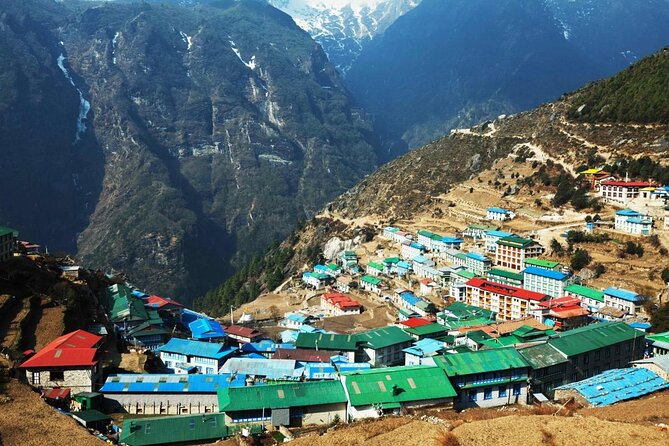
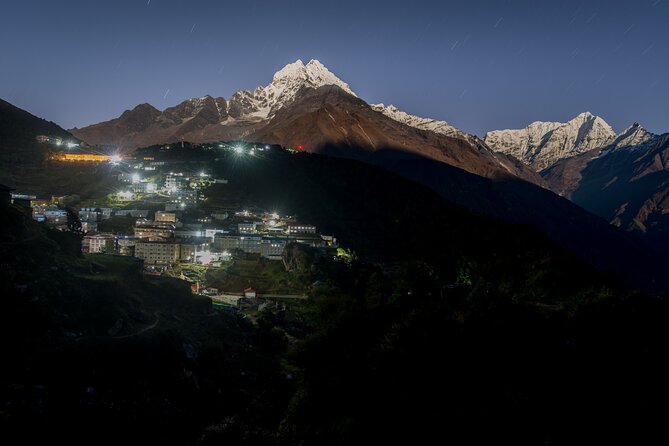
Namche is the Sherpa capital of the route and one of the most memorable settlements on the trek. It sits among steep mountain slopes, with views toward Kongde-Ri and Thamserku. You will find shops, lodges, and places to eat, but remember that this is a working mountain town, not simply a photo stop.
A few more treks around Kathmandu worth a look
- Annapurna Circuit Trek with Tilicho Lake
★ 5.0 · 368 reviews - Everest Base Camp Trekking – 13 Day
★ 5.0 · 365 reviews - Everest Base Camp Trek
★ 5.0 · 350 reviews - Everest Base Camp Trek -14 Days
★ 5.0 · 321 reviews
Day 4: Acclimatization around Namche
The rest day in Namche is one of the smartest parts of the itinerary. You do not spend the whole day lying down. Instead, the plan includes a hike to Khumjung, where you can see the historic monastery and the school associated with Sir Edmund Hillary.
The route also visits the Everest View Hotel, known for its wide mountain panorama. From here, you may see Everest, Ama Dablam, Thamserku, Nuptse, Lhotse, Kangtega, Taboche, and Kwangde.
This day helps your body adjust because you climb higher, then sleep back at Namche’s lower altitude. Take it slowly. Altitude is not impressed by enthusiasm, and a calm pace is more useful than trying to prove your fitness.
Day 5: Namche to Tengboche
The trail leaves Namche through dense forest and passes Phungithanga before a tougher uphill section. A water-powered prayer wheel and the changing views mark the approach to Tengboche.
Tengboche is home to the largest Buddhist monastery in the Khumbu region. The monastery gives the stop more meaning than another mountain viewpoint alone. It is a place of worship, and you should enter respectfully and follow local instructions.
The mountain setting is superb, with Ama Dablam, Everest, Nuptse, and Lhotse visible around the settlement. The walk takes about five hours, but the uphill sections can feel harder after the altitude has increased.
Day 6: Tengboche to Dingboche
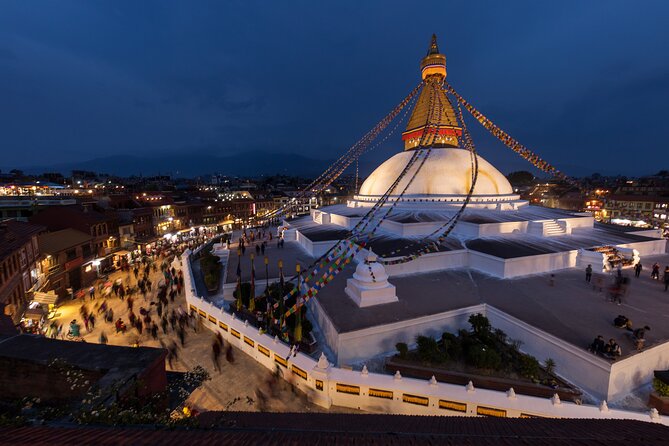
After breakfast, you cross a suspension bridge over the Dudh Koshi and continue toward Orsho and the Imja Khola. The trail passes rhododendron, birch, and conifer trees, along with mani walls, chortens, and small villages.
Dingboche is the highest Sherpa settlement on this route. Stone walls protect fields around the village, and Ama Dablam appears particularly close. The five-hour walk is not simply a climb to a bed for the night. You are moving into thinner air, so drinking water and walking steadily become more important.
The lodges here are basic compared with a city hotel. That is part of the deal at high altitude, but it is worth knowing before you arrive.
Day 7: Acclimatization at Dingboche
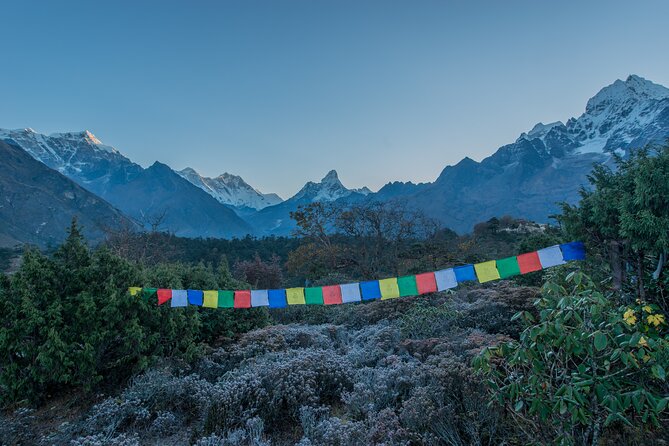
The second acclimatization day includes a hike up Nangkartshang Peak. The ascent takes about two hours from central Dingboche and rises roughly 400 meters to a summit at 5,083 meters.
This is a demanding side hike, especially because the air is now thin. You do not need to treat it as a race. The value is in climbing high, enjoying the views, then returning to Dingboche to sleep lower.
From the summit, the stated views include Ama Dablam, Makalu, Lhotse, Kangtega, and Cho Oyu. This is also a good day to tell your guide honestly how you are feeling. Past trips have praised guides such as Kamal and Achut for watching the group closely and adjusting the pace, but your own communication remains essential.
Day 8: Dingboche to Lobuche
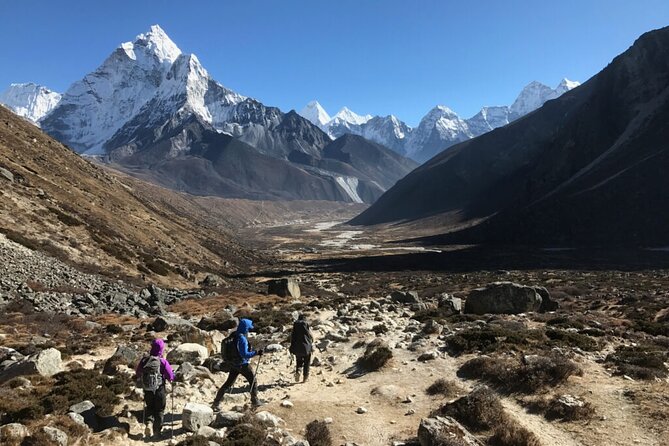
The trail begins with a gradual climb through the Pheriche Valley. Ama Dablam, Taboche, and Cholatse frame the route, while the path becomes rougher near the Khumbu Glacier moraine.
You cross Thukla Pass, marked by prayer flags and stone memorials. It is a quiet and emotional part of the trek, reminding you that the high mountains demand respect.
Lobuche is the overnight stop, with views toward Nuptse and Taboche. The walk is listed at about five hours, but rough ground and altitude can make it feel longer. Keep your warm layers ready, since conditions can change quickly at this elevation.
Day 9: Gorak Shep and Everest Base Camp
This is one of the biggest days of the trek, at about seven hours. You leave Lobuche on rough terrain toward Gorak Shep, passing views of Pumori and Nuptse.
At Gorak Shep, you leave your heavier backpack and continue toward Everest Base Camp. The trail is rocky and follows glacial moraine and streams. At Base Camp, the views include Nuptse, Pumori, Khumbu Icefall, and Khumbutse.
Do not expect a summit-style view of Everest from Base Camp itself. The point is the setting, the glacier, the icefall, and the fact that you have reached the staging area for the world’s highest mountain. You return to Gorak Shep for the night, and the small settlement offers striking views of Nuptse and Taboche.
Day 10: Kala Patthar and the descent to Pheriche
The early start for Kala Patthar is worth taking seriously. The climb is steep and rocky, but sunrise brings views across the surrounding massifs and gives you the broad mountain panorama that many people picture when they imagine an Everest trek.
After the viewpoint, you descend toward Lobuche, continue past Thukla Pass, cross a bridge, and reach Pheriche. This is a long day of about six hours, with an early climb followed by a substantial descent.
Pheriche is home to the Himalayan Rescue Association Clinic, a nonprofit facility focused on reducing deaths and illness among people trekking and climbing in the region. Its presence adds practical context to the high-altitude journey. You are not walking through a theme park. This is serious mountain country, and proper acclimatization matters.
Days 11 to 13: Returning through Tengboche, Namche, and Lukla
The return route is not just a repeat. Descending lets you notice forests, birds, and details that altitude may have blurred on the way up.
Day 11 returns to Tengboche in about five hours. The route includes forested sections with rhododendron and juniper, plus views of Ama Dablam, Everest, Nuptse, and Lhotse.
Day 12 continues toward Namche Bazaar. The supplied schedule describes the return section through Tengboche and Namche, so confirm the exact overnight stop with the operator before departure. This is a useful planning check because the printed day description contains a location mismatch.
Day 13 takes you from Namche toward Lukla. The path drops steeply at first, then follows the Dudh Koshi River. You cross suspension bridges, pass through rhododendron and pine forest, and see monasteries, chortens, and mani walls along the route.
The final uphill section into Lukla can surprise tired legs. The plan ends with a group celebration, a fitting way to mark the completion of the trek before the return flight.
Day 14: Flying back to Kathmandu
The return flight to Kathmandu takes about 40 minutes when conditions cooperate. As on the outbound journey, weather can affect the timetable. One past trip required a helicopter after serious Lukla delays, so keep some flexibility in your wider Nepal plans.
A representative meets you at the domestic terminal and transfers you to the hotel. You can rest or return to Thamel for souvenirs and an easy final evening.
Day 15: Airport transfer and departure
The final airport transfer takes about 30 minutes. A representative helps with the check-in terminal and drops you at Tribhuvan International Airport.
The trip ends where it began, at the Kathmandu meeting point. Since the package does not include international airfare, arrange your flights with enough time to account for possible mountain weather delays.
Guides, families, and the private format
The strongest praise attached to this company centers on guide care. Kamal was repeatedly described as attentive and helpful during difficult altitude days. Achut received similar praise for guiding families, slowing the pace for children, and adjusting plans to suit a group. Lhakpa, Bishnu Bhatta, Lakpa Sherpa, and other staff were also singled out for kindness and close attention.
Guide assignments can change, so do not assume you will receive a particular person. Still, the pattern is useful: this company appears accustomed to private groups, solo trekkers, and families, including children aged 11 to 13 on past trips.
The private format is a real advantage if your group walks at different speeds. You can ask questions, take breaks, and discuss how you feel without being tied to a large public group. It does not remove the physical demands, but it can make the experience more manageable.
Fitness, equipment, and what to clarify
You need moderate physical fitness for this trek. The longest days reach about seven hours, and the route includes steep climbs, rocky ground, suspension bridges, glacial moraine, and high elevations.
The operator supplies a duffel bag and sleeping bag, but personal trekking gear is your responsibility. The details of the gear list are not provided, so ask exactly what to bring and what the sleeping bag is rated for.
Insurance is not included. You should arrange travel and medical insurance that fits a high-altitude trekking holiday, then confirm what happens during a flight delay, evacuation, or other emergency. Natural disasters and accidents can create extra costs.
The cancellation policy allows a full refund if you cancel at least 24 hours before the experience begins. Poor weather can lead to a different date or full refund, but weather-related disruption can still affect your wider travel arrangements.
Should you book this Everest Base Camp trek?
I would book this trip if you want the classic Everest Base Camp route with a private guide, built-in acclimatization days, Kathmandu support, and a clear list of major inclusions. The $1,420 cost is reasonable for what it covers, especially the Lukla flights, lodging, meals, sleeping bag, duffel, and guide service.
I would not book it without first checking the porter arrangement, equipment expectations, insurance requirements, and the day 12 schedule mismatch. You should also leave spare time around the Lukla flights.
For families, first-time Himalayan trekkers, solo participants who want organized support, and anyone who values a private pace, this is a strong choice. For a comfortable holiday with short walks and guaranteed transport, it is the wrong trip. The reward is immense, but you earn it one uphill step at a time.
FAQ
Where does the Everest Base Camp trek begin?
The experience begins in Kathmandu, with airport assistance, hotel check-in, a trek briefing, and a welcome dinner.
How long is the trek?
The complete experience lasts approximately 15 days, including arrival and departure days in Kathmandu.
Are flights between Kathmandu and Lukla included?
Yes. Two-way domestic flights between Kathmandu and Lukla are included in the package.
Is this a private tour?
Yes. Only your own group participates in this private activity.
What meals are included?
The package includes 14 breakfasts, 13 dinners, and 12 lunches.
Is accommodation included?
Yes. Accommodation includes a three-star hotel in Kathmandu and lodges during the trek.
Is a porter included?
No. A trekking porter is not included in the stated package.
Is travel insurance included?
No. Travel and medical insurance are not included. Personal expenses, international flights, visa fees, and personal trekking equipment are also outside the package.
What happens if bad weather cancels the experience?
If poor weather causes cancellation, you will be offered a different date or a full refund. Lukla flight delays may also affect the schedule.
Recently added around Kathmandu
- Ghorepani Poon Hill Trek★ 5.0 · 16 reviews
- Private Manaslu Circuit Trek at Himalayas★ 5.0 · 3 reviews
- Amazing 1 Day Trekking Experience in Kathmandu Nepal★ 5.0 · 24 reviews
- Ghorepani Poonhill Trek★ 5.0 · 5 reviews
- Upper Mustang Trekking★ 5.0 · 2 reviews
- Upper Mustang Trekking★ 3.0 · 2 reviews
- Upper Mustang Trekking★ 5.0 · 4 reviews
- Upper Mustang Trek★ 5.0 · 5 reviews
Everest Base Camp Treks, compared.






Browse the lists this tour appears in