
REVIEW · KATHMANDU
Everest Base Camp Trek
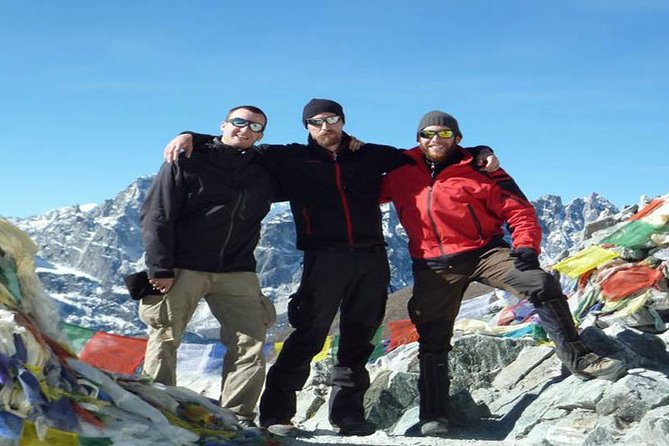
Everest begins with a very early flight. This 14-day trek combines Lukla’s mountain route with Sherpa villages, Tengboche Monastery, Everest Base Camp, and the sunrise viewpoint at Kala Patthar. I like the built-in acclimatization days at Namche Bazaar and Dingboche, and I like that domestic airfare and most trekking meals are included. The main caution is the altitude: this is a hard trek, not a casual mountain holiday.
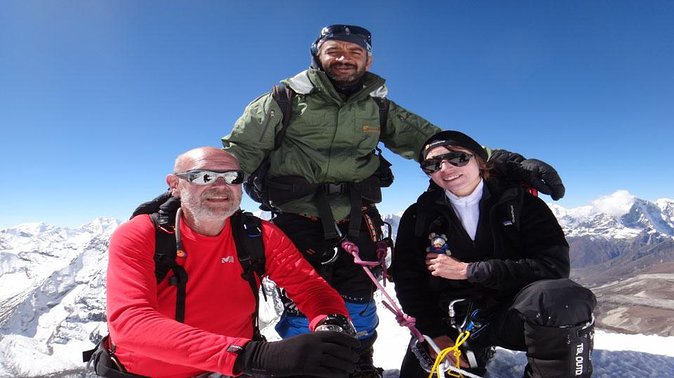
You’ll walk as high as 5,545 meters at Kala Patthar, with several long days and a demanding return route. The private format is appealing if you want personal attention, and the strongest praise for Himalayan Smile Treks centers on careful, personalized service from the guide and porter team. Guide Pramod is specifically praised in the available feedback, though you should confirm who will lead your departure.
Key points to know before booking
- Lukla flight included: The trip starts with a roughly 45-minute domestic flight from Kathmandu to Lukla.
- Two acclimatization stops: You spend an extra night at Namche Bazaar and another at Dingboche.
- High-altitude goal: The route reaches Everest Base Camp at about 5,380 meters and Kala Patthar at about 5,545 meters.
- Private group format: Only your own group participates, which allows more flexibility than a large departure.
- Meals included on the trail: The package covers 13 breakfasts, 11 lunches, and 11 dinners.
- $1,950 value: The price includes domestic airfare and trekking meals, but not food in Kathmandu, personal costs, or insurance.
What the $1,950 price really covers
At $1,950 per person, this trek is not simply a guided walk. The price includes domestic airfare, airport transfers connected with the trip, breakfast on 13 days, lunch on 11 days, and dinner on 11 days. That gives the package useful value, especially because the Lukla flight is a key part of reaching the Khumbu region.
You still need to budget for food in Kathmandu, personal expenses, and traveler’s insurance. The supplied details do not list every accommodation cost or personal service, so I would ask for a written breakdown before paying. Clarify what hotels and teahouse rooms are included, what happens if the Lukla flight is delayed, and whether porter service is part of your package.
The private format also matters. A private trip can be a better fit if your group wants to walk at its own pace or needs extra help during difficult sections. It does not make the altitude easier, but it can make the day feel less rushed and communication simpler.
The trip is listed with free cancellation up to 24 hours before the start time. After that point, the amount paid is not refunded, and late changes are not accepted.
More Everest Base Camp Treks in Kathmandu:
- Everest Base Camp Trek – 14 Days
★ 5.0 · 1,499 reviews - Everest Base Camp Trek
★ 5.0 · 842 reviews - Everest Base Camp Trekking
★ 5.0 · 485 reviews
Day 1 in Kathmandu: preparation before the mountains
Your first day is for arrival, hotel transfer, orientation, and trek preparation. This is more important than it sounds. The route begins early the next morning, so use this time to check equipment, organize your pack, and ask practical questions about the walking schedule.
Kathmandu food is not included, so plan for that expense. The airport transfer and orientation are useful touches, particularly if this is your first trip to Nepal. You will want a clear explanation of the Lukla departure, baggage arrangements, daily walking times, and what your guide expects you to carry.
Day 2: Lukla to Phakding
The day starts around 4:45 a.m. for the transfer to Kathmandu airport. The Lukla flight takes about 45 minutes, followed by a short tea break before the walk to Phakding.
The first trail day takes about five hours. It introduces you to the walking rhythm without sending you straight into the highest sections of the route. Phakding is your first overnight stop in the Khumbu region, and the short initial trek gives you a chance to check how your body feels before the route gets steeper.
The flight is an exciting beginning, but it is also a point where schedules can change. The supplied information includes domestic airfare, but it does not promise a fixed departure time beyond the early airport transfer. Ask the operator what support is provided if weather affects the flight.
Day 3: The long climb to Namche Bazaar
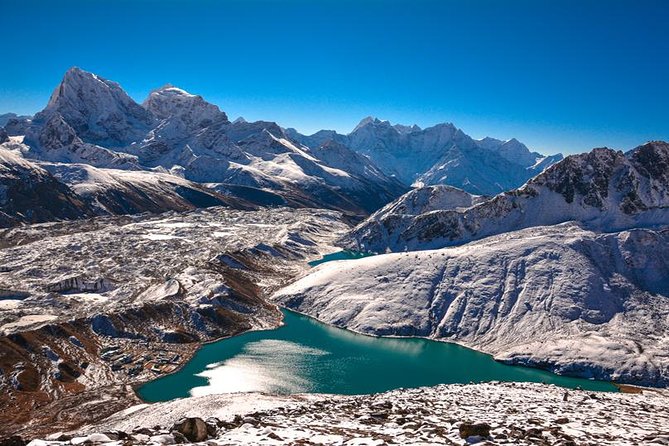
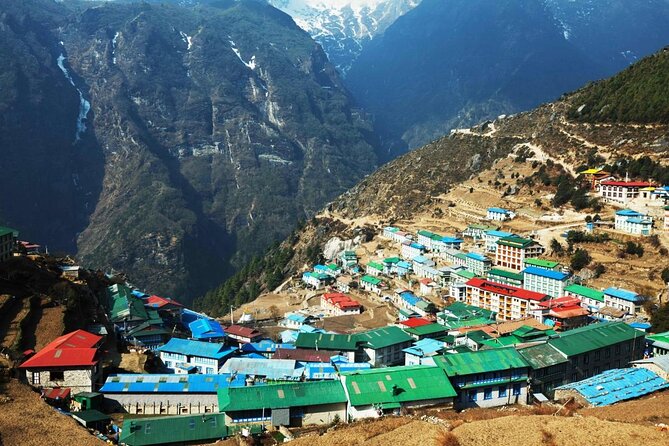
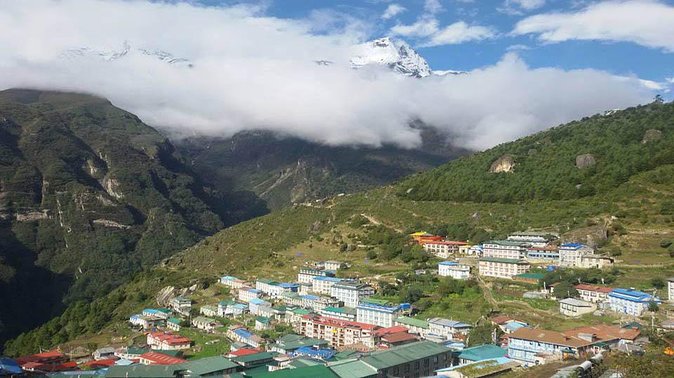
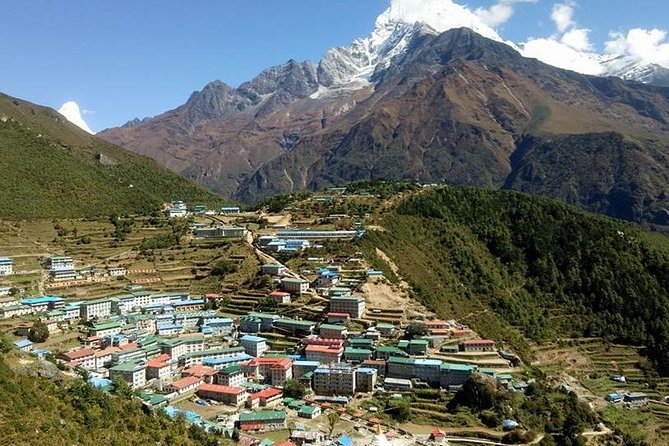
The walk to Namche Bazaar takes about six hours and becomes more demanding. Namche is the market center of the Khumbu region, so it feels like more than a sleeping stop. It is an important place to rest, adjust to the altitude, and see how local trade supports mountain communities.
The route is rewarding, but this is where the trek begins to feel serious. You are gaining height while still finding your walking pace. Keep your effort steady. There is no prize for arriving first, and the next morning includes an acclimatization hike.
A few more treks around Kathmandu worth a look
- Annapurna Circuit Trek with Tilicho Lake
★ 5.0 · 368 reviews - Everest Base Camp Trekking – 13 Day
★ 5.0 · 365 reviews - Everest Base Camp Trek
★ 5.0 · 350 reviews - Everest Base Camp Trek -14 Days
★ 5.0 · 321 reviews
Day 4: Acclimatization above Namche
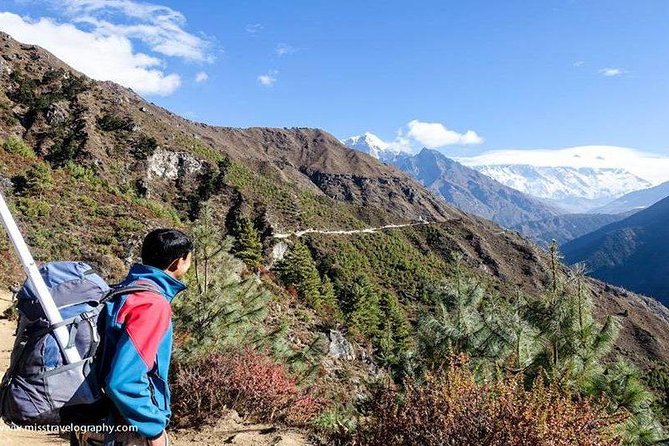
You spend a second night at Namche and take a short hike toward Syangboche Ridge, reaching about 3,880 meters. The walk is listed at around four hours, with views toward Mount Everest and fir trees and shrubs around the ridge.
I like this rest day because it is active without being a full trekking stage. You gain height during the day, then return to Namche to sleep lower than your highest point. That pattern is valuable on a high-altitude trek.
The walk is still not effortless. A short acclimatization hike can feel harder than its distance suggests, especially if you are not used to the elevation. Take it slowly and use the day to notice how you respond to altitude.
Day 5: Tengboche Monastery and mountain views
The trail to Tengboche takes about five or six hours. The main reward is the monastery, where you may see monks and nuns engaged in meditation. The setting also brings views of Everest, Ama Dablam, and Lhotse.
Tengboche gives the trek a cultural center as well as a scenic one. The monastery is not just a photo stop. It offers a reminder that this route passes through a lived-in region, not an empty wilderness reserved for climbers.
You should still keep expectations practical. Views in the Himalayas depend on weather, and no fixed schedule can guarantee a clear look at Everest. The mountain scenery is a major reason to come, but the villages, monasteries, and changing trail also carry much of the experience.
Day 6: Through Deboche and Pangboche to Dingboche
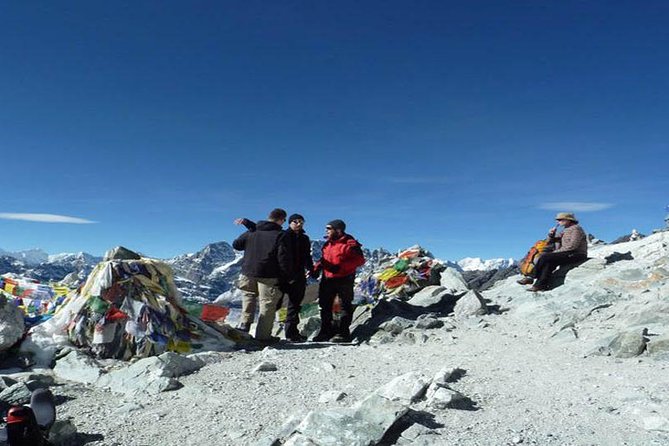
The route passes through rhododendron forest to Deboche, crosses the Imja Khola, and continues toward Pangboche. Ama Dablam is especially striking from the Pangboche area. After lunch at Pangboche or Somare, you continue to Dingboche.
This is about six hours of walking. It is a full day, but the route has variety: forest, river crossing, village sections, and open mountain views. Dingboche marks another clear change in the trek as you move higher and closer to the main goal.
Your pace matters more now. Drink regularly, eat even if your appetite drops, and tell your guide promptly if you feel unwell. The included meals are useful here because you are spending long days on the trail and need regular fuel.
Day 7: Dingboche and the Nagarjuna Hill hike
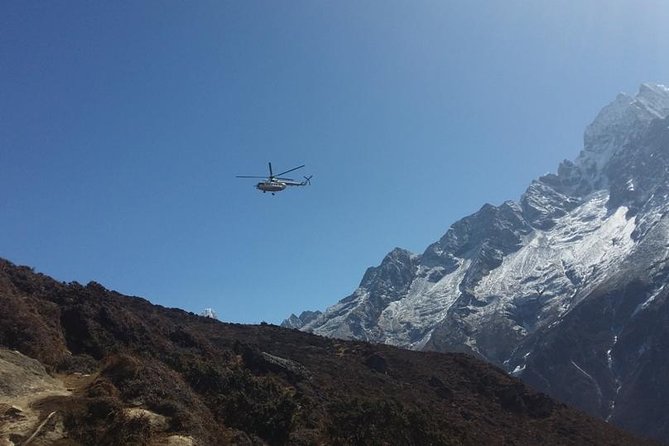
Dingboche provides the second acclimatization day. The scheduled hike around Nagarjuna Hill reaches about 5,050 meters and takes roughly three hours, though the climb to the top is described as challenging.
This is one of the hardest short walks in the program. The distance may be modest, but the elevation makes every step count. The reward is a high viewpoint with views toward Ama Dablam and Cholatse.
You do not need to treat the hill as a personal contest. The purpose of the day is to adapt, not to prove toughness. If your body is struggling, a shorter walk is the sensible choice. A private group may make that conversation easier, but you should confirm how much flexibility the guide allows.
Day 8: Lobuche and the climbers’ memorial
The trail from Dingboche to Thukla crosses pasture before climbing toward a memorial area at about 4,830 meters. The memorial honors climbers who died attempting Mount Everest. From there, the path continues gradually to Lobuche at approximately 4,940 meters.
The day takes about five hours. The memorial is a solemn part of the trek, and it adds emotional weight to the mountain scenery. Everest is not only a famous summit. It is also a place of real risk, and the memorial makes that clear.
Lobuche is high, cold, and close to the route’s toughest section. Keep the evening quiet and focus on rest. At this point, even routine tasks may take more time than they would at home.
Day 9: Gorak Shep and Everest Base Camp
The trail rises gently toward the moraine and reaches Gorak Shep at about 5,140 meters. This is the last settlement before Everest Base Camp and Kala Patthar. After lunch, the schedule allows for a hike to Base Camp or Kala Patthar.
The day is listed at roughly seven hours. The trail near the moraine can feel slow because of the altitude and rough ground. Reaching Everest Base Camp is a major milestone, even though you are not climbing onto the summit route itself.
There is a small planning point to clarify. The next day also schedules an early hike to Kala Patthar, so ask the operator how your group divides Base Camp and Kala Patthar between these two days. The written plan presents both options on Day 9 and then schedules Kala Patthar again on Day 10.
Day 10: Kala Patthar and the long return to Pheriche
An early morning hike to Kala Patthar is one of the trip’s defining moments. At about 5,545 meters, it is higher than Everest Base Camp and is described as one of the best places to see Mount Everest. After the viewpoint, you retrace the route toward Pheriche.
The listed walking time is about 10 hours, making this the toughest day on paper. You combine a pre-dawn or early morning climb with a long descent. The high point is spectacular, but the return requires stamina.
This is why the acclimatization days matter. It is also why you should take the fitness warning seriously. You need a moderate level of physical fitness at minimum, and you should be comfortable walking for several hours on uneven trails.
Days 11 and 12: Back through Tengboche and Lukla
The route continues through Tengboche, descends to Phungi Thanga at about 3,250 meters, climbs again toward Kyanjuma at about 3,600 meters, and then returns to Namche Bazaar. The route description lists seven minutes for this day, but the detailed walking plan clearly describes a substantial return stage, so confirm the correct timing before departure.
On Day 12, you trek all the way back to Lukla, with about seven hours of walking. This is not an easy victory lap. Descending can be hard on your knees, and the repeated ups and downs around the Khumbu trail still demand effort.
The plan ends the trekking section with a celebration alongside your guide and fellow staff. That final evening can be a meaningful chance to thank the people who carried equipment, set the pace, and helped your group through the high sections.
Days 13 and 14: Return to Kathmandu and departure
Day 13 brings a flight from Lukla to Kathmandu, listed at about 50 minutes, followed by transfer to your hotel. The day is intended for rest and personal time.
Day 14 includes airport transfer for your onward journey. The airport representative is scheduled to assist with the transfer, and the listed transfer time is about 30 minutes.
The two-day finish is sensible. After a demanding trek, you have time to return to Kathmandu before leaving Nepal. Still, the plan gives no detailed backup arrangement for flight delays, so ask about this before booking.
Who will enjoy this trek most
This experience suits you if you want a classic Everest route with a private group, a named guide option such as Pramod subject to confirmation, and a clear focus on Base Camp rather than a summit attempt. It is also a good match if you value local guiding and personal care more than luxury.
You should be ready for long days, cold conditions, steep sections, and high altitude. The route reaches more than 5,500 meters, so this is not appropriate for someone seeking an easy sightseeing trip.
The strongest praise connected with Himalayan Smile Treks focuses on personalized planning and attentive guide and porter support. That is especially useful on a demanding route where good judgment and calm assistance matter. Ask for the guide’s name, the porter arrangement, accommodation details, and the altitude safety plan before you commit.
Should you book the Everest Base Camp trek?
I would consider this a strong choice for a fit hiker who wants a classic Khumbu route and prefers a private experience. The included Lukla airfare and trekking meals make $1,950 a reasonable package price, provided the accommodation and porter details match your expectations.
Book it if you want Everest views, Sherpa villages, Tengboche Monastery, Base Camp, and Kala Patthar in one organized trip. Think twice if you dislike early starts, uncertain mountain flights, or long high-altitude days. Before paying, confirm the Day 9 and Day 10 plan, the odd Day 11 timing, what the price includes beyond meals and airfare, and how delays are handled.
FAQ
How long is the Everest Base Camp trek?
The experience lasts approximately 14 days, including arrival in Kathmandu, the trek from Lukla, the return flight, and departure from Nepal.
What is the starting time?
The listed meeting time is 4:45 a.m., mainly for the early transfer to Kathmandu airport and the Lukla flight.
Is the Lukla flight included?
Yes. Domestic airfare is included in the package.
How high does the trek go?
Everest Base Camp is listed at about 5,380 meters, while Kala Patthar reaches about 5,545 meters.
Are meals included?
The package includes 13 breakfasts, 11 lunches, and 11 dinners. Food in Kathmandu is not included.
Is this a private tour?
Yes. Only your own group participates in the activity.
What fitness level is required?
A moderate level of physical fitness is required. The route includes several long walking days, high-altitude sections, and a demanding hike to Kala Patthar.
Recently added around Kathmandu
- Ghorepani Poon Hill Trek★ 5.0 · 16 reviews
- Amazing 1 Day Trekking Experience in Kathmandu Nepal★ 5.0 · 24 reviews
- Private Manaslu Circuit Trek at Himalayas★ 5.0 · 3 reviews
- Ghorepani Poonhill Trek★ 5.0 · 5 reviews
- Upper Mustang Trekking★ 5.0 · 2 reviews
- Upper Mustang Trekking★ 3.0 · 2 reviews
- Upper Mustang Trekking★ 5.0 · 4 reviews
- Upper Mustang Trek★ 5.0 · 5 reviews
Everest Base Camp Treks, compared.






Browse the lists this tour appears in