
REVIEW · KATHMANDU
Everest Base Camp Trekking
The mountains begin before the trail does. This 12-day Everest Base Camp trek combines a dramatic flight into Lukla, Sherpa villages, Buddhist monasteries, Kala Patthar, and Everest Base Camp itself. I like the chance to spend real time in Namche Bazaar and Dingboche for altitude adjustment, and I like that permits, lodging, meals, a licensed guide, domestic flights, and basic trekking gear are included. The main concern is the demanding schedule, especially the very long walking days and the weather-sensitive flight connections.
At $1,300 per person, the package offers solid value if you want a private trip with the main costs arranged in advance. You still need to budget for drinks, showers, charging, insurance, tips, visa costs, and possible extra nights. I would also ask the operator to confirm the exact day-by-day timings before booking, since several listed durations appear to describe full days rather than actual walking hours.
Key Points Before You Book
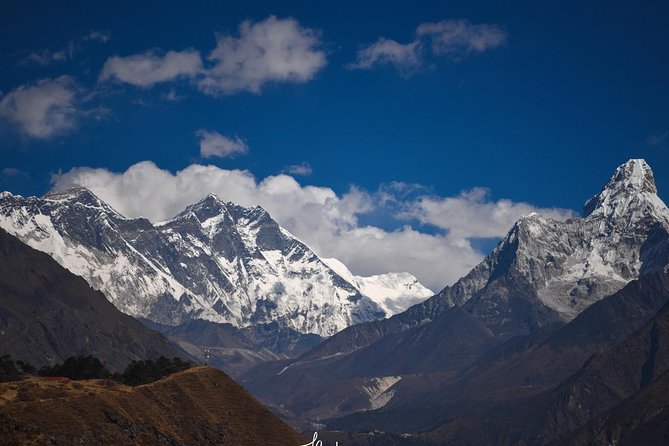
- Kala Patthar reaches about 5,550 meters: This is the best viewpoint on the route for a close look at Everest, Lhotse, Nuptse, Pumori, and the Khumbu Glacier.
- The journey uses Ramechhap and Lukla: During the busy trekking season, you travel by road from Kathmandu to Ramechhap, then fly to Tenzing-Hillary Airport.
- Namche and Dingboche provide needed rest days: These stops are not wasted time. They give you space to adjust to altitude and explore Sherpa culture.
- Tengboche adds real cultural depth: Its monastery, prayer ceremonies, painted interiors, and mountain setting make it more than a quick overnight stop.
- The price includes useful essentials: Domestic flights, permits, lodging, meals, a government-licensed guide, a duffle bag, sleeping bag, and down jacket are covered.
- The trek requires moderate fitness: The trail includes steep climbs, suspension bridges, moraine paths, thin air, and one especially demanding route to Kala Patthar.
Why This Everest Trek Has Real Appeal
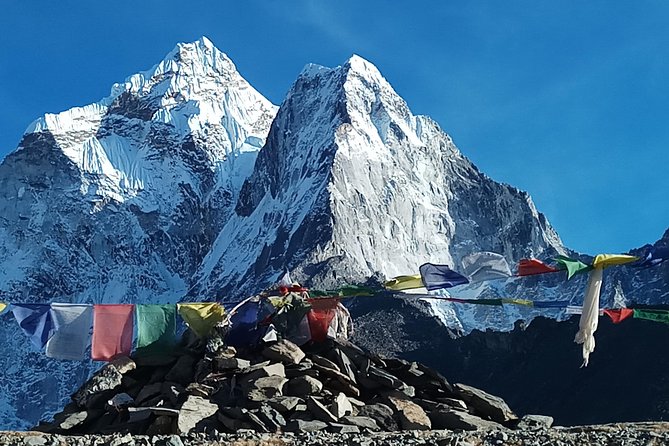
The attraction is not only Everest. You also get a close look at life in the Khumbu, where Sherpa villages, prayer flags, mani stones, monasteries, stone walls, and mountain trails shape the journey.
I especially like the balance between scenery and culture. The trail passes through pine and rhododendron forests, follows the Dudh Koshi River, crosses high suspension bridges, and reaches traditional settlements. At Namche, you can visit a museum devoted to Sherpa culture and mountaineering. At Tengboche, you can attend morning prayers and see Buddhist paintings linked to the Khumbu tradition.
The route also gives you two different mountain experiences. Kala Patthar offers a broad, close view of Everest. Base Camp gives you the emotional reward of reaching the place where summit expeditions begin, even though Everest’s summit cannot be seen directly from there.
This is a private activity, so your group does not join a large organized crowd. That matters on a difficult route. A guide can adjust the pace, help with direction, and offer support when the altitude begins to bite.
More Everest Base Camp Treks in Kathmandu:
- Everest Base Camp Trek – 14 Days
★ 5.0 · 1,499 reviews - Everest Base Camp Trek
★ 5.0 · 842 reviews - Everest Base Camp Trekking
★ 5.0 · 485 reviews
Kathmandu to Lukla via Ramechhap
The first transport day is less romantic than the mountain trail, but it is important. You leave Kathmandu early and take a road journey of about five hours to Ramechhap. This quiet town is used as an alternative departure point for Everest flights during the busy season.
The road trip takes you through countryside and foothills before you reach the airport. Plan for an early start and a long transfer day. The 45-minute stop shown for Ramechhap is airport time, not a sightseeing visit.
The flight to Tenzing-Hillary Airport in Lukla lasts about 30 minutes. The airstrip is famous for its short runway and high mountain setting. On a clear day, the arrival gives you an instant view of the terrain ahead.
Weather can delay or cancel flights. This is one reason the itinerary needs some flexibility. The cancellation terms allow a full refund if poor weather forces the operator to cancel, or you may be offered another date. That protection is useful, but it does not remove the need for patience.
From Lukla, you walk toward Phakding through farmland and Sherpa villages. The trail crosses suspension bridges and passes mani walls carved with Buddhist prayers. Phakding sits beside the Dudh Koshi River and makes a gentle introduction to the trek.
Phakding to Namche Bazaar
The second walking day brings your first serious climb. The route follows the Dudh Koshi through pine forests and small settlements including Toktok and Bengkar. You pass waterfalls, prayer flags, mani stones, and suspension bridges.
Monjo marks the entrance to Sagarmatha National Park. Permits are checked here, making it both a practical stop and a clear signal that you are entering the protected Everest region.
From Monjo, the path continues to Jorsalle, the last village before Namche. After this, the trail crosses the famous high suspension bridge at the meeting point of the Dudh Koshi and Bhote Koshi rivers. The climb then turns steep, with switchbacks through forest.
A viewpoint along the ascent may give you a first glimpse of Everest, Lhotse, and Nuptse. That sight is a powerful reward, but do not rush it. The final climb into Namche is hard, especially if you are still finding your rhythm.
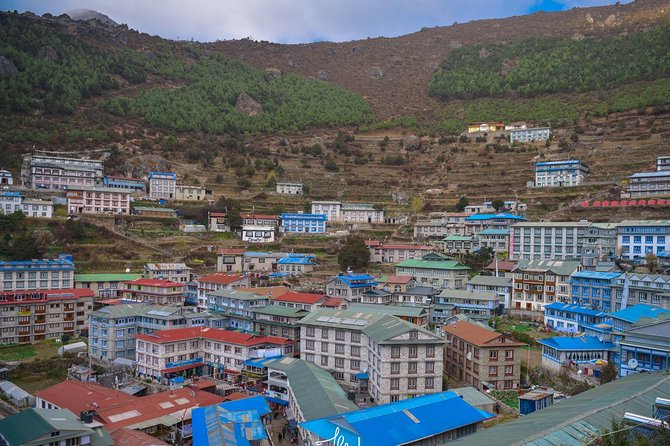
Namche Bazaar is built on a sunny mountainside and serves as the main trading center of the region. It has cafes, gear shops, bakeries, and lodges, but the real value is its position as an acclimatization stop.
Namche Bazaar: Culture and Altitude Adjustment
The rest day in Namche is one of the strongest parts of the plan. You are not simply waiting around. You can explore the town, visit the Sherpa Culture Museum, and take a side hike.
The museum presents traditional tools, clothing, cultural objects, and mountaineering material. It helps explain the connection between Sherpa communities and the mountains, something that can be easy to miss if you focus only on reaching Base Camp.
You also have two suggested walking options. The first leads to Hotel Everest View, with views toward Everest, Lhotse, Ama Dablam, and other peaks. The second takes you toward Khumjung and Khunde, where you can visit old monasteries and see the famous Yeti scalp at Khumjung Monastery.
These side trips are useful because they let you climb higher during the day and sleep lower in Namche. That supports the body’s adjustment to altitude. The walks are described as moderately difficult, so treat them as part of the trek rather than casual sightseeing.
A few more treks around Kathmandu worth a look
- Annapurna Circuit Trek with Tilicho Lake
★ 5.0 · 368 reviews - Everest Base Camp Trekking – 13 Day
★ 5.0 · 365 reviews - Everest Base Camp Trek
★ 5.0 · 350 reviews - Everest Base Camp Trek -14 Days
★ 5.0 · 321 reviews
Namche to Tengboche and the Monastery
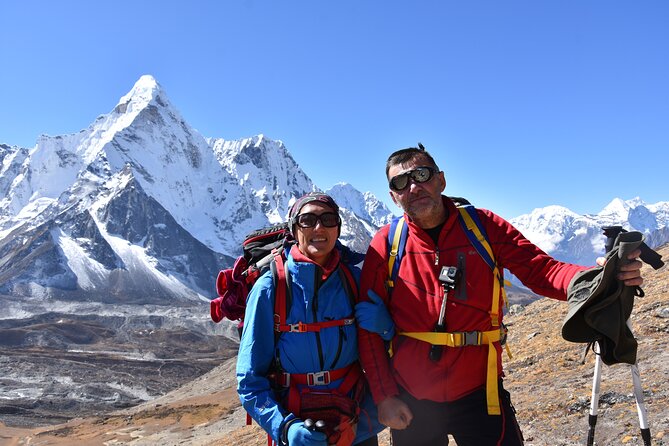
Leaving Namche, the trail passes the memorial stupa of Tenzing Norgay Sherpa. The route then climbs and descends through pine and rhododendron forest, with views of Ama Dablam, Lhotse Shar, Taboche, Kangtega, and Thamserku.
At Phunki Thanga, seven water-powered prayer wheels turn with the river. Local belief holds that each rotation carries the Buddhist mantra Om Mani Padme Hum. It is a small detail, but moments like this give the route its character.
The climb after Phunki Thanga is steady. You pass through the meadows of Saso Kharka before reaching Tengboche, one of the most important cultural stops on the route.
Tengboche Monastery is the largest and most significant monastery in the Everest region. The plan includes time to attend morning prayers and look around the monastery. Inside, painted images of the Buddha and Guru Rinpoche show the skill of local religious artists.
The mountain setting is impressive, but the monastery is not simply a scenic photo stop. Allow yourself time to be quiet, listen, and respect the religious setting.
Tengboche to Dingboche
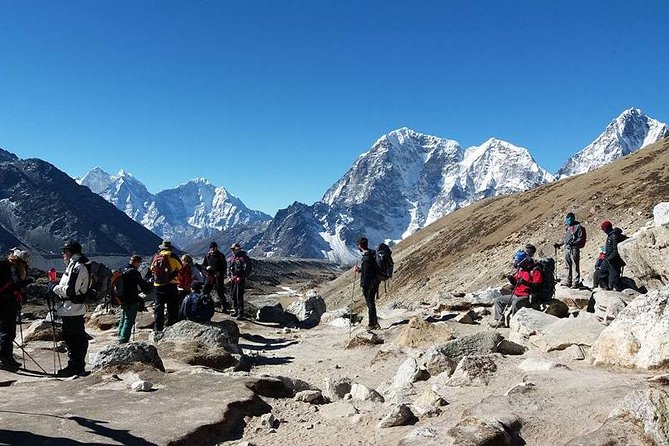
The trail continues through Deboche and along the Imja Khola. Ama Dablam and the surrounding peaks become more prominent as you gain height.
Large black overhanging rocks once gave porters and pack animals shelter before lodges were available. These details help you picture how much harder the route was before modern trekking infrastructure.
The path reaches Somare and then Dingboche, a traditional high-altitude village. Dingboche is also the site of a long stone wall beside the fields. Local explanation links it to years of farmers removing rocks from the soil and placing them at the edge of their fields.
At this height, the pace matters more than distance. The air is thinner, and ordinary uphill walking takes longer. Your guide should help keep the group moving at a sensible speed rather than treating the trek as a race.
Dingboche Rest Day
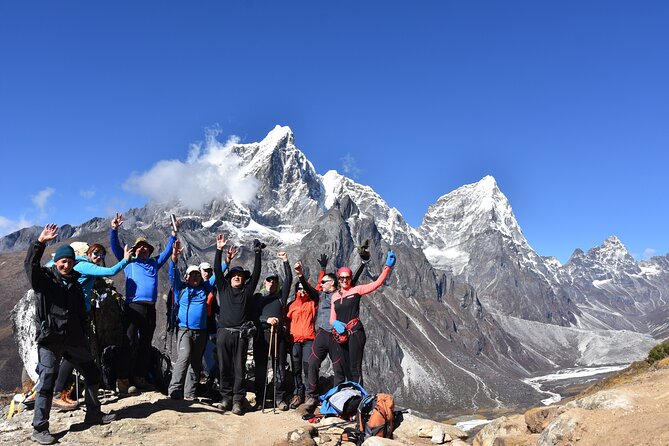
The rest day in Dingboche is essential. The itinerary gives you a full day here, which is sensible before the route becomes more exposed and demanding.
Dingboche’s stone-walled fields show how people farm in a severe mountain environment. Even without a major sightseeing stop, the village offers a useful pause between the forested lower Khumbu and the open moraine country above.
Use this day for rest and gentle movement. The provided schedule does not specify a particular side hike, so do not assume that one is included. Ask the guide what the plan will be and how much walking is appropriate for your group.
Dingboche to Lobuche Along the Moraine
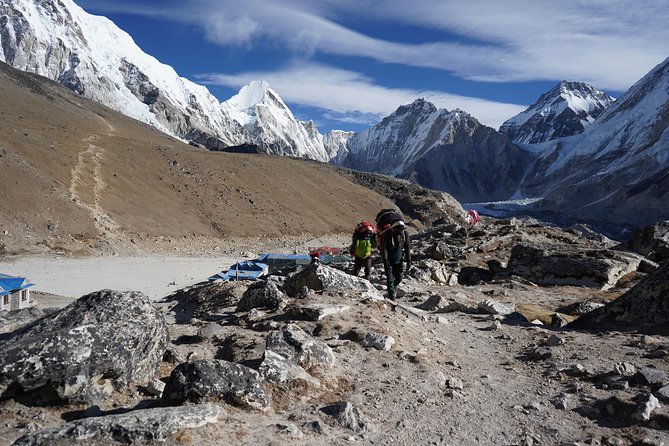
The route to Lobuche is mainly over moraine. The first section climbs over a ridge and passes through pasture before reaching Dughla.
The scenery becomes more bare and rugged here. Views may be obscured by haze, and the trail can feel less comfortable than the lower forest paths. The change is part of the experience, but it also shows why the trek requires moderate fitness.
The approach to Lobuche is not a sightseeing stroll. You are walking at high altitude, often over uneven ground, with less oxygen than your body is used to. Keep your pack light and follow the guide’s pace.
Gorak Shep and the Kala Patthar Viewpoint
From Lobuche, the route reaches Gorak Shep after about three to four hours. The path follows the lateral moraine of the Khumbu Glacier through a stark area shaped by ice and rock.
Gorak Shep sits at about 5,140 meters and is the last settlement before Base Camp. The thin air makes the approach feel harder than the distance suggests. Pumori, Nuptse, Everest, and icy ridges appear around the route, though Everest itself may be partly hidden.
The hike to Kala Patthar is one of the hardest and most rewarding parts of the trip. The climb reaches about 5,550 meters and follows loose rock and dusty switchbacks. It takes roughly two hours to climb, depending on pace and conditions.
The reward is a wide view of Everest, Lhotse, Nuptse, Pumori, Ama Dablam, and the Khumbu Glacier. Kala Patthar is often the best place on the trek for seeing Everest clearly and close up.
The schedule places Kala Patthar on the Gorak Shep day, with a descent back to Gorak Shep for the night. I would confirm the exact timing with Trek Mania Nepal, since the itinerary also describes the Base Camp visit on the following day.
Reaching Everest Base Camp
The approach to Everest Base Camp is slippery in places and can pass through narrow snow-covered sections. Conditions change, so careful footing matters more than speed.
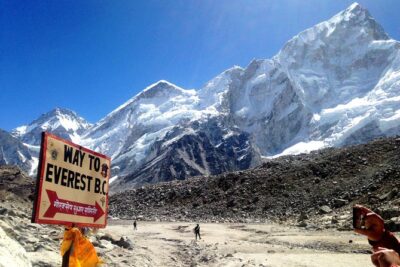
Base Camp sits at about 5,364 meters at the foot of the Khumbu Icefall. During climbing season, expedition tents may fill the glacier, adding color to an otherwise severe setting.
You cannot see Everest’s summit directly from Base Camp. That is a common surprise. The reward is the scale of the glacier, the surrounding peaks, and the feeling of reaching the starting point for summit expeditions.
The itinerary allows about 45 minutes at Base Camp. That is enough for photographs and a short pause, but you should not expect a long visit. Afterward, the route returns toward Pheriche, though the exact walking sequence should be confirmed because the supplied day order is not fully clear.
Returning Through Tengboche and Namche
The return route passes through Pheriche, Tengboche, and Namche. Going downhill reduces the strain on your lungs, but rough paths can still be hard on your knees.
Tengboche gives you another chance to pause beside the monastery and look across toward Ama Dablam and Everest. The route then continues through wooded sections and Sherpa villages to Namche.
Returning to Namche feels different from arriving there. You now understand the scale of the route behind you. The town’s shops and cafes offer a comfortable break before the final walk to Lukla.
The next day follows the same trail toward Lukla. The itinerary lists this as a very long day, so ask for the expected walking hours and whether any adjustment is possible. A long final walking day after Base Camp may be tiring, particularly if your group is moving slowly due to altitude or weather.
What the $1,300 Price Covers
The price is reasonable for a private 12-day trek because several costly basics are included:
- Private transportation
- Kathmandu to Lukla and return domestic flights
- Sagarmatha National Park permit
- Khumbu Pasang Lhamu Rural Municipality tax
- Government-licensed trekking guide
- Trekking accommodation
- Kathmandu hotel
- Breakfast, lunch, and dinner
- Rental duffle bag, sleeping bag, and down jacket
You return the rented gear after the trek. That can save you money if you do not already own cold-weather equipment.
The price does not include drinks, hot or cold showers, charging, laundry, travel insurance, rescue costs, tips, visa fees, international flights, airport or departure taxes, or extra nights and meals. Insurance is particularly important because rescue costs are excluded.
The strongest value comes from having permits, flights, meals, lodging, and a licensed guide handled together. The main thing I would clarify is the standard of accommodation and the precise flight and walking schedule, since those details affect comfort and risk.
Guides, Safety, and Personal Service
The experience is designed for private groups, which allows more personal attention than a large group departure. Guides named in past accounts include Moti, Lakbar, Bhim, Ram, and Tika Dhakal.
Moti is described as careful and good company on treks to Everest Base Camp and the Gokyo Lakes. Bhim received praise for explaining Nepalese culture, while Ram was remembered for his humor and encouragement at higher elevations. Tika Dhakal was valued for helping with the route and finding suitable places to stay.
These details matter because a guide’s manner can affect the whole trip. On a high-altitude route, patience, safety awareness, cultural knowledge, and a steady attitude are practical assets.
The tour requires a moderate fitness level. You should be comfortable with repeated uphill walking, uneven trails, suspension bridges, cold conditions, and long days. No technical climbing is listed, but the altitude alone makes this a serious trek.
Best Months and Who Should Book
The recommended months are March, April, May, September, October, and November. These periods are presented as the best times for the trek, though Lukla flights remain dependent on weather.
I would choose this trip if you want a structured private trek with the main arrangements included and enough time for Namche and Dingboche acclimatization. It suits someone who wants Sherpa culture and mountain scenery, not just a quick march to Base Camp.
I would hesitate if you dislike early starts, basic mountain lodging, uncertain flights, or long walking days. You should also be ready for a demanding altitude profile. Kala Patthar and Base Camp are serious objectives, even with a guide.
Should You Book This Everest Base Camp Trek?
I would consider booking it if the $1,300 price fits your budget and you want a private, guided route with flights, permits, meals, lodging, and rental gear included. The strongest parts are the Sherpa cultural stops, the Tengboche monastery, the acclimatization days, and the close view from Kala Patthar.
Before paying, ask Trek Mania Nepal to confirm the exact walking hours, the order of the Base Camp and Kala Patthar days, accommodation details, flight contingency plans, and the expected final walk to Lukla. If those points are clear, this is a practical way to reach Everest Base Camp without arranging every piece yourself.
FAQ
How long is the Everest Base Camp trek?
The experience lasts approximately 12 days, including transportation from Kathmandu, the flight to Lukla, the trek to Everest Base Camp, and the return to Kathmandu.
What is the price per person?
The listed price is $1,300 per person.
Are flights between Kathmandu and Lukla included?
Yes. Domestic flights between Kathmandu and Lukla are included as described in the itinerary. During peak season, the departure may involve a road journey from Kathmandu to Ramechhap before the flight to Lukla.
Are meals included?
Yes. Breakfast, lunch, and dinner are included for 12 days. Drinks and extra meals caused by additional nights are not included.
What trekking equipment is provided?
A duffle bag, sleeping bag, and down jacket are provided on a rental basis. You return these items after the trek.
Is a guide included?
Yes. The package includes a trekking guide licensed by the Nepalese government. This is a private activity for your group.
Can I cancel for a full refund?
You can cancel at least 24 hours before the experience start time for a full refund. If poor weather causes the operator to cancel, you may be offered another date or a full refund.
Recently added around Kathmandu
- Ghorepani Poon Hill Trek★ 5.0 · 16 reviews
- Private Manaslu Circuit Trek at Himalayas★ 5.0 · 3 reviews
- Amazing 1 Day Trekking Experience in Kathmandu Nepal★ 5.0 · 24 reviews
- Upper Mustang Trekking★ 5.0 · 2 reviews
- Ghorepani Poonhill Trek★ 5.0 · 5 reviews
- Upper Mustang Trekking★ 3.0 · 2 reviews
- Upper Mustang Trekking★ 5.0 · 4 reviews
- Upper Mustang Trek★ 5.0 · 5 reviews
Everest Base Camp Treks, compared.




Browse the lists this tour appears in