
REVIEW · KATHMANDU
13-Day Private Trekking Experience in Everest Base Camp
The mountain earns every step. This 13-day private trek combines a short Kathmandu stay, scenic flights to Lukla, Sherpa villages, Buddhist monuments, and the demanding walk to Everest Base Camp at 5,380 meters. I especially like the built-in acclimatization nights in Namche Bazaar and Dingboche, plus the chance to climb Kala Patthar for wide views of Everest. The main concern is the pace: several days require five to nine hours of walking, and the high altitude makes this a serious trek, not a casual sightseeing trip.
The $1,350 price includes domestic flights, permits, a licensed guide, accommodation, meals during the trek, trekking poles, a sleeping bag, and airport transfers. That is a strong package for a private trip, though you still pay extra for hot showers, Wi-Fi, charging, bottled water, and drinks. The company has earned repeated praise for its support before and during treks, with guides such as Kumar, Dorchi, and Dan receiving especially warm feedback.
Key Points Before You Book
- Kala Patthar is the visual high point: The 5,545-meter climb offers sunrise and sunset views of Everest, Nuptse, Lhotse, Pumori, Ama Dablam, and nearby peaks.
- Two acclimatization stops help: You spend two nights in Namche Bazaar and two nights in Dingboche, with short hikes instead of simply sitting indoors.
- The private format gives you flexibility: Only your group participates, making it easier to discuss pace, rest, and the choice between Everest Base Camp and Kala Patthar timing.
- Lukla flights are part of the adventure: The return airfare is included, along with airport pickup and drop-off in Kathmandu.
- Tea-house travel keeps the cost reasonable: Eleven nights are spent in simple mountain lodges, with breakfast, lunch, and dinner included during the trek.
- The hardest days come late: The walk to Gorak Shep and the return from Pheriche to Namche are long, high, and physically demanding.
What the $1,350 Package Really Covers
For a private Everest Base Camp trip, $1,350 is a useful price point because many of the expensive pieces are already bundled. You get return Kathmandu to Lukla airfare, national park permits, government taxes, a licensed trekking guide, two Kathmandu hotel nights, eleven tea-house nights, meals during the mountain portion, and airport transportation.
The included gear also helps. Trekking poles and a sleeping bag are supplied, and the company has provided warm coats to some clients on other Nepal treks. Ask in advance exactly what equipment is available for your departure, but these inclusions can save you from buying gear for a single trip.
The cost does not cover every comfort. Bottled water, alcoholic drinks, electronic charging, Wi-Fi, and hot showers during the trek cost extra. You should also expect tea-house rooms to be simple, particularly higher up. The package is good value if you want a guided trek with the major logistics handled, but it is not an all-inclusive luxury holiday.
Meals are included at the mountain lodges. That removes one daily decision and keeps spending more predictable. You will still want some cash for extras, especially drinks, showers, charging, and internet access.
More Everest Base Camp Treks in Kathmandu:
- Everest Base Camp Trek – 14 Days
★ 5.0 · 1,499 reviews - Everest Base Camp Trek
★ 5.0 · 842 reviews - Everest Base Camp Trekking
★ 5.0 · 485 reviews
Kathmandu Begins With Practical Preparation
Day one starts with airport pickup and transfer to a three-star hotel in Kathmandu. This gives you time to recover from your flight, organize your pack, and begin adjusting to Nepal before heading toward the mountains.
The Thamel visit is a useful first taste of Kathmandu. Its streets are packed with trekking shops, restaurants, cafés, and small stores, making it a sensible place to check forgotten gear. Keep this visit practical. You do not need to buy a complete expedition outfit, but you may want to sort out layers, gloves, water bottles, and any personal medication before leaving the city.
The schedule allows about two hours for the Thamel visit, while the hotel stop occupies most of the first day. That is wise. A little rest at the start matters more than squeezing in a long city tour before an early mountain departure.
Lukla to Phakding: Your First Three Hours on Foot
The flight from Kathmandu to Lukla takes about 35 minutes and is described as scenic, with views of snow-capped mountains and Nepal’s rugged terrain. After landing at about 2,800 meters, you begin the trek rather than spending the day at the airstrip.
The first walk to Phakding covers about nine kilometers and takes roughly three hours. It is a manageable introduction, passing Tibetan Buddhist prayer walls, monasteries, monuments, and villages. Phakding sits at about 2,610 meters, slightly lower than Lukla, so this first night gives your body time to begin adjusting.
You stay in a lodge and are advised to drink four to five liters of water daily. That is a serious amount, but hydration is treated as part of the trek rather than an afterthought. Do not wait until you feel thirsty. You should also keep your first walking day relaxed, since the route gets much harder soon.
Namche Bazaar Gives You Two Nights to Adjust
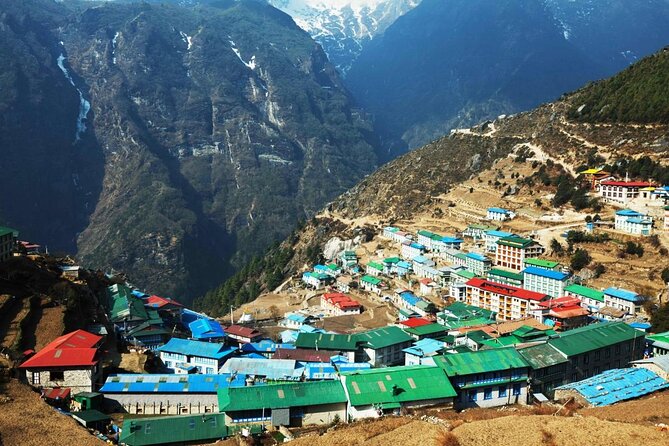
The route from Phakding to Namche passes through Toktok, Benkar, Monjo, and Jorsalle. The trail includes several suspension bridges and the entrance to Sagarmatha National Park. It follows the river for a time before the final high bridge and the long climb to Namche.
The climb to Namche can take about two hours. The total day is not listed as a precise distance, but it is one of the first clear tests of stamina because the trail changes from relatively gentle walking to sustained uphill work.
Namche Bazaar sits at about 3,340 meters and is a major stopping point in the Everest region. You spend two nights here, which is one of the best features of this plan. Namche has lodges, restaurants, bars, cafés, shops, groceries, boutiques, and a bakery, so you get a little choice and comfort before heading higher.
The acclimatization day does not mean doing nothing. You can hike to the Everest View Hotel, walk to Khumjung and Khunde, visit the Sherpa museum, or simply rest around Namche. The recommended pattern is to climb higher during the day and sleep lower that night. That gives your body a better chance to adjust to the rising altitude.
A few more treks around Kathmandu worth a look
- Annapurna Circuit Trek with Tilicho Lake
★ 5.0 · 368 reviews - Everest Base Camp Trekking – 13 Day
★ 5.0 · 365 reviews - Everest Base Camp Trek
★ 5.0 · 350 reviews - Everest Base Camp Trek -14 Days
★ 5.0 · 321 reviews
Tengboche Brings Forest, Prayer Wheels, and a Long Climb
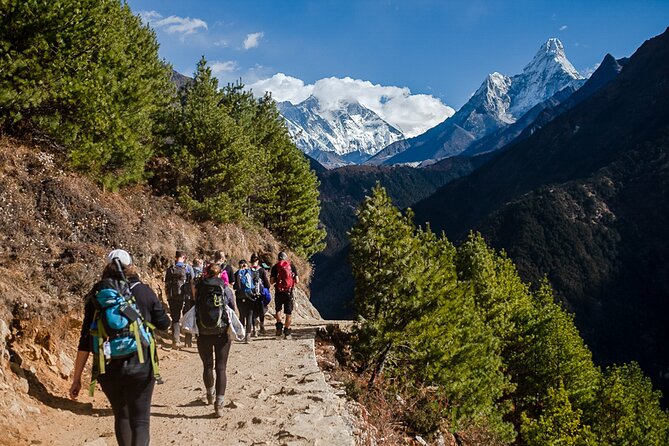
From Namche, the trail heads toward Tengboche at about 3,870 meters. The route first climbs, then follows a more pleasant section toward Kyanjuma before dropping to the Dudh Kosi River.
At Phungitenga, you cross a suspension bridge and pass water-driven prayer wheels. After lunch, the route turns uphill for two to three hours toward Tengboche. The whole day takes about five to six hours and covers roughly 12 kilometers.
Tengboche is one of the spiritual centers of the trek, with the region’s active monastery. The combination of forest, Buddhist monuments, prayer wheels, and mountain views gives this day more character than a simple march from one lodge to another.
The drawback is the late climb. You may feel tired by the time the trail turns upward, so save energy early in the day. The scenery is excellent, but you should not confuse a pretty trail with an easy one.
Dingboche Offers the Second Acclimatization Base
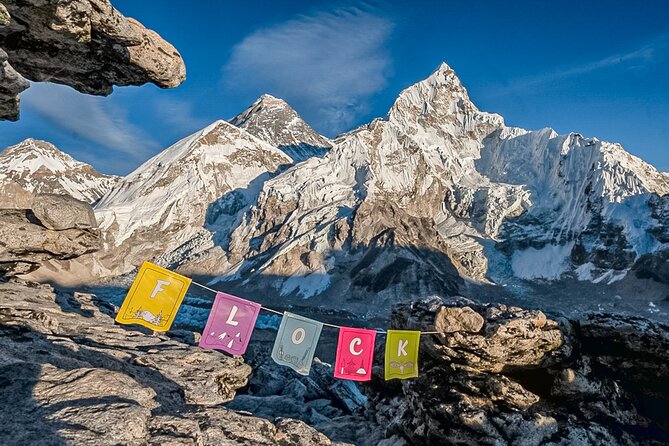
The path from Tengboche continues through rhododendron, birch, and blue pine forest before reaching a suspension bridge near Pangboche. You climb toward Pangboche, stop for lunch around Somare, and then enter a more open area of pastures and fields.
At Orsho, the route divides toward Pheriche and Dingboche. This trek follows the Imja Khola toward Dingboche, where you can see Ama Dablam, Island Peak, Lhotse, Tawache, Tsolache, Lobuche, and other peaks.
Dingboche is at a much higher elevation, so the second night here is important. On the acclimatization day, the plan calls for a short hike gaining about 500 meters over three kilometers. You rest at the high point for 30 to 45 minutes, then return for lunch and a quieter afternoon.
There is also an optional hike toward Nangkar Tshang, listed at 5,616 meters. The information describes it as physically demanding but worthwhile for views toward Makalu and the surrounding peaks. Treat this as an option, not an obligation. Your main goal is to arrive at the upper valleys in good condition.
Lobuche and the Memorial Ridge
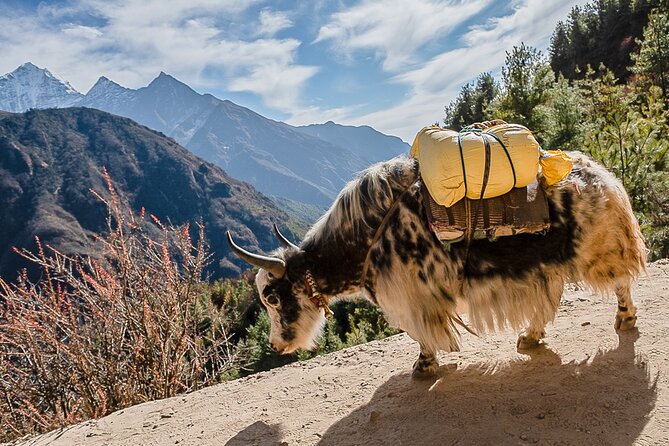
The walk from Dingboche to Lobuche takes about five to six hours and covers around 12 kilometers. It begins with a short climb above Dingboche, then follows an easier grassy moraine above the Khumbu Khola toward Thukla.
Along the way, you catch views of Pumori, Nuptse, Lobuche, Cholatse, Tawache, Ama Dablam, and smaller peaks. After Thukla, the trail climbs sharply to a ridge filled with cairns, stone memorials, and prayer flags dedicated to mountaineers who died while attempting Himalayan climbs.
This is a quiet and serious part of the route. It adds meaning to the walk without turning the day into a sightseeing stop. After the ridge, the trail continues for about an hour to Lobuche, where you spend the night in a lodge.
At this altitude, the short distance can feel deceptive. The air is thinner, the trail is rougher, and simple tasks take more effort. Walk slowly and keep your expectations realistic.
Gorak Shep and the Everest Base Camp Choice
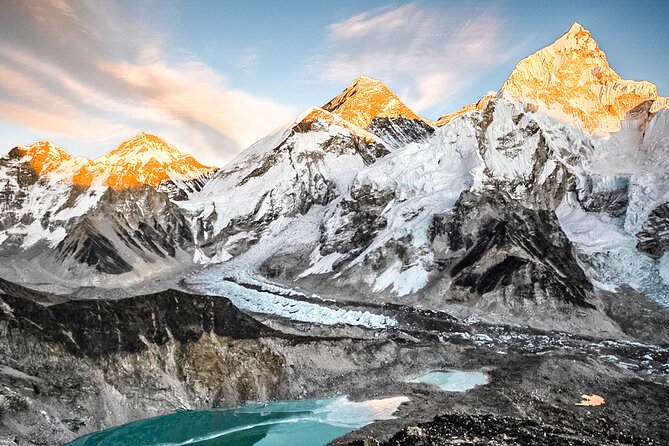
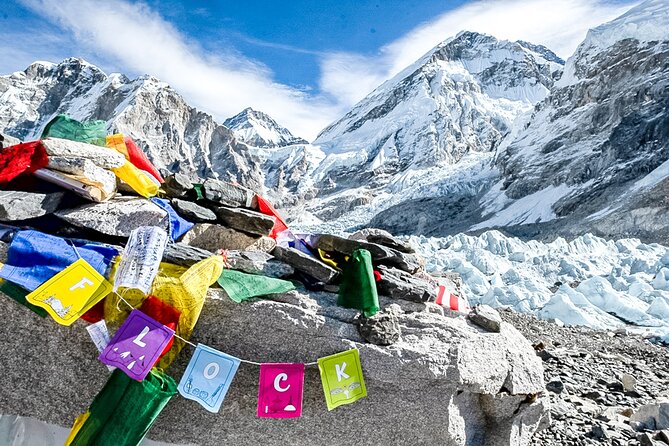
Day nine is the major test. After breakfast, you follow the left bank of the Khumbu Glacier, climb toward the Changri Glacier, and descend briefly to Gorak Shep. The walk to Gorak Shep takes about two and a half hours, but the day becomes much harder after lunch.
You leave your belongings at the lodge, then continue to Everest Base Camp. The full day covers about ten kilometers, but the altitude and rough trail make it challenging. Reaching Base Camp is a major physical and emotional milestone, even though the famous summit view is not always visible from the camp itself.
The plan gives you a choice. You can visit Base Camp on day nine and climb Kala Patthar the next morning, or choose Kala Patthar for sunset and complete Base Camp the following day. That flexibility is valuable because weather, energy, and visibility can change the best order.
Gorak Shep is a basic overnight stop. Expect the highest prices and fewest comforts of the trip. Hot showers, Wi-Fi, charging, and bottled water are not included, so this is a good place to save battery and use supplies carefully.
Kala Patthar Delivers the Big Mountain View
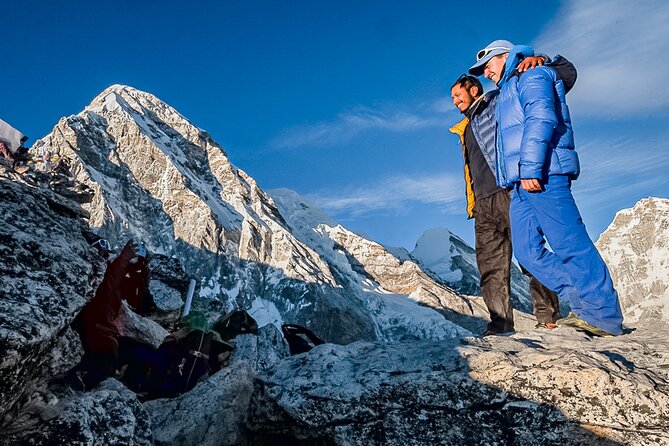
The early morning climb to Kala Patthar rises about 400 meters from Gorak Shep and takes up to two hours. At 5,545 meters, it is the highest point on the standard plan and can feel harder than the distance suggests.
The reward is a broad view of Everest, Nuptse, Lhotse, Khumbutse, Pumori, Lingtren, Ama Dablam, Thamserku, Lobuche Peak, and other peaks. The schedule highlights sunrise and sunset, and early morning is often the practical choice after a night at Gorak Shep.
After breakfast, you descend through Lobuche and Thukla toward Pheriche. This is a welcome change in altitude, but it remains a long day after the demanding Base Camp section.
Pheriche serves as a sensible recovery stop. The route is still remote, but you are moving lower and the return journey begins to feel more manageable.
The Return to Namche and Lukla
The walk from Pheriche to Namche takes about eight to nine hours and covers roughly 22 kilometers. It is downhill overall, but do not underestimate it. Tired knees, sore feet, and a long trail can make a descent just as tiring as a climb.
Back in Namche, the plan suggests stopping at the Namche Bakery or Café Danfe for a treat or a game of pool. These small comforts matter after the high valleys. You can also use the evening to rest before the final long walk to Lukla.
The Namche to Lukla section takes about seven to eight hours and covers around 21 kilometers. You descend Namche Hill, pass through Phakding, and then face the final uphill stretch into Lukla. It is an odd ending: you are returning to lower altitude, but your body is already worn out.
You spend one more night in Lukla before the morning flight. That extra night gives you protection against a same-day rush and provides a little breathing room before leaving the mountains.
What the Guides and Private Format Add
The trip uses a government-licensed guide, and only your group participates. That means the day can be handled as a private trek rather than a fixed large-group procession.
The strongest praise for this company centers on communication, patience, and care. Kumar has been praised for his mountain experience, while Dorchi Sherpa is repeatedly described as attentive, professional, and helpful. Dan has also been recommended for personalized guiding. You can ask about guide availability before booking if a particular name matters to you.
A private format does not remove the physical challenge. It does make it easier to discuss rest stops, meal timing, and the order of Base Camp and Kala Patthar. It also helps if one person in your group walks more slowly or needs extra reassurance at altitude.
Who Should Choose This Trek?
This trip suits you if you have moderate physical fitness and can prepare for repeated walking days of five to nine hours. You should be comfortable with simple tea-house accommodation, early starts, cold conditions, and limited access to hot water and internet.
It is a good fit for a first Everest Base Camp trek if you want permits, flights, meals, gear, lodging, and a guide arranged in one package. It is less suitable if you want private bathrooms, reliable charging, luxury hotels, or a relaxed schedule.
Spring, from March through May, and autumn, from September through November, are listed as the best seasons for weather. Mid-spring adds rhododendron color to the route. The trek is possible year round, but conditions can vary, so ask about the expected weather for your dates.
Cancellation terms are strict close to departure. You receive a full refund if you cancel at least six full days ahead, 50 percent if you cancel two to six days ahead, and no refund within two days.
Should You Book It?
I would consider this a well-priced, thoughtfully paced Everest Base Camp package for someone who wants the major arrangements handled without paying for luxury. The two acclimatization bases, private guide, return Lukla flights, meals, and included trekking equipment add real value.
Book it if you want a serious mountain challenge with strong logistical support and the freedom of a private group. Think twice if long walking days, basic lodges, extra charges for comfort, or high-altitude conditions sound unpleasant. The best preparation is simple: train your legs, bring layers, protect your feet, and allow yourself to walk slowly.
FAQ
How long does the Everest Base Camp experience last?
The experience lasts approximately 13 days, including Kathmandu, the flights to and from Lukla, the trek, and the final return to Kathmandu.
Is airport pickup included?
Yes. Airport pickup and drop-off in Nepal by private vehicle are included, along with Kathmandu to Lukla and Lukla to Kathmandu airfare.
How high does the trek go?
Everest Base Camp is listed at 5,380 meters, while Kala Patthar reaches about 5,545 meters.
Are meals included during the trek?
Breakfast, lunch, and dinner are included during the trekking portion at mountain tea-house lodges.
Is accommodation included?
Yes. The package includes two nights in a three-star Kathmandu hotel and eleven nights in tea houses during the trek.
What is not included?
Bottled water, alcoholic drinks, electronic charging, Wi-Fi, and hot showers during the trek are not included.
Is this a private tour?
Yes. Only your group participates, and the trek is led by a government-licensed guide.
Recently added around Kathmandu
- Ghorepani Poon Hill Trek★ 5.0 · 16 reviews
- Private Manaslu Circuit Trek at Himalayas★ 5.0 · 3 reviews
- Amazing 1 Day Trekking Experience in Kathmandu Nepal★ 5.0 · 24 reviews
- Ghorepani Poonhill Trek★ 5.0 · 5 reviews
- Upper Mustang Trekking★ 5.0 · 2 reviews
- Upper Mustang Trekking★ 3.0 · 2 reviews
- Upper Mustang Trekking★ 5.0 · 4 reviews
- Upper Mustang Trek★ 5.0 · 5 reviews
Everest Base Camp Treks, compared.






Browse the lists this tour appears in