
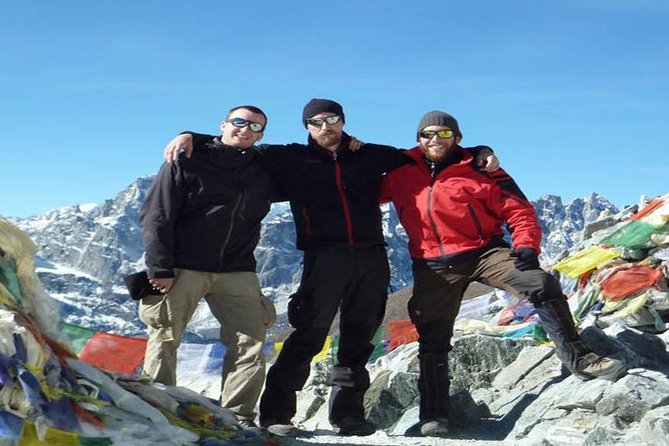
REVIEW · KATHMANDU
Everest Base Camp Trek
The mountain earns every step. This 14-day Everest Base Camp Trek combines Himalayan views, Sherpa villages, monastery visits, and a serious high-altitude challenge. I like the private group format, which gives your party more personal attention, and I like that flights, permits, meals, gear, and airport transfers are arranged together. The main drawback is clear: this is not a sightseeing holiday. You need strong fitness, patience for mountain flight delays, and comfort with basic accommodation.
The route includes acclimatization days in Namche Bazaar and Dingboche, then reaches Everest Base Camp and Kala Patthar before returning through the Khumbu Valley. Guides such as Buddhi and Pawan are praised for encouragement and care, but porter costs, Kathmandu lodging, insurance, showers, bottled water, and other extras are not included. At $1,799.27 per person, the package offers a useful amount of support, though you should budget beyond the advertised price.
Key points to know before booking
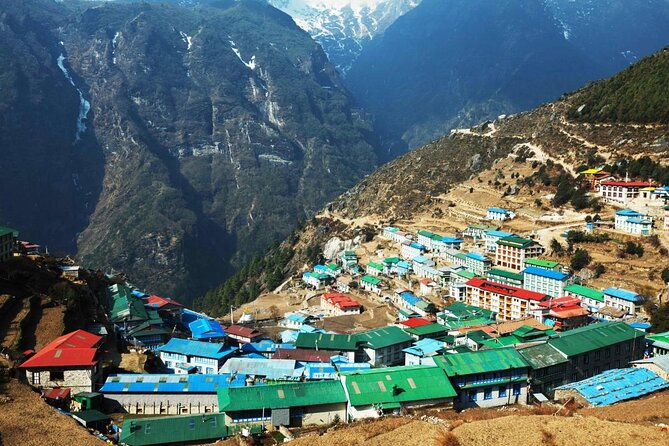
- Everest Base Camp and Kala Patthar are separate goals: You visit Base Camp, then climb Kala Patthar for the major mountain viewpoint.
- Two acclimatization days are built in: Namche Bazaar and Dingboche give your body time to adjust to altitude.
- Lukla flights shape the schedule: Both directions are included, but weather-related disruption can affect plans.
- Buddhi and Pawan receive strong praise: The guide team is repeatedly credited with care, encouragement, and organization.
- The package includes useful mountain gear: A sleeping bag, down jacket, duffel bag, medical kit, permits, and meals are provided.
- Budget for extras: Travel insurance, a porter, Kathmandu hotel nights, showers, laundry, phone calls, battery charging, bottled water, and tips cost extra.
What the 14-day route feels like
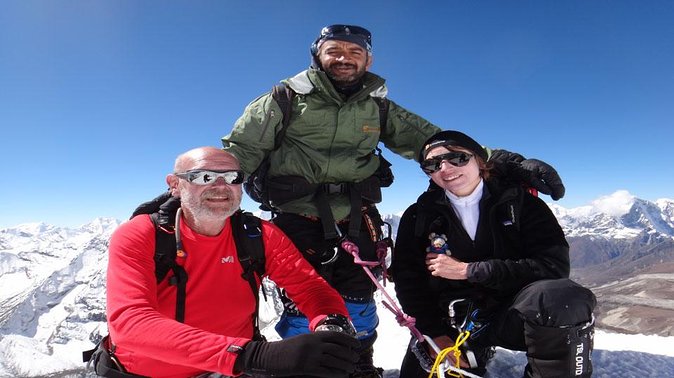
This is a point-to-point mountain journey, not a series of easy day trips. You begin in Kathmandu, fly to Lukla, walk through the Dudh Koshi Valley, climb toward Namche Bazaar, and continue into colder, higher country.
The pace is intentionally slow in places. That matters because altitude is the central challenge. The schedule includes rest and acclimatization days, but you still need to walk for several hours on uneven trails, cross suspension bridges, and handle repeated uphill sections.
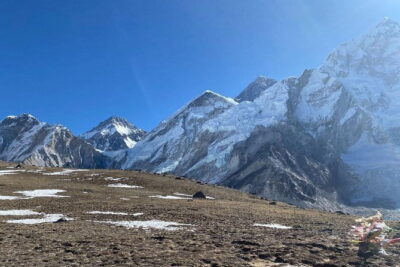
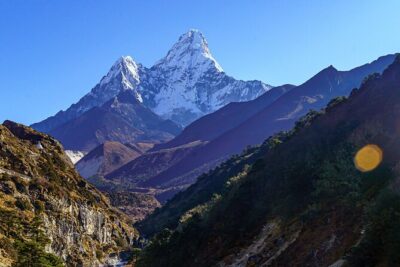
The highest rewards are not limited to Everest itself. You will see Thamserku, Ama Dablam, Lhotse, Nuptse, and other Himalayan peaks. You also pass Buddhist monasteries, stone memorials, Sherpa settlements, and valleys shaped by glacial rivers. The route gives you both famous mountain scenery and a look at daily life in the Khumbu region.
More Everest Base Camp Treks in Kathmandu:
- Everest Base Camp Trek – 14 Days
★ 5.0 · 1,499 reviews - Everest Base Camp Trek
★ 5.0 · 842 reviews - Everest Base Camp Trekking
★ 5.0 · 485 reviews
Day 1: Kathmandu arrival and a simple start
After landing at Tribhuvan International Airport, a representative from Nepal High Trek and Expedition meets you and transfers you to the arranged hotel. The day includes dinner and a short introduction to the trip.
This first day is useful for getting organized rather than sightseeing. You can check your bags, sort the sleeping bag and down jacket supplied for the trek, and confirm the next morning’s airport transfer. The experience includes international and domestic airport pickup and drop-off, which removes one layer of confusion after a long flight.
The schedule names Mount Everest as the first stop, but the practical focus is Kathmandu arrival and preparation. Ask for a clear briefing on luggage weight, the flight to Lukla, meal arrangements, and what you still need to purchase.
Day 2: The flight to Lukla
After breakfast, you transfer to Kathmandu’s domestic terminal for the flight to Lukla. This short mountain flight is the gateway to the Everest region and the starting point for the walk.
The flight is included in the price in both directions, a major advantage. At the same time, mountain weather can interfere with departures. The cancellation terms specifically allow a new date or full refund if the experience is canceled because of poor weather, but a delay can still disrupt your wider Nepal plans.
Once in Lukla, the trek begins in earnest. The early part of the route is lower, greener, and warmer than the upper valley. Do not treat this as a free warm-up. Your pack, boots, and walking rhythm will matter from the first day.
Day 3: Phakding to Namche Bazaar
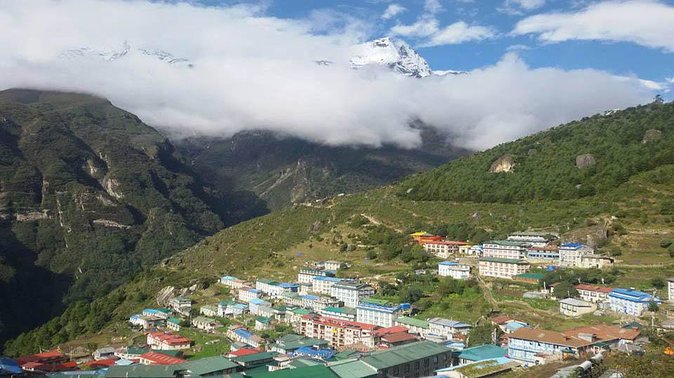
The route from Phakding to Namche follows the Dudh Koshi River and crosses several suspension bridges. You gain height steadily, with views toward Thamserku, listed at 6,618 meters.
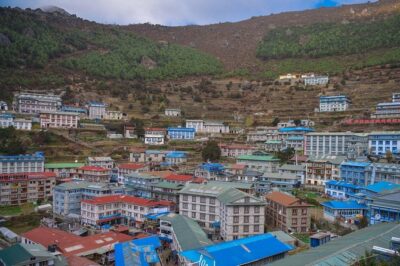
Namche Bazaar is one of the most important stops on the whole trek. It is the main service center in the area, with banks, ATMs, internet access, and other supplies. That makes it a good place to handle any final practical needs before the route becomes more remote.
The itinerary gives about one hour to the named stop, but the full walking day is more involved than that short stop duration suggests. Expect the approach to Namche to feel like a real climb. You will benefit from walking slowly and keeping your effort even.
A few more treks around Kathmandu worth a look
- Annapurna Circuit Trek with Tilicho Lake
★ 5.0 · 368 reviews - Everest Base Camp Trekking – 13 Day
★ 5.0 · 365 reviews - Everest Base Camp Trek
★ 5.0 · 350 reviews - Everest Base Camp Trek -14 Days
★ 5.0 · 321 reviews
Day 4: Acclimatization around Namche
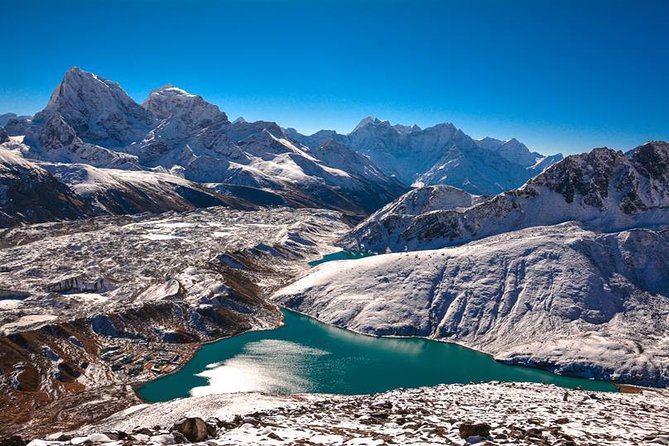
You spend the day in and around Namche rather than pushing farther up the valley. The schedule includes time at an Irish pub, but the main purpose is altitude adjustment, not nightlife.
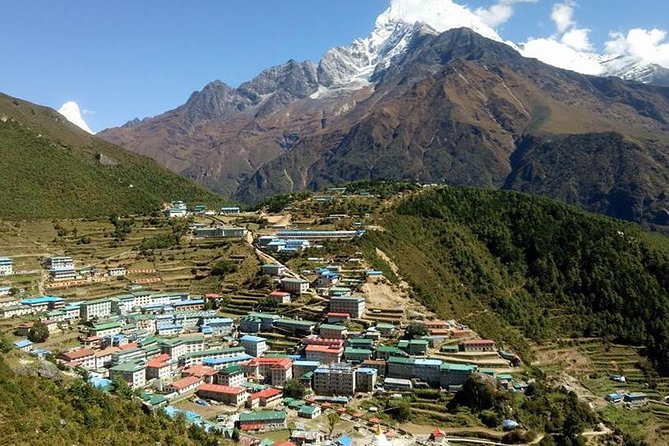
I like this pause because it protects the rest of the trip. You can explore the settlement, use the available services, and take a short outing without carrying out a full day’s advance. The best approach is to stay active at an easy pace, drink regularly, and avoid wasting the day on strenuous wandering.
The stop also gives you a first real sense of Sherpa mountain culture. Namche is not simply a place to sleep. It is a trading and supply center where the walking route, local life, and tourism economy meet.
Day 5: Namche to Tengboche
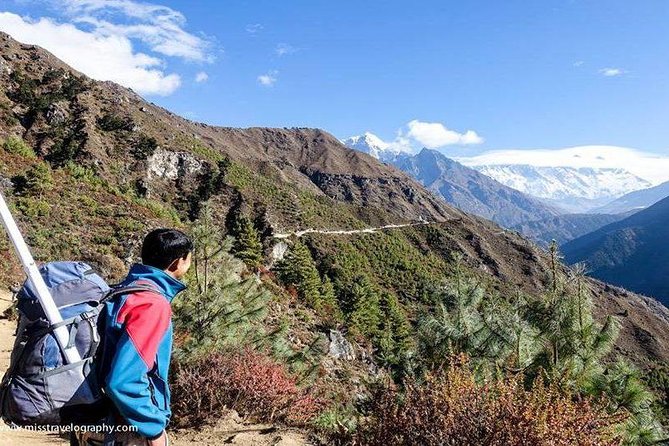
From Namche, the trail continues with striking views of Everest, Nuptse, Lhotse, and Ama Dablam. Tengboche Gompa is the focal point of the day.
The monastery gives the route a spiritual dimension. You are not only walking toward a famous mountain. You are moving through a region where Buddhist practice shapes villages, buildings, and daily routines. Take time to look around rather than treating the gompa as a quick photo stop.
The cold becomes more noticeable, and the route remains physically demanding. The named stop is listed as about one hour, but the walking day includes more than the visit itself. Pack layers where you can reach them easily.
Day 6: Tengboche to Dingboche
The morning includes a short visit to Tengboche and its monastery, followed by the walk to Dingboche. The listed stop at Dingboche View Point lasts about three hours, with mountain views providing much of the appeal.
Dingboche is an important change in the trip. The valley feels more exposed, the air is thinner, and the route is moving into serious altitude. The views of the surrounding peaks are excellent, but you should pay attention to how your body responds.
This is a good day to resist the temptation to race ahead. A slow pace helps you conserve energy and gives your guide a better chance to notice if you are struggling.
Day 7: Dingboche acclimatization and Chhukung
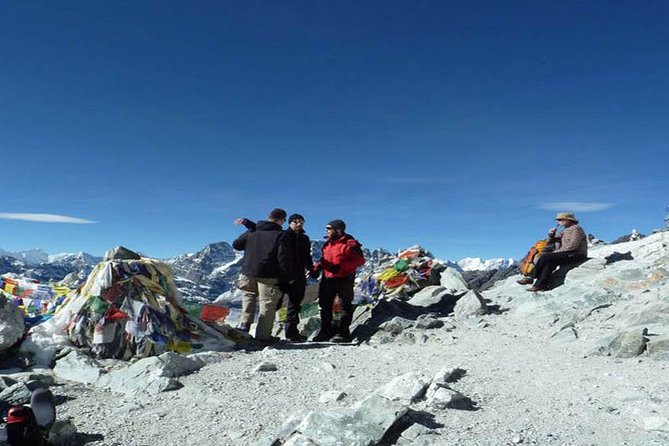
A second acclimatization day is built into Dingboche. The route makes a short hike toward Chhukung through the Imja Khola Valley, with views toward Lhotse and the surrounding peaks.
This is not a wasted day. At altitude, the rest schedule is part of the route design. You gain some walking experience at a higher elevation without adding another overnight climb.
The itinerary also names Dingboche Stupa as a stop. The combination of a short hike, mountain views, and a slower day gives you time to adjust before the hardest section. Keep your expectations realistic: acclimatization improves your odds, but it does not remove the risks of high altitude.
Day 8: Lobuche and the Khumbu Glacier
The route follows the lateral moraine of the Khumbu Glacier. You pass stone memorials dedicated to climbers who died on nearby summits before continuing toward Lobuche.
This is one of the most solemn parts of the trek. The memorials place the risks of Himalayan climbing in front of you without needing a dramatic explanation. The Khumbu Glacier also changes the character of the walk, with rock, ice, and high mountain walls replacing the greener valley below.
The itinerary lists roughly two hours for the Khumbu Glacier stop, but the entire day includes movement toward Lobuche. This is high, cold country, and even a short distance can take effort. Use the gear supplied by the operator wisely, especially the down jacket and sleeping bag at night.
Day 9: Gorak Shep and Everest Base Camp
After breakfast, you continue to Gorak Shep, the last settlement before the Base Camp section. From there, the trail leads toward Everest Base Camp, with views of the high peaks and the Khumbu Glacier area.
Reaching Base Camp is the emotional center of the trip. It is a major physical milestone, but the view from Base Camp is not the same as the classic broad panorama often associated with Everest. The following day’s climb to Kala Patthar is designed to provide the more expansive mountain outlook.
The listed duration for the Everest Camp II stop is only four minutes, which appears to refer to a brief stop rather than the complete walking section. Clarify the expected walking hours with the operator before departure, especially if you want a precise daily schedule.
Day 10: Kala Patthar and the big viewpoint
You start early for Kala Patthar. The climb is continuous for several hours, and the reward is sunrise light striking the snow and clouds around the high peaks.
This is the most demanding and photogenic day for many people. The early start can be cold, and the ascent is difficult at altitude. Still, Kala Patthar provides the classic high viewpoint that makes the effort worthwhile.
The schedule names Gorak Shep as the stop and lists about 30 minutes, but the day itself includes the early climb and the return. Plan for a long, tiring morning rather than a quick viewpoint visit. Keep sunscreen close. One useful piece of advice from the guide team is to apply it every day, even when the air feels cold.
Days 11 and 12: The return through Pheriche, Pangboche, Namche, and Lukla
The descent begins through Pheriche, with a slightly different route toward Orsho and Pangboche. Pangboche is home to an old monastery associated with stories about the scalp and bones of the abominable snowman.
That tale is part of the region’s folklore, but the greater value is the chance to see another village and monastery on the way down. The return route is not simply a reversal of every earlier step. You get different views and a chance to notice details missed while climbing.
The day from Pheriche is listed at about seven hours, making it one of the longest walking days. Downhill walking can be hard on tired knees, so do not assume the return is easy.
From Namche, you continue to Lukla and spend the night in a guesthouse. The schedule allows time to explore the Lukla Valley. This final mountain evening can feel relaxed, but keep some energy for the possibility of flight changes the next day.
Days 13 and 14: Back to Kathmandu and departure
You fly from Lukla to Kathmandu and have time to visit the city. Kathmandu Durbar Square is named as the main sightseeing stop, giving you a taste of the capital’s historic center after the quiet of the mountains.
The flight can arrive within a few hours, but the amount of free time depends on the actual departure and arrival schedule. Do not build an important international connection too tightly around the Lukla flight.
On Day 14, you transfer to Tribhuvan International Airport, with a recommended arrival three hours before your flight. A small farewell program is included before departure.
What the $1,799.27 price covers
The price is reasonable for a private, guided trek that includes the expensive and complicated pieces. You receive both Lukla flights, a licensed mountain guide from Kathmandu, national park and local entrance fees, 11 nights of trekking accommodation, meals, airport transfers, a medical kit, three cups of hot tea per day, and the use of a sleeping bag, down jacket, and duffel bag.
Emergency helicopter service is arranged, but the cost is paid by your travel insurance company. This makes proper rescue insurance essential, not optional.
Several expenses remain outside the package:
- Kathmandu hotel accommodation
- Porter service
- Travel and rescue insurance
- Water, hot water, showers, laundry, phone calls, and battery charging
- Costs caused by strikes, delays, or canceled flights
- Tips for your guide and porter
The meal information lists different totals in different places, including 12 breakfasts, 12 lunches, and 11 dinners, followed later by higher meal counts. Confirm exactly which meals are covered on each day. That small check can prevent awkward surprises.
Guides, group format, and practical comfort
This is a private activity, so only your group participates. That is helpful if you want the pace and conversation to remain focused on your party rather than a large mixed group.
Buddhi receives especially strong praise for support, positivity, and attention to individual needs. Pawan is also named as a main guide for a group that took a longer Everest route through Gokyo Lakes and Cho La. Those names do not guarantee which guide you will receive, so ask at booking.
The guides are repeatedly credited with careful organization and encouragement during difficult sections. That matters most on the long days near Gorak Shep, where a calm guide can help you keep moving without turning the experience into a race.
Porters are not included, so ask how porter arrangements work and what luggage support is available. You should also confirm the expected group size, daily walking hours, room arrangements, and the procedure if someone needs to stop or descend.
Who should book this trek?
You should consider this trip if you want a structured route to Everest Base Camp and prefer having flights, permits, meals, equipment, and a guide arranged in one package. It suits people who enjoy a physical challenge and are prepared for basic mountain accommodation.
It is less suitable if you want flexible luxury, a relaxed walking holiday, or a guaranteed flight timetable. The tour requires strong physical fitness, includes substantial walking, and depends on good mountain weather.
The strongest reasons to book are the built-in acclimatization days, private format, practical inclusions, and support from the guide team. The strongest reasons to pause are the extra costs, high-altitude strain, and uncertainty around Lukla flights.
FAQ
How long does the Everest Base Camp Trek last?
The trek lasts approximately 14 days, including arrival in Kathmandu, the mountain route, the return to Kathmandu, and departure.
Where does the trek begin?
The experience begins in Kathmandu, Nepal. You fly from Kathmandu to Lukla, which is the starting point of the walking route.
Are flights to Lukla included?
Yes. The package includes round-trip flights between Kathmandu and Lukla.
Are meals included?
Yes. Meals are included during the trek, but the supplied meal counts differ in different parts of the information. Confirm the exact breakfast, lunch, and dinner schedule before booking.
Is accommodation included?
The package includes 11 nights of accommodation during the trek. Hotel accommodation in Kathmandu is not included.
Is a guide provided?
Yes. A government-licensed mountain guide from Kathmandu is included. The experience is private, so only your group participates.
Is a porter included?
No. Porter costs are not included in the listed price.
What equipment is supplied?
You receive a sleeping bag, down jacket, and duffel bag. A medical kit box is also provided.
What happens if bad weather cancels the experience?
If poor weather causes cancellation, you can receive a different date or a full refund. You can also cancel for a full refund if you do so at least 24 hours before the scheduled start time.
Should you book it?
I would book this trek if reaching Everest Base Camp is a serious personal goal and you want a guided plan with the main permits, flights, meals, and mountain gear handled. The combination of two acclimatization days, a private group, and attentive guide support gives the route a sensible structure.
Before paying, confirm the guide, porter arrangements, Kathmandu hotel, daily walking times, meal totals, and insurance requirements. If you are ready for cold mornings, long climbs, basic lodging, and possible flight delays, this package offers a solid path to one of the world’s great mountain journeys.
Recently added around Kathmandu
- Ghorepani Poon Hill Trek★ 5.0 · 16 reviews
- Private Manaslu Circuit Trek at Himalayas★ 5.0 · 3 reviews
- Amazing 1 Day Trekking Experience in Kathmandu Nepal★ 5.0 · 24 reviews
- Ghorepani Poonhill Trek★ 5.0 · 5 reviews
- Upper Mustang Trekking★ 5.0 · 2 reviews
- Upper Mustang Trekking★ 3.0 · 2 reviews
- Upper Mustang Trekking★ 5.0 · 4 reviews
- Upper Mustang Trek★ 5.0 · 5 reviews
Everest Base Camp Treks, compared.
Browse the lists this tour appears in