
REVIEW · KATHMANDU
Everest Base Camp Trek
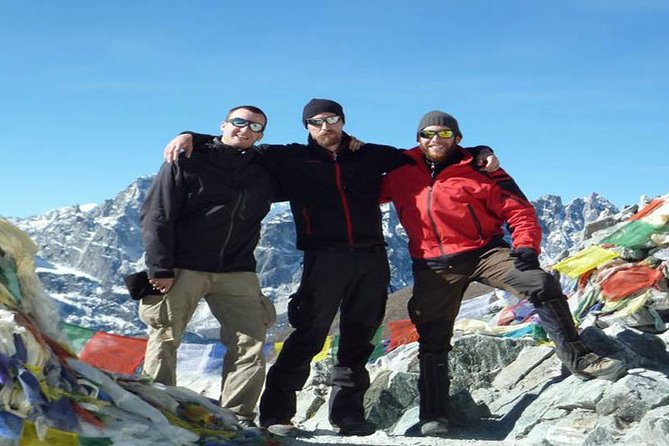
Everest begins with a long walk. This 12-day trek from Kathmandu leads you by air to Lukla, then on foot through Sherpa villages, Buddhist sites, Sagarmatha National Park, the Khumbu glacier, and finally toward Everest Base Camp and Kalapatthar. I like the way the trip combines serious Himalayan hiking with daily contact with local mountain communities. I also like that meals, internal flights, trekking fees, and sleeping gear are included. The main caution is altitude: reaching 5,555 meters demands good fitness, patience, and a willingness to turn back if your body struggles.
The private format is another strong point. Your group hikes with its own guide rather than joining a large mixed party, and the company has supplied guides such as Fanindra and Rai. Fanindra is praised for checking regularly for altitude sickness, while Rai is described as fluent in English and careful about recommending a porter. At $1,589.75 per person, the price is appealing for what it covers, but you still need to budget for bottled water and alcoholic drinks.
Key points to know before booking
- Kalapatthar reaches 5,555 meters: The sunrise viewpoint is the high point of the trek and offers some of the best views of Everest and nearby peaks.
- Lukla flights are included: The package covers the Kathmandu to Lukla and return flights, a major practical cost and part of the adventure.
- You hike through Sherpa communities: Villages, Buddhist monasteries, monuments, and daily local life give the route meaning beyond mountain scenery.
- Meals and basic trekking gear are covered: Breakfast, lunch, dinner, a sleeping bag, and a duffle bag are included.
- Altitude support matters: Guides are expected to monitor how you feel, but you remain responsible for pacing yourself and reporting symptoms clearly.
- This is a private trek: Only your group participates, which can make the walking pace and daily decisions more personal.
Why the route is more than a mountain photo
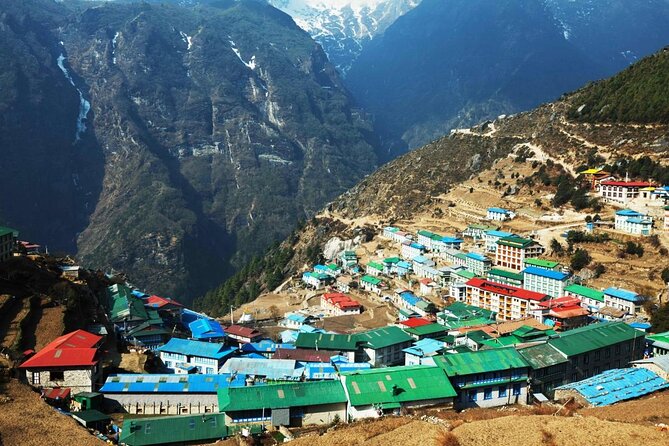
Everest Base Camp is the headline, but the walk earns its value long before you reach the famous destination. You move through the Everest region on foot, passing traditional Sherpa villages and village trails while the mountains grow more imposing around you.
I like this kind of travel because the scenery is tied to real communities. You are not simply driven to a viewpoint, handed a camera, and returned to town. You spend nights in lodges or guesthouses and see how people live in one of the world’s highest mountain regions.
The cultural side also matters. Buddhist monasteries and monuments appear along the way, giving the trek a spiritual setting. You should treat these places with respect, keep your voice low, and follow local guidance around religious sites.
The route also passes through Sagarmatha National Park, a World Heritage Site. The included nature experience covers local flora and fauna, though the exact animals and plants you see will depend on the season, weather, and your walking route. The glacier and lake views add another layer to the trip, especially as the trail moves toward the Khumbu glacier and Icefall.
More Everest Base Camp Treks in Kathmandu:
- Everest Base Camp Trek – 14 Days
★ 5.0 · 1,499 reviews - Everest Base Camp Trek
★ 5.0 · 842 reviews - Everest Base Camp Trekking
★ 5.0 · 485 reviews
Kathmandu to Lukla: an early start with a big payoff
Your meeting time is 5:45 am, so this trek begins before most people feel ready for conversation. That early start is important because the day includes the flight from Kathmandu to Lukla and the transition from city travel to mountain walking.
The Kathmandu to Lukla flight is included, as is the return flight at the end of the trek. This makes the package easier to plan and removes one large transport cost from your budget. It also means your schedule is tied to flight conditions, so flexibility matters.
Lukla is the practical gateway to the Everest region. From there, the journey shifts from aircraft to walking shoes. The change is part of the appeal: you leave Kathmandu behind and begin moving through the mountains at human speed.
The provided information does not give exact flight times, distances, or named overnight villages for every day. That means you should ask the operator for the final day-by-day schedule before paying. The trip is listed as approximately 12 days, but mountain transport and weather can affect plans.
Walking through Sherpa villages
The strongest cultural feature of this trek is the chance to walk through traditional Sherpa villages instead of treating the Everest region as empty wilderness. You can observe local people, homes, daily routines, and the working life that supports communities in a demanding environment.
I would pay attention to the small details: how village paths connect homes, where monasteries sit, and how mountain life shapes the pace of each day. The experience is physical, but it is also social and cultural.
The village trails may feel more personal than a formal sightseeing route. You are moving through places where people live, work, worship, and host trekkers. A respectful attitude goes a long way. Ask before photographing people, and remember that the local communities are not scenery.
Overnight stays are in lodges or guesthouses. This is useful to know if you expect hotel-style comfort. The trip is built around practical mountain accommodation, not luxury. The benefit is that you stay close to the route and local communities. The tradeoff is that facilities may be basic, and your comfort will depend on how well you handle the altitude and the simple setting.
Monasteries, monuments, and the spiritual side
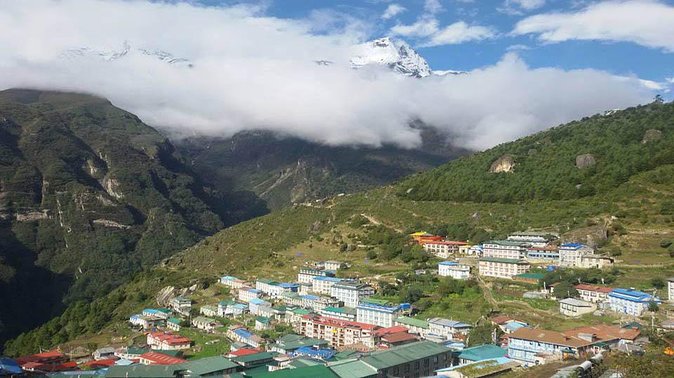
The Everest region is strongly connected to Tibetan Buddhist culture, and the trek includes Buddhist monasteries and monuments. These sites help explain the customs and beliefs of the communities along the trail.
For me, this is one of the details that keeps the trek from becoming a simple endurance test. Mountain views can be spectacular, but they can also blur together after several days of walking. A monastery, prayer monument, or village encounter gives each section a stronger sense of place.
The description does not identify particular monasteries or provide details about formal visits. You should therefore expect to see Buddhist religious sites, but not assume that every stop includes a guided ceremony or extended tour. The value comes from seeing these places in their local setting and learning from your guide.
A few more treks around Kathmandu worth a look
- Annapurna Circuit Trek with Tilicho Lake
★ 5.0 · 368 reviews - Everest Base Camp Trekking – 13 Day
★ 5.0 · 365 reviews - Everest Base Camp Trek
★ 5.0 · 350 reviews - Everest Base Camp Trek -14 Days
★ 5.0 · 321 reviews
Sagarmatha National Park and the Khumbu glacier
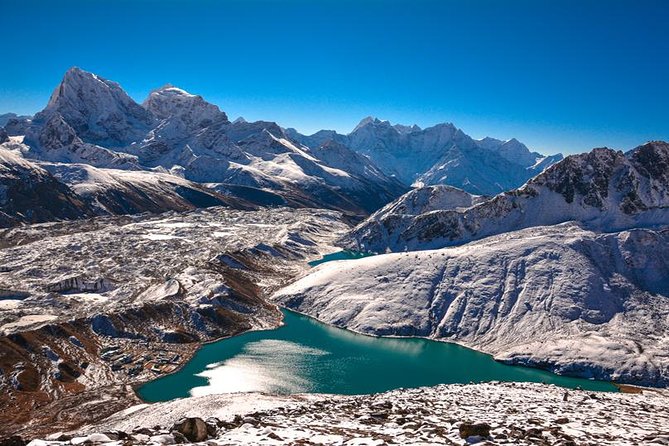
The trek passes through Sagarmatha National Park, where the natural setting changes as you gain altitude. You can expect mountain views, glacier scenery, and possible sightings of local flora and fauna.
The Khumbu glacier and Icefall are major visual highlights. Ice, rock, and high peaks create a more severe setting than the lower village trails. You will want time to stop, look carefully, and take photographs, but remember that this remains a demanding trek rather than a sightseeing walk.
The included glacier and lake views add value because they are part of the route, not an optional add-on. Still, weather may hide peaks or reduce visibility. The cancellation policy specifically notes that poor weather can force a change of date or a full refund if the experience is canceled, but mountain conditions can also affect what you see during a scheduled trek.
The final goal: Everest Base Camp
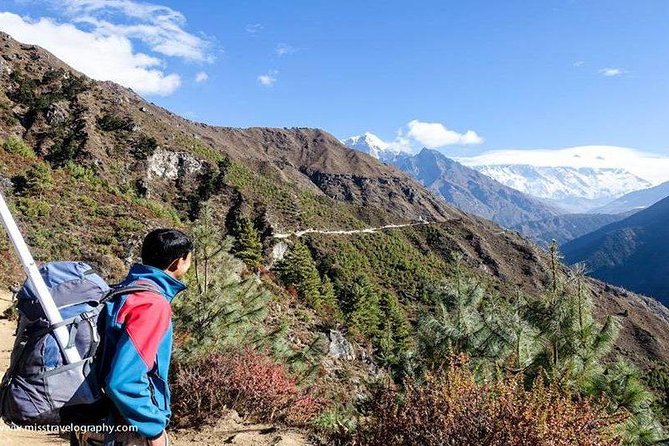
Reaching Everest Base Camp is the emotional center of the trip. You have spent days walking through villages, parkland, and high mountain terrain, and the base camp marks the point where the journey becomes closely tied to Everest climbing history.
The information provided does not promise a fixed amount of time at Base Camp or specify the exact activities there. Think of it as a destination reached by effort, not a theme park attraction with a long list of scheduled events.
The setting may feel crowded or quiet depending on the season, but the main reward is the sense of distance covered. You arrive under your own power, supported by your guide and porter arrangements, rather than simply being transported to a famous viewpoint.
Kalapatthar at 5,555 meters
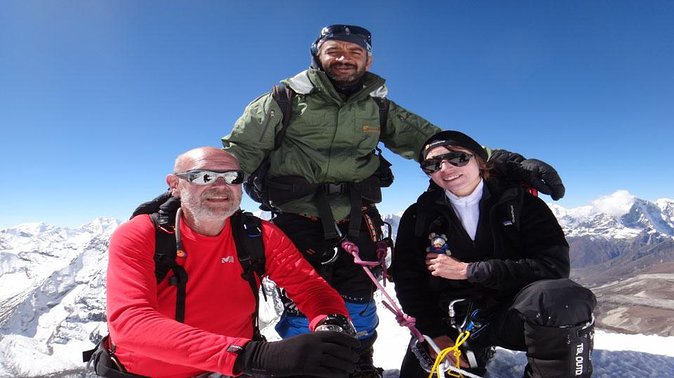
Kalapatthar is the trek’s highest point at 5,555 meters and the place to focus on if your main goal is the best view of Everest. The trip highlights sunrise from Kalapatthar, along with views of Everest and many surrounding mountains.
This is the section where altitude deserves your full attention. One of the guides, Fanindra, is praised for checking often for symptoms of altitude sickness. Another guide, Rai, is described as taking care of a hiker who had problems above 5,000 meters. That kind of attention is valuable, but no guide can remove the risks of high altitude.
You should tell your guide immediately if you feel unwell. Do not hide symptoms to protect your schedule or pride. A trek to Everest Base Camp is not a test of stubbornness, and a careful guide may advise rest, a slower pace, or a change of plan.
The sunrise setting is likely to be cold and tiring, especially after days of hiking. The reward is a broad mountain view at a remarkable altitude. If weather blocks the sunrise, the effort is still part of the trek, but you should keep your expectations realistic.
Guides, porters, and the private format
This is a private activity, so only your group participates. That can be a real advantage if you want to walk at a pace suited to your group rather than a large party.
The experience includes a guide and porter arrangements, although the listing does not spell out the porter’s exact duties, group size, or luggage limit. One direct account specifically praises a porter recommended by Rai, so ask how porter support is organized before you leave.
Guide quality matters greatly here. Fanindra is described as kind, security-minded, and attentive to altitude concerns. Rai is described as fluent in English and able to recommend a capable porter. These details suggest that communication and care are important parts of the service, not just route finding.
You should still ask practical questions before departure: who your guide will be, what weight a porter can carry, how altitude concerns are handled, and what happens if a member of your group cannot continue. The company’s response to one high-altitude problem notes that helicopter rescue was not needed in that case, but this should not be read as a promise that rescue will never be necessary.
What the $1,589.75 price covers
At $1,589.75 per person, the price has solid value if you want a package that handles the main logistics. It includes:
- Kathmandu to Lukla and return flights
- Breakfast, lunch, and dinner
- Sleeping bag and duffle bag
- All fees and taxes
- Private group participation
- Overnight stays in lodges or guesthouses
Flights alone are a meaningful inclusion because they connect Kathmandu with the trekking route. Meals also simplify the trip. You do not need to arrange breakfast, lunch, and dinner separately each day, though you should still confirm what meal arrangements look like on the final itinerary.
The sleeping bag and duffle bag are useful inclusions for a high-altitude trek. They reduce the amount of specialist gear you need to arrange before arrival. However, the provided details do not list clothing, boots, personal medicines, insurance, or other equipment, so you should ask what you must supply yourself.
Bottled water and alcoholic beverages are not included. Water is not a minor expense across 12 days, so budget for it. Alcohol is best treated as an optional cost and, at high altitude, something to approach cautiously.
Fitness, altitude, and who should book
The trip requires a moderate physical fitness level. That phrase should be taken seriously. You will be walking on mountain trails for many days, with the greatest challenge coming from altitude and cumulative fatigue.
This is a good fit if you want an active trip, can commit to a multi-day hike, and care about both mountain scenery and Sherpa culture. It suits someone who values a private group and wants meals, flights, fees, and basic sleeping equipment handled in one package.
It is a poor fit if you want a relaxed sightseeing holiday, dislike early starts, or are uncomfortable staying in lodges and guesthouses. The highest point reaches 5,555 meters, so even a fit person must respect the conditions.
The experience provider advises moderate fitness but does not provide a detailed training plan. Before booking, ask for the daily walking distances, elevation changes, acclimatization schedule, and emergency procedures. Those details are especially important because the public description does not list each day’s route.
Weather, cancellation, and planning advice
The experience requires good weather. If poor weather causes cancellation, you are offered a different date or a full refund. That protection is useful, but the general cancellation policy is strict: the experience is non-refundable and cannot be changed for any reason if you cancel or request an amendment.
That makes travel insurance worth considering, even though insurance is not listed as included. You should also leave some flexibility around the 12-day schedule, since the trip depends on mountain flights and conditions.
Confirmation is provided at booking, and pickup is offered. The meeting time is 5:45 am. Confirm the pickup point, luggage arrangements, guide name, and final itinerary before departure.
Should you book the Everest Base Camp Trek?
I would recommend this trek to an active hiker who wants the classic Everest route with useful inclusions and private guiding. The best reasons to book are the Lukla flights, full-board meals, sleeping bag and duffle bag, Sherpa village walking, Buddhist sites, Sagarmatha National Park, and the chance to reach Kalapatthar at 5,555 meters.
I would pause if you need a fixed, highly detailed itinerary before booking. The available information does not list each overnight stop, walking distance, or daily elevation gain. Ask for those details first.
If you want personal attention, Fanindra’s altitude checks and Rai’s English communication are encouraging signs. If you are ready for basic accommodation, early mornings, and a serious physical challenge, the $1,589.75 price offers a practical way to approach Everest Base Camp without arranging every major part yourself.
FAQ
How long is the Everest Base Camp Trek?
The trek lasts approximately 12 days.
Where does the experience begin?
The experience begins in Kathmandu, Nepal, with a meeting time of 5:45 am.
Are flights to Lukla included?
Yes. The package includes flights from Kathmandu to Lukla and the return flight from Lukla to Kathmandu.
What meals are included?
Breakfast, lunch, and dinner are included.
Is accommodation included?
Overnight stays are in lodges or guesthouses.
Is a sleeping bag included?
Yes. A sleeping bag and duffle bag are included.
What is the highest altitude reached?
The highest altitude listed is 5,555 meters at Kalapatthar.
Is this a private tour?
Yes. Only your group participates.
What fitness level is required?
A moderate physical fitness level is required.
Are bottled water and alcoholic drinks included?
No. Bottled water and alcoholic beverages are not included.
What happens if poor weather cancels the trek?
If the experience is canceled because of poor weather, you are offered a different date or a full refund.
Recently added around Kathmandu
- Ghorepani Poon Hill Trek★ 5.0 · 16 reviews
- Private Manaslu Circuit Trek at Himalayas★ 5.0 · 3 reviews
- Amazing 1 Day Trekking Experience in Kathmandu Nepal★ 5.0 · 24 reviews
- Ghorepani Poonhill Trek★ 5.0 · 5 reviews
- Upper Mustang Trekking★ 5.0 · 2 reviews
- Upper Mustang Trekking★ 3.0 · 2 reviews
- Upper Mustang Trekking★ 5.0 · 4 reviews
- Upper Mustang Trek★ 5.0 · 5 reviews
Everest Base Camp Treks, compared.




Browse the lists this tour appears in