
REVIEW · KATHMANDU
Everest Base Camp Trek – 15 Days
The mountain earns every step. This 15-day Everest Base Camp Trek combines a short flight to Lukla, lodge-to-lodge walking, Sherpa villages, Sagarmatha National Park, Tengboche Monastery, and the famous viewpoint at Kala Patthar. I like the careful acclimatization plan, especially the rest days in Namche Bazaar and Dingboche. I also like that the $1,600 price includes flights, permits, lodging, meals, guides, and porters.
The main drawback is the physical demand. You will walk for several hours on most trekking days, reach 5,364 meters at Everest Base Camp, and climb higher to Kala Patthar at 5,545 meters. The rooms are mostly twin-share, with some dormitory-style lodging, and comforts become basic as you go higher.
Five things to know before you book
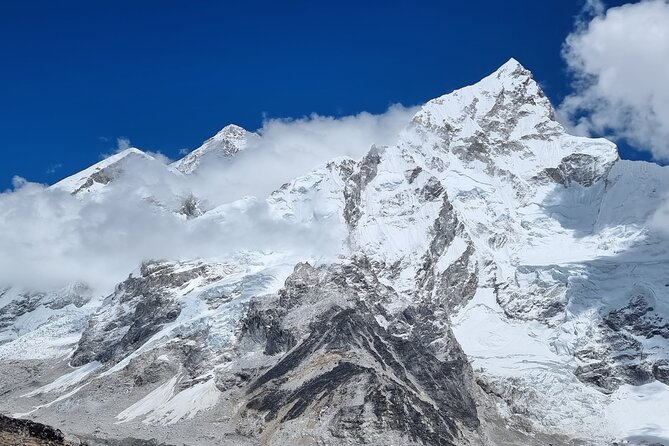
- Kala Patthar reaches 5,545 meters: The sunrise climb is one of the trip’s biggest rewards, with views of Everest, Pumori, Nuptse, Lhotse, Ama Dablam, and other peaks.
- Two acclimatization days are built in: You spend one rest day in Namche Bazaar and another in Dingboche, which gives your body time to adjust.
- The price includes the Lukla flights: Airfare between Kathmandu and Lukla, airport departure tax, trekking permits, staff costs, and a porter for every two clients are covered.
- The walking is lodge to lodge: You sleep in tea house lodges rather than tents, but rooms can occasionally be dormitory-style.
- The group is limited to 15 people: That is small enough for a more personal mountain experience, while still offering the social feel of a group trek.
- Guide quality matters here: Past guests gave special praise to guides named Padam and Pralad Simkhada, and to organizer Hari Khadka for clear communication.
What the $1,600 price really covers
At first glance, $1,600 may seem like a large sum for a 15-day trip. I think the value is strong because several expensive and necessary parts are included. You get three nights in a three-star Kathmandu hotel, guesthouse accommodation during the trek, return airfare between Kathmandu and Lukla, permits, meals on the trekking route, a licensed English-speaking guide, and porter support.
The staff package is particularly useful. The price covers staff salaries, insurance, equipment, medicine, and other personnel expenses. One porter is provided for every two clients, which means you are not expected to carry your full load while walking at high altitude.
Meals are included as 14 breakfasts, 11 lunches, and 12 dinners. Lunch and dinner in Kathmandu are not included, and neither are drinks. Alcohol, hot drinks, cold drinks, and personal trekking equipment are extra, so you should allow room in your budget for those costs.
International airfare is also separate. You will need a Nepal visa, which can be obtained on arrival, and travel insurance that specifically covers emergency high-altitude rescue and evacuation. That insurance is not a minor detail. It is one of the most important preparations for a trek at this altitude.
Tips for your guide and porter are expected but not included. The final cost will therefore be higher than the headline price, though the basic package remains well priced for the services provided.
More Everest Base Camp Treks in Kathmandu:
- Everest Base Camp Trek – 14 Days
★ 5.0 · 1,499 reviews - Everest Base Camp Trek
★ 5.0 · 842 reviews - Everest Base Camp Trekking
★ 5.0 · 485 reviews
Kathmandu begins and ends the journey
Your arrival day is deliberately easy. A representative meets you at Tribhuvan International Airport and takes you to a three-star hotel in Kathmandu, listed as either Thamel Eco Resort or The Address Kathmandu Hotel. You have time to settle in before the mountain section begins.
Kathmandu is also where you return after the trek. On the first afternoon back, the plan includes shopping and a farewell dinner at Bhojan Ghar, a typical Nepali restaurant. That gives the trip a pleasant return to city life after nearly two weeks of walking.
The final full day is flexible. You can rest, shop, or visit listed sights such as Swayambhunath, also called the Monkey Temple, Patan Durbar Square, Boudhanath Stupa, and Pashupatinath Hindu Temple. These options are useful because a high-altitude trek can leave you ready for a slower day.
Airport transfers are included at the beginning and end. The starting time is 6:15 a.m., so expect an early start when the trek portion begins.
Lukla to Phakding is a gentle first step
The flight from Kathmandu to Lukla takes you to 2,886 meters. After arriving, you refresh at a hotel and begin walking toward Phakding at 2,640 meters. The first route follows the Dudh Koshi River, with a gentle climb along the mountainside.
This first walking day lasts about three hours. That is a sensible introduction after the flight, and it lets you begin adjusting to the altitude without facing one of the longer days right away. Across the river, you can see Nupla at 5,885 meters.
Phakding is a tea house stop, not a luxury resort. You sleep in a lodge and begin to experience the rhythm that defines the rest of the trek: walk during the day, eat at the lodge, and rest early.
Namche Bazaar adds culture and a needed rest day
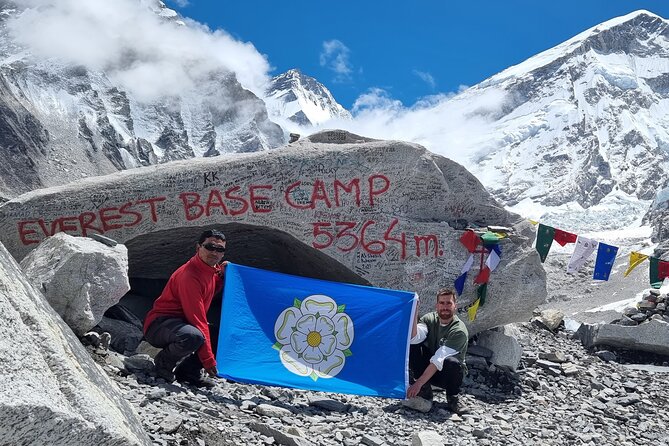
The walk from Phakding to Namche Bazaar takes about six hours. The trail follows the Dudh Koshi, passes Bengar, crosses streams, and moves through forest toward Monjo. At Sagarmatha National Park, an entrance fee is paid, and the route continues toward the point where the Dudh Koshi and Bhote Koshi rivers meet.
Namche Bazaar sits at 3,440 meters and is one of the most important stops on the route. It is more than a place to sleep. It is a Sherpa settlement and a practical base before the trail climbs higher.
The next day is reserved for acclimatization. You walk to Khumjung Monastery and a nearby Sherpa settlement, then visit the museum above Namche. The views include Everest, Ama Dablam, Thamserku, Nuptse, Lhotse, Tawche, and Kwangde.
I like this part of the schedule because the rest day is not treated as a wasted day. You still walk for about three hours, but the pace is easier and the distance is controlled. The combination of local culture, mountain views, and a slower schedule gives you time to get your bearings.
A few more treks around Kathmandu worth a look
- Annapurna Circuit Trek with Tilicho Lake
★ 5.0 · 368 reviews - Everest Base Camp Trekking – 13 Day
★ 5.0 · 365 reviews - Everest Base Camp Trek
★ 5.0 · 350 reviews - Everest Base Camp Trek -14 Days
★ 5.0 · 321 reviews
Tengboche brings the route’s spiritual center
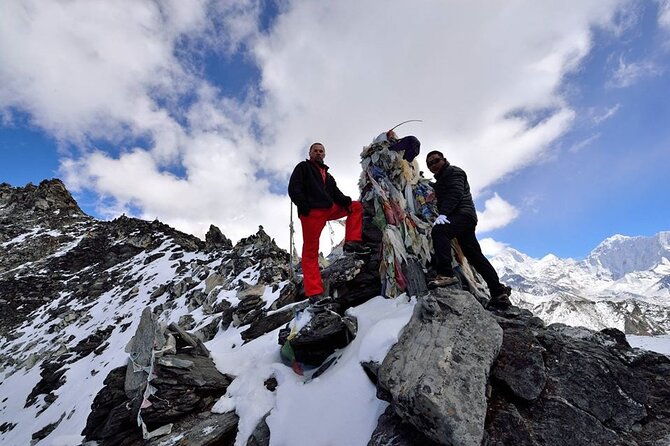
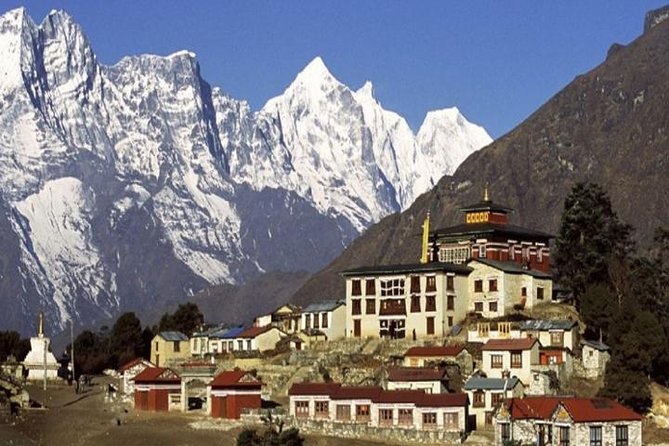
From Namche, you walk for about five hours toward Tengboche, also spelled Tyangboche, at 3,867 meters. The path includes a steep drop toward the Dudh Koshi, followed by sections with wide views of Ama Dablam, Everest, Lhotse, Nuptse, and Tawoche.
Tengboche Monastery is one of the route’s major attractions. The setting is especially memorable at sunrise and sunset, when the peaks around the monastery take on changing light. This is one of the places where the trek feels like more than a high-altitude exercise. You are moving through an active mountain community with a strong Sherpa Buddhist presence.
The five-hour walking day is manageable on paper, but the climb in altitude makes every hour count. You should keep your pace steady and avoid treating this section like a race.
Dingboche gives your body another chance to adjust
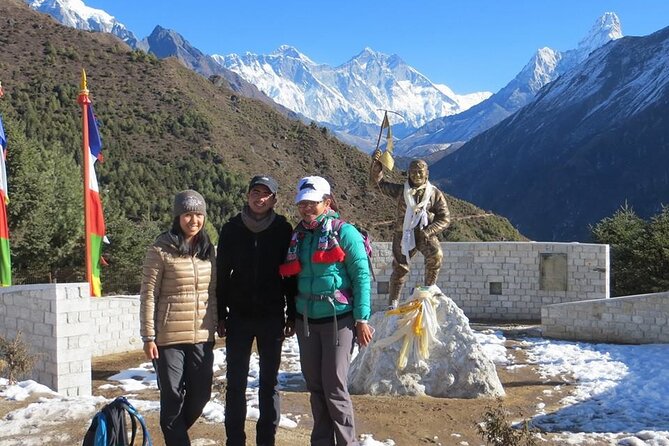
The route descends through rhododendron forest toward Deboche, crosses a suspension bridge over the Imja Khola, and enters the Imja Valley. Ama Dablam, Nuptse, and Lhotse dominate the view as you continue toward Dingboche at 4,260 meters.
This section takes about five hours. The change in scenery is clear as the route moves higher and the forest gives way to a more open mountain setting. Dingboche is an important place to slow down because altitude becomes a serious factor here.
You spend another acclimatization day in Dingboche. The plan includes a village walk and an optional hike toward Chhukum, with views of Island Peak, Ama Dablam, Makalu, and Tawoche Peak.
This is one of the strongest features of the schedule. The two acclimatization stops, Namche and Dingboche, break up the climb and give you time to adapt. You still need to take altitude symptoms seriously, but the itinerary is not trying to push you from Kathmandu to Base Camp in a hurry.
Lobuche leads into the high mountain zone
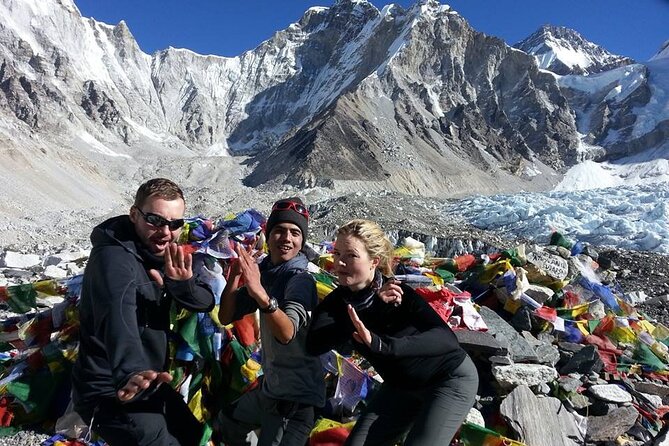
From Dingboche, the route heads toward Lobuche. The walk takes about five hours and passes through Pheriche. Along the way, you see Tawache, Ama Dablam, Pokalde, Kongma-tse, and the great wall of Nuptse.
Lunch is planned at Dugla, at 4,595 meters, before the route continues to Lobuche. This section is a transition into the highest part of the journey. The walking time is not extreme, but the altitude can make the day feel much harder than a similar walk at home.
Lobuche is a practical overnight stop before the Base Camp push. The lodging remains in a tea house, and the simple routine becomes valuable. You eat, rest, and prepare for one of the longest days of the trek.
Everest Base Camp is the emotional high point
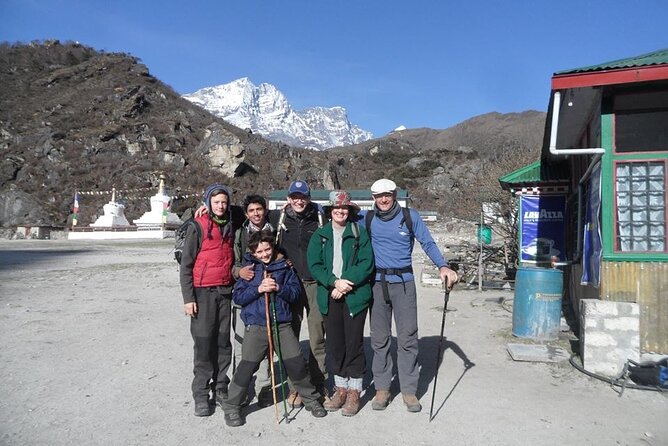
The walk from Lobuche to Everest Base Camp via Gorakshep takes about eight hours. It is described as the most rewarding part of the trek, but it is also one of the hardest. The route follows rocky ground beside the Khumbu Glacier, with Nuptse, Lho-La, and Khumbutse close by.
Gorakshep sits at 5,140 meters. From there, you continue to Everest Base Camp at 5,364 meters, then return to Gorakshep for the night. This is not a quick photo stop. The long walking day, rocky trail, and altitude make the Base Camp visit a real physical achievement.
It is useful to know what Everest Base Camp means here. You reach the base camp area, but this is not a summit climb and does not put you on Everest itself. The attraction is the route, the glacier, the surrounding peaks, and the sense of reaching one of the world’s best-known mountain destinations.
Kala Patthar offers the best mountain view
The next morning begins early with a climb to Kala Patthar at 5,545 meters. The goal is sunrise, and the view includes Everest, Pumori, Lingtren, Khumbutse, Nuptse, Lhotse, Ama Dablam, and Thamserku.
For many people, Kala Patthar provides a clearer and more satisfying view of Everest than Base Camp itself. Base Camp is the symbolic destination, while Kala Patthar is the high viewpoint that lets you look across the surrounding peaks.
After the climb, you descend toward Pheriche at 4,243 meters. The full day takes about seven hours. Pheriche is also home to a Himalayan Rescue Association aid post, where foreign volunteer doctors provide medical treatment.
That medical facility adds reassurance, though it does not replace travel insurance or sensible pacing. At this point, you are well above the altitude of most inhabited places, so you should pay close attention to how you feel.
The return to Namche and Lukla
From the high country, the route returns to Namche Bazaar. The schedule passes through traditional villages including Khumjung and Khunde, with a visit to a monastery known for a Yeti scalp. The walk from the Tengboche area to Namche is listed at about four and a half hours, though the full day description gives seven hours, so you should confirm the exact daily timing with the operator before departure.
The return to Namche is more than a simple retreat from the mountain. It gives you another chance to see the villages at a lower altitude and enjoy a more familiar lodge environment after the stark high-country section.
The final trekking day runs from Namche to Lukla and takes about seven hours, with lunch served along the way. Lukla is the last night on the trail. You can rest at the lodge before the early flight back to Kathmandu.
The next morning, you fly to Kathmandu and return to your hotel. The trip then shifts from mountain walking to shopping, a farewell meal, and optional city sightseeing.
Lodging, meals, and group size
This is a tea house trek, not a camping expedition. In Kathmandu, you receive three-star twin-share accommodation. During the trek, rooms are mostly twin-share, though dormitory-style rooms may sometimes be used.
That arrangement suits you if you want the classic Everest route without carrying camping gear or sleeping in a tent each night. It may not suit you if you require private rooms or hotel-style facilities throughout the trip.
The group can include up to 15 people. That size offers a useful middle ground. You have company on the trail, but the group is not so large that every stop becomes a long production.
Guide support is a major part of the package. The guide is government licensed, English speaking, and first-aid trained. Past praise focused on Padam for staying attentive and organized, and on Pralad Simkhada for selecting good tea rooms. Hari Khadka was also praised for communication before and during the trip. Guides can vary by departure, so treat these names as examples of the service level described, not a guarantee of assignment.
Who should book this trek?
I would recommend this trip to a fit adult who wants a structured Everest experience with flights, permits, lodging, meals, guides, and porters arranged in advance. It is a good match if you like walking for five to eight hours, can manage basic guesthouse accommodation, and want built-in acclimatization days.
I would be cautious if you are not accustomed to sustained uphill walking or if you expect a relaxed sightseeing holiday. The route reaches extreme altitude, and even the shorter days can feel demanding. You also need to bring suitable personal equipment, arrange rescue coverage in your insurance, and budget for drinks, Kathmandu meals, international flights, visas, and tips.
The free cancellation policy allows a full refund if you cancel at least 24 hours before the start time. Cancellations or changes within 24 hours are not refunded or accepted.
Should you book the Everest Base Camp Trek?
I think this is a strong-value package for a first visit to the Everest region. The best features are the two acclimatization days, return Lukla flights, porter support, and the carefully staged route from Phakding through Namche, Tengboche, Dingboche, Lobuche, Base Camp, and Kala Patthar.
Book it if you want the classic route and prefer having the practical pieces handled for you. Skip it if you need private lodging, dislike long walking days, or are not prepared for the demands of 5,000-meter altitude. For the right person, the reward is not just a photograph at Base Camp. It is the steady progression from Kathmandu streets to Sherpa villages, glacier trails, monastery bells, and the dawn view from Kala Patthar.
FAQ
How long is the Everest Base Camp Trek?
The experience lasts approximately 15 days, including arrival and departure days, the trek from Lukla to Everest Base Camp, the return to Lukla, and time in Kathmandu.
What is the tour price?
The listed price is $1,600 per person.
Are flights between Kathmandu and Lukla included?
Yes. Airfare for the Kathmandu to Lukla and Lukla to Kathmandu sectors, including airport departure tax, is included.
Is accommodation included?
Yes. The package includes three nights in a three-star twin-share hotel in Kathmandu and guesthouse accommodation during the trek. Trekking rooms are mostly twin-share, with occasional dormitory-style accommodation.
Are meals included?
Breakfast is included for 14 days, lunch for 11 days, and dinner for 12 days. Lunch and dinner in Kathmandu are not included, and drinks are extra.
What level of fitness is required?
You should have a strong level of physical fitness. The itinerary includes walking days of roughly three to eight hours and reaches Everest Base Camp at 5,364 meters and Kala Patthar at 5,545 meters.
What is the cancellation policy?
You can receive a full refund if you cancel at least 24 hours before the experience start time. Cancellations or changes made within 24 hours are not refunded or accepted.
Recently added around Kathmandu
- Ghorepani Poon Hill Trek★ 5.0 · 16 reviews
- Private Manaslu Circuit Trek at Himalayas★ 5.0 · 3 reviews
- Amazing 1 Day Trekking Experience in Kathmandu Nepal★ 5.0 · 24 reviews
- Ghorepani Poonhill Trek★ 5.0 · 5 reviews
- Upper Mustang Trekking★ 5.0 · 2 reviews
- Upper Mustang Trekking★ 5.0 · 4 reviews
- Upper Mustang Trek★ 5.0 · 5 reviews
- Upper Mustang Trekking★ 3.0 · 2 reviews
Everest Base Camp Treks, compared.






Browse the lists this tour appears in