
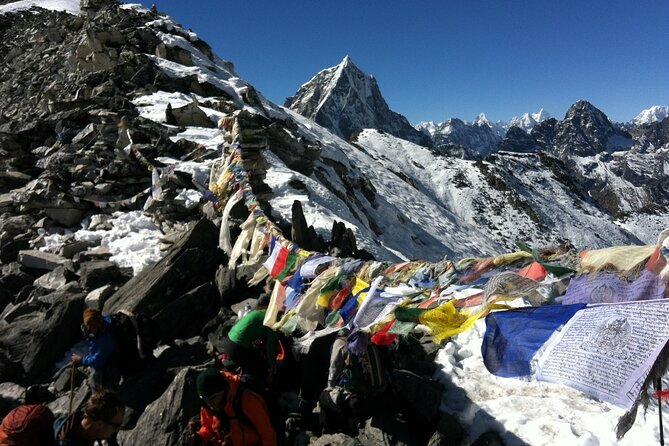
REVIEW · KATHMANDU
14 days Everest Base Camp Trek
Everest begins with a small plane. This 14-day trek takes you from Kathmandu to Lukla, then along the classic Khumbu route through Phakding, Namche Bazaar, Tengboche, Dingboche, Lobuche, and Gorakshep to Everest Base Camp. I like the careful altitude schedule, which includes a full acclimatization day in Dingboche, and I like that the $1,499 price includes flights, permits, meals, tea-house lodging, airport transfers, and a licensed guide.
I also like the human side of the trip. You sleep in Sherpa villages, pass mani walls and prayer wheels, visit Tengboche Monastery, and spend time with guides and porters who are central to the experience. The main drawback is plain: this is a hard, high-altitude trek, not a sightseeing holiday. The itinerary lists moderate physical fitness, but the long days above 4,000 meters require real preparation.
Five details that shape the experience
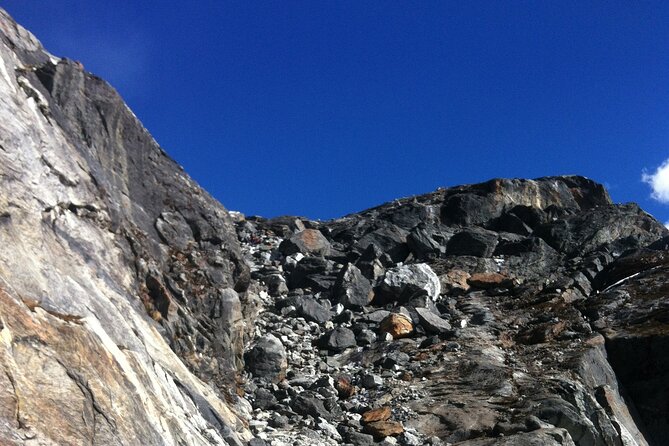
- Kala Patthar at 5,545 meters: The sunrise climb gives you one of the finest views of Everest, Nuptse, Pumori, and Ama Dablam.
- A private trip for your group: You are not placed into a large shared party, which can make the pace and daily decisions more personal.
- A useful acclimatization stop in Dingboche: The schedule includes a rest day with a climb to Nangkartshang Hill.
- Flights through Lukla: The route starts and ends with the famous Kathmandu to Lukla flight, with Ramechhap used during busy seasons if needed.
- A strong package price: At $1,499, the cost covers domestic flights, permits, full-board meals, tea houses, guide services, and airport transfers.
- Responsive local support: Shishir is repeatedly praised for clear communication and for sorting out problems, including flight changes.
From Kathmandu to the Khumbu trail
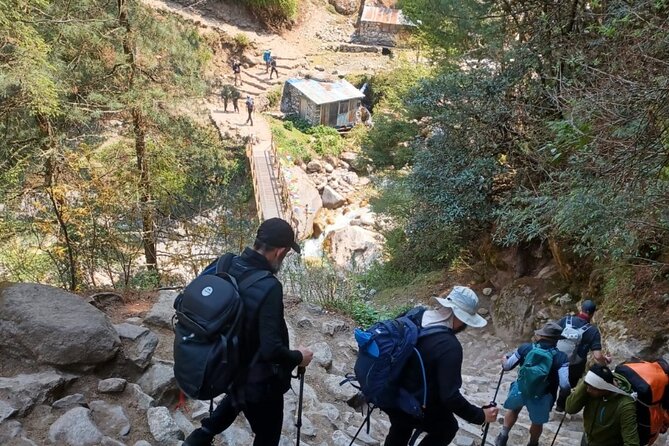
Your first day is deliberately light. You are met at Kathmandu International Airport, transferred to a three-star hotel, and given time to rest before a guide briefing and welcome dinner. That matters because the next morning starts early, and a quiet first evening is more useful than trying to pack in another city tour.
The guide briefing is the moment to ask practical questions about baggage, weather, meals, and the flight to Lukla. Airport transfers are included in a private vehicle, so you do not need to work out your own arrival transport after a long international flight.
On the second day, you fly to Lukla and begin walking toward Phakding. The flight is listed as roughly 30 minutes, though the road transfer to Ramechhap can take about four hours during peak spring and autumn periods before the flight continues to Lukla. That alternate airport is an important detail. It adds road time, but it reflects how busy the Lukla route can become.
After breakfast in Lukla, the trek passes through Cheplung and Ghat before reaching Phakding after about three hours of walking. This is a manageable introduction. You get your first taste of suspension bridges, river valleys, and stone-built villages without starting with a punishing day.
More Everest Base Camp Treks in Kathmandu:
- Everest Base Camp Trek – 14 Days
★ 5.0 · 1,499 reviews - Everest Base Camp Trek
★ 5.0 · 842 reviews - Everest Base Camp Trekking
★ 5.0 · 485 reviews
Namche Bazaar and the first Everest views
The third day takes you from Phakding to Namche Bazaar in about six hours. The trail follows the Dudh Koshi River, crosses a suspension bridge, passes Benkar and Jorsalle, and enters Sagarmatha National Park.
This is also where the route begins to feel serious. The climb to Namche is longer and steeper than the first day, but it is broken by villages, bridges, and changing views. The first sight of Everest comes along this section, although it is not yet the grand view you may picture from photographs.
Namche is the main settlement of the trek and your base for the fourth day. Instead of pushing onward, you hike to the Everest View Hotel, visit the market area, and have the option of seeing the Sagarmatha National Park museum. This rest day is well placed. You gain altitude, but you also get a shorter walking day and time to enjoy the Sherpa setting.
The walk to the Everest View Hotel takes about five hours according to the schedule. From there, you can see Everest, Lhotse, Nuptse, and Ama Dablam. I would treat this as one of the best early rewards of the trip. It gives you a clear sense of the peaks ahead before the route becomes colder and more rugged.
Tengboche brings culture into the trek
Leaving Namche, you walk for about six hours toward Tengboche. The route climbs, crosses the Imja Khola, and reaches Phungithanga, a Sherpa village with colorful prayer wheels. From there, the trail winds through rhododendron forest before opening near Tengboche Monastery.
Tengboche is more than a sleeping stop. The monastery gives the day a cultural focus, and the grounds offer views of Everest, Lhotse, Nuptse, Thamserku, and Ama Dablam. I like this part of the route because it prevents the trek from becoming a simple march between altitude markers. The villages, religious objects, and monastery make the journey feel connected to local life.
The next day continues through Deboche, across rope bridges, and up to Pangboche. Mani walls inscribed with Tibetan text line parts of the route. You then continue to Dingboche, where the views open toward Lhotse, Island Peak, and Ama Dablam.
This six-hour day includes both descents and climbs. That is typical of Himalayan walking: a route can lose height and still leave your legs working hard. You should not assume that every downhill section is easy.
Dingboche is where acclimatization matters
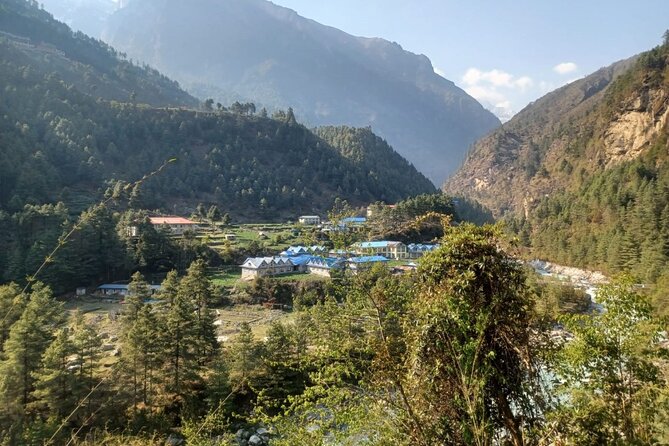
Day seven is set aside for acclimatization in Dingboche. You rest for much of the day, then climb Nangkartshang Hill. The climb is steep, but the viewpoint gives you broad views toward Makalu and Amphu Laptse. A visit to Nangkartshang Monastery adds another cultural stop before you return to the lodge.
This is one of the most important parts of the plan. The trek reaches high elevations quickly by ordinary walking standards, so the rest day gives your body time to adjust before the route heads toward Lobuche and Gorakshep. It is not a wasted day. It is one of the reasons this schedule is more sensible than a rushed ascent.
You should still listen to your guide and to your own body. The package includes an experienced, government-licensed trekking guide, but no itinerary can remove the effects of altitude. The stated moderate fitness requirement should be taken seriously.
A few more treks around Kathmandu worth a look
- Annapurna Circuit Trek with Tilicho Lake
★ 5.0 · 368 reviews - Everest Base Camp Trekking – 13 Day
★ 5.0 · 365 reviews - Everest Base Camp Trek
★ 5.0 · 350 reviews - Everest Base Camp Trek -14 Days
★ 5.0 · 321 reviews
Lobuche and the memorials at Thukla Pass
From Dingboche, the trail heads toward Lobuche in about five hours. The route includes a short downhill stretch, an uphill section, Dughla, and Thukla Pass. Views extend across the Khumbu valleys toward Cholatse Peak.
The memorials at Thukla Pass are a quiet and moving part of the trek. They honor climbers who died in the mountains and remind you that Everest is not just a scenic destination. The trail beyond becomes rocky and narrow before reaching Lobuche.
Lobuche is a high, basic overnight stop. The accommodation is in tea houses, with twin sharing as the standard arrangement. Tea houses are practical rather than luxurious. You should expect simple rooms and shared facilities, while WiFi, hot and cold drinks, battery charging, and internet cost extra.
Everest Base Camp is a long day
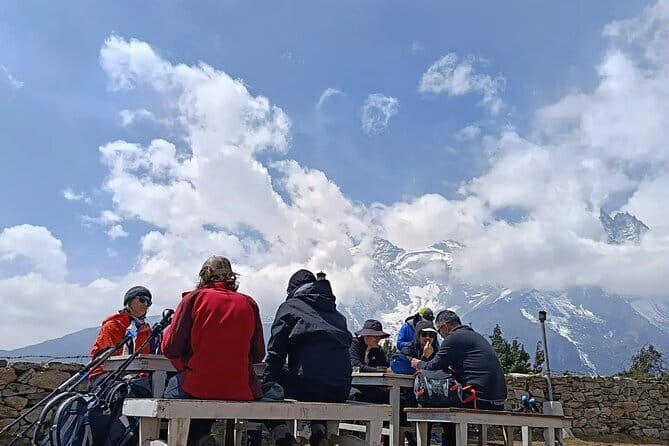
Day nine is the main goal for many people. You leave Lobuche early, walk along the southern side of Lhotse, cross glacial sections, and reach Gorakshep. After breakfast there, you continue toward Everest Base Camp.
The full day is listed at about eight hours. That number matters more than the short distance might suggest. At high altitude, walking is slower, the trail is rocky, and the return to Gorakshep still has to be made after reaching the base camp area.
At Everest Base Camp, you see the Khumbu Icefall and the peaks of Nuptse, Pumori, and Khumbutse. The view is dramatic, but keep your expectations realistic. You are visiting the base camp area used during climbing seasons, not standing on the summit or following a paved attraction. The setting is icy, rough, and exposed.
The package includes the required national park and local entry permits, which removes one layer of planning. Meals are also included on the stated full-board basis, with 12 dinners, 11 lunches, and 13 breakfasts listed. Personal drinks and snacks are not included, so carry extra money for those purchases.
Kala Patthar is the visual high point
The next morning begins before sunrise. You climb Kala Patthar by headlamp, with the ascent taking about two to three hours. At 5,545 meters, it is higher than Everest Base Camp and usually the toughest viewpoint of the route.
The reward is the sunrise. Everest, Nuptse, Pumori, and Ama Dablam catch the early light, creating the kind of view that photographs struggle to match. For many people, Kala Patthar is the visual high point of the entire trip, even though Base Camp is the named destination.
The day is listed at about nine hours and continues toward Pangboche after the descent. This is a demanding schedule. You have already completed the long walk to Base Camp, then you rise before dawn for the highest climb of the trip. I would be cautious about underestimating this day simply because much of the route afterward is downhill.
The return route feels easier, but not effortless
From the high Khumbu, the route returns through familiar villages and forested sections toward Namche Bazaar. The day is listed at about seven hours. You pass through the Dingboche and Tengboche area and spend another night in Namche.
The descent is generally easier on breathing, but your knees and feet may be tired. The familiar trail can be comforting, and a final night in Namche gives you one more chance to enjoy the Sherpa town before returning to the lower valley.
The final trekking day takes you from Namche to Lukla in about seven hours. You cross the Bhote Koshi and Dudh Koshi rivers, stop for lunch in Phakding, and continue along the path to Lukla. Once there, you can explore the village and buy souvenirs.
The following morning, you fly back to Kathmandu. The flight is listed at about 30 minutes, followed by time at the hotel for a shower, rest, and perhaps a massage. The final day is a private transfer to the international airport.
What the $1,499 price really covers
The price is strong for a two-week Himalayan trek because several expensive and essential pieces are included:
- Kathmandu hotel accommodation with breakfast
- Kathmandu to Lukla and Lukla to Kathmandu flights, including taxes
- Private airport transfers
- Tea-house lodging on a twin-sharing basis
- Full-board meals as specified
- National park and local permits
- A licensed guide with meals, lodging, and insurance
- Government taxes, GST, and company service charges
- A down jacket, sleeping bag, and duffel bag on request
You still need to budget for personal drinks, WiFi, internet access, battery charging, and tips for guides and porters. Those extras can matter in a remote mountain area, so do not treat the headline price as your complete spending total.
The private format is another benefit. Only your group participates, which may help if you want a particular pace or prefer not to walk with a large party. The exact group size is not given, so ask before booking if that affects your decision.
Service, guides, and practical confidence
The strongest praise centers on organization and personal support. Shishir is repeatedly described as responsive before and during the trip, including help when flight arrangements needed to change. That is valuable on the Lukla route, where weather and operating conditions can affect plans.
Guides named in the feedback include Ghaman, Lok, Purna, Raj, and others, while porters such as Santha and Rai are also praised. The consistent point is attentive support, especially around safety, meals, and altitude. One solo woman who used the company for an Annapurna trek also described the arrangements as professional, though that was a different route.
The overall rating is 5 from 18 reviews, with 100 percent recommending the experience. That is a small sample, and some comments cover other Nepal treks, so I would not treat every compliment as proof about this exact 14-day route. Still, the repeated praise for communication, guides, porters, and problem-solving is useful when choosing a local operator.
Who should book this trek?
I would recommend it to you if you want the classic Everest route, can manage long walking days, and prefer a package that handles flights, permits, meals, lodging, and transfers. It suits someone who values Sherpa villages, monasteries, mountain views, and a structured acclimatization plan as much as the Base Camp goal itself.
I would not choose it for a relaxed holiday, a luxury lodge trip, or a first outing without physical preparation. The route reaches 5,545 meters, includes several six-to-nine-hour days, and uses basic tea-house accommodation. You should also be comfortable with schedule changes caused by weather or other conditions beyond the agency’s control.
The experience is available as a private activity, service animals are allowed, and the operator states that it is near public transportation. You receive booking confirmation at the time of reservation. Cancellation is free if made at least three full days before the start time, while cancellations or changes inside that period are not accepted.
Final booking advice
This is a well-priced, classic Everest Base Camp package with the right major stops and a useful acclimatization day. I especially like the combination of Base Camp and Kala Patthar, since one gives you the destination and the other gives you the finest sunrise view.
Book it if you want dependable local organization and are ready for the altitude. Before paying, confirm the current flight plan, the Ramechhap transfer procedure for your dates, what equipment is available on request, and how your private group will be staffed. If those details suit you, this trek offers a practical route into the Khumbu with strong support and very little needless complication.
FAQ
How long is the Everest Base Camp Trek?
The experience lasts approximately 14 days, beginning and ending in Kathmandu.
What is the highest point reached?
The highest point is Kala Patthar at 5,545 meters above sea level. Everest Base Camp is listed at 5,316 meters.
Are flights from Kathmandu to Lukla included?
Yes. The package includes Kathmandu to Lukla and Lukla to Kathmandu domestic flights, including taxes. During busy seasons, you may first travel by private vehicle to Ramechhap for the flight.
What accommodation is included?
You receive three-star hotel accommodation in Kathmandu with breakfast and twin-sharing tea-house accommodation during the trek.
Are meals included?
Yes. Full-board meals are included as specified, with 13 breakfasts, 11 lunches, and 12 dinners listed.
Is a guide included?
Yes. The package includes an experienced, government-licensed trekking guide, along with the guide’s meals, accommodation, and insurance.
What is not included in the price?
Personal expenses, hot and cold drinks, WiFi, internet, battery charging, and tips for guides and porters are not included.
Recently added around Kathmandu
- Ghorepani Poon Hill Trek★ 5.0 · 16 reviews
- Private Manaslu Circuit Trek at Himalayas★ 5.0 · 3 reviews
- Amazing 1 Day Trekking Experience in Kathmandu Nepal★ 5.0 · 24 reviews
- Ghorepani Poonhill Trek★ 5.0 · 5 reviews
- Upper Mustang Trekking★ 5.0 · 2 reviews
- Upper Mustang Trekking★ 3.0 · 2 reviews
- Upper Mustang Trekking★ 5.0 · 4 reviews
- Upper Mustang Trek★ 5.0 · 5 reviews
Everest Base Camp Treks, compared.






Browse the lists this tour appears in