
REVIEW · KATHMANDU
Short Everest Base Camp Trek 10 Days
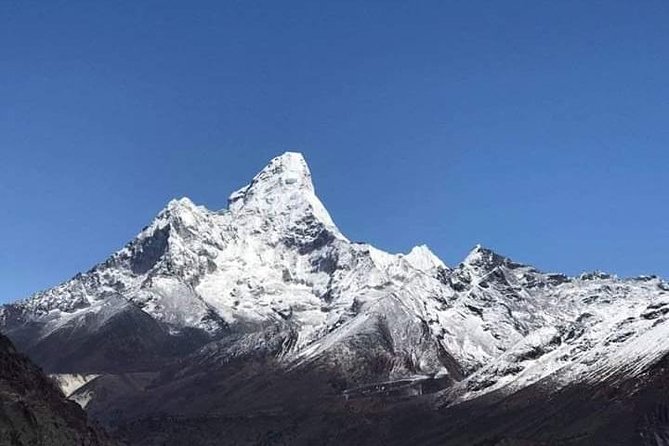
Everest begins with a short flight. This 10-day Everest Base Camp trek packs Lukla, Namche Bazaar, Tengboche, Everest Base Camp, and Kala Patthar into a demanding Himalayan journey. I like the direct route to the famous base camp and the experienced local guides, including Mohan, Padam, AJ, and Anjan, who have earned praise for patience, planning, and care.
I also like that the price includes domestic flights, trekking permits, lodgings, transfers, and a guide, which removes several big planning chores. The main catch is the speed: altitude gain is serious, meals are not included, and the schedule leaves little room for a slow acclimatization program.
The trip costs $1,400 per person, accepts groups of up to 15, and starts with a 6:15 am meeting time. It is a strong choice for fit hikers with limited time, but you should not treat the word short as easy.
Key points at a glance
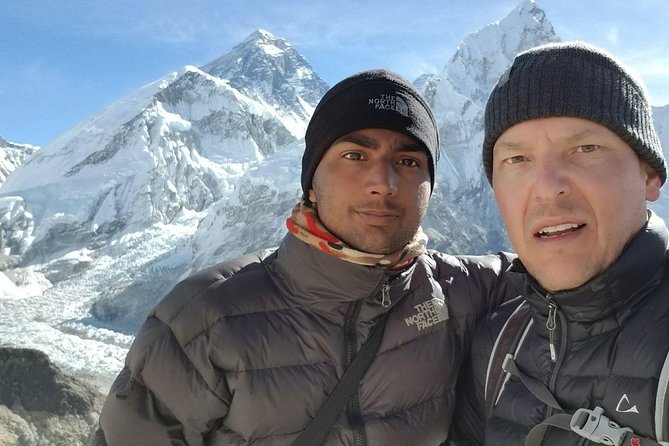
- Reach Everest Base Camp at 5,364 meters: The route follows the Khumbu Glacier and reaches the main goal on Day 6.
- Climb Kala Patthar at 5,545 meters: An early morning ascent offers sunrise views toward Everest, Pumori, and nearby peaks.
- Fly through Lukla: The 25-minute Kathmandu to Lukla flight saves several days of walking, though flight timing is an important practical consideration.
- Stay in teahouses: Lodging is arranged throughout the trek, giving you a simple base in villages such as Phakding, Namche, Dingboche, and Lobuche.
- Work with a local guide: Guide costs, food, accommodation, transport, equipment, salary, and insurance are included for the guide and porters assigned by the company.
- Budget carefully for extras: Meals, personal gear, tips, insurance, and porters hired at extra cost are not covered in the advertised price.
What the $1,400 price really covers
At $1,400, this is not a fully all-inclusive holiday. It is better understood as a guided trekking package that handles the major transport and organization while leaving your daily food and personal costs separate.
The package includes private airport and hotel transfers, Kathmandu to Lukla and Lukla to Kathmandu flights, domestic airport tax, teahouse accommodation, trekking permits, and an English-speaking guide. Government taxes and official service charges are also included.
The guide’s salary, meals, drinks, lodging, transport, equipment, and insurance are covered. The information also says porters are available for an extra charge, listed as one porter for two people. Because another inclusion refers to expenses for guides and porters, I would ask the operator to confirm exactly what porter support is included before paying.
Meals are not included. You need to budget for breakfast, lunch, and dinner during the trek, as well as drinks and personal purchases. Your own trekking clothing and equipment are also your responsibility.
Travel insurance is essential. The operator can arrange emergency helicopter service, but your insurance company pays for it. Your policy must cover high-altitude rescue and evacuation, not just ordinary medical care.
Tips for the guide and porter are expected. That is a normal part of trekking in Nepal, so include gratuities in your planning rather than treating them as an unexpected final expense.
More Everest Base Camp Treks in Kathmandu:
- Everest Base Camp Trek – 14 Days
★ 5.0 · 1,499 reviews - Everest Base Camp Trek
★ 5.0 · 842 reviews - Everest Base Camp Trekking
★ 5.0 · 485 reviews
Day 1: Lukla to Phakding and the first taste of the Khumbu
The adventure starts with an early meeting at 6:15 am and a 25-minute flight from Kathmandu to Lukla. Flights may be operated by Tara, Summit, or Sita Air.
Lukla is famous for its mountain airport and its role as the main gateway to the Everest region. Once you land, the trek begins almost at once. The walk to Phakding takes about three and a half hours, making this a useful first day rather than a brutal opening march.
Phakding gives you time to adjust to walking with a pack, uneven paths, and the rhythm of teahouse travel. The short flight is a major reason this itinerary fits into 10 days, but it also means you begin walking at altitude almost immediately.
Day 2: The long climb to Namche Bazaar
After breakfast in Phakding, you follow the Dudh Koshi River toward Namche Bazaar. The route takes about six hours and includes river crossings, village paths, and views toward Thamserku.
Namche sits at 3,440 meters and is one of the most important settlements in the region. It is a trading center for the surrounding Sherpa communities and a natural stopping point before the trail reaches higher ground.
This is one of the days when the short itinerary makes itself felt. You gain significant altitude and walk for much of the day. Keep your pace steady. The goal is not to win the trail, and your guide may encourage you to walk slowly to help your body adjust.
Namche is also one of the more memorable places to spend an evening. You will find a larger village setting than at Phakding, but the trek remains basic and mountain-focused.
Day 3: Namche to Tengboche, with big mountain views
The route from Namche to Tengboche takes about five hours. The trail leaves the steep drop toward the Dudh Koshi and continues through scenery dominated by Himalayan peaks.
Tengboche, also written as Tyangboche in the schedule, sits at 3,867 meters. The location is known for its monastery and for broad views toward some of the region’s major summits.
You can expect the walking to feel more exposed and more mountainous here. The trail gains height, then drops and climbs again in places, so the five-hour estimate should not be read as a casual stroll.
This stop has strong cultural value as well as scenic appeal. You are moving through Sherpa communities, not simply crossing empty wilderness. The villages, monasteries, bridges, and teahouses help explain how people live and work in this high region.
A few more treks around Kathmandu worth a look
- Annapurna Circuit Trek with Tilicho Lake
★ 5.0 · 368 reviews - Everest Base Camp Trekking – 13 Day
★ 5.0 · 365 reviews - Everest Base Camp Trek
★ 5.0 · 350 reviews - Everest Base Camp Trek -14 Days
★ 5.0 · 321 reviews
Day 4: Tengboche to Dingboche through Deboche
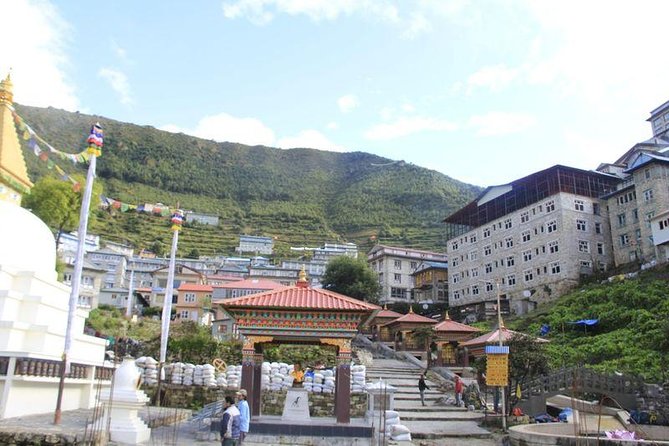
The fourth day takes you from Tengboche to Dingboche, with about five hours on foot. You descend through rhododendron forest toward Deboche, cross the Imja Khola by suspension bridge, and continue toward higher ground.
Dingboche is at 4,260 meters. At this height, breathing becomes more noticeable, and the pace naturally slows. The village is an important point on the route because the next stages take you much closer to the high-altitude section of the trek.
The route is appealing because it changes character. Forest gives way to more open mountain scenery, and the trail begins to feel more remote. The cost is physical: you are gaining altitude day after day with no full acclimatization day listed.
Listen closely to your guide here. Padam Bahadur Bhujel was praised for patience and practical advice, while Anjan was specifically noted for encouraging a slow pace to help maintain health. Those qualities matter more than a fast walking speed on this route.
Day 5: Dingboche to Lobuche and the approach to the glacier
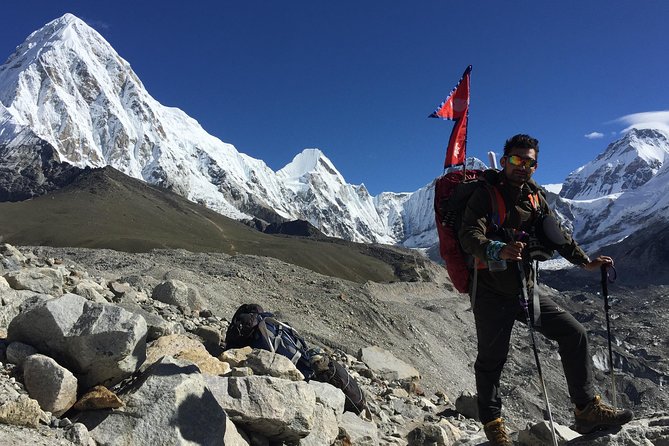
The five-hour walk from Dingboche to Lobuche is one of the clearest transitions of the trip. The trail continues gently toward Pheriche before heading into harsher, more open terrain.
Lobuche is a high settlement used by trekkers heading toward Everest Base Camp. The night here is part of the altitude challenge, and you should expect a basic teahouse stay rather than comfort-oriented lodging.
This is also a day to protect your energy. You are not yet at Base Camp, but the hardest walking is close. Keep drinking, eat enough, and tell your guide about headaches, dizziness, unusual tiredness, or breathing trouble.
The package includes a guide and organized accommodation, which helps reduce daily decisions. You still need to manage your own personal gear, clothing, and meals, so pack with care and keep your essentials accessible.
Day 6: Lobuche to Gorakshep and Everest Base Camp
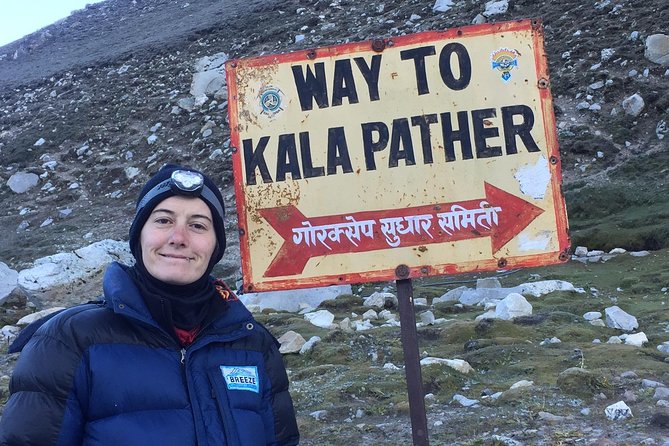
Day 6 is the dramatic centerpiece. From Lobuche, you walk toward Gorakshep at 5,140 meters, then continue to Everest Base Camp. The full day is listed at about eight hours.
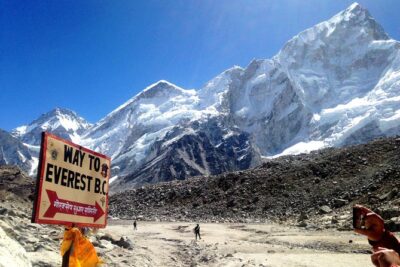
The route follows rocky ground beside the Khumbu Glacier. You can expect uneven footing, cold conditions, and slower progress at altitude. Views include Nuptse, Pumori, and the great peaks around the Khumbu region.
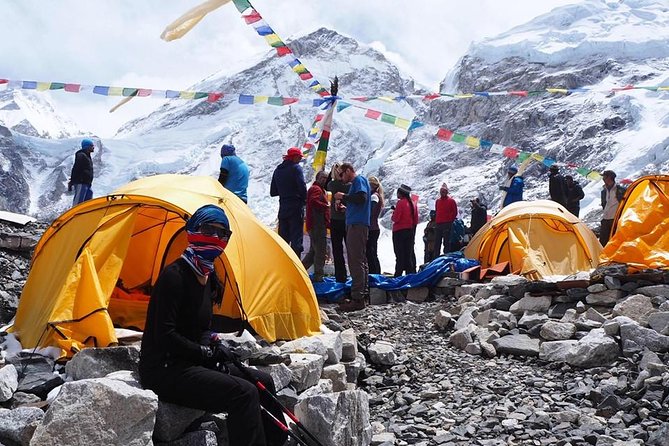
Everest Base Camp itself sits at 5,364 meters. Reaching it is a major physical achievement, but it is not the summit of Everest and does not offer a simple viewpoint of the top. The reward is the setting, the glacier, the expedition history, and the knowledge that you have reached one of the world’s best-known trekking goals.
This day requires realistic expectations. You may feel tired before reaching Base Camp, and the return to Gorakshep adds to the workload. The guide’s role is particularly important here, since the route, altitude, and long walking time all demand steady judgment.
Day 7: Kala Patthar at sunrise, then down to Pheriche
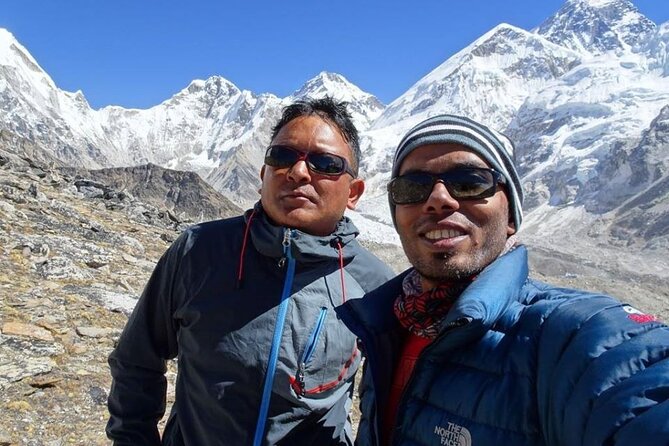
The next morning begins early with a climb from Gorakshep to Kala Patthar at 5,545 meters. The schedule lists about seven hours for the ascent and descent to Pheriche.
Kala Patthar is often the best viewpoint of the trip. From the top, you can watch the sunrise over Everest and see Pumori, Nuptse, and other major peaks. If you want the clearest mountain views, this is the moment to protect your camera and your energy for.
The descent to Pheriche is welcome after the high point. Pheriche sits at 4,243 meters, considerably lower than Gorakshep and Kala Patthar, so the night should feel easier for many people.
One practical note deserves attention: the supplied schedule appears inconsistent here. Day 7 correctly describes Gorakshep, Kala Patthar, and Pheriche, but Day 8 is labeled as a trek from Tengboche to Namche. Ask the operator to confirm the exact Day 8 route before departure. The logical return route from Pheriche would normally pass through Tengboche before reaching Namche.
Day 8: The return through Sherpa villages
The planned return includes a seven-hour walking day and a route toward Namche Bazaar at 3,440 meters. The schedule refers to Tengboche, Khumjung, and Khunde, traditional villages that add cultural interest to the descent.
Khumjung and Khunde are valuable stops because they show village life beyond the main trail. You can expect stone buildings, mountain paths, and a slower pace than in Namche.
The return route is not simply a replay of the ascent. Descending brings different views, and your body is no longer dealing with the same upward effort. Still, tired knees and feet can make a downhill day surprisingly hard.
Confirm the overnight village and walking sequence with the operator. This is especially important because the itinerary wording does not fully match from Day 7 onward.
Day 9: Namche to Lukla
The final walking day takes about seven hours from Namche to Lukla. You follow the trail back through the lower Khumbu villages, with lunch served along the way.
Lukla is the last night of the trek. The plan is simple: arrive, refresh yourself, rest at the teahouse, and prepare for the morning flight.
This day can feel longer than expected because fatigue has accumulated over a week of walking. The downhill sections may be easier on your breathing, but not always on your legs. Good footwear and a light day pack make a real difference.
Day 10: Fly back to Kathmandu
The return flight to Kathmandu is scheduled for early morning and takes about 25 minutes. Representatives meet you at Tribhuvan International Airport and transfer you to your hotel.
A farewell dinner is planned at Bhojan Griha, a restaurant in Kathmandu. That gives the trip a pleasant finish after the basic mountain lodges and long walking days.
The flight schedule is important. Mountain flights can affect your plans, so avoid booking an immediate international connection on the same day unless you have allowed plenty of extra time. The provided itinerary does not promise a backup day, so ask how delays are handled.
Guides, group size, and the human side of the trek
The maximum group size is 15 people. That is large enough to share costs while still being manageable on a narrow mountain trail, though the exact experience depends on the group’s walking speeds and health.
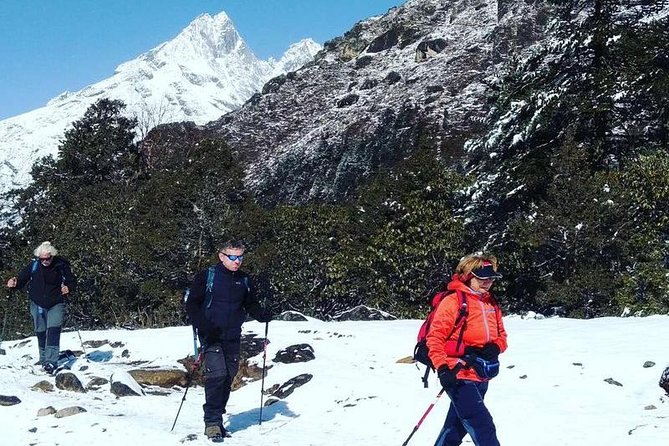
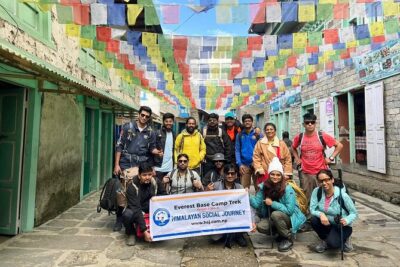
The strongest praise centers on the guides. Mohan was described as friendly and flexible. AJ reportedly explained the next day’s plan each evening and organized accommodation, food, and logistics. Padam was praised for expertise, patience, advice, and personal care, while Anjan was noted for keeping the pace slow and safe.
Those details are useful because a high-altitude guide does more than point toward the next village. You want someone who explains the day ahead, notices changes in your condition, and adjusts the pace when needed.
Welcome Nepal Treks is the operator, and the experience has a listed rating of 5 from eight ratings. That is encouraging, though you should still ask direct questions about the porter arrangement, the Day 8 schedule, and emergency procedures before booking.
Who should choose this 10-day route?
This trek suits you if you are physically fit, have limited time, and want the main Everest Base Camp experience without adding extra days. It also suits hikers who prefer having flights, permits, accommodation, transfers, and a guide arranged in advance.
It is less suitable if you want a slow acclimatization schedule, private rooms, included meals, or a large margin for delays. The route climbs quickly and includes long days at extreme altitude.
You do not need to be an experienced mountaineer, but you do need strong physical fitness. The operator specifically says this is not a casual activity. You should be comfortable walking for five to eight hours on rough mountain paths.
Some past participants combined the trek with Chitwan or another relaxing activity. That is sensible. After ten days of high-altitude walking, a few quieter days in Nepal can round out the trip far better than rushing straight home.
Final verdict: book it if the pace fits
I would choose this trek for a fit hiker who wants a tightly organized route to Everest Base Camp and Kala Patthar at a reasonable package price. The local guide support, included flights, teahouse lodging, permits, and airport transfers make the $1,400 cost useful, even after you add meals, insurance, gear, tips, and possible porter fees.
I would not book it without clarifying the porter cost and the Day 8 routing. I would also buy high-altitude rescue insurance, allow flexibility around Lukla flights, and understand that the short schedule leaves little room for a slow approach.
If you accept the physical demands and plan carefully, this is a focused way to experience the Sherpa villages, Khumbu Glacier, Everest Base Camp, and the sunrise from Kala Patthar in one memorable trip.
FAQ
How long is the Everest Base Camp trek?
The trek lasts approximately 10 days, including flights between Kathmandu and Lukla.
What is the price per person?
The listed price is $1,400 per person.
What time does the experience start?
The meeting time is 6:15 am.
Are flights between Kathmandu and Lukla included?
Yes. The package includes the Kathmandu to Lukla and Lukla to Kathmandu flights, along with domestic airport tax.
Is accommodation included?
Yes. Accommodation in lodges and teahouses during the trek is included.
Are meals included?
No. Breakfast, lunch, and dinner during the trek are not included.
Is a porter included?
Porters are available at an extra cost, listed as one porter for two people. Since the inclusion details also refer to porter expenses, confirm the exact arrangement with the operator before booking.
Is travel insurance included?
No. You need travel insurance that covers emergency high-altitude rescue and evacuation. Helicopter rescue can be arranged, but the insurance company pays for it.
What is the cancellation policy?
You can receive a full refund if you cancel at least 24 hours before the experience start time. Cancellations or changes made within 24 hours are not accepted for a refund.
Recently added around Kathmandu
- Ghorepani Poon Hill Trek★ 5.0 · 16 reviews
- Private Manaslu Circuit Trek at Himalayas★ 5.0 · 3 reviews
- Amazing 1 Day Trekking Experience in Kathmandu Nepal★ 5.0 · 24 reviews
- Ghorepani Poonhill Trek★ 5.0 · 5 reviews
- Upper Mustang Trekking★ 5.0 · 2 reviews
- Upper Mustang Trekking★ 3.0 · 2 reviews
- Upper Mustang Trekking★ 5.0 · 4 reviews
- Upper Mustang Trek★ 5.0 · 5 reviews
Everest Base Camp Treks, compared.




Browse the lists this tour appears in