
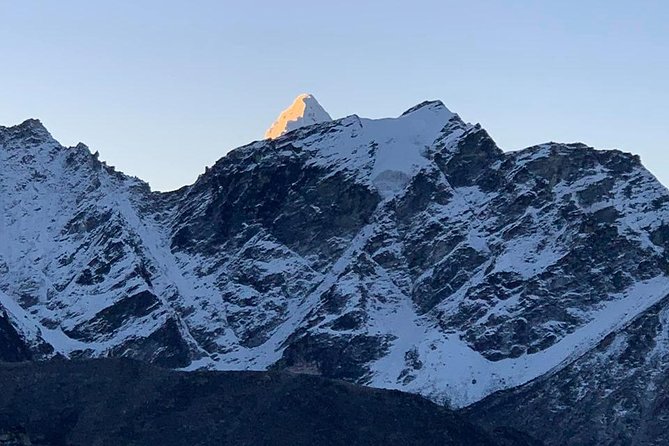
REVIEW · KATHMANDU
Everest Base Camp Standard Trek
Everest begins with a small plane. This 12-day trek combines the famous Lukla flight, Sherpa villages, suspension bridges, Buddhist monasteries, and close mountain views in one well-planned route. I especially like the two full acclimatization days, in Namche Bazaar and Dingboche, and the fact that flights, permits, meals, guides, porters, and mountain lodging are included.
I also like the human side of the trip. Guides such as Bhim, Bandhu, Ramesh, and Umesh have been praised for being helpful, kind, and good company, which matters when you are tired and breathing thin air. The main consideration is the altitude and physical demand. The plan is not a casual mountain walk, and the schedule has a few confusing day descriptions that you should clarify before paying.
Key Points to Know Before Booking
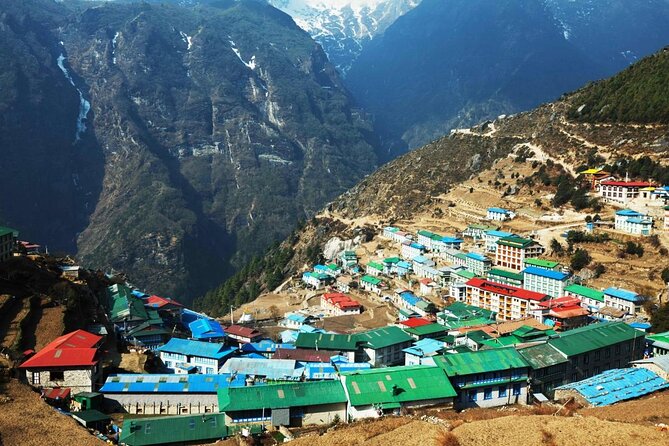
- The 30-minute Lukla flight starts the adventure: You fly from Kathmandu into a mountain airstrip at 9,186 feet, then begin walking the same day.
- Two acclimatization stops protect the pace: Rest days in Namche Bazaar and Dingboche give your body time to adjust, with optional hikes to higher viewpoints.
- Everest Base Camp is only part of the reward: The route also includes Tengboche Monastery, Sherpa villages, memorials, glaciers, and the Kala Patthar viewpoint.
- The $2,000 price covers the major essentials: Flights, mountain lodging, meals, permits, guides, porters, equipment, and Kathmandu hotel accommodation are included.
- The final high-altitude days are tough: Gorak Shep, Everest Base Camp, and Kala Patthar involve cold, thin air, rocky trails, and early starts.
- Weather can alter the plan: Poor weather may cancel flights, with a different date or full refund offered under the stated policy.
What the $2,000 Price Really Buys
At $2,000 per person, this is not simply a guided walk. The price includes airport transfers, a three-star or better hotel in Kathmandu with breakfast, flights between Kathmandu and Lukla, local guesthouses, meals during the trek, permits, equipment, guide and porter wages, insurance for the trekking team, and a farewell dinner.
That package gives you a useful level of cost control. The Lukla flights alone are an important part of the transport plan, and the Sagarmatha National Park entry fee and TIMS Card are already covered. You do not need to arrange each permit or wonder how your porter’s wages will be handled.
The included equipment is also helpful if you do not own proper mountain gear. Sleeping bags and warm layers are provided, along with a first aid kit and maps. Still, ask exactly what equipment is supplied, especially if you are particular about fit, warmth, or hygiene.
Your own spending will include international airfare, Kathmandu meals apart from breakfast, shopping, alcoholic drinks, chocolates, tea, coffee, tips, showers, and electronic charging at some mountain lodges. You should also keep money aside for unexpected costs caused by illness, cancellations, weather, lost property, or extra nights.
For the level of transport and support included, the price can be good value. It is especially useful for a first Everest Base Camp trip, when permits, flights, porter arrangements, and food can otherwise become a tiring puzzle.
More Everest Base Camp Treks in Kathmandu:
- Everest Base Camp Trek – 14 Days
★ 5.0 · 1,499 reviews - Everest Base Camp Trek
★ 5.0 · 842 reviews - Everest Base Camp Trekking
★ 5.0 · 485 reviews
Day 1: From Kathmandu to Lukla and Phakding
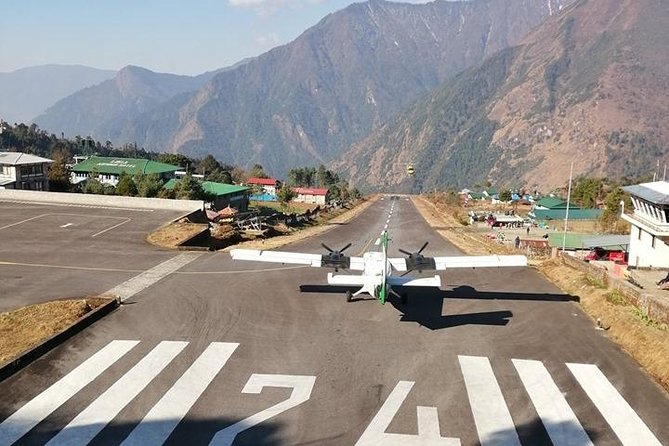
The trip opens with a 30-minute flight from Kathmandu to Lukla. The route is known for Himalayan views, and the arrival puts you directly at 9,186 feet, so the altitude begins to matter immediately.
At Lukla, you meet the trekking crew and sort your packs before walking. The first route gradually descends for about an hour to Cheplung, where you can glimpse Khumbila, a sacred mountain said never to have been climbed. From there, the trail continues down to Phakding for the night.
This is a sensible opening day because the walk is relatively gentle after the flight. Still, do not treat it as an easy city stroll. You are already at significant altitude, and the combination of an early airport start, flight, packing, and walking can leave you tired.
Day 2: Pine Forests and the Climb to Namche Bazaar
The second day is one of the most varied sections of the route. You walk through pine forest along the valley of the Dudh Koshi, cross the river, pass Benkar and Chumoa, and reach Monjo, the entrance to Sagarmatha National Park.
After Jorsale, the path follows the Dudh Koshi and Bhote Koshi rivers. The climb to Namche Bazaar then becomes steep. This is where the trek begins to feel serious, with the altitude and uphill walking working together.
If the weather is clear, you may see Everest and Lhotse roughly an hour before reaching Namche. That first possible view is exciting, but do not expect the best mountain panorama yet. Namche itself is the reward at the end of the climb, with shops, restaurants, ATMs, internet cafes, government offices, and a colorful market.
Day 3: Acclimatizing in Namche Bazaar
A rest day in Namche is one of the strongest parts of the schedule. You are not expected to spend the whole day lying in a room. The point is to rest while taking a useful short hike, helping your body adjust to the increasing elevation.
One option is a day walk to Khumjung, a Sherpa village at about 12,401 feet. The route offers mountain scenery, high-altitude plants, and a closer look at village life in the Khumbu region.
Namche is also your best chance to handle practical needs before the more remote sections. You have access to shops, food, cash machines, and internet cafes. Use the stop wisely, but do not spend the whole day shopping and then wonder why your legs feel heavy.
A few more treks around Kathmandu worth a look
- Annapurna Circuit Trek with Tilicho Lake
★ 5.0 · 368 reviews - Everest Base Camp Trekking – 13 Day
★ 5.0 · 365 reviews - Everest Base Camp Trek
★ 5.0 · 350 reviews - Everest Base Camp Trek -14 Days
★ 5.0 · 321 reviews
Day 4: Tengboche Monastery and Mountain Views
From Namche, the trail descends toward the Dudh Koshi River before climbing through rhododendron forest to Tengboche. This up-and-down rhythm is typical of the trek. A map may make the distance look manageable, but the repeated descents and climbs add work.
The views are a major reward. Everest, Lhotse, Nuptse, Ama Dablam, Thamserku, and Kongde can appear along the route when weather allows. Tengboche Monastery is the cultural highlight of the day and the largest monastery in the region.
I like this stop because it gives the trek more meaning than a simple march toward Base Camp. You see prayer flags, a working Buddhist center, mountain scenery, and the small settlements that support life in the high valleys. Overnight lodging is in Tengboche, so expect a quieter and more basic night than in Namche.
Day 5: Into the Imja Valley and Dingboche
The trail drops through birch, conifer, and rhododendron forest before entering the Imja Valley. You pass the Lobuche River and begin the climb to Dingboche.
Dingboche is known for fields protected by stone walls. Barley, buckwheat, and potatoes grow here despite cold winds and grazing animals. Those walls are not decoration. They show how carefully local farming has adapted to a harsh setting.
The day offers repeated views of Everest, Lhotse, and Ama Dablam. It also marks a clear change in the walk. The trees begin to thin as you gain height, and the route feels more open, colder, and more exposed.
Day 6: A Useful Rest Day in Dingboche
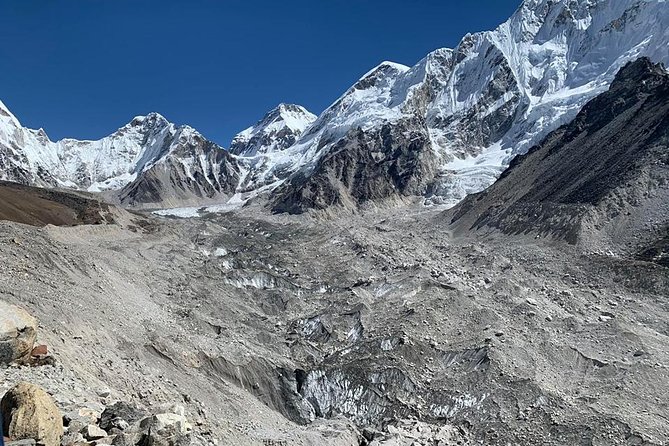
The second acclimatization day comes at Dingboche. This is important because the next section takes you much higher, and rushing through this point would make the rest of the trek harder.
Optional hikes lead toward Nagarjun Hill or the Chukkhung Valley. From these areas, you may see Makalu, Lhotse, Cholatse, Tawache, and Ama Dablam. The goal is not to exhaust yourself. A controlled hike, food, water, and rest are the sensible priorities.
Dingboche is also a good place to check your clothing and equipment. Cold conditions will become more serious soon, and small problems with socks, gloves, or footwear become much harder to ignore at altitude.
Day 7: Memorials, Moraine, and Lobuche
The route climbs gradually to Duglha at the end of the Khumbu terminal moraine. From there, a steeper section leads to Chupki Lhara, marked by stones and prayer flags honoring climbers and guides who died on Everest missions.
The memorials for Scott Fischer and Babu Chiri Sherpa give this part of the route a solemn mood. They remind you that Everest is not only a scenic destination. The mountain has a real cost, and the people who work and climb here face risks far beyond those of a trekking holiday.
After the memorial area, you continue along the Khumbu moraine. Peaks such as Khumbutse, Lingtren, Pumori, and Mahalangur Himal come into view. The trail then becomes easier as it follows the valley to Lobuche.
This is not the longest day in the schedule, but it can feel demanding because you are now high, cold, and close to the main goal.
Day 8: Gorak Shep and Everest Base Camp
You leave Lobuche for Gorak Shep, following a route connected with the former Gorak Shep Lake. The trail passes memorials associated with Indian army mountaineers before continuing over rocky ground, moraine, and streams.
The high altitude makes this section strenuous. The route can also be confusing in places, so staying close to your guide is important. The supplied plan specifically emphasizes following the lead Sherpa, and that is sound advice.
At Everest Base Camp, brightly colored expedition tents may contrast with the gray rock and moraine, particularly during the spring climbing season. From Base Camp, the prominent views include Nuptse, Khumbutse, and Pumori.
Base Camp is a major emotional high point, but do not expect a clear view directly up Everest from every angle. Kala Patthar the next morning is planned for the classic close view of the summit.
You return to Gorak Shep for the night. This is likely to be one of the hardest nights of the route because of cold, altitude, and basic mountain accommodation.
Day 9: Kala Patthar in the Cold Before Dawn
The schedule describes an early departure in temperatures around minus 10 to minus 14 degrees Celsius, with wind making it feel colder. This is the day to use every warm layer supplied or packed.
The climb to Kala Patthar is the scenic peak of the trek. From the top, you can see Everest up close in a 360-degree panorama, along with familiar peaks such as Lingtren, Khumbutse, and Changtse. The pre-dawn timing is uncomfortable, but it gives you the best chance of seeing the mountains in early light.
The itinerary wording for this day is not fully clear. Its heading names Pheriche, while the description says you return to Lobuche after Kala Patthar. Ask the operator to confirm the actual overnight stop and walking route before departure. Clear information matters when the day begins in darkness at extreme altitude.
Days 10 and 11: Returning Through Namche to Lukla
The return route follows the Dudh Koshi gorge through juniper and rhododendron areas, with pine forest lower down. You may see colorful pheasants and mountain goats, and the trail offers views of Ama Dablam, Thamserku, and Nuptse.
The route reaches Sansa before continuing to Namche Bazaar. After the high-altitude section, this descent should feel more comfortable for your breathing, though your knees and feet may complain. Suspension bridges and rocky paths still require care, especially when your legs are tired.
The next day continues down through the Dudh Koshi valley and across suspension bridges and tributaries. The trail becomes more level before reaching Lukla. The schedule says you spend the night in Lukla after arriving, giving you a chance to rest before the flight.
The day descriptions contain some mismatched place names, including a Pheriche and Duglha reference during the return. Confirm the overnight locations and daily walking times so you know where your bag and room will be each night.
Day 12: Flying Back to Kathmandu
The final morning begins with an early flight from Lukla to Kathmandu. As with the outbound journey, weather can affect flight plans. The stated policy allows a different date or a full refund if the experience is canceled because of poor weather, but you should still allow flexibility in your wider Nepal itinerary.
Back in Kathmandu, you can rest, shop for souvenirs, or explore more of the capital with help from the guides. A farewell dinner closes the trip.
Kathmandu meals apart from breakfast are not included, and neither are extra hotel nights if weather or illness delays your return. That is another reason to keep spare funds and time available.
Who Will Get the Most From This Trek?
This trek suits you if you want the classic Everest route with a guide, porters, organized flights, meals, permits, and mountain lodging already arranged. It also suits someone who values cultural stops such as Tengboche Monastery and Khumjung, rather than caring only about reaching Base Camp.
You need a moderate level of physical fitness. The itinerary includes steep ascents, long walking days, rocky trails, cold temperatures, suspension bridges, and very thin air. You should be comfortable with several demanding days in a row.
The private format is useful if you prefer your own group rather than joining strangers. Group discounts are offered, but the experience is described as a private activity in which only your group participates. If you are looking for a relaxed holiday with guaranteed comfort, this is not the right choice.
The strongest praise connected with the experience centers on the staff. Bhim is described as funny, helpful, smart, and experienced, while Bandhu, Ramesh, and Umesh are praised for their kindness and support. That personal care can make a real difference when the trail gets cold and tiring.
Should You Book the Everest Base Camp Standard Trek?
I would consider booking this trek if you want a supported, all-in-one Everest Base Camp route and can handle the physical demands. The inclusion of flights, porters, meals, permits, equipment, and two acclimatization days gives the $2,000 price solid practical value.
Before booking, ask for a corrected day-by-day schedule, especially for Days 9 through 11. Confirm the supplied gear, clarify the altitude plan, and budget for tips, drinks, showers, charging, Kathmandu meals, and possible delays.
If you want Everest without arranging every permit, flight, porter, and lodge yourself, this is a strong option. If you dislike basic accommodation, cold starts, uncertain mountain flights, or steep trails at altitude, choose a lower-altitude Nepal trip instead.
FAQ
How long is the Everest Base Camp trek?
The experience lasts approximately 12 days, including flights from Kathmandu to Lukla and back, the trek to Everest Base Camp, the return walk to Lukla, and time in Kathmandu.
What is included in the $2,000 price?
The price includes airport transportation, a three-star or better Kathmandu hotel with breakfast, flights to and from Lukla, mountain guesthouse accommodation, meals during the trek, guides, porters, trekking equipment, a first aid kit, maps, permits, service charges, government taxes, and a farewell dinner.
Are meals included during the trek?
Yes. Breakfast, lunch, and dinner are included during the trekking portion. Meals in Kathmandu, apart from hotel breakfast, are not included.
Is this a private trek?
Yes. The activity is described as private, with only your group participating. Group discounts are also offered.
What fitness level is needed?
A moderate level of physical fitness is required. The route includes steep climbs, rocky trails, long walking days, high altitude, cold temperatures, and suspension bridges.
Are the Lukla flights included?
Yes. Transportation for the trek includes flights between Kathmandu and Lukla.
What happens if bad weather cancels the experience?
If poor weather causes cancellation, you are offered a different date or a full refund. You can also cancel up to 24 hours before the start time for a full refund under the stated cancellation policy.
Recently added around Kathmandu
- Ghorepani Poon Hill Trek★ 5.0 · 16 reviews
- Amazing 1 Day Trekking Experience in Kathmandu Nepal★ 5.0 · 24 reviews
- Private Manaslu Circuit Trek at Himalayas★ 5.0 · 3 reviews
- Ghorepani Poonhill Trek★ 5.0 · 5 reviews
- Upper Mustang Trekking★ 5.0 · 2 reviews
- Upper Mustang Trekking★ 3.0 · 2 reviews
- Upper Mustang Trekking★ 5.0 · 4 reviews
- Upper Mustang Trek★ 5.0 · 5 reviews
Everest Base Camp Treks, compared.






Browse the lists this tour appears in