
REVIEW · KATHMANDU
Everest base camp trek & Heli return
Reach Everest Base Camp in just seven days. This one-way Himalayan trek pairs a demanding walk from Lukla with a helicopter flight home from Gorakshep, giving you the classic route without retracing every step. I like the strong sense of progress each day, and I like that the return flight saves time and tired legs. The main concern is the pace: you gain height quickly, with no scheduled acclimatization day.
The trip costs $3,195 per person, a serious price, but it includes the Lukla flight, helicopter return, guide, permits, tea-house lodging, airport transfers, and all meals during the trek. You should also plan for personal gear, Kathmandu hotels, drinks, Wi-Fi, hot showers, insurance, and possible emergency evacuation.
Key points to know before booking
- The helicopter return changes the whole trip: You walk up to Gorakshep, then fly back to Kathmandu after Kala Patthar.
- The schedule is fast: You reach Everest Base Camp on Day 6 and Kala Patthar on Day 7.
- The highest point is 5,545 meters: Kala Patthar is higher than Everest Base Camp and is the main viewpoint.
- Guide support is central: English-speaking government-licensed guides are included, with Padam and Kesh receiving especially warm praise.
- The price covers major transport: Lukla airfare and the Gorakshep to Kathmandu helicopter are included.
- You need moderate fitness and flexibility: Weather can delay flights, and the booking cannot be refunded after cancellation.
Why this seven-day Everest route works
Most people picture Everest Base Camp as a long out-and-back trek. This version cuts the return walk by using a shared helicopter from Gorakshep. That makes the trip possible for someone with limited holiday time, but it also means the uphill section is packed into six walking days.
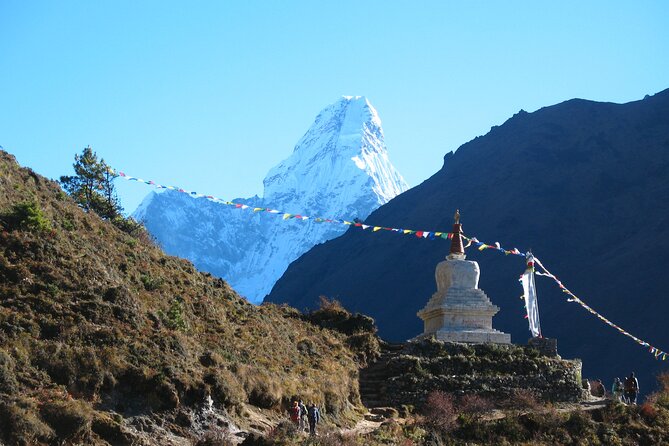
You begin at Lukla and follow the classic Khumbu route through Phakding, Namche Bazaar, Tengboche, Dingboche, Lobuche, and Gorakshep. The route is not just a march toward a famous signpost. You pass Sherpa villages, prayer walls, chortens, rhododendron forests, suspension bridges, and mountain viewpoints along the way.
I like the clean logic of the journey. Each day takes you farther into the Himalayas, and the final morning gives you Kala Patthar before the flight home. The tradeoff is equally clear: there is no spare day built in for rest, weather, or a slower adjustment to altitude.
The group can include up to 15 people. That is small enough to keep the guide involved, though it is not a private trek. The English-speaking guide is a government-licensed trekking guide, and the personal service appears to be one of the strongest parts of the operation. Padam is praised for his mountain experience, calm manner, and good English. Kesh is described as responsive on WhatsApp and helpful with practical problems, including finding boots for someone who arrived without a pair.
More Everest Base Camp Treks in Kathmandu:
- Everest Base Camp Trek – 14 Days
★ 5.0 · 1,499 reviews - Everest Base Camp Trek
★ 5.0 · 842 reviews - Everest Base Camp Trekking
★ 5.0 · 485 reviews
Day 1: Lukla to Phakding in four hours
Your day begins early, with a 5:15 am start at the domestic terminal parking lot at Tribhuvan International Airport in Kathmandu. The first flight takes you to Lukla, one of the key gateways for the Everest region.
From Lukla, you walk to Phakding at about 2,600 meters. The trek takes roughly three to four hours. That first day is useful because it gets your legs moving without immediately pushing you toward the highest villages.
Phakding is the first overnight stop and a practical place to begin the walking rhythm. Tea-house lodging is included, along with dinner and breakfast. Lunch is also included during the trek, but your personal spending begins with items such as drinks, bottled water, hot showers, Wi-Fi, and battery charging.
The biggest uncertainty on this day is the flight. Mountain weather can cause delays, and the trip does not pretend otherwise. One guest specifically praised Kesh for staying in contact and helping manage changes during weather delays. You should pack patience along with your trekking clothes.
Day 2: Phakding to Namche Bazaar
The walk from Phakding to Namche Bazaar takes about four to five hours and finishes at roughly 3,500 meters. This is the day when the trek begins to feel properly Himalayan.
Namche is the best-known settlement on this part of the route and serves as an important stopping point before the trail climbs farther. The plan allows time to explore in the late afternoon, which gives you a chance to look around rather than simply eat and collapse into bed.
I would treat this as a meaningful height gain, not an easy village stroll. The itinerary is moving upward at a steady rate, and the absence of a full rest day matters. You need to pay attention to how you feel and tell your guide if the pace is becoming too much.
Day 3: Namche to Tengboche
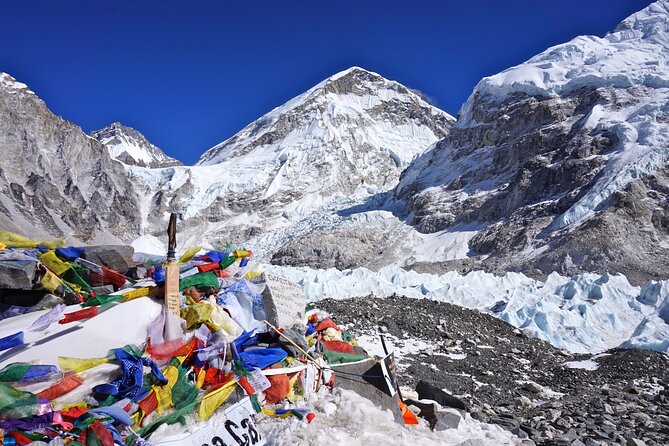
The trail continues from Namche to Tengboche, at approximately 3,870 meters. Walking time is listed as four to five hours.
This section brings many of the visual details people hope for from an Everest trek. You pass through rhododendron forests, along Mani walls covered with Buddhist prayer stones, and beside chortens. The route also offers wide Himalayan views, giving you more than a single distant look at Everest.
Tengboche is a special overnight stop because the setting combines a mountain village with a strong Buddhist presence. The information provided does not promise a specific monastery visit or ceremony, so I would enjoy the atmosphere without expecting a scheduled cultural program.
The climb is still gradual in terms of daily distance, but the altitude is now serious. Your guide matters here. Padam is praised for calming nervous trekkers, including anxiety around the Lukla flight, while keeping a cheerful and polite manner on the trail.
A few more treks around Kathmandu worth a look
- Annapurna Circuit Trek with Tilicho Lake
★ 5.0 · 368 reviews - Everest Base Camp Trekking – 13 Day
★ 5.0 · 365 reviews - Everest Base Camp Trek
★ 5.0 · 350 reviews - Everest Base Camp Trek -14 Days
★ 5.0 · 321 reviews
Day 4: Tengboche to Dingboche
Day 4 takes about six hours and leads to Dingboche. The route first drops through rhododendron forest toward Deboche, then crosses the Imja Khola on a bridge with the river roaring below.
After the bridge, the trail climbs toward Pangboche and Somare before continuing to Dingboche. This is a day of repeated changes in the path: a descent, a river crossing, and then a long uphill section.
The mountain views become one of the rewards of the effort. The itinerary highlights the route through local villages rather than rushing from one major viewpoint to another. You get a sense of the settlement pattern in the high Khumbu, where small hamlets connect the trekking route.
Dingboche also marks another major increase in altitude. The trek continues without an acclimatization day, so this is one of the points where moderate fitness becomes more than a box to tick. You should be ready for six hours of walking at height and for the possibility that the cold, thin air will slow you down.
Day 5: Dingboche to Lobuche
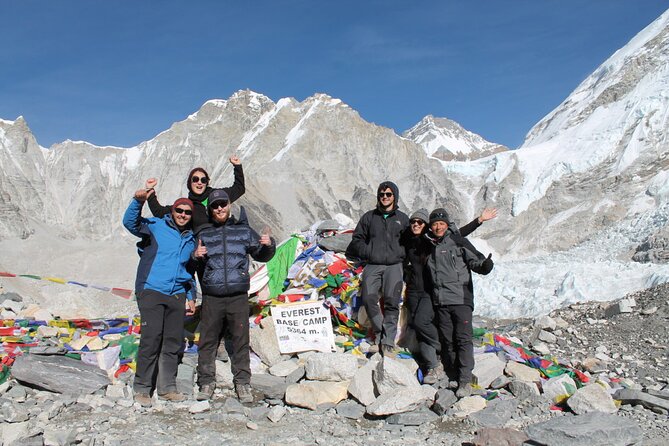
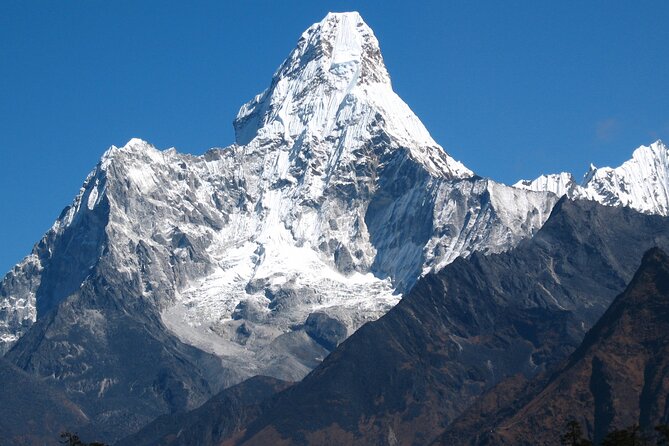
The walk to Lobuche takes about six hours. Along the way, you see Ama Dablam, Lhotse, Phortse Peak, and Cholatse, with the route continuing through Dughla before reaching Lobuche.
This is a strong day for mountain scenery, but it is also one of the more demanding parts of the schedule. By now you have been walking uphill for several days, and the route is approaching the final settlements before Gorakshep.
The appeal here is not comfort. It is the feeling of moving into a harsher, higher part of the route. Tea-house lodging keeps the trip practical, but you should not confuse a lodge trek with a soft holiday. Personal comfort costs extra, and hot showers, charging, Wi-Fi, drinks, and mineral water are excluded.
Day 6: Lobuche to Everest Base Camp and back
Day 6 is the central achievement of the trek. You walk from Lobuche to Gorakshep, at about 5,164 meters, then continue to Everest Base Camp at 5,364 meters before returning to Gorakshep for the night.
The full day takes about seven hours. The schedule places lunch at Gorakshep before the final walk to Base Camp. That break matters because the base camp section is not a quick roadside stop. You walk out, spend time at the destination, and then return to the same high settlement.
The route through the Lobuche area and onward to Gorakshep is part of what makes the day feel so significant. You are no longer simply approaching the mountains from below. You are walking into the high zone beneath Everest and the surrounding peaks.
It is worth keeping expectations realistic. Everest Base Camp itself is a working mountaineering staging area, not necessarily the best viewpoint of Everest. The next morning’s Kala Patthar walk is designed to provide the more dramatic mountain panorama.
Day 7: Kala Patthar, then helicopter to Kathmandu
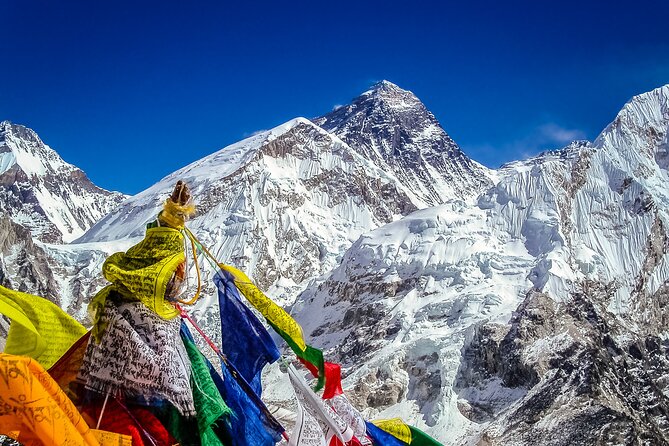
You start early for Kala Patthar, listed at 5,545 meters. The walk takes about two hours before you return to Gorakshep for breakfast.
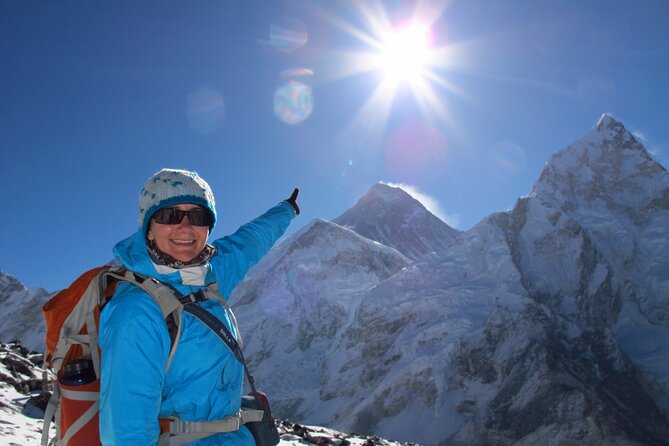
This is the highest point of the trip and the main viewpoint day. From Kala Patthar, you can see Everest and other Himalayan peaks. The early start is practical because the plan is to reach the viewpoint before returning for breakfast and the helicopter flight.
After breakfast, you fly from Gorakshep to Kathmandu in a shared helicopter. The flight is listed at about two hours, although mountain aviation is always subject to weather and operating conditions. The return changes the trip’s character completely: after days of walking, you move back to the capital by air instead of retracing the trail.
The helicopter is more than a luxury add-on. It is the reason this seven-day version can work. It saves several days of walking and avoids repeating the same route downhill. At the same time, the flight is shared, so you should not expect a private aircraft arranged only for your party.
What the $3,195 price really covers
At $3,195 per person, this is not a budget trek. The value comes from the combination of included transport and a compressed schedule.
Your price includes:
- Airport pickup and drop-off for the trek
- Kathmandu to Lukla flight
- Gorakshep to Kathmandu shared helicopter
- Tea-house accommodation
- Trekking permits and entrance fees
- English-speaking government-licensed trekking guide
- Six breakfasts, six lunches, and six dinners
The helicopter is the big cost item that changes the comparison with a standard return trek. You are paying for speed, convenience, and a different finish to the route. If you have only one week for the walking portion, that can make the price worthwhile.
You still need to budget for Kathmandu hotels before and after the trek, personal trekking gear, insurance, emergency evacuation, beverages, mineral water, hot water showers, Wi-Fi, and charging. Those extras are not minor if you want regular comforts, so I would calculate the full trip cost before booking.
Guides, group size, and practical support
The tour uses a maximum group size of 15. That gives you the social feel of a group trek while keeping the size below the very large organized departures sometimes seen on popular Himalayan routes.
Guide quality is especially important on this itinerary because the schedule is short and the altitude is high. Padam receives praise for his years of experience, calm response to anxiety, friendly personality, and ability to answer questions in English. Kesh receives praise for clear WhatsApp communication and for staying available when flight changes caused problems.
That kind of support has real value. Weather delays are part of mountain travel, and the positive feedback points to practical help rather than just pleasant conversation. Still, no guide can control the weather, helicopter operation, or flight schedule. Build flexibility into your wider Nepal plans if possible.
You also need your own trekking gear. The package does not provide personal equipment, and one unusual piece of practical feedback involved Kesh helping someone find boots after they forgot theirs. Treat that as a warning, not a service to rely on. Check your footwear and clothing before leaving Kathmandu.
Who should book this trek?
I would recommend this trip to a fit, time-conscious hiker who wants the classic Everest Base Camp route but does not want to walk back to Lukla. You should be comfortable with six- to seven-hour walking days and with a quick rise from Lukla to elevations above 5,000 meters.
It also suits someone who values guide support and wants the major transport arranged in advance. The inclusion of permits, meals, tea-house accommodation, the Lukla flight, and the helicopter return removes a lot of planning work.
I would hesitate if you want a slow trek with a generous adjustment schedule. There is no listed rest day, and the plan is demanding. I would also hesitate if you need a fully flexible booking, since the experience is non-refundable and cannot be changed after booking. If the minimum group size is not reached, the operator says you will be offered another date or experience, or a full refund.
Should you book the Everest Base Camp trek and helicopter return?
Book it if your priority is reaching Everest Base Camp and Kala Patthar within a tight seven-day plan, with a helicopter return and strong guide support. The route gives you the famous villages, mountain views, Buddhist details, and high-altitude walking without making you repeat the trail on the way back.
Skip it if your main goal is a relaxed pace, a lower price, or built-in time for altitude adjustment. The best reason to choose this trip is not that it is easy. It is that it packs a major Himalayan route into a short window and finishes with a memorable flight out.
FAQ
How long does the Everest Base Camp trek and helicopter return take?
The experience lasts approximately seven days. You walk from Lukla to Everest Base Camp, visit Kala Patthar the next morning, and fly from Gorakshep back to Kathmandu.
Where does the experience start?
It starts at the TIA Domestic Terminal parking lot in Kathmandu, with a stated start time of 5:15 am.
Is airport pickup included?
Yes. Airport pickup and drop-off are included for arrival and departure connected with the trek.
Is the flight from Kathmandu to Lukla included?
Yes. The Kathmandu to Lukla flight ticket is included in the price.
Is the helicopter flight back to Kathmandu included?
Yes. A shared helicopter from Gorakshep to Kathmandu is included.
Where do you sleep during the trek?
Overnight accommodation is provided in tea-house lodges. Hotels in Kathmandu before and after the trek are not included.
Are meals included?
Yes. Six breakfasts, six lunches, and six dinners are included during the trek.
What fitness level is required?
The experience requires a moderate physical fitness level. The itinerary includes walking days of about four to seven hours and reaches Kala Patthar at approximately 5,545 meters.
Recently added around Kathmandu
- Ghorepani Poon Hill Trek★ 5.0 · 16 reviews
- Private Manaslu Circuit Trek at Himalayas★ 5.0 · 3 reviews
- Amazing 1 Day Trekking Experience in Kathmandu Nepal★ 5.0 · 24 reviews
- Ghorepani Poonhill Trek★ 5.0 · 5 reviews
- Upper Mustang Trekking★ 5.0 · 2 reviews
- Upper Mustang Trekking★ 3.0 · 2 reviews
- Upper Mustang Trekking★ 5.0 · 4 reviews
- Upper Mustang Trek★ 5.0 · 5 reviews
Everest Base Camp Treks, compared.






Browse the lists this tour appears in