
REVIEW · KATHMANDU
Everest Base Camp Luxury Lodge Trek – 15 Days
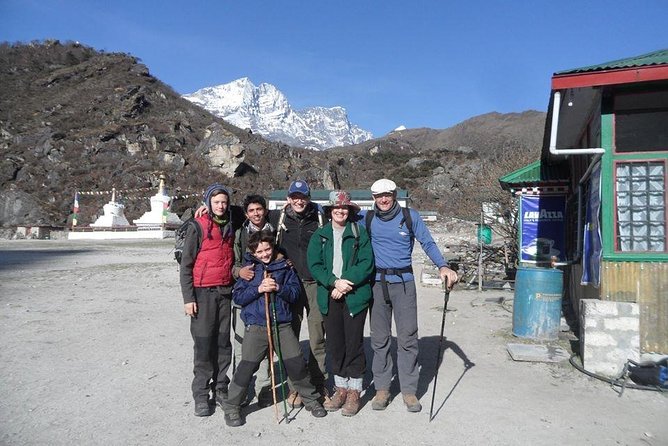
The Himalayas reward steady steps. This Everest Base Camp trek combines grand mountain views with time in Sherpa villages, a stay in Namche Bazaar, and the sunrise climb to Kala Patthar. I like the careful acclimatization days at Namche and Dingboche, and I like that airport transfers, permits, meals, guides, porters, and domestic flights are included. The main concern is the title: it says 15 days, while the supplied schedule covers 14 days, and luxury lodge standards in the high mountains may be simpler than you expect.
You will walk for about six hours on most trekking days, often on rocky trails with steep climbs and descents. The $3,800 price is high, but it covers many costly essentials, including Kathmandu hotels, mountain accommodation, food, staff, insurance for the guide and porter, and the Lukla flights. You still need to budget for drinks, hot showers, Kathmandu meals, travel insurance, and possible weather changes.
The trek at a glance
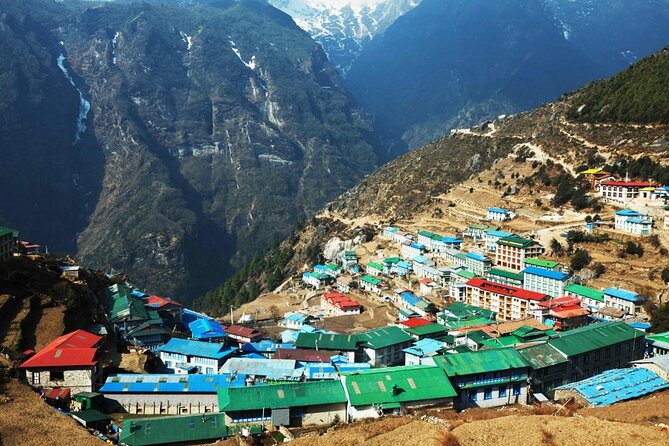
- Kala Patthar at 5,545 meters: The sunrise climb gives you broad views toward Everest, Pumori, Nuptse, Lhotse, Ama Dablam, and other major peaks.
- Two acclimatization stops: Extra time in Namche Bazaar and Dingboche helps break up the long climb toward Base Camp.
- Sherpa communities: Khumjung, Khunde, Namche Bazaar, Phakding, and other villages give the route a human side beyond the mountains.
- Lukla flight included: The trek begins and ends with the short domestic flight between Kathmandu and Lukla.
- Staff support: One porter is provided for every two people, with guide and porter wages, food, lodging, transport, and insurance included.
- Private group format: Only your own group takes part, with group discounts available.
Why this Everest trek earns its place on a Nepal trip
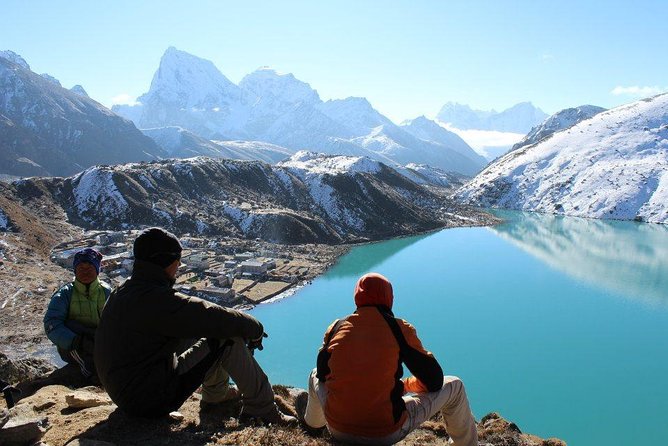
Everest Base Camp is not simply a walk toward a famous sign. The route passes through the Khumbu, the Sherpa homeland, where monasteries, stone villages, prayer sites, suspension bridges, and mountain lodges give the journey a strong sense of place.
The views begin early. From the trail near Namche, you can see Thamserku. Higher up, Ama Dablam becomes a constant companion, with Everest, Lhotse, Nuptse, Tawoche, and other peaks appearing as the route gains height. The scenery changes from forest near Lukla to open high mountain country around Dingboche, Lobuche, and Gorakshep.
I especially like the way the schedule builds in time to adjust. You spend a day around Namche before continuing to Tyangboche, then another acclimatization day in Dingboche. That is much more sensible than racing to Base Camp and hoping your body cooperates.
The route is still demanding. Six-hour days are common, and the altitude changes the nature of every walk. A moderate fitness level is required, but the distance alone is not the only issue. You must handle cold, thin air, uneven ground, and repeated uphill sections.
More Everest Base Camp Treks in Kathmandu:
- Everest Base Camp Trek – 14 Days
★ 5.0 · 1,499 reviews - Everest Base Camp Trek
★ 5.0 · 842 reviews - Everest Base Camp Trekking
★ 5.0 · 485 reviews
Day 1: A soft landing in Kathmandu
Your airport pickup begins at Tribhuvan Airport in Kathmandu. A private car, van, or bus takes you to a five-star hotel, where you spend the first night.
This is a useful start rather than wasted time. You have a chance to rest after your flight and prepare for an early departure to Lukla. The schedule lists a 5:15 am start point at the airport, so your first morning requires an early rise.
The package includes the Kathmandu hotel on arrival and again after trekking. Food in Kathmandu is not included, so plan separately for meals in the capital.
Day 2: Lukla to Phakding, the first mountain walk
The morning flight takes you from Kathmandu to Lukla at about 2,886 meters. Lukla is the gateway for this route and is known for its extreme mountain airport setting.
After arriving, you refresh at a local hotel before walking toward Phakding at roughly 2,640 meters. The trail follows the Dudh Koshi, with a gentle climb along the mountainside. Nupla, rising to 5,885 meters, appears across the river.
The walking time is listed at about six hours. This first day gives you a taste of the route without pushing you straight into the highest elevations. It is also a reminder that even the lower sections are active walking days, not casual strolls.
Day 3: River crossings and the climb to Namche Bazaar
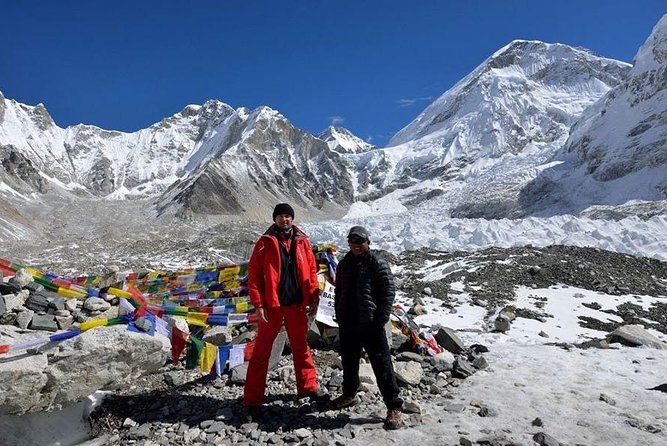
From Phakding, the trail follows the right bank of the Dudh Koshi toward Namche Bazaar. You pass Thamserku across the river, then continue through Bengar, Chumoa, and Monjo.
At Monjo, you enter Sagarmatha National Park and pay the required park entrance fee through the arranged permits. The route then follows the river to the point where the Dudh Koshi and Bhote Koshi meet.
Namche is at 3,440 meters, so the final climb matters. The trail has many ups and downs before the settlement, and the six-hour estimate does not mean an easy day. Namche is a good place to settle into the rhythm of mountain walking, with lodges, shops, and a strong Sherpa presence.
A few more treks around Kathmandu worth a look
- Annapurna Circuit Trek with Tilicho Lake
★ 5.0 · 368 reviews - Everest Base Camp Trekking – 13 Day
★ 5.0 · 365 reviews - Everest Base Camp Trek
★ 5.0 · 350 reviews - Everest Base Camp Trek -14 Days
★ 5.0 · 321 reviews
Day 4: Acclimatization around Namche and Khumjung
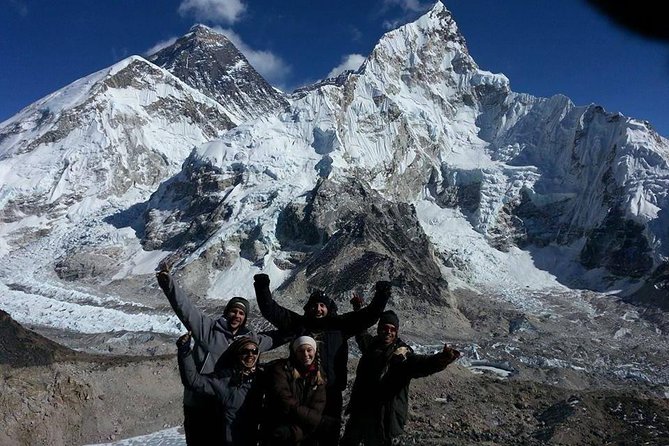
The schedule keeps you in Namche for another night, which is one of the trip’s best choices. You climb toward Khumjung, a Sherpa settlement, and see Everest, Ama Dablam, Thamserku, Nuptse, Lhotse, Tawoche, and Kwangde from the surrounding trails.
The day also includes a visit to the museum above Namche, where you can learn about Sherpa culture. This gives the trek more substance than a simple mountain checklist. You are not just moving from lodge to lodge; you are spending time in communities shaped by altitude, trade, mountaineering, and Tibetan Buddhist traditions.
The return to Namche still takes about six hours. Treat this as a walking acclimatization day, not a day off.
Day 5: Namche to Tyangboche and its famous monastery
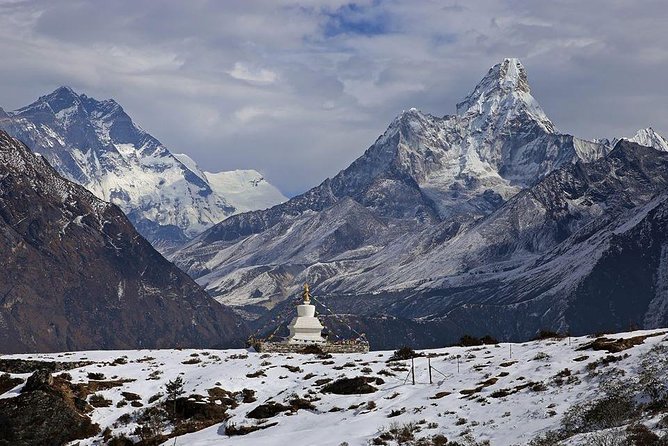
The trail leaves Namche and follows a high route above the Dudh Koshi. You pass the steep cliff above the river and continue toward Trashinga and Phunki Tenga before reaching Tyangboche at about 3,867 meters.
This section gives you some of the route’s best mountain views. Ama Dablam, Everest, Lhotse, Nuptse, and Tawoche appear across the horizon. Tyangboche is also known for its old monastery and for sunrise and sunset views toward Everest and Ama Dablam.
The route takes around six hours. There are steep sections, and the descent toward Phunki Tenga followed by the climb to Tyangboche can feel tiring. Still, the monastery and mountain views make this one of the more rewarding overnight stops.
Day 6: Into the Imja Valley and Dingboche
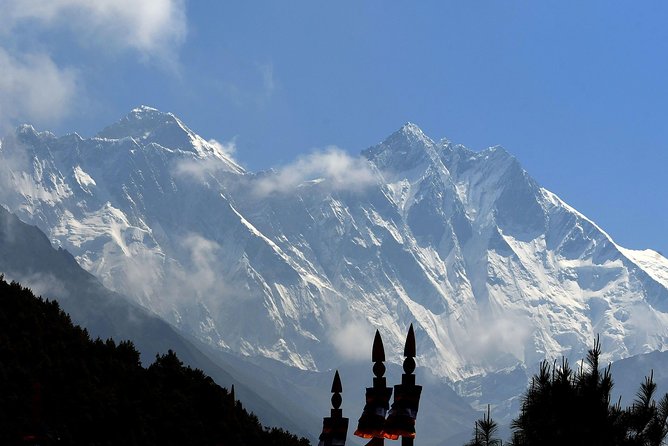
You descend through rhododendron forest to Deboche, then cross a suspension bridge over the Imja Khola. The route continues through Minlinggo into the Imja Valley, beneath Ama Dablam, Nuptse, and Lhotse.
Dingboche sits at about 4,260 meters. The scenery now feels more open and exposed than around Lukla and Namche. Trees become less central, and the peaks take up more of your view.
This is another six-hour walking day. The route is not only about reaching the next lodge. It is also about gaining height in measured stages before the harder push toward Lobuche, Gorakshep, and Base Camp.
Day 7: Dingboche acclimatization and a possible Chhukung walk
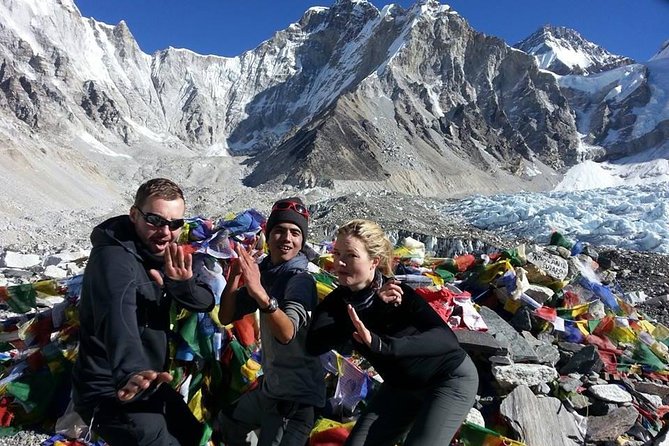
You spend another night in Dingboche. The schedule allows time to walk around the village and hike toward Chhukung in the afternoon.
From this area, you can see Island Peak, Ama Dablam, Makalu, Tawoche, and other peaks. The high point of the day is not a major destination but the chance to move at a controlled pace and let your body adjust.
The listed duration is six hours, though the exact effort depends on how far you walk toward Chhukung. You should not feel pressured to turn an acclimatization day into a race. Rest is part of the trek.
Day 8: Dingboche to Lobuche through Dugla
The route first follows a gentler section toward Pheriche, with views of Tawoche, Ama Dablam, Pokalde, Kongma Tse, and the great wall of Nuptse.
You stop for lunch at Dugla, about 4,595 meters, before continuing to Lobuche. The full day takes around five and a half to six hours. At this height, a normal walking pace feels slower, and breaks become more important.
Lobuche is an important staging point before Base Camp. The air is thinner, the route is rockier, and the comfort of the lodge may feel more basic than the luxury label suggests. The package includes available luxury accommodation in lodges and tea houses, but the information does not define a fixed hotel standard at each mountain stop.
Day 9: Gorakshep and Everest Base Camp
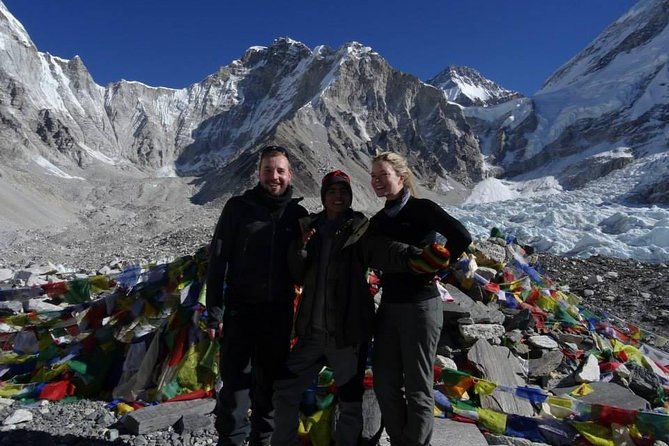
This is the main goal for many people. From Lobuche, you walk toward Gorakshep at about 5,140 meters, then continue over rocky ground beside the Khumbu Glacier.
The route brings views of Nuptse, Lho-La, and Khumbutse. You reach Everest Base Camp and then return to Gorakshep for the night.
The whole day is listed at about six hours, but altitude can make this section feel far longer. The ground is rough, and the return walk matters just as much as the outward journey. Base Camp itself is not a permanent town or a viewpoint with a simple road access. It is a high mountain staging area beside the glacier, with conditions that can vary by season.
Day 10: Kala Patthar sunrise and the descent to Pheriche
The early climb to Kala Patthar at 5,545 meters is the visual high point of the trek. From the summit area, you can watch the sunrise over Everest, Pumori, Lingtren, Khumbutse, Nuptse, Lhotse, Ama Dablam, Thamserku, and other peaks.
The ascent starts from Gorakshep, followed by a long descent to Pheriche at about 4,243 meters. The day is listed at six hours, but the early start and altitude make it a serious effort.
Pheriche has a Himalayan Rescue Association aid post, with foreign volunteer doctors available for medical treatment. This is useful support in a high-altitude region, though you should still have travel insurance that covers trekking and emergency care. Travel insurance is not included in the price.
Days 11 to 13: Returning through Tyangboche, Namche, and Lukla
The return route gives you a second look at places that may have passed quickly on the way up.
On Day 11, you walk from Pheriche to Tyangboche, descending through rhododendron forest and visiting the research centre. You can also visit the monastery and look back toward Ama Dablam, the green hills, and the river valley.
Day 12 takes you from Tyangboche toward Namche. The route includes traditional villages such as Khumjung and Khunde, along with a monastery associated with a Yeti scalp. You reach Namche in the late afternoon after about four and a half hours.
On Day 13, you walk from Namche to Lukla. This is the final trekking day, with lunch served along the route. After arriving in Lukla, you can refresh and rest before the return flight.
The descent is easier on your lungs, but it still puts work on your knees. Do not assume the second half is effortless simply because you are losing altitude.
Day 14: Lukla flight and Kathmandu
After breakfast, the domestic flight takes you from Lukla to Kathmandu. You have free time for shopping or rest before a private vehicle transfers you to the airport.
The supplied schedule calls this a 14-day program, while the product title says 15 days. Ask the operator to confirm exactly how the extra day is counted before paying. It may relate to arrival or departure arrangements, but that is not specified.
What the $3,800 price covers
The price includes more than just guiding. You receive:
- Private airport transfers
- Five-star Kathmandu accommodation on arrival and after trekking
- Breakfast, lunch, and dinner during the trek
- National park permits and required paperwork
- Lukla to Kathmandu return flights
- Available luxury lodge or tea house accommodation
- An experienced guide
- One porter for every two people
- Guide and porter wages, food, drinks, accommodation, transport, and insurance
- Government taxes, VAT, service charges, and official expenses
That is a substantial package for a private trek. The cost becomes easier to understand when you add domestic flights, staff support, meals, permits, and mountain lodging.
The exclusions still matter. Drinks are not included, alcoholic or otherwise. Hot showers during the trek cost extra, and meals in Kathmandu are separate. Travel insurance is also your responsibility.
How the guiding support affects the experience
The strongest praise connected to this operation focuses on the staff’s care and practical help. Ganesh and porter Lakpa are specifically associated with attentive support, while Hai, Ngima, and Pasang are also named for hard work during the trek.
That matters on a route where small problems can become serious. You want a team that helps with pacing, route decisions, bags, and daily needs. One porter for two people also means you should pack carefully and keep your personal day bag manageable.
This is a private activity, so your group does not have to match the pace or preferences of a large mixed party. Group discounts may improve the value if you are booking with friends or family.
Who should book this trek?
I would consider this trip a good match for you if you want:
- A private Everest Base Camp itinerary with staff support
- Extra acclimatization time at Namche and Dingboche
- Sherpa villages, monasteries, museums, and mountain views
- Meals, permits, flights, porters, and transfers arranged in advance
- A higher level of Kathmandu accommodation
- A structured plan instead of organizing each lodge and transfer yourself
You should think twice if you want hotel-style luxury throughout. Mountain lodges and tea houses can be comfortable and well placed, but the information does not promise private bathrooms, reliable hot water, or five-star service above Kathmandu.
You also need to be comfortable with long walking days and high altitude. The operator lists moderate fitness as necessary, and that should be taken seriously.
Should you book the Everest Base Camp luxury lodge trek?
I would book it if you value organization, private guiding, and a slower altitude schedule more than absolute luxury. The strongest parts are the two acclimatization stops, the cultural visits around Namche and Khumjung, the Kala Patthar sunrise, and the broad list of inclusions.
Before booking, confirm the 14-day versus 15-day wording, the exact lodge standards, the flight arrangements, and what happens if weather prevents the Lukla flight. The cancellation policy allows a full refund when you cancel at least 24 hours before the start, and poor weather may lead to a new date or full refund.
This is a serious mountain journey with a strong support package, not a pampered resort holiday. If that sounds like the right balance, the itinerary offers a practical route to Everest Base Camp with time to notice the people and places along the way.
FAQ
Where does the trek begin?
The experience begins at Tribhuvan Airport in Kathmandu, Nepal, with airport pickup by private car, van, or bus.
What time is the meeting?
The listed start time is 5:15 am at Tribhuvan Airport.
How long is the experience?
The tour title says 15 days, while the detailed schedule covers 14 days. Confirm the exact duration with the operator before booking.
Is the trek private?
Yes. This is a private activity, and only your group participates.
Is pickup included?
Yes. Airport pickup and drop-off by private vehicle are included.
Are meals included?
Breakfast, lunch, and dinner are included during the trekking portion. Food in Kathmandu is not included.
Are the Lukla flights included?
Yes. The package includes the domestic flight tickets between Lukla and Kathmandu.
Is accommodation in Kathmandu included?
Yes. Five-star deluxe accommodation is included on arrival and after the trek.
Is a guide and porter included?
Yes. An experienced guide and porters are included, with one porter provided for every two people.
Is travel insurance included?
No. You must arrange and pay for your own travel insurance.
Are hot showers included?
No. Hot showers during the trek are not included.
What happens if bad weather cancels the experience?
If poor weather causes cancellation, you are offered a different date or a full refund. If you cancel, a full refund is available when you cancel at least 24 hours before the start time.
Recently added around Kathmandu
- Ghorepani Poon Hill Trek★ 5.0 · 16 reviews
- Private Manaslu Circuit Trek at Himalayas★ 5.0 · 3 reviews
- Amazing 1 Day Trekking Experience in Kathmandu Nepal★ 5.0 · 24 reviews
- Ghorepani Poonhill Trek★ 5.0 · 5 reviews
- Upper Mustang Trekking★ 5.0 · 2 reviews
- Upper Mustang Trekking★ 3.0 · 2 reviews
- Upper Mustang Trekking★ 5.0 · 4 reviews
- Upper Mustang Trek★ 5.0 · 5 reviews
Everest Base Camp Treks, compared.




Browse the lists this tour appears in