
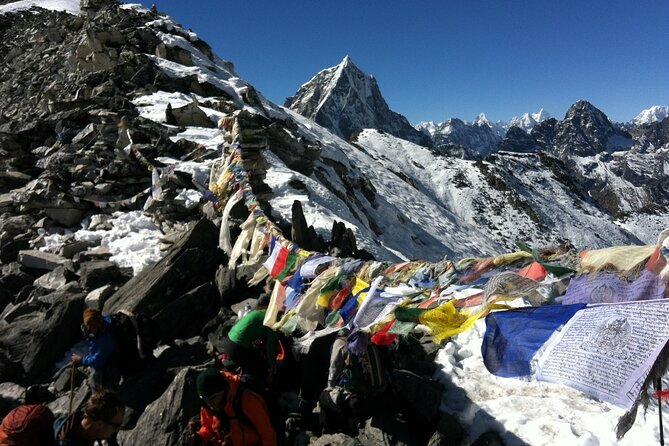
REVIEW · KATHMANDU
14 Days Everest Base Camp Trek
The mountain flight is only the beginning. This 14-day Everest Base Camp trek combines the classic Khumbu route with Sherpa villages, Buddhist sites, teahouse stays, and a guide-led climb to 5,365 meters. I especially like the built-in acclimatization days and the inclusion of flights, meals, permits, a porter, and airport transfers. The main concern is the altitude: long days, basic lodging, cold conditions, and possible flight delays make this a serious trek, not a sightseeing stroll.
I also like that the trek includes both Everest Base Camp and Kala Patthar, since each offers a different mountain experience. The private format gives your own group a guide rather than placing you into a large public departure. Still, the advertised price of $1,499 per person does not cover drinks, travel insurance, evacuation, visa fees, or unexpected costs, so your final budget will be higher.
Key points before you book
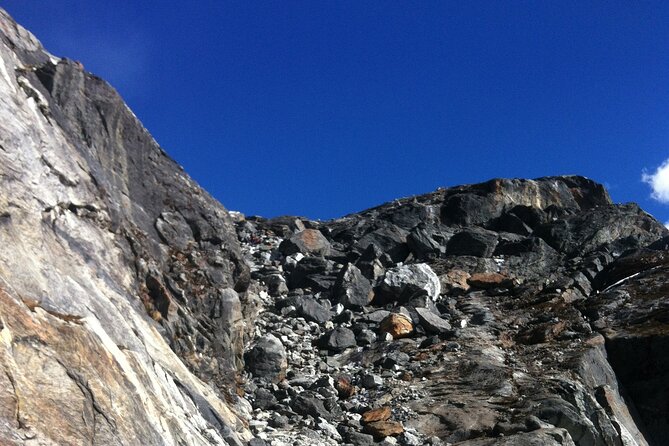
- Everest Base Camp at 5,365 meters: The goal arrives on Day 9, after a demanding walk beside the Khumbu Glacier.
- Kala Patthar viewpoint: Day 10 brings a separate high-altitude hike with broad views of Everest, Nuptse, Lhotse, Pumori, and nearby peaks.
- Two acclimatization stops: Namche Bazaar and Dingboche include shorter outings to help your body adjust to the height.
- Domestic flights included: You fly between Kathmandu and Lukla, including a scenic return flight listed at about 35 minutes.
- Practical support: A local English-speaking guide, personal porter, sleeping bag, oxygen cylinder, first-aid kit, TIMS card, and transfers are included.
- Shared teahouse accommodation: Expect double or triple sharing in Kathmandu and throughout the mountain route, with meals provided but drinks extra.
Why this 14-day route works
The itinerary follows the familiar approach to Everest Base Camp, but its value comes from pacing rather than speed. You do not rush from Lukla straight toward the high country. Instead, the route gives you a night in Phakding, two nights in Namche Bazaar, and two nights in Dingboche.
That matters. At altitude, a rest day is not wasted time. It gives you a chance to walk higher, return lower, eat, sleep, and see how your body is coping. The plan includes an outing around Namche and a hike to Nangkartshang Hill from Dingboche.
You should still understand the physical demand. Several days run six to seven hours, while the Base Camp day is listed at nine hours and the Kala Patthar day at eight. The trail includes suspension bridges, forest paths, steep climbs, rocky ground, and long descents. You need strong physical fitness, as the operator states directly.
More Everest Base Camp Treks in Kathmandu:
- Everest Base Camp Trek – 14 Days
★ 5.0 · 1,499 reviews - Everest Base Camp Trek
★ 5.0 · 842 reviews - Everest Base Camp Trekking
★ 5.0 · 485 reviews
Kathmandu arrival and the first mountain flight
On Day 1, an airport representative meets you at Tribhuvan International Airport. You are transferred to a Kathmandu hotel in double or triple-sharing accommodation. The scheduled airport transfer is useful after an international flight, especially if you arrive tired or unfamiliar with the city.
Day 2 begins with a flight from Kathmandu to Tenzing-Hillary Airport in Lukla. The flight is described as a mountain flight, and the short airstrip is the gateway to the Khumbu route. Weather matters here. The experience can be canceled or rescheduled if conditions are poor, so avoid planning a tight international connection immediately after the return flight.
From Lukla, you walk to Cheplung, where the route offers views of Mt. Khumbila, then continue to Phakding. This first trek is listed at about four hours, making it a useful introduction to the walking rhythm before the longer days begin. You stay in a teahouse and receive breakfast, lunch, and dinner.
The route also gives you an early view of Kusum Kanguru. It is a gentle opening compared with the days ahead, but you are already gaining height, so a slow pace is sensible.
Namche Bazaar and the first acclimatization day
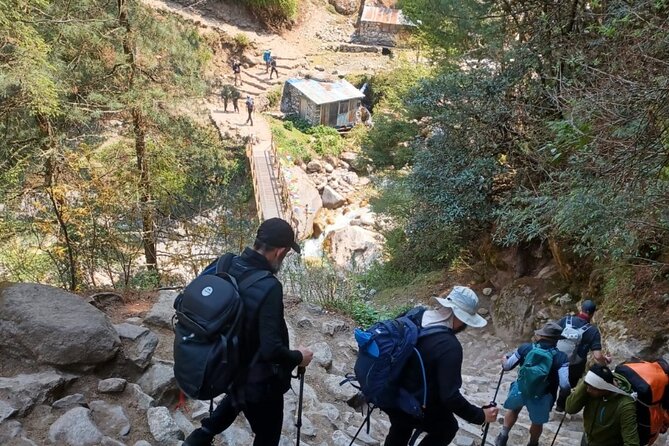
Day 3 is one of the route’s important transitions. You walk toward Jorsale and enter Sagarmatha National Park, passing Mani stone walls carved with Buddhist prayers. The trail crosses suspension bridges and moves through pine and cedar forest before the climb to Namche Bazaar.
Namche is the main settlement of the Everest region and has long served as a trading point between Nepal and Tibet. Here, the route shifts from lower valley walking to high-altitude trekking. The day is listed at about seven hours, so you will likely appreciate the overnight rest in a teahouse.
Day 4 is set aside for adjustment. You take a short trip toward Syangboche Airport, at about 3,700 meters, and visit the Everest Photo Gallery and Sherpa Culture Museum. The itinerary also includes sightseeing around Namche and views of Everest when the weather allows.
This is one of the strongest parts of the plan. You are not simply sitting indoors, but you also are not pushing onward to a higher village. The shorter outing gives you something to do while keeping the day lighter. Breakfast, lunch, and dinner are included.
Tengboche Gompa and the upper Khumbu
On Day 5, the trail follows the Dudh Koshi Valley toward Phunki Tenga before climbing to Tengboche. The monastery sits at about 3,860 meters and is surrounded by views of Everest, Ama Dablam, and other major peaks.
Tengboche Gompa is one of the cultural highlights of the trek. Buddhist prayer flags, Mani stones, mountain views, and the monastery give the walk a sense of place that a simple point-to-point hike would miss. You are not just walking toward a famous mountain. You are moving through Sherpa communities shaped by Himalayan Buddhist traditions.
The day is listed at six hours. You stay in a teahouse with all three meals included. Accommodation here and elsewhere on the trek is functional rather than luxurious. Double or triple sharing is part of the arrangement, and the package does not promise private rooms or hotel-style facilities.
Day 6 takes you through Deboche and across the Imja Khola toward Pangboche. You pass Mani stones before reaching Dingboche, often called the Summer Valley. The views open toward Lhotse, Ama Dablam, and Island Peak.
Dingboche is an important stop because the altitude is now serious. The six-hour walking day can feel harder than the distance suggests. Take your time, drink enough water, and tell your guide if you feel unwell. Drinks are not included, so you need to budget separately for water and other beverages.
A few more treks around Kathmandu worth a look
- Annapurna Circuit Trek with Tilicho Lake
★ 5.0 · 368 reviews - Everest Base Camp Trekking – 13 Day
★ 5.0 · 365 reviews - Everest Base Camp Trek
★ 5.0 · 350 reviews - Everest Base Camp Trek -14 Days
★ 5.0 · 321 reviews
Dingboche’s high viewpoint and the road to Lobuche
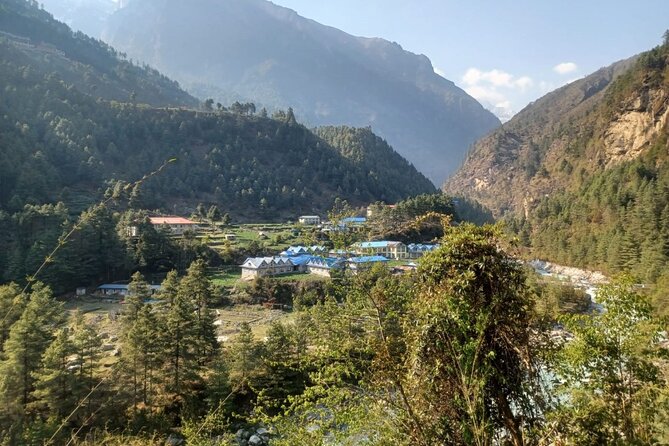
Day 7 is another acclimatization day based in Dingboche. The planned hike goes to Nangkartshang Hill and takes about five hours. From the viewpoint, you may see Lobuche East, Lobuche West, Kangtega, Taboche Peak, Thamserku, and Ama Dablam.
If the weather is favorable, Mt. Makalu, the world’s fifth-highest mountain, may also appear. That weather clause is important. Mountain views are never guaranteed, even on a carefully planned itinerary, and cloud can change the scene quickly.
The schedule allows time to return to Dingboche and rest after lunch. This is a smart place to have a lighter afternoon because you are preparing for the highest part of the trek. You spend another night in the same teahouse and receive all three meals.
On Day 8, you leave Dingboche for Lobuche. The walk is listed at about five hours, with a stop at Thukla. From there, the route moves toward the Khumbu Glacier. You can expect views of Nuptse, Pumori, and the Mahanlangur Himal, along with prayer flags, chortens, and Mani stones.
The scenery becomes more stark as you gain height. Forest gives way to a colder, more open setting, and the walking can feel slower. Lobuche is a key overnight stop before the big Base Camp day. Keep your evening simple: eat, organize your pack, and rest.
Everest Base Camp at 5,365 meters
Day 9 is the hardest and most anticipated day for many people. From Lobuche, you walk along the Khumbu Glacier toward Gorak Shep and then continue to Everest Base Camp. The full day is listed at about nine hours.
Everest Base Camp sits at 5,365 meters. It is the closest point to Mt. Everest on this route without mountaineering equipment. During spring, expedition teams may be preparing for summit attempts, and the Khumbu Icefall provides the dramatic backdrop.
The Base Camp viewpoint is not the summit, and Everest itself may not appear as you might expect from the famous destination. The reward is the setting: glacier ice, expedition activity in the climbing season, prayer flags, and the knowledge that you have reached the end of the approach route.
You return to Gorak Shep for the night. That return is part of the day’s difficulty. The excitement can carry you for a while, but high altitude and fatigue do not disappear because you have reached the goal.
Kala Patthar, then the long descent
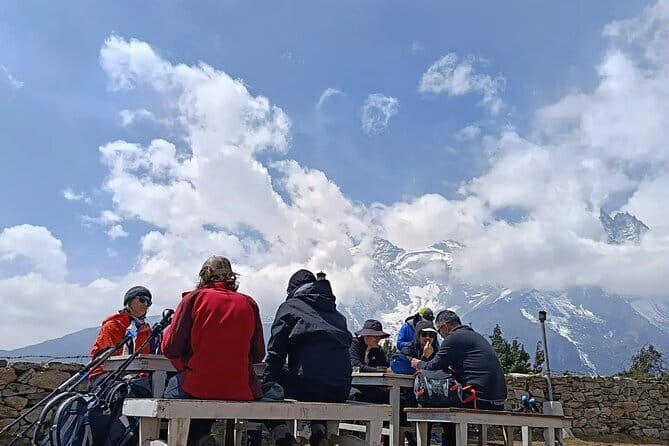
Day 10 begins with the hike to Kala Patthar. This viewpoint is valued for its broad mountain views, including Everest, Nuptse, Cholatse, Lhotse, and Pumori. The itinerary calls it a key day, and it earns that label because the viewpoint often gives a clearer visual connection to Everest than Base Camp itself.
The day is listed at eight hours. After Kala Patthar, you return to Gorak Shep and continue down to Pheriche, at about 4,210 meters. Descending helps, but the route remains tiring. Your knees may feel the change more than your lungs.
From this point, the trek becomes a gradual return through familiar villages. Day 11 takes you through Pangboche and Phunki Tenga, beside the Imja River and via Kyangjuma, before arriving back in Namche Bazaar. It is a seven-hour day, so do not treat the descent as effortless.
Lukla and the return to Kathmandu
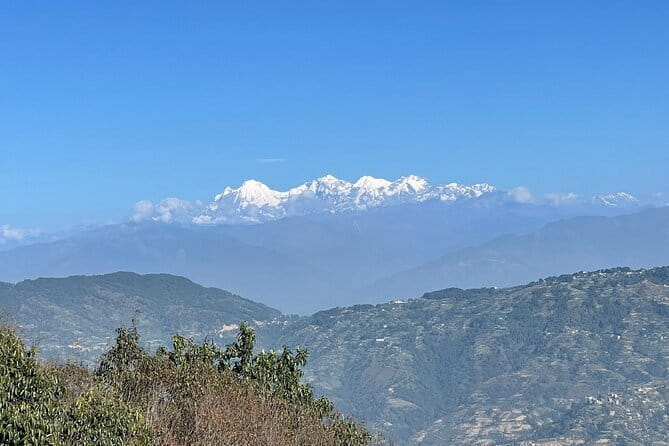
Day 12 follows the Dudh Koshi, crossing suspension bridges and passing through rhododendron forest. The listed walking time is seven hours, ending in Lukla.
This final mountain day gives you a chance to notice how different the route feels on the way back. You have already seen the high peaks, but the lower valleys, forests, streams, and villages now mark the end of the trek. A celebration can be arranged in Lukla for the group, though the details and cost of that celebration are not specified.
On Day 13, the return flight to Kathmandu is listed at about 35 minutes. You are transferred back to your hotel after landing. The package includes Kathmandu hotel accommodation on Day 13, again in double or triple sharing.
The extra Kathmandu time can be useful if you want to extend your Nepal visit. Possible add-ons listed by the operator include a Chitwan jungle safari, river rafting, a Kathmandu shopping tour, and mountain biking. These are not part of the $1,499 trek price.
Day 14 ends with a transfer to Tribhuvan International Airport. The listed airport transfer time is about two hours, but the itinerary does not promise a particular departure window. Plan your flight details carefully and confirm the pickup arrangement with the operator.
What the $1,499 price really covers
At $1,499 per person, the package offers solid coverage for a high-altitude trek. Included items are:
- Private airport and hotel transfers
- Kathmandu accommodation on Days 1 and 13
- Teahouse accommodation from Days 2 through 12
- Return Kathmandu to Lukla flights
- An English-speaking local guide
- A personal porter carrying up to 15 kilograms per person
- TIMS card and trekking permit support
- A cleaned, high-altitude sub-zero sleeping bag
- Oxygen cylinder, emergency medicine, and first-aid kit
- Medical and life insurance for the guides and porters
- Storage in Kathmandu for luggage you do not need on the trail
- Breakfast listed for 14 days
- Lunch and dinner listed for 12 days
That is a useful bundle. Flights alone can make up a notable part of a Nepal trekking budget, and a porter means you are not carrying the full load for two weeks. The sleeping bag is another practical inclusion, since cold nights at altitude are a real concern.
You still need money for water, drinks, personal purchases, a Nepal entry visa, travel insurance, and medical or evacuation costs. The visa is listed at $40 for foreign trekkers and is not needed for Indian citizens. Your travel insurance should be treated as essential planning, since it is not included.
The operator also lists cancellation, rescheduling, and extra accommodation costs as your responsibility when caused by unforeseen circumstances. Free cancellation is available up to 24 hours before the experience starts, while weather-related cancellation may lead to a new date or a full refund.
Guides, porters, and the feel of the trip
The trek uses an English-speaking local guide, with an additional assistant guide for a larger group. Although guide assignment is not guaranteed in advance, Bishal receives repeated praise in the supplied feedback for being helpful, friendly, encouraging, and attentive. Abhishek, identified as Bishal’s brother, is also praised after leading a solo trekker.
That is useful information when you choose a trekking company. On a demanding route, a guide’s attitude matters as much as route knowledge. You want someone who helps with pacing, daily organization, and morale when the weather turns or the trail feels long.
The activity is described as private, meaning only your group participates. It is also presented as a small-group experience. Ask for the exact group size before booking if that point matters to you, since a private group can still include several people.
The porter limit is 15 kilograms per person. Pack with that limit in mind, and remember that you still need a small daypack for items you want during the walk. The package does not describe porter tipping, so ask the company about local expectations before departure.
Food, lodging, and daily comfort
Breakfast, lunch, and dinner are included during the trekking days, with breakfast also listed for the Kathmandu days. Water and all other drinks cost extra.
The food is described positively in the available feedback, including praise for the meals and the organization of the stay. Still, the itinerary does not provide a detailed menu, so you should expect practical teahouse meals rather than a wide restaurant selection.
The accommodation is double or triple sharing in Kathmandu and in mountain teahouses. That keeps the price down and fits the nature of the route, but it also means you should be comfortable with basic shared lodging. The supplied information does not specify private bathrooms, heating, Wi-Fi, or hot showers, so do not book expecting those features.
Who should book this trek
I would recommend this trek to you if you want the classic Everest Base Camp route with a guide, porter, flights, meals, and built-in acclimatization days. It suits people who value help with logistics and who want cultural stops such as Tengboche Gompa, the Sherpa Culture Museum, Mani walls, and high-altitude villages.
It is also a good match if you prefer a private group rather than a large public departure. Solo hikers may find the guide and porter support especially useful, though the price and group arrangement should be confirmed for a single participant.
I would hesitate to recommend it if you have limited hiking fitness, dislike basic teahouses, need a private room every night, or have a very tight schedule around the Lukla flights. The highest day is long, weather can disrupt flights, and medical evacuation is not included.
Should you book the Everest Base Camp trek?
Book it if you want a well-supported route to Everest Base Camp and can accept the physical and financial realities of high-altitude trekking. The strongest value comes from the return flights, guide, porter, meals, sleeping bag, permits, transfers, and two acclimatization locations.
Before paying, confirm the exact guide, group size, flight arrangements, room-sharing plan, porter expectations, and what happens if Lukla weather changes your schedule. If those details suit you, this is a practical way to reach Base Camp while still leaving room for Sherpa culture, monastery visits, and the mountain villages that make the route memorable.
FAQ
How long is the Everest Base Camp trek?
The experience lasts approximately 14 days, including arrival and departure transfers, the trek, the Kathmandu to Lukla flights, and two Kathmandu hotel stays.
What is the price per person?
The listed price is $1,499 per person.
Does the price include flights to Lukla?
Yes. Return flights between Kathmandu and Lukla are included.
Is airport pickup available?
Yes. Airport and hotel transfers in a private vehicle are included, and an airport representative meets you on arrival in Kathmandu.
What accommodation is provided?
You receive double or triple-sharing hotel accommodation in Kathmandu on Days 1 and 13, plus double or triple-sharing teahouse accommodation during the trek.
Are meals included?
Breakfast is listed for 14 days. Lunch and dinner are listed for 12 days. Water and other drinks are not included.
Is a guide included?
Yes. An English-speaking local guide is included. An assistant guide may be added for a larger group.
How much luggage can the porter carry?
The personal porter carries up to 15 kilograms per person.
Is travel insurance included?
No. Medical and life insurance is provided for the guides and porters, but your own travel insurance is not included. Medical and evacuation expenses are also excluded.
What fitness level is required?
The operator states that you should have a strong physical fitness level. The trek includes walking days of up to nine hours and reaches Everest Base Camp at 5,365 meters.
Can the trek be canceled because of weather?
Yes. If poor weather causes cancellation, you may be offered a different date or a full refund. The Lukla flights and mountain conditions make weather an important part of planning.
Recently added around Kathmandu
- Ghorepani Poon Hill Trek★ 5.0 · 16 reviews
- Private Manaslu Circuit Trek at Himalayas★ 5.0 · 3 reviews
- Amazing 1 Day Trekking Experience in Kathmandu Nepal★ 5.0 · 24 reviews
- Ghorepani Poonhill Trek★ 5.0 · 5 reviews
- Upper Mustang Trekking★ 5.0 · 2 reviews
- Upper Mustang Trekking★ 3.0 · 2 reviews
- Upper Mustang Trekking★ 5.0 · 4 reviews
- Upper Mustang Trek★ 5.0 · 5 reviews
Everest Base Camp Treks, compared.






Browse the lists this tour appears in