
REVIEW · KATHMANDU
Everest Gokyo Valley Trek – 12 days
The high Himalaya rewards steady feet. This 12-day trek takes you from Kathmandu to Lukla, through Namche Bazaar and remote Sherpa settlements, then into the Gokyo Valley, where turquoise lakes, the Ngozumpa Glacier, and views of Everest, Lhotse, Cho Oyu, and Makalu fill the horizon. I especially like the Gokyo Ri sunrise hike and the quieter route compared with the classic Everest Base Camp trail.
I also like the practical setup: airport transfers, Lukla flights, permits, guide, porter support, mountain lodging, and breakfast are bundled into the $1,399 price. The main consideration is altitude. Gokyo sits at about 4,750 meters, and Gokyo Ri reaches 5,463 meters, so this is a serious high-altitude trek, not a casual mountain walk. Some schedule details also need clarification before booking, particularly the very short times shown for the Phortse and Dole sections.
Key points to know before booking
- Gokyo Ri reaches 5,463 meters: The sunrise climb is the trip’s big physical and visual test.
- Four giant peaks can appear together: From Gokyo Ri, you may see Everest, Lhotse, Cho Oyu, and Makalu in one broad panorama.
- The route follows the Ngozumpa Glacier: You walk from forest and river valleys into a world of moraine, ice, and high lakes.
- A guide and porter are included: Two guests share one porter, while an English-speaking guide leads the private group.
- The $1,399 price covers key trek costs: Flights, permits, guide services, porter services, mountain lodging, airport transfers, and breakfast are included.
- Weather can disrupt Lukla flights: The operator has handled diversions and helicopter arrangements for past departures, but flexibility remains essential.
What the 12-day Gokyo route actually gives you
This is a private trek for your group rather than a large departure. That matters in the mountains. Your guide can set the pace within the planned route, help with altitude concerns, and adjust when weather or flight problems interfere.
The route is built around acclimatization, although the schedule is brisk. You spend time in Namche Bazaar before going higher, then take a short day at Machhermo before reaching Gokyo. That structure helps, but you still need to be realistic about your fitness and altitude response.
The published rating is 5 out of 5 from 27 ratings, with 100 percent recommending the experience. Praise centers on friendly guides, useful support during difficult moments, and good handling of Lukla flight changes. Guides named in the feedback include Sonam, Kiran, FT Sherpa, Dipendra, Dibash, Pasang, Gyeljen Sherpa, and Ananta. The specific guide assigned to you may differ, but the pattern is clear: guide quality is a major part of the experience.
More Everest Base Camp Treks in Kathmandu:
- Everest Base Camp Trek – 14 Days
★ 5.0 · 1,499 reviews - Everest Base Camp Trek
★ 5.0 · 842 reviews - Everest Base Camp Trekking
★ 5.0 · 485 reviews
Day 1: Lukla flight and the walk to Phakding
Your day begins early, with a 6:15 a.m. start and a transfer to Tribhuvan Airport in Kathmandu. The flight to Lukla takes about 35 minutes. From the air, you get quick views of terraced hills and distant Himalayan peaks before landing at the small Lukla airport.
This flight is scenic, but it is also one of the least predictable pieces of the trek. Weather can delay, divert, or cancel service. In past cases, the operator has moved people onto the next available flight and arranged helicopter transport when necessary. That is useful support, but you should still avoid booking a tight international connection immediately after the trek.
From Lukla, you walk for about three hours to Phakding, following the Dudh Koshi River through a series of ups and downs. It is a manageable first walking day, though your legs may still be adjusting after the early flight and the unfamiliar altitude.
You spend the night in a tea house. Breakfast is included, while lunch and dinner during the trek are not. Keep that distinction in mind when comparing prices with other Nepal packages.
Day 2: Suspension bridges and the climb to Namche Bazaar
The trail follows the Dudh Koshi and crosses the river several times on suspension bridges hung with prayer flags. These bridges are not just transport links. They are one of the first unmistakable signs that you have entered the high Khumbu.
After entering Sagarmatha National Park, the trail climbs steeply from Larja Dobhan toward Namche Bazaar. This is a demanding day of about six hours, with the first real sustained uphill work of the trip.
Namche is the main hub of the Everest region. You will find shops, food vendors, tea houses, and views of the surrounding peaks. It is a good place to settle into the rhythm of walking, eating, resting, and watching the weather change by the hour.
The climb to Namche can feel harder than the distance suggests. Walk slowly, drink regularly, and let your guide know if you develop a headache, nausea, unusual tiredness, or trouble sleeping.
Day 3: Acclimatization above Namche
The third day is designed for acclimatization, and I consider it one of the most important days in the plan. You remain based in Namche, but take an early hike above town toward an Everest viewpoint.
Early timing matters. Clouds often build later in the day, so a sunrise departure gives you the best chance of seeing Everest, Lhotse, Ama Dablam, and nearby peaks clearly. The reward is not just a photograph. It gives you a first proper look at the scale of the country you are walking through.
On the way back, you can visit the Sherpa Museum. Its exhibits cover traditional Sherpa life and include photography by a local Nepalese naturalist. This adds useful context to the villages, prayer wheels, Mani stones, and painted flags you see along the trail.
Breakfast and tea or coffee are included on this day. The stop is also a good chance to ask your guide about the higher sections ahead, including Gokyo Ri and the glacier route.
A few more treks around Kathmandu worth a look
- Annapurna Circuit Trek with Tilicho Lake
★ 5.0 · 368 reviews - Everest Base Camp Trekking – 13 Day
★ 5.0 · 365 reviews - Everest Base Camp Trek
★ 5.0 · 350 reviews - Everest Base Camp Trek -14 Days
★ 5.0 · 321 reviews
Day 4: Khumjung, chortens, and the Phortse area
The route climbs Khumjung Hill before descending toward the Dudh Koshi. A chorten on the ridge sits at about 3,973 meters, below Khumbila, a 5,761-meter peak regarded as sacred in the region.
The route also passes through Mohang, associated with the reincarnated lama of Rongbuk Monastery in Tibet, who helped introduce Buddhism to the Khumbu. These details give the walk a stronger cultural focus than a simple peak-to-peak hike.
The trail eventually drops through steep switchbacks on a sandy slope toward the river. The published schedule labels this section as a stop at Phortse, but the displayed duration of four minutes is clearly not a realistic walking time. Treat that figure as a likely data error and ask the operator for the expected walking hours, elevation gain, and overnight village before you pay.
That small check is worth making. At this altitude, knowing the day’s true length helps you judge whether the trek fits your condition and experience.
Day 5: Forest, yak pastures, and the approach to Gokyo
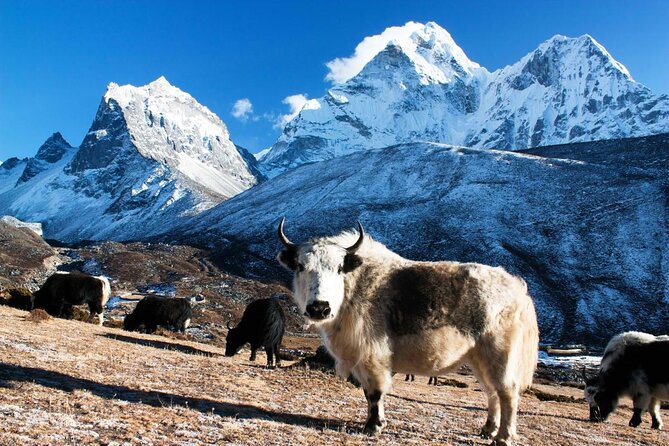
The route climbs through rhododendron woodland and passes kharkas, the seasonal settlements used by Sherpa families when yak herds move to summer grazing areas. You pass Tongba at about 3,950 meters and Gyele at about 3,960 meters.
This is a fine transition day. The lower green woodland begins to thin, and the trail feels more exposed and alpine. You see how local life follows the seasons, with temporary pasture settlements rather than permanent towns.
The schedule names Gokyo Lakes for this stop, although the description focuses on the settlements and the climb from the Dole side. The displayed duration is again listed as four minutes, which cannot be correct for the walking involved. Confirm the exact overnight stop, walking time, and elevation with Trekking Planner Nepal.
Day 6: Machhermo beneath Cho Oyu
From Dole, the route climbs steadily along the valley. Rhododendron gives way to scrub juniper as the altitude increases, and seasonal yak settlements appear along the way.
The mountain views become more dramatic here. Cho Oyu, at 8,153 meters, comes into view ahead, while Kantega and Thamserku rise behind down the valley. This is a shorter walking day, with arrival in Machhermo at about 4,410 meters around lunchtime.
That early arrival is useful. You have time to rest before the next day’s climb to Gokyo. At this height, a short afternoon is not wasted time. It gives your body a better chance to adjust before you gain more altitude.
Day 7: Ngozumpa Glacier and the third Gokyo Lake
Beyond Machhermo, the trail climbs a ridge with views back toward Kantega and forward toward Cho Oyu. The valley widens near Pangram, at about 4,390 meters, before the route descends to the river.
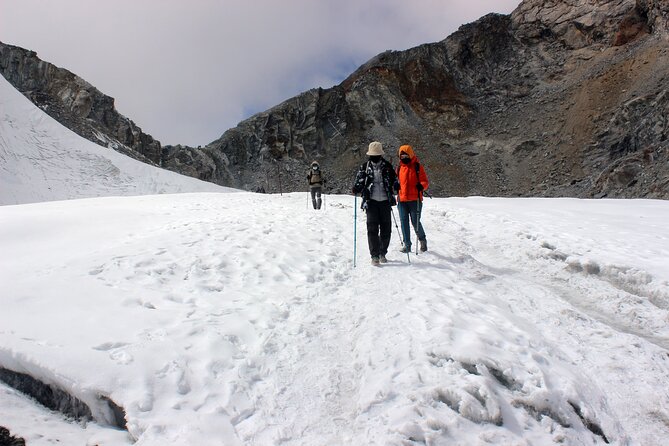
Then comes the serious approach to the Ngozumpa Glacier. You climb the terminal moraine, a rough section of rock and glacial debris. Once over it, the trail levels out and follows the valley past Longponga Lake, the second lake, at about 4,690 meters.
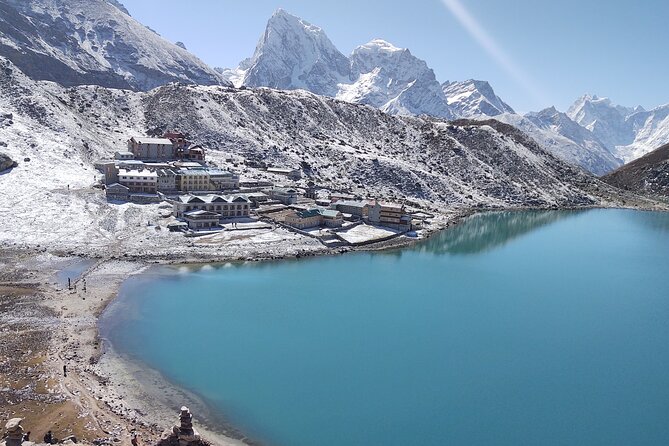
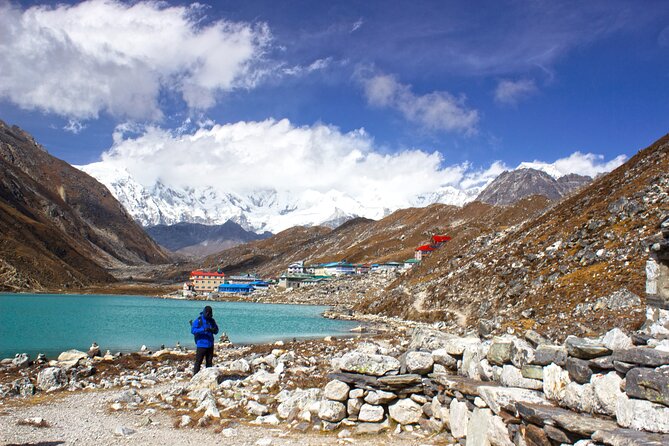
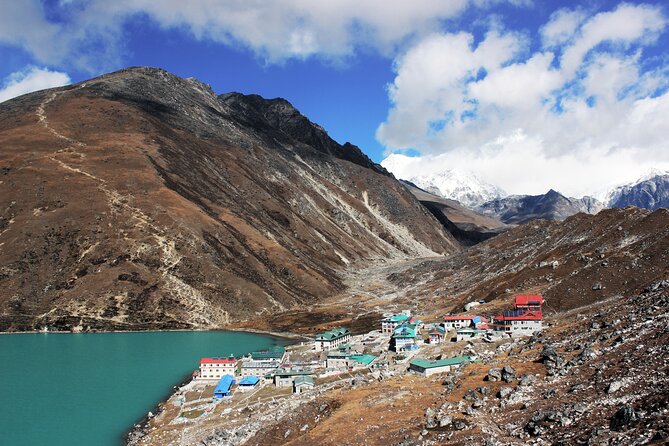
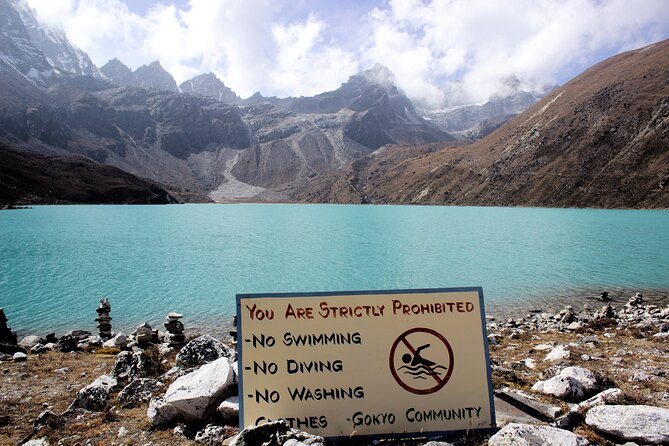
The route then continues over a boulder-strewn path to Gokyo, at approximately 4,750 meters, beside the third lake. The settlement is small, with roughly six to eight lodges described in the plan. You should expect simple mountain accommodation, not hotel comforts.
This is one of the finest days for scenery. You move from river valley to high moraine and then to still water surrounded by enormous peaks. The change is gradual enough to appreciate, but the altitude makes every uphill section count.
Day 8: Sunrise from Gokyo Ri and the fifth lake
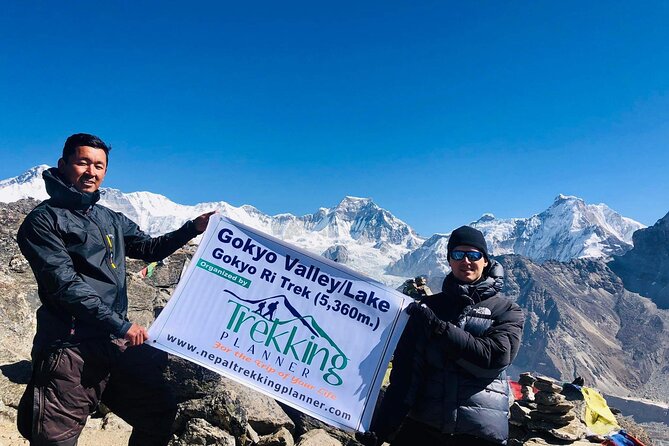
The central event comes early. You climb Gokyo Ri to 5,463 meters for sunrise. The climb is steep and demanding, particularly in thin air, but the view is the reason this route is chosen over a simpler valley walk.
From the summit, you may see Everest, Cho Oyu, Lhotse, and Makalu toward the eastern horizon. You also look down over the Gokyo lakes and the Ngozumpa Glacier, described as Nepal’s longest glacier. Clear conditions are never guaranteed, but a good morning here can provide the trek’s defining memory.
After returning for breakfast, you have an afternoon option to explore toward the fourth and fifth lakes. This gives you a second look at the valley without rushing straight into the descent.
At this point, listen closely to your guide. You are high, tired, and exposed to changing weather. The route is rewarding, but this is not a day to treat a headache or severe fatigue as a minor inconvenience.
Days 9 to 12: Returning through Dole, Namche, and Lukla
Day 9 retraces the route through Machhermo toward Dole. Retracing can sound dull on paper, but the view changes when you walk in the opposite direction, and descending usually lets you notice details missed during the climb.
On Day 10, you continue toward Namche. The route makes a large descent to Phortse Tanga, then climbs toward Mongla Dada before dropping gradually to Namche. This mix of descent and ascent can be tiring, even after leaving the highest part of the route.
Day 11 follows the familiar trail back to Lukla, with several ups and downs. The walking time is about six hours. Staying overnight in Lukla is wise because it gives you a buffer if the next morning’s flight is delayed.
On Day 12, you take the early flight back to Kathmandu. An airport representative meets you on arrival and transfers you to your hotel. Breakfast is included that day, but accommodation and other Kathmandu meals are not part of the package.
What the $1,399 price includes, and what it does not
At $1,399 per person, the price is reasonable for a private 12-day trek if the included services match your needs. You receive private airport transfers, Kathmandu to Lukla and return flights, airport departure tax, Sagarmatha National Park entry, the TIMS card, an English-speaking guide, a porter for every two guests, mountain accommodation, and breakfast.
Guide and porter costs include salary, food, lodging, insurance, and equipment. That removes several large expenses from your planning. The twin or double-sharing rooms also keep the package simpler for couples and friends traveling together.
You still pay for international flights, a Nepal visa, Kathmandu accommodation and meals, lunch and dinner during the trek, personal travel and health insurance, helicopter evacuation insurance, and tips for the trekking crew and driver.
The meal arrangement is the point most likely to surprise first-time trekkers. Breakfast is included, but lunch and dinner are paid separately. Carry enough spending money for food and personal needs in the mountains, where costs can rise as supplies travel farther.
Who should book this trek?
I would choose this trek if you want high mountain scenery without adding the Everest Base Camp route or a crossing such as Cho La. Gokyo offers a quieter-feeling alternative, with lakes, glacier views, and a spectacular summit viewpoint.
You should have moderate physical fitness and be comfortable walking for up to six hours on uneven mountain trails. The altitude is the bigger issue than the daily distance. Gokyo Ri is high enough to make pacing, rest, and honest communication with your guide essential.
This is a good fit for people who value organized support. You do not need to arrange Lukla transport, permits, guides, porters, or mountain rooms separately. It is less suitable if you want luxury lodging, independent route changes, or a fully flexible schedule.
The private format is useful for couples, families, and small friend groups. The one-porter-per-two-guests arrangement also means you should pack carefully and keep your personal load manageable.
Should you book the Everest Gokyo Valley Trek?
Book it if your priority is a strong Himalayan view without the crowds and extra mileage of a longer Everest circuit. The best reasons are clear: sunrise from Gokyo Ri, the chain of high lakes, the Ngozumpa Glacier, and the chance to see several of the world’s highest peaks in one direction.
Before paying, ask Trekking Planner Nepal to confirm the exact walking times for Days 4 and 5, the overnight villages for those nights, and the current flight arrangements. Also budget separately for lunch, dinner, Kathmandu lodging, insurance, tips, and possible weather-related delays.
If you accept simple tea-house rooms, changing Lukla flights, and a demanding high-altitude climb, this trek offers an excellent balance of organized support and wild mountain scenery. If you want a relaxed holiday with guaranteed transport and low physical effort, choose something lower and shorter.
FAQ
How long is the Everest Gokyo Valley Trek?
The trek lasts approximately 12 days, beginning and ending in Kathmandu. The plan includes flights between Kathmandu and Lukla and walking days through the Gokyo Valley.
What time does the trek start?
The stated start time is 6:15 a.m. at Tribhuvan Airport in Kathmandu.
Is transportation from the airport included?
Yes. Private airport pickup and drop-off are included in Kathmandu, along with the Kathmandu to Lukla and Lukla to Kathmandu flights.
Is a guide included?
Yes. An experienced English-speaking guide is included, along with the guide’s salary, food, accommodation, insurance, and equipment.
Is a porter included?
Yes. The package provides one porter for every two guests. The porter’s salary, food, accommodation, insurance, and equipment are included.
Are meals included?
Breakfast is included during the trek, with 11 breakfasts listed. Lunch and dinner during the trek are not included, and meals and accommodation in Kathmandu are also excluded.
What is the highest point on the trek?
The highest listed point is Gokyo Ri, at 5,463 meters or 17,923 feet. Gokyo village sits at about 4,750 meters.
What happens if bad weather cancels the Lukla flight or trek?
If poor weather cancels the experience, you can receive a different date or a full refund under the stated cancellation terms. Lukla flights may also be delayed or disrupted, so you should keep your schedule flexible.
Recently added around Kathmandu
- Ghorepani Poon Hill Trek★ 5.0 · 16 reviews
- Amazing 1 Day Trekking Experience in Kathmandu Nepal★ 5.0 · 24 reviews
- Private Manaslu Circuit Trek at Himalayas★ 5.0 · 3 reviews
- Ghorepani Poonhill Trek★ 5.0 · 5 reviews
- Upper Mustang Trekking★ 5.0 · 2 reviews
- Upper Mustang Trekking★ 3.0 · 2 reviews
- Upper Mustang Trekking★ 5.0 · 4 reviews
- Upper Mustang Trek★ 5.0 · 5 reviews
Everest Base Camp Treks, compared.




Browse the lists this tour appears in