
REVIEW · KATHMANDU
14 Days Everest Base Camp Trekking
Everest begins with a small mountain runway. This 14-day trek pairs careful acclimatization with dramatic Himalayan scenery, and I especially like the built-in rest days in Namche and Dingboche. I also like that the $1,420 price includes a guide, porter support, permits, meals, tea-house lodging, and flights between Kathmandu and Lukla. The main catch is the physical demand: long walking days, high altitude, basic accommodation, and a steep route that requires strong fitness.
You will also get a close look at Sherpa life, from the trading center of Namche Bazaar to the monastery setting of Tengboche. Guides connected with the company include Hari, Kapil, and Namo, and the service feedback repeatedly highlights calm support, good organization, and careful pacing. Still, the plan is not a relaxed sightseeing holiday, and hot showers, drinks, snacks, insurance, and personal equipment cost extra.
Key points to know before booking
- Lukla flight included: The round-trip domestic flight from Kathmandu is covered, including departure taxes.
- Two acclimatization days: Namche and Dingboche provide valuable pauses before the highest sections.
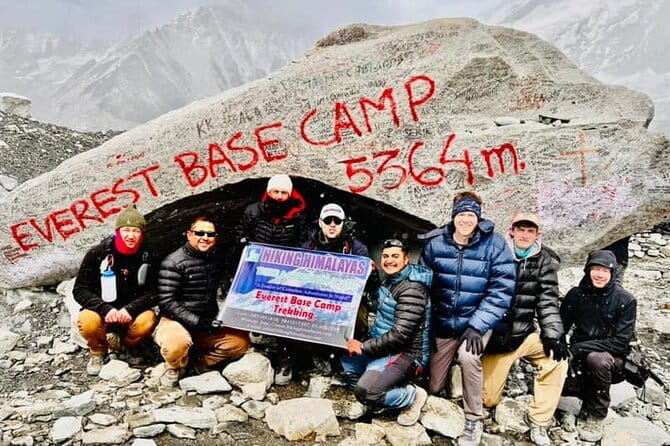
- Everest Base Camp and Kala Patthar: The trek reaches Base Camp at 5,364 meters and Kala Patthar at 5,565 meters.
- Tea-house accommodation: You sleep in the best available twin-sharing lodges along the route.
- Strong support team: One certified English-speaking guide and porter support for every two trekkers are included.
- Private group format: Only your own group takes part, with pickup from Tribhuvan International Airport available.
What the $1,420 Everest trek really gives you
The price is strong for a 14-day Everest Base Camp program. It covers private ground transport from the airport and back, a round-trip Kathmandu to Lukla flight, permits, a guide, porter support, trekking meals, lodge accommodation, a first-aid kit, a map, and a completion certificate.
That matters because the flight and permits alone form a large part of the trip’s practical cost. You are not simply paying for a walking route. You are paying for someone to handle the route logistics, staff arrangements, and high-altitude schedule while you concentrate on walking.
The included meals are breakfast for 13 days, lunch for 11 days, and dinner for 11 days. Seasonal fruit is also included during the trek. Food and lodging in Kathmandu are not included and are listed at $45 per day, so budget for that separately.
You will still need money for hot showers, which cost $5 per person, plus hot and cold drinks, snacks, tips, personal gear, international flights, travel insurance, and the Nepal entry visa. The visa can be obtained on arrival for $40 for 30 days.
For a private trek with flights and support included, I consider the price good value. It becomes less attractive only if you already have a guide, porter arrangements, or independent permits in place.
More Everest Base Camp Treks in Kathmandu:
- Everest Base Camp Trek – 14 Days
★ 5.0 · 1,499 reviews - Everest Base Camp Trek
★ 5.0 · 842 reviews - Everest Base Camp Trekking
★ 5.0 · 485 reviews
Days 1 and 2: Kathmandu to Lukla and Phakding
The first day begins with arrival in Kathmandu. A pickup is offered from Tribhuvan International Airport, and the support team handles the ground transfer to your hotel. The supplied schedule gives the first day a broad arrival focus, so the exact amount of free time depends on your flight and arrival time.
The flight to Lukla is one of the trip’s memorable moments. On a clear day, the aircraft offers wide views of snow-covered peaks before landing at Lukla, a mountain settlement at about 2,850 meters. The runway is steep, so this is not an ordinary airport arrival.
From Lukla, you meet the trekking crew and follow the Dudh Koshi Valley toward Phakding. The trail is well marked, and the overnight stop sits at roughly 2,656 meters. The day is listed at about 10 hours, so you should be ready to walk soon after the flight.
This early section introduces the rhythm of the trek: rivers, mountain villages, lodge stops, and steady uphill work. You do not reach the highest elevations yet, but the long hours make a good pair of walking shoes and a sensible pack essential.
Days 3 and 4: Sagarmatha National Park and Namche
The route from Phakding crosses the river several times on high suspension bridges. Beyond Monjo, at about 2,845 meters, you enter Sagarmatha National Park, a protected area created to preserve the fragile mountain environment.
Namche Bazaar sits between ridges at approximately 3,440 meters. It has lodges, tea shops, and souvenir shops, giving it a more active feel than the smaller villages along the trail. It is also an important place to slow down, check your condition, and let your body adjust.
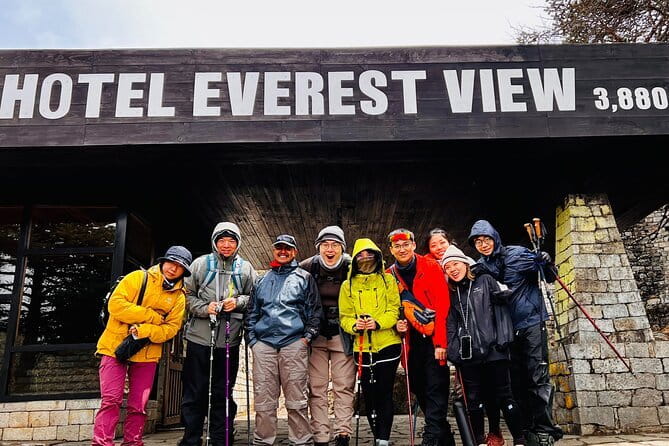
Day 4 is an acclimatization day in Namche. The plan includes a walk toward an Everest View Point, which gives you a useful first look at the high peaks without forcing a full day of forward progress.
I like this pause because altitude problems often begin when a schedule climbs too quickly. You still walk and explore, but you sleep at the same elevation rather than gaining height immediately. The drawback is simple: after a demanding approach, a rest day can feel like lost time if you are eager to reach Base Camp. It is not lost time. It is one of the most important parts of the plan.
Days 5 and 6: Tengboche, Pangboche, and Dingboche
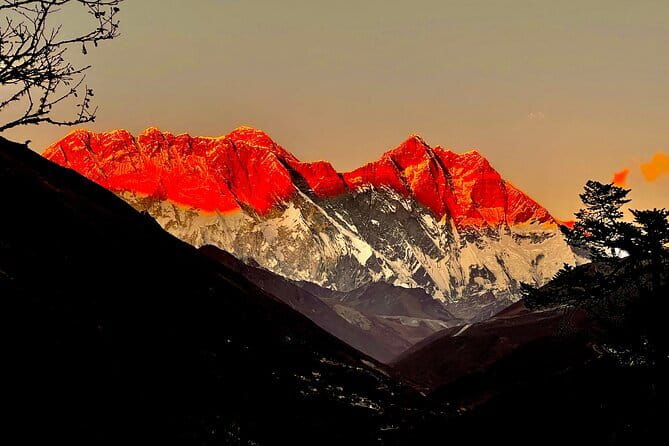
Leaving Namche, the trail contours high above the Dudh Kosi. This is where the major peaks begin to feel close and clear, including Everest, Lhotse, Nuptse, and Ama Dablam.
The route reaches Tengboche, written as Tyangboche in the schedule. The village is known for its monastery setting and mountain views. You pass smaller settlements and continue through changing vegetation as the route moves from forested slopes toward a colder, more open alpine zone.
The next day descends through forest, crosses the Imja Khola, and climbs to Pangboche at about 3,985 meters. Pangboche faces Ama Dablam and includes a gompa, mani walls, and traditional mountain scenery. From there, the trail continues toward Dingboche.
These days are listed at about 10 hours each. That timing is demanding, especially as the altitude rises. The route is not technically described as a climbing expedition, but you should expect steep sections, uneven ground, and a slower pace than you might manage at home.
Dingboche is a useful base because the valley opens toward dramatic peaks and provides a place to rest before the route heads above 4,500 meters. Your guide’s judgment and your willingness to walk slowly matter more here than speed.
A few more treks around Kathmandu worth a look
- Annapurna Circuit Trek with Tilicho Lake
★ 5.0 · 368 reviews - Everest Base Camp Trekking – 13 Day
★ 5.0 · 365 reviews - Everest Base Camp Trek
★ 5.0 · 350 reviews - Everest Base Camp Trek -14 Days
★ 5.0 · 321 reviews
Day 7: Acclimatization around Dingboche
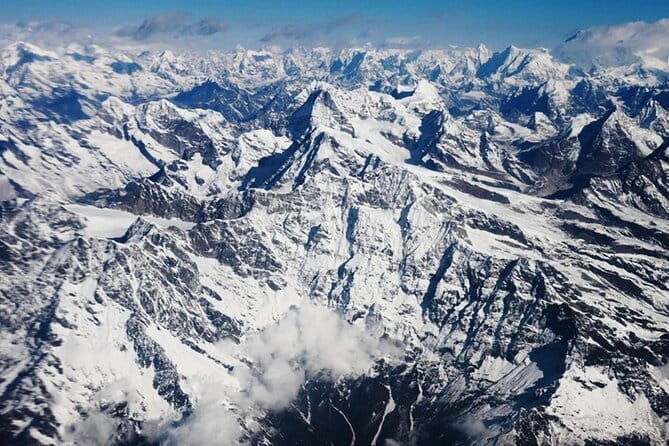
The second major acclimatization day gives you a chance to explore without changing sleeping altitude. The schedule suggests walking toward Tshola Tsho lake at about 4,510 meters and viewing the walls of Cholatse at 6,440 meters and Taboche at 6,495 meters.
You may also climb to Nagarjun, listed at about 5,100 meters. This is a serious acclimatization walk, not a lazy day in the lodge. The aim is to spend time higher during daylight, then return to Dingboche to sleep lower.
I like the way the schedule uses both Namche and Dingboche for adjustment. The limitation is that the day can be tiring, and the route’s exact pace should depend on how you feel. You should tell your guide promptly about headaches, nausea, unusual fatigue, or breathing trouble rather than treating them as something to push through.
Days 8 and 9: Lobuche, Gorakshep, and Everest Base Camp
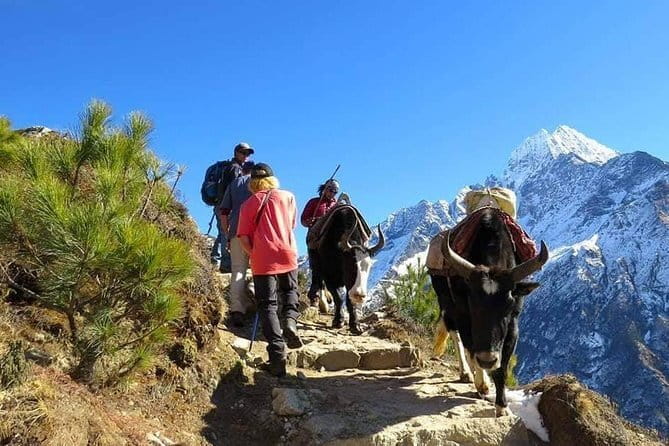
From Dingboche, the trail follows a broad valley beneath Cholatse and Tawache. It then turns toward the Khumbu Glacier and climbs to Duglha at approximately 4,620 meters, a practical place for a lunch break.
The route continues to Lobuche. At this height, the surrounding terrain becomes more severe, with less vegetation and more exposed rock, ice, and high mountain walls. The schedule again allows about 10 hours, so your pace needs to remain steady.
The next stage reaches Gorakshep at about 5,164 meters. The route follows the Khumbu Glacier and crosses rough sections near tributary ice. The listed walking time to Gorakshep is about one hour, followed by the main Base Camp outing, listed at about seven hours.
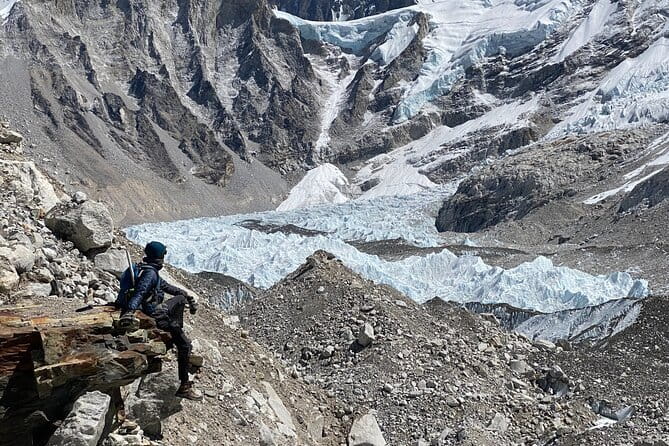
Everest Base Camp sits at roughly 5,364 meters. The approach crosses a difficult glacier zone with ice pinnacles and crevasses. You should not expect a comfortable viewpoint or a simple photo stop. The value is the setting itself, the high camp area, the glacier, and the knowledge that climbers use this place before attempting Everest.
The schedule describes a five-hour walk to Base Camp and a higher return route for additional views. At this elevation, that is a long afternoon. Weather and trail conditions can affect the pace, so your guide may adjust the plan for safety.
Day 10: Kala Patthar and the long descent
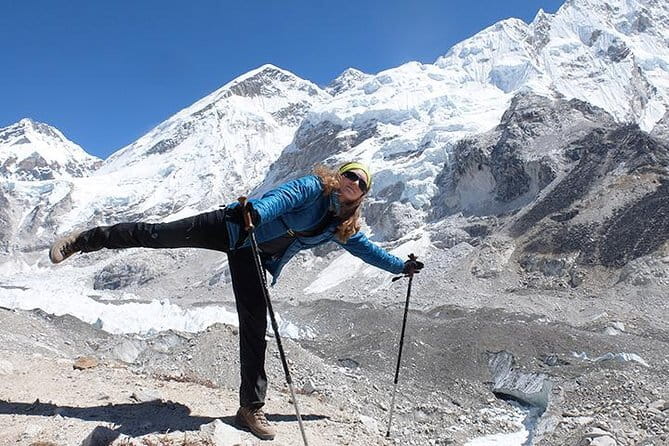
The early climb to Kala Patthar is one of the strongest parts of the trek. At approximately 5,565 meters, it provides views toward Everest, Nuptse, Ama Dablam, Pumori, Lola, and Lhumbute.
This is the viewpoint many people picture when they imagine an Everest trek. Base Camp itself does not provide the classic broad view of Everest as clearly as Kala Patthar can, so this morning matters.
After Kala Patthar, the route drops toward Pheriche through Gorakshep and Duglha. The schedule lists about 10 hours, making this another hard day even though much of it is downhill. Descending can be easier on your breathing but tough on knees and legs.
You should keep water, layers, and snacks easy to reach. The included meals help, but personal snacks and drinks are extra, and high-altitude days are not the time to discover that you dislike the food available along the route.
Days 11 and 12: Return through Tengboche to Lukla
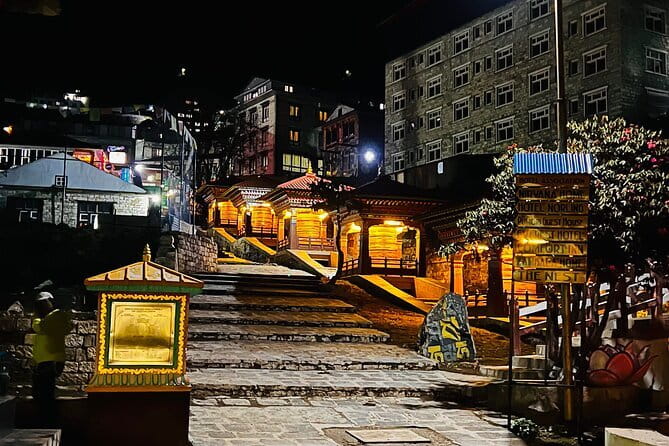
The return route follows the river and climbs back through birch and rhododendron forest toward Tengboche. From this direction, the trail gives another chance to see Kwangde, Tawache, Everest, Nuptse, Lhotse, Ama Dablam, Kantega, and Thamserku.
The change in vegetation is satisfying. You move from the stark upper valley toward greener forest and lower villages. The schedule still lists about 10 hours, so the return is not simply a gentle stroll after the main goal.
The final trekking day follows the Dudh Kosi down to Lukla. The listed elevation is about 2,800 meters, and the evening is planned as a celebration with the Sherpa guide and crew.
That closing gathering is a small but meaningful part of a guided trek. Porters and guides have carried much of the practical burden, and the final evening gives you a chance to thank the people who helped you reach the high country.
Porter support is arranged at a ratio of one porter for two trekkers. Porter food, accommodation, insurance, and equipment are included, while tips are not. Plan to tip directly and fairly at the end.
Days 13 and 14: Flying back to Kathmandu
You leave early for Lukla’s airstrip and fly back to Kathmandu. The flight is listed at about three hours in the day plan, though actual air travel timing can be affected by local conditions.
Once back in Kathmandu, the afternoon is free. You can shop, repack, send postcards, or simply rest after nearly two weeks on foot. Accommodation and food in Kathmandu are not included, so make sure your budget covers the final night if your flight home is on Day 14.
On the last day, the Nepalese support team takes you to Tribhuvan International Airport. The company also suggests extending your stay for activities such as national park game drives, white-water rafting, a Tibet tour, or mountain biking, but those options are not part of the $1,420 trek.
Guides, group size, and practical comfort
This is a private activity, so only your own group participates. That gives you more control over the walking pace than a large shared departure, though the mountain schedule still limits how much you can change.
The included guide is an English-speaking certified professional, with food, lodging, insurance, and related costs covered. Guide names connected with the company include Hari, Kapil, and Namo. Feedback about the service gives particular weight to careful organization, calm support, and attention to physical and mental well-being.
Accommodation is in the best available twin-sharing lodge from place to place. That phrase matters. You are not booking a chain hotel, and facilities become simpler as you gain altitude. Hot showers cost extra, and the package does not include personal trekking equipment.
You should bring or rent suitable clothing, footwear, and other gear yourself. The tour confirms a first-aid medical kit, but it does not include travel insurance. Strong physical fitness is required, and this is not a suitable choice if you want short walks or flexible sleep-in mornings.
The company offers free cancellation up to 24 hours before the start time. Changes or cancellations inside that period are not accepted for a refund, and the cutoff follows local Nepal time.
Who should book this Everest Base Camp trek?
I would choose this trip if you want a private, organized route with the major Everest stops already arranged. It suits someone who values a guide and porter team, wants meals and lodges included, and prefers not to manage permits and domestic flights alone.
It also suits you if you want more than a quick Base Camp dash. The Namche and Dingboche acclimatization days improve the schedule, while Tengboche, Pangboche, the glacier route, and Kala Patthar add cultural and scenic depth.
I would hesitate if you dislike basic lodges, long walking days, or high-altitude conditions. The price does not cover insurance, gear, Kathmandu costs, snacks, drinks, showers, tips, or international flights, so the final bill will be higher than the advertised rate.
Should you book it?
Book this trek if you have strong fitness, two weeks available, and a genuine interest in mountain villages, Sherpa culture, and high-altitude walking. The combination of private support, included flights, two acclimatization days, Base Camp, and Kala Patthar gives you a well-rounded route for the money.
Before paying, confirm your guide assignment, the exact Kathmandu hotel plan, the current Lukla flight arrangements, luggage limits, and what gear can be rented. If you prepare for the extra costs and accept the physical challenge, this is a practical and well-supported way to reach Everest Base Camp.
FAQ
How long is the Everest Base Camp trek?
The experience lasts approximately 14 days, including arrival in Kathmandu, the trek from Lukla, the return flight, and airport transfer on the final day.
Where does the trek begin?
The experience begins with pickup at Tribhuvan International Airport in Kathmandu. The walking portion begins after the flight to Lukla.
Is the flight from Kathmandu to Lukla included?
Yes. The round-trip Kathmandu to Lukla and Lukla to Kathmandu flight is included, along with departure taxes.
Are meals included during the trek?
Yes. The package includes 13 breakfasts, 11 lunches, and 11 dinners. Seasonal fruit is also included during the trek.
Is accommodation included?
Yes. The trek includes the best available twin-sharing lodge accommodation along the route. Food and accommodation in Kathmandu are not included.
Does the tour include a guide and porter?
Yes. One certified English-speaking guide is included, along with porter support at a ratio of one porter for every two trekkers.
What fitness level is required?
The tour requires a strong physical fitness level. The schedule includes several walking days of about 10 hours and reaches elevations above 5,500 meters.
Are travel insurance and trekking equipment included?
No. Travel insurance and personal trekking equipment are not included. Hot showers, drinks, snacks, tips, and gratuities are also extra.
Can I cancel for a full refund?
Yes, if you cancel at least 24 hours before the experience start time. Cancellations or changes made less than 24 hours before the start time are not refunded.
Recently added around Kathmandu
- Ghorepani Poon Hill Trek★ 5.0 · 16 reviews
- Private Manaslu Circuit Trek at Himalayas★ 5.0 · 3 reviews
- Amazing 1 Day Trekking Experience in Kathmandu Nepal★ 5.0 · 24 reviews
- Ghorepani Poonhill Trek★ 5.0 · 5 reviews
- Upper Mustang Trekking★ 5.0 · 2 reviews
- Upper Mustang Trek★ 5.0 · 5 reviews
- Upper Mustang Trekking★ 3.0 · 2 reviews
- Upper Mustang Trekking★ 5.0 · 4 reviews
Everest Base Camp Treks, compared.






Browse the lists this tour appears in