
REVIEW · KATHMANDU
12 Days Everest Base Camp Trek from Kathmandu
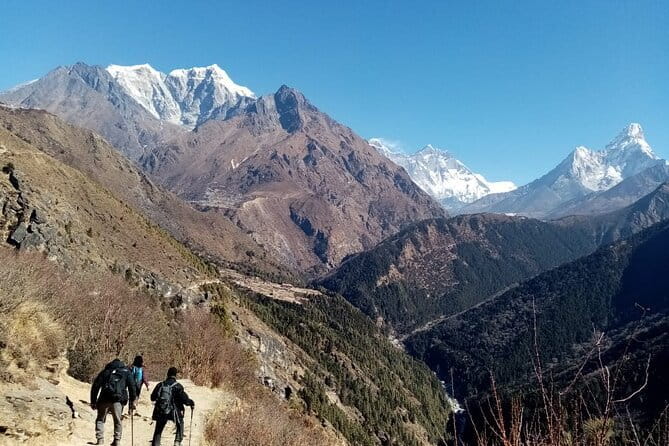
The mountain earns every hard-won step. This 12-day trek from Kathmandu combines the famous walk to Everest Base Camp with Sherpa villages, Buddhist monasteries, suspension bridges, and sweeping views of Everest, Lhotse, and Ama Dablam. I like the built-in acclimatization days at Namche Bazaar and Dingboche, and I like that the price includes flights, permits, guesthouse lodging, and a private licensed guide. The main caution is the physical demand: you spend many days walking at high altitude, with no easy shortcut once the trail turns upward.
I also like the clear route design. You reach Base Camp on Day 8, then climb Kala Patthar the next morning for the finest mountain views before walking back toward Lukla. Guides named Prakash, Milan, and Dev received especially warm praise for safety, patience, local insight, and care with practical details. Food is not included, however, and adds about $25 per day.
Key points to know before booking
- Two acclimatization days: You pause at Namche Bazaar and Dingboche, with short hikes to Everest View Hotel or Nagarjun Hill.
- Everest Base Camp on Day 8: The route reaches Gorak Shep before continuing to the famous base camp.
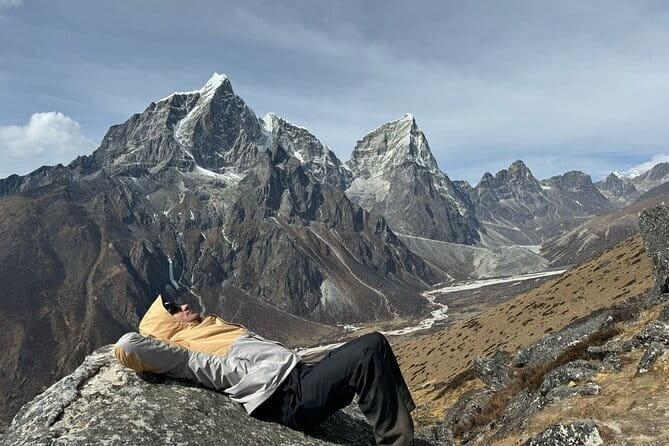
- Kala Patthar follows the main goal: The early climb on Day 9 gives you 360-degree views of Everest and nearby peaks.
- Flights are included: Round-trip Kathmandu to Lukla flights are part of the package, along with airport and hotel transfers.
- Private trekking support: Your group has a government-licensed English-speaking guide, official permits, guesthouse lodging, and a basic first-aid kit.
- Budget extra for meals: Food and drinks are purchased separately, at an estimated $25 per person each day.
What the $1,380 price really covers
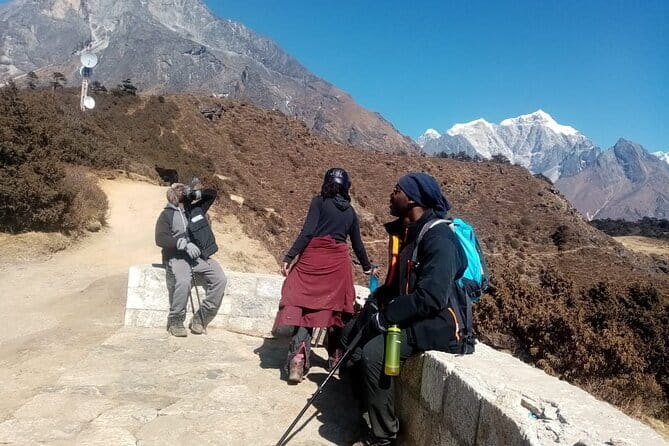
At $1,380 per person, this trek is not an all-inclusive holiday. It is a mountain package that covers several expensive and important pieces: round-trip flights between Kathmandu and Lukla, hotel pickup and drop-off, trekking permits, official documents, a licensed English-speaking guide, guesthouse accommodation, and a basic emergency first-aid kit.
That is a useful bundle. The Lukla flights alone are a key part of reaching the trail, and handling the permits and official paperwork removes a layer of planning. You also have private-tour service, so only your group takes part. That can make the walking pace and daily conversations more personal than on a large group departure.
You still need to pay for meals and drinks. The stated estimate is about $25 per day, which adds roughly $300 over 12 days if you follow that guide. Gratuities are optional and not included. I would also treat the advertised price as the starting cost, not the final trip budget, since you need to account for meals and any personal spending.
The value is strongest if you want one company to arrange the difficult framework while you focus on walking. It is less compelling if you are searching for a fully covered package with meals included.
More Everest Base Camp Treks in Kathmandu:
- Everest Base Camp Trek – 14 Days
★ 5.0 · 1,499 reviews - Everest Base Camp Trek
★ 5.0 · 842 reviews - Everest Base Camp Trekking
★ 5.0 · 485 reviews
Day 1: Lukla to Phakding beside the Dudh Koshi
Your trek begins with a short scenic flight from Kathmandu to Lukla. At Lukla, you meet the rest of the crew and start walking toward Phakding, following the Dudh Koshi River.
The first day takes about six hours. That is a sensible introduction to the route, since you begin with river valleys and village paths rather than an immediate high-altitude push. The trail passes through local settlements and offers an early look at the mix of mountain scenery and Sherpa life that defines the trek.
Phakding is the first overnight stop. The accommodation is in a guesthouse, a simple setup that fits the nature of this journey. Do not expect resort comforts. The point is to rest, eat, and prepare for the harder ascent ahead.
Day 2: Entering Sagarmatha National Park and reaching Namche Bazaar
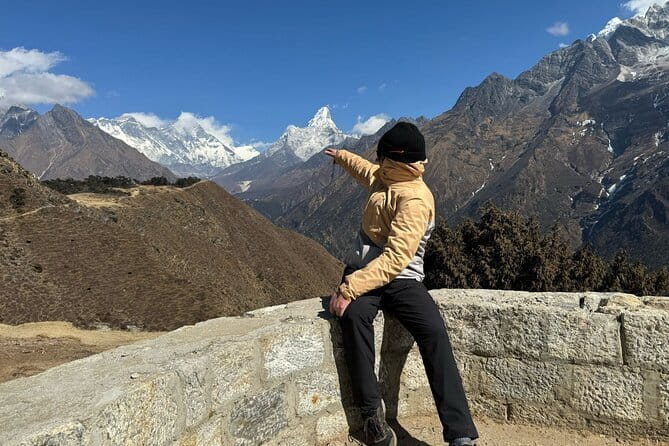
From Phakding, you walk for about seven hours toward Namche Bazaar. The route passes through Monjo, where you enter Sagarmatha National Park, a protected area known for Himalayan wildlife and mountain flowers.
You cross streams, pass small villages, and continue along the trail toward the region’s main trading center. Namche Bazaar is more than a stopping point. It is the gateway to the Everest region, a place where trekkers, guides, porters, and local residents meet before the trail climbs farther into the mountains.
This is one of the days when steady pacing matters. The walk is not simply about covering miles. You are gaining altitude, and your body needs time to adjust. The guide’s role becomes important here, especially in helping you maintain a sensible rhythm and notice how you are responding.
Day 3: Namche Bazaar and a useful acclimatization day
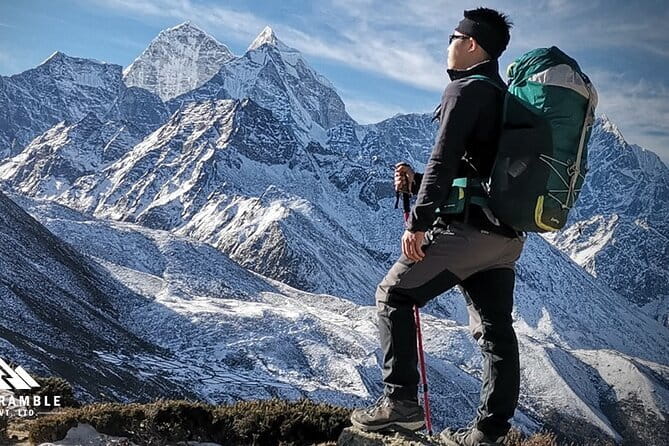
You spend a second night in Namche Bazaar and use the day for acclimatization. The planned outing goes toward Syangboche Airstrip or the Everest View Hotel, with mountain views and a chance to walk higher before returning to sleep at a lower elevation.
I like this design. A rest day at altitude does not mean doing nothing. A short excursion gives your body a better chance to adjust while also giving you an early look at the Himalayan peaks ahead.
Namche is also a good place to appreciate the human side of the route. Its position as a regional hub makes it feel more active than the smaller settlements farther up the valley. The itinerary allows time to explore instead of treating the village as a quick meal stop.
A few more treks around Kathmandu worth a look
- Annapurna Circuit Trek with Tilicho Lake
★ 5.0 · 368 reviews - Everest Base Camp Trekking – 13 Day
★ 5.0 · 365 reviews - Everest Base Camp Trek
★ 5.0 · 350 reviews - Everest Base Camp Trek -14 Days
★ 5.0 · 321 reviews
Day 4: Rhododendron forest and Tengboche Monastery
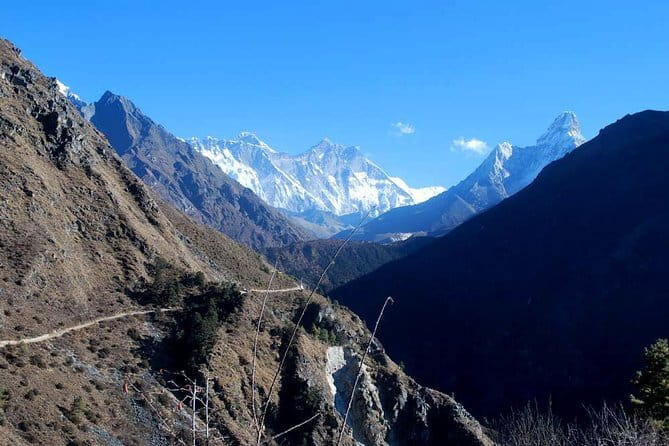
The trail to Tengboche takes about six hours and climbs through dense rhododendron forest. You cross the Imja Khola before reaching Tengboche, one of the most memorable villages on the route.
The main draw is Tengboche Monastery, described as the oldest monastery in the Khumbu region. Its location gives the visit extra power: Buddhist architecture and religious practice are set against a backdrop of high Himalayan peaks.
You can explore the monastery, spin prayer wheels, and observe Buddhist rituals if they are taking place during your visit. This is a cultural stop, not just a viewpoint, and it gives the trek a stronger sense of place.
The day is also a reminder that the route is not only a march toward a famous sign at Base Camp. The forests, villages, stupas, chortens, and monasteries are central to the experience.
Day 5: Pangboche, Orsho, and the climb to Dingboche
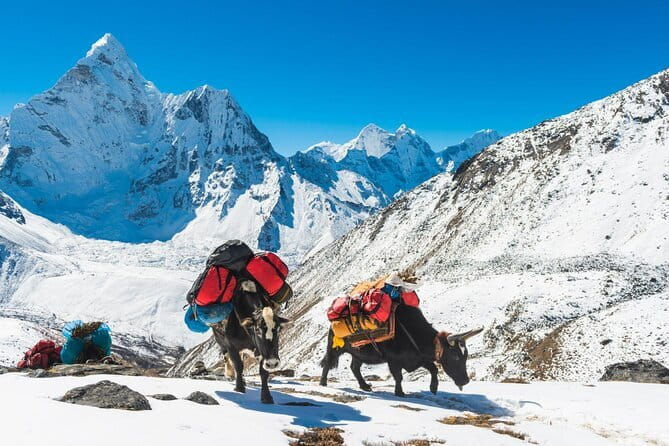
The walk to Dingboche takes about six hours. You cross more suspension bridges and pass through settlements including Pangboche and Orsho.
Along the trail, you see stupas and chortens, giving the route a distinctly Buddhist character. The scenery shifts as you gain height. Forest becomes less dominant, and the open mountain setting begins to take over.
Dingboche is an important stop because it is high enough for altitude to become a serious concern. The itinerary wisely gives you another acclimatization day after arrival rather than sending you straight toward Lobuche.
Day 6: Nagarjun Hill and a second acclimatization break
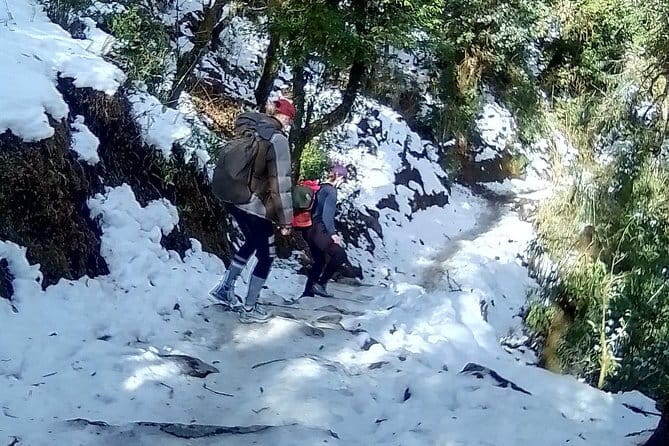
You spend another night in Dingboche and take a hike toward Nagarjun Hill. From there, the route offers views of Everest, Lhotse, Ama Dablam, Nuptse, Thamserku, and Pumori.
This is one of the most valuable days in the schedule. The hike lets you gain more height during the day while keeping your overnight stop in Dingboche. That pattern is useful for adjusting to the altitude and makes the following stages more manageable.
The day is listed at about six hours, so it is not a free afternoon. You still need strong fitness and a willingness to walk uphill at a slow pace. If your body is struggling, tell your guide early. Guides such as Prakash, Milan, and Dev were praised for safety, patience, and attentive care, which are exactly the qualities you want in this setting.
Day 7: The changing terrain to Lobuche
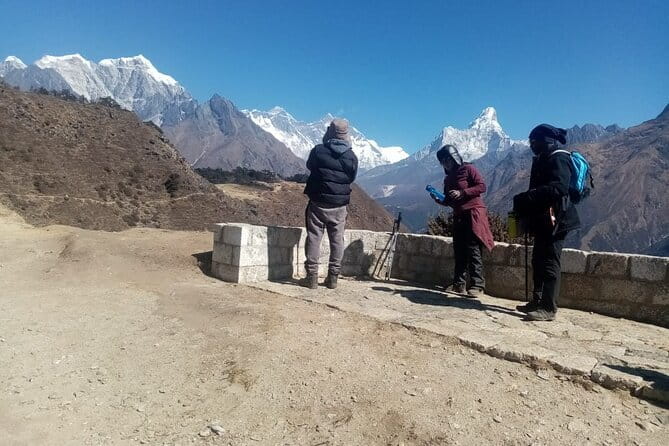
From Dingboche, you walk for around six hours toward Lobuche. The route passes smaller settlements and gradually changes from greener areas to sparse shrubs and more exposed ground.
The shift in scenery helps you understand how far you have climbed. The villages become smaller, the vegetation thins, and the mountains feel closer. Lobuche sits at the foot of the next major stage, the walk to Gorak Shep and Everest Base Camp.
This is likely to feel like a serious day even though it is shorter than the Base Camp stage. You are now walking at high elevation, and the cold, thin air can make a normal uphill trail feel demanding.
Day 8: Gorak Shep and Everest Base Camp
You start early for the walk toward Everest Base Camp. The full day takes about eight hours, making it the longest listed walking day on the outward route.
The trail passes through Gorak Shep, the last human settlement on the route. It was once used as the original base camp, which gives the stop historical meaning before you continue toward the current Everest Base Camp area.
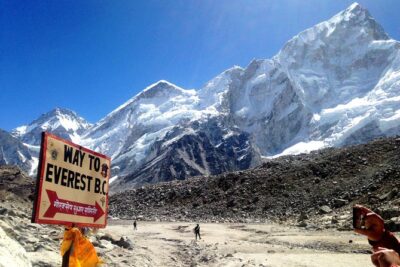
Reaching Base Camp is the emotional high point for many people. You are not climbing Everest itself, and the mountain may not appear from the base camp viewpoint in the way you expect, but you are standing at the staging ground used by mountaineering expeditions. The value is in the setting, the effort, and the personal milestone.
The distance and altitude make this a day for patience. Keep your pace steady, follow your guide, and avoid treating the final stretch as a race.
Day 9: Kala Patthar, then down to Pheriche
The next morning brings the route’s finest viewpoint. You climb Kala Patthar, located above Everest Base Camp, for 360-degree views of Everest and the surrounding peaks.
The hike takes about seven hours overall and ends at Pheriche. This is a demanding combination because you climb for the view soon after the Base Camp day, then begin the return journey.
Still, Kala Patthar is a major reason to choose this itinerary. If your goal is the clearest broad view of Everest, the viewpoint often matters more than Base Camp itself. The return to Pheriche also begins the useful process of losing altitude after several demanding nights higher up.
Day 10: Down through Tengboche to Namche Bazaar
You walk for about six hours from Pheriche toward Namche Bazaar. The trail follows the Imja River, passes Tengboche again, descends to Phungki Thanka, and continues through forest.
The route may feel easier in one sense because you are losing altitude, but downhill walking can still be hard on knees and ankles. Dense forest and familiar villages return as you retrace part of the trail.
This is a good day to reflect on the change from the high, spare country near Lobuche to the more wooded lower valley. You are still surrounded by major peaks, but the route begins to feel more settled and inhabited.
Day 11: Namche Bazaar to Lukla
The final walking day takes about seven hours. From Namche, you descend through forest, cross streams, pass small villages, and reach Phakding before continuing to Lukla.
Retracing the trail gives you a different view of places you passed quickly on the way up. The descent also marks the end of the walking challenge, though you should not assume the day will feel easy. Seven hours on a trail after many days of exertion requires stamina.
Lukla is your last night before the flight back to Kathmandu. It is a practical finish, allowing the group to reach the airport area rather than attempting an awkward same-day return from a distant point on the trail.
Day 12: Flight back to Kathmandu and farewell dinner
You take the flight from Lukla back to Kathmandu, then transfer to your hotel. The day is listed at about five hours and ends with a farewell dinner and preparation for departure.
The return flight is included, as are the hotel pickup and drop-off arrangements. Having those pieces handled is useful after 11 days of walking, when you may have little energy for sorting out airport transport.
Guide support and the private-tour advantage
The guide can make or break a high-altitude trek. The package provides a government-licensed English-speaking guide, and the strongest praise centers on individual guides named Prakash, Milan, and Dev.
Prakash was praised for professional care, safety, and keeping spirits up during difficult sections. Milan was valued for patience, local insight, and practical acclimatization advice. Dev received credit for taking care of a family throughout the trek and helping with accommodation, transport, and flight arrangements.
Those details matter because the guide is not simply there to point out mountains. You need someone who watches the group, explains local customs, manages the daily flow, and responds calmly when the walking becomes hard.
The private format is another advantage. Only your group participates, so the experience should feel more personal than a large departure. Group discounts are offered, though the exact discount is not stated, so ask for the current rate if you are booking with several people.
Who should book this Everest trek?
I would recommend it to fit hikers who want the classic Everest route in a compact 12-day plan, especially those who value a private guide and a package that includes flights, permits, lodging, and transport.
It also suits people who want more than mountain views. Tengboche Monastery, prayer wheels, chortens, Sherpa villages, and the daily rhythm of the trail give the walk a strong cultural side.
I would be cautious if you have limited fitness or dislike long uphill days. The itinerary includes several six- to eight-hour walking days, high-altitude nights, and a demanding Kala Patthar climb. The company specifically says a strong physical fitness level is required.
You should also be comfortable paying for meals separately. The food estimate is about $25 per day, and gratuities are optional. The cancellation terms are fairly strict close to departure: cancel at least three full days before the start time for a full refund. Later cancellations and late changes are not accepted.
Should you book the 12-day Everest Base Camp trek?
Book this trek if you want a focused route with the essential stops, two acclimatization days, a private guide, and the satisfaction of reaching both Everest Base Camp and Kala Patthar.
The strongest reasons to choose it are the sensible altitude breaks, included Lukla flights, and guide support. The main tradeoff is the tight schedule and physical strain. You are not buying an easy sightseeing tour. You are buying a carefully arranged mountain challenge.
For a fit hiker who understands the cost of meals and the demands of altitude, $1,380 offers solid practical value. Ask about the current group discount and confirm the meal budget before booking, then prepare to walk slowly, listen to your guide, and enjoy the villages and monasteries as much as the famous peaks.
FAQ
How long is the Everest Base Camp trek from Kathmandu?
The experience lasts approximately 12 days, including flights from Kathmandu to Lukla and back, the trek, hotel transfers, and the farewell dinner in Kathmandu.
Is transportation from Kathmandu included?
Yes. The package includes hotel pickup and drop-off, plus round-trip flights between Kathmandu and Lukla.
Is the tour private?
Yes. Only your group participates in this private tour.
Is a guide included?
Yes. The package includes a government-licensed English-speaking trekking guide.
Is accommodation included?
Yes. Accommodation in guesthouses during the trek is included.
Are meals included in the price?
No. Food and drinks are purchased separately. The estimated cost is about $25 per person per day.
Are trekking permits included?
Yes. Trekking permits and all official documents are included.
Can I cancel for a full refund?
Yes, if you cancel at least three full days before the experience start time. Cancellations made later are not refunded, and changes made less than three full days before the start time are not accepted.
Recently added around Kathmandu
- Ghorepani Poon Hill Trek★ 5.0 · 16 reviews
- Private Manaslu Circuit Trek at Himalayas★ 5.0 · 3 reviews
- Amazing 1 Day Trekking Experience in Kathmandu Nepal★ 5.0 · 24 reviews
- Ghorepani Poonhill Trek★ 5.0 · 5 reviews
- Upper Mustang Trekking★ 5.0 · 2 reviews
- Upper Mustang Trekking★ 3.0 · 2 reviews
- Upper Mustang Trekking★ 5.0 · 4 reviews
- Upper Mustang Trek★ 5.0 · 5 reviews
Everest Base Camp Treks, compared.




Browse the lists this tour appears in