REVIEW · KATHMANDU
Upper Mustang Trek – 17 Days
A kingdom beyond the usual Himalayan routes. This 17-day Upper Mustang trek takes you from Kathmandu and Pokhara into a dry, wind-carved region shaped by Tibetan culture, old monasteries, walled villages, and high mountain passes. I like the generous two-night stay around Lo Manthang, and I like that permits, domestic flights, meals, guide services, and porter support are bundled into the $1,999 price.
The main catch is the basic mountain routine. Several days involve long climbs over barren passes, and the accommodation description is not perfectly clear: the package says lodge or guest house stays, while the daily plan repeatedly says tented camp. Confirm this before paying, especially if you expect private rooms or hot showers.
Key points before you book
- Lo Manthang gets proper time: You spend a full day exploring the former royal city, its monasteries, old palace sites, and surrounding valleys.
- Upper Mustang requires a special permit: The restricted area north of Kagbeni is not an ordinary Nepal trekking route, and the permit is included.
- The highest pass reaches 4,325 meters: Chogo La is the physical high point, so acclimatization and steady pacing matter.
- Flights save days of road travel: You fly between Kathmandu, Pokhara, and Jomsom, then begin walking into Mustang.
- Horseback riding may be possible: A previous arrangement included horseback riding to Lo Manthang, but it is not listed as part of the standard package.
- The price covers the costly essentials: Domestic flights, guide, porter, permits, food during the trek, sleeping bag, down jacket, and airport transfers are included.
Why Upper Mustang feels so different
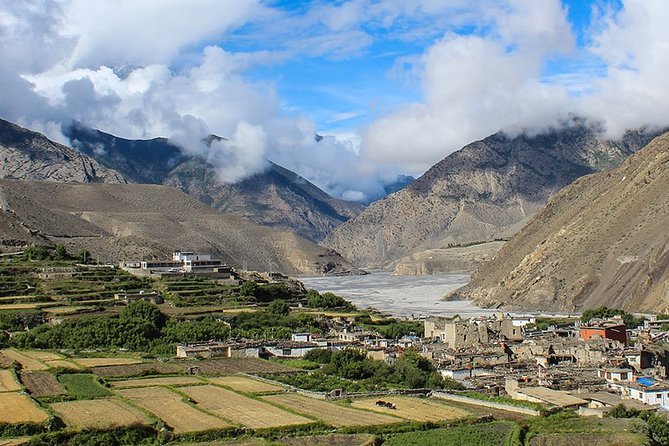
Upper Mustang sits north of Kagbeni at the top of the Kali Gandaki River. It was once an independent Himalayan kingdom, and its isolation helped preserve a Tibetan Buddhist way of life that feels quite different from the greener trekking corridors closer to Pokhara.
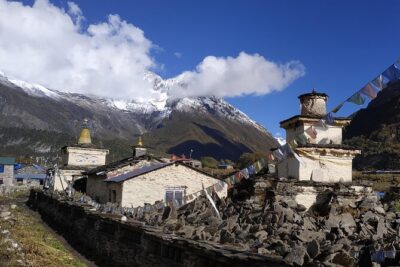
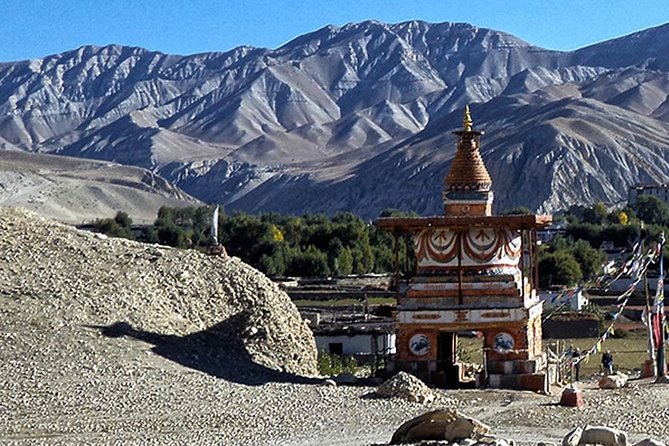
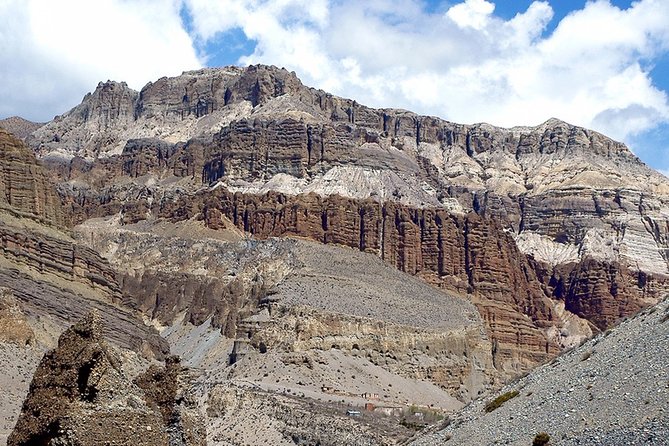
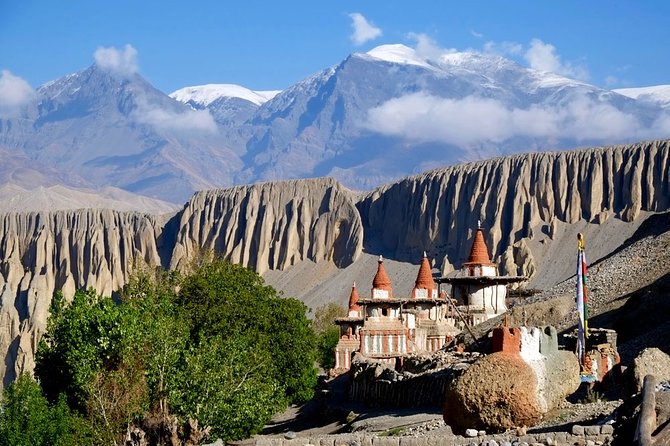
You will not find the lush valleys many people picture when they think of Nepal. Instead, expect bare cliffs in red, gray, yellow, black, and white. Wind cuts through the river valleys. Whitewashed villages cling to dry hillsides, while chortens, mani walls, prayer flags, and monasteries mark the route.
The appeal is not one single viewpoint. It is the slow change in the land as you walk from Kagbeni toward Lo Manthang. You see old trading paths, irrigation fields, poplar groves, cave-cut cliffs, and villages that appear suddenly in an otherwise dry world.
The route also carries cultural weight. You pass some of Nepal’s oldest Buddhist monasteries and enter a former kingdom where the old capital still has walls, royal buildings, religious centers, and castle ruins. It is a place where the journey itself matters as much as the final destination.
A few more treks around Kathmandu worth a look
- Everest Base Camp Trek – 14 Days
★ 5.0 · 1,499 reviews - Everest Base Camp Trek
★ 5.0 · 842 reviews - Everest Base Camp Trekking
★ 5.0 · 485 reviews
Days 1 and 2: Kathmandu sets the stage
Your first day is straightforward. You arrive at Kathmandu International Airport, meet a representative, and transfer to your hotel. There is no meal listed for this day, so plan to buy food at the airport or nearby if you arrive late.
Day two gives you a useful introduction to the Kathmandu Valley. The schedule includes Kathmandu Durbar Square, Swayambhunath Stupa, Pashupatinath Temple, and Boudhanath Stupa. This is a full cultural sampler, moving between royal architecture, Buddhist worship, and Hindu religious life.
Boudhanath is especially relevant before Upper Mustang because Buddhist symbols, prayer wheels, monasteries, and painted religious art will become familiar sights later. The welcome dinner also gives you a chance to meet the team and ask about the walking days ahead.
The limitation is time. You will see major sites, but this is not a slow archaeological tour. If you want detailed museum visits or extra time in Kathmandu, use day 17 or arrange additional nights.
Days 3 and 4: Pokhara, then the trailhead at Kagbeni
On day three, a short flight takes you from Kathmandu to Pokhara. The city portion includes the Seti River gorge, Davi’s Falls, Gupteswar Cave, Bat Cave, and Phewa Lake. The day mixes sightseeing with a relaxed evening beside the lake, which is a pleasant change after Kathmandu’s busy streets.
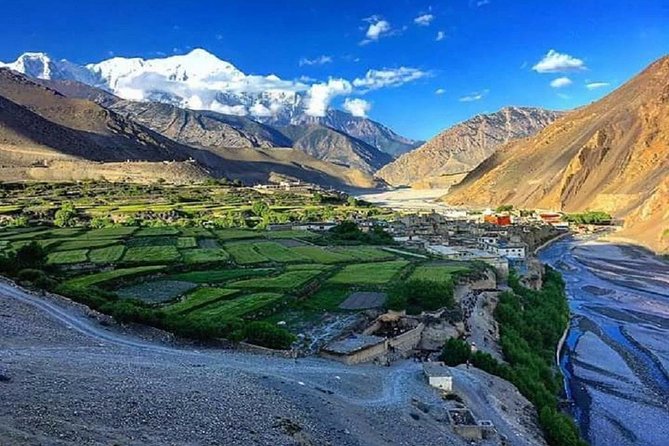
Day four brings the key transition. You fly from Pokhara to Jomsom, a mountain flight that saves a long approach by road, then trek to Kagbeni. This is where the Upper Mustang section begins in earnest.
Kagbeni sits at an important gateway north of the main Mustang route. From here, the trail moves into the restricted area, and the surroundings become drier and more Tibetan in character. The first night is listed at a tented camp, with breakfast, lunch, dinner, and tea or coffee included.
Domestic flights are useful but weather-sensitive in Himalayan regions. The schedule gives you an efficient connection, but you should keep some flexibility in your wider Nepal plans.
Days 5 to 8: Chortens, cliffs, and high passes
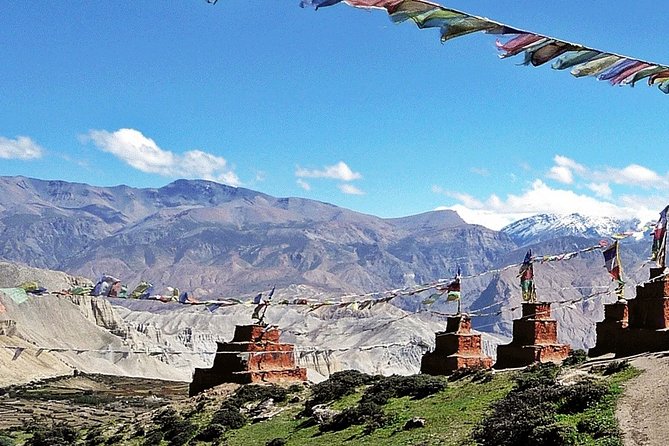
The route from Kagbeni to Chhuksang introduces the visual language of Upper Mustang. You climb and descend across ridges, pass the village of Tangbe, and reach Chhuksang at the meeting point of the Narshing Khola and Kali Gandaki.
Across the river, red organ-pipe cliffs rise above caves that are difficult to reach. These cliffs are one of the first clear signs that this is not a standard green foothill trek. The path continues over dry terrain with repeated ups and downs, so the distance may feel harder than the map suggests.
From Chele, day six becomes more demanding. The trail climbs steeply toward the Chele La, then enters a broad valley and descends to Samar, a village softened by poplar trees. You climb again toward Bhena La at 3,830 meters.
This is a good example of the trek’s rhythm: a pass, a descent, a village, then another climb. There are no long flat stretches to make the day effortless. You should be comfortable walking several hours at altitude and carrying a daypack.
Day seven reaches Geling after the Shyangmochen La. Geling is one of the more appealing settlements on the route, with poplar trees, barley fields, and a picturesque village setting. After Geling, the trail climbs toward Nyi La at 4,020 meters before descending toward Ghemi.
Ghemi is the third-largest village in Lo and is surrounded by fields. Day eight takes you past striking cliffs, a steel bridge, and a long mani wall before the Choya La. The descent toward Tsarang is gentler, with fields replacing the harsher upper slopes.
These days provide some of the trek’s best variety. You get dry cliffs and mountain passes, but also carefully irrigated fields and green patches around villages. That contrast explains how communities have lived in such a demanding setting.
Same trailhead, a longer or shorter day out:
- Annapurna Circuit Trek with Tilicho Lake
★ 5.0 · 368 reviews - Everest Base Camp Trekking – 13 Day
★ 5.0 · 365 reviews - Everest Base Camp Trek
★ 5.0 · 350 reviews - Everest Base Camp Trek -14 Days
★ 5.0 · 321 reviews
Days 9 and 10: Entering Lo Manthang
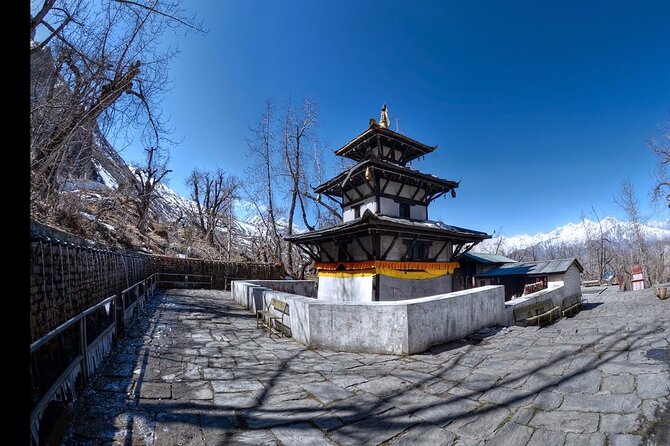
From Tsarang, the route crosses the Tsarang Chu and enters a desert-like stretch colored in gray and yellow. The climb to the Lo La at 3,950 meters brings your first view of Lo Manthang, a memorable approach to the old capital.
The trail then crosses the Plain of Aspiration and climbs to Lo Manthang at 3,840 meters. The city’s walls and concentrated buildings feel very different from the scattered villages along the route.
Day 10 is one of the strongest parts of the program because you do not simply arrive and leave. You get a full day around Lo Manthang, including its temples, the former king’s palace, and the surrounding valleys.
In the western valley, you can visit Tingkhar, Phuwa Gompa, and Namgyal Gompa. Namgyal sits on a stark ridge and follows the Gelug tradition. North of the city are the remains of two castles, including the palace associated with Ame Pal, founder of the Mustang kingdom.
The package also describes a former queen’s castle site that is now used for sky burials. That detail points to the old customs that still shape the region, although visitors should approach religious and funerary places with care and follow local guidance.
The day in Lo Manthang is valuable because it gives you time to look beyond scenery. You can focus on architecture, religious art, village life, and the history of a former royal center without rushing through every building.
Days 11 and 12: The highest pass and Ghar Gompa
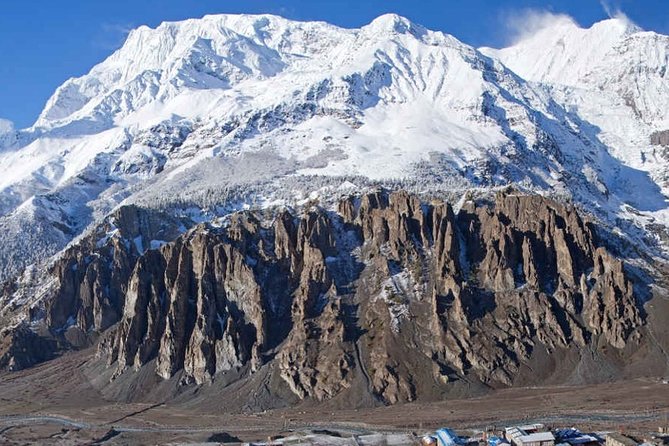
Leaving Lo Manthang, you follow less-used paths toward Lo Gekar. The route crosses several passes and reaches Chogo La at 4,325 meters, the highest point of the trek.
At this altitude, the pace matters more than speed. The day includes a short steep descent, a wooden bridge, and a climb to Lo Gekar. A local guide is particularly useful here because herder paths cross the area and the route is less direct than the main trading trail.
Ghar Gompa is the key stop. Its name means house temple, and the monastery sits among larger trees in an otherwise dry setting. The contrast between the grove and the surrounding rock makes the visit memorable.
Day 12 leads through alpine meadows, an eroded gully, red rock towers, and the village of Drakmar before returning toward Ghemi and Geling. It is not a simple downhill day. You cross another pass at 4,170 meters, descend steeply, then climb again toward Ghemi La and Nyi La.
This return route gives you a second look at country that may have passed quickly on the outward journey. It also confirms that the trek is physically serious even after Lo Manthang. The highest pass is behind you, but the repeated climbs continue.
Days 13 to 15: Returning through Mustang and Pokhara
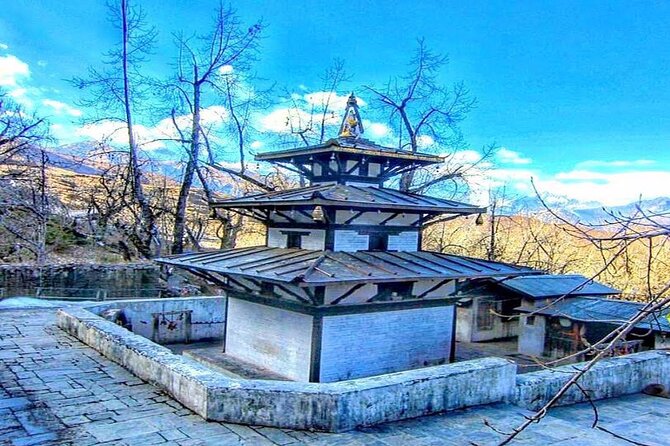
From Geling, the trail descends toward Chhungar, an apple orchard, Tama Gaon, and the Shyangmochen La. You then retrace the route through Yamdo, Bhena, Samar, and Chele.
This is a long day with changing surfaces. Rocky canyons, streams, chortens, orchards, and dry ridges all appear as you lose altitude. The return route may feel familiar, but the views change with the direction of light and your growing sense of distance covered.
Day 14 continues down toward Chhuksang and Kagbeni. The description allows roughly four to five hours to Kagbeni, with the possibility of continuing toward Jomsom for about three more hours so you are positioned for the next morning’s flight.
That option is practical but tiring. Ask the guide about the final walking plan before setting out, particularly if weather or flight timing makes an early arrival in Jomsom important.
On day 15, you take the early flight from Jomsom to Pokhara. The rest of the day is open for enjoying the city, including its views and Phewa Lake setting. Two nights in Pokhara are included in the overall program, with hotel accommodation and breakfast.
Days 16 and 17: Kathmandu and a soft landing
You fly back to Kathmandu on day 16 and return to the hotel. The day is intentionally easy, leaving time for gifts, souvenirs, and rest after the trek.
A farewell dinner provides a final chance to share photographs and talk through the trip. Day 17 is departure or an optional extension day. The provider can discuss extra activities such as national park drives, rafting, mountain biking, Tibet, India, or Bhutan.
That last day is useful if your international flight leaves later, but the package does not include those extra trips. Treat them as separate plans with separate costs.
What the $1,999 price really covers
At $1,999 per person, the value depends on how much of the included support you would otherwise need to arrange yourself. The price covers airport and hotel transfers, Kathmandu and Pokhara accommodation, domestic flights, Upper Mustang and national permits, an English-speaking trekking guide, and a porter shared at a ratio of two trekkers to one porter.
It also includes porter and guide salaries, food, lodging, and insurance, along with breakfast, lunch, dinner, and tea or coffee during the trek. A down jacket, sleeping bag, kitbag, and T-shirt are supplied, with the jacket and sleeping bag returned afterward.
Those inclusions matter because Upper Mustang permits and internal flights can make this route expensive to organize independently. The price also removes much of the daily meal planning.
You still need to budget for a Nepal visa, international flights, personal drinks, laundry, bottled water, hot showers, hot water, Wi-Fi, desserts, tips, insurance with evacuation cover, and entrance fees in Kathmandu and Pokhara. One lunch in Kathmandu is also excluded.
The accommodation needs clarification. The package says 11 nights in lodges or guest houses, but many daily entries specify tented camps. Ask exactly which nights use tents, whether tents and mattresses are supplied, and what bathroom facilities are available.
Who this trek suits best
I would recommend this route to someone who wants cultural depth and dramatic scenery more than comfort. You should have moderate physical fitness, be ready for repeated climbs, and accept that the high-altitude days may feel slow.
It suits people who value a structured itinerary. Flights, permits, food, transfers, a guide, and porter support are already organized, so you can focus on walking and looking around rather than solving transport problems.
It is less suitable if you want a soft adventure with dependable hot showers, strong internet, or easy access to shops. The exclusion of travel insurance is also important. You must arrange your own cover, including evacuation protection.
The company has handled trips connected with the Tiji Festival, and Sujan, identified as the company’s CEO, is praised for long-running service. If the festival is part of your interest, ask about dates, extra nights, and whether the published 17-day route changes.
Horseback riding to Lo Manthang has also been arranged on at least one trip and was described as a highlight. It is not included in the stated package, so treat it as an optional activity and confirm its cost and availability in advance.
Should you book the Upper Mustang Trek?
Book it if you want a serious Himalayan walk through old Buddhist villages, high passes, unusual rock formations, and one of Nepal’s most distinctive cultural regions. The two-night Lo Manthang stay and broad list of inclusions make the itinerary stronger than a rushed in-and-out visit.
Before booking, get written answers about tented camps versus lodges, the exact flight schedule, porter arrangements, and optional horseback riding. If you are comfortable with basic conditions and a demanding walking schedule, the $1,999 price offers solid value for a restricted-area trek with substantial logistical support.
FAQ
Where does the Upper Mustang Trek begin?
The organized trip begins in Kathmandu, followed by sightseeing in the Kathmandu Valley and a flight to Pokhara. You then fly from Pokhara to Jomsom and trek to Kagbeni.
How long is the trek?
The full experience lasts approximately 17 days. This includes arrival and departure days, Kathmandu and Pokhara stays, flights, and the walking route through Upper Mustang.
Is the Upper Mustang permit included?
Yes. The Upper Mustang Permit, National Park Permit, and TIMS are included in the package price.
What is the highest point on the route?
The highest point is Chogo La at 4,325 meters on the route between Lo Manthang and Lo Gekar.
Are meals included during the trek?
Yes. Breakfast, lunch, dinner, and tea or coffee are included during the trek. Breakfasts are also included in Kathmandu and Pokhara, with welcome and farewell meals in Kathmandu.
Are domestic flights included?
Yes. The package includes flights between Kathmandu and Pokhara, Pokhara and Jomsom, and Jomsom and Pokhara, as well as the return flight from Pokhara to Kathmandu. Domestic flight taxes are included.
Is travel insurance included?
No. You must arrange your own travel insurance, including cover for evacuation.
Is accommodation provided in tents or lodges?
The package information describes 11 nights in lodges or guest houses, while several daily entries describe tented camps. Confirm the exact accommodation plan before booking.
Recently added around Kathmandu
- Ghorepani Poon Hill Trek★ 5.0 · 16 reviews
- Private Manaslu Circuit Trek at Himalayas★ 5.0 · 3 reviews
- Amazing 1 Day Trekking Experience in Kathmandu Nepal★ 5.0 · 24 reviews
- Ghorepani Poonhill Trek★ 5.0 · 5 reviews
- Upper Mustang Trekking★ 5.0 · 2 reviews
- Upper Mustang Trekking★ 3.0 · 2 reviews
- Upper Mustang Trekking★ 5.0 · 4 reviews
- Upper Mustang Trek★ 5.0 · 5 reviews
Kathmandu Trekking Tours, compared.