
REVIEW · NEPAL
Pokhara: Amazing 7-Day ABC Trek with Natural Hot Spring
Annapurna rewards steady walkers. This seven-day route from Pokhara combines Annapurna Base Camp with a soak at Jhinu Dada’s natural hot springs, giving you both a serious Himalayan goal and a gentle finish. I like the carefully paced route, and I like that transport, permits, a guide, and trek accommodation are included. The main catch is that the $200 price needs careful checking, since meals and deluxe transport are listed for the full package only.
This is a private trek, not a large group march. Guides such as Ramesh, Jeet, Prakash, Ghanshyam Silwal, and Niraj have been praised for keeping walkers safe, adjusting the pace, and helping when somebody felt unwell. You should still expect long uphill and downhill days, basic mountain accommodation, and changing weather at altitude.
Key points before you book
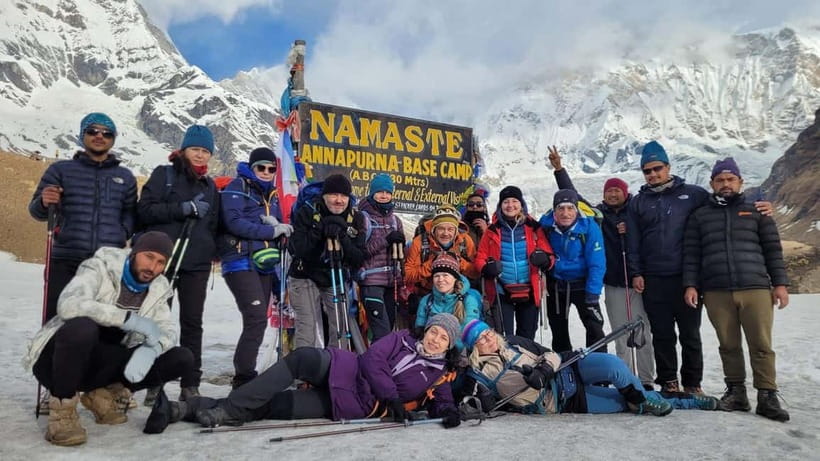
- Annapurna Base Camp at 4,130 meters: The route finishes inside a dramatic mountain bowl surrounded by snow-covered peaks and glaciers.
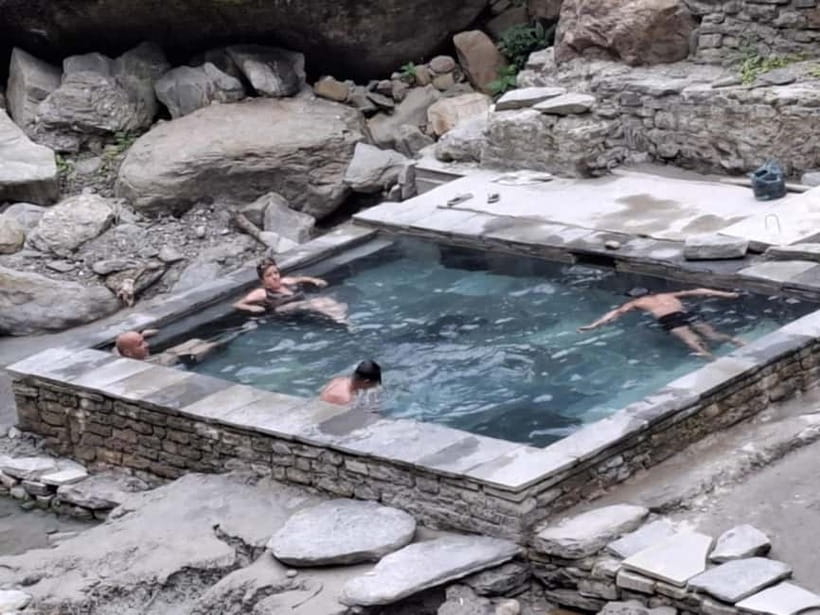
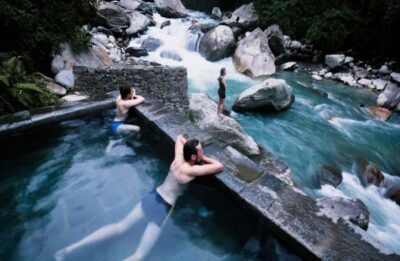
- Jhinu Dada hot springs: Day six gives your legs a welcome break in naturally warm water beside the trail.
- Private group with an English-speaking guide: English, Hindi, and Nepali guiding is available, with pickup anywhere in Lakeside Pokhara, Pokhara Airport, or the wider Pokhara Valley.
- A varied seven-day route: You pass paddy fields, villages, suspension bridges, bamboo and rhododendron forests, waterfalls, and high mountain scenery.
- A strong value package, with conditions: Permits, paperwork, guide costs, medical kit, accommodation, and government taxes are included. Meals and deluxe transport apply to the full package, so confirm exactly what your $200 booking covers.
- Porter service is extra: You can arrange one separately, and it may make the long uphill and downhill sections much easier.
Starting from Pokhara at 800 meters
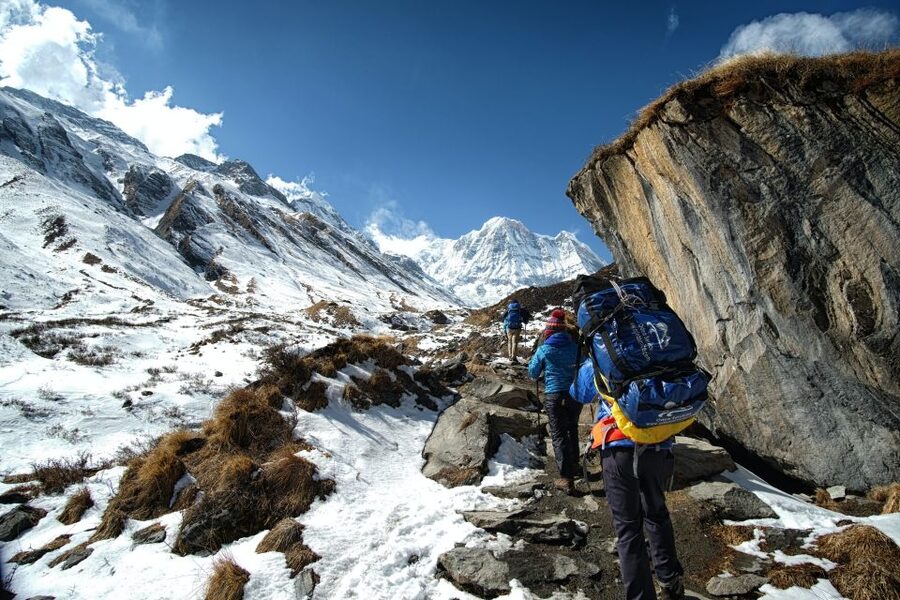
Your first morning begins with pickup after breakfast in Lakeside Pokhara. The road heads toward the Annapurna region, with views of the Seti River, mountain slopes, and green paddy fields along the way.
The first section is by jeep, taking about four hours. You continue by road to Matqui, roughly half an hour beyond Ghandruk, then begin walking for around three hours to Chhomrong at 2,200 meters. This is a smart way to begin because the vehicle removes a long road section while leaving you with a proper first day on foot.
Chhomrong is a major village on the route, and it gives you an early taste of life in the hills. You will see local homes, mountain farms, and welcoming teahouses rather than a polished resort setting. The final climb toward the village can feel demanding after a road journey, so keep water and a light layer within reach.
The road portion is useful, but it is not the smoothest part of the experience. Mountain roads can be slow and tiring, and the itinerary gives only an approximate travel time. If you are prone to motion sickness, ask your guide where to sit and keep your medicine accessible.
More Hot Spring Treks in Nepal
- Pokhara: 5 Day Annapurna Base Camp Trek & Natural Hot Spring
★ 4.9 · 44 reviews - From Pokhara: 5-Day Annapurna Basecamp Trek with Hot Springs
★ 4.9 · 26 reviews - Pokhara: 7-Day Annapurna Base Camp Trek & Natural Hot Spring
★ 5.0 · 11 reviews
Chhomrong to Dovan through forest and river country
Day two covers Chhomrong to Dovan, at about 2,400 meters, in five to six hours. The route passes through thick forest and across suspension bridges, with the Modi River below and mountain views opening through the trees.
This is where the trek begins to feel like a proper foot journey. The forest gives shade, but the route rises and falls repeatedly. You will cross stairs and uneven sections, so hiking shoes with a firm sole matter more than fashionable gear.
Annapurna and Machhapuchhre, also called Fishtail, appear along the way. The views do not arrive as one constant grand scene. Instead, the forest keeps changing, with short openings that reveal a peak, a river gorge, or a hillside village.
Dovan is a practical overnight stop rather than a destination in its own right. Accommodation on the trek is described as available mountain lodging, with meals included in the full package. Expect a simple place to sleep and eat, not hotel comforts. Bring cash for personal costs such as showers, battery charging, drinks, and bottled or boiled water.
Dovan to Deurali at 3,200 meters
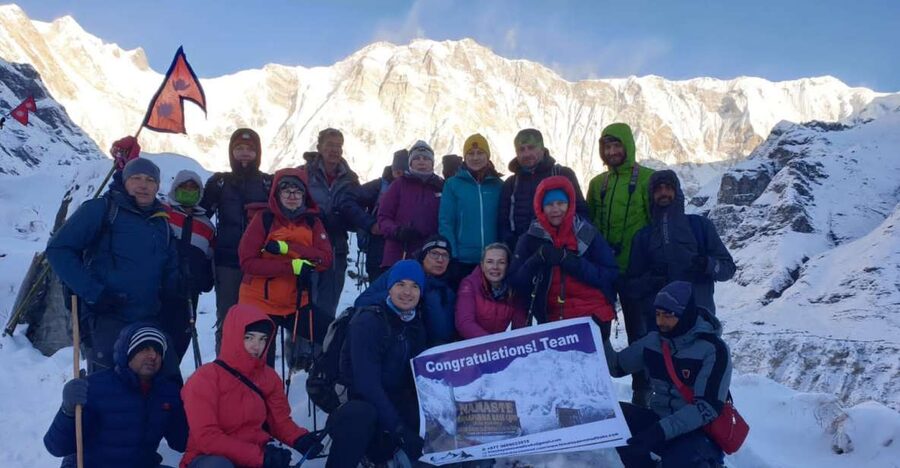
The third day takes about six hours from Dovan to Deurali. The route climbs through bamboo and rhododendron forest, then continues into a cooler, higher mountain setting.
Waterfalls and steep slopes give this section plenty of visual variety. The walking becomes more serious as you gain height, but the daily distance remains manageable for a person who is used to regular hiking. The guide’s role matters here because a good pace is not the same as a fast pace.
Deurali sits at 3,200 meters, so this is the first night when altitude deserves real attention. Walk slowly, drink regularly, and tell your guide if you develop a headache, nausea, unusual tiredness, or other concerns. The guides connected with this trip have been praised for watching walkers closely and changing the pace when needed, but no guide can remove the effects of altitude.
The itinerary does not list a separate acclimatization day. That means the climb is compact, with four consecutive days leading to Base Camp. You should be honest about your fitness before booking. You do not need to be an elite hiker, but you do need to handle several hours of walking, repeated climbs, and a high point above 4,000 meters.
Deurali to Annapurna Base Camp at 4,130 meters
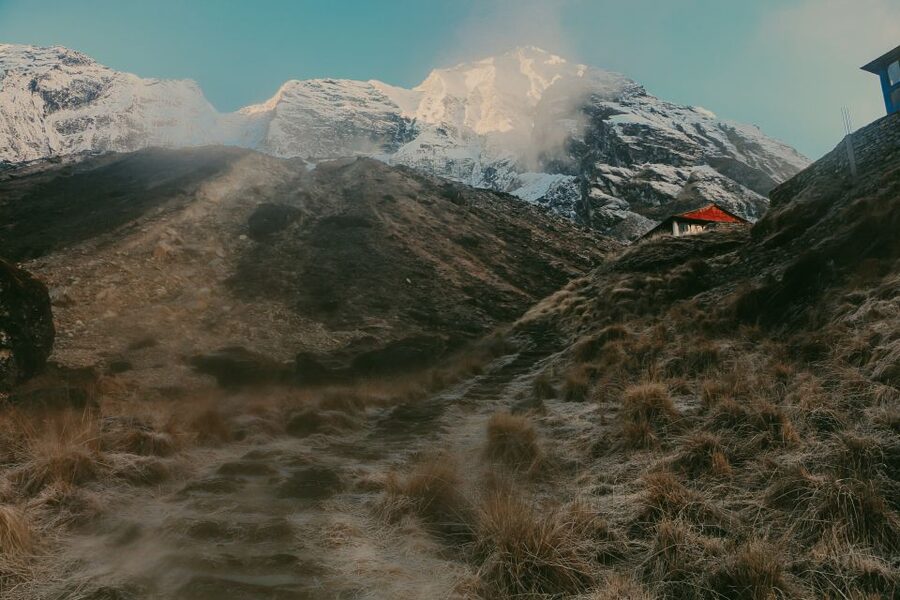
Day four is the main prize. You walk from Deurali to Annapurna Base Camp in around six hours, entering the huge mountain amphitheater that makes this route famous.
The scenery changes quickly as the forest thins and the high peaks take over. Snow-covered summits, glaciers, rock walls, and broad mountain slopes surround the route. The final approach can feel slow because of the altitude, even when the distance seems reasonable.
At Base Camp, the appeal is not simply reaching a sign or checking off a name. You are standing in a natural bowl enclosed by some of the highest peaks in the Annapurna range. That setting gives the day its emotional lift, but the air is thin and the weather can change quickly.
Plan to keep your expectations practical. The itinerary promises the Base Camp setting and mountain views, not a guaranteed clear sky. Carry warm clothing, sunglasses, sunscreen, and a camera, but also allow the place to be impressive in cloud or shifting light.
You should also remember that day four is not the end of the effort. You need enough energy for the descent that follows, so do not treat the Base Camp arrival as permission to ignore food, water, or rest.
Same trailhead, a longer or shorter day out:
- Everest Base Camp Trek – 14 Days
★ 5.0 · 1,499 reviews - Everest Base Camp Trek
★ 5.0 · 842 reviews - Everest Base Camp Trekking
★ 5.0 · 485 reviews - Annapurna Circuit Trek with Tilicho Lake
★ 5.0 · 368 reviews
The long return to Sinuwa
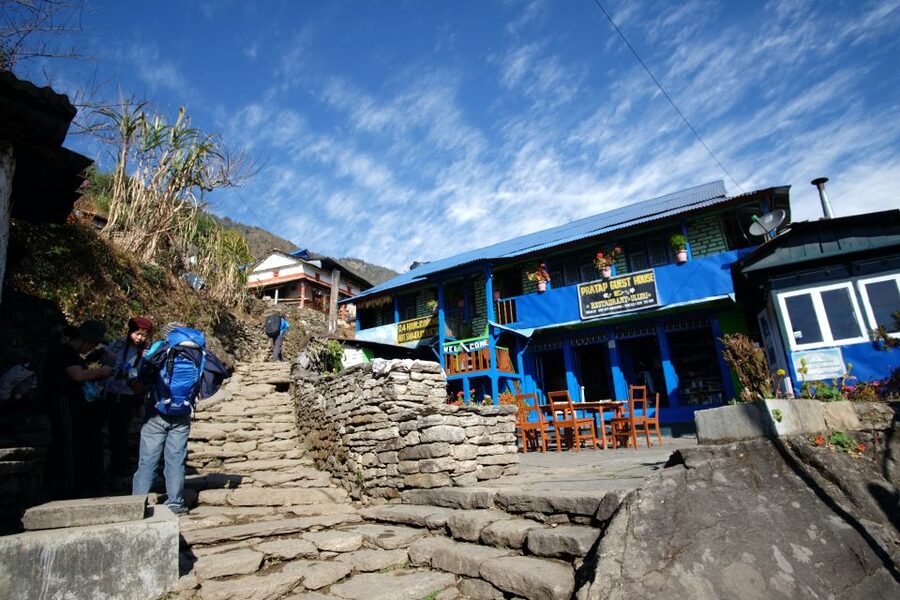
On day five, you retrace the route from Annapurna Base Camp to Sinuwa, descending to about 2,200 meters. The walk takes around seven hours.
Going downhill is often harder on knees and thighs than people expect. Trekking poles can help, and a porter can reduce the weight on your back. The route may feel familiar, but the lower altitude brings a different mood as forests and warmer air return.
Sinuwa is a sensible overnight stop because it breaks up the descent before Jhinu Dada. You will have time to reflect on the Base Camp section without trying to complete the entire return in one punishing day.
The accommodation is described as varied but adequate for its remote setting. That is the right way to think about mountain lodging here. You are paying for access to the route, meals, a bed, and local support, not for polished rooms or a full list of hotel services.
Jhinu Dada and the natural hot springs
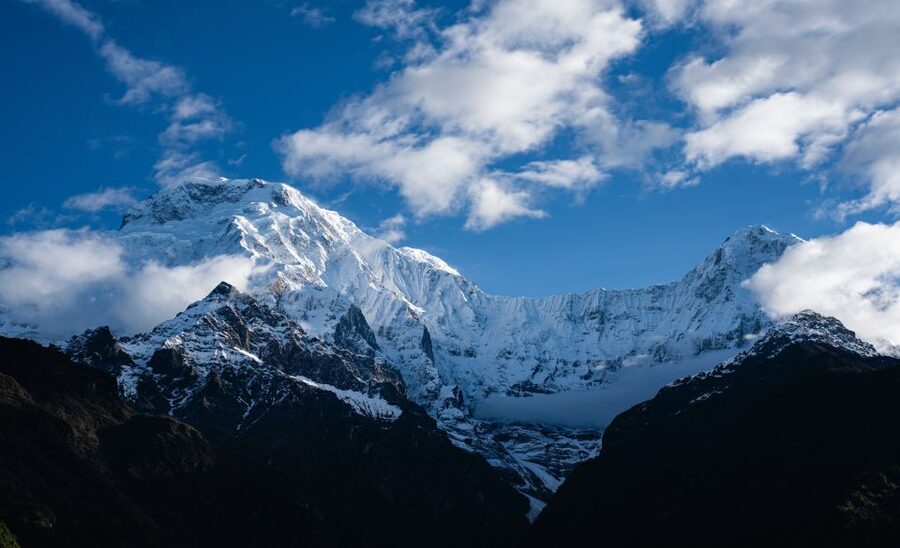
Day six runs from Sinuwa to Jhinu Dada in about five hours, ending at roughly 1,600 meters. The main reward is a visit to the natural hot springs, where you can soak tired legs in warm water.
This is a well-judged feature of the route. After the long climb to Base Camp and the seven-hour return to Sinuwa, a hot spring stop gives the final mountain days a pleasant rhythm. You still need to walk to the springs, so do not expect a completely effortless spa visit, but the chance to rest in warm water is a welcome change from trail dust and cold mountain air.
Bring a towel and a dry change of clothes. These are specifically listed among the recommended items, and they are especially useful on this day. The hot springs are not a substitute for medical care, and you should follow your guide’s advice if you are feeling sick or unusually weak.
Jhinu Dada also gives you a final taste of village life before returning to Pokhara. The route has moved from paddy fields to forest, then high mountain terrain, and finally back toward warmer hills. That steady change is one of the trek’s strongest features.
Returning to Lakeside Pokhara
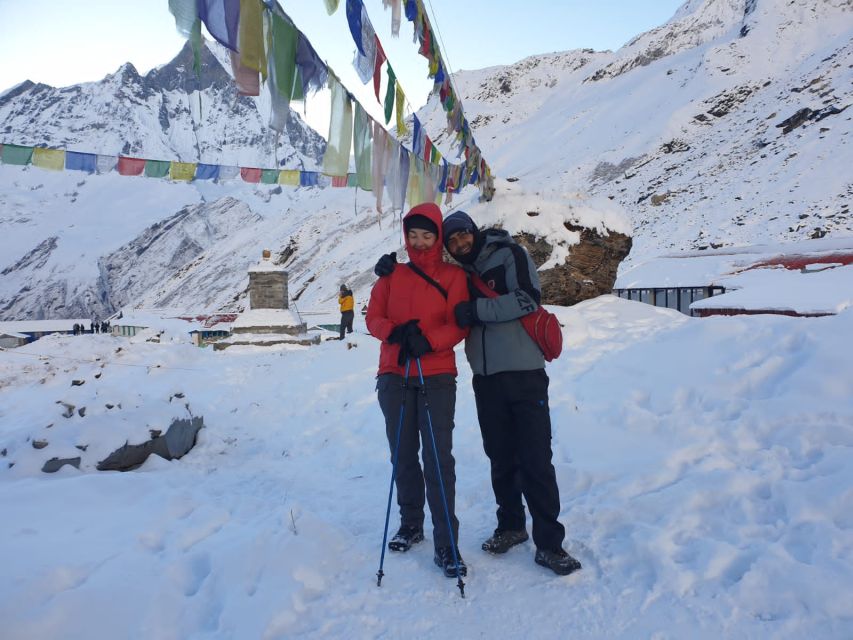
On the final day, you walk for about two hours after breakfast before taking a jeep back to Lakeside Pokhara. The return gives you time to think back over the route, from the first road journey through the Seti area to the high mountain bowl and the hot springs.
The return transfer is convenient, but the trip timing may vary. Pickup and drop-off are available throughout Lakeside, at Pokhara Airport, and across the Pokhara Valley. Kathmandu pickup can be arranged for an additional charge, so it is worth asking about this before you commit if you are not already in Pokhara.
The tour includes hotel pickup and drop-off, but extra nights in Pokhara are not covered if you arrive early, leave late, or return from the mountains ahead of schedule for reasons outside the planned itinerary. Build some flexibility into your wider Nepal plans rather than booking a tight same-day connection.
What the $200 price really gives you
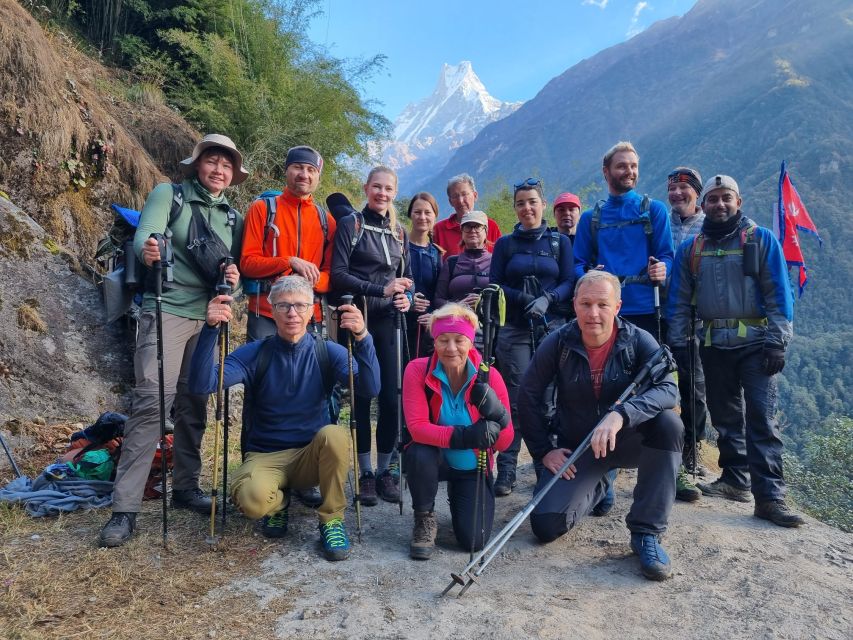
At $200 per person, this appears to be a strong-value way to reach Annapurna Base Camp, especially if you use the full package. The listed inclusions cover permits, required paperwork, the Trekkers’ Information Management System fee, government taxes, accommodation during the trek, a medical kit, and the guide’s salary, food, lodging, insurance, equipment, and transport.
Meals are included for breakfast, lunch, and dinner during the trek under the full package. Deluxe transport according to the itinerary is also listed for the full package. For the non-full package option, shared bus transport is specified instead.
That distinction matters. Ask the provider to state in writing whether your quoted price includes all meals and deluxe road transport. You should also confirm if your booking includes the entire seven-day arrangement or only selected services.
Personal expenses are separate. Budget for drinks, phone calls, laundry, showers, battery charging, extra porters, and bottled or boiled water. Soft and hard drinks, travel and rescue insurance, sightseeing entrance fees, international flights, and the Nepalese visa fee are also excluded.
A porter is available at an extra cost. I would seriously consider one if you are not accustomed to carrying a pack on steep trails. One Chilean participant specifically credited the porter with helping at difficult moments, and that is practical advice, not luxury fussiness.
Guides, pace, and the private-group advantage
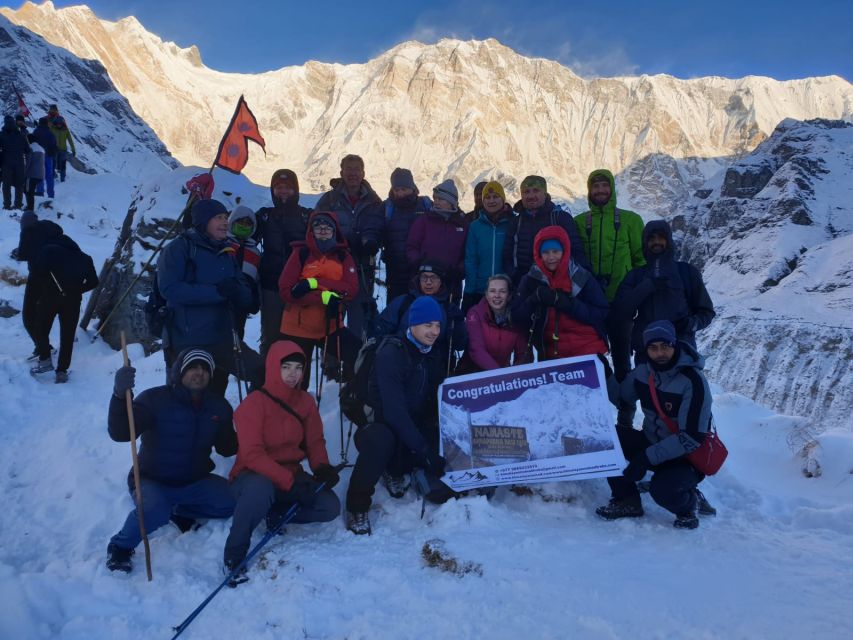
The guide may shape your experience more than the scenery. This trip uses authorized English-speaking guides, with English, Hindi, and Nepali available. The guide also handles route support, accommodation, meals, permits, and safety concerns during the trek.
Ghanshyam Silwal was praised for changing the pace to suit the group, keeping watch when somebody felt ill, and maintaining a cheerful mood with games, dancing, and conversation. That kind of flexibility is valuable on a seven-day route, where one person’s fast pace can quickly become another person’s problem.
Jeet was described as an experienced local guide who helped the trek run smoothly. Prakash was praised for explaining Nepal’s history, geography, and Annapurna setting while keeping the group safe. Ramesh, from Himalayan Nomad Treks, was noted for answering questions before departure and meeting the group at the start and return.
You cannot request every named guide with certainty unless the company confirms availability. Still, these details show what to ask for: a guide who adjusts speed, explains the area, checks on health, and understands the route well.
The private-group format should also help you avoid being forced into somebody else’s schedule. It does not make the hike easy, but it gives the guide more room to respond to your needs.
What to pack for this route
The recommended list covers the basics: passport or identification, camera, sunscreen, sleeping bag, T-shirts, cash, shorts, hiking shoes, long trousers, jacket, towel, trekking gear, and sunglasses.
I would pay special attention to the following:
- Warm layers: Temperatures at 4,130 meters can be very different from those in Pokhara.
- Sturdy footwear: The route includes forest paths, stairs, bridges, descents, and uneven ground.
- Cash: Personal costs are not covered, and card payments may not be available along the trail.
- Sun protection: The higher you go, the more exposed the route can feel.
- Sleeping bag: It is specifically requested, so do not assume mountain accommodation will provide one.
- A small day pack: Keep water, layers, snacks, sunscreen, and personal medicine close at hand.
Travel and rescue insurance is not included. That is not a minor formality on a high-altitude trek, so arrange suitable cover before departure.
Who should book this trek?
I would recommend this route to you if you want a classic Annapurna experience in a compact seven-day schedule and you value a private guide over a self-guided approach. It suits active walkers who can handle five to seven hours on foot, repeated climbs, and a high point of 4,130 meters.
The route is also a good fit if you want more than mountain views. You get village roads, local communities, bridges, forests, waterfalls, glaciers, a famous Base Camp, and natural hot springs in one continuous trip.
I would hesitate if you want luxury accommodation, short walking days, or a guaranteed slow acclimatization program. The itinerary is efficient, but there is no spare acclimatization day listed, and the long return from Base Camp is demanding.
Should you book it?
Book this Annapurna Base Camp trek if you want a well-supported, good-value mountain route with a private guide, included permits, village accommodation, and a satisfying hot spring finish. The strongest reasons are the varied scenery, the guide support, and the chance to reach Base Camp without arranging every detail yourself.
Before paying, confirm the full-package price, meals, deluxe transport, porter cost, and insurance requirements. If those details match your expectations and you are ready for long walking days, this is a practical way to experience the Annapurna region from Pokhara.
FAQ
How long does the Annapurna Base Camp trek take?
The experience lasts seven days, beginning and ending in Lakeside Pokhara.
What is the highest point on the route?
Annapurna Base Camp is at approximately 4,130 meters.
Is transport from Pokhara included?
Hotel pickup and drop-off are included. Deluxe transportation is listed for the full package, while shared bus transport is listed for the non-full package. Pickup is available from Lakeside Pokhara, Pokhara Airport, and the Pokhara Valley.
Are meals included during the trek?
Breakfast, lunch, and dinner are included during the trek for the full package. Drinks and personal food expenses are not included.
Is a guide provided?
Yes. The trek includes an authorized English-speaking guide, with English, Hindi, and Nepali available. The guide’s meals, accommodation, salary, equipment, insurance, and transportation are included.
Can I cancel the booking?
You can cancel up to 24 hours in advance for a full refund. The experience also offers reserve now and pay later.
More 7-Day Experiences in Nepal
- Pokhara: 7 Day Annapurna Base Camp Trek
★ 4.9 · 38 reviews - Short Annapurna Base Camp Trek – 7 Days
★ 5.0 · 22 reviews - Kathmandu to Langtang Valley 7-Day Trek
★ 5.0 · 11 reviews - 7 Days Langtang Valley Private Trek From Kathmandu
★ 5.0 · 10 reviews
Recently added around Nepal
- Ghorepani Poon Hill Trek★ 5.0 · 16 reviews
- Private Manaslu Circuit Trek at Himalayas★ 5.0 · 3 reviews
- Amazing 1 Day Trekking Experience in Kathmandu Nepal★ 5.0 · 24 reviews
- Ghorepani Poonhill Trek★ 5.0 · 5 reviews
- Upper Mustang Trekking★ 5.0 · 2 reviews
- Upper Mustang Trekking★ 3.0 · 2 reviews
- Upper Mustang Trekking★ 5.0 · 4 reviews
- Upper Mustang Trek★ 5.0 · 5 reviews
Hot Spring Treks, compared.
Private Tour Mount Batur Sunrise Trekking and Natural Hot Spring
Read our review →
Mount Batur Sunrise Trek & Natural Hot Spring Experience
Read our review →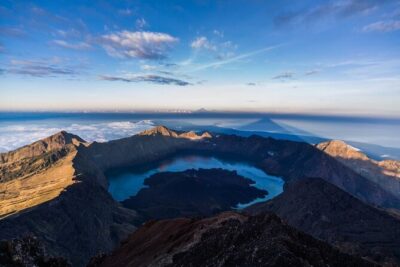
3D/2N Rinjani trekking summit,lake and hot springs.
Read our review →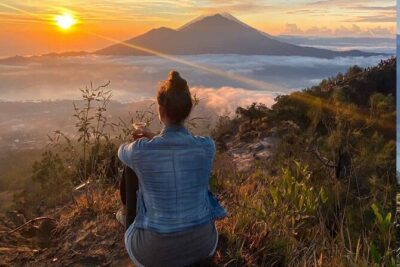
Mount Batur Sunrise Trekking & Natural Hot Spring – All Inclusive
Read our review →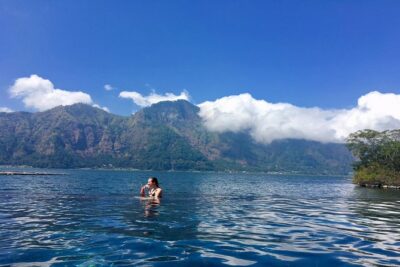
5 Day Annapurna Base Camp Trek & Natural Hot Spring
Read our review →Browse the lists this tour appears in