
REVIEW · NEPAL
Pokhara: 7 Day Annapurna Base Camp Trek
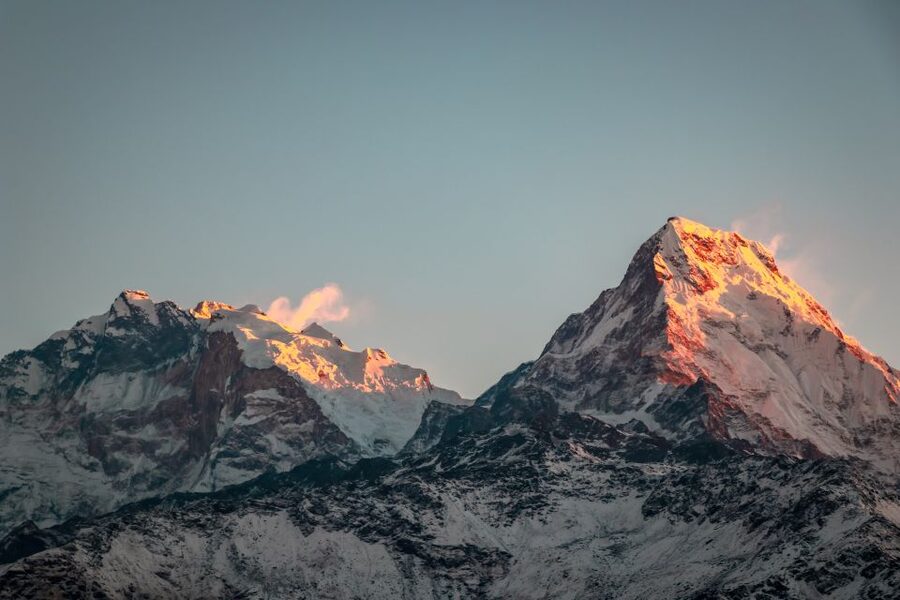
The Himalayas get serious quickly. This seven-day trek takes you from Pokhara to Annapurna Base Camp at 4,130 meters, with terraced fields, Gurung villages, rhododendron forests, suspension bridges, and the great Annapurna peaks along the way. I especially like the private format, which lets your guide adjust the pace, and the stop at Jhinu Danda’s hot springs, a welcome reward for tired legs.
The $215 price is strong value because it includes private transport, permits, accommodation, a certified guide, trekking poles if needed, a duffel bag, and luggage storage in Pokhara. The main caution is the pace: reaching base camp in seven days involves long uphill sections and a quick rise in altitude, while food, drinks, and a porter cost extra.
Key points to know before booking
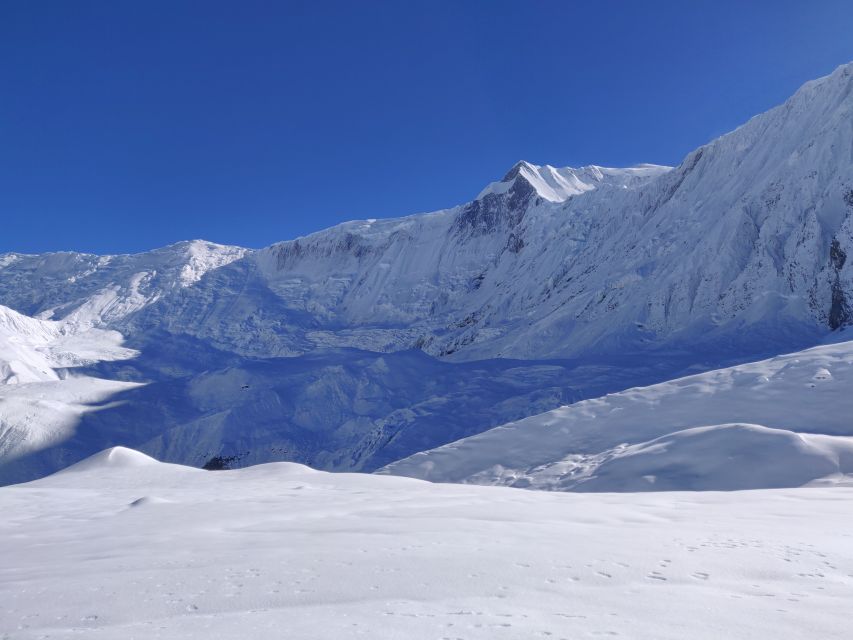
- Base camp at 4,130 meters: The high point of the trek is the enormous mountain amphitheater around Annapurna Base Camp.
- A private trek with flexible pacing: Guides such as Pratiksha, Hari, Sandesh, Paras, Bidur, and Krishna have been praised for adjusting the walk to each person’s ability.
- Gurung culture in Ghandruk: The first overnight stop gives you a real village experience, not just a mountain viewpoint.
- Snow and changing conditions: Winter trekkers have encountered snow near base camp, while monsoon hikers have found rain, quiet trails, and a different kind of beauty.
- Hot springs on day six: Jhinu Danda offers a natural place to rest before the final walk and drive back to Pokhara.
- A demanding seven-day schedule: You need reasonable fitness, comfort with steep steps, and a willingness to walk for several hours each day.
What the $215 package really gives you
At $215 per person, this is not an all-inclusive trek. Your meals and drinks are separate, and a porter costs $15 per day. Still, the price covers several expensive and useful pieces: pickup at any hotel in Pokhara’s Lakeside area, private round-trip transport, conservation and government permits, standard tourist lodge accommodation, a government-certified guide, a first aid kit, and storage for luggage left behind in Pokhara.
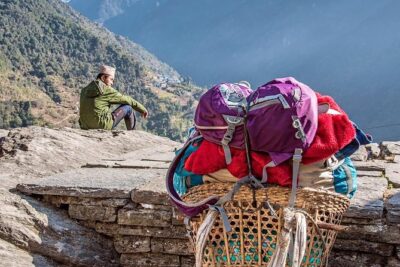
That package matters because transport to and from the trailhead can be awkward to arrange on your own. You also avoid carrying everything from Pokhara, since the company provides a duffel bag and trekking poles if required. If your main bag is heavy, hiring the porter is worth considering. The trek is much more pleasant when you can focus on your footing and the views instead of your shoulders.
The accommodation is described as standard tourist lodges. Expect practical mountain lodging rather than comfort-hotel luxury. Food is available for purchase along the route, but the cost is not included, so you should budget for meals, drinks, and any small extras.
The private group setup is one of the strongest parts of the arrangement. You are not locked into the speed of a large party. Past guide pairings included a porter with the guide, and the team adjusted when people felt sick, tired, or wanted to change the pace. That flexibility can make the difference between a hard but enjoyable trek and a miserable one.
More Annapurna Treks in Nepal:
- Annapurna Circuit Trek with Tilicho Lake
★ 5.0 · 368 reviews - Annapurna base camp trek 5 Days
★ 5.0 · 252 reviews - 14-Day Private Annapurna Base Camp Trek
★ 5.0 · 180 reviews
Day one: Pokhara to Ghandruk through farms and villages
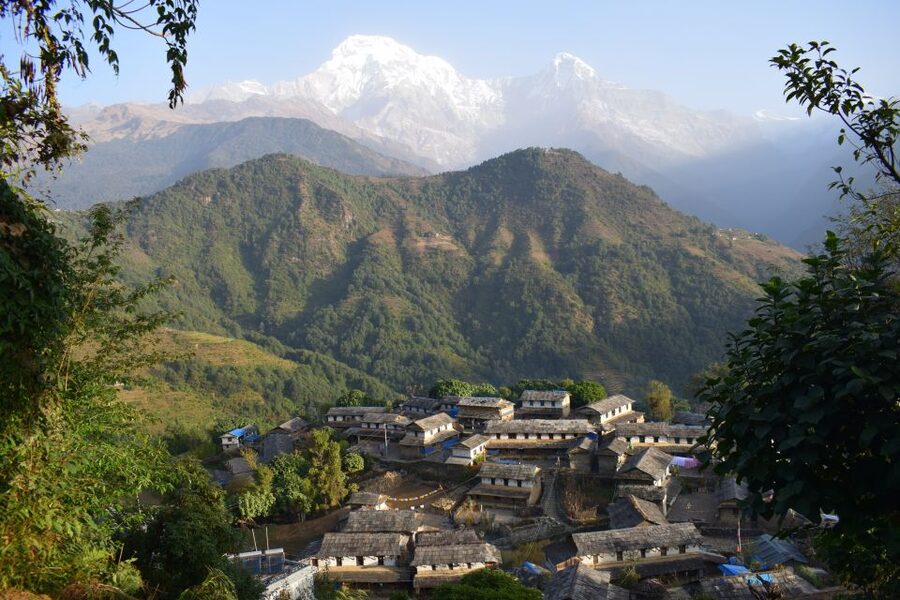
The first day begins with a drive from Pokhara to Nayapool. From there, you walk through villages and terraced fields toward Ghandruk, at 1,939 meters.
Ghandruk is an excellent first stop because it gives you a taste of Gurung village life before the trail becomes more remote. The setting also delivers an early mountain reward, with views toward Annapurna South and Machhapuchhre, the distinctive peak better known as Fishtail.
The day is not simply a gentle introduction. You gain height through farm country, and the first uphill sections can reveal how prepared your legs are. One useful point from the route is that the scenery changes often. You are not staring at one road or one type of view. Farmland gives way to village paths, and the mountains begin to feel close enough to touch.
Ghandruk also helps set the cultural tone of the trek. You are walking through a lived-in community, not a staged mountain attraction. Take time to notice the traditional village setting and talk with your guide about the Gurung people and the area.
Day two: Ghandruk to Lower Sinuwa across bridges and forest
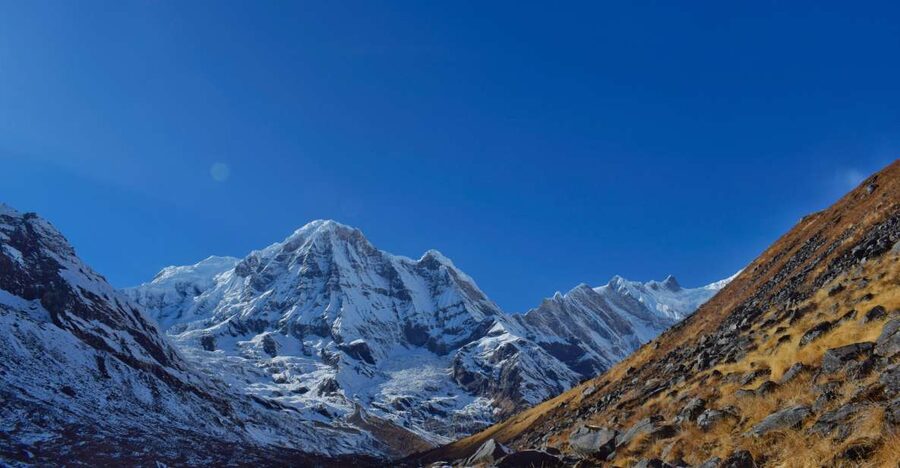
From Ghandruk, the trail rises and falls through rhododendron forest and small settlements before reaching Lower Sinuwa at 2,249 meters.
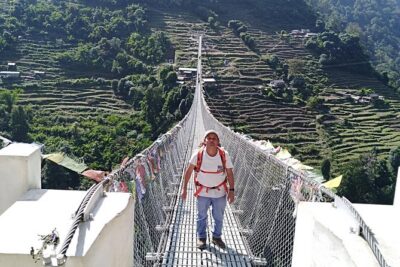
This is a day of changing rhythm. You may climb hard for a while, then lose some height, then climb again. Suspension bridges over the Modi Khola add a memorable bit of trail drama, especially when the river and steep slopes make the scale of the valley clear.
The forests provide shade and a cooler feel than the exposed sections higher up. Rhododendrons are especially appealing in season, although the exact appearance depends on the month you visit. The route also passes through small communities, so you continue to see daily life rather than walking through empty wilderness.
Lower Sinuwa is a useful overnight stop because it places you deeper into the Modi Khola valley without pushing the schedule too far. Even so, you should not treat day two as an easy walk. The repeated ascents and descents can be more tiring than a steady climb.
Day three: The Modi Khola gorge to Deurali
Day three takes you from Sinuwa to Deurali at 3,230 meters. The path passes through bamboo and oak forest, then continues by Dovan and Himalaya as it follows the Modi Khola gorge.
This section feels more enclosed and dramatic. Dense forest, cliffs, waterfalls, and the sound of the river make the route visually different from the open farms around Ghandruk. The trail gradually becomes more serious as you gain altitude.
Deurali is where the trek begins to test your preparation. The climb is longer, the air is thinner, and the surrounding cliffs make it clear that you are entering high mountain country. Do not race your guide or try to prove a point here. The private format is most useful on this day, since your guide can slow the pace and add rests when needed.
Altitude sickness is a real concern on this itinerary. One trekker became ill at Deurali and could not continue to base camp. The guide arranged jeep transport and helped change the plan, allowing that person to hike to Poon Hill instead. That is an important reminder: reaching the highest point is not worth ignoring serious symptoms.
A few more treks around Nepal worth a look
- Short Annapurna Base Camp Trek – 7 Days
★ 5.0 · 22 reviews - Kathmandu to Langtang Valley 7-Day Trek
★ 5.0 · 11 reviews - Pokhara: 7-Day Annapurna Base Camp Trek & Natural Hot Spring
★ 5.0 · 11 reviews - 7 Days Langtang Valley Private Trek From Kathmandu
★ 5.0 · 10 reviews
Day four: Machhapuchhre Base Camp and Annapurna Base Camp
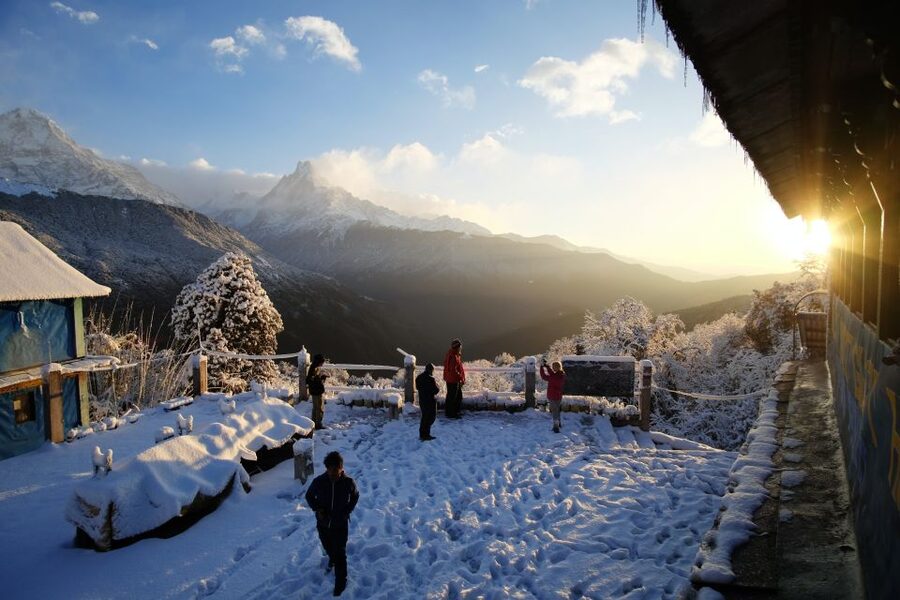
Day four is the main event. You climb from Deurali through alpine meadows, pass Machhapuchhre Base Camp, and continue to Annapurna Base Camp at 4,130 meters.
The view changes quickly as trees thin out and the peaks dominate the horizon. Machhapuchhre, or Fishtail, is one of the great visual prizes of the trek. From the approach to its base camp, you also begin to see the Annapurna range in a much more powerful way.
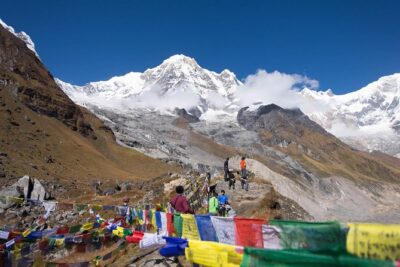
Annapurna Base Camp sits inside a broad amphitheater of enormous peaks. The appeal is not only the destination sign or the sense of achievement. It is the feeling of being surrounded by high Himalayan walls, with Annapurna I, Annapurna South, Hiunchuli, and Machhapuchhre forming the setting.
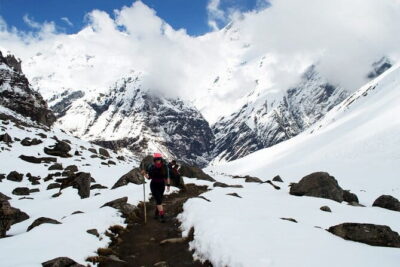
This is also the hardest day for many people. The altitude, cold, and uphill walking arrive together. Some hikers have reached base camp in snow, particularly in winter. That can be magical, but it also means you should be ready for changing trail conditions and cold temperatures.
The schedule gets you to base camp in just seven days, which is efficient but not especially slow. If you are new to high-altitude trekking, you should take the pace seriously. A guide can help you manage the day, but no guide can remove the physical demands of 4,130 meters.
Day five: Sunrise and the long descent to Sinuwa
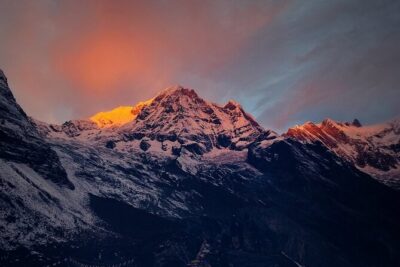
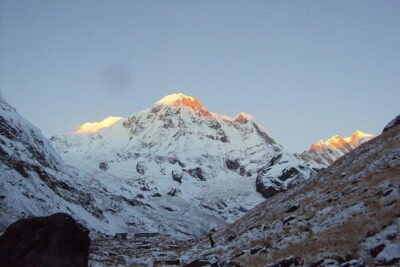
If the weather cooperates, sunrise at Annapurna Base Camp is worth setting an alarm for. The early light changes the color of the surrounding peaks, and the amphitheater feels even larger before the trail gets busy.
After breakfast, you retrace your route downhill to Sinuwa at 2,249 meters. Descending is usually easier on the lungs, but it can be tough on knees and thighs, especially after the climb to base camp.
The return route through bamboo and rhododendron forest gives you a different view of the trail. Sections that felt steep on the way up can seem equally demanding in reverse. Trekking poles are useful here, and the package can provide them if needed.
This night at Sinuwa breaks up the descent and keeps the final two days manageable. It also gives you time to absorb the main achievement instead of rushing directly from base camp to the road.
Day six: Jhinu Danda and the natural hot springs
From Sinuwa, you descend to Jhinu Danda at 1,760 meters. The reward is a visit to natural hot springs beside the river.
This is one of the best design choices in the itinerary. After several days of climbing, the hot springs offer a simple, physical pleasure: warm water, tired muscles, and a chance to sit still. Bring swimwear. The stop has been a favorite part of the trip for people who did not expect it to be such a welcome break.
Jhinu is also a good place to slow down and enjoy the village setting. You are still in the mountains, but the lower altitude and warmer air make the day feel lighter. The descent is not effortless, though. Long downhill sections can be harder than expected, so do not assume the day will be a rest day from start to finish.
Day seven: Returning to Pokhara
The final day descends through farmland and villages to Nayapool, where private transport takes you back to Pokhara.
The walk is less dramatic than the high country, and some of the route includes road access. One practical suggestion is worth considering: if you mainly want mountain walking, you may prefer to finish around Jhinu if your arrangements allow it. The route after Jhinu is more road-oriented, and one past trekker specifically felt the itinerary could end there.
Still, ending in Pokhara has its advantages. You return directly to Lakeside, with time to celebrate the trek beside the lake, eat a proper meal, and collect any stored luggage. The private vehicle also removes the uncertainty of finding transport after a long descent.
Guides, pacing, and the human side of the trek
The guide is a major part of this experience. Names praised for patience, care, and trail skill include Pratiksha, Deepak, Hari, Krishna, Sandesh, Paras, Bidur, Narayan, and Deepchandra. You are not guaranteed a particular guide unless the company confirms one in advance, but the pattern is clear: personal attention is central to the service.
Pratiksha was praised for letting hikers move at their own pace while still providing useful direction. Deepak and Hari were appreciated for adjusting their rhythm and explaining the mountains and Nepal. Sandesh was noted for being positive, attentive, and even taking photos and videos. Paras was praised for estimating the route well and adapting the trek to personal preferences.
That matters more than a polished itinerary. A good guide will notice when you are struggling, explain what comes next, help with lodge arrangements, and know when to talk and when to give you quiet time. The guides also have relationships with the tea houses, which can make overnight stays feel more comfortable.
Communication is available in English, Hindi, and Nepali. Before departure, ask for a packing list suited to your month. One useful criticism of the arrangement is that a seasonal packing list would make preparation easier.
Weather, fitness, and who should book
You do not need to be an elite athlete, but you should be comfortable with repeated uphill and downhill walking. The itinerary rises from Ghandruk at 1,939 meters to base camp at 4,130 meters, then drops quickly. That combination demands steady pacing.
Spring and autumn are likely to appeal to people seeking clearer mountain views, based on the strong experiences reported in those periods. Winter can bring snow near base camp, which may add beauty and difficulty. Monsoon conditions can mean substantial rain, but the trail may be quieter and more peaceful.
I would recommend this trek to people who want a serious Himalayan goal without committing to a much longer route. It also suits first-time trekkers who want a private guide and flexible support. It is less suitable if you dislike steep steps, have little time for physical preparation, or expect hotel-style comfort.
The overall rating is 4.9 from 38 reviews, and transport received a perfect score from 87 percent of ratings. Those figures support the strongest practical point: organization and guide care are the core strengths.
What to budget and pack
The $215 base price does not cover food and drinks, so keep extra money available for meals along the trail. A porter is available for $15 per day, and that can be a smart choice if you want to carry only a daypack.
Bring your passport or ID card, as requested for the activity. The operator supplies a duffel bag and trekking poles if needed, and luggage storage in Pokhara means you can leave nonessential items behind.
Pack for changing conditions, especially if you are going in winter or monsoon months. Ask the operator for a season-specific list before setting off. At minimum, plan around the fact that you may encounter cold at base camp, rain in wet months, and long downhill stretches.
Cancellation is flexible, with a full refund available when you cancel at least 24 hours before the activity. You can also reserve and pay later, which helps if your Pokhara plans are still moving around.
Should you book this Annapurna Base Camp trek?
I would book it if you want the classic base camp goal in a compact seven-day schedule, value a private guide, and accept that the trek will be physically demanding. The mountain views, Ghandruk village, Modi Khola gorge, sunrise at base camp, and Jhinu hot springs give the week a satisfying range.
I would hesitate only if you want a slow acclimatization schedule, dislike basic lodge accommodation, or prefer to avoid road sections near the end. Ask about the assigned guide, seasonal packing list, porter, meal budget, and the option of finishing at Jhinu before you pay.
For fit hikers who want strong support without paying for a luxury trek, this is a well-priced and thoughtfully arranged route to one of Nepal’s great mountain destinations.
FAQ
How long is the Annapurna Base Camp trek?
The trek lasts seven days, including the drive from Pokhara to Nayapool and the return drive from Nayapool to Pokhara.
What is the highest altitude reached?
The highest point is Annapurna Base Camp at 4,130 meters, or 13,550 feet.
Where does the trek begin?
The experience includes pickup from any hotel in Lakeside, Pokhara, followed by private transport to Nayapool.
Is transport included?
Yes. Private round-trip transportation, hotel pickup, and hotel drop-off are included.
Are permits included?
Yes. The package includes the Annapurna Conservation Area permit and government permits.
Is food included in the price?
No. Food and drinks are available to purchase during the trek but are not included.
Can I hire a porter?
Yes. A porter is available for $15 per day.
What languages can the guide speak?
Guides are available in English, Hindi, and Nepali.
Are the hot springs included in the route?
Yes. Day six includes the walk to Jhinu Danda, where you can visit the natural hot springs beside the river.
What should I bring?
You should bring your passport or ID card. The operator can provide a duffel bag and trekking poles if needed, and it is wise to request a packing list suited to your season.
Recently added around Nepal
- Ghorepani Poon Hill Trek★ 5.0 · 16 reviews
- Private Manaslu Circuit Trek at Himalayas★ 5.0 · 3 reviews
- Amazing 1 Day Trekking Experience in Kathmandu Nepal★ 5.0 · 24 reviews
- Ghorepani Poonhill Trek★ 5.0 · 5 reviews
- Upper Mustang Trekking★ 5.0 · 2 reviews
- Upper Mustang Trekking★ 3.0 · 2 reviews
- Upper Mustang Trekking★ 5.0 · 4 reviews
- Upper Mustang Trek★ 5.0 · 5 reviews
Annapurna Base Camp Treks, compared.
Trekking in Annapurna/Langtang/Everest/Upper Mustang regions
Read our review →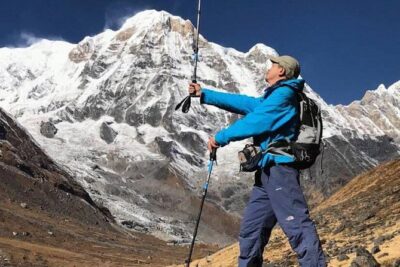
Kathmandu to Annapurna Base Camp (ABC) 5-Day Trek
Read our review →Browse the lists this tour appears in