REVIEW · KATHMANDU
Khopra Ridge Trek
The quiet trail is the real reward. This 14-day private trek from Kathmandu reaches the high Khopra Ridge and Khayer Lake while taking you through Gurung villages, rhododendron forests, buffalo pastures, and the lake city of Pokhara. I especially like the less-used route beyond Tadapani and the chance to stay in simple homestays rather than polished mountain hotels. I also like that the plan includes time in Kathmandu and Pokhara, so you get culture and rest along with the walking.
The main tradeoff is comfort. Tea houses and homestays on this route are basic, and the days at altitude require steady fitness. The long excursion to Khayer Lake reaches 4,827 meters, so this is not a casual sightseeing trip with a few easy walks added on.
Key points to know before booking
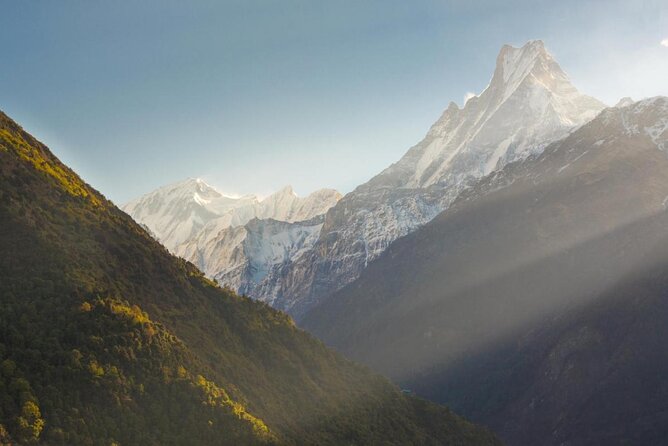
- Khopra Ridge reaches 3,870 meters, with Annapurna South about 6 kilometers away and views toward Fang, Nilgiri, and Dhaulagiri.
- Khayer Lake rises to 4,827 meters, making the second night at Khopra the hardest and most ambitious part of the trip.
- The route leaves the busier Annapurna Sanctuary trail at Tadapani, bringing more forest, pasture, and village walking.
- Pokhara gives the trek a soft landing, with boating on Fewa Lake, the World Peace Stupa, and an optional Mountaineering Museum visit.
- The trip is private, so only your group participates, and the guide can adjust the pace for breaks.
- The $1,461.49 price includes all trek meals, according to the operator, along with pickup and the organized transport shown in the schedule.
Why Khopra Ridge feels different from the usual Annapurna trek
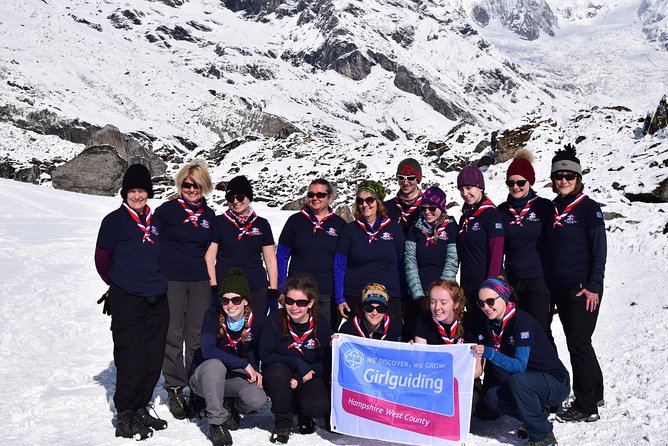
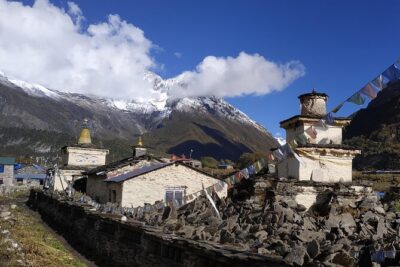
The Annapurna region has famous trails, but Khopra Ridge takes a quieter turn. After Ghandruk and Tadapani, you leave the more established route and walk toward Dobato, Chistibung, and Khopra. That change matters. You trade some comfort and convenience for a closer look at rural mountain life.
The accommodation is part of the appeal. The route uses basic lodges, tea houses, and homestay-style accommodation. You should not expect the polished facilities found in larger trekking centers. Instead, you get a simpler night close to the forest, pastures, and village communities.
The route also offers strong variety over two weeks. You begin with Kathmandu’s old religious sites, fly to Pokhara, walk through Gurung villages, climb above the tree line, visit a high mountain lake, soak at Tatopani, and return to Pokhara before the long bus ride to Kathmandu. It is a full Nepal trip, not only a mountain walk.
The operator describes this as a private activity. That is useful if your group wants a flexible pace, more time for photographs, or extra pauses on steep sections. Some of the strongest praise attached to the company focuses on careful guides, porters, and personal attention, with Biru Tamang and Bhoj repeatedly singled out by name. Guide assignments can vary, so ask who will lead your departure.
A few more treks around Kathmandu worth a look
- Everest Base Camp Trek – 14 Days
★ 5.0 · 1,499 reviews - Everest Base Camp Trek
★ 5.0 · 842 reviews - Everest Base Camp Trekking
★ 5.0 · 485 reviews
Kathmandu begins with temples, tea, and Thamel
Your first day starts with an airport pickup and about a 45-minute bus ride into central Kathmandu. After checking into the hotel, you have time for a shower, tea, and a first walk through Thamel before dinner.
That short first evening is well judged. Kathmandu can feel intense after a long flight, and you will appreciate not having a major sightseeing program immediately. Thamel is the place to handle last-minute shopping, but it is also worth using the evening to check your pack and get some rest.
Day two gives you a slower start to the country. You visit Swayambhunath, the Buddhist stupa and monastery often called the Monkey Temple. The site is described as more than 2,000 years old and offers views across the Kathmandu Valley, along with plenty of monkeys around the steps and shrines.
The afternoon is for trek preparation. You can finish shopping in Thamel, check your clothing and equipment, and relax before the mountain section begins. This is a practical day, not wasted time. A trek feels easier when you are not still hunting for essentials on the morning of departure.
Ghandruk brings Gurung culture and first mountain views
On day three, you take an early flight to Pokhara, a journey of about 45 minutes. Private transport continues to Nayapul, where the walking begins toward Ghandruk at about 1,940 meters.
The five-hour walk introduces the character of the route. Ghandruk is a typical Gurung village, and the surrounding views include Annapurna South, Hiunchuli, Machhapuchhre, and Annapurna III. The schedule labels this stop Machhapuchhare Base Camp, but the described overnight is Ghandruk, so confirm the exact day plan with the operator before departure.
Ghandruk is a useful first night because you are already in the hills, but not yet sleeping at extreme altitude. You get your first real mountain setting without beginning with the hardest climb.
Rhododendron forests lead to Tadapani and Dobato
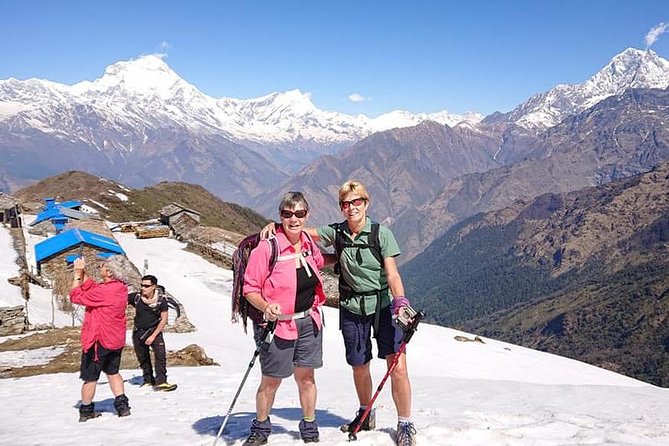
Day four climbs through rhododendron forest toward Tadapani at about 2,300 meters. The four-hour walk offers chances to see monkeys, birds, and flowers, with views toward Annapurna II, Annapurna III, Annapurna IV, Annapurna South, Machhapuchhre, and Lamjung Himal.
Tadapani is especially appealing at sunrise and sunset. Weather controls what you see, but this is one of the route’s best places to have the mountains close at hand without a long side trip.
On day five, the route leaves the Annapurna Sanctuary trail. You continue through thick rhododendron forest, pass local water buffalo pastures, and climb gradually above the tree line. Dobato, at about 3,400 meters, is reached after roughly five hours and becomes the night’s stopping point.
This is where the route begins to feel properly remote. The climb is not described as a technical one, but the altitude changes the effort. Walk slowly, keep water close, and do not treat the five-hour estimate as a race.
Same trailhead, a longer or shorter day out:
- Annapurna Circuit Trek with Tilicho Lake
★ 5.0 · 368 reviews - Everest Base Camp Trekking – 13 Day
★ 5.0 · 365 reviews - Everest Base Camp Trek
★ 5.0 · 350 reviews - Everest Base Camp Trek -14 Days
★ 5.0 · 321 reviews
Mulde View Point adds a sunrise-sized panorama
Day six starts early with a climb to Mulde View Point. From here, the schedule promises a broad view of the Annapurna and Dhaulagiri ranges. You then return to Dobato for breakfast before continuing toward Upper Chistibung at about 3,000 meters.
The day combines an early viewpoint visit with a varied five-hour walk. You descend through forest and pasture to Deaurali or Lower Chistibung, cross a suspension bridge, and then climb gradually through forest again.
That repeated rise and fall is worth noting. This is not simply a steady uphill approach to Khopra. You will lose some height before gaining it again, which can feel tiring after several walking days. The reward is a changing route rather than a single long climb.
Khopra Ridge brings the trip’s signature views
Day seven is a shorter walking day, at about three hours, but it is a steady climb above the tree line. The area is known for chances to see Himalayan tahr and danphe pheasant. The pace is intended to be slow, with time to rest and take photographs.
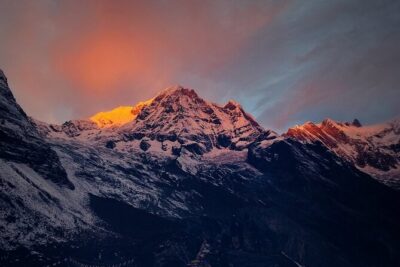
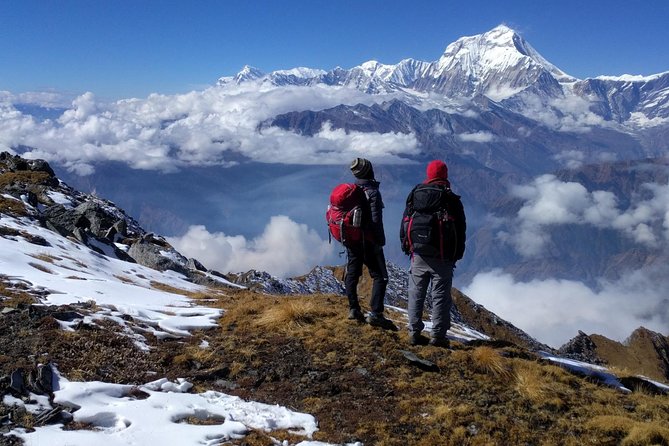
Khopra Ridge sits at about 3,870 meters. From here, Annapurna South is described as only 6 kilometers away, with Fang and Nilgiri to the north and Dhaulagiri to the west. This is the visual high point of the trek, and the reason many people choose Khopra instead of a more familiar Annapurna route.
The second night at Khopra is important. Rather than climbing higher immediately and moving on, you have a day to explore and adapt to the altitude. The accommodation will be basic, and the cold or simple facilities may test your patience, but the setting is the sort of mountain experience that modern roads and large lodges have not yet smoothed out.
Khayer Lake is the hardest day
Day eight is reserved for the walk to Khayer Lake and its temple. The route reaches about 4,827 meters and takes around six hours. It is described as a long walk, but the views make the effort worthwhile.
This is the day to judge your own fitness honestly. You have already climbed high, and the lake sits nearly 1,000 meters above Khopra Ridge. A flexible guide and a private group are helpful here because your pace may be much slower than on the lower sections.
You should also understand that the lake excursion is a major mountain day, not a quick photo stop. If weather or your condition makes the full walk unwise, ask the guide about the safest plan. The experience requires good physical fitness, and the operator notes that weather can affect the departure.
The descent passes villages, bridges, and hot springs
Day nine begins the return journey. You descend along open slopes, pass buffalo pastures, and enter oak and rhododendron forest before reaching Paudwar. The walking takes about five hours and includes some steep sections.
Paudwar gives the route another village overnight rather than sending you straight to the road. That keeps the return gradual, though the downhill work can be hard on knees after the high-altitude days.
On day ten, you continue downhill through fields, pass a small river and water mill, cross a suspension bridge, and reach Hillkharka before descending to Tatopani at about 1,190 meters. The five-hour day ends with time at the hot spring.
Tatopani is a welcome change in rhythm. You are back at a much lower elevation, and soaking in spring water gives tired legs a simple, memorable finish to the mountain section. The village is reached after a long descent, so do not expect the hot spring to feel like a resort spa. Its value is the setting and the timing.
Pokhara gives you a gentler second act
Day eleven has no trekking. Local bus transport takes you from Tatopani to Beni, followed by a taxi to Pokhara. The transfer takes about four hours in the schedule, though road conditions can affect how a mountain journey feels in practice.
Pokhara is built around Fewa Lake and is a good place to recover. You have time to sleep, eat, and enjoy a city that feels very different from Kathmandu and the small mountain villages.
Day twelve is a sightseeing day. You take boats across the lake, walk up to the World Peace Stupa, and look across Pokhara and the surrounding mountains. There is also an optional visit to the International Mountain Museum if the group wants it.
I like this pause because it keeps the trip from becoming a nonstop sequence of climbs. The boat ride and stupa walk are active, but they are not another high-altitude trek. You can also use the day to decide how much sightseeing energy you have left.
The long ride to Kathmandu closes the trip
Day thirteen starts early with breakfast and a tourist bus to Kathmandu. The journey is listed at about six hours, followed by hotel check-in and free time for shopping or rest.
The final day is left open for extra time at your own expense, and the company says it can arrange additional days. The schedule also lists Kathmandu Durbar Square, though the detailed description focuses on the free day. Confirm whether a formal visit is planned or whether the square is simply the suggested focus for your remaining time.
This loose ending is useful if you want to add sightseeing, shopping, or a recovery day. It also gives you a little breathing room before your flight home, assuming your own arrangements allow it.
What the $1,461.49 price gets you
At $1,461.49 per person, this is not a shoestring trek, but the value depends on what you want included. The package covers about 14 days, airport pickup, Kathmandu and Pokhara stays, internal transport shown in the schedule, guides and porter support as arranged by the operator, and all meals during the trek according to the supplied details.
The company says it uses the best available lodges and hotels and lets you choose food from the available menus. At the same time, the Khopra section is clearly basic and homestay-oriented. I would read the price as payment for organization, support, transport, and a private route, not as a promise of luxury.
The free cancellation policy allows a full refund if you cancel at least 24 hours before the start time. Poor weather or failure to reach the minimum number of participants can lead to a new date, another experience, or a full refund. Confirmation is usually immediate, but bookings made within seven days of departure may take up to 48 hours and depend on space.
Who should book this trek?
I would choose this trip if you want a quieter Annapurna route, strong mountain views, village contact, and a complete Nepal program rather than a short trek alone. It suits people who can manage several hours of walking on consecutive days and who are comfortable with simple accommodation.
It is also a good fit for a private group. The company’s most praised qualities are attentive guides and porters, careful support, and a willingness to adjust the pace. The names Biru Tamang and Bhoj appear often in the company’s praised service, but you should confirm your own guide team.
I would think twice if you need reliable hotel comforts, dislike long bus rides, or want a trek with no very high side trip. Khayer Lake is a serious day at 4,827 meters, and the simple tea houses are part of the deal. Pack for mountain conditions, carry a trek-ready day pack, and leave room in your expectations for slow transport and changing weather.
FAQ
How long is the Khopra Ridge Trek?
The experience lasts approximately 14 days, including time in Kathmandu, Pokhara, the trek itself, and the return to Kathmandu.
Where does the trek start and finish?
The mountain trek starts near Nayapul after transport from Pokhara and finishes in the Pokhara area after descending to Tatopani. The wider trip begins and ends in Kathmandu.
What is the highest point on the route?
The highest stated point is Khayer Lake and its temple at about 4,827 meters. Khopra Ridge itself is about 3,870 meters.
Is this a private tour?
Yes. Only your group participates in the private tour or activity.
What fitness level is required?
The experience requires a moderate physical fitness level. Several days involve about four to six hours of walking, and the Khayer Lake day reaches high altitude.
Are meals included?
The operator states that all meals during the trek are included. Food can be chosen from the menus available at the lodges.
What type of accommodation is used?
The route uses basic lodges, tea houses, and homestay-style accommodation in the less-developed sections. Hotels are used in Kathmandu and Pokhara.
Is airport pickup available?
Yes. Pickup is offered, and the first day includes meeting a member of Top of The World Treks followed by transport into Kathmandu.
Does the trip include time in Pokhara?
Yes. The schedule includes arrival in Pokhara, a return stay after the trek, boating on Fewa Lake, the World Peace Stupa, and a possible Mountaineering Museum visit.
What happens if bad weather cancels the experience?
If poor weather causes cancellation, you can be offered a different date or a full refund. A minimum-participant cancellation offers the same basic choices.
Should you book the Khopra Ridge Trek?
Book it if you want the Annapurna mountains without staying on the busiest route, and if you value simple village accommodation over polished facilities. The combination of Khopra Ridge, Khayer Lake, Tatopani, Pokhara, and Kathmandu gives you a broad look at Nepal for one organized price.
Skip it if your priority is comfort or an easy walking holiday. The high lake day, repeated climbs, basic tea houses, and long road transfers demand patience. For fit walkers who want personal guiding, big views, and a quieter trail, this is a strong choice, especially for a private group willing to trade convenience for a more direct taste of mountain life.
Recently added around Kathmandu
- Ghorepani Poon Hill Trek★ 5.0 · 16 reviews
- Private Manaslu Circuit Trek at Himalayas★ 5.0 · 3 reviews
- Amazing 1 Day Trekking Experience in Kathmandu Nepal★ 5.0 · 24 reviews
- Ghorepani Poonhill Trek★ 5.0 · 5 reviews
- Upper Mustang Trekking★ 5.0 · 2 reviews
- Upper Mustang Trekking★ 3.0 · 2 reviews
- Upper Mustang Trekking★ 5.0 · 4 reviews
- Upper Mustang Trek★ 5.0 · 5 reviews
Kathmandu Trekking Tours, compared.