
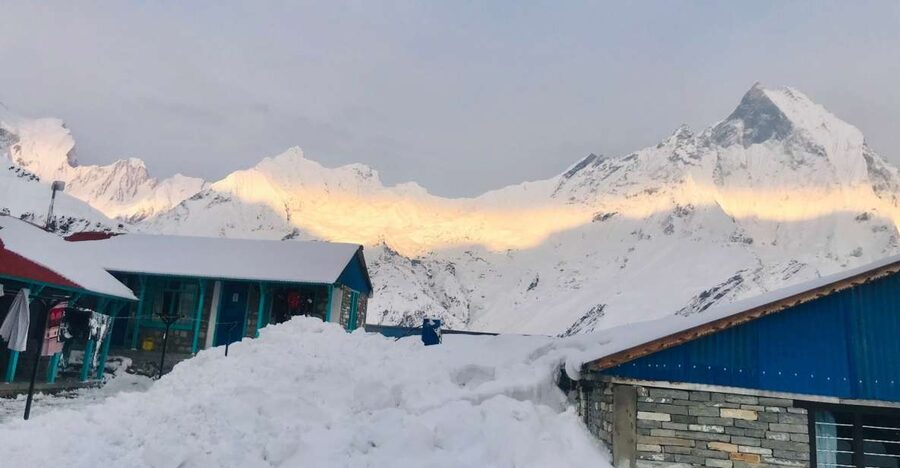
REVIEW · NEPAL
From Pokhara: 7 Days Budget backpackers group ABC Trek
The mountains arrive one step at a time. This seven-day Annapurna Base Camp trek from Pokhara mixes forest trails, Gurung villages, high mountain scenery, and a memorable night at 4,130 meters. I like the route’s changing character, from terraced hills and rhododendron woods to the rocky bowl of ABC. I also like the low price of $213 per person, which covers a guide, permits, lodging, and transport, though meals, drinks, insurance, and emergency rescue are extra.
The main consideration is the pace. You reach Annapurna Base Camp on day four, then make a long descent through several settlements on day five. That works well for fit hikers with limited time, but it leaves less room for slow mornings or adjustment if altitude affects you. The guide, who speaks English, Nepali, and Hindi, is especially important here. One verified booking from Australia praised the guide as friendly, supportive, and fun, exactly the sort of help you want when the trail gets steep or your legs start filing complaints.
Key points before you book
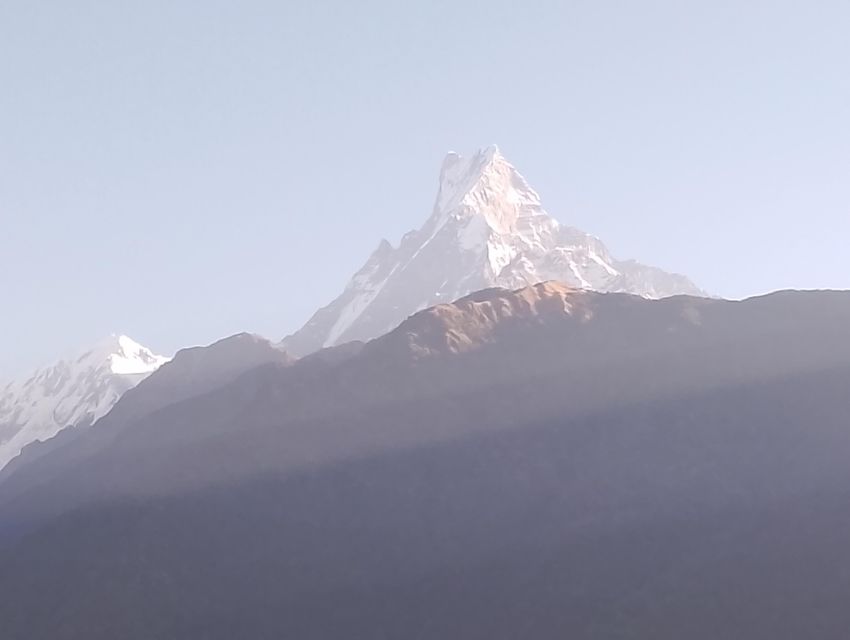
- Annapurna Base Camp reaches 4,130 meters, with views of Annapurna I, Annapurna South, Hiunchuli, Machhapuchhre, and nearby peaks.
- The trek starts and ends in Pokhara, with shared bus transport between Pokhara and Nayapul included.
- Ghandruk brings the cultural welcome, with traditional stone houses, Gurung hospitality, and a Gurung Museum.
- The route changes dramatically each day, moving from terraced fields and forests to bamboo woods, rocky moraine, and alpine country.
- Jhinu’s natural hot springs offer a welcome pause after the return from the base camp.
- The $213 price is attractive but not all-inclusive, since food, drinks, travel insurance, and emergency rescue are not covered.
What this seven-day trek is really like
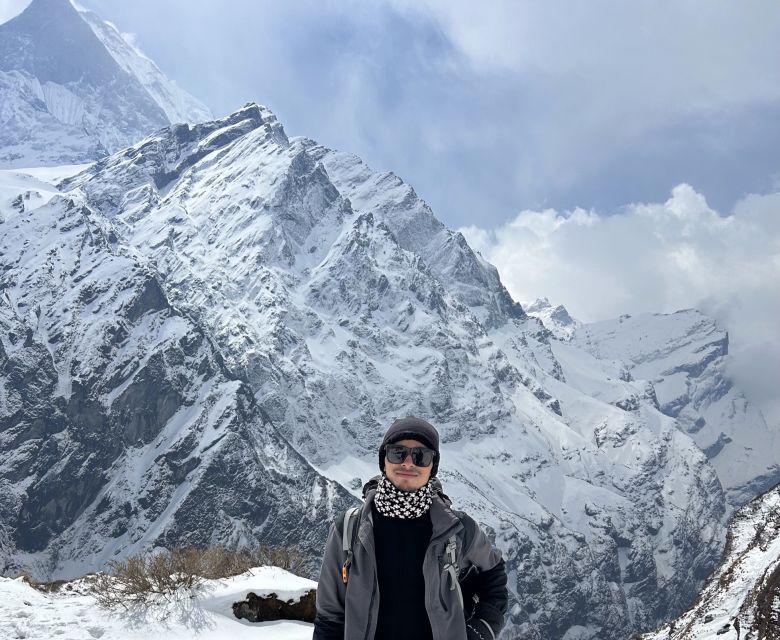
This is a compact version of the Annapurna Base Camp walk. You begin at Nayapul, about a 1.5-hour drive from Pokhara, and finish back in Pokhara after walking through villages and forested valleys. The highest point is Annapurna Base Camp at about 4,130 meters, while the final day ends near 822 meters.
The route is appealing because it gives you several Nepals in one trip. At lower elevations, you see terraced fields, traditional houses, rivers, and subtropical forest. Higher up, bamboo and rhododendron dominate, then the trees thin out and the trail turns rocky. The mountains do not simply appear at the end. They change with every bend.
You will be walking roughly four to seven hours a day. The early sections are rated easy to moderate, while the route from Deurali to ABC and the long descent on day five are more demanding. The itinerary calls the trek suitable for novice and experienced hikers, but I would read that as possible for a beginner who is reasonably fit, not as a gentle introduction to mountain walking.
A few more treks around Nepal worth a look
- Pokhara: 7 Day Annapurna Base Camp Trek
★ 4.9 · 38 reviews - Short Annapurna Base Camp Trek – 7 Days
★ 5.0 · 22 reviews - Kathmandu to Langtang Valley 7-Day Trek
★ 5.0 · 11 reviews
Day one: Pokhara to Nayapul and Ghandruk
Your first morning starts with transport from Pokhara’s Lakeside area to Nayapul. The ride is listed as about 1.5 hours, using shared bus transport. Shared transport keeps the price down, though you should expect a practical rather than luxurious start to the trip.
From Nayapul, the trail follows green hills, terraced fields, small villages, and river crossings. Suspension bridges add a little drama without requiring technical climbing. The walk takes about six hours and covers roughly 12 to 14 kilometers, finishing at Ghandruk at 2,020 meters.
Ghandruk is one of the most rewarding overnight stops. The Gurung village has traditional stone houses and broad views toward Annapurna South, Hiunchuli, Annapurna III, and Machhapuchhre, also called Fishtail Mountain. The Gurung Museum gives you a useful cultural stop rather than just another place to eat and sleep.
The trail passes through oak, bamboo, and rhododendron forest. In bloom, rhododendrons add strong color to the hills, while birdsong and occasional wildlife keep the forest from feeling empty. The stated difficulty is easy, making this a good first day, but the six-hour walk still calls for proper hiking shoes.
Day two: Ghandruk, Chhomrong, and Sinuwa
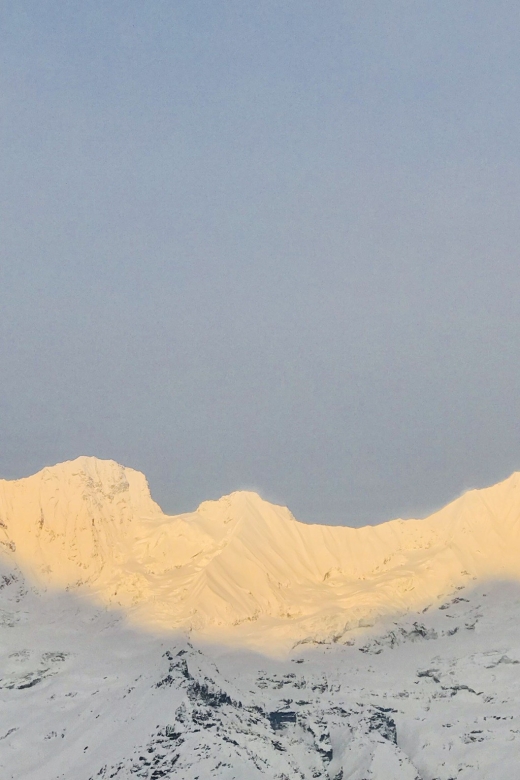
Day two covers about 12 kilometers in six to seven hours. You leave Ghandruk and walk through rhododendron and oak forest toward Chhomrong, a village perched on a ridge at around 2,340 meters.
Chhomrong is more than a lunch or rest stop. Its position gives you a change in viewpoint, with mountain views opening across green valleys and toward the snowy peaks. After the village, the route descends and then climbs again toward Sinuwa. This up-and-down pattern is common in the Annapurna foothills, so do not assume that a downhill section means the day is getting easier.
You cross the Chhomrong Khola on a suspension bridge before continuing through bamboo forest. The trail can feel enclosed here, with dense foliage, birds, and possible sightings of langurs or macaques. The forest also provides shade, which matters on a long walking day.
Sinuwa is a small forest settlement at about 2,340 meters. The day is rated easy to moderate. I would call it a useful conditioning day because you gain height without yet sleeping at the highest part of the route.
Day three: Bamboo to Deurali through the Modi Khola valley
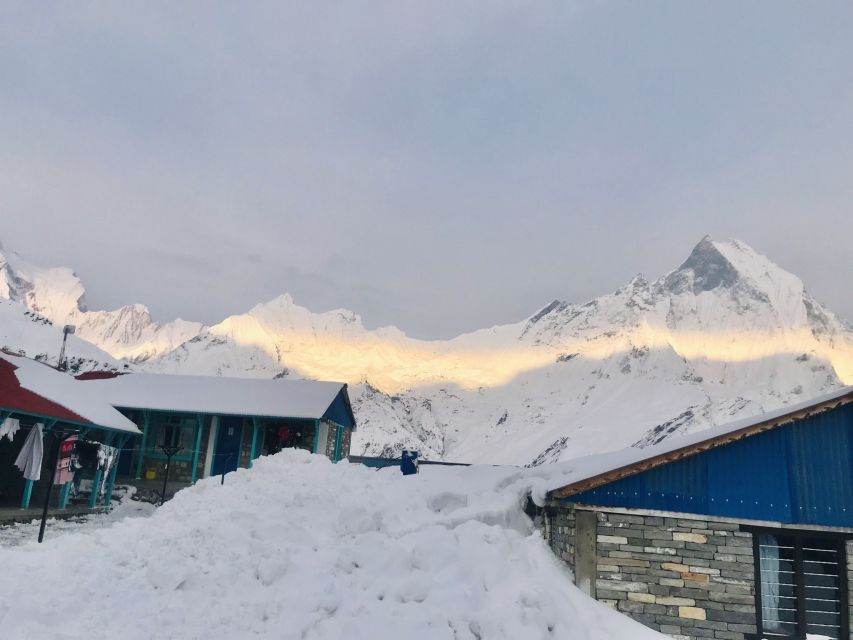
The third day takes you from Sinuwa through Bamboo, Dovan, and Himalaya to Deurali. Expect six to seven hours of walking and around 10 to 12 kilometers. The rating is moderate, and the steady climb begins to feel more serious.
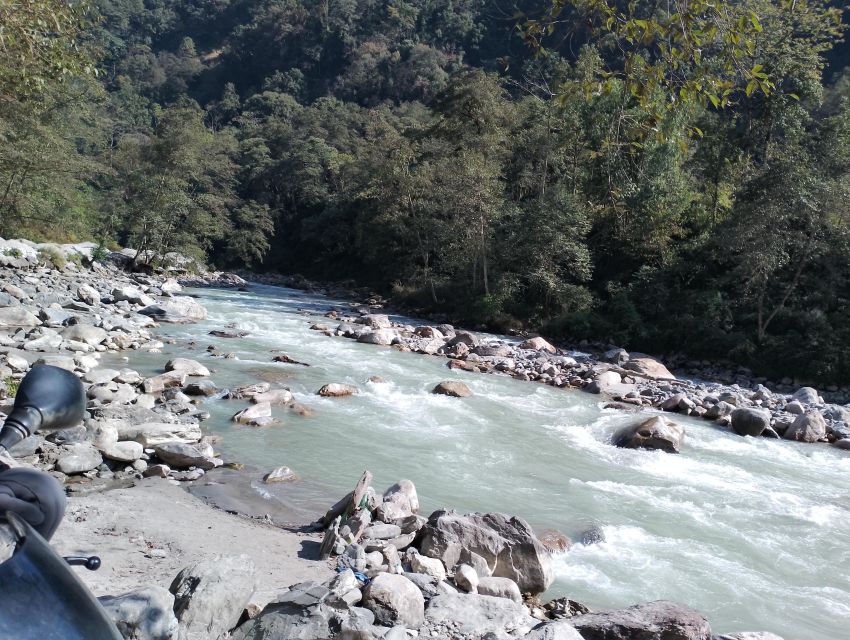
Bamboo is a natural break point in the forest. You follow the Modi Khola, with the river providing a constant sound beside the trail. From Bamboo, the route climbs gradually through dense rhododendron and oak woods toward Dovan.
As you approach Himalaya and Deurali, the trees begin to thin. The trail becomes more rugged, and views of Annapurna South and Hiunchuli become clearer. Deurali sits at about 3,200 meters, so this is the point where you should pay attention to how your body feels.
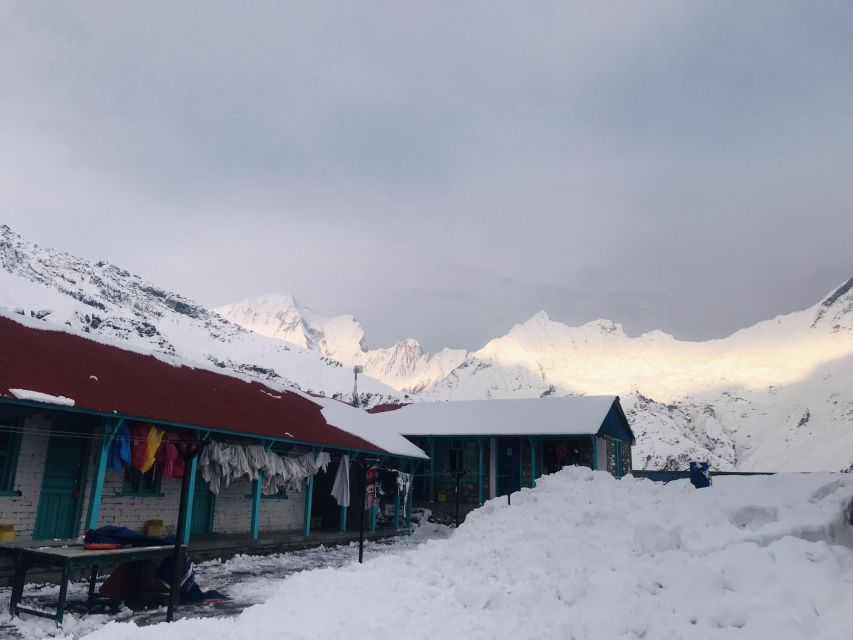
The accommodation is in guesthouses with shared beds. That arrangement is part of the budget appeal, but it also means you should pack with basic mountain lodging in mind. Warm clothing is listed as essential, and it becomes increasingly important from this night onward.
Same trailhead, a longer or shorter day out:
- Everest Base Camp Trek – 14 Days
★ 5.0 · 1,499 reviews - Everest Base Camp Trek
★ 5.0 · 842 reviews - Everest Base Camp Trekking
★ 5.0 · 485 reviews - Annapurna Circuit Trek with Tilicho Lake
★ 5.0 · 368 reviews
Day four: Deurali to Machhapuchhre Base Camp and ABC
This is the main event. From Deurali, you leave much of the forest behind and move into open, rocky country. The trail climbs through rocky terrain and moraine toward Machhapuchhre Base Camp, then continues to Annapurna Base Camp.
The walk takes about five to six hours and covers around 10 kilometers. The distance sounds manageable, but the altitude changes everything. At 4,130 meters, the air is thinner and the path includes rocky sections. Walk slowly, drink regularly, and tell your guide if you feel unwell.
Machhapuchhre Base Camp gives you the first full sense of the mountain amphitheater. Machhapuchhre rises to about 6,997 meters, while the Annapurna range fills the wider view. The final section to ABC follows glacier moraine and can be rough underfoot.
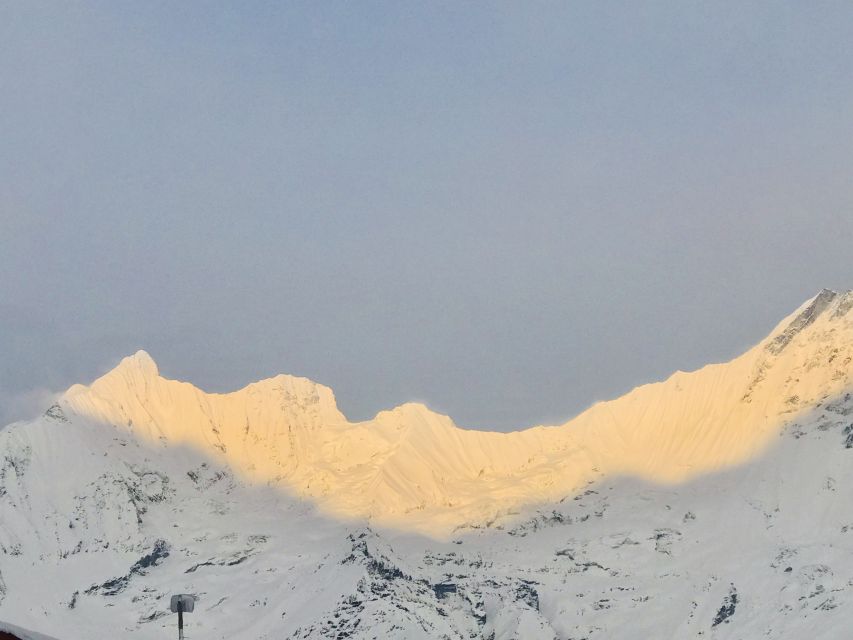
At Annapurna Base Camp, you reach a 360-degree mountain setting with Annapurna I at 8,091 meters, Annapurna South at 7,219 meters, and Hiunchuli at 6,441 meters. The itinerary also identifies views of Glacier Dom, Gangapurna, and Gandharva Chuli.
The overnight stay at ABC is the emotional high point, but not necessarily the most comfortable night. The cold and altitude can make sleep difficult. You are there for the setting, not for a long lie-in. If conditions allow, sunrise is a major reason for staying overnight.
Day five: The long return through Deurali and Bamboo
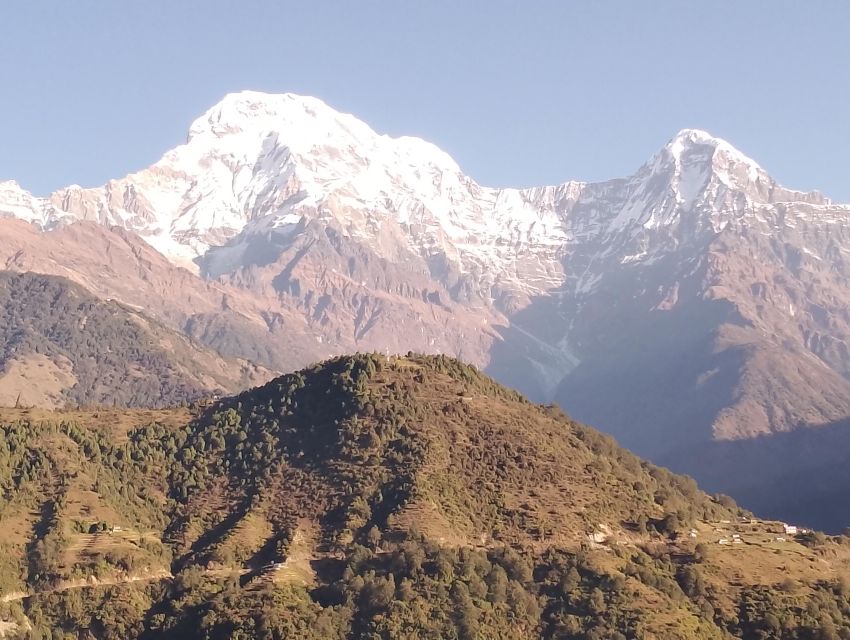
Day five begins with a sunrise opportunity at ABC, followed by breakfast and a long descent. You return through MBC, Deurali, Himalaya, Dovan, and Bamboo, with six to seven hours of walking.
The first part gives you another look at Machhapuchhre and the surrounding peaks from a different angle. Then the trail drops into rhododendron and bamboo forest, with waterfalls, streams, rocky sections, narrow gorges, and glacial riverbeds along the way.
This is rated moderate to difficult, and the rating makes sense. Descending can be harder on knees than climbing, particularly after the high-altitude day. The route also covers several settlements, so you need to keep a steady pace to reach Bamboo.
The good news is that the air warms as you lose elevation. Bamboo sits at about 2,340 meters, and reaching it feels like a return to a more forgiving climate. A hot meal and a proper rest matter here. If your legs are tired, this is not the day to prove anything.
Day six: Sinuwa, Chhomrong, Jhinu, and Kyumi
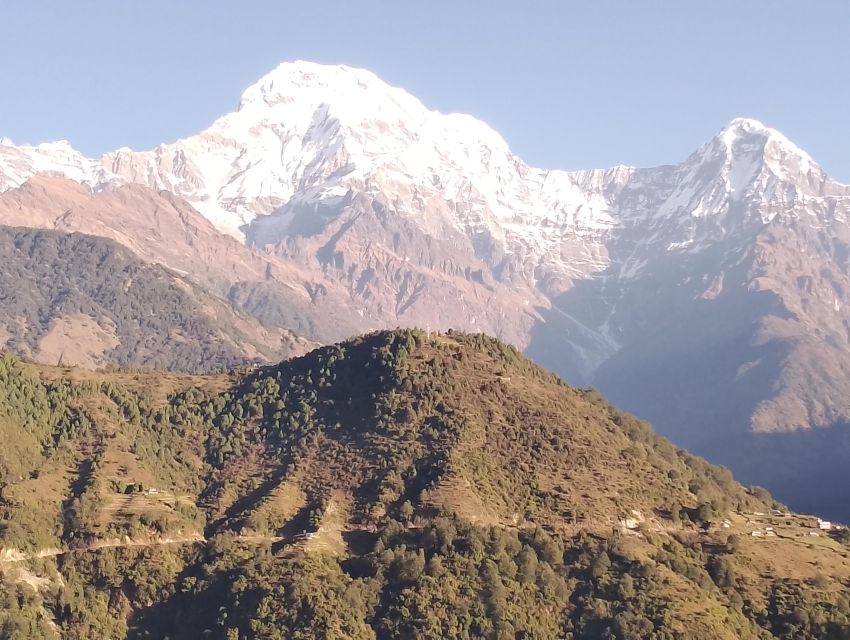
The sixth day covers around 14 to 15 kilometers in four to five hours, with a stated altitude of 1,690 meters at Kyumi. You retrace part of the route through bamboo and rhododendron forest to Sinuwa, then continue toward Chhomrong.
From Chhomrong, you descend toward Jhinu. This is one of the best recovery stops on the trip because Jhinu is known for its natural hot springs. After several days of walking, soaking in warm water can feel like a small luxury.
The route then continues through terraced fields, forest, and traditional villages toward Kyumi. You get a closer look at rural life here, including the farmland that supports communities along the trail.
There is an important practical point to clarify before booking. The route describes an overnight at Kyumi, but it also says you can stop at Jhinu and continue the next day, particularly if you want a more relaxed schedule. Ask the operator how your group will handle this option, since it changes the final two days.
Day seven: Kyumi to Siwai, Nayapul, and Pokhara
The final day includes three to four hours of walking, followed by a listed three-hour drive back to Pokhara. You descend from Kyumi to Siwai, passing terraced fields, forest, and villages before reaching Nayapul.
The walking distance is given as roughly 12 to 15 kilometers, so this is not just a short stroll to the bus. Still, compared with the high-altitude sections, the day should feel easier because you are much lower and the trail passes through familiar rural surroundings.
From Nayapul, shared transport returns you to Pokhara. Hotel pickup and drop-off within the Lakeside area are included, and the tour ends with an overnight in Pokhara. That gives you a useful buffer for rest or for adding another activity, such as paragliding, rafting, kayaking, or bungee jumping.
What the $213 price covers, and what it does not
At $213 per person, this is a strong budget price for a seven-day guided trek. The cost includes pickup and drop-off within Lakeside, shared transport between Pokhara and Nayapul, an English-speaking guide, trekking permits, official documents, guesthouse accommodation, and an emergency first-aid kit carried by the guide.
The exclusions matter. Food and drinks are paid separately, as are travel insurance and any emergency rescue. This means the final cost will be higher than $213, though the basic package still removes several important expenses.
You should budget for meals and drinks at the guesthouses, plus any personal purchases. Since no meal allowance is included, ask for current food prices before setting out and carry enough Nepalese currency for the route.
Shared beds keep costs low but may not suit everyone. If you value privacy or need a higher level of comfort, ask about room arrangements before you commit. The package is designed for budget backpackers, not for a private lodge experience.
Guide support, safety, and altitude
A professional guide is included, and the guide team speaks English, Nepali, and Hindi. That is useful for route decisions, communication at guesthouses, and help if you feel the altitude.
One verified participant gave the guide the highest rating and specifically praised the support, friendliness, and sense of fun. That matters more here than a polished vehicle or fancy room. A good guide helps set a sensible walking pace and notices when a trekker needs a break.
The trek reaches 4,130 meters, so do not treat it as an ordinary village walk. Your guide carries a basic first-aid kit, but emergency rescue is not included. Travel insurance with suitable trekking and rescue cover is your responsibility.
The best seasons are March to May and September to December. These months are identified as the preferred periods for the trek. You should still check conditions before departure, since weather can affect high trails and mountain visibility.
Who should book this ABC trek?
I would recommend this trip to a budget-conscious hiker who wants the major Annapurna Base Camp experience without adding many extra days. It suits people who enjoy simple guesthouses, shared transport, long walking days, and close contact with village life.
It can also work for a first Himalayan trek if you are in good physical condition and understand the altitude challenge. The early days build gradually, but the route is still demanding once you reach Deurali and ABC.
I would be more cautious if you dislike shared accommodation, need included meals, or prefer a flexible pace. Pregnant women and wheelchair users are specifically listed as unsuitable for this activity. Pets are not allowed.
Free cancellation is available up to 24 hours before departure, and you can reserve now and pay later. Those terms make planning easier, but they do not replace checking the route details, food costs, and insurance requirements before you book.
Should you book it?
Book this trek if you want seven focused days of mountain walking for a modest starting price, and you are comfortable paying for meals and accepting basic accommodation. The route gives you Ghandruk’s Gurung culture, forest trails, high mountain views, ABC itself, and Jhinu’s hot springs in one tight package.
Before paying, confirm the exact group size, sleeping arrangements, food budget, and whether your final overnight is in Kyumi or Jhinu. If you are prepared for the altitude and the long descent from ABC, this is a practical way to reach one of Nepal’s most famous base camps with a friendly guide and a budget-friendly structure.
FAQ
How long is the Annapurna Base Camp trek?
The trek lasts seven days, beginning and ending in Pokhara.
How high is Annapurna Base Camp?
Annapurna Base Camp is located at about 4,130 meters, or 13,550 feet.
What is included in the $213 price?
The price includes Lakeside hotel pickup and drop-off, shared transport between Pokhara and Nayapul, a professional English-speaking guide, trekking permits, official documents, guesthouse accommodation with shared beds, and a first-aid kit carried by the guide.
Are food and drinks included?
No. Food and drinks are available for purchase and are not included in the tour price.
Is travel insurance included?
No. Travel insurance is not included. Emergency rescue is also not included and should be covered by your own insurance.
What languages does the guide speak?
The guide service is available in English, Nepali, and Hindi.
What should I bring?
Bring warm clothing, hiking shoes, your passport or a copy of it, and a passport-sized photo.
When is the best time to do this trek?
The recommended seasons are March to May and September to December.
Can I stop at Jhinu instead of continuing to Kyumi?
Yes. The route allows an optional stop at Jhinu, where you can use the natural hot springs and continue the trek the following day. Confirm the exact plan with the operator before departure.
Recently added around Nepal
- Ghorepani Poon Hill Trek★ 5.0 · 16 reviews
- Private Manaslu Circuit Trek at Himalayas★ 5.0 · 3 reviews
- Amazing 1 Day Trekking Experience in Kathmandu Nepal★ 5.0 · 24 reviews
- Ghorepani Poonhill Trek★ 5.0 · 5 reviews
- Upper Mustang Trekking★ 5.0 · 2 reviews
- Upper Mustang Trekking★ 3.0 · 2 reviews
- Upper Mustang Trekking★ 5.0 · 4 reviews
- Upper Mustang Trek★ 5.0 · 5 reviews
7-Day Experiences, compared.
Best Kilimanjaro Adventure 7 days Machame route Trekking
Read our review →
7-Day: Inca Trail Trek to Machu Picchu Group Tour
Read our review →
Kilimanjaro 7 Day Private Trekking Experience
Read our review →
Wonderful 7 Days North Sumatra Tour (Include: 2 Days 1 Night Jungle Trekking)
Read our review →
Kilimanjaro Trekking 7Days 6Night Lemosho Route
Read our review →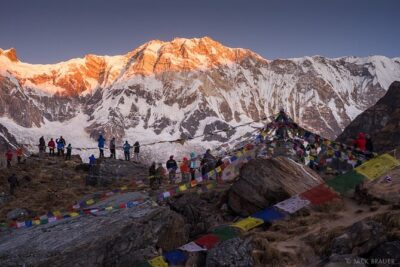
Browse the lists this tour appears in