
REVIEW · MOSHI
Kilimanjaro 7 Day Private Trekking Experience
The mountain saves its best view for sunrise. This seven-day private climb follows the Machame Route, moving from rainforest to moorland, high desert, glaciers, and Uhuru Peak. I like the careful acclimatization plan, especially the climb to Lava Tower followed by a lower night at Barranco. I also like the personal service, with a dedicated guide team, cooks, porters, and a private group format.
The main caution is the pace. Summit day is a very long push, with a midnight start, six to eight hours to the top, and another seven to eight hours descending. You need strong fitness, patience, and a willingness to walk slowly for several days. The $3,120 price is substantial, but it covers food, tents, crew wages, transfers, and accommodation before and after the climb.
Key points to know before booking
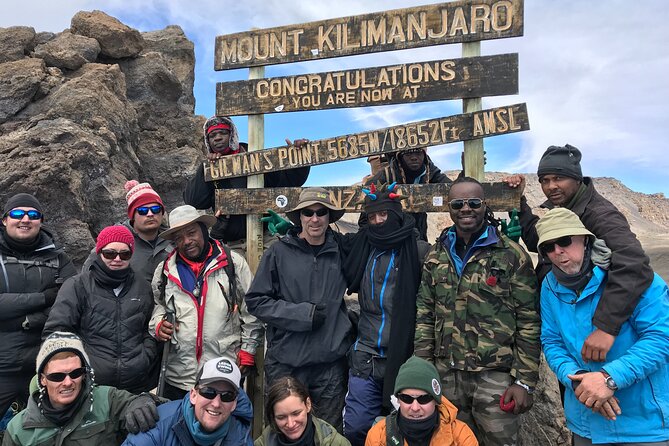
- Machame Route scenery changes daily: You move through rainforest, moorland, semi-desert, stone scree, ice fields, and glacier country.
- Private means your group sets the rhythm: Only your own party participates, which can make rest stops and pacing more flexible.
- Lava Tower is an important acclimatization day: You climb to 4,600 meters, then sleep at about 3,950 meters at Barranco.
- Barranco Wall requires a hands-on scramble: The route is not technical climbing, but you will use your hands in places.
- The crew receives strong praise for care and organization: Names linked with particularly positive feedback include Oscar, Saul, Mvungi, Jackie, Emmanuel, Gaudence, and Jonas.
- The price includes the basics that matter on the mountain: Meals, tents, porters, guides, camping support, transfers, and six nights of breakfast and dinner.
What the $3,120 price buys you
At $3,120 per person, this is not a budget walk up a hill. Kilimanjaro is a serious high-altitude trip, and the price pays for far more than trail guiding. It includes food, tents, mountain crew salaries, specified transfers, pre-climb and post-climb accommodation, and a full support team.
You receive seven lunches, six dinners, and six breakfasts. That matters because eating well becomes harder as you gain height. The cook prepares hot meals, and the camp team provides boiled drinking water. Each morning begins with coffee, tea, or hot chocolate, a small comfort that becomes surprisingly welcome in a cold tent.
The price also includes the people who make the climb possible: guides, porters, cooks, and camping staff. A private trip usually costs more than joining a larger group, but you are not sharing the schedule with strangers. That can be useful if your party wants a slower pace, needs extra breaks, or prefers a more personal relationship with the guide.
You still need to budget for several important extras. Personal mountain gear can be hired locally if necessary, but the price does not include that rental. You also pay for guide and porter gratuities, travel and baggage insurance, telephone charges, and laundry.
I would ask for a clear equipment list before committing. The supplied details confirm that gear can be hired locally, but they do not specify which items are available or the rental rates.
More Kilimanjaro Climbs in Moshi
- Best Kilimanjaro Adventure 7 days Machame route Trekking
★ 5.0 · 42 reviews - 6 Days Machame Route Kilimanjaro Climbing Trekking Tour
★ 5.0 · 34 reviews - Kilimanjaro Trekking 7Days 6Night Lemosho Route
★ 5.0 · 23 reviews
Day 1: Machame Gate and the rainforest
The day begins at about 9 a.m., when the guide team meets you and checks equipment and supplies. Anything you do not need on the mountain can stay in a locked hotel storage area. That simple step keeps your pack lighter and reduces worry about valuables left in the vehicle.
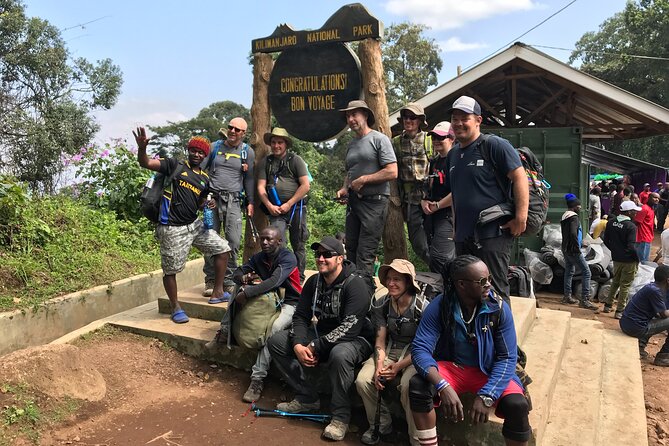
A drive takes you to Machame Gate, where you register with the Kilimanjaro National Park office. After receiving a packed lunch, you start walking through the rainforest toward Machame Camp.
The first stage climbs from about 1,800 meters to 3,000 meters. The distance is approximately 11 kilometers, and the listed walking time is six hours. Expect damp forest conditions, a steady uphill trail, and a proper introduction to the slow rhythm needed on Kilimanjaro.
You stop around the halfway point for lunch, then continue to camp in the late afternoon. After arrival, the crew handles the practical camp work while you settle in. This first day is not the highest or hardest, but it tests your footwear, rain protection, and ability to keep a steady pace.
Day 2: Moorland and Shira Camp One
A hot drink arrives at about 6:30 a.m., followed by breakfast and camp packing. You leave the rainforest behind and enter open moorland, where the trees give way to smaller shrubs and wide views.
The route climbs from 3,000 meters to 3,850 meters over about nine kilometers. The walk takes around six hours. You cross a small valley, reach a steep rocky ridge, and then follow a river gorge toward the Shira Plateau.
This is the first day when Kilimanjaro begins to feel like a high mountain rather than a forest hike. You may catch views toward the Western Breach and its glaciers, although conditions can affect visibility. The setting becomes more exposed, so sun protection and warm layers matter.
At Shira Camp One, the cook provides boiled drinking water and hot washing water. That second service is useful after a dusty day, although washing at altitude is not exactly a spa treatment. The camp’s height also begins to make breathing and sleeping feel different, so use the evening to rest rather than trying to prove anything.
Day 3: Lava Tower and Barranco Camp
Day three is the key acclimatization stage. You leave Shira Camp at about 3,850 meters and climb to Lava Tower at 4,600 meters. The route covers about 12 kilometers and takes around seven hours.
The climb is designed around the useful rule of going high and sleeping lower. After reaching Lava Tower, you pause for lunch and extra time at altitude. You then descend about 650 meters to Barranco Camp, located around 3,950 meters.
This can feel like a strange day because you work hard to gain height, then give some of it back. That is the point. Your body gets time at a higher elevation, while your sleeping altitude remains lower than the day’s highest point.
The surroundings become semi-desert, with less vegetation and more exposed rock. The descent through the valleys gives you changing views and good photo opportunities, but the terrain can feel tiring after the climb to Lava Tower. This is likely the toughest day before summit night, so drink regularly, eat even if your appetite is poor, and tell your guide early if you feel unwell.
Same trailhead, a longer or shorter day out:
- 8 Day Kilimanjaro Trek via Lemosho Route
★ 5.0 · 17 reviews - Top 6 Days Mt. Kilimanjaro Bike trek Tour by Marangu-Kilema Route
★ 5.0 · 15 reviews - 6 Days Mount Kilimanjaro Trek Marangu Route
★ 5.0 · 15 reviews - Kilimanjaro Trek 7 Days – Machame Route
★ 5.0 · 13 reviews
Day 4: Barranco Wall and Karanga Valley
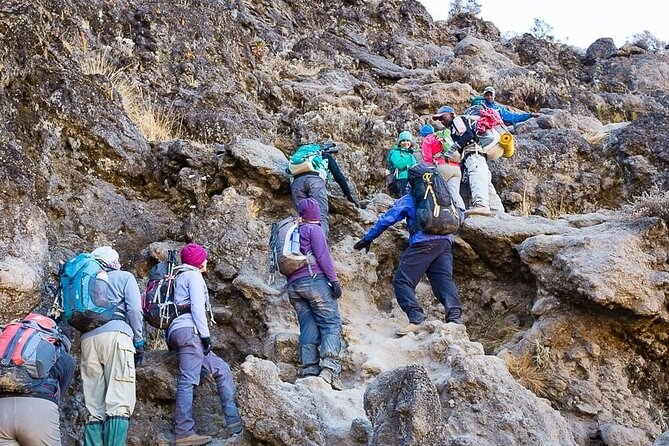
After breakfast, you tackle the famous Barranco Wall. The wall rises for about an hour and a half, and in places you use your hands to pull yourself upward. It is a scramble rather than a technical rock climb, but it is the most physical section of this day.
The route gains only about 250 meters and covers approximately seven kilometers. Those figures look modest, but the wall makes the morning demanding. A private group can be helpful here because the guide can give you time to find secure steps and move carefully.
Once over the wall, you descend into the greener Karanga Valley. The route then climbs toward a ridge above the valley, where the group generally camps. The combination of a hands-on ascent, descent, and renewed climb makes this a short but active day.
I like this stage because it breaks the long uphill routine. You gain confidence by solving small trail problems, then get another useful night for acclimatization. The drawback is that the terrain can feel awkward if you are carrying too much. Keep your personal pack light and let the porter system do its job.
Day 5: Karanga to Barafu Camp
The fifth day takes you from Karanga toward Barafu Camp, gaining about 400 meters over six kilometers. The listed walking time is seven hours, which tells you the trail is not simply a short uphill stroll.
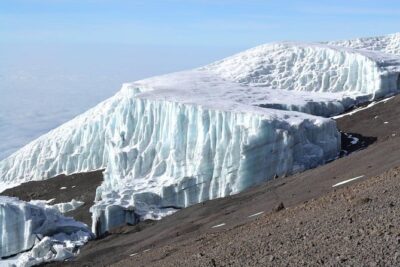
You pass views of Kibo’s glaciers and reach the junction where the Mweka descent route meets the Machame trail. The route also takes you near the Heim Glacier before turning through ridges and valleys toward Barafu.
By this point, you have completed the southern circuit of the mountain. You have seen Kibo from several angles, rather than walking straight toward the summit from one side. That changing perspective is one of the route’s strengths.
Barafu is the staging point for summit night. The schedule provides time to rest, eat, organize layers, and prepare your headlamp before the midnight departure. Do not expect a normal evening. You will try to sleep early, then wake at about 11:30 p.m. for tea before beginning the summit push.
Day 6: Uhuru Peak and the long descent
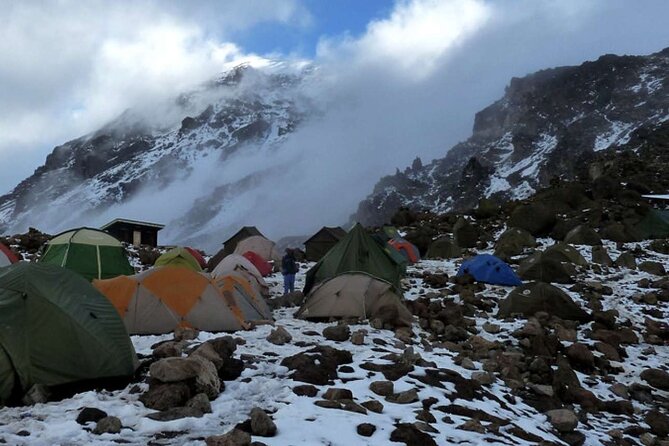
Summit day is the heart of the trip and the part you should take most seriously. You leave around midnight with a headlamp, walking through stone scree and high mountain terrain toward Stella Point.
The ascent covers about seven kilometers and takes six to eight hours. The route passes near the Ratzel and Rebmann Glaciers, with the upper mountain becoming colder, steeper, and more exposed. The pace is deliberately slow. This is not the place for heroic speed.
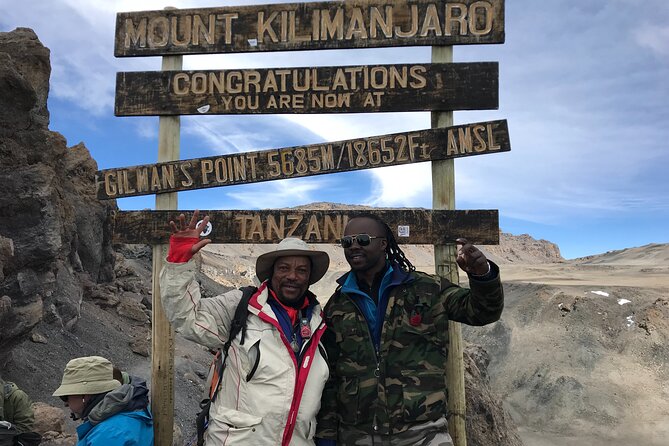
Reaching Stella Point brings sunrise for many climbers, along with a short rest before continuing around the crater rim toward Uhuru Peak. The summit elevation is 5,895 meters. From there, you begin a much longer descent of about 23 kilometers toward approximately 3,100 meters.
The total walking time listed for the ascent and descent is roughly 13 to 16 hours. That range explains why summit day can be physically and mentally draining even for fit people. Your reward is the sunrise, high views, and the satisfaction of reaching Africa’s highest point, but the return walk still requires focus.
The descent over loose scree can be hard on knees and feet. Trekking poles may help, though personal equipment is not included in the price. Listen to your guide, keep eating and drinking, and do not treat the summit as the end of the day. It is only the halfway point.
Day 7: Mweka Gate and the return to Moshi
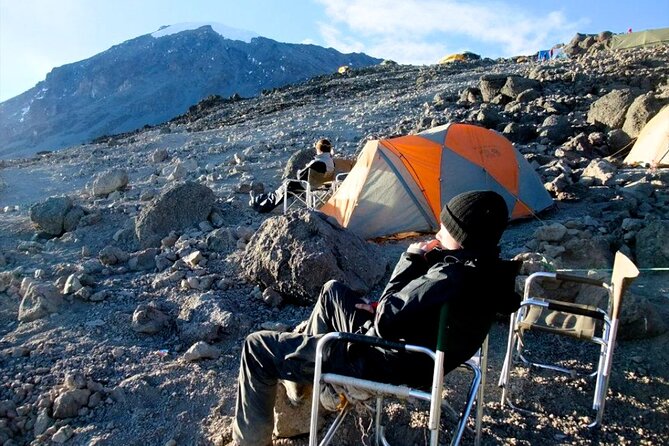
The final day descends from about 3,100 meters to 1,800 meters. The walk covers roughly 10 kilometers and takes three to four hours through rainforest.
After breakfast, the crew offers a final celebration and thanks you for the climb. This is also when you can give tips to the guides, porters, cooks, and other crew members. Gratuities are not included, so bring a plan for showing your appreciation.
At Mweka Gate, the equipment is loaded into the vehicle. The schedule includes a celebratory beer or champagne, followed by transport to Kilimanjaro Wonders Hotel in Moshi for a shower and lunch. After dinner, you receive a certificate of achievement.
That hotel return is more than a pleasant extra. After a week of tents, dust, cold mornings, and long walking days, a hot shower and a proper meal will feel like a major event.
Guides, porters, and the private format
The strongest praise for this company focuses on organization and crew support. Oscar is repeatedly associated with quick, helpful communication and trip planning. Saul is named as a friendly and experienced guide, while Mvungi, Jackie, Emmanuel, Gaudence, and Jonas are also praised in connection with different mountain or Tanzania trips.
You should not assume a particular person will lead your climb unless the company confirms it. Still, the repeated focus on friendly guides, helpful porters, and capable cooks is encouraging. On Kilimanjaro, crew behavior matters as much as scenery. You need people who notice when you are struggling, keep meals moving, and maintain a calm pace.
Only your own group participates. That gives you more control than a large shared departure, though it also makes your group’s fitness and attitude more important. If one person walks much slower or needs extra support, the private structure may allow more flexibility, but you should discuss this with the operator before arrival.
Fitness, age, and practical preparation
The operator requires a strong level of physical fitness. That is reasonable. The climb includes seven walking days, repeated altitude gains, a hands-on scramble, and an extremely long summit day.
You do not need to be a technical climber for this route, but you do need endurance and comfort with sustained uphill walking. Train for long days on your feet, practice walking with a daypack, and make sure your boots are comfortable before the trip.
Children under 15 require special arrangements before trekking Kilimanjaro. The experience is private, but that does not remove the risks of altitude or the physical demands of the route.
Pickup is offered, and the company provides pre-climb and post-climb accommodation. Exact hotel details are not provided, so confirm the property, room arrangement, and number of included nights before paying.
Who should book this climb?
I would recommend it to a fit adult or private group that wants the Machame Route, a full seven-day schedule, and a support crew handling meals and camping. It suits people who value personal attention and do not want to share the trail schedule with a larger group.
I would be cautious about booking it if you want a relaxed holiday, dislike early starts, or have little experience with long uphill walks. The summit morning is demanding, and the advertised cancellation policy is strict: the experience is non-refundable and cannot be changed for any reason. If poor weather forces cancellation, you are offered another date or a full refund.
The trip also requires suitable weather. That makes travel insurance especially important, since personal travel and baggage insurance are not included.
Should you book the Tanzania Escapade trek?
This is a well-supported, scenery-heavy Kilimanjaro plan with a sensible acclimatization day and a private group structure. I particularly like the Lava Tower to Barranco schedule, the included Moshi return, and the clear role of the guides, porters, cooks, and camping crew.
The $3,120 cost is fair only if you use the included support and understand the exclusions. Add gear rental if needed, insurance, tips, and personal expenses. Book this trek if you are ready for the physical work and want a carefully supported Machame climb. If you need a gentler schedule, ask about a longer route before committing to seven days.
FAQ
Where does the Kilimanjaro trek begin?
The experience begins in Moshi, Tanzania. The team meets you around 9 a.m. before driving to Machame Gate for registration and the start of the climb.
How long is the trekking experience?
The trip lasts approximately seven days, including the climb, summit attempt, descent to Mweka Gate, and return to Moshi.
Is this a private trek?
Yes. Only your own group participates in the private tour or activity.
What route does the trek use?
The itinerary follows the Machame Route, beginning at Machame Gate and descending through the Mweka route after the summit.
What meals are included?
The package includes seven lunches, six dinners, and six breakfasts. Hot drinks, boiled drinking water, and hot washing water are also provided at camp as described in the daily schedule.
Are tents included?
Yes. Tents are included, along with the mountain crew, camping support, guides, porters, and cooks.
Is personal climbing equipment included?
No. Personal mountain gear is not included, but equipment can be hired locally if required.
What happens if bad weather cancels the trip?
If poor weather causes the experience to be canceled, you are offered a different date or a full refund. The experience is otherwise non-refundable and cannot be changed after booking.
More 7-Day Experiences in Moshi
- 7-Day Kilimanjaro Trekking Tour via Machame Route
★ 5.0 · 12 reviews - Machame Route 7-Day Private Kilimanjaro Trek
★ 5.0 · 9 reviews - 7 Days Kilimanjaro Trekking Machame Route
★ 5.0 · 8 reviews - 7 Day Trek To The Roof Of Africa Kilimanjaro via Machame Route
★ 5.0 · 5 reviews
Recently added around Moshi
- Mt Kilimanjaro Trek, 6 Days – Umbwe Route★ 5.0 · 4 reviews
- 7 Day Trek To The Roof Of Africa Kilimanjaro via Machame Route★ 5.0 · 5 reviews
- Mount Kilimanjaro Trek 7-Days: Lemosho Route★ 5.0 · 2 reviews
- 8 Day Kilimanjaro Trek via Lemosho Route★ 5.0 · 17 reviews
- 6-Day Kilimanjaro Machame Route – A Stunning Trek to Uhuru Peak★ 5.0 · 7 reviews
- 7-Days Tour Mount Kilimanjaro Trekking via Machame Route★ 5.0 · 2 reviews
- Trek To Mount Kilimanjaro★ 5.0 · 12 reviews
- Unforgettable 8 Days Lemosho Route Trekking on Kilimanjaro★ 5.0 · 4 reviews
Kilimanjaro Climbs, compared.
8-Day Small-group Lemosho Kilimanjaro Summit Trekking
Read our review →
Best Kilimanjaro Adventure 7 days Machame route Trekking
Read our review →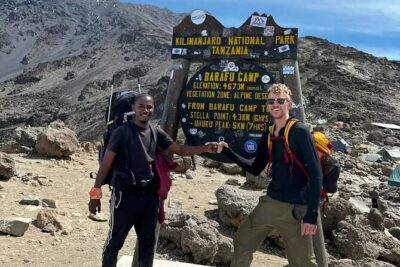
6 Days Machame Route Kilimanjaro Climbing Trekking Tour
Read our review →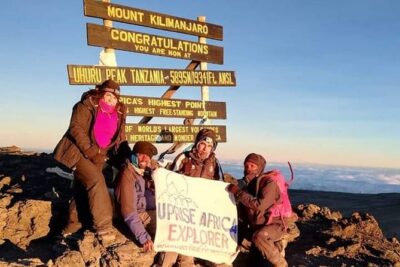
Kilimanjaro Trekking 7Days 6Night Lemosho Route
Read our review →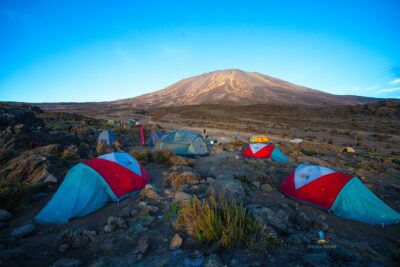
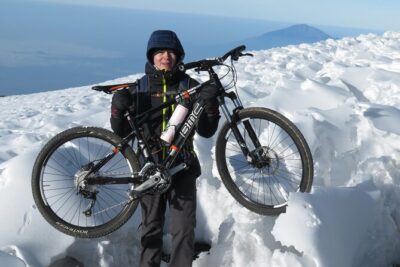
Top 6 Days Mt. Kilimanjaro Bike trek Tour by Marangu-Kilema Route
Read our review →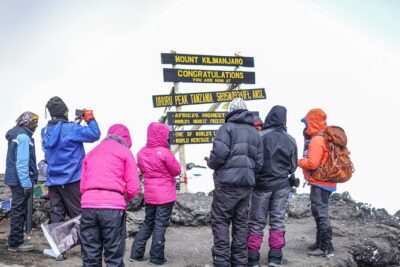
Browse the lists this tour appears in