REVIEW · KATHMANDU
Upper Mustang Trekking
The old kingdom still feels wonderfully remote. This 18-day Upper Mustang trek takes you past cliffside trails, desert-like hills, ancient villages, and Tibetan Buddhist monasteries to Lo Manthang, the walled Himalayan city. I like the quiet trails and preserved local culture, and I also like that flights, permits, lodges, porters, and much of the food are bundled into one price. The main catch is the physical demand: long walking days, strong wind, dusty paths, and high-altitude terrain require solid fitness.
The route is private, so your group can move at its own pace within the planned schedule. You will also need an original passport, a Nepal visa, and a special Upper Mustang permit. At $2,400 per person, the trip is not cheap, but the package covers several costly items, including the $500 restricted-area permit and domestic flights.
Five things to know before choosing this trek
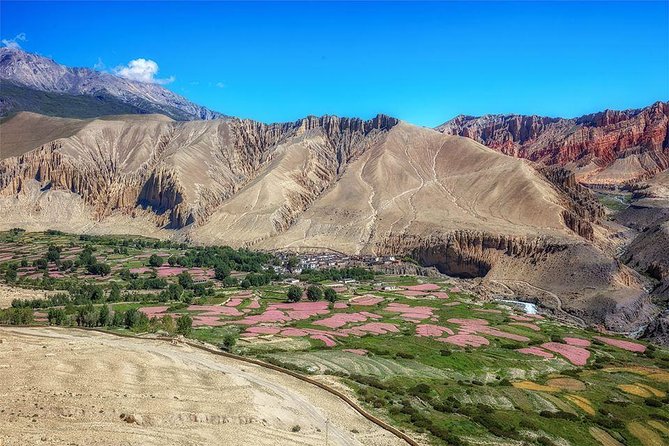
- Lo Manthang is the central prize: You spend a full day exploring monasteries, the former palace, and the old walled city.
- The $500 permit is included: The special Upper Mustang permit covers 10 days inside the restricted area.
- Transport is part of the adventure: You use a tourist bus, domestic aircraft, private transfers, and trekking trails.
- The terrain is dry, windy, and demanding: Fitness matters more than technical climbing skill.
- The group is private: Only your own party participates, with a government-licensed guide and one porter for every two people.
- The trip has a high satisfaction rating: It currently carries a 5.0 rating from four posted assessments, with particular praise for organization, friendly support, scenery, and low crowd levels.
Why Upper Mustang feels different from Nepal’s famous treks
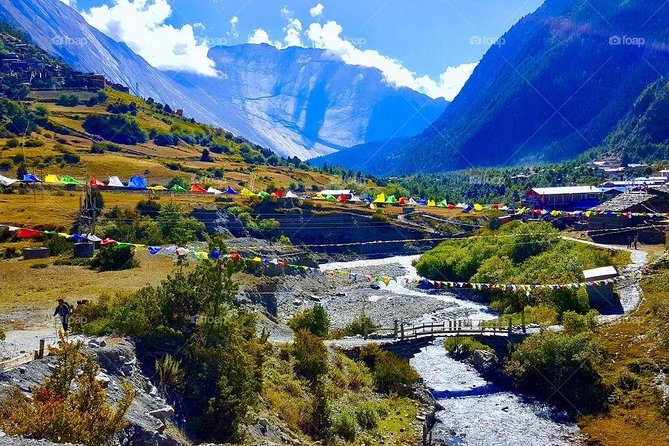
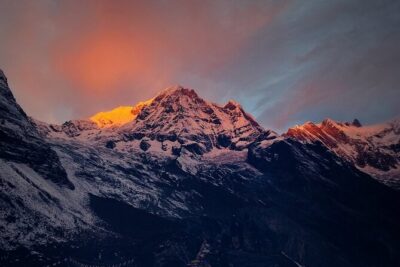
Upper Mustang is not the usual image of Nepal. You do not spend the whole trip walking below enormous green slopes beside busy teahouse routes. Instead, the scenery turns dry, open, and almost desert-like, with pale cliffs, bare ridges, river valleys, and distant snow-covered peaks.
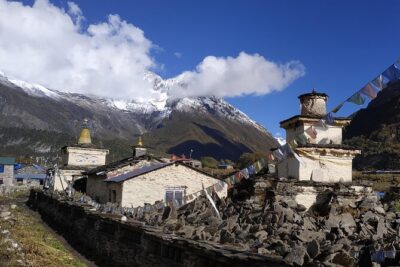
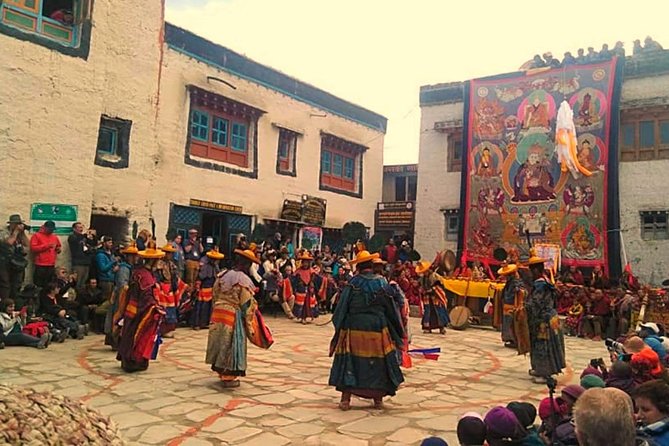
The region also has a strong Tibetan Buddhist identity. Old monasteries, gompas, prayer traditions, compact villages, and former royal connections give the trek a clear cultural focus. You are not simply walking from one mountain lodge to another. The villages and monasteries are the reason the route feels special.
The itinerary reaches elevations above 4,000 meters in places, although the route description notes that elevation rarely exceeds that level. That makes this a serious high-altitude walk, but it is not presented as a technical mountaineering trip. You need stamina for repeated climbs and descents, not climbing equipment or advanced rope skills.
I particularly like the combination of distance and relative quiet. The posted experiences describe Upper Mustang as lightly visited, with superb scenery and a way of life that remains well preserved. The tradeoff is comfort. Trails can be dusty, roads and flights can be affected by conditions, and lodge standards are practical rather than luxurious.
A few more treks around Kathmandu worth a look
- Everest Base Camp Trek – 14 Days
★ 5.0 · 1,499 reviews - Everest Base Camp Trek
★ 5.0 · 842 reviews - Everest Base Camp Trekking
★ 5.0 · 485 reviews
Days 1 and 2: Kathmandu preparation and permits
Your first day is simple. A representative from Everest Trekking Routes meets you at Tribhuvan International Airport and transfers you to your Kathmandu hotel. That airport welcome matters after a long international flight, especially when you are dealing with a new country, unfamiliar traffic, and a trekking schedule.
You stay in a three-star Kathmandu hotel with breakfast. The package includes three nights in Kathmandu, though the exact distribution of those nights follows the wider schedule.
Day 2 is your preparation day. If you wish, you can visit sightseeing points in the Kathmandu Valley after breakfast. More important, you obtain the Upper Mustang special permit. You must bring your original passport and Nepal visa for this process.
Do not treat this as a minor paperwork stop. Upper Mustang is a restricted area, and the permit costs $500 per person for 10 days. That fee is included in the tour price, which is one reason the $2,400 total deserves a closer look.
The Kathmandu day also gives you time to check equipment, sort your bags, and adjust to Nepal before the walking begins. The itinerary does not specify which sightseeing points are included, so ask the operator what can realistically fit around the permit arrangements.
Day 3: The long road toward the mountains
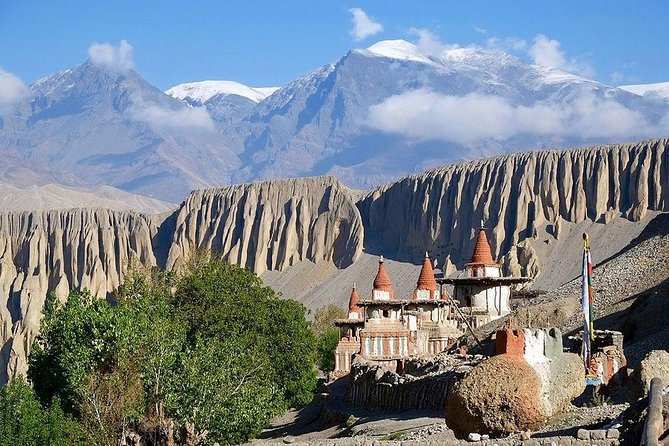
The journey continues by tourist bus, with the bus station about a 10-minute morning walk from the hotel. Departure is listed at 7:00 a.m. The route follows the Prithvi Rajmarg highway, with a breakfast stop after about two hours.
This is not a glamorous transfer, but it gives you an early look at Nepal beyond Kathmandu. A long road day can also be tiring, so you should think of it as part of the expedition rather than wasted time. The itinerary description for this day is incomplete, so confirm the exact overnight destination and total driving time before departure.
That small planning step is useful. The trip includes several transport changes, and knowing when you arrive helps you judge how much energy you will have for the next day’s flight and walk.
Days 4 and 5: Jomsom, Kagbeni, and the restricted area
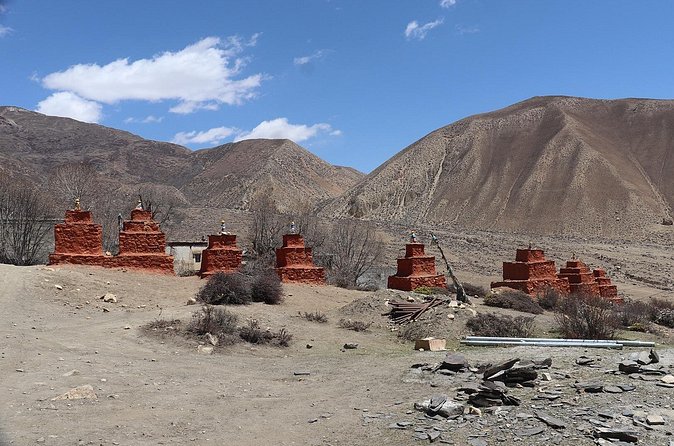
After breakfast, you transfer to the domestic airport and fly to Jomsom at 2,715 meters. The flight is listed as taking you toward the lower Mustang region, with views associated with the Jomsom and Muktinath route.
From Jomsom, you trek for four to five hours to Kagbeni. This is your first proper walking day, so the distance is long enough to test your boots and your rhythm without immediately reaching the more demanding sections.
Kagbeni is important because it serves as the main entry point to restricted Upper Mustang. Here, your special permit is checked before you continue. The permit covers 10 days and is included in the listed price.
From Kagbeni, you continue to Chhusang. The route description notes a descent through Kagbeni before entering the special area. This section introduces the dry river valleys and rougher terrain that define the Upper Mustang experience.
You should expect dust and wind. Those conditions were specifically noted in the trip feedback, and they are part of the setting rather than a rare inconvenience. A scarf or face covering, sunglasses, water, and lip balm will be useful, though the supplied details do not specify an equipment list.
Same trailhead, a longer or shorter day out:
- Annapurna Circuit Trek with Tilicho Lake
★ 5.0 · 368 reviews - Everest Base Camp Trekking – 13 Day
★ 5.0 · 365 reviews - Everest Base Camp Trek
★ 5.0 · 350 reviews - Everest Base Camp Trek -14 Days
★ 5.0 · 321 reviews
Days 6 and 7: Apple gardens, climbs, and wide mountain views
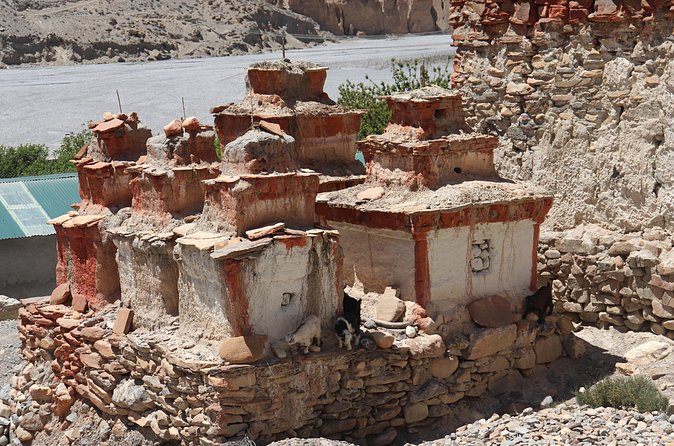
The walk from Chhusang toward Samar includes flatter sections, followed by a major climb after Chele toward Syangboche. The day takes roughly five to six hours. You pass an apple garden and small settlements, giving you a welcome change from the bare rock and dry slopes.
The next day continues uphill toward Syangboche. You stop for lunch and rest before carrying on. This is one of the sections where your fitness really matters. The route is not described as technical, but repeated uphill walking at altitude can be harder than the distance suggests.
The reward is broad mountain scenery. On clear days, you may see Dhaulagiri at 8,167 meters and Annapurna I at 8,097 meters, along with other white peaks. They remain distant, but their presence gives scale to the bare Mustang terrain.
The schedule allows five to six hours on some walking days, yet you should not assume every hour will feel easy. Wind, dust, altitude, and uneven trails affect the pace. Because the tour is private, you can discuss your pace with the guide, but the route still has fixed overnight stops.
Day 8: Ghiling and the road to Tsarang
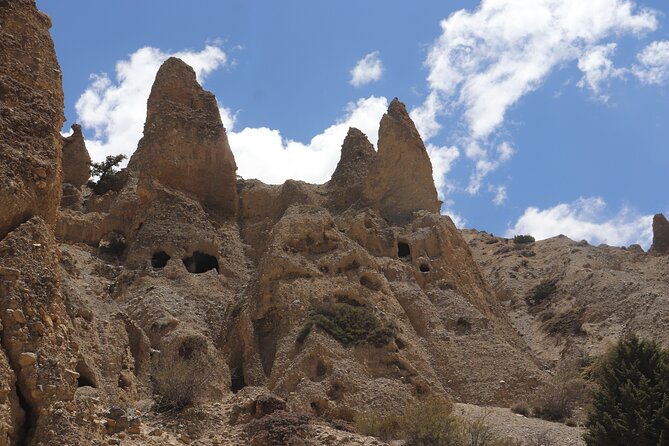
After breakfast, you walk through farmland and toward Ghiling, a village with old monasteries. The route continues in the direction of Lo Manthang before reaching Tsarang, described as one of the larger settlements in the region.
This is a good day for travelers who want culture without giving up scenery. The farms show that Upper Mustang is not empty wilderness. People still grow food, tend apple trees, and maintain village life in a severe environment.
The trail may feel long because the scenery is open and exposed. There is little suggestion of city-style convenience, so you should be comfortable with simple lodges and a steady walking routine.
Days 9 and 10: Reaching Lo Manthang and staying put
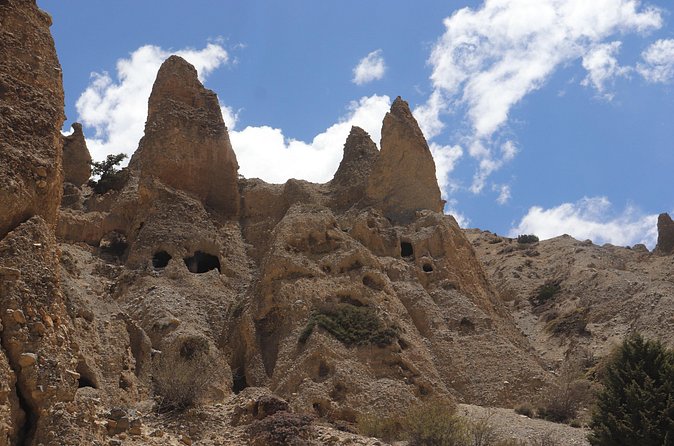
The trek to Lo Manthang takes about five to six hours. Along the way, you cross rivers and bridges and pass through dry, open terrain. Reaching the walled city is the emotional center of the route.
Lo Manthang is presented as the Himalayan kingdom of Nepal, with a strong royal and religious identity. Its compact form, old buildings, colorful village details, monasteries, and palace create a sense of place that cannot be reduced to a mountain viewpoint.
Day 10 is reserved for exploration. You visit monasteries and the King’s Palace, with time to walk around the city rather than rush through it. I consider this full day essential. Without it, Lo Manthang would become little more than an overnight stop at the end of a hard walk.
The itinerary does not list exact monastery names, opening hours, or entrance charges. Ask your guide what is open on your date and what is covered. The posted information also does not promise a palace interior visit, so think of this as a guided city and heritage day rather than a guaranteed museum tour.
Days 11 and 12: Gompas, Dhakmar, and Ghami
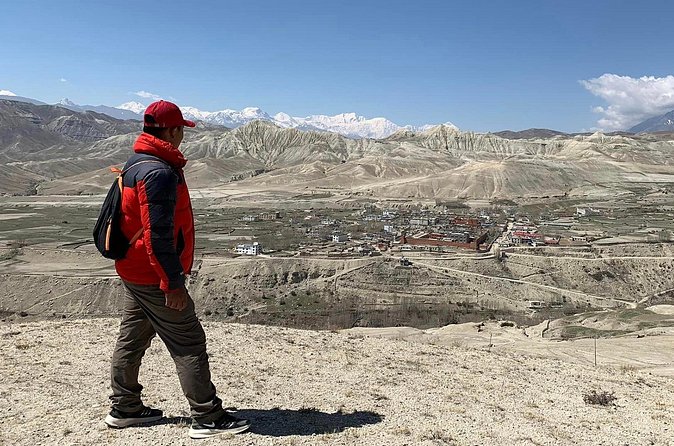
You leave Lo Manthang after breakfast and begin with an uphill section toward a gompa before heading toward Dhakmar. This return route is not simply a repeat of the outbound walk. It offers different angles on the valleys and brings you through more historic religious sites.
The route from Dhakmar toward Ghami passes through the Upper Mustang valley and reaches another large village with a monastery. The area includes farm products and apple gardens, reinforcing the contrast between dry surroundings and carefully maintained agriculture.
These days are valuable because they slow the trip down. You have already seen Lo Manthang, so the focus shifts back to village life, local cultivation, and the pattern of monasteries and trails. You are still walking for several hours, but the cultural details become easier to notice when you are no longer rushing toward the main destination.
Days 13 to 15: The return through Samar, Chele, and Kagbeni
From Syangboche to Chhusang, the route becomes a major downhill walk. You pass Samar, Bhena, and Chele while descending about 1,000 meters toward the Kali Gandaki River.
Downhill does not always mean easy. A long descent can be hard on knees and ankles, especially after days of walking. The valley can also become very windy, and the schedule recommends starting early on the Chhusang to Kagbeni section because conditions are stronger after noon.
That early start is one of the most useful practical details in the plan. Have breakfast promptly, get moving, and avoid treating the morning as casual lodge time. From Chhusang to Kagbeni, you follow the trail back through the valley and continue toward the lower Mustang area.
The walk from Kagbeni to Jomsom is shorter and easier. Once in Jomsom, you check the flight schedule for the following day and have time to explore the town. The itinerary specifically mentions local apple brandy and other apple products, giving you a chance to see one of the region’s better-known local specialties.
Days 16 to 18: Flight to Pokhara and the long finish
The Jomsom to Pokhara flight takes about 25 minutes, but the schedule depends on the flight time. You may eat breakfast in Jomsom, or you may need to leave early to report to the airport.
This is a useful place to keep your plans flexible. Domestic mountain flights do not fit neatly into a rigid timetable, and the operator has wisely built the day around the flight schedule rather than promising a fixed breakfast hour.
In Pokhara, you transfer to a hotel. Two nights of Pokhara accommodation with breakfast are included. The itinerary does not list a full Pokhara sightseeing program, so use this stop mainly to rest unless your arrangements say otherwise.
On Day 17, you take a tourist bus from Pokhara to Kathmandu. The journey is listed at about seven hours. That is a long final road transfer, but it avoids adding another flight and gives the package a clear overland finish.
Day 18 is your airport transfer to Tribhuvan International Airport. Airport, hotel, and airport transfers by private car, van, or bus are included at the relevant points in the trip.
What the $2,400 price really covers
At $2,400 per person, this is a substantial purchase. Still, the price includes the Upper Mustang permit, listed at $500 alone, plus the Annapurna Conservation Area permit. It also includes domestic flights between Pokhara and Jomsom, tourist buses between Kathmandu and Pokhara, three-star Kathmandu hotels, two Pokhara hotel nights, trekking lodges, breakfasts, 16 lunches and dinners, a guide, a porter arrangement, taxes, and service charges.
One porter is provided for every two people. That is helpful, but you should confirm the baggage limit and what the porter will carry before arrival. Personal expenses, extra hotel nights, and tips for the guide, porters, and driver are not included.
The package has good value if you want a planned private trek and do not want to arrange permits, internal transport, flights, lodges, and staff separately. It offers less value if you prefer luxury hotels, independent route changes, or a shorter trip.
Who should book this Upper Mustang trek?
I would recommend it to fit hikers who care about Tibetan Buddhist culture, old villages, dry mountain scenery, and a quieter route. It suits people who want structure but prefer a private group rather than a large departure.
You should think twice if you dislike dusty paths, early starts, basic trekking lodges, long bus rides, or uncertain flight timing. The operator describes the required fitness level as strong, and that warning should be taken seriously.
The current 5.0 rating from four posted assessments reflects the strongest parts of the experience: excellent scenery, low crowd levels, careful organization, and helpful, patient guide and porter support. Those are meaningful strengths, but they do not remove the physical work.
Booking is also relatively forgiving, with a full refund available when you cancel at least six full days before the start time. A 50 percent refund applies when you cancel two to six full days beforehand, while cancellations less than two full days before departure are not refunded.
FAQ
How long does the Upper Mustang Trekking experience last?
The trip lasts approximately 18 days, beginning with arrival in Kathmandu and ending with an airport transfer for your departure.
What does the tour cost?
The listed price is $2,400 per person.
Is the Upper Mustang special permit included?
Yes. The package includes the special Upper Mustang permit, listed at $500 per person for 10 days.
What documents are needed for the special permit?
You need your original passport and a Nepal visa.
Is this a private tour?
Yes. Only your own group participates in the private tour or activity.
What transportation is included?
The package includes airport and hotel transfers, tourist bus travel between Kathmandu and Pokhara, and domestic flights between Pokhara and Jomsom.
Are meals included?
Breakfast is included throughout the package, with 17 breakfasts listed. The package also includes 16 lunches and dinners.
Is accommodation included?
Yes. The package includes three nights in a three-star Kathmandu hotel with breakfast, two nights in Pokhara with breakfast, and lodge or teahouse accommodation during the trek.
How far in advance can I cancel for a full refund?
You must cancel at least six full days before the experience start time for a full refund. Cancellations two to six full days before the start receive a 50 percent refund, while cancellations less than two full days before the start are not refunded.
Should you book it?
Book this trek if you want Upper Mustang’s old villages, Buddhist monasteries, walled Lo Manthang, broad mountain views, and a quieter route, and if you are ready for dusty trails and demanding walking days. The price is easier to justify because it includes the costly permit, flights, transport, staff, lodges, and many meals.
Skip it if your priority is comfort, flexible timing, or an easy walk. For the right hiker, this is a carefully organized way to reach one of Nepal’s most distinctive regions without having to assemble every permit and transfer yourself.
Recently added around Kathmandu
- Ghorepani Poon Hill Trek★ 5.0 · 16 reviews
- Private Manaslu Circuit Trek at Himalayas★ 5.0 · 3 reviews
- Amazing 1 Day Trekking Experience in Kathmandu Nepal★ 5.0 · 24 reviews
- Ghorepani Poonhill Trek★ 5.0 · 5 reviews
- Upper Mustang Trekking★ 5.0 · 2 reviews
- Upper Mustang Trekking★ 3.0 · 2 reviews
- Upper Mustang Trekking★ 5.0 · 4 reviews
- Upper Mustang Trek★ 5.0 · 5 reviews
Kathmandu Trekking Tours, compared.