REVIEW · KATHMANDU
Tiji Festival Trek ( Upper Mustang) : The Festival of Lo Manthang
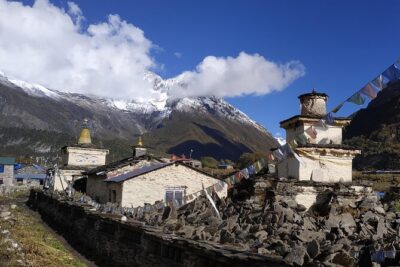
Sacred masks, mountain trails, and an ancient story await. This Upper Mustang trek combines a demanding route with the three-day Tiji Festival, a Tibetan Buddhist celebration held in Lo Manthang. I like the way the trip builds toward the festival instead of treating it as a quick cultural stop, and I also like that permits, domestic flights, meals, guides, and mountain accommodation are bundled into the price. The main concern is the schedule: several trekking days are long, the highest point reaches 4,353 meters, and the published summary says 18 hours while the detailed plan clearly describes an 18-day journey.
I also appreciate the small group format, with only two participants, and the chance to travel through Upper Mustang by foot rather than simply flying in and out. The drawback is that comfort is basic in the tea-houses, and the final walking days include a 12-hour trek, which may feel too hard for anyone who has not trained at altitude.
Key points before you book
- The festival runs for three days: In 2025, the Tiji Festival was scheduled for 24 to 26 May in Lo Manthang.
- The route reaches 4,353 meters: You need a moderate level of fitness and a sensible approach to altitude.
- A private two-person trip: Only your group participates, with an English-speaking, government-licensed trekking guide.
- The journey includes flights and rougher road travel: You drive between Kathmandu and Pokhara, fly to Jomsom, trek through Upper Mustang, then fly back from Jomsom to Pokhara.
- The price covers major trip costs: At $2,895 per person, permits, accommodation, meals, transport, flights, monument fees, and VAT are included.
- Festival access comes with a demanding route: The dances are the reward, but you must first walk for several days through high mountain country.
Why the Tiji Festival matters in Lo Manthang
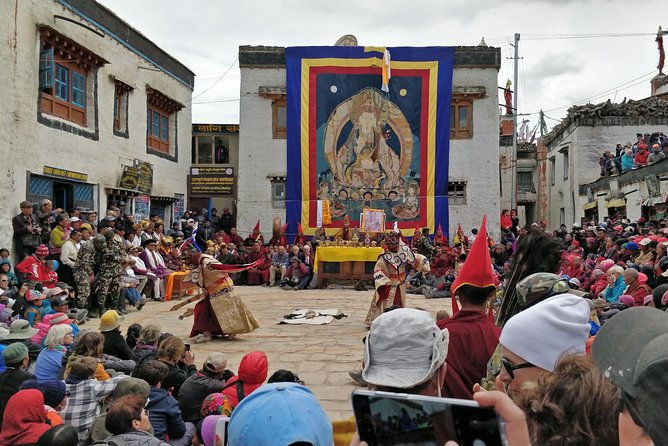
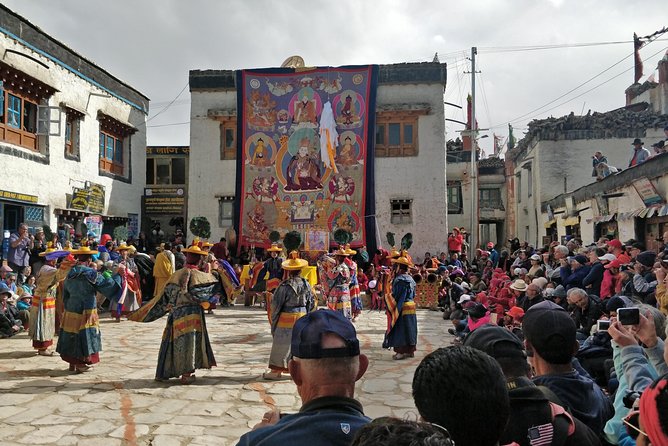
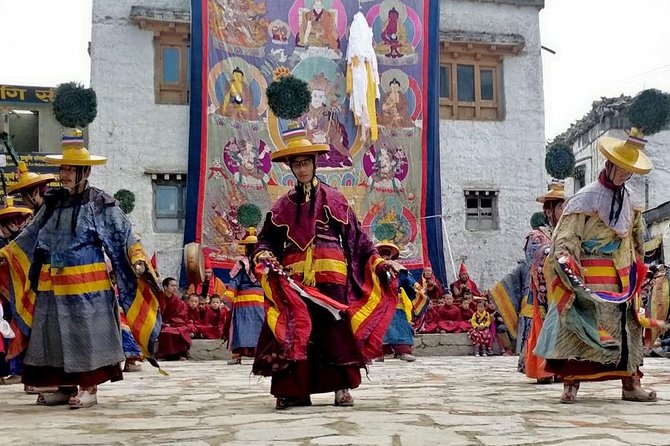
The Tiji Festival tells the story of a son who saves the Mustang kingdom from destruction. Its three days use Tibetan Buddhist rituals, masked dances, music, and symbolic action to show the struggle between harmful forces and protection.
The mask dance is the heart of the event. A Cham performance can make a powerful impression because it is not staged as a show for outsiders. It is a religious ceremony, carried out with care by the local community. You may find the preparations almost dreamlike, but the meaning is serious and tied to faith, nature, and centuries of tradition.
I like this setting because Lo Manthang gives the festival room to breathe. You are not rushing from a vehicle to a viewing platform, then back to a hotel. You arrive on foot after crossing the Mustang route, giving the celebration a stronger sense of place.
The 2025 dates were 24, 25, and 26 May. Festival dates matter here because the entire trek is arranged around reaching Lo Manthang in time. Confirm the dates carefully for any future departure, since this is an annual event and the schedule supplied for 2025 should not be treated as a permanent calendar.
A few more treks around Kathmandu worth a look
- Everest Base Camp Trek – 14 Days
★ 5.0 · 1,499 reviews - Everest Base Camp Trek
★ 5.0 · 842 reviews - Everest Base Camp Trekking
★ 5.0 · 485 reviews
From Kathmandu preparation to Pokhara by road
The trip begins at Tribhuvan Airport in Kathmandu. The plan allows a preparation day in the capital before you head toward the mountains. That is useful because the trek needs permits, equipment checks, and time to organize bags before the walking begins.
Day three is a long drive to Pokhara, around 220 kilometers and approximately eight hours. The distance may look modest on a map, but the time tells you what to expect: this is not a quick transfer. You will spend much of the day on the road, and this section may feel tiring before the trek has even started.
Pokhara sits at about 860 meters. It is a practical staging point for the flight to Jomsom, not simply a spare overnight stop. The route uses both private vehicles and buses, so ask how your particular departure handles these transfers.
Jomsom and Kagbeni: the walking begins
On day four, you take a morning flight to Jomsom at 2,715 meters. From there, the trek continues to Kagbeni, at 2,858 meters, in about four hours.
This is a sensible first walking day. You gain altitude, but the planned distance is shorter than several later stages. Kagbeni is the point where the journey begins to feel properly remote, and it marks the transition from transport to a lodge-to-lodge trek.
You should pay attention to how your body feels here. The route soon climbs higher, and the itinerary does not include many spare days. A moderate fitness level is required, but fitness alone does not guarantee an easy time at altitude.
Chele, Syangbochen, and Dhakmar
Day five takes you to Chele, also written as Tsele, at 3,050 meters. The walk lasts about six hours. This is a substantial increase in elevation from Jomsom, so a steady pace matters more than speed.
The next day leads to Syangbochen at 3,475 meters, with around five hours on foot. By now, the route is firmly in high-altitude territory. You will stay in tea-houses rather than full-service hotels, and the inclusion of breakfast, lunch, and dinner is useful because food choices can be limited on a remote trekking route.
Day seven brings you to Dhakmar at 3,810 meters after about five hours. This section places you close to the highest part of the trek. The schedule is not built around luxury or leisurely late starts. You should expect early mornings, basic rooms, and a day shaped by the trail.
The supplied maximum elevation is 4,353 meters, although the daily outline does not identify exactly where that highest point occurs. That is worth asking about before departure. Knowing the high passes and steepest sections helps you judge the trek more accurately.
Same trailhead, a longer or shorter day out:
- Annapurna Circuit Trek with Tilicho Lake
★ 5.0 · 368 reviews - Everest Base Camp Trekking – 13 Day
★ 5.0 · 365 reviews - Everest Base Camp Trek
★ 5.0 · 350 reviews - Everest Base Camp Trek -14 Days
★ 5.0 · 321 reviews
Reaching Lo Manthang before the festival
On day eight, you walk about five hours to Lo Manthang, at 3,700 meters. This is the moment the whole route has been working toward.
Arriving a day before the festival begins gives you a useful buffer. You are not trying to land in Jomsom and reach the ceremony immediately. Instead, you have time to settle into the town, prepare for the following days, and adjust to the altitude.
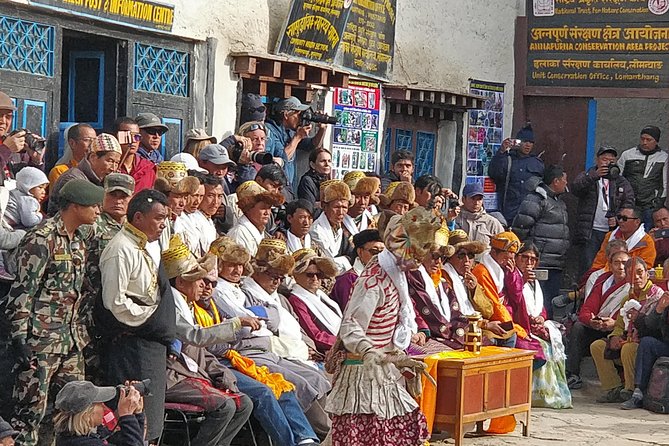
Lo Manthang is the setting for the festival, but this is not a standard sightseeing circuit with a long list of attractions and quick photo stops. The main reward is being present for the rituals. You should approach the festival with patience and respect, especially during religious ceremonies and mask dances.
The company supplies a trekking map, duffel bag, T-shirt, and an appreciation letter. The map and duffel bag are practical additions. The T-shirt is a souvenir, while the letter is a pleasant finish rather than a reason to book.
Three days of Tiji ceremony
The first festival day begins on day nine. The second follows on day ten, and the third on day eleven. The itinerary gives each day its own place, which is important. You are not expected to watch one short performance and move on.
The ceremony is built around the story of the son who protects Mustang from destruction. The use of Cham masks makes the religious symbolism visible, but you should not expect a simple folk dance. The masks, movements, and rituals carry meaning for the people taking part.
I would plan to watch carefully rather than constantly photograph. The most worthwhile part may be the preparation and the pauses around the main dances, when you can see how seriously the community treats the event. The experience has a strong connection to Tibetan Buddhist belief and to ideas about nature and protection.
The two-person group is especially useful during these festival days. A private trip can make it easier to coordinate with your guide, manage your pace, and avoid the feel of a large organized party. The English-speaking, government-licensed guide is also responsible for helping explain the ceremony and managing the practical details.
Jeeban is associated with the Nepal Adventure Team and has been praised for guiding an Upper Mustang Tiji trip. If Jeeban is assigned to your departure, ask about his role and experience before you travel. The information supplied does not guarantee that he will lead every departure.
The return route through Yara and Tengbe
After the festival, day twelve takes you to Yara in about five hours. This is not simply a short exit from Lo Manthang. You continue trekking through Upper Mustang, which means the journey remains active after the ceremonies end.
Day thirteen leads to Tengbe after about six hours. The route continues as a lodge-to-lodge trek, so you should expect another basic overnight stay rather than a return to hotel comfort.
This return section is one reason the trip feels like a full cultural journey rather than a festival transfer. You have time to process what you saw while continuing through the region on foot. The tradeoff is that you must maintain your energy after the most important event has already taken place.
The 12-hour push to Chuksang
Day fourteen is the hardest-looking stage on paper: around 12 hours to Chuksang, also written as Tsusang. That is a very long day at altitude.
This is the detail I would take most seriously before booking. A moderate difficulty rating can sound manageable, but a 12-hour walking day changes the picture. You should ask the operator how the day is paced, whether the group can adjust the schedule, and what happens if weather or fatigue causes delays.
The itinerary does not provide a rest day here. You need to arrive with enough fitness for several consecutive trekking days, not just one strong day. The small private group may help with flexibility, but the supplied information does not promise a modified route or extra night.
Muktinath, Jomsom, and the return to Kathmandu
Day fifteen takes you to Muktinath in about eight hours. This is another long walking day, following the demanding stage to Chuksang.
Muktinath is a major pilgrimage destination, and its presence gives the final trekking section added cultural weight. The route then returns toward Jomsom for the flight back to Pokhara on day sixteen. From Pokhara, you drive to Kathmandu on day seventeen, with about six hours on the road.
The final day is international departure. The stated meeting point is Tribhuvan Airport, and the activity ends back there. The published start time is 12:15 am, which is unusual beside a day-by-day itinerary beginning with arrival. I would confirm the exact pickup time and transfer plan before paying for flights.
What the $2,895 price really covers
At $2,895 per person, this is a substantial trip cost, but the package includes many of the expensive and complicated parts of an Upper Mustang journey.
Included items are:
- An English-speaking, government-licensed trekking guide
- Hotel and tea-house accommodation
- Breakfast, lunch, and dinner during the trek
- Restricted-area permits
- Monument fees and other trekking permits
- Ground transportation
- Domestic flight to Jomsom
- Flight back to Pokhara
- Nepal government VAT of 13 percent
- First-aid medical kit
- Duffel bag, map, T-shirt, and appreciation letter
That makes the price easier to assess. You are not paying only for walks and festival access. You are paying for a restricted-area route with transport, paperwork, meals, accommodation, and support.
You still need to budget for alcoholic and non-alcoholic drinks, travel and rescue insurance, and tips for the guide and porters. Insurance deserves special attention because the route reaches 4,353 meters and includes long walking days. The package includes a first-aid kit, but that is not the same as medical or evacuation cover.
Who will enjoy this trek most
I would recommend this trip to someone who wants a major cultural event but is willing to work for it. You should be comfortable with basic tea-house accommodation, long days on foot, high altitude, and changing transport conditions.
It suits you if:
- You want to attend all three festival days
- You value a private two-person group
- You are interested in Tibetan Buddhist ritual, not only scenic views
- You can manage a moderate trekking route with several long days
- You prefer a package that handles restricted permits and domestic transport
I would hesitate if you want a relaxed holiday, dislike basic accommodation, or have not prepared for altitude. The 12-hour stage to Chuksang is the clearest warning sign.
You must be at least 18 years old, and children must be accompanied by an adult. A valid passport is required on the day of travel. Confirmation is provided when you book, and cancellation is free up to 24 hours before the experience start time. Changes or cancellations inside that window are not accepted for a refund.
Should you book the Tiji Festival Trek?
Book it if the festival itself is your priority and you want to reach Lo Manthang by foot. The strongest parts are the full three-day program, the small private group, and the fact that the price covers permits, meals, flights, transport, and a licensed guide.
Think twice if you are attracted only by the photographs. This is an 18-day route in the detailed schedule, not a quick cultural excursion, and the altitude and long return trek demand real preparation.
For me, the trip offers good value for a committed trekker who wants religious ceremony in its home setting rather than a staged cultural display. Just confirm the actual duration, pickup time, guide assignment, highest pass, and plan for the 12-hour walking day before you book.
FAQ
How long does the Tiji Festival Trek take?
The detailed day-by-day plan covers 18 days, from arrival in Kathmandu through international departure. The short tour summary also says approximately 18 hours, so you should confirm the correct duration with Nepal Adventure Team before booking.
When was the 2025 Tiji Festival scheduled?
The 2025 festival was scheduled for 24 May through 26 May 2025.
What is the highest elevation on the trek?
The stated maximum elevation is 4,353 meters.
What meals are included?
Breakfast, lunch, and dinner are included during the trek. Extra alcoholic and non-alcoholic drinks are not included.
Are domestic flights included?
Yes. The package includes the flight to Jomsom and the flight back to Pokhara.
Is this a private tour?
Yes. The activity is private, and only your group participates. The stated group size is two people.
What fitness level and documents do I need?
You should have a moderate level of physical fitness. You must be at least 18 years old and carry a current valid passport on the day of travel.
Recently added around Kathmandu
- Ghorepani Poon Hill Trek★ 5.0 · 16 reviews
- Amazing 1 Day Trekking Experience in Kathmandu Nepal★ 5.0 · 24 reviews
- Private Manaslu Circuit Trek at Himalayas★ 5.0 · 3 reviews
- Ghorepani Poonhill Trek★ 5.0 · 5 reviews
- Upper Mustang Trekking★ 5.0 · 2 reviews
- Upper Mustang Trekking★ 3.0 · 2 reviews
- Upper Mustang Trekking★ 5.0 · 4 reviews
- Upper Mustang Trek★ 5.0 · 5 reviews
Kathmandu Trekking Tours, compared.