REVIEW · KATHMANDU
Khopra Danda Trek
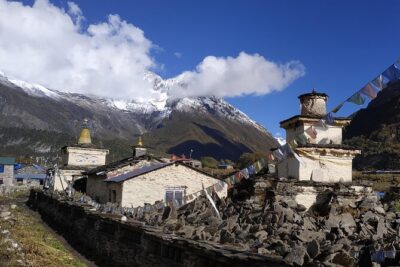
The high ridge is worth the climb. The Khopra Danda Trek takes you from Kathmandu through Pokhara, Ghorepani, and Poon Hill before reaching the quieter Khopra Ridge at 3,637 meters. Along the way, you get sunrise views, stone stairways, forest paths, community lodges, a sacred high-altitude lake, and wide views toward Annapurna, Dhaulagiri, Manaslu, and Mardi.
I like the route’s variety, especially the combination of Poon Hill sunrise and the less-traveled Khopra section. I also like the community-lodge approach at Khopra, where the trip feels more local than a standard tea-house circuit. The main drawback is the physical demand: long walking days, more than 3,000 stone steps, a high camp near Khayer Lake, and a final altitude of 4,660 meters make this a serious trek, not a gentle mountain holiday.
Five Details That Define This Trek
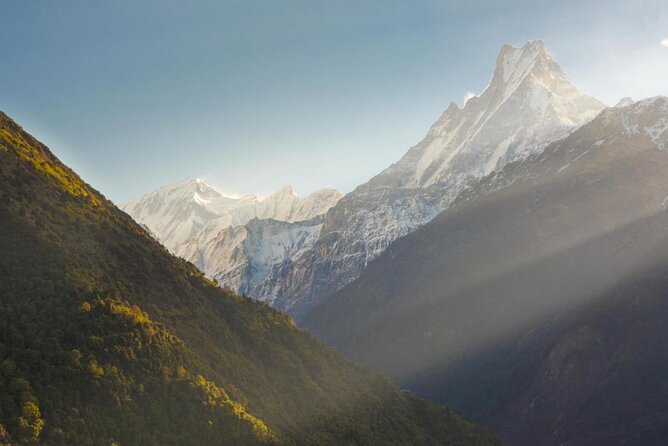
- Muldai viewpoint reaches 3,637 meters, with a morning panorama of as many as 25 mountains in the Annapurna and Dhaulagiri ranges.
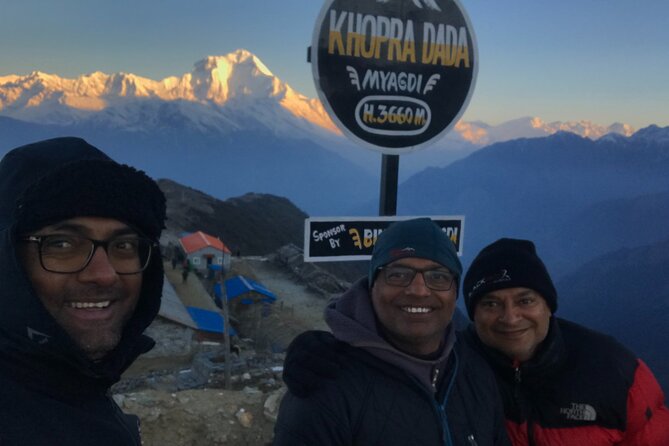
- Poon Hill comes early in the trek, giving you a classic sunrise view before the route turns toward the quieter Khopra Ridge.
- Khayer Lake reaches 4,660 meters, making the ninth day the toughest and highest part of the journey.
- The route includes more than 3,000 stone steps between Tikhedhunga and Ulleri, so your legs get an early reminder that Nepal is not short on stairs.
- Khopra community lodges provide the main overnight base at the ridge, with time to rest and enjoy the setting after the climb.
- The listed price is $1,120 per person, with a maximum group size of 25 and free cancellation up to 24 hours before the start time.
Why Khopra Danda Is Different From the Usual Poon Hill Trek
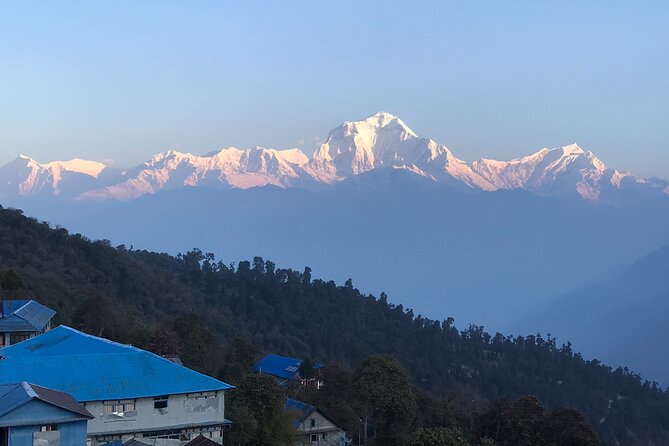
The route begins along a familiar Annapurna path, but it does not end with Poon Hill. After Ghorepani and Tadapani, you turn toward Dobato, Chistibung, and Khopra Ridge. That change gives the trip a stronger sense of distance and a quieter rhythm.
The reward is the view from 3,637 meters. From Khopra Danda, you can look toward Dhaulagiri, Annapurna, Nilgiri, and other peaks in the two major ranges. The route also includes views of Manaslu and Mardi in the wider mountain panorama.
I like this progression. You get an accessible introduction to the Annapurna region, then move into a more remote-feeling section. You are not simply walking to one famous viewpoint and turning around. You are crossing several distinct mountain areas, with villages, forests, open ridges, and high-altitude paths along the way.
The route is called a newly introduced trek in the supplied information, but you should not read that as a promise of untouched wilderness. It follows established paths and includes well-known places such as Ghorepani and Poon Hill. Its appeal is the combination of the famous section with the quieter Khopra extension.
A few more treks around Kathmandu worth a look
- Everest Base Camp Trek – 14 Days
★ 5.0 · 1,499 reviews - Everest Base Camp Trek
★ 5.0 · 842 reviews - Everest Base Camp Trekking
★ 5.0 · 485 reviews
Days 1 and 2: Kathmandu Sights and the Road to Pokhara
The trip begins at Tribhuvan International Airport in Kathmandu. The stated start time is 10:45 a.m., and the first day includes a visit to Kathmandu Durbar Square and sightseeing around the city. The planned sightseeing period is about three hours, with admission included for that stop.
Kathmandu Durbar Square gives you an immediate taste of Nepal’s capital, with historic buildings, courtyards, and the busy city atmosphere around them. Since the itinerary places city sightseeing soon after airport arrival, your first day may feel full if your flight lands after a long overnight journey. Keep your first afternoon practical. You will want some energy left for the road and the trek ahead.
On day two, you drive from Kathmandu to Pokhara. The drive is listed at four to five hours, followed by sightseeing around Pokhara for a total day of about seven hours. The road journey is an important part of the trip, not just a transfer. You get a view of the countryside between Nepal’s two major tourist bases.
Pokhara works as the staging point for the trek. It also gives you a softer pause before the walking begins. The schedule does not specify which Pokhara sights are included, so you should confirm the exact sightseeing plan before booking if particular attractions matter to you.
Days 3 and 4: Nayapul, Tikhedhunga, and the Stone Steps to Ghorepani
From Pokhara, you drive about 1.5 hours to Nayapul. This is where the walking begins after equipment is organized and porters are hired. The first walking day takes you to Tikhedhunga at 1,750 meters and lasts about five hours.
The path follows the Modi Khola area and passes through mountain villages and natural surroundings. This first section is useful for finding your walking pace. Do not treat it as a warm-up you can rush. Your legs will need to work for many more days.
Day four is one of the route’s first real tests. You climb more than 3,000 stone steps to Ulleri, then continue toward Ghorepani. The full walk from Tikhedhunga to Ghorepani takes about six to seven hours.
The steps are not a minor detail. They are the day. Pace yourself, drink regularly, and keep your pack light if porters are carrying luggage. Ghorepani is reached at the end of a long climb, and the overnight guesthouse gives you a needed pause before the early start for Poon Hill.
Day 5: Poon Hill Sunrise and the Walk to Tadapani
Poon Hill is the classic viewpoint on this route, and the early morning timing is central to the experience. From the top, you can watch the Annapurna and Dhaulagiri ranges catch the first light, with the peaks turning golden as the sun rises.
This is one of the most scenic moments of the trek, but it is also one of the busiest and most structured. You leave Ghorepani early, reach the viewpoint, then return before continuing toward Tadapani. The total walking time is about six to seven hours.
The route passes through Deurali before reaching Tadapani. You are still walking through the Annapurna region’s forested mountain paths, with views opening and closing as the trail changes direction.
The schedule marks the Poon Hill admission ticket as not included, so check whether that cost is payable locally or handled separately. The same kind of clarification is useful for other listed admission items, since some stops show included tickets and others do not.
Same trailhead, a longer or shorter day out:
- Annapurna Circuit Trek with Tilicho Lake
★ 5.0 · 368 reviews - Everest Base Camp Trekking – 13 Day
★ 5.0 · 365 reviews - Everest Base Camp Trek
★ 5.0 · 350 reviews - Everest Base Camp Trek -14 Days
★ 5.0 · 321 reviews
Days 6 and 7: Tadapani, Dobato, and Muldai Viewpoint
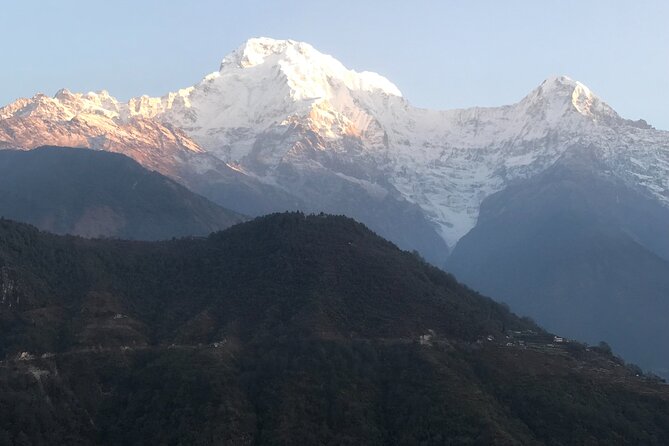
From Tadapani, the route leaves the standard Poon Hill pattern and heads toward Dobato. The distance is listed as 6.5 kilometers, with five to six hours of walking. The trail passes villages and areas with varied plant and animal life, while mountain views continue to appear between the trees.
Dobato sits at 3,350 meters. That increase in altitude matters. The walking distance is not huge, but you are sleeping higher than before, so the pace should remain steady. A moderate fitness level is required, and you should take any signs of altitude trouble seriously.
The next morning begins with a hike to Muldai viewpoint at 3,637 meters. This is one of the route’s best viewing points. The stated panorama includes up to 25 mountains in the Annapurna and Dhaulagiri ranges.
After returning to Dobato, you continue toward Chistibung. The first hour leads to Bayli Kharka, followed by about three more hours to Chistibung. The full day takes around five hours, but the early viewpoint start makes it feel longer.
I like this section because it gives you a high mountain view without making the viewpoint the entire purpose of the day. You rise early, take in the peaks, then continue through a series of mountain settlements. Chistibung is a quieter overnight stop before the main Khopra Ridge arrival.
Day 8: Reaching Khopra Ridge at 3,637 Meters
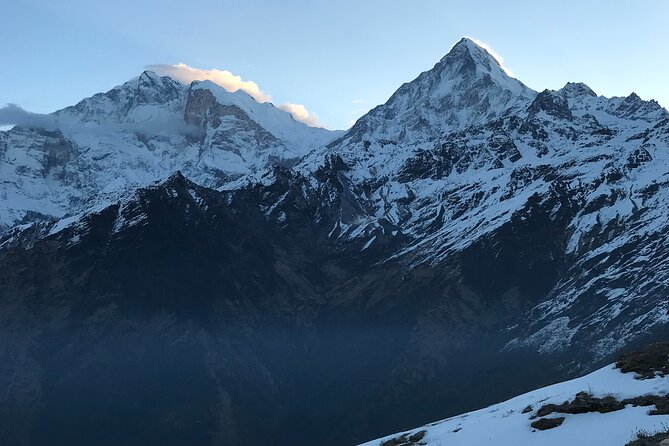
The walk from Chistibung to Khopra Ridge takes about three hours, making this one of the shorter days. That is good planning. By this point, your legs have already handled the long climb to Ghorepani, the Poon Hill morning, Dobato, and Muldai.
Khopra Ridge gives you the broad mountain views that define the trek. Dhaulagiri, Annapurna, and Nilgiri are among the peaks visible from the ridge, with more summits spread across the surrounding ranges.
You spend the rest of the day at the Khopra community lodges. The itinerary specifically highlights the hospitality there, and this is one of the trip’s more distinctive elements. Instead of treating the ridge as a quick photo stop, you have time to rest and enjoy the setting.
The Khopra overnight is also practical. It places you near the starting point for the Khayer Lake excursion, while giving you a shorter walking day before the most demanding outing.
Day 9: The Hard Push to Sacred Khayer Lake
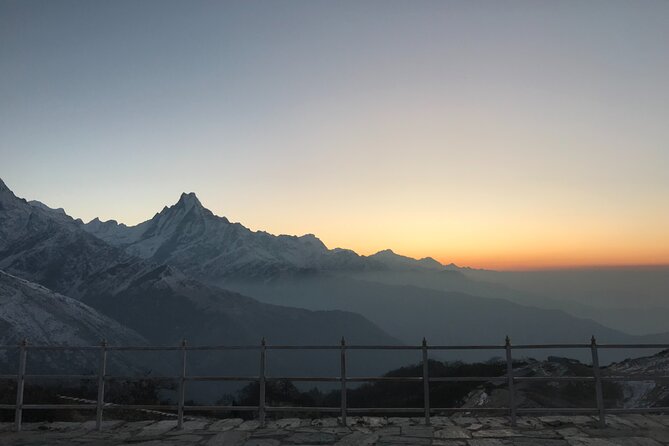
The Khayer Lake day is the trek’s major endurance test. The lake sits at 4,660 meters, and the walk from Khopra takes about five hours. The route requires a tent, food, and all necessary supplies carried from Khopra Danda.
This is a major logistical difference from the other nights. You are not simply walking to a lodge with a bed waiting. You need camping equipment and provisions for the overnight stay. The itinerary describes the lake as sacred and notes a Brahma temple beside it, adding cultural meaning to the high-altitude setting.
The climb is worth considering carefully. At 4,660 meters, altitude is a bigger concern than distance alone. The information provided only specifies a moderate fitness level, but the Khayer Lake day is plainly more demanding than the shorter lodge-to-lodge sections. You should ask the operator how altitude concerns, camping equipment, food, and porter support are handled.
The overnight tent stay gives the day a strong sense of adventure, but it also means less comfort. If you want a trek with guesthouses every night, this route may not suit you.
Day 10: Descending to Tatopani and Its Hot Water Ponds
After lunch, you descend toward Tatopani. The walking time is listed at about five hours. Tatopani is known for its hot water ponds, where you can rest muscles that have spent the previous week climbing and descending steep paths.
This is a welcome change in pace and setting. The trek has moved from high ridges and a sacred lake to a lower settlement associated with hot springs. The ponds are not just a sightseeing extra. After the Khayer Lake outing, they give you a chance to relax before returning to the road.
The day still involves a substantial descent. Downhill walking can be hard on knees, especially after a high-altitude camp. Trekking poles and controlled steps would be sensible, though the supplied information does not state that equipment is provided.
Days 11 and 12: Jeep to Pokhara, Then Back to Kathmandu
Day eleven uses a jeep from Tatopani to Pokhara. The route follows an off-road section to Beni, then continues on a paved road through Nayapul, the starting point for the Ghorepani and Khopra treks.
The drive takes about five hours. This is not simply a comfortable transfer. The off-road portion may be rough, and you should expect a road day rather than a smooth highway ride. Still, it is efficient and avoids retracing the entire walking route.
You spend the night in Pokhara, then return to Kathmandu on day twelve. You can take a tourist bus and watch the countryside pass by, or choose a flight. The listed travel time is about four hours, though the actual choice affects how the day feels. The bus gives you more road scenery, while flying offers a quicker return to the capital.
Day 13: Airport Transfer and the Final Practical Details
On the final day, an airport representative takes you to Kathmandu International Airport three hours before your flight. The airport transfer itself is listed at about 30 minutes.
The endpoint information is written as Annapurna Region, Nepal, while the final airport transfer clearly returns you to Kathmandu. Confirm the exact pickup and drop-off arrangements before departure, especially if your flight time changes.
The group size can reach 25 people. That is a reasonably large group for a mountain trek, so ask how many guides and porters will accompany the group and how walking pace is managed. One useful detail from the available information is the mention of Samir, who prepared a customized itinerary for a couple. If you have particular pacing or route needs, you could ask whether a similar adjustment is possible.
Is $1,120 a Fair Price?
At $1,120 per person for about 13 days, the price covers a substantial route: airport arrival, Kathmandu and Pokhara sightseeing, road transfers, accommodation stops, the full trek, a Khayer Lake camping night, and the return to Kathmandu.
That makes the price look reasonable for the amount of time and transport involved, especially since the route includes both the well-known Poon Hill section and the longer Khopra extension. The value is strongest if the price includes the key road transfers, lodging, guide services, porter support, meals, and camping arrangements.
But those inclusions are not fully spelled out in the supplied details. Some stops show admission tickets included, while Poon Hill and Khopra Ridge are marked as not included. Ask for a written list covering meals, permits, porter arrangements, the Khayer Lake tent night, hot spring access, domestic flights if you choose to fly, and personal expenses.
The free cancellation policy allows a full refund when you cancel at least 24 hours before the experience starts. Changes made inside that period are not accepted, and poor weather may lead to a different date or a full refund.
Who Should Book the Khopra Danda Trek?
I would recommend this trek to you if you want more than a short Poon Hill walk. It suits hikers who like a mix of famous viewpoints, quieter paths, community lodges, mountain villages, and one demanding high-altitude excursion.
You should be comfortable walking five to seven hours on several days. The 3,000-plus steps to Ulleri, the 3,637-meter viewpoints, and the 4,660-meter Khayer Lake outing require preparation.
I would not choose this trip for a first mountain holiday if you dislike steep steps, basic overnight conditions, long road transfers, or changing altitude. The Khayer Lake camping night is the key decision point. If that sounds exciting rather than uncomfortable, the route offers a strong mix of scenery and challenge.
FAQ
How long is the Khopra Danda Trek?
The experience lasts approximately 13 days, including Kathmandu, Pokhara, the trek, return transport, and the final airport transfer.
Where does the trek begin?
The experience begins with pickup at Tribhuvan International Airport in Kathmandu. The walking section begins after a drive from Pokhara to Nayapul.
What is the highest point on the route?
Khayer Lake is the highest listed point at 4,660 meters. Muldai viewpoint and Khopra Ridge reach 3,637 meters.
Is Khayer Lake an overnight camping trip?
Yes. You walk to Khayer Lake, set tents, and stay overnight. Necessary supplies and food must be carried from Khopra Danda.
How difficult is the trek?
A moderate physical fitness level is required. The route includes five to seven-hour walking days, more than 3,000 stone steps, high-altitude sections, and the demanding walk to Khayer Lake.
How large can the group be?
The maximum group size is 25 people.
Can I cancel for a full refund?
Yes, if you cancel at least 24 hours before the experience start time. Cancellations made less than 24 hours in advance are not refunded. If poor weather cancels the experience, you are offered another date or a full refund.
Recently added around Kathmandu
- Ghorepani Poon Hill Trek★ 5.0 · 16 reviews
- Private Manaslu Circuit Trek at Himalayas★ 5.0 · 3 reviews
- Amazing 1 Day Trekking Experience in Kathmandu Nepal★ 5.0 · 24 reviews
- Upper Mustang Trekking★ 5.0 · 2 reviews
- Ghorepani Poonhill Trek★ 5.0 · 5 reviews
- Upper Mustang Trekking★ 3.0 · 2 reviews
- Upper Mustang Trekking★ 5.0 · 4 reviews
- Upper Mustang Trek★ 5.0 · 5 reviews
Kathmandu Trekking Tours, compared.