REVIEW · KATHMANDU
Upper Mustang Trek
Ancient caves and walled towns await. The Upper Mustang Trek takes you into one of Nepal’s most secluded regions, where Tibetan languages, flat-roofed villages, prayer flags, old gompas, and high desert scenery still shape daily life. I like the rare access to Lo Manthang and the careful inclusion of the Upper Mustang permit, flights, guide, and staff costs. I also like the small group limit of 12 people. The main drawback is that food, porter service, insurance, and most lodge costs are not included, so the advertised price is not your final budget.
This is a serious mountain journey, not a sightseeing bus tour with a few short walks. You cross several passes above 3,600 meters, face strong winds, and spend long days on rough trails. The itinerary also needs clarification, since the listed days place you at Ghami before a later full day in Lo Manthang. Ask the operator to confirm the night-by-night route before paying.
Five things to know before choosing this trek
- Upper Mustang requires a restricted-area permit: The price includes the special permit and other required park fees, a major advantage in a tightly controlled region.
- The trek reaches Lo Manthang: The walled town gives you access to Jhampa, Thubchen, and Chhode gompas, plus the village of Tingkhar.
- High passes come early and often: Taklam La, Dajori La, Yamada La, Nyi La, and Tsarang La create a demanding middle section.
- Flights save time but add uncertainty: The Pokhara to Jomsom and return flights are included, though mountain flights can be affected by conditions.
- The price covers the expensive framework: At $2,431.92 per person, you get transport, guide, staff support, accommodation, permits, and domestic flights, but not meals or a porter.
- The group is capped at 12: That is small enough for a more personal trek without requiring the cost of a private departure.
Why Upper Mustang feels different from standard Nepal trekking
Upper Mustang was closed to foreign visitors until 1992 and remained a restricted demilitarized area for years. That isolation helped preserve old customs, Tibetan languages, Buddhist monuments, and village layouts that have changed less than those in more accessible parts of Nepal.
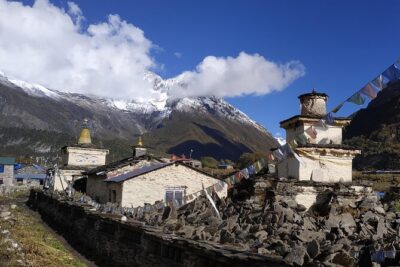
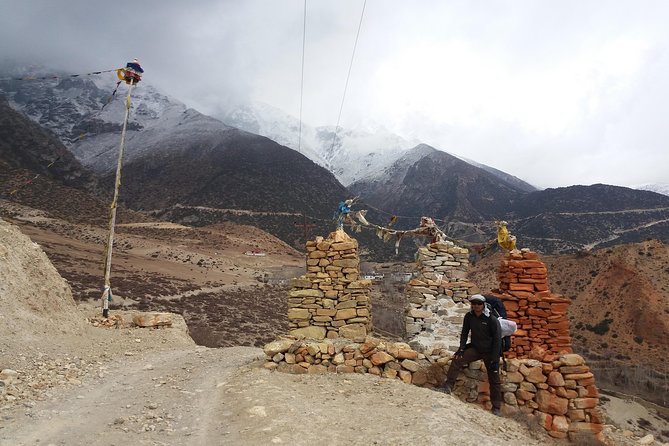
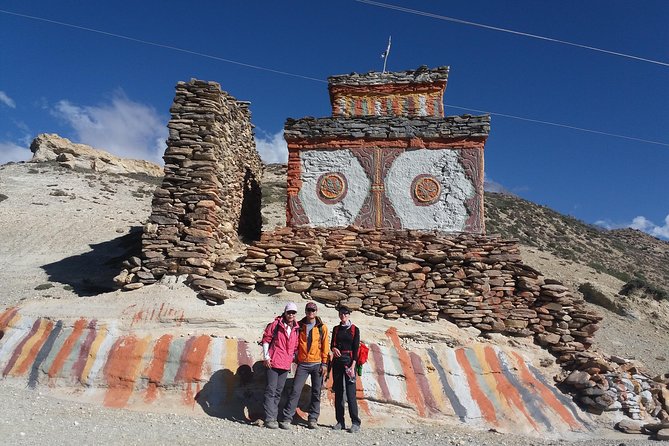
The region sits beyond the main Himalayan ridges, near the Tibetan Plateau. You are not walking through the thick green scenery associated with lower Nepal. Instead, the route moves through dry valleys, wind-shaped cliffs, barley fields, orchards, caves, chortens, and pale rock formations.
The name Mustang comes from a Tibetan term meaning Plain of Aspiration. That fits the journey. The trek is not built around one single viewpoint. Its appeal comes from the slow shift between villages, passes, monasteries, old walls, and exposed valleys.
I especially like that the experience gives cultural sights their proper place. At Lo Manthang, you visit three major gompas rather than simply passing through town. At Gyakar, the century-old Ghar Gompa has rock paintings and a local tradition that wishes made there will come true. These details give the walking a purpose beyond reaching the next lodge.
A few more treks around Kathmandu worth a look
- Everest Base Camp Trek – 14 Days
★ 5.0 · 1,499 reviews - Everest Base Camp Trek
★ 5.0 · 842 reviews - Everest Base Camp Trekking
★ 5.0 · 485 reviews
Kathmandu to Pokhara, a long first day with a useful reward
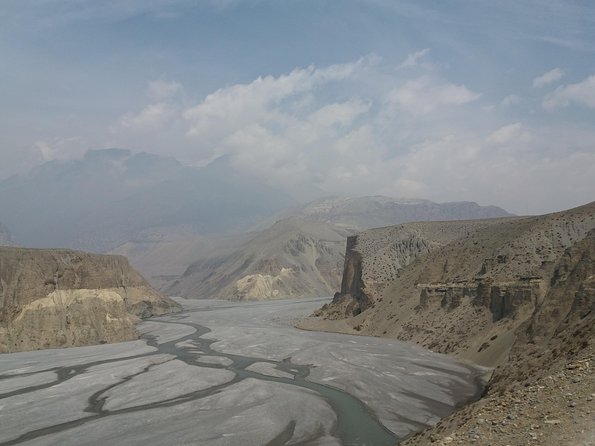
The trip begins with a guide pickup at your hotel and a walk to Kathmandu’s tourist bus park. The bus to Pokhara is shared, so you should expect a public group transfer rather than private door-to-door comfort.
After reaching Pokhara, you check into Hotel Shaara or a similar property. The day leaves room for boating on Fewa Lake and walking through the city’s lakeside streets. That is a pleasant start, but do not expect a short travel day. The Kathmandu to Pokhara road journey takes much of the day.
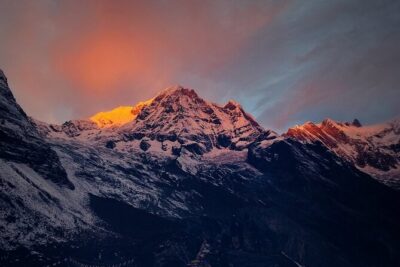
Pokhara offers an early taste of what is ahead. On clear days, you may see Dhaulagiri, Manaslu, Machhapuchhre, and several Annapurna peaks. The next morning’s flight to Jomsom is one of the trip’s practical highlights, since it replaces several days of road travel and places you close to the Upper Mustang route.
Jomsom and Kagbeni introduce the dry mountain world
The flight from Pokhara to Jomsom is short in duration, but the mountain setting makes it memorable. Jomsom is known for apples, strong winds, and its position near two rivers. Once on foot, you follow an open trail through the valley and pass Eaklibatti village, with its flat-roofed houses and old fortress ruins.
The first walking stage is a good test of your pace. From Jomsom, the route reaches Kagbeni, where permits are checked before you continue alongside the Kali Gandaki River. Sand, wind, and a rising trail replace the softer feel of Pokhara.
Tangbe is one of the more appealing early villages. Its narrow lanes, whitewashed houses, barley and buckwheat fields, and apple orchards show how people adapt farming to a dry mountain climate. You continue through another village, cross a river, walk along a ridge, and reach Chele.
The day is listed at about six hours. That sounds manageable, but the wind and uneven ground can make it feel longer. You will want water, sun protection, and a steady pace from the start.
Five passes and a steep descent to Syangboche
The route becomes more demanding on the way toward Syangboche. You cross Taklam La at 3,624 meters and Dajori La at 3,735 meters. These are not extreme Himalayan heights, but the repeated climbing and descending can catch you off guard, especially early in the trek.
The rewards are broad mountain views toward Tilicho, Yakawa Kang, and Damodar Danda. You also pass Ramchung Cave, adding a touch of mystery to an already unusual route.
At Samar, you walk above the village to a ridge before descending steeply to a stream. The trail then continues to Syangboche. This seven-hour day deserves respect. I would treat it as one of the first points where fitness, footwear, and pacing matter more than enthusiasm.
You should also remember that the Upper Mustang experience is exposed. The route does not promise shade or easy surfaces. Strong winds are a recurring part of the journey, not an occasional nuisance.
Same trailhead, a longer or shorter day out:
- Annapurna Circuit Trek with Tilicho Lake
★ 5.0 · 368 reviews - Everest Base Camp Trekking – 13 Day
★ 5.0 · 365 reviews - Everest Base Camp Trek
★ 5.0 · 350 reviews - Everest Base Camp Trek -14 Days
★ 5.0 · 321 reviews
Ghami and the high route toward Tsarang
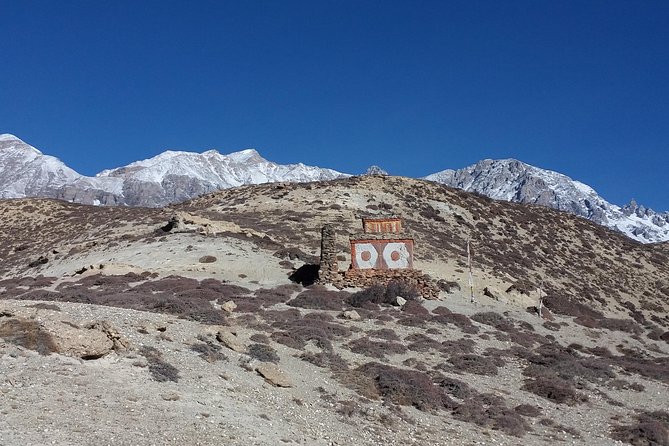
From Syangboche, the trek rises toward Yamada La at 3,850 meters. Along the way, you pass teahouses, chortens, villages, polar forests, and barley fields. The mixture of cultivated ground and dry high country makes this one of the most varied sections.
Nyi La reaches 3,950 meters. From there, you descend to Ghami, one of the larger villages in the Lo region. Fields surround the settlement, creating a more settled impression after the exposed passes.
The following stage includes a rough and sometimes slippery descent, a suspension bridge over the Ghami Khola, and another climb. Mani walls line parts of the route, adding Buddhist detail to the walk. You then cross Tsarang La at 3,870 meters and reach Tsarang village.
Tsarang sits above the Charang Chu canyon. Its large fortress and red gompa are the main sights, and they give the village a strong sense of place. The six-hour timing looks reasonable on paper, but the rough descent and pass crossing mean you should not think of this as an easy walking day.
Lo Manthang, the reason many people choose this route
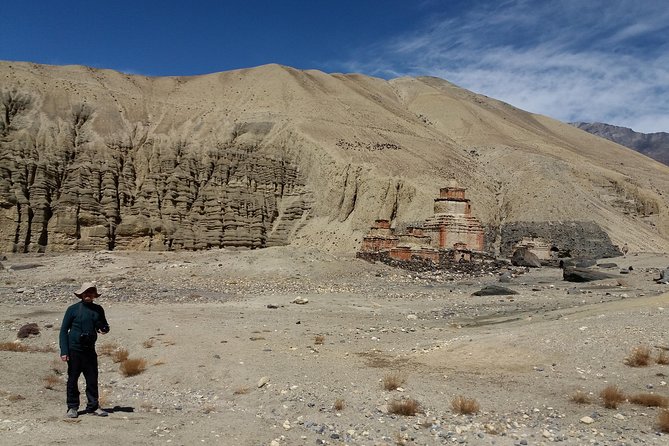
Lo Manthang is the emotional center of the trek. The town is enclosed by walls and lies in the remote Upper Mustang region. Its identity comes from the combination of old architecture, Buddhist worship, local village life, and the hard-to-reach setting.
The planned cultural day covers Jhampa, Thubchen, and Chhode gompas. Each has undergone specialist restoration over the past two decades. You can also walk to Tingkhar, a village northwest of Lo Manthang.
This is where a rest from constant forward motion matters. You are not only trying to collect photographs. You have time to look at restored religious buildings, walk through a walled settlement, and notice how the town relates to the surrounding dry country.
The schedule supplied for the trip contains a point that should be cleared up before departure. One day describes returning from Lo Manthang to Ghami, while a later day again gives you a full Lo Manthang visit. That may reflect a simple ordering error, but it could also affect where you sleep and how much time you receive in town. Get the final route in writing.
A second route through Gyakar and Drakmar
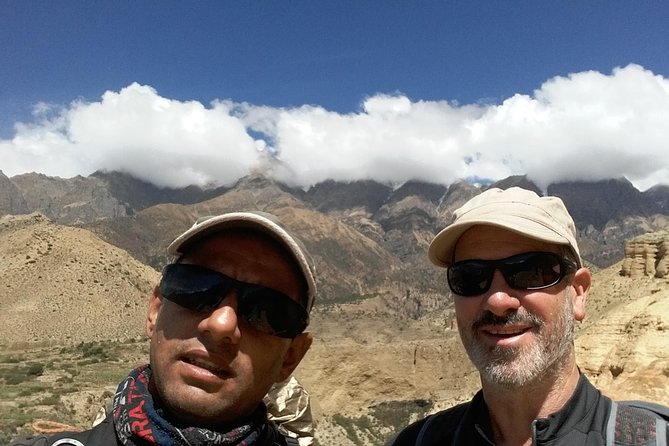
The return route is not simply a repeat of the way north. It passes through Gyakar village, home to the old Ghar Gompa. The gompa contains rock paintings and a local wish-making tradition. Even if you are not religious, this kind of story makes the stop more memorable than a quick photograph at a viewpoint.
The day continues to Drakmar and is listed at about seven hours. A different route adds welcome variety, but it also means another long stage after the cultural time in Lo Manthang.
From Drakmar, the trail descends toward Ghiling. The route crosses a dry plateau and fields, and the strongest winds may hit you directly. The early start is practical because the wind can build later in the day.
Ghiling itself is dry, yet the village offers views toward Dhaulagiri and Nilgiri. You can explore the settlement in the evening. The six-hour day is not necessarily easy, since descending on loose or exposed ground can work your legs as much as climbing.
Chhusang, Kagbeni, and the final long walk
The stage to Chhusang follows the same general route used earlier toward Lo Manthang. You will see more mountain views and pass small villages, but the return leg may feel less dramatic simply because the terrain is familiar.
The final trek to Jomsom is listed at seven hours. You first reach the end of the Mustang trails and join the Annapurna Circuit route. Lunch is planned at Kagbeni before you continue to Jomsom for the night.
This is a useful ending because Kagbeni provides a clear link between the restricted Upper Mustang zone and the better-known Annapurna routes. It also gives you one last look at the river valleys and village architecture that define the trek.
The long final day calls for an early start and realistic expectations. Your legs have already handled several passes and many hours of exposed walking. A guide can help set the pace, but you still need to manage your own water, clothing, and energy.
Flights, buses, lodges, and what the $2,431.92 price really buys
The price is high compared with a simple Nepal walking holiday, but Upper Mustang has unusual permit and access costs. The package includes the restricted-area permit, other required permits and park fees, guide services, staff salary and insurance, staff equipment, staff food and accommodation, the two domestic flights, and tourist bus transport between Kathmandu and Pokhara.
You also receive two nights in Pokhara at Hotel Shaara or a similar hotel. The remaining 11 nights are in available local lodges on a room-only basis. That wording matters. Your meals and drinks are not included, so you need extra cash for food, beverages, and any lodge charges beyond the room.
A porter is also extra. One porter can carry 20 kilos, with a stated charge of $30 per day per porter. If you carry your own pack, the total price remains simpler, but you should be honest about what you can manage over repeated six- and seven-hour days.
International flights, travel insurance, personal hiking equipment, temple and school donations, room upgrades, tips, and emergency rescue evacuation insurance are also excluded. I would treat travel insurance and evacuation cover as essential planning items, not optional extras.
The included guide is English-speaking, and the group can have up to 12 people. That is a reasonable group size for a route where permits, transport, and daily coordination matter. Pickup is offered, and confirmation is provided when you book. The listed meeting time is 9:00 a.m., although the first day also involves an early start for the bus.
Who will get the most from this Upper Mustang trek?
I would recommend this trip to you if you want:
- A remote Himalayan region with strong Tibetan Buddhist character
- Ancient gompas, caves, chortens, Mani walls, and old fortresses
- A guided trek with permits and domestic flights arranged
- A small group rather than a large commercial departure
- Long walking days and repeated high passes
- A cultural journey that is as important as the mountain views
I would be cautious if you want a relaxed holiday with included meals, easy roads, private transfers, or short daily walks. The route demands stamina, flexibility, and comfort with basic local lodge accommodation.
The region can be visited year-round according to the supplied information, which gives you more scheduling freedom than many Himalayan routes. Still, your operator should confirm flight conditions and the exact departure plan for your dates. Mountain transport and remote logistics deserve a little patience.
Should you book it?
I would book the Upper Mustang Trek if the restricted permit, old Buddhist sites, and remote villages are the main reason you are going to Nepal. The access arrangements cover several costly pieces, and the small group cap is a real advantage.
Before booking, ask three direct questions: What is the corrected day-by-day order around Lo Manthang and Ghami? Which lodge nights are confirmed? What extra budget should you allow for meals, porter service, tips, and insurance?
If the answers are clear, this is a strong choice for an active trek into a protected cultural region. If you want predictable comfort, included food, and a gentler schedule, choose a shorter Nepal route instead.
FAQ
How long is the Upper Mustang Trek?
The trip lasts approximately 14 days, beginning in Kathmandu and ending back in Kathmandu after the return journey from Pokhara.
What is the price per person?
The listed price is $2,431.92 per person.
Is pickup offered?
Yes. Pickup is offered, and the guide will meet you at your hotel before you walk to Kathmandu’s tourist bus park.
What is the group size?
The activity can have a maximum of 12 participants.
Is the Upper Mustang permit included?
Yes. The restricted-area permit, other required permits, and park fees are included.
Are domestic flights included?
Yes. The Pokhara to Jomsom and Jomsom to Pokhara flights, including domestic surcharges, are included.
Are meals included?
Food, drinks, and beverage bills are not included. The package lists breakfast, but the inclusion details specify two breakfasts.
Is a porter included?
No. Porter service costs extra. One porter can carry 20 kilos, at a stated additional charge of $30 per day per porter.
Are accommodation and transport included?
Two nights in Pokhara at Hotel Shaara or a similar hotel, 11 nights in available local lodges on a room-only basis, tourist bus transport between Kathmandu and Pokhara, guide services, and domestic flights are included.
Can I cancel for a full refund?
You can cancel at least 24 hours before the experience start time for a full refund. Cancellations or changes made less than 24 hours before the start time are not accepted for a refund.
Recently added around Kathmandu
- Ghorepani Poon Hill Trek★ 5.0 · 16 reviews
- Private Manaslu Circuit Trek at Himalayas★ 5.0 · 3 reviews
- Amazing 1 Day Trekking Experience in Kathmandu Nepal★ 5.0 · 24 reviews
- Ghorepani Poonhill Trek★ 5.0 · 5 reviews
- Upper Mustang Trekking★ 5.0 · 2 reviews
- Upper Mustang Trekking★ 3.0 · 2 reviews
- Upper Mustang Trekking★ 5.0 · 4 reviews
- Upper Mustang Trek★ 5.0 · 5 reviews
Kathmandu Trekking Tours, compared.